
Neu-Ulm
89 Neu-Ulm, Germany
Neu-Ulm | Events today & Citizen Office
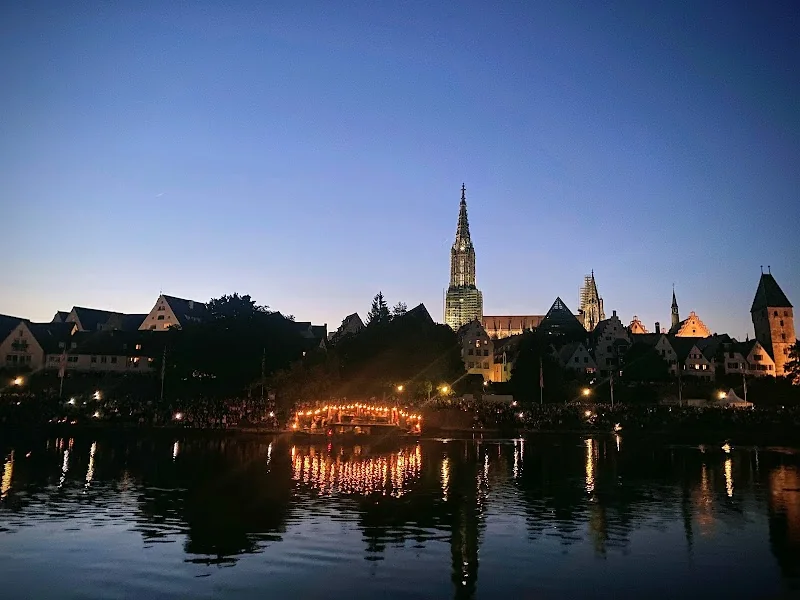
Neu-Ulm is located directly on the Danube opposite Ulm, is seen as a young, vibrant city, and today encompasses 14 districts over 80.96 square kilometers. According to the city, 66,392 residents live here. So, when looking for Neu-Ulm, one is not just searching for an administrative location but a city with a clear center, strong recreational value, and an astonishingly dense mix of culture, everyday life, and history. This mix makes the city particularly interesting for visitors, commuters, families, and people with specific service needs. The official pages present a very broad picture: from events and markets to tourism and city maps, as well as citizen office, parking, and waste disposal. ([nu.neu-ulm.de](https://nu.neu-ulm.de/neu-ulm-erleben))
Neu-Ulm Events today: Festivals, markets, and culture all year round
Those searching for Neu-Ulm events today quickly find a city that lives visibly and audibly throughout the year. The Neu-Ulm weekly market takes place every Wednesday and Saturday from 7 AM to 1 PM at Petrusplatz and is considered by many to be a fixed part of Neu-Ulm. In addition, there are major events such as the city festival, the artisan market, the medieval Christmas market, and cultural series that shape the calendar. The city consolidates these dates on the official pages for events as well as festivals & markets and refers to the joint event calendar of Ulm and Neu-Ulm for additional program points. This creates a structure that is very clear for both spontaneous day visitors and planners. ([nu.neu-ulm.de](https://nu.neu-ulm.de/neu-ulm-erleben/veranstaltungen/feste-maerkte/wochenmarkt/))
Neu-Ulm shows itself particularly strongly in summer. Under the brand KulturRaum Neu-Ulm, the city's cultural department organizes a variety of cultural events during the summer months. These include the Maypole celebration with Rock into May, the Glacis Open-Airs, culture in the Caponniere 4, culture in the museum courtyard, and literature under the trees. The series take place at very different locations, such as in the Glacis city park, in Caponniere 4, or in the courtyard of the Edwin Scharff Museum. This is not only diverse but also typical for a city that thinks of culture not as a single event but as an experiential network throughout the urban space. For weather-related changes, there is even a dedicated weather phone during the season, through which the city provides short-term information. ([nu.neu-ulm.de](https://nu.neu-ulm.de/neu-ulm-erleben/veranstaltungen/kulturraum))
Another hallmark is the location on the Danube, as many major events deliberately engage with the river and the public space. The International Danube Festival takes place every two years in Ulm and Neu-Ulm and offers around 150 events, most of which are freely accessible. Swearing Monday is also relevant for Neu-Ulm because the city is traditionally involved in the celebrations of Swearing Week. Such formats show that Neu-Ulm is not only organized municipally but also culturally and regionally networked. Therefore, those researching events in Neu-Ulm will find not just a list of dates but a very lively mix of market culture, open-air season, Danube atmosphere, and urban community. ([nu.neu-ulm.de](https://nu.neu-ulm.de/neu-ulm-erleben/veranstaltungen/feste-maerkte/donaufest/?utm_source=openai))
Citizen Office, Directions, and Parking in Neu-Ulm
For many inquiries, Neu-Ulm is primarily a service location, and that is why the citizen office is a central anchor. It is located directly at Petrusplatz. The city names the stops Petrusplatz and Rathaus Neu-Ulm for directions, which describes the location right in the center very well. Those arriving by bus can reach the administration without detours, and the route from the train station via Ludwigstraße is also clearly described on foot. This concentration on short distances fits well with a city center where administration, weekly market, gastronomy, and culture are only a few minutes apart. This is a real advantage, especially for residents who have appointments at the citizen office, the town hall, or other municipal offices. ([nu.neu-ulm.de](https://nu.neu-ulm.de/buerger-service/buergerservice/buergerbuero))
The city is also transparent when it comes to parking. On the page about parking in the city center, Neu-Ulm lists several covered options, including the underground car park at Petrusplatz, the underground car park Südstadtbogen, the underground car park Brückenhaus, the parking garage at Augsburger-Tor-Platz, and the parking garage Glacis-Galerie. For the citizen office and the central city core, the underground car park Petrusplatz is particularly important, offering 118 short-term parking spaces, is open around the clock, and has a maximum entrance height of 2.0 meters. So, those visiting Neu-Ulm by car will find a clearly structured parking landscape with short distances into the city center. This mix of orientation and proximity makes the location pleasant for appointments, shopping, and city visits. ([nu.neu-ulm.de](https://nu.neu-ulm.de/buerger-service/leben-in-neu-ulm/verkehr/parken/parken-in-der-innenstadt/))
It is also practical that the city administration centrally lists the most important service times and addresses. The town hall is located at Augsburger Straße 15; residents will find not only contact persons there but also further administrative services and information on online services. For visitors, this means: Neu-Ulm is not only a city with beautiful places but also a very functional municipality, where one can easily combine official visits, parking, and public transport access. This is noticeable in everyday life, especially when one wants to combine an appointment at the citizen office, a market visit, or a city tour. This city center structure is a clear advantage for people searching for Neu-Ulm maps, citizen office, or parking. ([nu.neu-ulm.de](https://nu.neu-ulm.de/buerger-service/buergerservice/anliegen-a-z/a/anfahrt-rathaus-neu-ulm))
City Map, Maps, and Orientation: How Neu-Ulm Reads in Everyday Life
Those searching for Neu-Ulm maps or city maps will find a very useful orientation offer on the official pages. The city refers to the geodata portal of the city of Neu-Ulm and to the city map of the city publishing house. Additionally, city maps can be obtained from the city surveying office in Ulm, at the citizen office in Neu-Ulm, or in bookstores. For a municipality whose city center is closely linked with administration, culture, market activities, and the Danube waterfront, this digital and analog orientation is particularly helpful. It also shows that Neu-Ulm does not leave its spatial relationships to chance but makes them systematically accessible. This is important for visitors as well as for locals who want to quickly find their way in the multitude of districts and offerings. ([nu.neu-ulm.de](https://nu.neu-ulm.de/buerger-service/buergerservice/anliegen-a-z/anliegen-s/stadtplan))
The districts themselves are a core part of Neu-Ulm's identity. Viewed from the air, the city area resembles a star, with the districts lying in a semicircle around the center, which is bordered by the Danube and Ulm. Since the incorporations from 1972 to 1977, Neu-Ulm has 14 districts: City Center, Burlafingen, Finningen, Gerlenhofen, Hausen, Holzschwang, Jedelhausen, Ludwigsfeld, Offenhausen, Pfuhl, Reutti, Schwaighofen, Steinheim, and Weststadt. This is particularly helpful for keyword combinations like Neu-Ulm Pfuhl or Neu-Ulm federal state, as it becomes clear that Neu-Ulm should not be understood as just a point on the map but as a spatially differentiated city with very different living environments. ([nu.neu-ulm.de](https://nu.neu-ulm.de/stadt-politik/stadtinfo/stadtteile))
From a tourist perspective, the orientation is also clearly structured. The city describes Neu-Ulm as a modern, young city on the Danube and refers to tourism, city tours, attractions, and event venues. This creates a simple mental map for guests: center, Danube waterfront, cultural sites, parks, and districts are close together and can be easily combined. Therefore, those orienting themselves with a city map can not only find addresses but also plan their route sensibly, for example, from the citizen office to the weekly market, from there to the Danube waterfront, or subsequently to a cultural site like the Glacis or the Edwin Scharff House. This usability is what makes a city map more than just a map. ([nu.neu-ulm.de](https://nu.neu-ulm.de/neu-ulm-erleben))
History, Danube, and Attractions: Why Neu-Ulm is So Influential
Neu-Ulm's history is closely linked to the Danube. The city describes the river as its lifeblood and reminds that Bavaria and Württemberg set their new border in the middle of the Danube in 1810. In 1811, the political municipality on the right bank of the Danube was approved, marking the beginning of Neu-Ulm's actual history. In the district of City Center, the city additionally names April 7, 1811, as the date when Neu-Ulm's history officially begins. This makes it clear that Neu-Ulm emerged from a border and bridge situation and continues to be shaped by this location to this day. This is why terms like federal state, history, or cityscape frequently appear in searches related to Neu-Ulm. The city is not just any suburb but a consciously grown municipality at a historical junction. ([nu.neu-ulm.de](https://nu.neu-ulm.de/neu-ulm-erleben/tourismus/sehenswert))
Particularly influential was the construction of the Federal Fortress Ulm between 1842 and 1859. The city calls it the central southern German defense, supply, and retreat facility of the German Confederation; parts of the facility are still visible today. The city center was shaped by this fortress framework in the 19th century and received its typical checkerboard pattern, which is traced back to 1845 in the sources. Notable buildings include the water tower in Kollmannpark, which went into operation in 1900, is 47 meters high, and is now considered a landmark, as well as St. Johann Baptist, which was consecrated in 1860 and rebuilt until 1927. The Petruskirche, consecrated in 1867, is also one of the most important buildings in the city. Therefore, those searching for Neu-Ulm attractions will find a remarkable mix of fortress architecture, sacred buildings, urban development, and urban culture here. ([nu.neu-ulm.de](https://nu.neu-ulm.de/neu-ulm-erleben/tourismus/sehenswert))
The history of Neu-Ulm is also a story of destruction and reconstruction. The city history recalls the heavy air raids of 1944 and that Neu-Ulm redeveloped after the war based on the master plan of 1845. Later, the expansion of parks and green spaces, the state garden shows in 1980 and 2008, and the enhancement of the Danube waterfront were added. Flood protection is also part of this narrative: after the Pentecost flood in 1999, protective facilities were built between 2005 and 2008, which now secure the city center. Thus, history directly becomes the present. Neu-Ulm shows how a city with a historical burden, technical infrastructure, and public space can form its own identity. ([nu.neu-ulm.de](https://nu.neu-ulm.de/buerger-service/leben-in-neu-ulm/wasser/hochwasser/hochwasserschutz?utm_source=openai))
Leisure, Restaurants, Cinema, Pfuhl, and the Small Everyday Questions in Neu-Ulm
Neu-Ulm is not only administration and history but also a city of leisure. The official page about experiencing Neu-Ulm describes a sophisticated cultural program, noteworthy spots and parks, a large recreational and sports offer, sociable festivals and markets, several swimming lakes, and of course the Danube. Under leisure & sports, the city lists recreational areas, parks and green spaces, the municipal indoor pool, the Donaubad, sports facilities, playgrounds, clubs, and educational trails. So, those searching for Neu-Ulm restaurant, Neu-Ulm cinema, or general leisure opportunities will find a clear indication on the pages that urban life goes far beyond administration. The proximity of water, greenery, and urban infrastructure is particularly pleasant, as many destinations are only a few minutes apart. ([nu.neu-ulm.de](https://nu.neu-ulm.de/neu-ulm-erleben))
The cultural and gastronomy offerings are also explicitly part of the city profile. The tourism and culture pages mention museums, theaters, cinemas, the city library, hotels, and restaurants as part of the offer. This makes it clear that Neu-Ulm is a classic upper center with practical choices, not just an administrative location. For guests, this is especially relevant when a city visit is to be combined with dining out, a cinema visit, a cultural program, or an overnight stay. The combination of culinary, cultural, and short distances makes Neu-Ulm particularly easy to use. This official cultural framework is valuable, especially for search queries with Neu-Ulm restaurant or Neu-Ulm cinema, as it shows that the city actively considers these topics and does not just silently offer them. ([nu.neu-ulm.de](https://nu.neu-ulm.de/neu-ulm-erleben))
In everyday life, practical services also play a significant role. The city refers to the Neu-Ulm waste calendar for questions about residual waste and organic waste collection, on waste separation, on the recycling center in Breitenhofstraße, and on clear service information regarding the provision of bins. The recycling center accepts recyclables, electronic devices, bulky waste, and garden waste; the city provides exact opening hours and special openings there. This shows: Neu-Ulm is also well organized in the quiet but important questions of everyday life. Those searching for Neu-Ulm waste calendar 2026 do not expect a tourist attraction but reliability in everyday life, and exactly this reliability is provided by the city on its official pages. In the same logic, the weather phone of the cultural season is also part of it, which informs about weather-related changes. Thus, short distances in Neu-Ulm arise not only spatially but also organizationally. ([nu.neu-ulm.de](https://nu.neu-ulm.de/buerger-service/leben-in-neu-ulm/abfall-sauberkeit/?utm_source=openai))
Finally, it is worth taking a look at the districts because they make Neu-Ulm truly tangible. Pfuhl is a popular destination with shops, a local history museum branch, and Pfuhl bathing lake, Ludwigsfeld combines quality of life with local recreation and the Ludwigsfeld gravel lake, and Offenhausen is located on the Danube and is well connected by foot and bike paths. These different profiles make the city exciting for people who are not just looking for an address but a living environment. Neu-Ulm is in this sense a city of short distances but also of different moods: urban in the center, green by the lakes, cultural at the Danube waterfront, and practical in everyday life. This is probably the most important reason why Neu-Ulm appears in so many search queries and brings together very different needs. ([nu.neu-ulm.de](https://nu.neu-ulm.de/stadt-politik/stadtinfo/stadtteile))
Sources:
Mehr anzeigenWeniger anzeigen
Neu-Ulm | Events today & Citizen Office
Neu-Ulm is located directly on the Danube opposite Ulm, is seen as a young, vibrant city, and today encompasses 14 districts over 80.96 square kilometers. According to the city, 66,392 residents live here. So, when looking for Neu-Ulm, one is not just searching for an administrative location but a city with a clear center, strong recreational value, and an astonishingly dense mix of culture, everyday life, and history. This mix makes the city particularly interesting for visitors, commuters, families, and people with specific service needs. The official pages present a very broad picture: from events and markets to tourism and city maps, as well as citizen office, parking, and waste disposal. ([nu.neu-ulm.de](https://nu.neu-ulm.de/neu-ulm-erleben))
Neu-Ulm Events today: Festivals, markets, and culture all year round
Those searching for Neu-Ulm events today quickly find a city that lives visibly and audibly throughout the year. The Neu-Ulm weekly market takes place every Wednesday and Saturday from 7 AM to 1 PM at Petrusplatz and is considered by many to be a fixed part of Neu-Ulm. In addition, there are major events such as the city festival, the artisan market, the medieval Christmas market, and cultural series that shape the calendar. The city consolidates these dates on the official pages for events as well as festivals & markets and refers to the joint event calendar of Ulm and Neu-Ulm for additional program points. This creates a structure that is very clear for both spontaneous day visitors and planners. ([nu.neu-ulm.de](https://nu.neu-ulm.de/neu-ulm-erleben/veranstaltungen/feste-maerkte/wochenmarkt/))
Neu-Ulm shows itself particularly strongly in summer. Under the brand KulturRaum Neu-Ulm, the city's cultural department organizes a variety of cultural events during the summer months. These include the Maypole celebration with Rock into May, the Glacis Open-Airs, culture in the Caponniere 4, culture in the museum courtyard, and literature under the trees. The series take place at very different locations, such as in the Glacis city park, in Caponniere 4, or in the courtyard of the Edwin Scharff Museum. This is not only diverse but also typical for a city that thinks of culture not as a single event but as an experiential network throughout the urban space. For weather-related changes, there is even a dedicated weather phone during the season, through which the city provides short-term information. ([nu.neu-ulm.de](https://nu.neu-ulm.de/neu-ulm-erleben/veranstaltungen/kulturraum))
Another hallmark is the location on the Danube, as many major events deliberately engage with the river and the public space. The International Danube Festival takes place every two years in Ulm and Neu-Ulm and offers around 150 events, most of which are freely accessible. Swearing Monday is also relevant for Neu-Ulm because the city is traditionally involved in the celebrations of Swearing Week. Such formats show that Neu-Ulm is not only organized municipally but also culturally and regionally networked. Therefore, those researching events in Neu-Ulm will find not just a list of dates but a very lively mix of market culture, open-air season, Danube atmosphere, and urban community. ([nu.neu-ulm.de](https://nu.neu-ulm.de/neu-ulm-erleben/veranstaltungen/feste-maerkte/donaufest/?utm_source=openai))
Citizen Office, Directions, and Parking in Neu-Ulm
For many inquiries, Neu-Ulm is primarily a service location, and that is why the citizen office is a central anchor. It is located directly at Petrusplatz. The city names the stops Petrusplatz and Rathaus Neu-Ulm for directions, which describes the location right in the center very well. Those arriving by bus can reach the administration without detours, and the route from the train station via Ludwigstraße is also clearly described on foot. This concentration on short distances fits well with a city center where administration, weekly market, gastronomy, and culture are only a few minutes apart. This is a real advantage, especially for residents who have appointments at the citizen office, the town hall, or other municipal offices. ([nu.neu-ulm.de](https://nu.neu-ulm.de/buerger-service/buergerservice/buergerbuero))
The city is also transparent when it comes to parking. On the page about parking in the city center, Neu-Ulm lists several covered options, including the underground car park at Petrusplatz, the underground car park Südstadtbogen, the underground car park Brückenhaus, the parking garage at Augsburger-Tor-Platz, and the parking garage Glacis-Galerie. For the citizen office and the central city core, the underground car park Petrusplatz is particularly important, offering 118 short-term parking spaces, is open around the clock, and has a maximum entrance height of 2.0 meters. So, those visiting Neu-Ulm by car will find a clearly structured parking landscape with short distances into the city center. This mix of orientation and proximity makes the location pleasant for appointments, shopping, and city visits. ([nu.neu-ulm.de](https://nu.neu-ulm.de/buerger-service/leben-in-neu-ulm/verkehr/parken/parken-in-der-innenstadt/))
It is also practical that the city administration centrally lists the most important service times and addresses. The town hall is located at Augsburger Straße 15; residents will find not only contact persons there but also further administrative services and information on online services. For visitors, this means: Neu-Ulm is not only a city with beautiful places but also a very functional municipality, where one can easily combine official visits, parking, and public transport access. This is noticeable in everyday life, especially when one wants to combine an appointment at the citizen office, a market visit, or a city tour. This city center structure is a clear advantage for people searching for Neu-Ulm maps, citizen office, or parking. ([nu.neu-ulm.de](https://nu.neu-ulm.de/buerger-service/buergerservice/anliegen-a-z/a/anfahrt-rathaus-neu-ulm))
City Map, Maps, and Orientation: How Neu-Ulm Reads in Everyday Life
Those searching for Neu-Ulm maps or city maps will find a very useful orientation offer on the official pages. The city refers to the geodata portal of the city of Neu-Ulm and to the city map of the city publishing house. Additionally, city maps can be obtained from the city surveying office in Ulm, at the citizen office in Neu-Ulm, or in bookstores. For a municipality whose city center is closely linked with administration, culture, market activities, and the Danube waterfront, this digital and analog orientation is particularly helpful. It also shows that Neu-Ulm does not leave its spatial relationships to chance but makes them systematically accessible. This is important for visitors as well as for locals who want to quickly find their way in the multitude of districts and offerings. ([nu.neu-ulm.de](https://nu.neu-ulm.de/buerger-service/buergerservice/anliegen-a-z/anliegen-s/stadtplan))
The districts themselves are a core part of Neu-Ulm's identity. Viewed from the air, the city area resembles a star, with the districts lying in a semicircle around the center, which is bordered by the Danube and Ulm. Since the incorporations from 1972 to 1977, Neu-Ulm has 14 districts: City Center, Burlafingen, Finningen, Gerlenhofen, Hausen, Holzschwang, Jedelhausen, Ludwigsfeld, Offenhausen, Pfuhl, Reutti, Schwaighofen, Steinheim, and Weststadt. This is particularly helpful for keyword combinations like Neu-Ulm Pfuhl or Neu-Ulm federal state, as it becomes clear that Neu-Ulm should not be understood as just a point on the map but as a spatially differentiated city with very different living environments. ([nu.neu-ulm.de](https://nu.neu-ulm.de/stadt-politik/stadtinfo/stadtteile))
From a tourist perspective, the orientation is also clearly structured. The city describes Neu-Ulm as a modern, young city on the Danube and refers to tourism, city tours, attractions, and event venues. This creates a simple mental map for guests: center, Danube waterfront, cultural sites, parks, and districts are close together and can be easily combined. Therefore, those orienting themselves with a city map can not only find addresses but also plan their route sensibly, for example, from the citizen office to the weekly market, from there to the Danube waterfront, or subsequently to a cultural site like the Glacis or the Edwin Scharff House. This usability is what makes a city map more than just a map. ([nu.neu-ulm.de](https://nu.neu-ulm.de/neu-ulm-erleben))
History, Danube, and Attractions: Why Neu-Ulm is So Influential
Neu-Ulm's history is closely linked to the Danube. The city describes the river as its lifeblood and reminds that Bavaria and Württemberg set their new border in the middle of the Danube in 1810. In 1811, the political municipality on the right bank of the Danube was approved, marking the beginning of Neu-Ulm's actual history. In the district of City Center, the city additionally names April 7, 1811, as the date when Neu-Ulm's history officially begins. This makes it clear that Neu-Ulm emerged from a border and bridge situation and continues to be shaped by this location to this day. This is why terms like federal state, history, or cityscape frequently appear in searches related to Neu-Ulm. The city is not just any suburb but a consciously grown municipality at a historical junction. ([nu.neu-ulm.de](https://nu.neu-ulm.de/neu-ulm-erleben/tourismus/sehenswert))
Particularly influential was the construction of the Federal Fortress Ulm between 1842 and 1859. The city calls it the central southern German defense, supply, and retreat facility of the German Confederation; parts of the facility are still visible today. The city center was shaped by this fortress framework in the 19th century and received its typical checkerboard pattern, which is traced back to 1845 in the sources. Notable buildings include the water tower in Kollmannpark, which went into operation in 1900, is 47 meters high, and is now considered a landmark, as well as St. Johann Baptist, which was consecrated in 1860 and rebuilt until 1927. The Petruskirche, consecrated in 1867, is also one of the most important buildings in the city. Therefore, those searching for Neu-Ulm attractions will find a remarkable mix of fortress architecture, sacred buildings, urban development, and urban culture here. ([nu.neu-ulm.de](https://nu.neu-ulm.de/neu-ulm-erleben/tourismus/sehenswert))
The history of Neu-Ulm is also a story of destruction and reconstruction. The city history recalls the heavy air raids of 1944 and that Neu-Ulm redeveloped after the war based on the master plan of 1845. Later, the expansion of parks and green spaces, the state garden shows in 1980 and 2008, and the enhancement of the Danube waterfront were added. Flood protection is also part of this narrative: after the Pentecost flood in 1999, protective facilities were built between 2005 and 2008, which now secure the city center. Thus, history directly becomes the present. Neu-Ulm shows how a city with a historical burden, technical infrastructure, and public space can form its own identity. ([nu.neu-ulm.de](https://nu.neu-ulm.de/buerger-service/leben-in-neu-ulm/wasser/hochwasser/hochwasserschutz?utm_source=openai))
Leisure, Restaurants, Cinema, Pfuhl, and the Small Everyday Questions in Neu-Ulm
Neu-Ulm is not only administration and history but also a city of leisure. The official page about experiencing Neu-Ulm describes a sophisticated cultural program, noteworthy spots and parks, a large recreational and sports offer, sociable festivals and markets, several swimming lakes, and of course the Danube. Under leisure & sports, the city lists recreational areas, parks and green spaces, the municipal indoor pool, the Donaubad, sports facilities, playgrounds, clubs, and educational trails. So, those searching for Neu-Ulm restaurant, Neu-Ulm cinema, or general leisure opportunities will find a clear indication on the pages that urban life goes far beyond administration. The proximity of water, greenery, and urban infrastructure is particularly pleasant, as many destinations are only a few minutes apart. ([nu.neu-ulm.de](https://nu.neu-ulm.de/neu-ulm-erleben))
The cultural and gastronomy offerings are also explicitly part of the city profile. The tourism and culture pages mention museums, theaters, cinemas, the city library, hotels, and restaurants as part of the offer. This makes it clear that Neu-Ulm is a classic upper center with practical choices, not just an administrative location. For guests, this is especially relevant when a city visit is to be combined with dining out, a cinema visit, a cultural program, or an overnight stay. The combination of culinary, cultural, and short distances makes Neu-Ulm particularly easy to use. This official cultural framework is valuable, especially for search queries with Neu-Ulm restaurant or Neu-Ulm cinema, as it shows that the city actively considers these topics and does not just silently offer them. ([nu.neu-ulm.de](https://nu.neu-ulm.de/neu-ulm-erleben))
In everyday life, practical services also play a significant role. The city refers to the Neu-Ulm waste calendar for questions about residual waste and organic waste collection, on waste separation, on the recycling center in Breitenhofstraße, and on clear service information regarding the provision of bins. The recycling center accepts recyclables, electronic devices, bulky waste, and garden waste; the city provides exact opening hours and special openings there. This shows: Neu-Ulm is also well organized in the quiet but important questions of everyday life. Those searching for Neu-Ulm waste calendar 2026 do not expect a tourist attraction but reliability in everyday life, and exactly this reliability is provided by the city on its official pages. In the same logic, the weather phone of the cultural season is also part of it, which informs about weather-related changes. Thus, short distances in Neu-Ulm arise not only spatially but also organizationally. ([nu.neu-ulm.de](https://nu.neu-ulm.de/buerger-service/leben-in-neu-ulm/abfall-sauberkeit/?utm_source=openai))
Finally, it is worth taking a look at the districts because they make Neu-Ulm truly tangible. Pfuhl is a popular destination with shops, a local history museum branch, and Pfuhl bathing lake, Ludwigsfeld combines quality of life with local recreation and the Ludwigsfeld gravel lake, and Offenhausen is located on the Danube and is well connected by foot and bike paths. These different profiles make the city exciting for people who are not just looking for an address but a living environment. Neu-Ulm is in this sense a city of short distances but also of different moods: urban in the center, green by the lakes, cultural at the Danube waterfront, and practical in everyday life. This is probably the most important reason why Neu-Ulm appears in so many search queries and brings together very different needs. ([nu.neu-ulm.de](https://nu.neu-ulm.de/stadt-politik/stadtinfo/stadtteile))
Sources:
Neu-Ulm | Events today & Citizen Office
Neu-Ulm is located directly on the Danube opposite Ulm, is seen as a young, vibrant city, and today encompasses 14 districts over 80.96 square kilometers. According to the city, 66,392 residents live here. So, when looking for Neu-Ulm, one is not just searching for an administrative location but a city with a clear center, strong recreational value, and an astonishingly dense mix of culture, everyday life, and history. This mix makes the city particularly interesting for visitors, commuters, families, and people with specific service needs. The official pages present a very broad picture: from events and markets to tourism and city maps, as well as citizen office, parking, and waste disposal. ([nu.neu-ulm.de](https://nu.neu-ulm.de/neu-ulm-erleben))
Neu-Ulm Events today: Festivals, markets, and culture all year round
Those searching for Neu-Ulm events today quickly find a city that lives visibly and audibly throughout the year. The Neu-Ulm weekly market takes place every Wednesday and Saturday from 7 AM to 1 PM at Petrusplatz and is considered by many to be a fixed part of Neu-Ulm. In addition, there are major events such as the city festival, the artisan market, the medieval Christmas market, and cultural series that shape the calendar. The city consolidates these dates on the official pages for events as well as festivals & markets and refers to the joint event calendar of Ulm and Neu-Ulm for additional program points. This creates a structure that is very clear for both spontaneous day visitors and planners. ([nu.neu-ulm.de](https://nu.neu-ulm.de/neu-ulm-erleben/veranstaltungen/feste-maerkte/wochenmarkt/))
Neu-Ulm shows itself particularly strongly in summer. Under the brand KulturRaum Neu-Ulm, the city's cultural department organizes a variety of cultural events during the summer months. These include the Maypole celebration with Rock into May, the Glacis Open-Airs, culture in the Caponniere 4, culture in the museum courtyard, and literature under the trees. The series take place at very different locations, such as in the Glacis city park, in Caponniere 4, or in the courtyard of the Edwin Scharff Museum. This is not only diverse but also typical for a city that thinks of culture not as a single event but as an experiential network throughout the urban space. For weather-related changes, there is even a dedicated weather phone during the season, through which the city provides short-term information. ([nu.neu-ulm.de](https://nu.neu-ulm.de/neu-ulm-erleben/veranstaltungen/kulturraum))
Another hallmark is the location on the Danube, as many major events deliberately engage with the river and the public space. The International Danube Festival takes place every two years in Ulm and Neu-Ulm and offers around 150 events, most of which are freely accessible. Swearing Monday is also relevant for Neu-Ulm because the city is traditionally involved in the celebrations of Swearing Week. Such formats show that Neu-Ulm is not only organized municipally but also culturally and regionally networked. Therefore, those researching events in Neu-Ulm will find not just a list of dates but a very lively mix of market culture, open-air season, Danube atmosphere, and urban community. ([nu.neu-ulm.de](https://nu.neu-ulm.de/neu-ulm-erleben/veranstaltungen/feste-maerkte/donaufest/?utm_source=openai))
Citizen Office, Directions, and Parking in Neu-Ulm
For many inquiries, Neu-Ulm is primarily a service location, and that is why the citizen office is a central anchor. It is located directly at Petrusplatz. The city names the stops Petrusplatz and Rathaus Neu-Ulm for directions, which describes the location right in the center very well. Those arriving by bus can reach the administration without detours, and the route from the train station via Ludwigstraße is also clearly described on foot. This concentration on short distances fits well with a city center where administration, weekly market, gastronomy, and culture are only a few minutes apart. This is a real advantage, especially for residents who have appointments at the citizen office, the town hall, or other municipal offices. ([nu.neu-ulm.de](https://nu.neu-ulm.de/buerger-service/buergerservice/buergerbuero))
The city is also transparent when it comes to parking. On the page about parking in the city center, Neu-Ulm lists several covered options, including the underground car park at Petrusplatz, the underground car park Südstadtbogen, the underground car park Brückenhaus, the parking garage at Augsburger-Tor-Platz, and the parking garage Glacis-Galerie. For the citizen office and the central city core, the underground car park Petrusplatz is particularly important, offering 118 short-term parking spaces, is open around the clock, and has a maximum entrance height of 2.0 meters. So, those visiting Neu-Ulm by car will find a clearly structured parking landscape with short distances into the city center. This mix of orientation and proximity makes the location pleasant for appointments, shopping, and city visits. ([nu.neu-ulm.de](https://nu.neu-ulm.de/buerger-service/leben-in-neu-ulm/verkehr/parken/parken-in-der-innenstadt/))
It is also practical that the city administration centrally lists the most important service times and addresses. The town hall is located at Augsburger Straße 15; residents will find not only contact persons there but also further administrative services and information on online services. For visitors, this means: Neu-Ulm is not only a city with beautiful places but also a very functional municipality, where one can easily combine official visits, parking, and public transport access. This is noticeable in everyday life, especially when one wants to combine an appointment at the citizen office, a market visit, or a city tour. This city center structure is a clear advantage for people searching for Neu-Ulm maps, citizen office, or parking. ([nu.neu-ulm.de](https://nu.neu-ulm.de/buerger-service/buergerservice/anliegen-a-z/a/anfahrt-rathaus-neu-ulm))
City Map, Maps, and Orientation: How Neu-Ulm Reads in Everyday Life
Those searching for Neu-Ulm maps or city maps will find a very useful orientation offer on the official pages. The city refers to the geodata portal of the city of Neu-Ulm and to the city map of the city publishing house. Additionally, city maps can be obtained from the city surveying office in Ulm, at the citizen office in Neu-Ulm, or in bookstores. For a municipality whose city center is closely linked with administration, culture, market activities, and the Danube waterfront, this digital and analog orientation is particularly helpful. It also shows that Neu-Ulm does not leave its spatial relationships to chance but makes them systematically accessible. This is important for visitors as well as for locals who want to quickly find their way in the multitude of districts and offerings. ([nu.neu-ulm.de](https://nu.neu-ulm.de/buerger-service/buergerservice/anliegen-a-z/anliegen-s/stadtplan))
The districts themselves are a core part of Neu-Ulm's identity. Viewed from the air, the city area resembles a star, with the districts lying in a semicircle around the center, which is bordered by the Danube and Ulm. Since the incorporations from 1972 to 1977, Neu-Ulm has 14 districts: City Center, Burlafingen, Finningen, Gerlenhofen, Hausen, Holzschwang, Jedelhausen, Ludwigsfeld, Offenhausen, Pfuhl, Reutti, Schwaighofen, Steinheim, and Weststadt. This is particularly helpful for keyword combinations like Neu-Ulm Pfuhl or Neu-Ulm federal state, as it becomes clear that Neu-Ulm should not be understood as just a point on the map but as a spatially differentiated city with very different living environments. ([nu.neu-ulm.de](https://nu.neu-ulm.de/stadt-politik/stadtinfo/stadtteile))
From a tourist perspective, the orientation is also clearly structured. The city describes Neu-Ulm as a modern, young city on the Danube and refers to tourism, city tours, attractions, and event venues. This creates a simple mental map for guests: center, Danube waterfront, cultural sites, parks, and districts are close together and can be easily combined. Therefore, those orienting themselves with a city map can not only find addresses but also plan their route sensibly, for example, from the citizen office to the weekly market, from there to the Danube waterfront, or subsequently to a cultural site like the Glacis or the Edwin Scharff House. This usability is what makes a city map more than just a map. ([nu.neu-ulm.de](https://nu.neu-ulm.de/neu-ulm-erleben))
History, Danube, and Attractions: Why Neu-Ulm is So Influential
Neu-Ulm's history is closely linked to the Danube. The city describes the river as its lifeblood and reminds that Bavaria and Württemberg set their new border in the middle of the Danube in 1810. In 1811, the political municipality on the right bank of the Danube was approved, marking the beginning of Neu-Ulm's actual history. In the district of City Center, the city additionally names April 7, 1811, as the date when Neu-Ulm's history officially begins. This makes it clear that Neu-Ulm emerged from a border and bridge situation and continues to be shaped by this location to this day. This is why terms like federal state, history, or cityscape frequently appear in searches related to Neu-Ulm. The city is not just any suburb but a consciously grown municipality at a historical junction. ([nu.neu-ulm.de](https://nu.neu-ulm.de/neu-ulm-erleben/tourismus/sehenswert))
Particularly influential was the construction of the Federal Fortress Ulm between 1842 and 1859. The city calls it the central southern German defense, supply, and retreat facility of the German Confederation; parts of the facility are still visible today. The city center was shaped by this fortress framework in the 19th century and received its typical checkerboard pattern, which is traced back to 1845 in the sources. Notable buildings include the water tower in Kollmannpark, which went into operation in 1900, is 47 meters high, and is now considered a landmark, as well as St. Johann Baptist, which was consecrated in 1860 and rebuilt until 1927. The Petruskirche, consecrated in 1867, is also one of the most important buildings in the city. Therefore, those searching for Neu-Ulm attractions will find a remarkable mix of fortress architecture, sacred buildings, urban development, and urban culture here. ([nu.neu-ulm.de](https://nu.neu-ulm.de/neu-ulm-erleben/tourismus/sehenswert))
The history of Neu-Ulm is also a story of destruction and reconstruction. The city history recalls the heavy air raids of 1944 and that Neu-Ulm redeveloped after the war based on the master plan of 1845. Later, the expansion of parks and green spaces, the state garden shows in 1980 and 2008, and the enhancement of the Danube waterfront were added. Flood protection is also part of this narrative: after the Pentecost flood in 1999, protective facilities were built between 2005 and 2008, which now secure the city center. Thus, history directly becomes the present. Neu-Ulm shows how a city with a historical burden, technical infrastructure, and public space can form its own identity. ([nu.neu-ulm.de](https://nu.neu-ulm.de/buerger-service/leben-in-neu-ulm/wasser/hochwasser/hochwasserschutz?utm_source=openai))
Leisure, Restaurants, Cinema, Pfuhl, and the Small Everyday Questions in Neu-Ulm
Neu-Ulm is not only administration and history but also a city of leisure. The official page about experiencing Neu-Ulm describes a sophisticated cultural program, noteworthy spots and parks, a large recreational and sports offer, sociable festivals and markets, several swimming lakes, and of course the Danube. Under leisure & sports, the city lists recreational areas, parks and green spaces, the municipal indoor pool, the Donaubad, sports facilities, playgrounds, clubs, and educational trails. So, those searching for Neu-Ulm restaurant, Neu-Ulm cinema, or general leisure opportunities will find a clear indication on the pages that urban life goes far beyond administration. The proximity of water, greenery, and urban infrastructure is particularly pleasant, as many destinations are only a few minutes apart. ([nu.neu-ulm.de](https://nu.neu-ulm.de/neu-ulm-erleben))
The cultural and gastronomy offerings are also explicitly part of the city profile. The tourism and culture pages mention museums, theaters, cinemas, the city library, hotels, and restaurants as part of the offer. This makes it clear that Neu-Ulm is a classic upper center with practical choices, not just an administrative location. For guests, this is especially relevant when a city visit is to be combined with dining out, a cinema visit, a cultural program, or an overnight stay. The combination of culinary, cultural, and short distances makes Neu-Ulm particularly easy to use. This official cultural framework is valuable, especially for search queries with Neu-Ulm restaurant or Neu-Ulm cinema, as it shows that the city actively considers these topics and does not just silently offer them. ([nu.neu-ulm.de](https://nu.neu-ulm.de/neu-ulm-erleben))
In everyday life, practical services also play a significant role. The city refers to the Neu-Ulm waste calendar for questions about residual waste and organic waste collection, on waste separation, on the recycling center in Breitenhofstraße, and on clear service information regarding the provision of bins. The recycling center accepts recyclables, electronic devices, bulky waste, and garden waste; the city provides exact opening hours and special openings there. This shows: Neu-Ulm is also well organized in the quiet but important questions of everyday life. Those searching for Neu-Ulm waste calendar 2026 do not expect a tourist attraction but reliability in everyday life, and exactly this reliability is provided by the city on its official pages. In the same logic, the weather phone of the cultural season is also part of it, which informs about weather-related changes. Thus, short distances in Neu-Ulm arise not only spatially but also organizationally. ([nu.neu-ulm.de](https://nu.neu-ulm.de/buerger-service/leben-in-neu-ulm/abfall-sauberkeit/?utm_source=openai))
Finally, it is worth taking a look at the districts because they make Neu-Ulm truly tangible. Pfuhl is a popular destination with shops, a local history museum branch, and Pfuhl bathing lake, Ludwigsfeld combines quality of life with local recreation and the Ludwigsfeld gravel lake, and Offenhausen is located on the Danube and is well connected by foot and bike paths. These different profiles make the city exciting for people who are not just looking for an address but a living environment. Neu-Ulm is in this sense a city of short distances but also of different moods: urban in the center, green by the lakes, cultural at the Danube waterfront, and practical in everyday life. This is probably the most important reason why Neu-Ulm appears in so many search queries and brings together very different needs. ([nu.neu-ulm.de](https://nu.neu-ulm.de/stadt-politik/stadtinfo/stadtteile))
Sources:
Upcoming Events
Cancelled: Traveling Exhibition "Seeing Dementia Anew"
Lunch Table "Good Room" at Cafe Lebenswert
Homework Help for Primary School Children at the Friedenskirche Neu-Ulm
District Council
Meeting Café
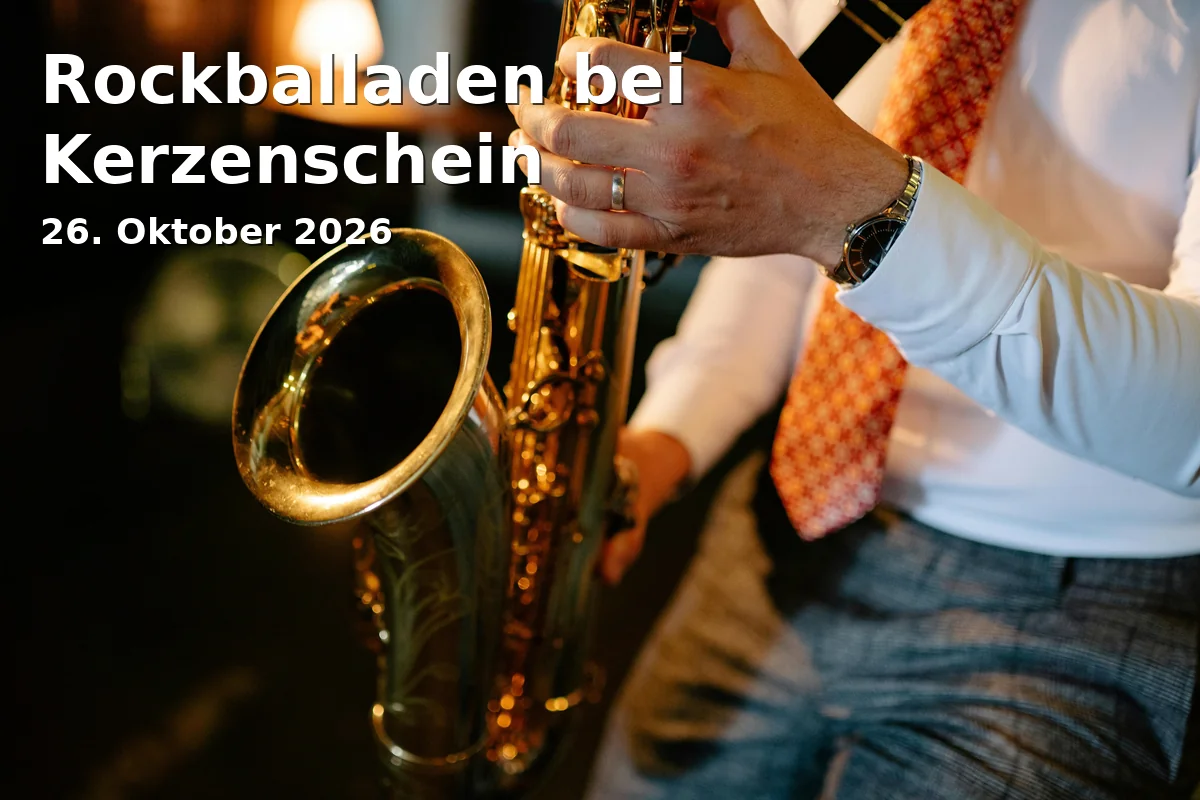
Rock Ballads by Candlelight
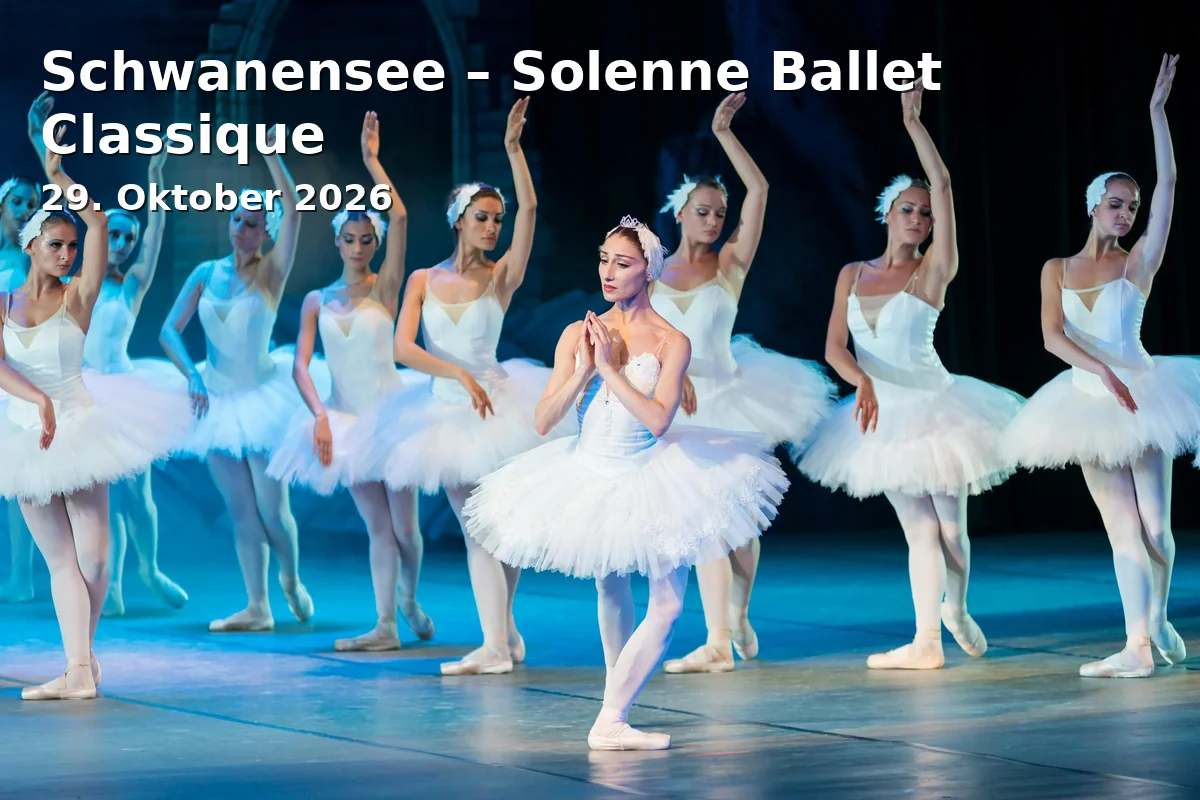
Swan Lake – Solenne Ballet Classique
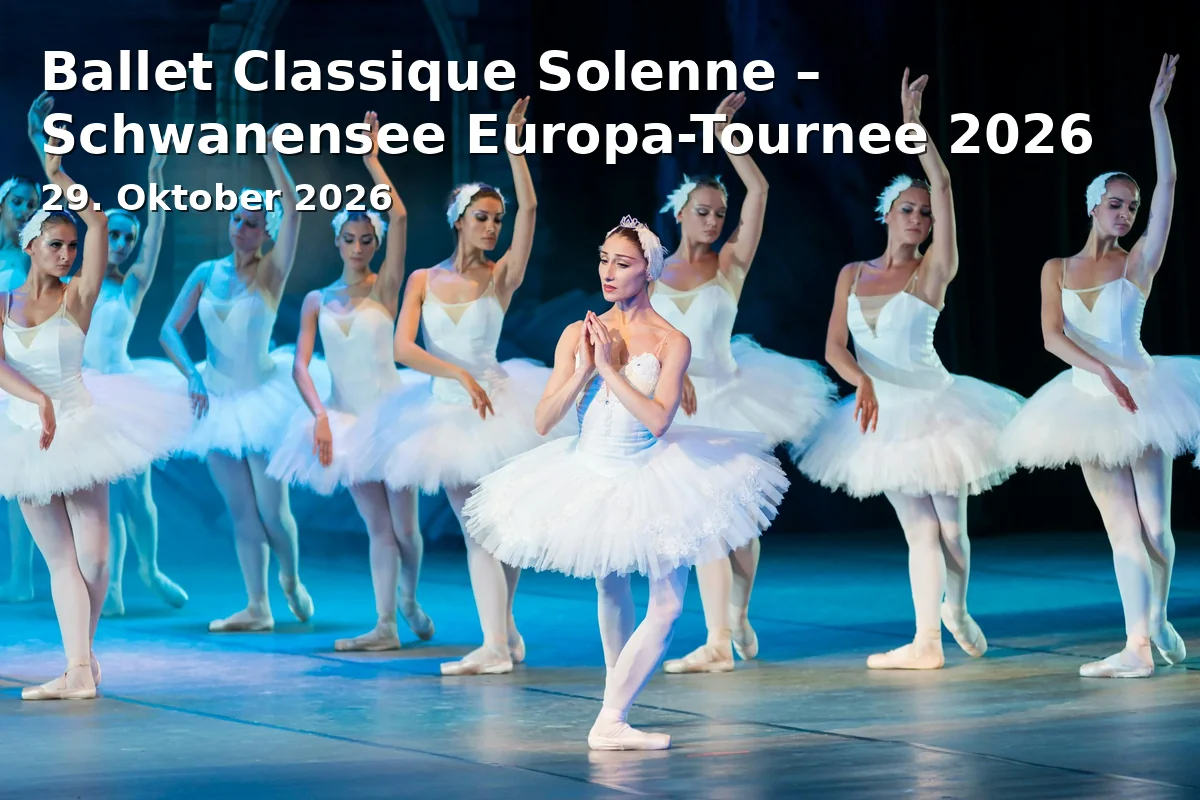
Ballet Classique Solenne – Swan Lake Europe Tour 2026
District Council at the Neu-Ulm District Office
Meeting Café
Frequently Asked Questions
Reviews
No reviews found