
Volha Hapeyeva
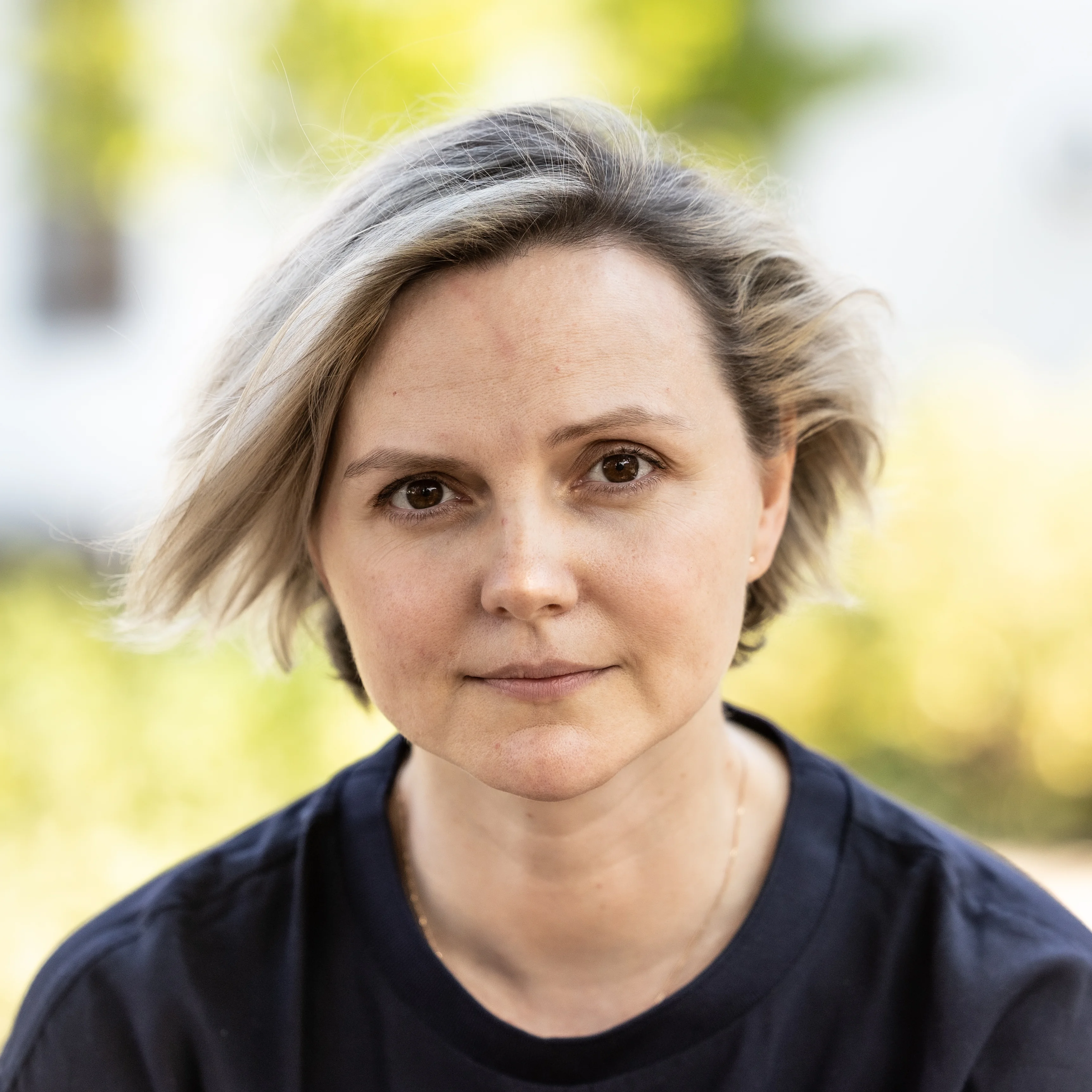
Image from Wikipedia
Image from Wikipedia
Volha Hapeyeva: The Poetic Voice from Minsk between Exile, Language, and Literary Radicalism
An Author Redefining Language, Identity, and Contemporary Issues
Volha Hapeyeva, born on January 5, 1982, in Minsk, is one of the most prominent voices in contemporary Belarusian literature. She works as a writer, poet, translator, and linguist, combining literary rigor with political awareness and linguistic precision in her work. Her texts revolve around exile, body, memory, gender, and the fragile power of language. ([de.wikipedia.org](https://de.wikipedia.org/wiki/Volha_Hapeyeva))
Approaching her work reveals not a smoothly polished author's biography, but an artistic development marked by relocations, institutional support, translation work, and international resonance. Hapeyeva writes in Belarusian and, since 2020, also in German; in the German-speaking world, she also publishes under the English spelling Volha Hapeyeva. This multilingualism is not a peripheral aspect but the center of her literary method. ([de.wikipedia.org](https://de.wikipedia.org/wiki/Volha_Hapeyeva))
Biography: Minsk, Education, and the Formation of a Literary Stance
Hapeyeva graduated in 2004 from the Minsk State Linguistic University in Foreign Languages and Literature, focusing on English, German, and French; she completed her Master's there in 2005. Later, she obtained another Master's in Gender Studies at EHU-International in Vilnius and received her PhD in 2012 from the Minsk Linguistic University in Comparative Linguistics. This academic career explains the analytical tone of many of her texts: language never appears to her merely as a medium, but as an object of study and a political space. ([de.wikipedia.org](https://de.wikipedia.org/wiki/Volha_Hapeyeva))
From an early age, Hapeyeva combined poetic writing with an intensive translation practice. She translates from several languages, including German, English, Chinese, Japanese, Ukrainian, and Latvian, and has translated, among others, haikus by Kobayashi Issa and prose by Robert Walser. Her research focuses—on body transformation, self-harm, gender issues, and philosophy of language—also show how closely literature, linguistics, and societal observation intertwine. ([de.wikipedia.org](https://de.wikipedia.org/wiki/Volha_Hapeyeva))
Career: From Belarus to Central Europe, from the Print Space to Exile
Her career is closely linked to residencies, festivals, and experiences of exile. During the protests in the summer of 2020, she was in Graz as a city writer; after that, she lived with a scholarship by Lake Starnberg, later in Krems, and was eventually accepted into the Writers-in-Exile program of the PEN Centre Germany. These stages mark not only a geographic shift but also a biographical turning point that focused her writing even more on loss, distance, and self-assertion. ([de.wikipedia.org](https://de.wikipedia.org/wiki/Volha_Hapeyeva))
International institutions like Burg Hülshoff – Center for Literature and the Berliner Künstlerprogramm of the DAAD position Hapeyeva as a significant contemporary author with European reach. Her poems have been translated into more than 15 languages; moreover, she became a DAAD Fellow in Berlin in 2023. Such contexts are central to her role as an author: she does not just write literature; she is part of a transnational literary network where translation, reading, and performance intertwine. ([burg-huelshoff.de](https://www.burg-huelshoff.de/programm/akteurinnen/volha-hapeyeva))
Works and Books: A Literature of Condensation
In Belarusian, Hapeyeva is the author of 14 books. In German, she has published, among others, the poetry collection Mutantengarten (2020), the novel Camel Travel (2021), the essay The Defense of Poetry in Times of Constant Exile (2022), and the poetry collection Trapezherz (2023). These publications exhibit a remarkable range: poetry, prose, essays, and dramatic forms do not coexist as separate entities but form an interconnected aesthetic field. ([burg-huelshoff.de](https://www.burg-huelshoff.de/programm/akteurinnen/volha-hapeyeva))
The German-language reception particularly emphasizes how precisely and simultaneously atmospherically dense her texts work. A review of Camel Travel states that the book subtly tells of growing up in late socialist Belarus; at the same time, the autobiographical storytelling is readable as a reflection on childhood, relocations, and the experience of the disintegration of a world. This is where a core of her literary authority lies: personal memory becomes a societal diagnosis in Hapeyeva's work. ([cba.media](https://cba.media/488721))
Style: Philosophy of Language, Physicality, and Poetic Resistance
Hapeyeva's style combines clarity with uncertainty. Her language often appears laconic, yet beneath lie complex semantic layers intertwined with exile, loneliness, and societal violence. The poetic form does not serve as a retreat for her but as an instrument of insight: poems become places where fragile identity becomes visible, and language reveals its political and emotional tensions. ([tintjournal.com](https://tintjournal.com/about/writers/volha-hapeyeva))
Notably, there is a close connection between text and performance. According to Tintjournal, Hapeyeva collaborates with electronic musicians and visual artists to develop audiovisual performances. This expands her literary practice to an intermedial dimension: the text is not limited to paper but unfolds as a sonic, visual, and physical experience. For contemporary literature, this is a strong signal as it dissolves the boundaries between poetry, sound art, and performance. ([tintjournal.com](https://tintjournal.com/about/writers/volha-hapeyeva))
Awards, Resonance, and Cultural Influence
For her work, Hapeyeva has received numerous awards, including the Rotahorn Literature Prize in 2021 and the Wortmeldungen Literature Prize in 2022. Additionally, her English collection In My Garden of Mutants was published by Arc Publications and awarded a PEN Translates Award. Such honors confirm not only literary quality but also the international viability of her themes: language, migration, uprooting, and female self-assertion. ([burg-huelshoff.de](https://www.burg-huelshoff.de/programm/akteurinnen/volha-hapeyeva))
Her public impact is also noteworthy. In interviews and event announcements, Hapeyeva is described as an author who precisely names social conditions and thinks of language as a means against violence. The cultural influence of her work extends far beyond the literary scene: her texts provide terms for experiences that often remain voiceless in authoritarian and crisis-ridden contexts. ([sn.at](https://www.sn.at/kultur/literatur/lyrikerin-aus-belarus-gedichte-sind-mittel-gewalt-auszuhalten-art-370279?utm_source=openai))
Discography? Why Volha Hapeyeva Primarily Represents a Literary, Not a Musical Career
In the context of this page, it is essential to clarify an important point: Volha Hapeyeva is not a musician but an author, translator, and linguist. A classical discography, hit singles, or chart successes in the pop or rock sense cannot be substantiated for her. What can be substantiated is rather a history of works consisting of books, readings, translations, and interdisciplinary performances, which occasionally intersect with music and draw their tension from this. ([de.wikipedia.org](https://de.wikipedia.org/wiki/Volha_Hapeyeva))
For music lovers, Hapeyeva remains interesting because her art possesses a pronounced sensitivity to rhythm, sound, and vocal delivery. Her collaboration with electronic musicians and her audiovisual formats open a resonant space where literature almost feels musical. For those who appreciate poetic form, performativity, and linguistic consciousness, her work offers an author of exceptional presence. ([tintjournal.com](https://tintjournal.com/about/writers/volha-hapeyeva))
Conclusion: A Strong Voice for Contemporary Literature
Volha Hapeyeva is compelling because she understands literature as an existential practice: as thinking in language, as resistance against silence, and as a search for a place in exile. Her books are simultaneously poetic, intellectual, and political; her career combines academic depth with international visibility and artistic multilingualism. Those who wish to experience contemporary literature with substance, attitude, and formal power should read her work and follow her appearances live. ([burg-huelshoff.de](https://www.burg-huelshoff.de/programm/akteurinnen/volha-hapeyeva))
Official Channels of Volha Hapeyeva:
- Instagram: No official profile found
- Facebook: No official profile found
- YouTube: No official profile found
- Spotify: No official profile found
- TikTok: No official profile found
Sources:
- Wikipedia – Volha Hapeyeva
- Burg Hülshoff – Center for Literature: Volha Hapeyeva
- Tint Journal – Volha Hapeyeva
- Official Author Website – hapeyeva.org
- cba – cultural broadcasting archive: Childhood in Minsk: Volha Hapeyeva's "Camel Travel"
- Versopolis – Volha Hapeyeva
- Salzburger Nachrichten – Poet from Belarus: Poems are a Means to Endure Violence
- Cultural Mediation Styria – Volha Hapeyeva
Upcoming Events
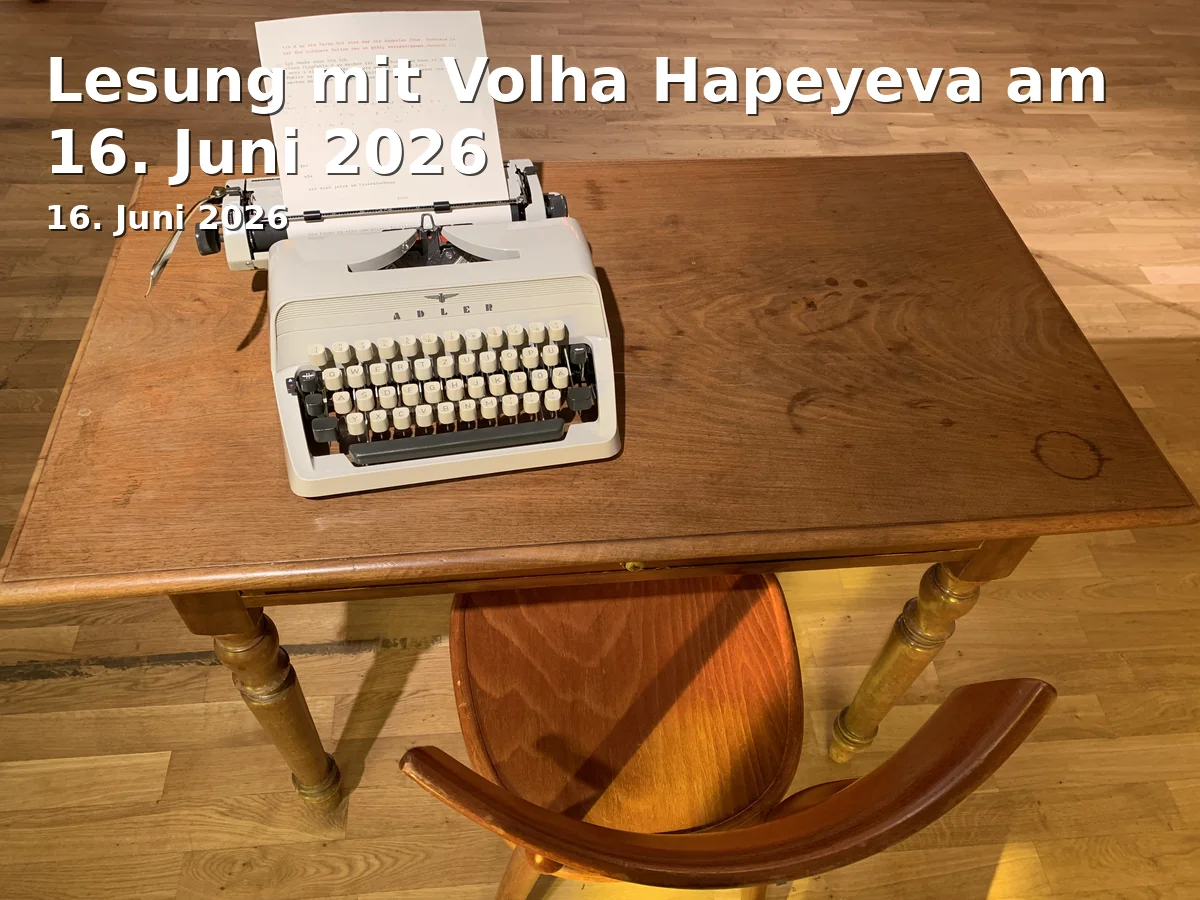
Reading with Volha Hapeyeva on June 16, 2026
On June 16, 2026, Volha Hapeyeva will read in Aalen from her new work. An unforgettable evening for literature fans!
Endangered Authors Read: Volha Hapeyeva / Belarus
An evening for language lovers: Volha Hapeyeva reads in Aalen from Dictionary of a Nomad. Exile, identity, and great poetic clarity. #Literature
Endangered Authors Reading: Volha Hapeyeva
An evening for all who love poetry as resistance and insight: Volha Hapeyeva reads in Aalen from Dictionary of a Nomad. June 16, 2026, 19:30, 16 Euros. #Literature
Volha Hapeyeva reads in Aalen from Dictionary of a Nomad
An evening full of linguistic art and exile experience in Aalen: Volha Hapeyeva reads from Dictionary of a Nomad. June 16, 2026, 7:30 PM, 16 euros. Secure your spot now. #Literature