
Sasha Waltz
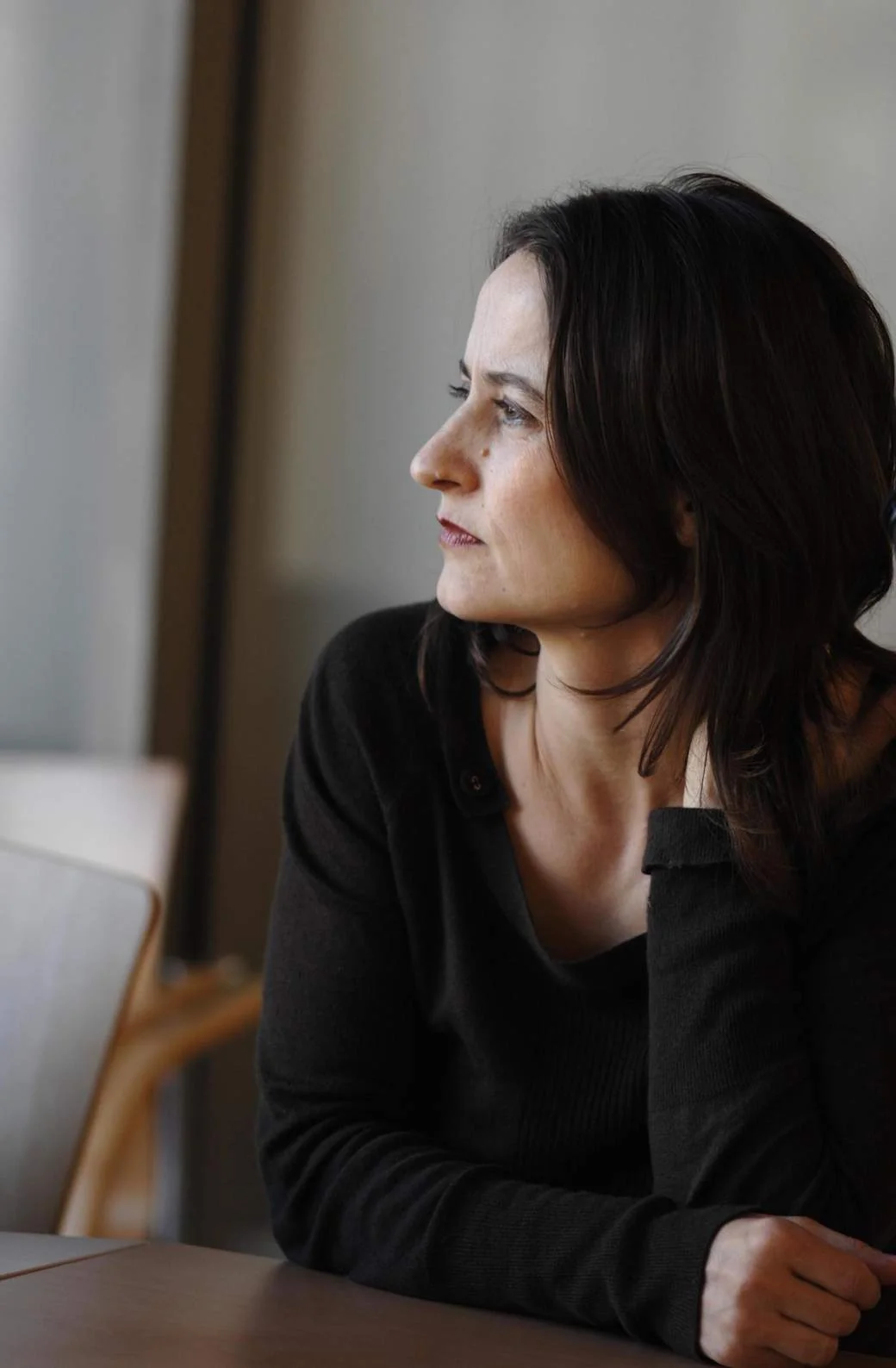
Image from Wikipedia
Image from Wikipedia
Sasha Waltz – Dance, Music, and a Radical Art of Connection
One of Europe's Most Influential Choreographers Bridging Stage, Music, and Space
Sasha Waltz, born on March 8, 1963, in Karlsruhe as Alexandra Waltz, is one of the most influential voices in contemporary dance in Germany and Europe. Her artistic career intertwines choreography, dance, opera direction, and work at the intersection of music, architecture, and social space. Since the early 1990s, she has shaped her distinctive style with Sasha Waltz & Guests, intertwining physical precision, performative openness, and musical thinking. ([de.wikipedia.org](https://de.wikipedia.org/wiki/Sasha_Waltz?utm_source=openai))
Biography: From Free Training to a Unique Artistic Language
After her training in Amsterdam and New York, Sasha Waltz initially collaborated with artists such as Pooh Kaye, Yoshiko Chuma, Lisa Kraus, Tristan Honsinger, Frans Poelstra, Mark Tompkins, and David Zambrano. These early years shaped her perspective on collective processes, improvisation, and interdisciplinary collaboration. In the 1980s, she created her first choreographies like Das Meer in mir, Goldstaub, How come we go, Schwarze Sirene, and Rifle, which hinted at the fundamental tone of her later works: movement as a form of thought, and the body as archived experience. ([de.wikipedia.org](https://de.wikipedia.org/wiki/Sasha_Waltz?utm_source=openai))
In 1992, she received a scholarship at Künstlerhaus Bethanien in Berlin. In this environment, she developed the Dialoge projects with dancers and musicians, which became a trademark of her later work. The breakthrough came in 1993 with Twenty to Eight; following the premiere, she co-founded the Compagnie Sasha Waltz & Guests with Jochen Sandig. This decision led to an international platform for dance, music theater, and experimental performance, which has continuously grown over the decades. ([de.wikipedia.org](https://de.wikipedia.org/wiki/Sasha_Waltz?utm_source=openai))
Career: A Compagnie as a Laboratory for Contemporary Culture
Sasha Waltz & Guests was founded in 1993 and quickly evolved into a highly sought-after international ensemble. Since its inception, the company has performed at over 300 international venues and festivals in more than 50 countries and 180 cities. Waltz’s career is not marked by a linear sequence of premieres but rather by an ongoing laboratory: revivals, transmissions to new generations of dancers, and the opening of choreography into social and architectural spaces are among her essential strategies. ([sashawaltz.de](https://www.sashawaltz.de/de/compagnie?utm_source=openai))
Some of her defining works include Travelogue I – Twenty to Eight, Allee der Kosmonauten, Zweiland, Na Zemlje, Körper, noBody, insideout, and Kreatur. Many of these pieces have been developed or presented in museums, concert halls, and unusual urban spaces, including the Neues Museum Berlin, MAXXI in Rome, Radialsystem, Elbphilharmonie, and Sophiensæle. Waltz is interested not only in the stage space but in places as carriers of memory, publicness, and perception. ([de.wikipedia.org](https://de.wikipedia.org/wiki/Sasha_Waltz?utm_source=openai))
Musical Development: Choreography as a Dialogue with Composition
A central driving force of her artistic development is music. Sasha Waltz does not treat music as mere accompaniment, but as a structural partner of choreography. This is particularly evident in works such as Dido & Aeneas, Figure Humaine, Beethoven 7, SYM-PHONIE MMXX, and In C, where singing, instrumental sound, and movement merge into a dense, scenic composition. Her approach remains both analytical and poetic: she reads scores as social spaces and translates musical tension into physical dramaturgy. ([sashawaltz.de](https://www.sashawaltz.de/en/mediathek?utm_source=openai))
This principle becomes especially visible in In C, which is based on Terry Riley's minimal music classic. From the open structure of the composition, Sasha Waltz, together with the dancers, developed a choreographic system of 53 figures that connects collective freedom, individual variation, and group dynamics. This work exemplifies her artistic development: she conceptualizes dance as a form of structured improvisation and as a model for democratic negotiation. ([sashawaltz.de](https://www.sashawaltz.de/en/h9432waoxr?utm_source=openai))
Current Projects and Publications: New Works, Tours, and Awards
In 2025 and 2026, Sasha Waltz & Guests will remain very active. The official website announces revivals of Travelogue I – Twenty to Eight, current performances of Beethoven 7 and In C, the project for the time being, as well as a special evening celebrating the 75th anniversary of the Goethe-Institut. Additionally, the company received attention for a new book detailing her complete works, which has been available since September 17, 2025. This presence demonstrates how consistently Waltz develops her oeuvre while adapting it to new contexts. ([sashawaltz.de](https://sashawaltz.de/))
Recent awards include the German Dance Prize 2024, which Sasha Waltz officially confirmed, as well as the Helmut Schmidt Future Prize 2025. In 2021, she was already awarded the Commandeur des Arts et Lettres by the French Ministry of Culture. Such honors not only underscore her international authority but also the cultural significance of her work at the intersection of art, public life, and education. ([berlinerfestspiele.de](https://www.berlinerfestspiele.de/en/artist/c779202b-66f1-49d5-939a-9df71fff712a/Sasha-Waltz?utm_source=openai))
Discography and Reception: Works, Classics, and Culturally Defining Recognition
In a narrower sense, Sasha Waltz does not have a traditional discography, but her body of work is closely linked to central choreographic “classics” that remain ever-present in music and dance criticism. Travelogue I – Twenty to Eight established her international reputation, Allee der Kosmonauten and Körper solidified it, and Dido & Aeneas opened her work to opera as a choreographic form. The press often describes her works as powerful intersections of music, space, and social observation, while her company is regarded as a reference point of contemporary dance at venues like Elbphilharmonie, in museums, and at festivals. ([sashawaltz.de](https://www.sashawaltz.de/en/gjbpr7p82w?utm_source=openai))
The cultural significance of her work is also reflected in the breadth of collaborations: Sasha Waltz collaborates with composers, orchestras, opera houses, museums, and interdisciplinary partners. Her productions are revived worldwide, transferred to new ensembles, and carried forward in the form of films, documentaries, and digital formats. This makes her an artist whose influence extends far beyond dance and continually reshapes the boundaries between choreography, music theater, and institutional art production. ([sashawaltz.de](https://www.sashawaltz.de/en/mediathek?utm_source=openai))
Style and Cultural Influence: When Dance Becomes a Space for Thought
The style of Sasha Waltz is characterized by clarity and intensity. Her choreographies engage with group dynamics, eruptive image shifts, precise body lines, and a clear attention to architectural situations. Instead of mere illustrations, spaces for contemplation emerge where music, movement, and societal themes reflect each other. Especially in works like Figure Humaine, Beethoven 7, or In C, it becomes evident how consistently she connects aesthetic form with political and social resonance. ([sashawaltz.de](https://www.sashawaltz.de/en/gjbpr7p82w?utm_source=openai))
Her cultural influence is also evident in her mediation efforts: Sasha Waltz & Guests develops education and community formats, engages young people in artistic processes, and views dance as public knowledge. The company operates as a network of production, research, and performance, thereby reaching not only a dance audience but also music lovers, opera visitors, and an art-interested urban public. This creates an artistic practice that resonates widely in the present. ([sashawaltz.de](https://www.sashawaltz.de/gwtz3tdo3e?utm_source=openai))
Conclusion: An Artist for the Present and Future
Sasha Waltz is exciting because she does not place dance, music, and space side by side but condenses them into a shared artistic language. Her work combines historical depth with formal presentness, improvisation with structure, and sensuality with intellectual sharpness. Anyone wanting to experience contemporary dance as a vibrant art form will find in her productions an uncompromising, inspiring, and visually striking experience. A live encounter with Sasha Waltz & Guests is one of the most compelling experiences currently offered in European stage art. ([sashawaltz.de](https://www.sashawaltz.de/de/compagnie?utm_source=openai))
Official Channels of Sasha Waltz:
- Instagram: https://www.instagram.com/sashawaltzandguests
- Facebook: https://www.facebook.com/sashawaltzandguests
- YouTube: https://www.youtube.com/@SashaWaltzGuests
- Spotify: No official profile found
- TikTok: No official profile found