
Paolo Sorrentino
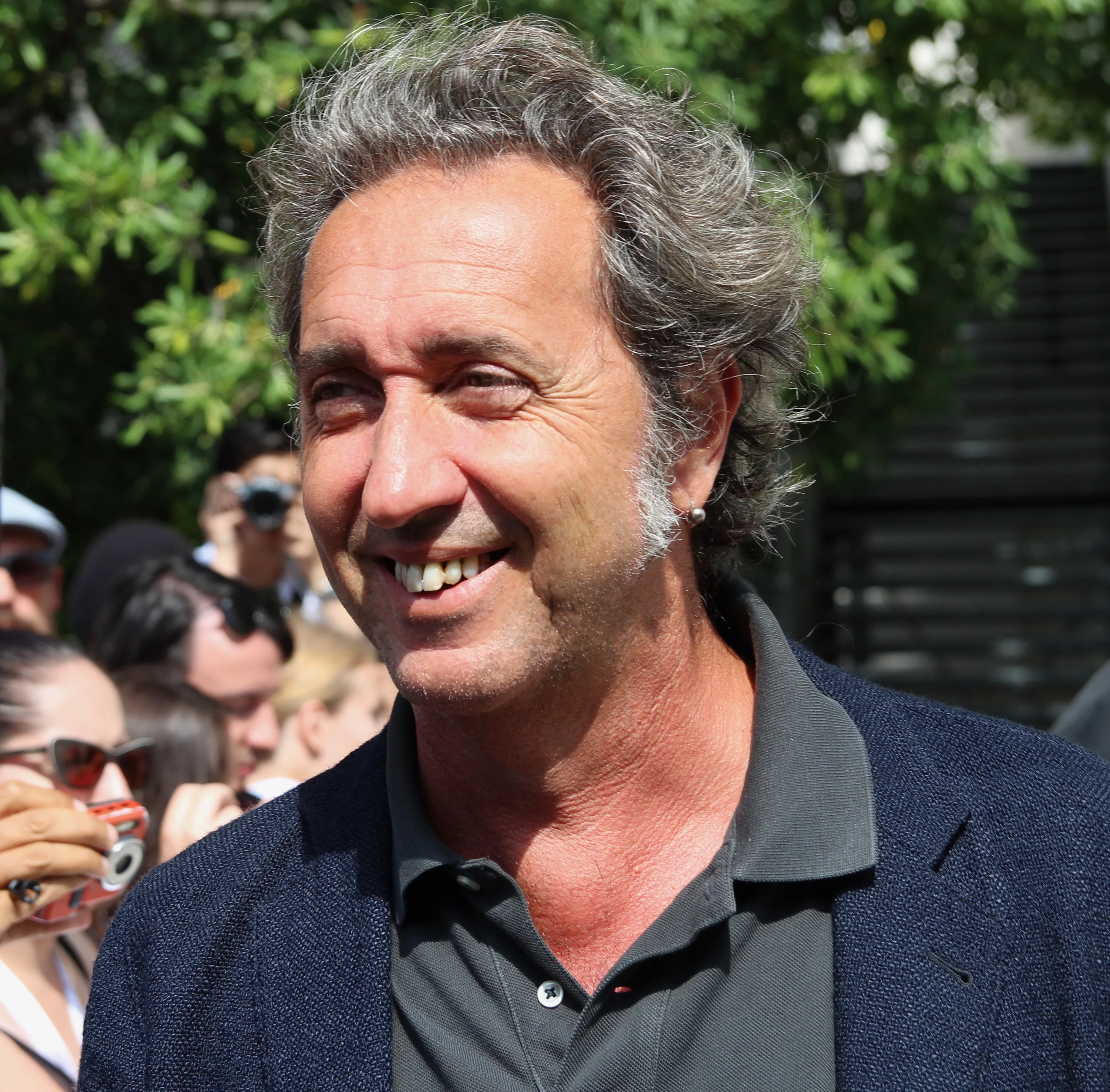
Image from Wikipedia
Image from Wikipedia
Paolo Sorrentino: Great Cinema Between Melancholy, Style, and Italian Modernity
An Exceptional Director from Naples Who Translates the Present into Images of Rare Beauty
Paolo Sorrentino, born on May 31, 1970, in Naples, is one of the most prominent auteurs of Italian cinema. As a screenwriter, film director, and writer, he has shaped a distinctive artistic signature since the 1990s, combining visual opulence, existential melancholy, and precise character studies. While he does not have a music career, his films operate with an almost musical dramaturgy: rhythm, variation, crescendo, and silence dictate his stage presence on screen. ([en.wikipedia.org](https://en.wikipedia.org/wiki/Paolo_Sorrentino))
Biography: Naples, Loss, and the Early Formation of a Writer
Sorrentino grew up in the neighborhoods of Arenella and Vomero and studied economics at the University of Naples Federico II but dropped out. A deep autobiographical rupture marked his early life: at the age of 16, he lost both parents in a carbon monoxide accident at their vacation home in Roccaraso. This experience is one of the key motifs of his work, which repeatedly tells of loss, memory, family, and the attempt to shape beauty from pain. ([en.wikipedia.org](https://en.wikipedia.org/wiki/Paolo_Sorrentino))
The director is married to journalist Daniela D’Antonio and has two children. His connection to Naples remains central in his personal life as well, since the city is not only his origin but also an aesthetic resonance space for his entire oeuvre. Sorrentino himself has referred to himself as a nonbeliever in relation to the Vatican, which does not diminish his films' immersion in Catholic symbolism, power presentation, and spiritual emptiness. ([en.wikipedia.org](https://en.wikipedia.org/wiki/Paolo_Sorrentino))
The Breakthrough: From Debut to International Authority
His first film as a screenwriter was The Dust of Naples in 1998, shortly followed by short films and documentary projects. The feature film debut One Man Up was released in 2001 and earned him the Nastro d’Argento for best emerging director. Even here, the signature of a filmmaker is evident, who does not simply accompany characters but builds psychological spaces with compositional rigor. ([en.wikipedia.org](https://en.wikipedia.org/wiki/Paolo_Sorrentino))
He achieved international recognition in 2004 with The Consequences of Love, a dark thriller about loneliness, power, and mafia entanglements. The film competed at Cannes and marked Sorrentino's ascent into the circle of style-defining European auteur filmmakers. With The Family Friend and Il Divo, he further solidified this reputation; the latter, a dramatized portrait of Giulio Andreotti, earned him the Prix du Jury at Cannes in 2008. ([en.wikipedia.org](https://en.wikipedia.org/wiki/Paolo_Sorrentino))
The Oscar Moment: The Great Beauty as the Pinnacle of Sorrentino's Cinema
With The Great Beauty, Sorrentino achieved the highest global resonance of his career in 2013. The film won the Oscar for Best Foreign Language Film, as well as the Golden Globe and the BAFTA Award; critics lauded it as an overwhelming, sensual portrait of Rome. Variety described it as a “densely packed, often astonishing cinematic feast,” showcasing the city in its grandeur and superficiality simultaneously. ([en.wikipedia.org](https://en.wikipedia.org/wiki/Paolo_Sorrentino))
This work crystallizes Sorrentino's approach: baroque imagery, elegant camera movements, sharp dialogues, and a sensitivity to cultural decadence. The result is not a classic plot film, but an audiovisual essay film that stages beauty as a fleeting, yet painful experience. The accolades at Cannes, the European Film Awards, and on the international award stage ultimately established him as an authority in contemporary cinema. ([en.wikipedia.org](https://en.wikipedia.org/wiki/Paolo_Sorrentino))
Musicality in Cinema: Rhythm, Song Choice, and Cinematic Composition
Although Sorrentino is not a musician, his films work with a pronounced sense of musical dramaturgy. His filmography repeatedly features collaborations and references to songwriters like Antonello Venditti, Paloma Faith, and Mark Kozelek. This demonstrates how strongly he perceives music as narrative material: not merely as accompaniment but as a structural element for montage, atmosphere, and emotional pacing. ([en.wikipedia.org](https://en.wikipedia.org/wiki/Paolo_Sorrentino))
This attitude is particularly evident in This Must Be the Place, his English-language debut, which centers on an aging rock star. Youth also unfolds its effect like an orchestrated chamber play about transience, memory, and artistic dignity. Kenneth Turan wrote in NPR that the film is a meditation on the wonders and complications of life—a description that precisely captures Sorrentino's own signature. ([en.wikipedia.org](https://en.wikipedia.org/wiki/Paolo_Sorrentino))
Television and the Present: Power, Religion, and New Narrative Spaces
With the HBO series The Young Pope, Sorrentino opened his cinema to the series format, proving that his imagery also works in episodic form. The sequel The New Pope continued this blend of baroque staging, irony, and theological sharpening. In both works, he combines power aesthetics with a cool, highly artificial compositional style that oscillates between opera, satire, and faith drama. ([en.wikipedia.org](https://en.wikipedia.org/wiki/Paolo_Sorrentino))
In recent years, Sorrentino has remained productive and visible. The Hand of God, released in 2021, is considered his most personal work, strongly autobiographical and again set in Naples. In 2024, Parthenope followed, another "love letter" project to the city, and in 2025 came La grazia, a drama about a fictional Italian president at the end of his term, starring Toni Servillo. Additionally, Sorrentino was honored at the Sarajevo Film Festival in 2025, underscoring his lasting international significance. ([en.wikipedia.org](https://en.wikipedia.org/wiki/Paolo_Sorrentino))
Discography in a Broader Sense: Filmography, Books, and Critical Reception
To speak of "discography" in relation to Sorrentino must be understood in a broader sense: his body of work is a precisely curated sequence of films, series, and literary contributions. His filmography includes titles such as One Man Up, The Consequences of Love, The Family Friend, Il Divo, This Must Be the Place, The Great Beauty, Youth, Loro, The Hand of God, Parthenope, and La grazia. In addition, there are three books as well as short films and documentary works that illustrate his versatility as an author. ([en.wikipedia.org](https://en.wikipedia.org/wiki/Paolo_Sorrentino))
The critical reception shows a remarkable tension between euphoria and skepticism. The Great Beauty and The Hand of God received very strong ratings, while Parthenope received mixed reviews. This polarity is exactly part of Sorrentino's profile: he provokes admiration for form, style, and visual architecture, but also debates about pathos, overwhelm, and aesthetic self-assertion. ([en.wikipedia.org](https://en.wikipedia.org/wiki/Paolo_Sorrentino))
Cultural Influence: Naples as Myth, Europe as Stage
Sorrentino has long since become more than an Italian successful director. He belongs to that generation of film authors who translate national culture into an international visual language without smoothing out their origins. Naples never appears in his work as a postcard but as a mythological zone of memory, decay, humor, and longing—a place where the private and the historical spill into each other. ([en.wikipedia.org](https://en.wikipedia.org/wiki/Paolo_Sorrentino))
His work is often compared to that of Federico Fellini and Michelangelo Antonioni, and therein lies his cultural relevance: he continues the tradition of European author cinema but in a present marked by media, politics, and self-presentation. The numerous awards at Cannes, Venice, the Oscars, the BAFTA Awards, and the European Film Awards not only confirm success but also authority. Sorrentino has created a distinct style that makes Italian contemporary culture visible in global cinema. ([en.wikipedia.org](https://en.wikipedia.org/wiki/Paolo_Sorrentino))
Conclusion: Paolo Sorrentino remains compelling because he thinks of cinema as an art of perception. His films connect intellect, emotion, and visual ecstasy into a signature that is immediately recognizable. Anyone who loves great auteur cinema should not only watch Sorrentino but experience the full range of his images, themes, and tones. ([en.wikipedia.org](https://en.wikipedia.org/wiki/Paolo_Sorrentino))
Official Channels of Paolo Sorrentino:
- Instagram: https://www.instagram.com/paolosorrentino_real/
- Facebook: No official profile found
- YouTube: No official profile found
- Spotify: No official profile found
- TikTok: No official profile found
Sources:
- Wikipedia – Paolo Sorrentino
- Wikipedia (EN) – Paolo Sorrentino
- Variety – Review/Context for The Great Beauty
- NPR – Review of Youth
- la Repubblica – Instagram Reference and Context for Sorrentino
- Sky TG24 – Paolo Sorrentino and Instagram
- Festival de Cannes – Official Festival Pages and Awards
- ElCinema – Paolo Sorrentino
- Instagram – paolosorrentino_real