
Leopoldo Retti
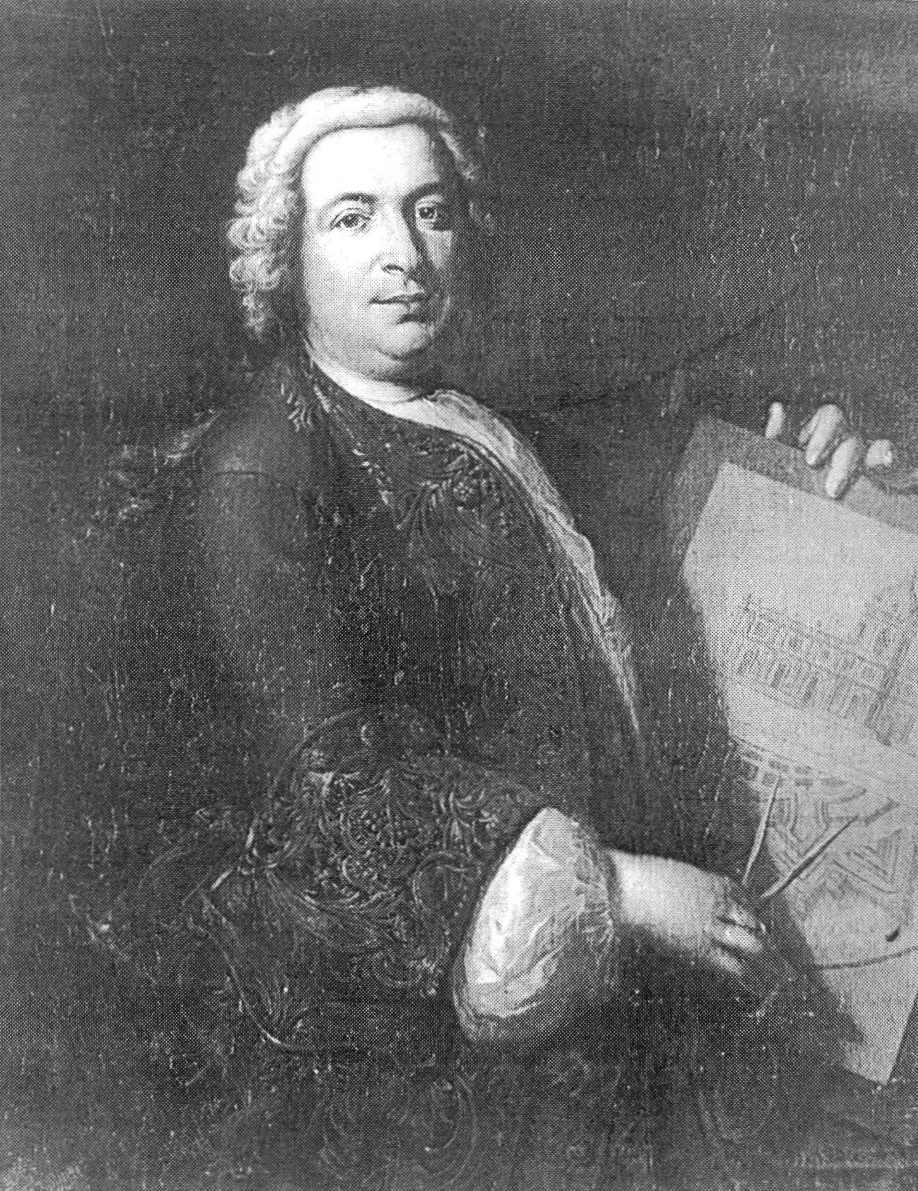
Image from Wikipedia
Image from Wikipedia
Leopoldo Retti – The Baroque Master Who Shaped the Residences of Southern Germany
A Master of Southern German Baroque Between Ludwigsburg, Ansbach, and Stuttgart
Leopoldo Matteo Retti, also known as Leopold Retty, is one of the defining architects of Southern German Baroque. Born in 1704 in Laino and died on September 18, 1751, in Stuttgart, he left behind a portfolio of buildings that still ranks among the most significant residential and urban complexes in Southern Germany. His career combined court representation, urban planning, and architectural elegance at the highest level. ([de.wikipedia.org](https://de.wikipedia.org/wiki/Leopoldo_Retti))
Background and Early Training
Retti came from an artistic family that introduced him early to a world of stucco, painting, and architecture. His father, Lorenzo Mattia Retti, was a stucco worker, his brothers worked as stucco artisans, painters, and contractors, and his uncle, Donato Giuseppe Frisoni, was also a key figure in court architecture in Württemberg. In 1717, Retti moved to Ludwigsburg with his brothers, where he received a fundamental training in architecture; this training is said to have included a stay in Paris that deepened his connection to French architectural culture. ([de.wikipedia.org](https://de.wikipedia.org/wiki/Leopoldo_Retti))
Especially significant for Retti's artistic development was his early involvement in the grand court building projects of the Duke of Württemberg. The combination of his family’s craft talent, practical site experience, and international influence made him an architect who not only mastered the representative vocabulary of the Baroque but also developed it with confidence. The initial stages of his career already demonstrate an exceptionally close interplay of education, networking, and political assignment. ([schloesserblog.bayern.de](https://schloesserblog.bayern.de/geheimnisse/leopoldo-retti-und-donato-giuseppe-frisoni-neue-erkenntnisse-zur-ausbildung-des-architekten-der-ansbacher-residenz))
The Breakthrough in Ludwigsburg
In 1726, the Duke of Württemberg entrusted the young Retti with the entire construction activity in the new town of Ludwigsburg. This marked the beginning of his actual public career as Chief Architect and Engineer Lieutenant in Württemberg service. For the expansion of the residence city, he received a fixed annual salary, and his large-format drawing of Ludwigsburg Palace is regarded as the first documented evidence of his artistic activity. ([de.wikipedia.org](https://de.wikipedia.org/wiki/Leopoldo_Retti))
In Ludwigsburg, Retti worked on an urban idea that went far beyond individual buildings. He was not merely a designer of facades, but a co-creator of a cohesive court complex where spatial arrangement, axis alignment, and representation converged. This early phase already shows what distinguished Retti: a sensitivity to architecture as a political statement and an expression of dynastic power. ([retti-verein.de](https://www.retti-verein.de/forschung/leopoldo-retti/))
Ansbach: Court Architect, Urban Planner, and Designer of an Entire Ensemble
In 1731, Retti received the call to Ansbach, where he served as Engineering Captain and later as the Margrave’s Chief Architect for over two decades, significantly shaping the face of the residence city. His most important works include the Ansbach Residence, the City Palace, the Synagogue, the conversion of St. Gumbertus into the Court Church, and the design of entire streets around the Karlsplatz and the Neue Auslage. ([retti-verein.de](https://www.retti-verein.de/forschung/leopoldo-retti/))
In Ansbach, Retti's artistic authority is fully evident. He skillfully integrated court architecture, civilian urban structure, and ecclesiastical construction tasks into a harmonious Baroque fabric. His integration of additional artists from his circle, including stucco workers, marble workers, and sculptors, illustrates his ability to lead complex construction projects as a coordinating figure. His own residence, the Retti Palace, exemplifies this mix of representation, domestic culture, and urban presence. ([retti-verein.de](https://www.retti-verein.de/forschung/leopoldo-retti/))
Stuttgart and the New Palace as Late Work
In Stuttgart, Retti was awarded the general planning for the New Palace in 1745, one of the most ambitious residential projects of the Württemberg court. The palace was planned from 1746 onward and marks Retti's late work, in which his experience with court architecture, French-influenced form language, and monumental representation culminated. His work on this building makes him a key figure in Württemberg’s 18th-century representative architecture. ([de.wikipedia.org](https://de.wikipedia.org/wiki/Leopoldo_Retti))
The New Palace Stuttgart simultaneously represents the political dimension of architecture. It was intended to redefine the residence of the court and to visibly demonstrate the Baroque claims of a dynasty that staged its power through architecture. Retti provided not only a design but also an architectural program that intertwined scale, urban imagery, and court culture. Until his death in 1751, Stuttgart remained the place where his final grand vision was concentrated. ([de.wikipedia.org](https://de.wikipedia.org/wiki/Leopoldo_Retti))
Architectural Style and Artistic Signature
Retti's style belongs to the Southern German Baroque but exhibits a notable closeness to French models, particularly in courtly and palatial contexts. Sources refer to a stay in Paris and his familiarity with French architecture, which is reflected in the design of his portals, the axes of representation, and the strict urban planning order. His architecture combines grandeur with functional planning while always remaining oriented towards the stage of the residence. ([schloesserblog.bayern.de](https://schloesserblog.bayern.de/geheimnisse/leopoldo-retti-und-donato-giuseppe-frisoni-neue-erkenntnisse-zur-ausbildung-des-architekten-der-ansbacher-residenz))
Especially remarkable is Retti's ability to conceive large construction tasks as an ensemble. Residences, churches, city gates, and palaces appear not as isolated objects but as parts of an architectural dramaturgy. This way of thinking makes him a master builder whose work remains relevant not only art-historically but also in terms of urban planning. The combination of elegance, order, and courtly symbolism continues to shape his oeuvre sustainably. ([retti-verein.de](https://www.retti-verein.de/forschung/leopoldo-retti/))
Impact, Cultural Heritage, and Historical Significance
Retti's cultural influence extends far beyond individual famous buildings. In Ansbach, Ludwigsburg, Stuttgart, and other locations, he left not only distinctive structures but entire urban spaces that make the character of an era visible. His work on the synagogue, court church, residence, and city palace also showcases the breadth of an architect who transitioned confidently between religious, courtly, and civilian architecture. ([retti-verein.de](https://www.retti-verein.de/forschung/leopoldo-retti/))
To this day, his life’s work is honored through research, monument preservation, and regional cultural memory. The Retti e. V. association based in Ansbach is dedicated to this task; additionally, streets in Ansbach, Nürnberg-Mögeldorf, and Stuttgart bear his name. This visibility in public space demonstrates that Retti's work is firmly anchored not only in academic circles but also in the cultural memory of Southern Germany. ([de.wikipedia.org](https://de.wikipedia.org/wiki/Leopoldo_Retti))
Current Reception and Anniversary Projects
Even in 2026, Leopoldo Retti remains a topic of vibrant cultural work. On the occasion of the 275th anniversary of his death, a comprehensive anniversary program titled “RETTI275” is being organized in Ansbach, featuring exhibitions, lectures, guided tours, film screenings, performances, and art projects. Planned events include the film premiere “Retti-Palais: Rebirth of a Baroque Jewel,” a special exhibition on the festivity hall of the Ansbach Residence, and further educational formats at historical sites. ([urlaub-und-reise-news.de](https://www.urlaub-und-reise-news.de/reisenews/retti275-vielfaeltiges-jubilaeumsprogramm-in-ansbach-24869))
This current reception underscores how strongly Retti's architecture continues to act as a cultural reference point. His buildings serve not only as a reminder but also as a stage for new forms of mediation between history and the present. This creates an enduring tension in his legacy: Retti remains relevant because his architecture has not become museum-like and continues to shape the city to this day. ([urlaub-und-reise-news.de](https://www.urlaub-und-reise-news.de/reisenews/retti275-vielfaeltiges-jubilaeumsprogramm-in-ansbach-24869))
Conclusion: Why Leopoldo Retti Continues to Fascinate Today
Leopoldo Retti is one of the great designers of Southern German Baroque because he understood architecture as a total work of art. His career took him from an artist family through Ludwigsburg and Ansbach to the New Palace in Stuttgart, with each station showcasing more maturity, more confidence, and more artistic authority. Those who view his works encounter not only magnificent facades but the vision of a master builder who translated residence, city, and power into a single architectural image. A visit to his buildings is worthwhile to this day, as Retti's work not only documents the Baroque but also brings it to life. ([retti-verein.de](https://www.retti-verein.de/forschung/leopoldo-retti/))
Official Channels of Leopoldo Retti:
- Instagram: No official profile found
- Facebook: No official profile found
- YouTube: No official profile found
- Spotify: No official profile found
- TikTok: No official profile found
Sources:
- Retti e. V. – Leopoldo Retti: Life, Major Works, and Palace
- Blog of the Bavarian Palace Administration – Leopoldo Retti and Donato Giuseppe Frisoni
- Wikipedia – Leopoldo Retti
- Heidelberg University Publishing – Prince's Arcadia
- Travel and Holiday News – RETTI275: Diverse Anniversary Program in Ansbach
- Wikipedia – New Palace Stuttgart
- Wikipedia: Image and text source
Upcoming Events
Special Exhibition: How the Sky Came to the Ceiling
Special Exhibition: How the Sky Came to the Ceiling
City Tour: In the Footsteps of Leopoldo Retti