
Blaustein
Lautern 10, 89134 Blaustein-Wippingen, Deutschland
To Our Beloved Lady | History & Photos
To Our Beloved Lady in Lautern is one of those churches that seem calm and reserved at first glance, and for that reason, they leave a deep impression. In the small Lautertal near Blaustein, the house of worship stands in a village that has preserved its special location, historical character, and strong local image. The church is located at Lautern 10 and today belongs to the Protestant parish of Asch-Sonderbuch-Wippingen-Lautern. With 100 seats and additional seating for a total of 150 people, it is manageable, personal, and large enough for concerts, baptisms, weddings, and special moments in community life. Those looking for photos, history, or practical information will find not only a beautiful church building here but also a true piece of regional identity. The city of Blaustein describes Lautern itself as a popular place in the small Lautertal, and the parish also emphasizes the special location, historical depth, and use for services and summer evenings. This very mix is what makes To Our Beloved Lady appealing: a historical building that does not feel like a museum but remains a vibrant place of encounter. ([asch-sonderbuch-wippingen-evangelisch.de](https://www.asch-sonderbuch-wippingen-evangelisch.de/kirchen-und-raeume/lautern))
Photos and First Impressions of To Our Beloved Lady
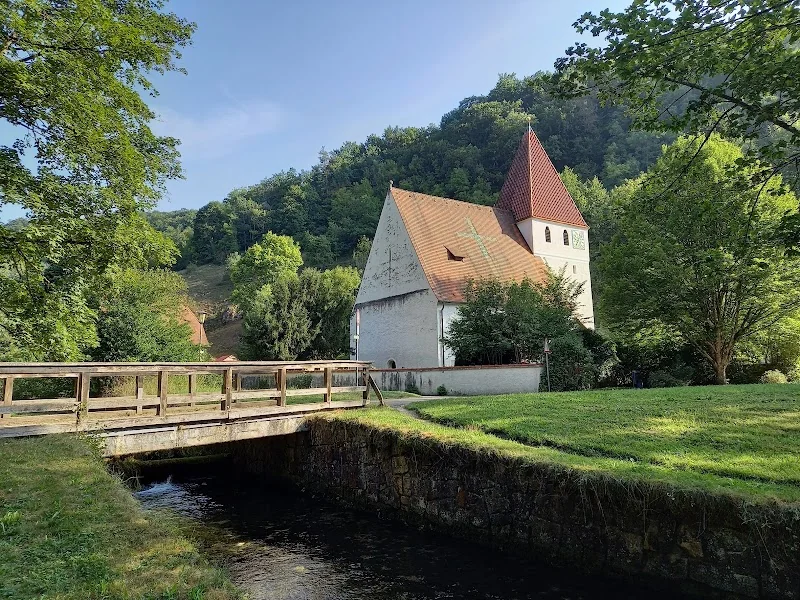
Those searching for photos of To Our Beloved Lady usually want to know how the church feels before delving into data and dates. The first impression is shaped by the location in the small Lautertal, the calm village image, and the harmonious interplay of church, surrounding buildings, and historical atmosphere. The church stands slightly in the historical center of Lautern and forms a notable ensemble with the half-timbered house next door and the churchyard wall due to its cohesion. The official presentation of the parish emphasizes that the half-timbered house directly next to the church was once the summer house of the Maucler family and that the church, house, and wall create an incomparable overall picture. The city of Blaustein describes Lautern as a tranquil place with tourist appeal and highlights that the church is one of the defining features of the village. This is particularly important for visitors who arrive through search terms like photos, impression, or location: To Our Beloved Lady is not an isolated monument but part of a developed village core. The building itself appears deliberately simple yet powerful. The church is located in the small Lautertal, a landscape characterized by tranquility, nature, and short distances. This creates an image that many associate with a quiet, almost meditative church visit. Those photographing the church will find motifs in the historical facade, in the interplay with neighboring buildings, near the Lauter, and in the atmosphere of the village. The summer months additionally bring life to the scene, as the church is open during the day, allowing visitors to enter spontaneously. Thus, aesthetics, history, and everyday life come together in a very natural way at To Our Beloved Lady. ([asch-sonderbuch-wippingen-evangelisch.de](https://www.asch-sonderbuch-wippingen-evangelisch.de/kirchen-und-raeume/lautern))
The History of the Church in Lautern
The history of To Our Beloved Lady stretches far back and is one of the most fascinating aspects of this church. The city of Blaustein cites a construction date for Lautern before 1225 and a Romanesque origin. The parish also states that a possible first church building can be dated back to the Carolingian period, around the 9th century. The church was first mentioned in a document in 1219, making it one of the early church buildings on the Swabian Jura. The history of the place Lautern is closely linked to this church, as the village consisted for centuries of only a few defining buildings such as the church, the rectory, and the sacristan's house, a few mills, and a tavern. This concentration on the essentials makes the historical profile so strong. The official description also tells that the spring pot in present-day Lautern was once the starting point of a pagan cult site and that a Christian sanctuary was deliberately intended to emerge at this very place. Such continuities are rarely tangible and give the place a special spiritual depth. In the 16th century, the Reformation set new accents: In 1570, the first Protestant pastor was appointed in Lautern, and the parochial rights gradually passed to Wippingen. In 1817, the rectory was privatized. Today, Lautern belongs to the parish of Asch-Sonderbuch-Wippingen-Lautern and is described as a place of significance for baptism, marriage, burial, and quiet reflection alike. For visitors, this means: The church is not only old but historically multifaceted. It tells of early times, Romanesque architecture, the Reformation, and regional village history in a single building. These layers make it a place that one does not just look at but can read in the best sense. ([asch-sonderbuch-wippingen-evangelisch.de](https://www.asch-sonderbuch-wippingen-evangelisch.de/kirchen-und-raeume/lautern))
Furnishings, Altar, and Organ
Inside To Our Beloved Lady, the full value of a building that has been gently developed over many centuries is revealed. Particularly impressive is the late Gothic wing altar of the Ulm school from 1509, which, according to the parish, is a gem of the interior. It was restored in 1970/71 and continues to shape the liturgical center of the church today. In addition, remnants of medieval and post-medieval frescoes can be seen on the walls, further filling the space with historical depth. The church thus preserves not only an altar but a whole pictorial program that appeals to visitors on different levels. The baptismal font is also noteworthy, as it was designed in 1973 by Lothar Würker and donated by Pastor Carl Tempel. This makes it clear that the church has not remained stagnant in a single period but has developed over generations. According to the official description, the church has 100 seats and with additional seating 150. This is important for everyday use as well as for holidays and concerts. Upon entering the space, one experiences a church that is small enough for an intimate atmosphere but still offers enough room for festive occasions. The combination of a simple building structure and valuable furnishings is also characteristic: the external impression remains subdued, while art-historical details shine inside. This makes To Our Beloved Lady a worthwhile destination, especially for those interested in photos, art, organs, or sacred furnishings. The organ itself is described on the official site as a new organ from 1950, which replaced an older one from 1844. Together with the altar and the frescoes, a picture of continuity and renewal emerges that makes the history of this church space very visible. ([asch-sonderbuch-wippingen-evangelisch.de](https://www.asch-sonderbuch-wippingen-evangelisch.de/kirchen-und-raeume/lautern))
Summer Evenings, Services, and Cultural Use
To Our Beloved Lady is not only a historical building but a vibrant event venue. The most well-known series are the Summer Evenings Lautern, which take place in the picturesque setting of the church and offer a diverse program on up to ten evenings in June and July. The official website of the event series emphasizes that singing, words, and especially instrumental contributions aim to take the audience into the world of music. The series is free of charge, is entirely organized by volunteers, and sees itself as an open cultural offering for all. This is crucial for the significance of the church: historical atmosphere and contemporary culture are not separated here but connected. The church thus serves as a space for classical music, regional ensembles, musical discoveries, and quiet, special summer evenings. The parish also describes that the church is usually open during the day in the summer months. This also makes it accessible outside of fixed events. Additionally, the city of Blaustein names the church as a defining place of the district of Lautern and makes the event series visible as part of local life. For visitors, this means: those attending a concert do not experience a neutral hall but a sacred space with history and character. The event page states that admission is free and notes that there are no reservations, but entry begins 30 minutes before the concert starts. Another practical piece of information: the platform Culture in Ulm lists wheelchair access and parking in front of the church for the Summer Evenings Lautern. This makes the use not only culturally attractive but also practically organized. To Our Beloved Lady thus remains a place where faith, music, and village life naturally come together. This combination ensures that the church is perceived far beyond its religious function. ([sommerabende-lautern.de](https://www.sommerabende-lautern.de/))
Seating, Special Occasions, and Practical Information
Those considering To Our Beloved Lady for a special occasion will find very concrete information on usage and procedures on the official page. The church has 100 seats, with additional seating for 150, making it suitable for festive services, baptisms, weddings, and funerals in a small to medium framework. The parish pastor of the Protestant parish of Asch-Sonderbuch-Wippingen is responsible for the church's official acts in Lautern, and the musical accompaniment is organized independently if needed. For outsiders, a usage fee of 250 euros is mentioned for baptisms, weddings, or funerals, which includes the sacristan service and cleaning. This information is especially important for people who are not just coming as tourists but want to use the church for a family occasion or a spiritual celebration. The listed heritage-protected character of the site also plays a role, as special regulations apply for funerals, and historical guidelines must be observed in the design of grave monuments. This is a clear indication that the church and cemetery are understood as a cohesive, protected space. At the same time, the official presentation conveys a very personal image: the church is not oversized but deliberately manageable. This creates closeness, especially during baptisms, weddings, or farewells. The place is thus not an anonymous event space but a spiritual space with clear order and open character. It is also practical that the church is accessible during the day in the summer months, according to the official page, and is described as wheelchair accessible for cultural evenings according to event information. Those wishing to inquire about seating, celebrations, opening hours, or contacts will find clear contact paths on the parish website through the Asch parish office. Thus, To Our Beloved Lady remains not only historically interesting but also reliably usable. ([asch-sonderbuch-wippingen-evangelisch.de](https://www.asch-sonderbuch-wippingen-evangelisch.de/kirchen-und-raeume/lautern))
Directions, Parking, and Location in the Small Lautertal
The location of To Our Beloved Lady is one of the strongest reasons why the church remains memorable. Lautern is situated in the small Lautertal, and the city of Blaustein describes the place as particularly popular with tourists. Those arriving experience a landscape that is not characterized by heavy traffic or urban hustle but by valleys, nature, and a clear village structure. The church itself is located at Lautern 10 in 89134 Blaustein, making it well positioned in the village. For the Summer Evenings Lautern, the event platform refers to parking directly in front of the church. This is very helpful information for visitors as it shows that access to the events is practically organized. Furthermore, the event location is described as wheelchair accessible according to the culture platform, which facilitates visits for different guest groups. The city of Blaustein emphasizes in its portrait that Lautern is traversed by the popular Lauterfelsensteig, a dream tour awarded by the German Hiking Association that offers beautiful views of the small Lautertal. So, those on foot can also experience the church as part of a scenically appealing route. Due to its location by the Lauter and proximity to historical paths, visiting the church is often associated with a walk or a small hike. This fits very well with the atmosphere of the place: To Our Beloved Lady is not an isolated destination but a goal in an environment that wants to be experienced slowly and attentively. For this reason, the impression on site is so strong. One arrives, parks directly in front of the church if needed, enters a space with centuries-old history, and immediately feels like they have arrived in a special section of the Lautertal. This mix of good accessibility, scenic quality, and historical depth makes the church attractive for guests, concert visitors, and quiet visitors alike. ([kultur-in-ulm.de](https://www.kultur-in-ulm.de/veranstalter/sommerabende-lautern/))
Sources:
Show moreShow less
To Our Beloved Lady | History & Photos
To Our Beloved Lady in Lautern is one of those churches that seem calm and reserved at first glance, and for that reason, they leave a deep impression. In the small Lautertal near Blaustein, the house of worship stands in a village that has preserved its special location, historical character, and strong local image. The church is located at Lautern 10 and today belongs to the Protestant parish of Asch-Sonderbuch-Wippingen-Lautern. With 100 seats and additional seating for a total of 150 people, it is manageable, personal, and large enough for concerts, baptisms, weddings, and special moments in community life. Those looking for photos, history, or practical information will find not only a beautiful church building here but also a true piece of regional identity. The city of Blaustein describes Lautern itself as a popular place in the small Lautertal, and the parish also emphasizes the special location, historical depth, and use for services and summer evenings. This very mix is what makes To Our Beloved Lady appealing: a historical building that does not feel like a museum but remains a vibrant place of encounter. ([asch-sonderbuch-wippingen-evangelisch.de](https://www.asch-sonderbuch-wippingen-evangelisch.de/kirchen-und-raeume/lautern))
Photos and First Impressions of To Our Beloved Lady
Those searching for photos of To Our Beloved Lady usually want to know how the church feels before delving into data and dates. The first impression is shaped by the location in the small Lautertal, the calm village image, and the harmonious interplay of church, surrounding buildings, and historical atmosphere. The church stands slightly in the historical center of Lautern and forms a notable ensemble with the half-timbered house next door and the churchyard wall due to its cohesion. The official presentation of the parish emphasizes that the half-timbered house directly next to the church was once the summer house of the Maucler family and that the church, house, and wall create an incomparable overall picture. The city of Blaustein describes Lautern as a tranquil place with tourist appeal and highlights that the church is one of the defining features of the village. This is particularly important for visitors who arrive through search terms like photos, impression, or location: To Our Beloved Lady is not an isolated monument but part of a developed village core. The building itself appears deliberately simple yet powerful. The church is located in the small Lautertal, a landscape characterized by tranquility, nature, and short distances. This creates an image that many associate with a quiet, almost meditative church visit. Those photographing the church will find motifs in the historical facade, in the interplay with neighboring buildings, near the Lauter, and in the atmosphere of the village. The summer months additionally bring life to the scene, as the church is open during the day, allowing visitors to enter spontaneously. Thus, aesthetics, history, and everyday life come together in a very natural way at To Our Beloved Lady. ([asch-sonderbuch-wippingen-evangelisch.de](https://www.asch-sonderbuch-wippingen-evangelisch.de/kirchen-und-raeume/lautern))
The History of the Church in Lautern
The history of To Our Beloved Lady stretches far back and is one of the most fascinating aspects of this church. The city of Blaustein cites a construction date for Lautern before 1225 and a Romanesque origin. The parish also states that a possible first church building can be dated back to the Carolingian period, around the 9th century. The church was first mentioned in a document in 1219, making it one of the early church buildings on the Swabian Jura. The history of the place Lautern is closely linked to this church, as the village consisted for centuries of only a few defining buildings such as the church, the rectory, and the sacristan's house, a few mills, and a tavern. This concentration on the essentials makes the historical profile so strong. The official description also tells that the spring pot in present-day Lautern was once the starting point of a pagan cult site and that a Christian sanctuary was deliberately intended to emerge at this very place. Such continuities are rarely tangible and give the place a special spiritual depth. In the 16th century, the Reformation set new accents: In 1570, the first Protestant pastor was appointed in Lautern, and the parochial rights gradually passed to Wippingen. In 1817, the rectory was privatized. Today, Lautern belongs to the parish of Asch-Sonderbuch-Wippingen-Lautern and is described as a place of significance for baptism, marriage, burial, and quiet reflection alike. For visitors, this means: The church is not only old but historically multifaceted. It tells of early times, Romanesque architecture, the Reformation, and regional village history in a single building. These layers make it a place that one does not just look at but can read in the best sense. ([asch-sonderbuch-wippingen-evangelisch.de](https://www.asch-sonderbuch-wippingen-evangelisch.de/kirchen-und-raeume/lautern))
Furnishings, Altar, and Organ
Inside To Our Beloved Lady, the full value of a building that has been gently developed over many centuries is revealed. Particularly impressive is the late Gothic wing altar of the Ulm school from 1509, which, according to the parish, is a gem of the interior. It was restored in 1970/71 and continues to shape the liturgical center of the church today. In addition, remnants of medieval and post-medieval frescoes can be seen on the walls, further filling the space with historical depth. The church thus preserves not only an altar but a whole pictorial program that appeals to visitors on different levels. The baptismal font is also noteworthy, as it was designed in 1973 by Lothar Würker and donated by Pastor Carl Tempel. This makes it clear that the church has not remained stagnant in a single period but has developed over generations. According to the official description, the church has 100 seats and with additional seating 150. This is important for everyday use as well as for holidays and concerts. Upon entering the space, one experiences a church that is small enough for an intimate atmosphere but still offers enough room for festive occasions. The combination of a simple building structure and valuable furnishings is also characteristic: the external impression remains subdued, while art-historical details shine inside. This makes To Our Beloved Lady a worthwhile destination, especially for those interested in photos, art, organs, or sacred furnishings. The organ itself is described on the official site as a new organ from 1950, which replaced an older one from 1844. Together with the altar and the frescoes, a picture of continuity and renewal emerges that makes the history of this church space very visible. ([asch-sonderbuch-wippingen-evangelisch.de](https://www.asch-sonderbuch-wippingen-evangelisch.de/kirchen-und-raeume/lautern))
Summer Evenings, Services, and Cultural Use
To Our Beloved Lady is not only a historical building but a vibrant event venue. The most well-known series are the Summer Evenings Lautern, which take place in the picturesque setting of the church and offer a diverse program on up to ten evenings in June and July. The official website of the event series emphasizes that singing, words, and especially instrumental contributions aim to take the audience into the world of music. The series is free of charge, is entirely organized by volunteers, and sees itself as an open cultural offering for all. This is crucial for the significance of the church: historical atmosphere and contemporary culture are not separated here but connected. The church thus serves as a space for classical music, regional ensembles, musical discoveries, and quiet, special summer evenings. The parish also describes that the church is usually open during the day in the summer months. This also makes it accessible outside of fixed events. Additionally, the city of Blaustein names the church as a defining place of the district of Lautern and makes the event series visible as part of local life. For visitors, this means: those attending a concert do not experience a neutral hall but a sacred space with history and character. The event page states that admission is free and notes that there are no reservations, but entry begins 30 minutes before the concert starts. Another practical piece of information: the platform Culture in Ulm lists wheelchair access and parking in front of the church for the Summer Evenings Lautern. This makes the use not only culturally attractive but also practically organized. To Our Beloved Lady thus remains a place where faith, music, and village life naturally come together. This combination ensures that the church is perceived far beyond its religious function. ([sommerabende-lautern.de](https://www.sommerabende-lautern.de/))
Seating, Special Occasions, and Practical Information
Those considering To Our Beloved Lady for a special occasion will find very concrete information on usage and procedures on the official page. The church has 100 seats, with additional seating for 150, making it suitable for festive services, baptisms, weddings, and funerals in a small to medium framework. The parish pastor of the Protestant parish of Asch-Sonderbuch-Wippingen is responsible for the church's official acts in Lautern, and the musical accompaniment is organized independently if needed. For outsiders, a usage fee of 250 euros is mentioned for baptisms, weddings, or funerals, which includes the sacristan service and cleaning. This information is especially important for people who are not just coming as tourists but want to use the church for a family occasion or a spiritual celebration. The listed heritage-protected character of the site also plays a role, as special regulations apply for funerals, and historical guidelines must be observed in the design of grave monuments. This is a clear indication that the church and cemetery are understood as a cohesive, protected space. At the same time, the official presentation conveys a very personal image: the church is not oversized but deliberately manageable. This creates closeness, especially during baptisms, weddings, or farewells. The place is thus not an anonymous event space but a spiritual space with clear order and open character. It is also practical that the church is accessible during the day in the summer months, according to the official page, and is described as wheelchair accessible for cultural evenings according to event information. Those wishing to inquire about seating, celebrations, opening hours, or contacts will find clear contact paths on the parish website through the Asch parish office. Thus, To Our Beloved Lady remains not only historically interesting but also reliably usable. ([asch-sonderbuch-wippingen-evangelisch.de](https://www.asch-sonderbuch-wippingen-evangelisch.de/kirchen-und-raeume/lautern))
Directions, Parking, and Location in the Small Lautertal
The location of To Our Beloved Lady is one of the strongest reasons why the church remains memorable. Lautern is situated in the small Lautertal, and the city of Blaustein describes the place as particularly popular with tourists. Those arriving experience a landscape that is not characterized by heavy traffic or urban hustle but by valleys, nature, and a clear village structure. The church itself is located at Lautern 10 in 89134 Blaustein, making it well positioned in the village. For the Summer Evenings Lautern, the event platform refers to parking directly in front of the church. This is very helpful information for visitors as it shows that access to the events is practically organized. Furthermore, the event location is described as wheelchair accessible according to the culture platform, which facilitates visits for different guest groups. The city of Blaustein emphasizes in its portrait that Lautern is traversed by the popular Lauterfelsensteig, a dream tour awarded by the German Hiking Association that offers beautiful views of the small Lautertal. So, those on foot can also experience the church as part of a scenically appealing route. Due to its location by the Lauter and proximity to historical paths, visiting the church is often associated with a walk or a small hike. This fits very well with the atmosphere of the place: To Our Beloved Lady is not an isolated destination but a goal in an environment that wants to be experienced slowly and attentively. For this reason, the impression on site is so strong. One arrives, parks directly in front of the church if needed, enters a space with centuries-old history, and immediately feels like they have arrived in a special section of the Lautertal. This mix of good accessibility, scenic quality, and historical depth makes the church attractive for guests, concert visitors, and quiet visitors alike. ([kultur-in-ulm.de](https://www.kultur-in-ulm.de/veranstalter/sommerabende-lautern/))
Sources:
To Our Beloved Lady | History & Photos
To Our Beloved Lady in Lautern is one of those churches that seem calm and reserved at first glance, and for that reason, they leave a deep impression. In the small Lautertal near Blaustein, the house of worship stands in a village that has preserved its special location, historical character, and strong local image. The church is located at Lautern 10 and today belongs to the Protestant parish of Asch-Sonderbuch-Wippingen-Lautern. With 100 seats and additional seating for a total of 150 people, it is manageable, personal, and large enough for concerts, baptisms, weddings, and special moments in community life. Those looking for photos, history, or practical information will find not only a beautiful church building here but also a true piece of regional identity. The city of Blaustein describes Lautern itself as a popular place in the small Lautertal, and the parish also emphasizes the special location, historical depth, and use for services and summer evenings. This very mix is what makes To Our Beloved Lady appealing: a historical building that does not feel like a museum but remains a vibrant place of encounter. ([asch-sonderbuch-wippingen-evangelisch.de](https://www.asch-sonderbuch-wippingen-evangelisch.de/kirchen-und-raeume/lautern))
Photos and First Impressions of To Our Beloved Lady
Those searching for photos of To Our Beloved Lady usually want to know how the church feels before delving into data and dates. The first impression is shaped by the location in the small Lautertal, the calm village image, and the harmonious interplay of church, surrounding buildings, and historical atmosphere. The church stands slightly in the historical center of Lautern and forms a notable ensemble with the half-timbered house next door and the churchyard wall due to its cohesion. The official presentation of the parish emphasizes that the half-timbered house directly next to the church was once the summer house of the Maucler family and that the church, house, and wall create an incomparable overall picture. The city of Blaustein describes Lautern as a tranquil place with tourist appeal and highlights that the church is one of the defining features of the village. This is particularly important for visitors who arrive through search terms like photos, impression, or location: To Our Beloved Lady is not an isolated monument but part of a developed village core. The building itself appears deliberately simple yet powerful. The church is located in the small Lautertal, a landscape characterized by tranquility, nature, and short distances. This creates an image that many associate with a quiet, almost meditative church visit. Those photographing the church will find motifs in the historical facade, in the interplay with neighboring buildings, near the Lauter, and in the atmosphere of the village. The summer months additionally bring life to the scene, as the church is open during the day, allowing visitors to enter spontaneously. Thus, aesthetics, history, and everyday life come together in a very natural way at To Our Beloved Lady. ([asch-sonderbuch-wippingen-evangelisch.de](https://www.asch-sonderbuch-wippingen-evangelisch.de/kirchen-und-raeume/lautern))
The History of the Church in Lautern
The history of To Our Beloved Lady stretches far back and is one of the most fascinating aspects of this church. The city of Blaustein cites a construction date for Lautern before 1225 and a Romanesque origin. The parish also states that a possible first church building can be dated back to the Carolingian period, around the 9th century. The church was first mentioned in a document in 1219, making it one of the early church buildings on the Swabian Jura. The history of the place Lautern is closely linked to this church, as the village consisted for centuries of only a few defining buildings such as the church, the rectory, and the sacristan's house, a few mills, and a tavern. This concentration on the essentials makes the historical profile so strong. The official description also tells that the spring pot in present-day Lautern was once the starting point of a pagan cult site and that a Christian sanctuary was deliberately intended to emerge at this very place. Such continuities are rarely tangible and give the place a special spiritual depth. In the 16th century, the Reformation set new accents: In 1570, the first Protestant pastor was appointed in Lautern, and the parochial rights gradually passed to Wippingen. In 1817, the rectory was privatized. Today, Lautern belongs to the parish of Asch-Sonderbuch-Wippingen-Lautern and is described as a place of significance for baptism, marriage, burial, and quiet reflection alike. For visitors, this means: The church is not only old but historically multifaceted. It tells of early times, Romanesque architecture, the Reformation, and regional village history in a single building. These layers make it a place that one does not just look at but can read in the best sense. ([asch-sonderbuch-wippingen-evangelisch.de](https://www.asch-sonderbuch-wippingen-evangelisch.de/kirchen-und-raeume/lautern))
Furnishings, Altar, and Organ
Inside To Our Beloved Lady, the full value of a building that has been gently developed over many centuries is revealed. Particularly impressive is the late Gothic wing altar of the Ulm school from 1509, which, according to the parish, is a gem of the interior. It was restored in 1970/71 and continues to shape the liturgical center of the church today. In addition, remnants of medieval and post-medieval frescoes can be seen on the walls, further filling the space with historical depth. The church thus preserves not only an altar but a whole pictorial program that appeals to visitors on different levels. The baptismal font is also noteworthy, as it was designed in 1973 by Lothar Würker and donated by Pastor Carl Tempel. This makes it clear that the church has not remained stagnant in a single period but has developed over generations. According to the official description, the church has 100 seats and with additional seating 150. This is important for everyday use as well as for holidays and concerts. Upon entering the space, one experiences a church that is small enough for an intimate atmosphere but still offers enough room for festive occasions. The combination of a simple building structure and valuable furnishings is also characteristic: the external impression remains subdued, while art-historical details shine inside. This makes To Our Beloved Lady a worthwhile destination, especially for those interested in photos, art, organs, or sacred furnishings. The organ itself is described on the official site as a new organ from 1950, which replaced an older one from 1844. Together with the altar and the frescoes, a picture of continuity and renewal emerges that makes the history of this church space very visible. ([asch-sonderbuch-wippingen-evangelisch.de](https://www.asch-sonderbuch-wippingen-evangelisch.de/kirchen-und-raeume/lautern))
Summer Evenings, Services, and Cultural Use
To Our Beloved Lady is not only a historical building but a vibrant event venue. The most well-known series are the Summer Evenings Lautern, which take place in the picturesque setting of the church and offer a diverse program on up to ten evenings in June and July. The official website of the event series emphasizes that singing, words, and especially instrumental contributions aim to take the audience into the world of music. The series is free of charge, is entirely organized by volunteers, and sees itself as an open cultural offering for all. This is crucial for the significance of the church: historical atmosphere and contemporary culture are not separated here but connected. The church thus serves as a space for classical music, regional ensembles, musical discoveries, and quiet, special summer evenings. The parish also describes that the church is usually open during the day in the summer months. This also makes it accessible outside of fixed events. Additionally, the city of Blaustein names the church as a defining place of the district of Lautern and makes the event series visible as part of local life. For visitors, this means: those attending a concert do not experience a neutral hall but a sacred space with history and character. The event page states that admission is free and notes that there are no reservations, but entry begins 30 minutes before the concert starts. Another practical piece of information: the platform Culture in Ulm lists wheelchair access and parking in front of the church for the Summer Evenings Lautern. This makes the use not only culturally attractive but also practically organized. To Our Beloved Lady thus remains a place where faith, music, and village life naturally come together. This combination ensures that the church is perceived far beyond its religious function. ([sommerabende-lautern.de](https://www.sommerabende-lautern.de/))
Seating, Special Occasions, and Practical Information
Those considering To Our Beloved Lady for a special occasion will find very concrete information on usage and procedures on the official page. The church has 100 seats, with additional seating for 150, making it suitable for festive services, baptisms, weddings, and funerals in a small to medium framework. The parish pastor of the Protestant parish of Asch-Sonderbuch-Wippingen is responsible for the church's official acts in Lautern, and the musical accompaniment is organized independently if needed. For outsiders, a usage fee of 250 euros is mentioned for baptisms, weddings, or funerals, which includes the sacristan service and cleaning. This information is especially important for people who are not just coming as tourists but want to use the church for a family occasion or a spiritual celebration. The listed heritage-protected character of the site also plays a role, as special regulations apply for funerals, and historical guidelines must be observed in the design of grave monuments. This is a clear indication that the church and cemetery are understood as a cohesive, protected space. At the same time, the official presentation conveys a very personal image: the church is not oversized but deliberately manageable. This creates closeness, especially during baptisms, weddings, or farewells. The place is thus not an anonymous event space but a spiritual space with clear order and open character. It is also practical that the church is accessible during the day in the summer months, according to the official page, and is described as wheelchair accessible for cultural evenings according to event information. Those wishing to inquire about seating, celebrations, opening hours, or contacts will find clear contact paths on the parish website through the Asch parish office. Thus, To Our Beloved Lady remains not only historically interesting but also reliably usable. ([asch-sonderbuch-wippingen-evangelisch.de](https://www.asch-sonderbuch-wippingen-evangelisch.de/kirchen-und-raeume/lautern))
Directions, Parking, and Location in the Small Lautertal
The location of To Our Beloved Lady is one of the strongest reasons why the church remains memorable. Lautern is situated in the small Lautertal, and the city of Blaustein describes the place as particularly popular with tourists. Those arriving experience a landscape that is not characterized by heavy traffic or urban hustle but by valleys, nature, and a clear village structure. The church itself is located at Lautern 10 in 89134 Blaustein, making it well positioned in the village. For the Summer Evenings Lautern, the event platform refers to parking directly in front of the church. This is very helpful information for visitors as it shows that access to the events is practically organized. Furthermore, the event location is described as wheelchair accessible according to the culture platform, which facilitates visits for different guest groups. The city of Blaustein emphasizes in its portrait that Lautern is traversed by the popular Lauterfelsensteig, a dream tour awarded by the German Hiking Association that offers beautiful views of the small Lautertal. So, those on foot can also experience the church as part of a scenically appealing route. Due to its location by the Lauter and proximity to historical paths, visiting the church is often associated with a walk or a small hike. This fits very well with the atmosphere of the place: To Our Beloved Lady is not an isolated destination but a goal in an environment that wants to be experienced slowly and attentively. For this reason, the impression on site is so strong. One arrives, parks directly in front of the church if needed, enters a space with centuries-old history, and immediately feels like they have arrived in a special section of the Lautertal. This mix of good accessibility, scenic quality, and historical depth makes the church attractive for guests, concert visitors, and quiet visitors alike. ([kultur-in-ulm.de](https://www.kultur-in-ulm.de/veranstalter/sommerabende-lautern/))
Sources:

Frequently Asked Questions
Reviews
No reviews found