
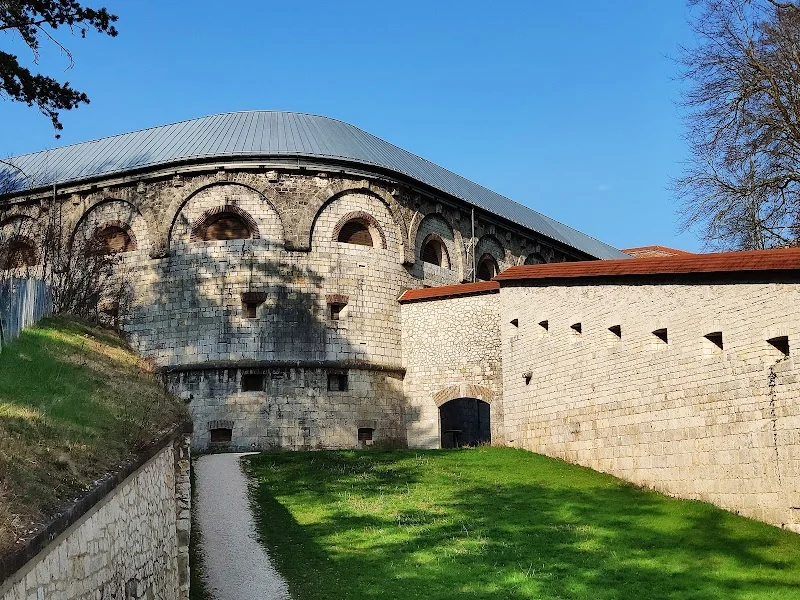
Ulm
Prittwitzstraße 100, 89075 Ulm, Deutschland
Wilhelmsburg | Arrival & Events
The Wilhelmsburg in Ulm is a location that not only preserves history but makes it visible, walkable, and experienceable for new uses. Located high above the city on Michelsberg, the building still shapes the silhouette of Ulm today and is part of the federal fortress, making it Germany's largest preserved fortress ensemble. Those who visit the Wilhelmsburg experience not just an isolated event location, but a multifaceted monument that connects military past, cultural present, and an ambitious future. This mix makes the castle particularly interesting for those searching for Wilhelmsburg Ulm, location, arrival, tours, or events: Here, historical walls, generous outdoor spaces, unique interiors, and a vibrant cultural program come together. For visitors, organizers, culture enthusiasts, and businesses, the Wilhelmsburg is therefore a place with a clear identity and strong recognition value. The official development of the castle aims to bring the building closer to the city and to revitalize it permanently without losing its character. The result is an extraordinary mix of monument, stage, event venue, and future laboratory. ([ulm.de](https://www.ulm.de/kultur/wilhelmsburg))
History and Location of the Wilhelmsburg in Ulm
The history of the Wilhelmsburg begins in the 19th century with the expansion of the federal fortress Ulm. On October 18, 1842, the first spade was turned on Michelsberg for the fortress; two years later, the foundation stone for the Wilhelmsburg was laid, and by 1848 the building was completed. Between 1842 and 1859, the entire federal fortress was constructed as a polygonal fortress ring for the military protection of the German Confederation. The Wilhelmsburg was the strongest structure of the entire complex and served as the last refuge for the garrison. This role also explains the dimensions of the building: Historical sources mention around 570 rooms and an occupancy for about 6,950 men. Even today, it is understandable why the castle does not appear as a single building, but rather like its own fortified city on the mountain. The location is part of its effect: it is situated high above Ulm, is visible from afar, and continues to shape the urban structure to this day. Those who deal with the location of Wilhelmsburg quickly understand that this place was never just a backdrop, but always a strategic vantage point and symbol of power. ([ulm.de](https://www.ulm.de/kultur/wilhelmsburg/die-geschichte-der-wilhelmsburg))
After its completion, the Wilhelmsburg remained militarily influenced for decades. Until the end of World War II, it served as a barracks; in 1944, tubes were produced there using forced labor from the company Telefunken. From 1945 to 1956, the castle then served as emergency accommodation, production site, and refugee camp, where at times up to 4,200 people lived. The fact that this mix of uses can still be read in the building substance and in small traces such as wallpaper paintings or drawings in casemates makes the Wilhelmsburg a particularly dense place of remembrance. From 1956, the Bundeswehr again used the building as a barracks until the structural condition deteriorated due to moisture to the point that the last soldiers left in 1982. In 1986, the Wilhelmsburg was transferred as a gift from the federal government to the city of Ulm and was partially renovated with federal and state funds amounting to 8 million DM. Since the 2010s, the city has pursued a clear revitalization strategy that does not freeze the Wilhelmsburg in a museum-like state but rethinks it as a living part of the city. This historical depth makes the Wilhelmsburg so attractive for culture enthusiasts, local history fans, and event planners. ([ulm.de](https://www.ulm.de/kultur/wilhelmsburg/die-geschichte-der-wilhelmsburg))
Arrival, Parking, and Opening Hours
For visitors, the arrival to the Wilhelmsburg is intentionally explained simply: The address is Prittwitzstraße 100, 89075 Ulm. However, the official site explicitly recommends arriving by public transport, as there are very few parking options available on-site. Those arriving by bus can take line 7 to the Kliniken Michelsberg stop and walk about 700 meters from there. The tram can be taken via line 2 to Lehrertal; from there, it is about an 800-meter walk. Additionally, the castle is accessible via various paths, including the Butterfly Path with 1.9 kilometers for families, the Ulm Heights Path with about 12 kilometers, and the Fortress Path, which connects the Wilhelmsburg with other structures of the federal fortress. Those coming from the city center can also plan the castle as a walking or cycling destination: From the Münster, it takes about 15 minutes by bike or around 30 minutes on foot. These details are invaluable for orientation, as they make the visit not only practical but also scenically interesting. ([die-wilhelmsburg.de](https://www.die-wilhelmsburg.de/besuchen/anreise/))
Important for parking searches is the clear message from the operators: There are very few regular parking spaces available. In the courtyard, 2 to 3 disabled parking spaces are available, and the courtyard is also largely accessible. For individual events, shuttle buses have been arranged, such as for musical performances or pop-up formats, to transport visitors comfortably between the city and the castle. The opening hours are also clearly regulated: The courtyard of the Wilhelmsburg is open to visitors around the clock and accessible via the East Gate and the South Gate; however, different times apply during events. This is a practical advantage for those who wish to visit the castle spontaneously or independently of an event. At the same time, the open courtyard usage shows how much the Wilhelmsburg is understood today as a public urban space. It is not just a place with ticket sales and an event calendar but also an accessible place for walks, views, and atmospheric visits. This mix of a controlled event location and freely accessible courtyard makes the site unusual and attractive. Therefore, those searching for parking at Wilhelmsburg, arriving at Wilhelmsburg, or Wilhelmsburg opening hours receive a clear, user-friendly answer. ([die-wilhelmsburg.de](https://www.die-wilhelmsburg.de/besuchen/oeffnungszeiten/))
Events at the Wilhelmsburg: Theater Summer and Storm the Castle
The modern recognition of the Wilhelmsburg as a cultural venue is primarily due to two formats: the Theater Summer of the Theater Ulm and the pop-up festival Storm the Castle. In the late 1990s, the Wilhelmsburg became an additional venue for the Theater Ulm. Since then, open-air musical theater performances have taken place in the summer every two years from May to July. The special feature is the combination of historical backdrop, covered spectator stands, gastronomic offerings, and a shuttle system that compensates for the lack of parking on Michelsberg. This makes the Wilhelmsburg suitable not only for classical culture fans but also for visitors seeking a special summer experience. The fact that a building from the 19th century fits so seamlessly into the theater landscape of a city shows how well historical places can be translated into the present through programmatic use. Those searching for Wilhelmsburg events or Wilhelmsburg Ulm program will find exactly this exciting connection between monument protection and cultural production. ([theater-ulm.de](https://www.theater-ulm.de/theater/geschichte))
Since 2018, the annual pop-up space Storm the Castle has also been established. The cultural festival brings live music, true-crime theater, readings, discussions, art, and a family program to the area of the Wilhelmsburg during the summer months. In 2025, the format will already run for the eighth time and will make a strong statement for the further development of the place with concerts in the courtyard, poetic actions, family offerings, and for the first time also used indoor spaces. The west wing has been transformed into an exhibition space for graffiti, AI, light art, theater, textiles, interaction, and performance. For the city of Ulm, the festival is more than just an event: According to the official representation, Storm the Castle provides answers to the question of how the place can be sustainably filled with new life. That is why the festival fits perfectly into the current search intent around Wilhelmsburg news, Wilhelmsburg program, or Wilhelmsburg events, even though it clearly differs in content from current news or other local references. This development will continue in 2026, and the Open Tower format in the Kehlturm also shows that experimentation, testing, and further thinking are taking place at the Wilhelmsburg. So, if you are looking for a location with genuine cultural dynamism, you will find not only history at the Wilhelmsburg but also regularly new impulses. ([die-wilhelmsburg.de](https://www.die-wilhelmsburg.de/pop-up-space/))
Rooms, Capacities, and Equipment for Celebrations and Conferences
The Wilhelmsburg is not only a monument but also a thoughtfully usable event location. Officially, six modern and high-quality renovated vaulted rooms are available for celebrations and conferences, each offering daylight and parquet flooring. In addition, the rustic flank tower, the terrace of the Kehlturm, and the spacious courtyard serve as special areas for receptions, concerts, corporate parties, or cultural events. This variety of spaces is crucial as it covers different usage profiles: small meetings, medium conferences, stylish champagne receptions, and large-scale open-air events. Therefore, those searching for Wilhelmsburg rentals do not get a standard location but an ensemble with very different characters. Particularly interesting is that the rooms not only appear historical but are also technically and organizationally geared towards event requirements. Catering, technology, and tents can be organized, and self-organization is also possible. This makes the Wilhelmsburg appealing to a wide range of target groups, from cultural organizers to companies with corporate event needs. ([die-wilhelmsburg.de](https://www.die-wilhelmsburg.de/feiern-tagen-formular/))
The numbers underscore the scale of the location: The flank tower offers an extraordinary circular vault of 239 square meters and is suitable for parties and celebrations with up to 200 people. It is rustic, unrenovated, with daylight but without permanently installed technology and without its own heating; this character makes it attractive for special formats and atmospheric events. The courtyard, with 13,000 square meters, is the largest event space and can accommodate outdoor events with up to 3,600 people, with or without a tent. It is surrounded on all sides by historical walls and is only accessible via two large public entrances, giving it a nearly closed, highly controllable event structure. The terrace of the Kehlturm, in turn, is suitable for standing receptions or as part of a tour and offers a wide view over Ulm. Additionally, the Kehlturm itself is being further developed as part of the Open Tower program: By no later than 2028, 25 rooms are to be permanently used and rented there. This shows that the Wilhelmsburg is not a static backdrop but a location with a growing usage logic. Therefore, those searching for Wilhelmsburg courtyard, Wilhelmsburg flank tower, or Wilhelmsburg Kehlturm receive real, reliable space data and a clear picture of the event possibilities. ([die-wilhelmsburg.de](https://www.die-wilhelmsburg.de/innenhof/))
Guided Tours, Current Use, and Future with Open Tower 2.0
Those who want to understand the Wilhelmsburg more deeply should plan a guided tour. All tours start at the South Gate, sturdy footwear, a flashlight, and warm clothing are recommended. Historical tours are offered by the Förderkreis Bundesfestung Ulm e.V.; these focus on the defense system, the integration of the castle into the fortress, and its varied use. Here, too, the dimensions of the building are evident: The tour page refers to around 570 rooms, the historical occupancy of about 6,950 men, and the role of the citadel as the last refuge. In addition, there are special tours such as Life and Childhood in the Wilhelmsburg from 1946 to 1951 and the experience tour Willy and the Innkeeper, which enriches the place with anecdotes and a touch of ghost history. Such formats are particularly attractive for visitors who want to hear stories, not just see architecture. This is where the added value for search queries around Wilhelmsburg tours or Wilhelmsburg history arises. ([die-wilhelmsburg.de](https://www.die-wilhelmsburg.de/besuchen/fuehrungen/))
The current use also includes that the castle is once again understood as a lively urban building block. The city of Ulm aims to bring the building closer to the city through permanent use. In the east wing, rooms for living, offices, or studios have been developed on around 1,000 square meters of usable space; in the left flank tower, rooms for theater use have been created on about 1,250 square meters, including orchestra, mask, multifunctional, and ancillary rooms. Additionally, a new external access with a bridge and turnaround area for shuttle buses or public transport has been created. These measures show that the Wilhelmsburg not only functions for festivals but is also structurally designed for permanent use. An additional special feature is its ecological dimension: Over 4,000 dwarf bats already live in the Wilhelmsburg, mainly in the north wing and in many crevice habitats. This makes the castle a rare place where culture, urban development, monument protection, and nature conservation come together simultaneously. With Open Tower 2.0, this development will enter a new testing phase in 2026, in which the Kehlturm with its 25 rooms is to be gradually transformed into a permanently usable building block of the future. The Wilhelmsburg is thus not only past and present but an open future project. ([die-wilhelmsburg.de](https://www.die-wilhelmsburg.de/historie/heutige-nutzung/))
Sources:
- City of Ulm - The Wilhelmsburg
- City of Ulm - The History of the Wilhelmsburg
- The Wilhelmsburg Ulm - Arrival
- The Wilhelmsburg Ulm - Opening Hours
- The Wilhelmsburg Ulm - Celebrations & Conferences
- The Wilhelmsburg Ulm - Guided Tours
- The Wilhelmsburg Ulm - Storm the Castle
- Theater Ulm - History
- The Wilhelmsburg Ulm - Open Tower 2.0
Show moreShow less
Wilhelmsburg | Arrival & Events
The Wilhelmsburg in Ulm is a location that not only preserves history but makes it visible, walkable, and experienceable for new uses. Located high above the city on Michelsberg, the building still shapes the silhouette of Ulm today and is part of the federal fortress, making it Germany's largest preserved fortress ensemble. Those who visit the Wilhelmsburg experience not just an isolated event location, but a multifaceted monument that connects military past, cultural present, and an ambitious future. This mix makes the castle particularly interesting for those searching for Wilhelmsburg Ulm, location, arrival, tours, or events: Here, historical walls, generous outdoor spaces, unique interiors, and a vibrant cultural program come together. For visitors, organizers, culture enthusiasts, and businesses, the Wilhelmsburg is therefore a place with a clear identity and strong recognition value. The official development of the castle aims to bring the building closer to the city and to revitalize it permanently without losing its character. The result is an extraordinary mix of monument, stage, event venue, and future laboratory. ([ulm.de](https://www.ulm.de/kultur/wilhelmsburg))
History and Location of the Wilhelmsburg in Ulm
The history of the Wilhelmsburg begins in the 19th century with the expansion of the federal fortress Ulm. On October 18, 1842, the first spade was turned on Michelsberg for the fortress; two years later, the foundation stone for the Wilhelmsburg was laid, and by 1848 the building was completed. Between 1842 and 1859, the entire federal fortress was constructed as a polygonal fortress ring for the military protection of the German Confederation. The Wilhelmsburg was the strongest structure of the entire complex and served as the last refuge for the garrison. This role also explains the dimensions of the building: Historical sources mention around 570 rooms and an occupancy for about 6,950 men. Even today, it is understandable why the castle does not appear as a single building, but rather like its own fortified city on the mountain. The location is part of its effect: it is situated high above Ulm, is visible from afar, and continues to shape the urban structure to this day. Those who deal with the location of Wilhelmsburg quickly understand that this place was never just a backdrop, but always a strategic vantage point and symbol of power. ([ulm.de](https://www.ulm.de/kultur/wilhelmsburg/die-geschichte-der-wilhelmsburg))
After its completion, the Wilhelmsburg remained militarily influenced for decades. Until the end of World War II, it served as a barracks; in 1944, tubes were produced there using forced labor from the company Telefunken. From 1945 to 1956, the castle then served as emergency accommodation, production site, and refugee camp, where at times up to 4,200 people lived. The fact that this mix of uses can still be read in the building substance and in small traces such as wallpaper paintings or drawings in casemates makes the Wilhelmsburg a particularly dense place of remembrance. From 1956, the Bundeswehr again used the building as a barracks until the structural condition deteriorated due to moisture to the point that the last soldiers left in 1982. In 1986, the Wilhelmsburg was transferred as a gift from the federal government to the city of Ulm and was partially renovated with federal and state funds amounting to 8 million DM. Since the 2010s, the city has pursued a clear revitalization strategy that does not freeze the Wilhelmsburg in a museum-like state but rethinks it as a living part of the city. This historical depth makes the Wilhelmsburg so attractive for culture enthusiasts, local history fans, and event planners. ([ulm.de](https://www.ulm.de/kultur/wilhelmsburg/die-geschichte-der-wilhelmsburg))
Arrival, Parking, and Opening Hours
For visitors, the arrival to the Wilhelmsburg is intentionally explained simply: The address is Prittwitzstraße 100, 89075 Ulm. However, the official site explicitly recommends arriving by public transport, as there are very few parking options available on-site. Those arriving by bus can take line 7 to the Kliniken Michelsberg stop and walk about 700 meters from there. The tram can be taken via line 2 to Lehrertal; from there, it is about an 800-meter walk. Additionally, the castle is accessible via various paths, including the Butterfly Path with 1.9 kilometers for families, the Ulm Heights Path with about 12 kilometers, and the Fortress Path, which connects the Wilhelmsburg with other structures of the federal fortress. Those coming from the city center can also plan the castle as a walking or cycling destination: From the Münster, it takes about 15 minutes by bike or around 30 minutes on foot. These details are invaluable for orientation, as they make the visit not only practical but also scenically interesting. ([die-wilhelmsburg.de](https://www.die-wilhelmsburg.de/besuchen/anreise/))
Important for parking searches is the clear message from the operators: There are very few regular parking spaces available. In the courtyard, 2 to 3 disabled parking spaces are available, and the courtyard is also largely accessible. For individual events, shuttle buses have been arranged, such as for musical performances or pop-up formats, to transport visitors comfortably between the city and the castle. The opening hours are also clearly regulated: The courtyard of the Wilhelmsburg is open to visitors around the clock and accessible via the East Gate and the South Gate; however, different times apply during events. This is a practical advantage for those who wish to visit the castle spontaneously or independently of an event. At the same time, the open courtyard usage shows how much the Wilhelmsburg is understood today as a public urban space. It is not just a place with ticket sales and an event calendar but also an accessible place for walks, views, and atmospheric visits. This mix of a controlled event location and freely accessible courtyard makes the site unusual and attractive. Therefore, those searching for parking at Wilhelmsburg, arriving at Wilhelmsburg, or Wilhelmsburg opening hours receive a clear, user-friendly answer. ([die-wilhelmsburg.de](https://www.die-wilhelmsburg.de/besuchen/oeffnungszeiten/))
Events at the Wilhelmsburg: Theater Summer and Storm the Castle
The modern recognition of the Wilhelmsburg as a cultural venue is primarily due to two formats: the Theater Summer of the Theater Ulm and the pop-up festival Storm the Castle. In the late 1990s, the Wilhelmsburg became an additional venue for the Theater Ulm. Since then, open-air musical theater performances have taken place in the summer every two years from May to July. The special feature is the combination of historical backdrop, covered spectator stands, gastronomic offerings, and a shuttle system that compensates for the lack of parking on Michelsberg. This makes the Wilhelmsburg suitable not only for classical culture fans but also for visitors seeking a special summer experience. The fact that a building from the 19th century fits so seamlessly into the theater landscape of a city shows how well historical places can be translated into the present through programmatic use. Those searching for Wilhelmsburg events or Wilhelmsburg Ulm program will find exactly this exciting connection between monument protection and cultural production. ([theater-ulm.de](https://www.theater-ulm.de/theater/geschichte))
Since 2018, the annual pop-up space Storm the Castle has also been established. The cultural festival brings live music, true-crime theater, readings, discussions, art, and a family program to the area of the Wilhelmsburg during the summer months. In 2025, the format will already run for the eighth time and will make a strong statement for the further development of the place with concerts in the courtyard, poetic actions, family offerings, and for the first time also used indoor spaces. The west wing has been transformed into an exhibition space for graffiti, AI, light art, theater, textiles, interaction, and performance. For the city of Ulm, the festival is more than just an event: According to the official representation, Storm the Castle provides answers to the question of how the place can be sustainably filled with new life. That is why the festival fits perfectly into the current search intent around Wilhelmsburg news, Wilhelmsburg program, or Wilhelmsburg events, even though it clearly differs in content from current news or other local references. This development will continue in 2026, and the Open Tower format in the Kehlturm also shows that experimentation, testing, and further thinking are taking place at the Wilhelmsburg. So, if you are looking for a location with genuine cultural dynamism, you will find not only history at the Wilhelmsburg but also regularly new impulses. ([die-wilhelmsburg.de](https://www.die-wilhelmsburg.de/pop-up-space/))
Rooms, Capacities, and Equipment for Celebrations and Conferences
The Wilhelmsburg is not only a monument but also a thoughtfully usable event location. Officially, six modern and high-quality renovated vaulted rooms are available for celebrations and conferences, each offering daylight and parquet flooring. In addition, the rustic flank tower, the terrace of the Kehlturm, and the spacious courtyard serve as special areas for receptions, concerts, corporate parties, or cultural events. This variety of spaces is crucial as it covers different usage profiles: small meetings, medium conferences, stylish champagne receptions, and large-scale open-air events. Therefore, those searching for Wilhelmsburg rentals do not get a standard location but an ensemble with very different characters. Particularly interesting is that the rooms not only appear historical but are also technically and organizationally geared towards event requirements. Catering, technology, and tents can be organized, and self-organization is also possible. This makes the Wilhelmsburg appealing to a wide range of target groups, from cultural organizers to companies with corporate event needs. ([die-wilhelmsburg.de](https://www.die-wilhelmsburg.de/feiern-tagen-formular/))
The numbers underscore the scale of the location: The flank tower offers an extraordinary circular vault of 239 square meters and is suitable for parties and celebrations with up to 200 people. It is rustic, unrenovated, with daylight but without permanently installed technology and without its own heating; this character makes it attractive for special formats and atmospheric events. The courtyard, with 13,000 square meters, is the largest event space and can accommodate outdoor events with up to 3,600 people, with or without a tent. It is surrounded on all sides by historical walls and is only accessible via two large public entrances, giving it a nearly closed, highly controllable event structure. The terrace of the Kehlturm, in turn, is suitable for standing receptions or as part of a tour and offers a wide view over Ulm. Additionally, the Kehlturm itself is being further developed as part of the Open Tower program: By no later than 2028, 25 rooms are to be permanently used and rented there. This shows that the Wilhelmsburg is not a static backdrop but a location with a growing usage logic. Therefore, those searching for Wilhelmsburg courtyard, Wilhelmsburg flank tower, or Wilhelmsburg Kehlturm receive real, reliable space data and a clear picture of the event possibilities. ([die-wilhelmsburg.de](https://www.die-wilhelmsburg.de/innenhof/))
Guided Tours, Current Use, and Future with Open Tower 2.0
Those who want to understand the Wilhelmsburg more deeply should plan a guided tour. All tours start at the South Gate, sturdy footwear, a flashlight, and warm clothing are recommended. Historical tours are offered by the Förderkreis Bundesfestung Ulm e.V.; these focus on the defense system, the integration of the castle into the fortress, and its varied use. Here, too, the dimensions of the building are evident: The tour page refers to around 570 rooms, the historical occupancy of about 6,950 men, and the role of the citadel as the last refuge. In addition, there are special tours such as Life and Childhood in the Wilhelmsburg from 1946 to 1951 and the experience tour Willy and the Innkeeper, which enriches the place with anecdotes and a touch of ghost history. Such formats are particularly attractive for visitors who want to hear stories, not just see architecture. This is where the added value for search queries around Wilhelmsburg tours or Wilhelmsburg history arises. ([die-wilhelmsburg.de](https://www.die-wilhelmsburg.de/besuchen/fuehrungen/))
The current use also includes that the castle is once again understood as a lively urban building block. The city of Ulm aims to bring the building closer to the city through permanent use. In the east wing, rooms for living, offices, or studios have been developed on around 1,000 square meters of usable space; in the left flank tower, rooms for theater use have been created on about 1,250 square meters, including orchestra, mask, multifunctional, and ancillary rooms. Additionally, a new external access with a bridge and turnaround area for shuttle buses or public transport has been created. These measures show that the Wilhelmsburg not only functions for festivals but is also structurally designed for permanent use. An additional special feature is its ecological dimension: Over 4,000 dwarf bats already live in the Wilhelmsburg, mainly in the north wing and in many crevice habitats. This makes the castle a rare place where culture, urban development, monument protection, and nature conservation come together simultaneously. With Open Tower 2.0, this development will enter a new testing phase in 2026, in which the Kehlturm with its 25 rooms is to be gradually transformed into a permanently usable building block of the future. The Wilhelmsburg is thus not only past and present but an open future project. ([die-wilhelmsburg.de](https://www.die-wilhelmsburg.de/historie/heutige-nutzung/))
Sources:
- City of Ulm - The Wilhelmsburg
- City of Ulm - The History of the Wilhelmsburg
- The Wilhelmsburg Ulm - Arrival
- The Wilhelmsburg Ulm - Opening Hours
- The Wilhelmsburg Ulm - Celebrations & Conferences
- The Wilhelmsburg Ulm - Guided Tours
- The Wilhelmsburg Ulm - Storm the Castle
- Theater Ulm - History
- The Wilhelmsburg Ulm - Open Tower 2.0
Wilhelmsburg | Arrival & Events
The Wilhelmsburg in Ulm is a location that not only preserves history but makes it visible, walkable, and experienceable for new uses. Located high above the city on Michelsberg, the building still shapes the silhouette of Ulm today and is part of the federal fortress, making it Germany's largest preserved fortress ensemble. Those who visit the Wilhelmsburg experience not just an isolated event location, but a multifaceted monument that connects military past, cultural present, and an ambitious future. This mix makes the castle particularly interesting for those searching for Wilhelmsburg Ulm, location, arrival, tours, or events: Here, historical walls, generous outdoor spaces, unique interiors, and a vibrant cultural program come together. For visitors, organizers, culture enthusiasts, and businesses, the Wilhelmsburg is therefore a place with a clear identity and strong recognition value. The official development of the castle aims to bring the building closer to the city and to revitalize it permanently without losing its character. The result is an extraordinary mix of monument, stage, event venue, and future laboratory. ([ulm.de](https://www.ulm.de/kultur/wilhelmsburg))
History and Location of the Wilhelmsburg in Ulm
The history of the Wilhelmsburg begins in the 19th century with the expansion of the federal fortress Ulm. On October 18, 1842, the first spade was turned on Michelsberg for the fortress; two years later, the foundation stone for the Wilhelmsburg was laid, and by 1848 the building was completed. Between 1842 and 1859, the entire federal fortress was constructed as a polygonal fortress ring for the military protection of the German Confederation. The Wilhelmsburg was the strongest structure of the entire complex and served as the last refuge for the garrison. This role also explains the dimensions of the building: Historical sources mention around 570 rooms and an occupancy for about 6,950 men. Even today, it is understandable why the castle does not appear as a single building, but rather like its own fortified city on the mountain. The location is part of its effect: it is situated high above Ulm, is visible from afar, and continues to shape the urban structure to this day. Those who deal with the location of Wilhelmsburg quickly understand that this place was never just a backdrop, but always a strategic vantage point and symbol of power. ([ulm.de](https://www.ulm.de/kultur/wilhelmsburg/die-geschichte-der-wilhelmsburg))
After its completion, the Wilhelmsburg remained militarily influenced for decades. Until the end of World War II, it served as a barracks; in 1944, tubes were produced there using forced labor from the company Telefunken. From 1945 to 1956, the castle then served as emergency accommodation, production site, and refugee camp, where at times up to 4,200 people lived. The fact that this mix of uses can still be read in the building substance and in small traces such as wallpaper paintings or drawings in casemates makes the Wilhelmsburg a particularly dense place of remembrance. From 1956, the Bundeswehr again used the building as a barracks until the structural condition deteriorated due to moisture to the point that the last soldiers left in 1982. In 1986, the Wilhelmsburg was transferred as a gift from the federal government to the city of Ulm and was partially renovated with federal and state funds amounting to 8 million DM. Since the 2010s, the city has pursued a clear revitalization strategy that does not freeze the Wilhelmsburg in a museum-like state but rethinks it as a living part of the city. This historical depth makes the Wilhelmsburg so attractive for culture enthusiasts, local history fans, and event planners. ([ulm.de](https://www.ulm.de/kultur/wilhelmsburg/die-geschichte-der-wilhelmsburg))
Arrival, Parking, and Opening Hours
For visitors, the arrival to the Wilhelmsburg is intentionally explained simply: The address is Prittwitzstraße 100, 89075 Ulm. However, the official site explicitly recommends arriving by public transport, as there are very few parking options available on-site. Those arriving by bus can take line 7 to the Kliniken Michelsberg stop and walk about 700 meters from there. The tram can be taken via line 2 to Lehrertal; from there, it is about an 800-meter walk. Additionally, the castle is accessible via various paths, including the Butterfly Path with 1.9 kilometers for families, the Ulm Heights Path with about 12 kilometers, and the Fortress Path, which connects the Wilhelmsburg with other structures of the federal fortress. Those coming from the city center can also plan the castle as a walking or cycling destination: From the Münster, it takes about 15 minutes by bike or around 30 minutes on foot. These details are invaluable for orientation, as they make the visit not only practical but also scenically interesting. ([die-wilhelmsburg.de](https://www.die-wilhelmsburg.de/besuchen/anreise/))
Important for parking searches is the clear message from the operators: There are very few regular parking spaces available. In the courtyard, 2 to 3 disabled parking spaces are available, and the courtyard is also largely accessible. For individual events, shuttle buses have been arranged, such as for musical performances or pop-up formats, to transport visitors comfortably between the city and the castle. The opening hours are also clearly regulated: The courtyard of the Wilhelmsburg is open to visitors around the clock and accessible via the East Gate and the South Gate; however, different times apply during events. This is a practical advantage for those who wish to visit the castle spontaneously or independently of an event. At the same time, the open courtyard usage shows how much the Wilhelmsburg is understood today as a public urban space. It is not just a place with ticket sales and an event calendar but also an accessible place for walks, views, and atmospheric visits. This mix of a controlled event location and freely accessible courtyard makes the site unusual and attractive. Therefore, those searching for parking at Wilhelmsburg, arriving at Wilhelmsburg, or Wilhelmsburg opening hours receive a clear, user-friendly answer. ([die-wilhelmsburg.de](https://www.die-wilhelmsburg.de/besuchen/oeffnungszeiten/))
Events at the Wilhelmsburg: Theater Summer and Storm the Castle
The modern recognition of the Wilhelmsburg as a cultural venue is primarily due to two formats: the Theater Summer of the Theater Ulm and the pop-up festival Storm the Castle. In the late 1990s, the Wilhelmsburg became an additional venue for the Theater Ulm. Since then, open-air musical theater performances have taken place in the summer every two years from May to July. The special feature is the combination of historical backdrop, covered spectator stands, gastronomic offerings, and a shuttle system that compensates for the lack of parking on Michelsberg. This makes the Wilhelmsburg suitable not only for classical culture fans but also for visitors seeking a special summer experience. The fact that a building from the 19th century fits so seamlessly into the theater landscape of a city shows how well historical places can be translated into the present through programmatic use. Those searching for Wilhelmsburg events or Wilhelmsburg Ulm program will find exactly this exciting connection between monument protection and cultural production. ([theater-ulm.de](https://www.theater-ulm.de/theater/geschichte))
Since 2018, the annual pop-up space Storm the Castle has also been established. The cultural festival brings live music, true-crime theater, readings, discussions, art, and a family program to the area of the Wilhelmsburg during the summer months. In 2025, the format will already run for the eighth time and will make a strong statement for the further development of the place with concerts in the courtyard, poetic actions, family offerings, and for the first time also used indoor spaces. The west wing has been transformed into an exhibition space for graffiti, AI, light art, theater, textiles, interaction, and performance. For the city of Ulm, the festival is more than just an event: According to the official representation, Storm the Castle provides answers to the question of how the place can be sustainably filled with new life. That is why the festival fits perfectly into the current search intent around Wilhelmsburg news, Wilhelmsburg program, or Wilhelmsburg events, even though it clearly differs in content from current news or other local references. This development will continue in 2026, and the Open Tower format in the Kehlturm also shows that experimentation, testing, and further thinking are taking place at the Wilhelmsburg. So, if you are looking for a location with genuine cultural dynamism, you will find not only history at the Wilhelmsburg but also regularly new impulses. ([die-wilhelmsburg.de](https://www.die-wilhelmsburg.de/pop-up-space/))
Rooms, Capacities, and Equipment for Celebrations and Conferences
The Wilhelmsburg is not only a monument but also a thoughtfully usable event location. Officially, six modern and high-quality renovated vaulted rooms are available for celebrations and conferences, each offering daylight and parquet flooring. In addition, the rustic flank tower, the terrace of the Kehlturm, and the spacious courtyard serve as special areas for receptions, concerts, corporate parties, or cultural events. This variety of spaces is crucial as it covers different usage profiles: small meetings, medium conferences, stylish champagne receptions, and large-scale open-air events. Therefore, those searching for Wilhelmsburg rentals do not get a standard location but an ensemble with very different characters. Particularly interesting is that the rooms not only appear historical but are also technically and organizationally geared towards event requirements. Catering, technology, and tents can be organized, and self-organization is also possible. This makes the Wilhelmsburg appealing to a wide range of target groups, from cultural organizers to companies with corporate event needs. ([die-wilhelmsburg.de](https://www.die-wilhelmsburg.de/feiern-tagen-formular/))
The numbers underscore the scale of the location: The flank tower offers an extraordinary circular vault of 239 square meters and is suitable for parties and celebrations with up to 200 people. It is rustic, unrenovated, with daylight but without permanently installed technology and without its own heating; this character makes it attractive for special formats and atmospheric events. The courtyard, with 13,000 square meters, is the largest event space and can accommodate outdoor events with up to 3,600 people, with or without a tent. It is surrounded on all sides by historical walls and is only accessible via two large public entrances, giving it a nearly closed, highly controllable event structure. The terrace of the Kehlturm, in turn, is suitable for standing receptions or as part of a tour and offers a wide view over Ulm. Additionally, the Kehlturm itself is being further developed as part of the Open Tower program: By no later than 2028, 25 rooms are to be permanently used and rented there. This shows that the Wilhelmsburg is not a static backdrop but a location with a growing usage logic. Therefore, those searching for Wilhelmsburg courtyard, Wilhelmsburg flank tower, or Wilhelmsburg Kehlturm receive real, reliable space data and a clear picture of the event possibilities. ([die-wilhelmsburg.de](https://www.die-wilhelmsburg.de/innenhof/))
Guided Tours, Current Use, and Future with Open Tower 2.0
Those who want to understand the Wilhelmsburg more deeply should plan a guided tour. All tours start at the South Gate, sturdy footwear, a flashlight, and warm clothing are recommended. Historical tours are offered by the Förderkreis Bundesfestung Ulm e.V.; these focus on the defense system, the integration of the castle into the fortress, and its varied use. Here, too, the dimensions of the building are evident: The tour page refers to around 570 rooms, the historical occupancy of about 6,950 men, and the role of the citadel as the last refuge. In addition, there are special tours such as Life and Childhood in the Wilhelmsburg from 1946 to 1951 and the experience tour Willy and the Innkeeper, which enriches the place with anecdotes and a touch of ghost history. Such formats are particularly attractive for visitors who want to hear stories, not just see architecture. This is where the added value for search queries around Wilhelmsburg tours or Wilhelmsburg history arises. ([die-wilhelmsburg.de](https://www.die-wilhelmsburg.de/besuchen/fuehrungen/))
The current use also includes that the castle is once again understood as a lively urban building block. The city of Ulm aims to bring the building closer to the city through permanent use. In the east wing, rooms for living, offices, or studios have been developed on around 1,000 square meters of usable space; in the left flank tower, rooms for theater use have been created on about 1,250 square meters, including orchestra, mask, multifunctional, and ancillary rooms. Additionally, a new external access with a bridge and turnaround area for shuttle buses or public transport has been created. These measures show that the Wilhelmsburg not only functions for festivals but is also structurally designed for permanent use. An additional special feature is its ecological dimension: Over 4,000 dwarf bats already live in the Wilhelmsburg, mainly in the north wing and in many crevice habitats. This makes the castle a rare place where culture, urban development, monument protection, and nature conservation come together simultaneously. With Open Tower 2.0, this development will enter a new testing phase in 2026, in which the Kehlturm with its 25 rooms is to be gradually transformed into a permanently usable building block of the future. The Wilhelmsburg is thus not only past and present but an open future project. ([die-wilhelmsburg.de](https://www.die-wilhelmsburg.de/historie/heutige-nutzung/))
Sources:
- City of Ulm - The Wilhelmsburg
- City of Ulm - The History of the Wilhelmsburg
- The Wilhelmsburg Ulm - Arrival
- The Wilhelmsburg Ulm - Opening Hours
- The Wilhelmsburg Ulm - Celebrations & Conferences
- The Wilhelmsburg Ulm - Guided Tours
- The Wilhelmsburg Ulm - Storm the Castle
- Theater Ulm - History
- The Wilhelmsburg Ulm - Open Tower 2.0
Upcoming Events
No events found
Frequently Asked Questions
Reviews
Subha Jana
14. July 2025
Quite a nice place to walk around with an interesting history. I visited during the weekend, the place was quiet and there were some nice parts to walk and trek. There is a tower just in front that one can climb up and the view from the tower top is great too.
david antoun
8. July 2025
Stone complex from 19th century. Used as a prison then as a refugee camp and today as museum and events location. Amazing building surrounded by green areas.
Benjamin Mwangi
13. June 2025
Located in Ulm, this fortress was built between 1842 and 1849 and later used by the German Army until after World War II when it was used as a refugee camp. When we visited it was under construction, we could not get inside. It is nevertheless worth a visit.
Ebin Zacharias
21. August 2022
Best in the evening. Sunset from the tower is a mesmerising experience and don’t miss it. There are some bands and music happening and you can certainly grab some drinks there. Also, not that these events are not on a usual basis, so check them before you hit to this place. But a stroll around here is really a worthy experience.
Maxim Wolf
19. December 2025
The fortress itself is huge and impressive, and when you explore it, you can really feel how much attention has been given to preserving the details. The guided tours are super interesting.