
Ulm
Heidenheimer Str. 80, 89075 Ulm, Deutschland
Villa Eberhardt | Directions & Parking
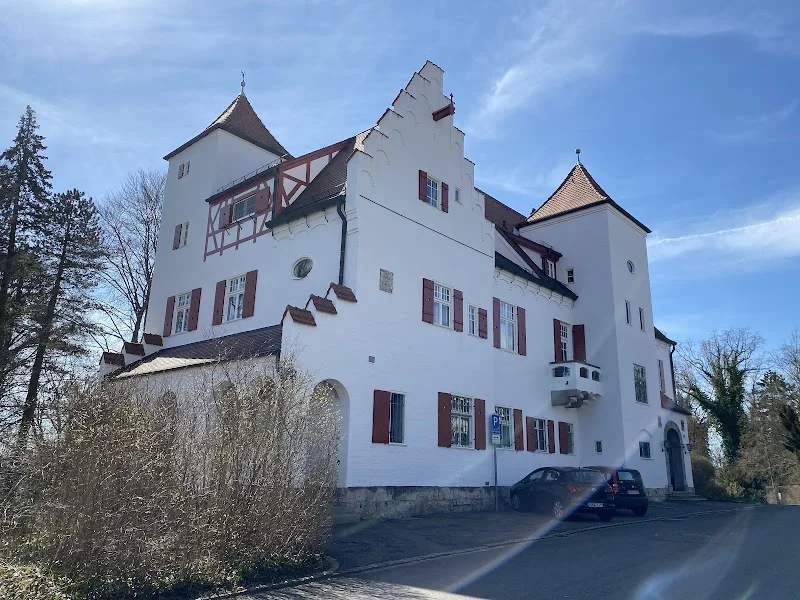
The Villa Eberhardt in Ulm is much more than just a well-known address on Safranberg. It is a historic house with a strong identity, a place for scientific encounters, and at the same time a venue with a distinctive atmosphere. Those looking for Villa Eberhardt Ulm, Villa Eberhardt parking, or Villa Eberhardt rental quickly come across a building that elegantly combines history, representation, and practical use. The house belongs to the University of Ulm and is used as a scientific meeting place; at the same time, it serves as a former residence of the Eberhardt manufacturing family, reminding us of the industrial and social development of the city. The building was handed over by the city of Ulm as a jubilee gift to the university and was restored according to monument preservation guidelines to maintain its representative effect. Today, conferences, workshops, lectures, festive occasions, and university events take place here in an ambiance that is immediately memorable with its Art Nouveau style, wooden staircase, knights' hall, and winter garden. ([uni-ulm.de](https://www.uni-ulm.de/index.php?id=25632))
History and Identity of Villa Eberhardt
The history of Villa Eberhardt begins with the Eberhardt entrepreneurial family, whose company history dates back to the 19th century. The company was founded in 1854 by Albert and Wilhelm Eberhardt; initially, the focus was on carriages and wagon building, later the company developed into a significant manufacturer of plows and agricultural equipment. A notable milestone was the first iron plow developed by Wilhelm Eberhardt in 1859. By around 1880, approximately 30,000 plows were said to be produced annually. This economic success story is also reflected in the family's self-understanding: In 1903, Albert Eberhardt junior moved in with his family to the newly built house on Safranberg, today's Villa Eberhardt, thus expressing the representative residence as a symbol of wealth, entrepreneurial spirit, and social status. The house was not built by chance at this location, but in close relation to the factory halls at the edge of Friedrichsau. From the villa, the factory grounds could be overlooked, which impressively illustrated the connection between living and working. ([uni-ulm.de](https://www.uni-ulm.de/fileadmin/website_uni_ulm/zuv/zuv.dezVI/%C3%B6ffentlich/v-1/Villa_Eberhardt/VillaEberhardt_Information_Pflugfabrik.pdf))
The villa has been repurposed several times over the decades, making it a house with many layers. After World War II, it was temporarily seized by the Americans, later it transitioned to municipal and eventually university use. The historical significance of the house has been preserved, even though parts of the furniture and some decorative elements have been lost over time. The elaborate restoration carried out in the early 1990s was therefore all the more important. Contemporary reports speak of a multi-million renovation aimed at preserving the old gem for representative purposes and providing the university with a place where science and the public can come together. This is precisely how the current character of Villa Eberhardt has emerged: a house that not only shows history but also uses it as a living framework for the present and future. ([uni-ulm.de](https://www.uni-ulm.de/fileadmin/website_uni_ulm/zuv/zuv.dezVI/%C3%B6ffentlich/v-1/Villa_Eberhardt/Artikel_SWP1992_VillaEberhardt.pdf))
The identity of the house also includes architectural contrasts. Even the descriptions from the early restoration period emphasize the mix of castle-like romantic and Art Nouveau elements. The villa appears from the outside like a small castle, but inside it features a finely balanced combination of representative rooms, wooden staircase, library, guest rooms, and communication areas. This connection makes the place particularly attractive for events that should not take place in any arbitrary conference environment. Therefore, anyone entering Villa Eberhardt not only feels the history of the Eberhardt family but also the history of the University of Ulm, which has received a representative place for scientific encounters here. The building thus serves as both a cultural and institutional anchor point. ([uni-ulm.de](https://www.uni-ulm.de/index.php?id=25632))
Directions to Villa Eberhardt and Parking on Site
For many inquiries regarding Villa Eberhardt Ulm parking or directions to Villa Eberhardt, the location within the city is crucial. The address is Heidenheimer Straße 80, 89075 Ulm. By car, the University of Ulm recommends approaching via the Ulm-Ost highway exit. From there, follow the B19 towards Ulm; after entering the town, the road is called Heidenheimer Straße. After a sharp left turn and a subsequent right turn, Villa Eberhardt appears on the left side, opposite a gas station. Official documents also mention that the villa is located about 2.5 kilometers after entering the town. This precise orientation is particularly helpful when arriving with guests or planning an event with multiple participants and wanting to send everyone a clear route description. ([uni-ulm.de](https://www.uni-ulm.de/fileadmin/website_uni_ulm/arbeitsstelleHochschuldidaktik/Arbeitsstelle/Veranstaltungsorte/Anfahrtsbeschreibung_Villa.pdf))
The Villa Eberhardt is also easily accessible by public transport. From Ulm main station, take tram line 1 towards Donauhalle to Willy-Brandt-Platz. There, transfer to bus line 4 towards Böfingen or Böfingen Süd / Egertweg and get off at the Steinhövelstraße stop. Alternatively, the university also describes the route from Ehinger Tor using bus line 4. If starting from the train station, depending on the waiting time during the transfer, plan approximately 10 to 20 minutes. This combination of train, tram, and bus makes the journey manageable even for visitors without a car. This is an important advantage, especially for scientific events, as it keeps Villa Eberhardt not only representative but also functional. ([uni-ulm.de](https://www.uni-ulm.de/index.php?id=25632))
Regarding parking, the official information is clear: Parking spaces are available directly in front of the building. A university information sheet additionally mentions 13 parking spaces directly at the house. This is a very practical solution for a historic villa, especially for conferences, ceremonial events, or workshops, as the proximity to the entrance is a plus. At the same time, one should keep in mind the limited number of parking spaces and arrive early for larger events or consider arriving by public transport. The parking situation is therefore not comparable to a large exhibition parking garage, but it is remarkably convenient for a location of this type. Those looking for a venue with real villa character while also valuing a clearly described route will find a balanced solution between atmosphere and practicality here. ([uni-ulm.de](https://www.uni-ulm.de/department/humboldt/veranstaltungen/veranstaltungsorte/?utm_source=openai))
Knight's Hall, Library, and Other Rooms
Villa Eberhardt is not only impressive from the outside but is especially interesting because of its different rooms. On the ground floor is the magnificent Knight's Hall, which is considered the heart of the house. The university also describes additional representative rooms as well as a winter garden overlooking the park-like garden. On the upper floor are the library, offices, and seminar rooms; on the second upper floor, there are apartments for university guests. The basement contains another communication room, complemented by a kitchen and storage rooms. This makes it clear that the villa cannot be reduced to a single large hall but provides a whole ensemble of rooms for different event formats. This is particularly relevant for search terms like Villa Eberhardt conference rooms or Villa Eberhardt library, as the place offers both representative and functional spaces. ([uni-ulm.de](https://www.uni-ulm.de/index.php?id=25632))
The reservation form from the university provides very specific usage data for the individual rooms. The Knight's Hall has 50 square meters and offers up to 60 seats in lecture seating without tables; with tables, 18 seats are provided, and in banquet seating, 43. The reception room measures 25 square meters, and the ladies' room 29 square meters. In the basement, the Altdeutsche Stube is available with 53 square meters and the Kleine Stube with 28 square meters. On the first upper floor, there is the Bleiche conference room with 34 square meters as well as the Pfitzer library with 28 square meters. On the second upper floor is the Friedrichsau conference room with 36 square meters. This variety shows that the villa is suitable for small discussion rounds as well as for medium-sized professional events or festive formats. Those wishing to compare rooms will find both intimate salons and a classic main room with a significantly larger impact here. ([uni-ulm.de](https://www.uni-ulm.de/fileadmin/website_uni_ulm/zuv/zuv.dezVI/%C3%B6ffentlich/v-1/Villa_Eberhardt/VillaEberhardt_Reservierungsformular_Nutzungsbedingungen_2017.pdf))
The equipment of the house also contributes to the quality of the events. The usage conditions list projector, screen, flip chart, slide projector, partition wall, microphone, podium, and overhead projector as possible equipment options. Additionally, there are offers for drinks, coffee, tea, and light catering. This is a decisive advantage, especially for longer seminars or workshop days, as organizational processes can be bundled directly in the house. The combination of historical architecture and practical infrastructure is a key reason why Villa Eberhardt has been used as a scientific meeting place for many years. In other words: The place is charming but not impractical. It is representative without closing itself off from the realities of event organization. This balance makes it interesting for many formats. ([uni-ulm.de](https://www.uni-ulm.de/fileadmin/website_uni_ulm/zuv/zuv.dezVI/%C3%B6ffentlich/v-1/Villa_Eberhardt/VillaEberhardt_Reservierungsformular_Nutzungsbedingungen_2017.pdf))
Renting Villa Eberhardt: Booking, Equipment, and Rules
Those looking to rent Villa Eberhardt should be aware of the official usage rules. The rooms of the villa are primarily available for events of the University of Ulm. If they are not needed for that purpose, they can also be made available to third parties on a case-by-case basis. This means: Renting is generally possible, but it follows an institutional framework and is not comparable to a freely available event hall. The university also stipulates that a written request is required and must be submitted to Department V at least two weeks before the desired date. The responsible department is V-1, and the contact person is Margit Nägele, whose phone number and fax number are provided in the documents. This is important for organizers because early planning and a complete booking request form the basis for an approval. ([uni-ulm.de](https://www.uni-ulm.de/fileadmin/website_uni_ulm/zuv/zuv.dezVI/%C3%B6ffentlich/v-1/Villa_Eberhardt/VillaEberhardt_Reservierungsformular_Nutzungsbedingungen_2017.pdf))
The usage conditions not only regulate the booking but also the procedures on site. Events should end by 24:00 at the latest; from 22:00, care should be taken not to disturb the neighbors. Furthermore, events may only take place in the presence of the organizers. The university points out that there is no legal entitlement to the transfer and that the allocation may also depend on conditions. These rules are plausible for a historic building with a representative character and protect both the house and the surroundings. Those planning to use Villa Eberhardt for a seminar, conference, or festive event should not view these framework conditions as restrictions but as a quality feature. They ensure that the house remains in its special condition and that events can proceed in an organized manner. ([uni-ulm.de](https://www.uni-ulm.de/fileadmin/website_uni_ulm/zuv/zuv.dezVI/%C3%B6ffentlich/v-1/Villa_Eberhardt/VillaEberhardt_Reservierungsformular_Nutzungsbedingungen_2017.pdf))
It is also practical that Villa Eberhardt has a good basic equipment. The university lists among other things projector, screen, flip chart, microphone, and podium. Additionally, there are catering options such as cold and hot drinks, coffee, tea, juice, water, and light snacks. This is particularly valuable for many event formats because it means that one does not have to bring a complete infrastructure from outside. The rooms themselves are also prepared for different seating arrangements, making it easy to adapt to lectures, workshops, panel discussions, or small banquets. Therefore, those looking for a house with historical character while also expecting professional event conditions will find a very well-documented and clearly organized solution in Villa Eberhardt. ([uni-ulm.de](https://www.uni-ulm.de/fileadmin/website_uni_ulm/zuv/zuv.dezVI/%C3%B6ffentlich/v-1/Villa_Eberhardt/VillaEberhardt_Reservierungsformular_Nutzungsbedingungen_2017.pdf))
Photos, Architecture, and Typical Events
The search term Villa Eberhardt photos is no coincidence, as the building strongly lives from its visual presence. The official university website shows exterior views, the Knight's Hall, entrance area, library, staircase, winter garden, guest apartment, seminar room, and gentlemen's room. Even this selection makes it clear how differently the rooms appear. Outside, the villa appears as a white Art Nouveau building with small turrets and decorative details, while inside, representative rooms, wooden staircase, winter garden-like light zones, and rather quiet work areas alternate. The architecture thus not only connects styles but also moods. Those viewing photos quickly recognize why the place is equally suitable for festive formats, academic events, and special occasions. The villa does not appear neutral but rather characterful. This is precisely what makes it appealing. ([uni-ulm.de](https://www.uni-ulm.de/index.php?id=25632))
Particularly striking is the combination of Art Nouveau and castle-like romantic elements. Historical descriptions refer to a small castle on park-like grounds, and the official university emphasizes the high-quality furniture from the era of German-Austrian Art Nouveau. The Knight's Hall, entrance hall, and winter garden contribute significantly to this effect. At the same time, the mature vegetation and the garden ensure that the house is perceived not only as a building but as a complete situation. This is exactly what makes the location so attractive for event planners, scientists, lecturers, and guests: The villa tells a story before the program even begins. Those looking for a location with atmosphere receive not only rooms but also a backdrop with its own character and recognizable face. ([uni-ulm.de](https://www.uni-ulm.de/index.php?id=25632))
The typical events also show how versatile the house is. At the university level, colloquia, workshops, lecture series, scientific retreats, award ceremonies, and other academic formats take place here. Villa Eberhardt is thus not a place for a single genre but a flexible framework for exchange, discussion, and recognition. The combination of a quiet location, historic surroundings, and clear event spaces makes it attractive for scientific events. The official description as a scientific meeting place is therefore more than just a label. It describes a functioning role in the daily life of the University of Ulm, which has been repeatedly confirmed in recent years. So, those searching for Villa Eberhardt Ulm, Villa Eberhardt Uni Ulm, or Villa Eberhardt events are actually looking for a place where history and the present work together very concretely. ([uni-ulm.de](https://www.uni-ulm.de/index.php?id=25632))
Sources:
- University of Ulm - Villa Eberhardt ([uni-ulm.de](https://www.uni-ulm.de/index.php?id=25632))
- University of Ulm - Villa Eberhardt Information Flyer ([uni-ulm.de](https://www.uni-ulm.de/fileadmin/website_uni_ulm/hsz/Downloads/VillaEberhardt_Information_Flyer.pdf?utm_source=openai))
- University of Ulm - Directions to Villa Eberhardt ([uni-ulm.de](https://www.uni-ulm.de/fileadmin/website_uni_ulm/arbeitsstelleHochschuldidaktik/Arbeitsstelle/Veranstaltungsorte/Anfahrtsbeschreibung_Villa.pdf))
- University of Ulm - Reservation Form and Usage Conditions ([uni-ulm.de](https://www.uni-ulm.de/fileadmin/website_uni_ulm/zuv/zuv.dezVI/%C3%B6ffentlich/v-1/Villa_Eberhardt/VillaEberhardt_Reservierungsformular_Nutzungsbedingungen_2017.pdf))
- University of Ulm - Plow Factory Eberhardt and Villa Eberhardt ([uni-ulm.de](https://www.uni-ulm.de/fileadmin/website_uni_ulm/zuv/zuv.dezVI/%C3%B6ffentlich/v-1/Villa_Eberhardt/VillaEberhardt_Information_Pflugfabrik.pdf))
Show moreShow less
Villa Eberhardt | Directions & Parking
The Villa Eberhardt in Ulm is much more than just a well-known address on Safranberg. It is a historic house with a strong identity, a place for scientific encounters, and at the same time a venue with a distinctive atmosphere. Those looking for Villa Eberhardt Ulm, Villa Eberhardt parking, or Villa Eberhardt rental quickly come across a building that elegantly combines history, representation, and practical use. The house belongs to the University of Ulm and is used as a scientific meeting place; at the same time, it serves as a former residence of the Eberhardt manufacturing family, reminding us of the industrial and social development of the city. The building was handed over by the city of Ulm as a jubilee gift to the university and was restored according to monument preservation guidelines to maintain its representative effect. Today, conferences, workshops, lectures, festive occasions, and university events take place here in an ambiance that is immediately memorable with its Art Nouveau style, wooden staircase, knights' hall, and winter garden. ([uni-ulm.de](https://www.uni-ulm.de/index.php?id=25632))
History and Identity of Villa Eberhardt
The history of Villa Eberhardt begins with the Eberhardt entrepreneurial family, whose company history dates back to the 19th century. The company was founded in 1854 by Albert and Wilhelm Eberhardt; initially, the focus was on carriages and wagon building, later the company developed into a significant manufacturer of plows and agricultural equipment. A notable milestone was the first iron plow developed by Wilhelm Eberhardt in 1859. By around 1880, approximately 30,000 plows were said to be produced annually. This economic success story is also reflected in the family's self-understanding: In 1903, Albert Eberhardt junior moved in with his family to the newly built house on Safranberg, today's Villa Eberhardt, thus expressing the representative residence as a symbol of wealth, entrepreneurial spirit, and social status. The house was not built by chance at this location, but in close relation to the factory halls at the edge of Friedrichsau. From the villa, the factory grounds could be overlooked, which impressively illustrated the connection between living and working. ([uni-ulm.de](https://www.uni-ulm.de/fileadmin/website_uni_ulm/zuv/zuv.dezVI/%C3%B6ffentlich/v-1/Villa_Eberhardt/VillaEberhardt_Information_Pflugfabrik.pdf))
The villa has been repurposed several times over the decades, making it a house with many layers. After World War II, it was temporarily seized by the Americans, later it transitioned to municipal and eventually university use. The historical significance of the house has been preserved, even though parts of the furniture and some decorative elements have been lost over time. The elaborate restoration carried out in the early 1990s was therefore all the more important. Contemporary reports speak of a multi-million renovation aimed at preserving the old gem for representative purposes and providing the university with a place where science and the public can come together. This is precisely how the current character of Villa Eberhardt has emerged: a house that not only shows history but also uses it as a living framework for the present and future. ([uni-ulm.de](https://www.uni-ulm.de/fileadmin/website_uni_ulm/zuv/zuv.dezVI/%C3%B6ffentlich/v-1/Villa_Eberhardt/Artikel_SWP1992_VillaEberhardt.pdf))
The identity of the house also includes architectural contrasts. Even the descriptions from the early restoration period emphasize the mix of castle-like romantic and Art Nouveau elements. The villa appears from the outside like a small castle, but inside it features a finely balanced combination of representative rooms, wooden staircase, library, guest rooms, and communication areas. This connection makes the place particularly attractive for events that should not take place in any arbitrary conference environment. Therefore, anyone entering Villa Eberhardt not only feels the history of the Eberhardt family but also the history of the University of Ulm, which has received a representative place for scientific encounters here. The building thus serves as both a cultural and institutional anchor point. ([uni-ulm.de](https://www.uni-ulm.de/index.php?id=25632))
Directions to Villa Eberhardt and Parking on Site
For many inquiries regarding Villa Eberhardt Ulm parking or directions to Villa Eberhardt, the location within the city is crucial. The address is Heidenheimer Straße 80, 89075 Ulm. By car, the University of Ulm recommends approaching via the Ulm-Ost highway exit. From there, follow the B19 towards Ulm; after entering the town, the road is called Heidenheimer Straße. After a sharp left turn and a subsequent right turn, Villa Eberhardt appears on the left side, opposite a gas station. Official documents also mention that the villa is located about 2.5 kilometers after entering the town. This precise orientation is particularly helpful when arriving with guests or planning an event with multiple participants and wanting to send everyone a clear route description. ([uni-ulm.de](https://www.uni-ulm.de/fileadmin/website_uni_ulm/arbeitsstelleHochschuldidaktik/Arbeitsstelle/Veranstaltungsorte/Anfahrtsbeschreibung_Villa.pdf))
The Villa Eberhardt is also easily accessible by public transport. From Ulm main station, take tram line 1 towards Donauhalle to Willy-Brandt-Platz. There, transfer to bus line 4 towards Böfingen or Böfingen Süd / Egertweg and get off at the Steinhövelstraße stop. Alternatively, the university also describes the route from Ehinger Tor using bus line 4. If starting from the train station, depending on the waiting time during the transfer, plan approximately 10 to 20 minutes. This combination of train, tram, and bus makes the journey manageable even for visitors without a car. This is an important advantage, especially for scientific events, as it keeps Villa Eberhardt not only representative but also functional. ([uni-ulm.de](https://www.uni-ulm.de/index.php?id=25632))
Regarding parking, the official information is clear: Parking spaces are available directly in front of the building. A university information sheet additionally mentions 13 parking spaces directly at the house. This is a very practical solution for a historic villa, especially for conferences, ceremonial events, or workshops, as the proximity to the entrance is a plus. At the same time, one should keep in mind the limited number of parking spaces and arrive early for larger events or consider arriving by public transport. The parking situation is therefore not comparable to a large exhibition parking garage, but it is remarkably convenient for a location of this type. Those looking for a venue with real villa character while also valuing a clearly described route will find a balanced solution between atmosphere and practicality here. ([uni-ulm.de](https://www.uni-ulm.de/department/humboldt/veranstaltungen/veranstaltungsorte/?utm_source=openai))
Knight's Hall, Library, and Other Rooms
Villa Eberhardt is not only impressive from the outside but is especially interesting because of its different rooms. On the ground floor is the magnificent Knight's Hall, which is considered the heart of the house. The university also describes additional representative rooms as well as a winter garden overlooking the park-like garden. On the upper floor are the library, offices, and seminar rooms; on the second upper floor, there are apartments for university guests. The basement contains another communication room, complemented by a kitchen and storage rooms. This makes it clear that the villa cannot be reduced to a single large hall but provides a whole ensemble of rooms for different event formats. This is particularly relevant for search terms like Villa Eberhardt conference rooms or Villa Eberhardt library, as the place offers both representative and functional spaces. ([uni-ulm.de](https://www.uni-ulm.de/index.php?id=25632))
The reservation form from the university provides very specific usage data for the individual rooms. The Knight's Hall has 50 square meters and offers up to 60 seats in lecture seating without tables; with tables, 18 seats are provided, and in banquet seating, 43. The reception room measures 25 square meters, and the ladies' room 29 square meters. In the basement, the Altdeutsche Stube is available with 53 square meters and the Kleine Stube with 28 square meters. On the first upper floor, there is the Bleiche conference room with 34 square meters as well as the Pfitzer library with 28 square meters. On the second upper floor is the Friedrichsau conference room with 36 square meters. This variety shows that the villa is suitable for small discussion rounds as well as for medium-sized professional events or festive formats. Those wishing to compare rooms will find both intimate salons and a classic main room with a significantly larger impact here. ([uni-ulm.de](https://www.uni-ulm.de/fileadmin/website_uni_ulm/zuv/zuv.dezVI/%C3%B6ffentlich/v-1/Villa_Eberhardt/VillaEberhardt_Reservierungsformular_Nutzungsbedingungen_2017.pdf))
The equipment of the house also contributes to the quality of the events. The usage conditions list projector, screen, flip chart, slide projector, partition wall, microphone, podium, and overhead projector as possible equipment options. Additionally, there are offers for drinks, coffee, tea, and light catering. This is a decisive advantage, especially for longer seminars or workshop days, as organizational processes can be bundled directly in the house. The combination of historical architecture and practical infrastructure is a key reason why Villa Eberhardt has been used as a scientific meeting place for many years. In other words: The place is charming but not impractical. It is representative without closing itself off from the realities of event organization. This balance makes it interesting for many formats. ([uni-ulm.de](https://www.uni-ulm.de/fileadmin/website_uni_ulm/zuv/zuv.dezVI/%C3%B6ffentlich/v-1/Villa_Eberhardt/VillaEberhardt_Reservierungsformular_Nutzungsbedingungen_2017.pdf))
Renting Villa Eberhardt: Booking, Equipment, and Rules
Those looking to rent Villa Eberhardt should be aware of the official usage rules. The rooms of the villa are primarily available for events of the University of Ulm. If they are not needed for that purpose, they can also be made available to third parties on a case-by-case basis. This means: Renting is generally possible, but it follows an institutional framework and is not comparable to a freely available event hall. The university also stipulates that a written request is required and must be submitted to Department V at least two weeks before the desired date. The responsible department is V-1, and the contact person is Margit Nägele, whose phone number and fax number are provided in the documents. This is important for organizers because early planning and a complete booking request form the basis for an approval. ([uni-ulm.de](https://www.uni-ulm.de/fileadmin/website_uni_ulm/zuv/zuv.dezVI/%C3%B6ffentlich/v-1/Villa_Eberhardt/VillaEberhardt_Reservierungsformular_Nutzungsbedingungen_2017.pdf))
The usage conditions not only regulate the booking but also the procedures on site. Events should end by 24:00 at the latest; from 22:00, care should be taken not to disturb the neighbors. Furthermore, events may only take place in the presence of the organizers. The university points out that there is no legal entitlement to the transfer and that the allocation may also depend on conditions. These rules are plausible for a historic building with a representative character and protect both the house and the surroundings. Those planning to use Villa Eberhardt for a seminar, conference, or festive event should not view these framework conditions as restrictions but as a quality feature. They ensure that the house remains in its special condition and that events can proceed in an organized manner. ([uni-ulm.de](https://www.uni-ulm.de/fileadmin/website_uni_ulm/zuv/zuv.dezVI/%C3%B6ffentlich/v-1/Villa_Eberhardt/VillaEberhardt_Reservierungsformular_Nutzungsbedingungen_2017.pdf))
It is also practical that Villa Eberhardt has a good basic equipment. The university lists among other things projector, screen, flip chart, microphone, and podium. Additionally, there are catering options such as cold and hot drinks, coffee, tea, juice, water, and light snacks. This is particularly valuable for many event formats because it means that one does not have to bring a complete infrastructure from outside. The rooms themselves are also prepared for different seating arrangements, making it easy to adapt to lectures, workshops, panel discussions, or small banquets. Therefore, those looking for a house with historical character while also expecting professional event conditions will find a very well-documented and clearly organized solution in Villa Eberhardt. ([uni-ulm.de](https://www.uni-ulm.de/fileadmin/website_uni_ulm/zuv/zuv.dezVI/%C3%B6ffentlich/v-1/Villa_Eberhardt/VillaEberhardt_Reservierungsformular_Nutzungsbedingungen_2017.pdf))
Photos, Architecture, and Typical Events
The search term Villa Eberhardt photos is no coincidence, as the building strongly lives from its visual presence. The official university website shows exterior views, the Knight's Hall, entrance area, library, staircase, winter garden, guest apartment, seminar room, and gentlemen's room. Even this selection makes it clear how differently the rooms appear. Outside, the villa appears as a white Art Nouveau building with small turrets and decorative details, while inside, representative rooms, wooden staircase, winter garden-like light zones, and rather quiet work areas alternate. The architecture thus not only connects styles but also moods. Those viewing photos quickly recognize why the place is equally suitable for festive formats, academic events, and special occasions. The villa does not appear neutral but rather characterful. This is precisely what makes it appealing. ([uni-ulm.de](https://www.uni-ulm.de/index.php?id=25632))
Particularly striking is the combination of Art Nouveau and castle-like romantic elements. Historical descriptions refer to a small castle on park-like grounds, and the official university emphasizes the high-quality furniture from the era of German-Austrian Art Nouveau. The Knight's Hall, entrance hall, and winter garden contribute significantly to this effect. At the same time, the mature vegetation and the garden ensure that the house is perceived not only as a building but as a complete situation. This is exactly what makes the location so attractive for event planners, scientists, lecturers, and guests: The villa tells a story before the program even begins. Those looking for a location with atmosphere receive not only rooms but also a backdrop with its own character and recognizable face. ([uni-ulm.de](https://www.uni-ulm.de/index.php?id=25632))
The typical events also show how versatile the house is. At the university level, colloquia, workshops, lecture series, scientific retreats, award ceremonies, and other academic formats take place here. Villa Eberhardt is thus not a place for a single genre but a flexible framework for exchange, discussion, and recognition. The combination of a quiet location, historic surroundings, and clear event spaces makes it attractive for scientific events. The official description as a scientific meeting place is therefore more than just a label. It describes a functioning role in the daily life of the University of Ulm, which has been repeatedly confirmed in recent years. So, those searching for Villa Eberhardt Ulm, Villa Eberhardt Uni Ulm, or Villa Eberhardt events are actually looking for a place where history and the present work together very concretely. ([uni-ulm.de](https://www.uni-ulm.de/index.php?id=25632))
Sources:
- University of Ulm - Villa Eberhardt ([uni-ulm.de](https://www.uni-ulm.de/index.php?id=25632))
- University of Ulm - Villa Eberhardt Information Flyer ([uni-ulm.de](https://www.uni-ulm.de/fileadmin/website_uni_ulm/hsz/Downloads/VillaEberhardt_Information_Flyer.pdf?utm_source=openai))
- University of Ulm - Directions to Villa Eberhardt ([uni-ulm.de](https://www.uni-ulm.de/fileadmin/website_uni_ulm/arbeitsstelleHochschuldidaktik/Arbeitsstelle/Veranstaltungsorte/Anfahrtsbeschreibung_Villa.pdf))
- University of Ulm - Reservation Form and Usage Conditions ([uni-ulm.de](https://www.uni-ulm.de/fileadmin/website_uni_ulm/zuv/zuv.dezVI/%C3%B6ffentlich/v-1/Villa_Eberhardt/VillaEberhardt_Reservierungsformular_Nutzungsbedingungen_2017.pdf))
- University of Ulm - Plow Factory Eberhardt and Villa Eberhardt ([uni-ulm.de](https://www.uni-ulm.de/fileadmin/website_uni_ulm/zuv/zuv.dezVI/%C3%B6ffentlich/v-1/Villa_Eberhardt/VillaEberhardt_Information_Pflugfabrik.pdf))
Villa Eberhardt | Directions & Parking
The Villa Eberhardt in Ulm is much more than just a well-known address on Safranberg. It is a historic house with a strong identity, a place for scientific encounters, and at the same time a venue with a distinctive atmosphere. Those looking for Villa Eberhardt Ulm, Villa Eberhardt parking, or Villa Eberhardt rental quickly come across a building that elegantly combines history, representation, and practical use. The house belongs to the University of Ulm and is used as a scientific meeting place; at the same time, it serves as a former residence of the Eberhardt manufacturing family, reminding us of the industrial and social development of the city. The building was handed over by the city of Ulm as a jubilee gift to the university and was restored according to monument preservation guidelines to maintain its representative effect. Today, conferences, workshops, lectures, festive occasions, and university events take place here in an ambiance that is immediately memorable with its Art Nouveau style, wooden staircase, knights' hall, and winter garden. ([uni-ulm.de](https://www.uni-ulm.de/index.php?id=25632))
History and Identity of Villa Eberhardt
The history of Villa Eberhardt begins with the Eberhardt entrepreneurial family, whose company history dates back to the 19th century. The company was founded in 1854 by Albert and Wilhelm Eberhardt; initially, the focus was on carriages and wagon building, later the company developed into a significant manufacturer of plows and agricultural equipment. A notable milestone was the first iron plow developed by Wilhelm Eberhardt in 1859. By around 1880, approximately 30,000 plows were said to be produced annually. This economic success story is also reflected in the family's self-understanding: In 1903, Albert Eberhardt junior moved in with his family to the newly built house on Safranberg, today's Villa Eberhardt, thus expressing the representative residence as a symbol of wealth, entrepreneurial spirit, and social status. The house was not built by chance at this location, but in close relation to the factory halls at the edge of Friedrichsau. From the villa, the factory grounds could be overlooked, which impressively illustrated the connection between living and working. ([uni-ulm.de](https://www.uni-ulm.de/fileadmin/website_uni_ulm/zuv/zuv.dezVI/%C3%B6ffentlich/v-1/Villa_Eberhardt/VillaEberhardt_Information_Pflugfabrik.pdf))
The villa has been repurposed several times over the decades, making it a house with many layers. After World War II, it was temporarily seized by the Americans, later it transitioned to municipal and eventually university use. The historical significance of the house has been preserved, even though parts of the furniture and some decorative elements have been lost over time. The elaborate restoration carried out in the early 1990s was therefore all the more important. Contemporary reports speak of a multi-million renovation aimed at preserving the old gem for representative purposes and providing the university with a place where science and the public can come together. This is precisely how the current character of Villa Eberhardt has emerged: a house that not only shows history but also uses it as a living framework for the present and future. ([uni-ulm.de](https://www.uni-ulm.de/fileadmin/website_uni_ulm/zuv/zuv.dezVI/%C3%B6ffentlich/v-1/Villa_Eberhardt/Artikel_SWP1992_VillaEberhardt.pdf))
The identity of the house also includes architectural contrasts. Even the descriptions from the early restoration period emphasize the mix of castle-like romantic and Art Nouveau elements. The villa appears from the outside like a small castle, but inside it features a finely balanced combination of representative rooms, wooden staircase, library, guest rooms, and communication areas. This connection makes the place particularly attractive for events that should not take place in any arbitrary conference environment. Therefore, anyone entering Villa Eberhardt not only feels the history of the Eberhardt family but also the history of the University of Ulm, which has received a representative place for scientific encounters here. The building thus serves as both a cultural and institutional anchor point. ([uni-ulm.de](https://www.uni-ulm.de/index.php?id=25632))
Directions to Villa Eberhardt and Parking on Site
For many inquiries regarding Villa Eberhardt Ulm parking or directions to Villa Eberhardt, the location within the city is crucial. The address is Heidenheimer Straße 80, 89075 Ulm. By car, the University of Ulm recommends approaching via the Ulm-Ost highway exit. From there, follow the B19 towards Ulm; after entering the town, the road is called Heidenheimer Straße. After a sharp left turn and a subsequent right turn, Villa Eberhardt appears on the left side, opposite a gas station. Official documents also mention that the villa is located about 2.5 kilometers after entering the town. This precise orientation is particularly helpful when arriving with guests or planning an event with multiple participants and wanting to send everyone a clear route description. ([uni-ulm.de](https://www.uni-ulm.de/fileadmin/website_uni_ulm/arbeitsstelleHochschuldidaktik/Arbeitsstelle/Veranstaltungsorte/Anfahrtsbeschreibung_Villa.pdf))
The Villa Eberhardt is also easily accessible by public transport. From Ulm main station, take tram line 1 towards Donauhalle to Willy-Brandt-Platz. There, transfer to bus line 4 towards Böfingen or Böfingen Süd / Egertweg and get off at the Steinhövelstraße stop. Alternatively, the university also describes the route from Ehinger Tor using bus line 4. If starting from the train station, depending on the waiting time during the transfer, plan approximately 10 to 20 minutes. This combination of train, tram, and bus makes the journey manageable even for visitors without a car. This is an important advantage, especially for scientific events, as it keeps Villa Eberhardt not only representative but also functional. ([uni-ulm.de](https://www.uni-ulm.de/index.php?id=25632))
Regarding parking, the official information is clear: Parking spaces are available directly in front of the building. A university information sheet additionally mentions 13 parking spaces directly at the house. This is a very practical solution for a historic villa, especially for conferences, ceremonial events, or workshops, as the proximity to the entrance is a plus. At the same time, one should keep in mind the limited number of parking spaces and arrive early for larger events or consider arriving by public transport. The parking situation is therefore not comparable to a large exhibition parking garage, but it is remarkably convenient for a location of this type. Those looking for a venue with real villa character while also valuing a clearly described route will find a balanced solution between atmosphere and practicality here. ([uni-ulm.de](https://www.uni-ulm.de/department/humboldt/veranstaltungen/veranstaltungsorte/?utm_source=openai))
Knight's Hall, Library, and Other Rooms
Villa Eberhardt is not only impressive from the outside but is especially interesting because of its different rooms. On the ground floor is the magnificent Knight's Hall, which is considered the heart of the house. The university also describes additional representative rooms as well as a winter garden overlooking the park-like garden. On the upper floor are the library, offices, and seminar rooms; on the second upper floor, there are apartments for university guests. The basement contains another communication room, complemented by a kitchen and storage rooms. This makes it clear that the villa cannot be reduced to a single large hall but provides a whole ensemble of rooms for different event formats. This is particularly relevant for search terms like Villa Eberhardt conference rooms or Villa Eberhardt library, as the place offers both representative and functional spaces. ([uni-ulm.de](https://www.uni-ulm.de/index.php?id=25632))
The reservation form from the university provides very specific usage data for the individual rooms. The Knight's Hall has 50 square meters and offers up to 60 seats in lecture seating without tables; with tables, 18 seats are provided, and in banquet seating, 43. The reception room measures 25 square meters, and the ladies' room 29 square meters. In the basement, the Altdeutsche Stube is available with 53 square meters and the Kleine Stube with 28 square meters. On the first upper floor, there is the Bleiche conference room with 34 square meters as well as the Pfitzer library with 28 square meters. On the second upper floor is the Friedrichsau conference room with 36 square meters. This variety shows that the villa is suitable for small discussion rounds as well as for medium-sized professional events or festive formats. Those wishing to compare rooms will find both intimate salons and a classic main room with a significantly larger impact here. ([uni-ulm.de](https://www.uni-ulm.de/fileadmin/website_uni_ulm/zuv/zuv.dezVI/%C3%B6ffentlich/v-1/Villa_Eberhardt/VillaEberhardt_Reservierungsformular_Nutzungsbedingungen_2017.pdf))
The equipment of the house also contributes to the quality of the events. The usage conditions list projector, screen, flip chart, slide projector, partition wall, microphone, podium, and overhead projector as possible equipment options. Additionally, there are offers for drinks, coffee, tea, and light catering. This is a decisive advantage, especially for longer seminars or workshop days, as organizational processes can be bundled directly in the house. The combination of historical architecture and practical infrastructure is a key reason why Villa Eberhardt has been used as a scientific meeting place for many years. In other words: The place is charming but not impractical. It is representative without closing itself off from the realities of event organization. This balance makes it interesting for many formats. ([uni-ulm.de](https://www.uni-ulm.de/fileadmin/website_uni_ulm/zuv/zuv.dezVI/%C3%B6ffentlich/v-1/Villa_Eberhardt/VillaEberhardt_Reservierungsformular_Nutzungsbedingungen_2017.pdf))
Renting Villa Eberhardt: Booking, Equipment, and Rules
Those looking to rent Villa Eberhardt should be aware of the official usage rules. The rooms of the villa are primarily available for events of the University of Ulm. If they are not needed for that purpose, they can also be made available to third parties on a case-by-case basis. This means: Renting is generally possible, but it follows an institutional framework and is not comparable to a freely available event hall. The university also stipulates that a written request is required and must be submitted to Department V at least two weeks before the desired date. The responsible department is V-1, and the contact person is Margit Nägele, whose phone number and fax number are provided in the documents. This is important for organizers because early planning and a complete booking request form the basis for an approval. ([uni-ulm.de](https://www.uni-ulm.de/fileadmin/website_uni_ulm/zuv/zuv.dezVI/%C3%B6ffentlich/v-1/Villa_Eberhardt/VillaEberhardt_Reservierungsformular_Nutzungsbedingungen_2017.pdf))
The usage conditions not only regulate the booking but also the procedures on site. Events should end by 24:00 at the latest; from 22:00, care should be taken not to disturb the neighbors. Furthermore, events may only take place in the presence of the organizers. The university points out that there is no legal entitlement to the transfer and that the allocation may also depend on conditions. These rules are plausible for a historic building with a representative character and protect both the house and the surroundings. Those planning to use Villa Eberhardt for a seminar, conference, or festive event should not view these framework conditions as restrictions but as a quality feature. They ensure that the house remains in its special condition and that events can proceed in an organized manner. ([uni-ulm.de](https://www.uni-ulm.de/fileadmin/website_uni_ulm/zuv/zuv.dezVI/%C3%B6ffentlich/v-1/Villa_Eberhardt/VillaEberhardt_Reservierungsformular_Nutzungsbedingungen_2017.pdf))
It is also practical that Villa Eberhardt has a good basic equipment. The university lists among other things projector, screen, flip chart, microphone, and podium. Additionally, there are catering options such as cold and hot drinks, coffee, tea, juice, water, and light snacks. This is particularly valuable for many event formats because it means that one does not have to bring a complete infrastructure from outside. The rooms themselves are also prepared for different seating arrangements, making it easy to adapt to lectures, workshops, panel discussions, or small banquets. Therefore, those looking for a house with historical character while also expecting professional event conditions will find a very well-documented and clearly organized solution in Villa Eberhardt. ([uni-ulm.de](https://www.uni-ulm.de/fileadmin/website_uni_ulm/zuv/zuv.dezVI/%C3%B6ffentlich/v-1/Villa_Eberhardt/VillaEberhardt_Reservierungsformular_Nutzungsbedingungen_2017.pdf))
Photos, Architecture, and Typical Events
The search term Villa Eberhardt photos is no coincidence, as the building strongly lives from its visual presence. The official university website shows exterior views, the Knight's Hall, entrance area, library, staircase, winter garden, guest apartment, seminar room, and gentlemen's room. Even this selection makes it clear how differently the rooms appear. Outside, the villa appears as a white Art Nouveau building with small turrets and decorative details, while inside, representative rooms, wooden staircase, winter garden-like light zones, and rather quiet work areas alternate. The architecture thus not only connects styles but also moods. Those viewing photos quickly recognize why the place is equally suitable for festive formats, academic events, and special occasions. The villa does not appear neutral but rather characterful. This is precisely what makes it appealing. ([uni-ulm.de](https://www.uni-ulm.de/index.php?id=25632))
Particularly striking is the combination of Art Nouveau and castle-like romantic elements. Historical descriptions refer to a small castle on park-like grounds, and the official university emphasizes the high-quality furniture from the era of German-Austrian Art Nouveau. The Knight's Hall, entrance hall, and winter garden contribute significantly to this effect. At the same time, the mature vegetation and the garden ensure that the house is perceived not only as a building but as a complete situation. This is exactly what makes the location so attractive for event planners, scientists, lecturers, and guests: The villa tells a story before the program even begins. Those looking for a location with atmosphere receive not only rooms but also a backdrop with its own character and recognizable face. ([uni-ulm.de](https://www.uni-ulm.de/index.php?id=25632))
The typical events also show how versatile the house is. At the university level, colloquia, workshops, lecture series, scientific retreats, award ceremonies, and other academic formats take place here. Villa Eberhardt is thus not a place for a single genre but a flexible framework for exchange, discussion, and recognition. The combination of a quiet location, historic surroundings, and clear event spaces makes it attractive for scientific events. The official description as a scientific meeting place is therefore more than just a label. It describes a functioning role in the daily life of the University of Ulm, which has been repeatedly confirmed in recent years. So, those searching for Villa Eberhardt Ulm, Villa Eberhardt Uni Ulm, or Villa Eberhardt events are actually looking for a place where history and the present work together very concretely. ([uni-ulm.de](https://www.uni-ulm.de/index.php?id=25632))
Sources:
- University of Ulm - Villa Eberhardt ([uni-ulm.de](https://www.uni-ulm.de/index.php?id=25632))
- University of Ulm - Villa Eberhardt Information Flyer ([uni-ulm.de](https://www.uni-ulm.de/fileadmin/website_uni_ulm/hsz/Downloads/VillaEberhardt_Information_Flyer.pdf?utm_source=openai))
- University of Ulm - Directions to Villa Eberhardt ([uni-ulm.de](https://www.uni-ulm.de/fileadmin/website_uni_ulm/arbeitsstelleHochschuldidaktik/Arbeitsstelle/Veranstaltungsorte/Anfahrtsbeschreibung_Villa.pdf))
- University of Ulm - Reservation Form and Usage Conditions ([uni-ulm.de](https://www.uni-ulm.de/fileadmin/website_uni_ulm/zuv/zuv.dezVI/%C3%B6ffentlich/v-1/Villa_Eberhardt/VillaEberhardt_Reservierungsformular_Nutzungsbedingungen_2017.pdf))
- University of Ulm - Plow Factory Eberhardt and Villa Eberhardt ([uni-ulm.de](https://www.uni-ulm.de/fileadmin/website_uni_ulm/zuv/zuv.dezVI/%C3%B6ffentlich/v-1/Villa_Eberhardt/VillaEberhardt_Information_Pflugfabrik.pdf))
Frequently Asked Questions
Reviews
No reviews found