
Blaubeuren
Karlstraße 17, 89143 Blaubeuren, Deutschland
City Church St. Peter and Paul Blaubeuren | Photos & Directions
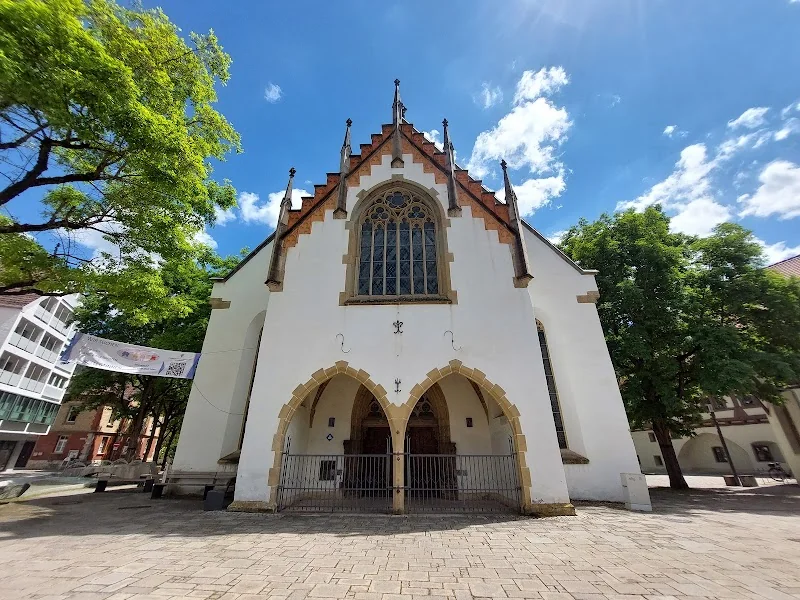
The City Church St. Peter and Paul in Blaubeuren is one of those places that you not only visit but slowly perceive. Located in the middle of the historic old town, it combines urban presence with quiet restraint and appears both powerful and delicate. This contrast is precisely what makes it appealing: When one steps from the lively old town into the church space, a distinct change in noise, pace, and mood is experienced. The Protestant congregation describes the space as a place where the bustling activity of the city suddenly seems far away, and the view of art, devotion, and community is freed. For orientation on-site, the address is also important: Karlstraße 17, 89143 Blaubeuren. This makes the church very well integrated into the old town structure and easy to find. The City Church belongs to the Blaubeuren-Gerhausen-Weiler congregation and is thus a fixed part of Protestant life in the city. Those looking for photos, impressions, directions, and practical tips will find here not only a building but a living church with a historical core, artistic furnishings, and current community life. This mixture makes the City Church an interesting place for both spontaneous visitors and those planning a visit. ([blaubeuren-evangelisch.de](https://www.blaubeuren-evangelisch.de/die-kirchengemeinden/gebaeude/stadtkirche))
Photos and First Impressions in the Blaubeuren Old Town
Those searching for photos of the City Church St. Peter and Paul are usually looking for more than just a building. They seek an impression: How does the church appear in the old town? What attitude does it radiate? How does it fit between alleys, houses, and squares? This is where Blaubeuren shows its strength. The official description speaks of a powerful yet delicate appearance, meaning an architecture that does not seem cold or monumental in a bad sense but dignified, fine, and present at the same time. In this form, the church fits very well into the historical environment of Blaubeuren, whose old town is among the prominent cityscapes of the region. This is particularly important for photography enthusiasts, as strong motifs often arise where architecture, light, and surroundings interact. The City Church is such a motif: It does not stand isolated but in a developed cityscape that directs the gaze towards it and simultaneously enhances its effect. Therefore, anyone taking pictures of the church or viewing them is also aware of the context: the old town, the paths, the quiet proximity to community life, and the impression of a church that is not museum-like but actively used. This is a crucial difference, as one photographs living buildings differently than mere monuments. ([blaubeuren-evangelisch.de](https://www.blaubeuren-evangelisch.de/die-kirchengemeinden/gebaeude/stadtkirche))
This impression continues inside. The church is described by the congregation as a space where everyday life becomes noticeably quieter, and visitors are allowed to bring time and leisure to perceive the many details. For photos, this means: The City Church is not only a striking sight from the outside but also an interior space with clear sight lines, artworks, and an atmosphere that can be captured in images without losing its depth. Particularly helpful is the note that a church guide is available in the literature stand. This shows that visitors do not simply walk past art but can consciously explore it. For image searches, travel preparations, or spontaneous visits, this is a plus because the first impression can quickly be connected with background knowledge. Thus, a photo becomes not just a beautiful motif but a connection of architecture, history, and religious significance. This interplay makes the City Church Peter and Paul a location that appears calm, dignified, and alive in images. ([blaubeuren-evangelisch.de](https://www.blaubeuren-evangelisch.de/die-kirchengemeinden/gebaeude/stadtkirche))
Artworks in the Church Space: Neubronner Altar and Frescoes
The real treasure of the City Church lies in the church space itself. The congregation mentions several artworks that make the visit particularly worthwhile: the Neubronner Altar, a fresco with a protective mantle Madonna, a crucifixion fresco, a Martin fresco, and the gallery paintings by Bartholomäus Sixt Kummer. Even this enumeration shows that the church is noteworthy not only architecturally but also art-historically. The Neubronner Altar shapes the space as a central focal point, while the frescoes and gallery paintings transform the church space into a multifaceted world of images. For visitors, this creates a tour where not just a single work has an effect, but the entire ensemble. The church thus becomes a place of contemplation that takes time and demands time. These artworks are not merely decoration but expressions of faith and history. They represent generations that have shaped, preserved, and filled the space with meaning. Therefore, when entering the church space, one encounters not only an aesthetic order but a spiritual and cultural narrative that remains legible to this day. The mix of altar, fresco, and gallery painting makes the City Church exciting for culture-interested guests because different forms of religious art meet in a historical space. ([blaubeuren-evangelisch.de](https://www.blaubeuren-evangelisch.de/die-kirchengemeinden/gebaeude/stadtkirche))
This artistic furnishing also changes the atmosphere of the visit. The congregation describes the interior as another world where the bustling activity of the city seems far away. This is not an exaggeration but a very accurate description of how sacred spaces can work when they are well preserved and permeated with art. Particularly in Blaubeuren, where the historic old town and church culture closely meet, this effect becomes especially evident. The visitor can not only look but also understand: The space invites one to reflect on their own faith, engage with the heritage of past generations, and perceive the connection between image, word, and music. This makes the City Church a place where art is not viewed in isolation but embedded in a lively religious practice. Therefore, those planning a visit should not only think of architecture and photos but also of the sound space created by choir, organ, and singing. The restoration of the choir windows, the care of the organ, and the continued use of the space are parts of the same task: to preserve the City Church as a spiritual, cultural, and urban center. This blend of heritage and responsibility makes the place so special. When visiting Blaubeuren, one does not encounter a frozen past but a church whose future is actively shaped. ([blaubeuren-evangelisch.de](https://www.blaubeuren-evangelisch.de/kirchengemeinde/spenden?utm_source=openai))
Directions and Parking at the City Church
For many inquiries, the location of the City Church is crucial, and here Blaubeuren has clear advantages. The church is located at Karlstraße 17 in 89143 Blaubeuren, right in the old town. Those walking through the historic city center are thus moving directly into an environment closely connected with the church, community life, and city history. General orientation is additionally facilitated by the fact that the city of Blaubeuren and tourism websites present the area around the old town as a well-developed destination with clear parking zones. For visitors, this means: The church can be planned as part of an old town visit, for example, in combination with other attractions, a stroll through the city center, or a detour to the church buildings in the vicinity. The City Church is therefore not a remote specialty address but a central component of the historic city center. However, those arriving by car should pay attention to the local parking regulations to ensure a relaxed visit. Particularly for people who want to combine a city church, photos, or a church visit with practical questions, precise information about directions is important. Blaubeuren provides several tips that allow for good preparation. ([blaubeuren-evangelisch.de](https://www.blaubeuren-evangelisch.de/die-kirchengemeinden/adressen-a-z/stadtkirche-blaubeuren))
When parking, it is especially relevant that Blaubeuren charges parking fees for municipal areas from Monday to Sunday between 8 a.m. and 6 p.m. The city center is divided into different parking zones. The official parking pages of the city also distinguish between Zone 1 with the Krone underground garage, Zone 1 old town, and Zone 2 at the old town. Those choosing an annual parking ticket for Zone 2 do not receive a fixed parking space; however, the ticket allows parking in this zone and is aimed at the general need within the old town. For spontaneous visitors, this is primarily a hint to pay attention to signs and zones early on. Those who wish to visit the City Church in peace can better plan whether a short stop, a stroll through the old town, or a longer stay is sensible. The combination of a central location and clear parking structure is typical for Blaubeuren. It ensures that the old town remains easily accessible without losing its historical character. That is why the directions are important but not a hindrance: With a little preparation, the City Church can be conveniently integrated into a visit to the Blaubeuren city center. ([blautopf.de](https://blautopf.de/kontakt/anfahrt/?utm_source=openai))
Services and Community Life in Blaubeuren
The City Church St. Peter and Paul is not only a noteworthy building but primarily a lively place of worship. The Protestant congregation emphasizes that in this church, worship, singing, and community come together, and the word of God is repeatedly spoken and interpreted anew. This is important because it removes the City Church from a purely monument perspective and shows it as an active part of community life. Therefore, those who view the church not only as a photographic motif or historical sight quickly understand that regular religious life takes place here. A current note from the church newsletter mentions the main service on Sundays at 10:15 a.m. in the City Church. Thus, the church is also interesting for people who want to combine a visit with a service. Particularly in cities with a strong historical imprint, this connection of age, present, and everyday piety is especially valuable. The City Church is not located outside the city but right in the middle: as a place of prayer, music, and encounter. This makes it relevant for families, travelers, and community members alike. ([blaubeuren-evangelisch.de](https://www.blaubeuren-evangelisch.de/die-kirchengemeinden/gebaeude/stadtkirche))
Community life also includes integration into the local Protestant structure. The Blaubeuren-Gerhausen-Weiler congregation belongs to the Protestant Church District of Blaubeuren and to the Protestant State Church in Württemberg. This classification shows that the City Church does not function as an isolated object but is part of a larger church network. This is important background information for visitors interested in church culture, local traditions, or church events. The congregation itself is also visibly present: it refers to contact persons, donation projects, and church offerings. This makes the City Church a place where religious practice, monument preservation responsibility, and social community overlap. Therefore, those visiting will not only experience the famous artworks or the beautiful location in the old town but also a church that still lives its mission today. This distinguishes the City Church from many purely sightseeing locations and explains why it continues to play a central role for Blaubeuren. ([blaubeuren-evangelisch.de](https://www.blaubeuren-evangelisch.de/die-kirchengemeinden/gebaeude/stadtkirche))
Choir Windows, Organ, and Current Preservation Projects
Another important aspect of the City Church is the ongoing preservation and renovation issues. The Protestant congregation is currently collecting donations for the rescue of the choir windows of the City Church Blaubeuren. The measure is estimated at around 411,000 euros. This makes it clear that monument preservation in a historic church like this is always a concrete and costly task. The church newsletter also describes that damage has been identified at the choir windows and flying buttresses, and therefore, professional and monument law action was necessary. For visitors, this is important information because it shows: The City Church is not a finished museum but a building that must be maintained, secured, and preserved permanently. The windows strongly shape the atmosphere of a church space because light, color, and construction determine the overall impression. Therefore, when visiting the church, one sees not only art and history but also the present of responsible preservation. This explains why donation projects and renovations play such a significant role in the congregation. ([blaubeuren-evangelisch.de](https://www.blaubeuren-evangelisch.de/kirchengemeinde/spenden?utm_source=openai))
The organ also plays a role in the preservation and future of the City Church. The church's website points to a project for organ restoration, and a church newsletter also highlights church music and the training of young organists and choir leaders. This shows that the City Church lives not only architecturally but also musically. For a Protestant city church, this is particularly important, as music, congregational singing, and worship are closely intertwined here. Therefore, those planning a visit should think not only of architecture and photos but also of the sound space created by choir, organ, and singing. The restoration of the choir windows, the care of the organ, and the continued use of the space are parts of the same task: to preserve the City Church as a spiritual, cultural, and urban center. This blend of heritage and responsibility makes the place so special. When visiting Blaubeuren, one does not encounter a frozen past but a church whose future is actively shaped. ([blaubeuren-evangelisch.de](https://www.blaubeuren-evangelisch.de/kirchengemeinde/spenden?utm_source=openai))
Why the City Church St. Peter and Paul is So Important
The City Church Peter and Paul is much more than a beautiful building in the old town for Blaubeuren. It connects location, history, art, and community life in a way that remains visible in the everyday life of the city. The congregation describes it as a place where the past of the church meets the present of faith. This is a good image of its significance: it stands firmly in the historical city structure yet is no mere backdrop. Through its central location on Karlstraße, its furnishings with altar, frescoes, and gallery paintings, and its integration into Protestant community life, it remains relevant for locals and guests alike. Those who want to understand Blaubeuren must also understand this church, as it is part of the religious and cultural identity of the city. Particularly in connection with the old town, an ensemble emerges that should not be viewed in isolation. The City Church is part of a vibrant town center where paths, squares, and sight lines interact. This defines its character and explains why it is so frequently sought after when people inquire about photos, history, directions, or parking. ([blaubeuren-evangelisch.de](https://www.blaubeuren-evangelisch.de/die-kirchengemeinden/gebaeude/stadtkirche))
For visitors, the special charm lies in the fact that the City Church addresses several interests at once. Those seeking art will find the Neubronner Altar and the frescoes. Those seeking tranquility will experience a different sound and a different time. Those needing practical information will find the address, parking tips, and a church guide on-site. Those wishing to attend a service have a concrete orientation with the Sunday appointment at 10:15 a.m. And those interested in the preservation of historic churches encounter a congregation that does not treat its choir windows and organ as a side issue but actively fights for their future. This multifaceted nature makes the City Church St. Peter and Paul Blaubeuren a location with its own identity. It is a sacred space, a cultural venue, a community church, and an old town motif all in one. Therefore, a visit is worthwhile not only for a quick impression but also for all those who wish to discover Blaubeuren with an open mind. ([blaubeuren-evangelisch.de](https://www.blaubeuren-evangelisch.de/die-kirchengemeinden/gebaeude/stadtkirche))
Sources:
- Protestant Congregation Blaubeuren – City Church Peter and Paul
- Protestant Congregation Blaubeuren – Address City Church Blaubeuren
- Protestant Congregation Blaubeuren – Donations and Rescue of the Choir Windows
- City of Blaubeuren – Parking in the Blautopf City Blaubeuren
- Blautopf.de – Directions and Parking in Blaubeuren
Mehr anzeigenWeniger anzeigen
City Church St. Peter and Paul Blaubeuren | Photos & Directions
The City Church St. Peter and Paul in Blaubeuren is one of those places that you not only visit but slowly perceive. Located in the middle of the historic old town, it combines urban presence with quiet restraint and appears both powerful and delicate. This contrast is precisely what makes it appealing: When one steps from the lively old town into the church space, a distinct change in noise, pace, and mood is experienced. The Protestant congregation describes the space as a place where the bustling activity of the city suddenly seems far away, and the view of art, devotion, and community is freed. For orientation on-site, the address is also important: Karlstraße 17, 89143 Blaubeuren. This makes the church very well integrated into the old town structure and easy to find. The City Church belongs to the Blaubeuren-Gerhausen-Weiler congregation and is thus a fixed part of Protestant life in the city. Those looking for photos, impressions, directions, and practical tips will find here not only a building but a living church with a historical core, artistic furnishings, and current community life. This mixture makes the City Church an interesting place for both spontaneous visitors and those planning a visit. ([blaubeuren-evangelisch.de](https://www.blaubeuren-evangelisch.de/die-kirchengemeinden/gebaeude/stadtkirche))
Photos and First Impressions in the Blaubeuren Old Town
Those searching for photos of the City Church St. Peter and Paul are usually looking for more than just a building. They seek an impression: How does the church appear in the old town? What attitude does it radiate? How does it fit between alleys, houses, and squares? This is where Blaubeuren shows its strength. The official description speaks of a powerful yet delicate appearance, meaning an architecture that does not seem cold or monumental in a bad sense but dignified, fine, and present at the same time. In this form, the church fits very well into the historical environment of Blaubeuren, whose old town is among the prominent cityscapes of the region. This is particularly important for photography enthusiasts, as strong motifs often arise where architecture, light, and surroundings interact. The City Church is such a motif: It does not stand isolated but in a developed cityscape that directs the gaze towards it and simultaneously enhances its effect. Therefore, anyone taking pictures of the church or viewing them is also aware of the context: the old town, the paths, the quiet proximity to community life, and the impression of a church that is not museum-like but actively used. This is a crucial difference, as one photographs living buildings differently than mere monuments. ([blaubeuren-evangelisch.de](https://www.blaubeuren-evangelisch.de/die-kirchengemeinden/gebaeude/stadtkirche))
This impression continues inside. The church is described by the congregation as a space where everyday life becomes noticeably quieter, and visitors are allowed to bring time and leisure to perceive the many details. For photos, this means: The City Church is not only a striking sight from the outside but also an interior space with clear sight lines, artworks, and an atmosphere that can be captured in images without losing its depth. Particularly helpful is the note that a church guide is available in the literature stand. This shows that visitors do not simply walk past art but can consciously explore it. For image searches, travel preparations, or spontaneous visits, this is a plus because the first impression can quickly be connected with background knowledge. Thus, a photo becomes not just a beautiful motif but a connection of architecture, history, and religious significance. This interplay makes the City Church Peter and Paul a location that appears calm, dignified, and alive in images. ([blaubeuren-evangelisch.de](https://www.blaubeuren-evangelisch.de/die-kirchengemeinden/gebaeude/stadtkirche))
Artworks in the Church Space: Neubronner Altar and Frescoes
The real treasure of the City Church lies in the church space itself. The congregation mentions several artworks that make the visit particularly worthwhile: the Neubronner Altar, a fresco with a protective mantle Madonna, a crucifixion fresco, a Martin fresco, and the gallery paintings by Bartholomäus Sixt Kummer. Even this enumeration shows that the church is noteworthy not only architecturally but also art-historically. The Neubronner Altar shapes the space as a central focal point, while the frescoes and gallery paintings transform the church space into a multifaceted world of images. For visitors, this creates a tour where not just a single work has an effect, but the entire ensemble. The church thus becomes a place of contemplation that takes time and demands time. These artworks are not merely decoration but expressions of faith and history. They represent generations that have shaped, preserved, and filled the space with meaning. Therefore, when entering the church space, one encounters not only an aesthetic order but a spiritual and cultural narrative that remains legible to this day. The mix of altar, fresco, and gallery painting makes the City Church exciting for culture-interested guests because different forms of religious art meet in a historical space. ([blaubeuren-evangelisch.de](https://www.blaubeuren-evangelisch.de/die-kirchengemeinden/gebaeude/stadtkirche))
This artistic furnishing also changes the atmosphere of the visit. The congregation describes the interior as another world where the bustling activity of the city seems far away. This is not an exaggeration but a very accurate description of how sacred spaces can work when they are well preserved and permeated with art. Particularly in Blaubeuren, where the historic old town and church culture closely meet, this effect becomes especially evident. The visitor can not only look but also understand: The space invites one to reflect on their own faith, engage with the heritage of past generations, and perceive the connection between image, word, and music. This makes the City Church a place where art is not viewed in isolation but embedded in a lively religious practice. Therefore, those planning a visit should not only think of architecture and photos but also of the sound space created by choir, organ, and singing. The restoration of the choir windows, the care of the organ, and the continued use of the space are parts of the same task: to preserve the City Church as a spiritual, cultural, and urban center. This blend of heritage and responsibility makes the place so special. When visiting Blaubeuren, one does not encounter a frozen past but a church whose future is actively shaped. ([blaubeuren-evangelisch.de](https://www.blaubeuren-evangelisch.de/kirchengemeinde/spenden?utm_source=openai))
Directions and Parking at the City Church
For many inquiries, the location of the City Church is crucial, and here Blaubeuren has clear advantages. The church is located at Karlstraße 17 in 89143 Blaubeuren, right in the old town. Those walking through the historic city center are thus moving directly into an environment closely connected with the church, community life, and city history. General orientation is additionally facilitated by the fact that the city of Blaubeuren and tourism websites present the area around the old town as a well-developed destination with clear parking zones. For visitors, this means: The church can be planned as part of an old town visit, for example, in combination with other attractions, a stroll through the city center, or a detour to the church buildings in the vicinity. The City Church is therefore not a remote specialty address but a central component of the historic city center. However, those arriving by car should pay attention to the local parking regulations to ensure a relaxed visit. Particularly for people who want to combine a city church, photos, or a church visit with practical questions, precise information about directions is important. Blaubeuren provides several tips that allow for good preparation. ([blaubeuren-evangelisch.de](https://www.blaubeuren-evangelisch.de/die-kirchengemeinden/adressen-a-z/stadtkirche-blaubeuren))
When parking, it is especially relevant that Blaubeuren charges parking fees for municipal areas from Monday to Sunday between 8 a.m. and 6 p.m. The city center is divided into different parking zones. The official parking pages of the city also distinguish between Zone 1 with the Krone underground garage, Zone 1 old town, and Zone 2 at the old town. Those choosing an annual parking ticket for Zone 2 do not receive a fixed parking space; however, the ticket allows parking in this zone and is aimed at the general need within the old town. For spontaneous visitors, this is primarily a hint to pay attention to signs and zones early on. Those who wish to visit the City Church in peace can better plan whether a short stop, a stroll through the old town, or a longer stay is sensible. The combination of a central location and clear parking structure is typical for Blaubeuren. It ensures that the old town remains easily accessible without losing its historical character. That is why the directions are important but not a hindrance: With a little preparation, the City Church can be conveniently integrated into a visit to the Blaubeuren city center. ([blautopf.de](https://blautopf.de/kontakt/anfahrt/?utm_source=openai))
Services and Community Life in Blaubeuren
The City Church St. Peter and Paul is not only a noteworthy building but primarily a lively place of worship. The Protestant congregation emphasizes that in this church, worship, singing, and community come together, and the word of God is repeatedly spoken and interpreted anew. This is important because it removes the City Church from a purely monument perspective and shows it as an active part of community life. Therefore, those who view the church not only as a photographic motif or historical sight quickly understand that regular religious life takes place here. A current note from the church newsletter mentions the main service on Sundays at 10:15 a.m. in the City Church. Thus, the church is also interesting for people who want to combine a visit with a service. Particularly in cities with a strong historical imprint, this connection of age, present, and everyday piety is especially valuable. The City Church is not located outside the city but right in the middle: as a place of prayer, music, and encounter. This makes it relevant for families, travelers, and community members alike. ([blaubeuren-evangelisch.de](https://www.blaubeuren-evangelisch.de/die-kirchengemeinden/gebaeude/stadtkirche))
Community life also includes integration into the local Protestant structure. The Blaubeuren-Gerhausen-Weiler congregation belongs to the Protestant Church District of Blaubeuren and to the Protestant State Church in Württemberg. This classification shows that the City Church does not function as an isolated object but is part of a larger church network. This is important background information for visitors interested in church culture, local traditions, or church events. The congregation itself is also visibly present: it refers to contact persons, donation projects, and church offerings. This makes the City Church a place where religious practice, monument preservation responsibility, and social community overlap. Therefore, those visiting will not only experience the famous artworks or the beautiful location in the old town but also a church that still lives its mission today. This distinguishes the City Church from many purely sightseeing locations and explains why it continues to play a central role for Blaubeuren. ([blaubeuren-evangelisch.de](https://www.blaubeuren-evangelisch.de/die-kirchengemeinden/gebaeude/stadtkirche))
Choir Windows, Organ, and Current Preservation Projects
Another important aspect of the City Church is the ongoing preservation and renovation issues. The Protestant congregation is currently collecting donations for the rescue of the choir windows of the City Church Blaubeuren. The measure is estimated at around 411,000 euros. This makes it clear that monument preservation in a historic church like this is always a concrete and costly task. The church newsletter also describes that damage has been identified at the choir windows and flying buttresses, and therefore, professional and monument law action was necessary. For visitors, this is important information because it shows: The City Church is not a finished museum but a building that must be maintained, secured, and preserved permanently. The windows strongly shape the atmosphere of a church space because light, color, and construction determine the overall impression. Therefore, when visiting the church, one sees not only art and history but also the present of responsible preservation. This explains why donation projects and renovations play such a significant role in the congregation. ([blaubeuren-evangelisch.de](https://www.blaubeuren-evangelisch.de/kirchengemeinde/spenden?utm_source=openai))
The organ also plays a role in the preservation and future of the City Church. The church's website points to a project for organ restoration, and a church newsletter also highlights church music and the training of young organists and choir leaders. This shows that the City Church lives not only architecturally but also musically. For a Protestant city church, this is particularly important, as music, congregational singing, and worship are closely intertwined here. Therefore, those planning a visit should think not only of architecture and photos but also of the sound space created by choir, organ, and singing. The restoration of the choir windows, the care of the organ, and the continued use of the space are parts of the same task: to preserve the City Church as a spiritual, cultural, and urban center. This blend of heritage and responsibility makes the place so special. When visiting Blaubeuren, one does not encounter a frozen past but a church whose future is actively shaped. ([blaubeuren-evangelisch.de](https://www.blaubeuren-evangelisch.de/kirchengemeinde/spenden?utm_source=openai))
Why the City Church St. Peter and Paul is So Important
The City Church Peter and Paul is much more than a beautiful building in the old town for Blaubeuren. It connects location, history, art, and community life in a way that remains visible in the everyday life of the city. The congregation describes it as a place where the past of the church meets the present of faith. This is a good image of its significance: it stands firmly in the historical city structure yet is no mere backdrop. Through its central location on Karlstraße, its furnishings with altar, frescoes, and gallery paintings, and its integration into Protestant community life, it remains relevant for locals and guests alike. Those who want to understand Blaubeuren must also understand this church, as it is part of the religious and cultural identity of the city. Particularly in connection with the old town, an ensemble emerges that should not be viewed in isolation. The City Church is part of a vibrant town center where paths, squares, and sight lines interact. This defines its character and explains why it is so frequently sought after when people inquire about photos, history, directions, or parking. ([blaubeuren-evangelisch.de](https://www.blaubeuren-evangelisch.de/die-kirchengemeinden/gebaeude/stadtkirche))
For visitors, the special charm lies in the fact that the City Church addresses several interests at once. Those seeking art will find the Neubronner Altar and the frescoes. Those seeking tranquility will experience a different sound and a different time. Those needing practical information will find the address, parking tips, and a church guide on-site. Those wishing to attend a service have a concrete orientation with the Sunday appointment at 10:15 a.m. And those interested in the preservation of historic churches encounter a congregation that does not treat its choir windows and organ as a side issue but actively fights for their future. This multifaceted nature makes the City Church St. Peter and Paul Blaubeuren a location with its own identity. It is a sacred space, a cultural venue, a community church, and an old town motif all in one. Therefore, a visit is worthwhile not only for a quick impression but also for all those who wish to discover Blaubeuren with an open mind. ([blaubeuren-evangelisch.de](https://www.blaubeuren-evangelisch.de/die-kirchengemeinden/gebaeude/stadtkirche))
Sources:
- Protestant Congregation Blaubeuren – City Church Peter and Paul
- Protestant Congregation Blaubeuren – Address City Church Blaubeuren
- Protestant Congregation Blaubeuren – Donations and Rescue of the Choir Windows
- City of Blaubeuren – Parking in the Blautopf City Blaubeuren
- Blautopf.de – Directions and Parking in Blaubeuren
City Church St. Peter and Paul Blaubeuren | Photos & Directions
The City Church St. Peter and Paul in Blaubeuren is one of those places that you not only visit but slowly perceive. Located in the middle of the historic old town, it combines urban presence with quiet restraint and appears both powerful and delicate. This contrast is precisely what makes it appealing: When one steps from the lively old town into the church space, a distinct change in noise, pace, and mood is experienced. The Protestant congregation describes the space as a place where the bustling activity of the city suddenly seems far away, and the view of art, devotion, and community is freed. For orientation on-site, the address is also important: Karlstraße 17, 89143 Blaubeuren. This makes the church very well integrated into the old town structure and easy to find. The City Church belongs to the Blaubeuren-Gerhausen-Weiler congregation and is thus a fixed part of Protestant life in the city. Those looking for photos, impressions, directions, and practical tips will find here not only a building but a living church with a historical core, artistic furnishings, and current community life. This mixture makes the City Church an interesting place for both spontaneous visitors and those planning a visit. ([blaubeuren-evangelisch.de](https://www.blaubeuren-evangelisch.de/die-kirchengemeinden/gebaeude/stadtkirche))
Photos and First Impressions in the Blaubeuren Old Town
Those searching for photos of the City Church St. Peter and Paul are usually looking for more than just a building. They seek an impression: How does the church appear in the old town? What attitude does it radiate? How does it fit between alleys, houses, and squares? This is where Blaubeuren shows its strength. The official description speaks of a powerful yet delicate appearance, meaning an architecture that does not seem cold or monumental in a bad sense but dignified, fine, and present at the same time. In this form, the church fits very well into the historical environment of Blaubeuren, whose old town is among the prominent cityscapes of the region. This is particularly important for photography enthusiasts, as strong motifs often arise where architecture, light, and surroundings interact. The City Church is such a motif: It does not stand isolated but in a developed cityscape that directs the gaze towards it and simultaneously enhances its effect. Therefore, anyone taking pictures of the church or viewing them is also aware of the context: the old town, the paths, the quiet proximity to community life, and the impression of a church that is not museum-like but actively used. This is a crucial difference, as one photographs living buildings differently than mere monuments. ([blaubeuren-evangelisch.de](https://www.blaubeuren-evangelisch.de/die-kirchengemeinden/gebaeude/stadtkirche))
This impression continues inside. The church is described by the congregation as a space where everyday life becomes noticeably quieter, and visitors are allowed to bring time and leisure to perceive the many details. For photos, this means: The City Church is not only a striking sight from the outside but also an interior space with clear sight lines, artworks, and an atmosphere that can be captured in images without losing its depth. Particularly helpful is the note that a church guide is available in the literature stand. This shows that visitors do not simply walk past art but can consciously explore it. For image searches, travel preparations, or spontaneous visits, this is a plus because the first impression can quickly be connected with background knowledge. Thus, a photo becomes not just a beautiful motif but a connection of architecture, history, and religious significance. This interplay makes the City Church Peter and Paul a location that appears calm, dignified, and alive in images. ([blaubeuren-evangelisch.de](https://www.blaubeuren-evangelisch.de/die-kirchengemeinden/gebaeude/stadtkirche))
Artworks in the Church Space: Neubronner Altar and Frescoes
The real treasure of the City Church lies in the church space itself. The congregation mentions several artworks that make the visit particularly worthwhile: the Neubronner Altar, a fresco with a protective mantle Madonna, a crucifixion fresco, a Martin fresco, and the gallery paintings by Bartholomäus Sixt Kummer. Even this enumeration shows that the church is noteworthy not only architecturally but also art-historically. The Neubronner Altar shapes the space as a central focal point, while the frescoes and gallery paintings transform the church space into a multifaceted world of images. For visitors, this creates a tour where not just a single work has an effect, but the entire ensemble. The church thus becomes a place of contemplation that takes time and demands time. These artworks are not merely decoration but expressions of faith and history. They represent generations that have shaped, preserved, and filled the space with meaning. Therefore, when entering the church space, one encounters not only an aesthetic order but a spiritual and cultural narrative that remains legible to this day. The mix of altar, fresco, and gallery painting makes the City Church exciting for culture-interested guests because different forms of religious art meet in a historical space. ([blaubeuren-evangelisch.de](https://www.blaubeuren-evangelisch.de/die-kirchengemeinden/gebaeude/stadtkirche))
This artistic furnishing also changes the atmosphere of the visit. The congregation describes the interior as another world where the bustling activity of the city seems far away. This is not an exaggeration but a very accurate description of how sacred spaces can work when they are well preserved and permeated with art. Particularly in Blaubeuren, where the historic old town and church culture closely meet, this effect becomes especially evident. The visitor can not only look but also understand: The space invites one to reflect on their own faith, engage with the heritage of past generations, and perceive the connection between image, word, and music. This makes the City Church a place where art is not viewed in isolation but embedded in a lively religious practice. Therefore, those planning a visit should not only think of architecture and photos but also of the sound space created by choir, organ, and singing. The restoration of the choir windows, the care of the organ, and the continued use of the space are parts of the same task: to preserve the City Church as a spiritual, cultural, and urban center. This blend of heritage and responsibility makes the place so special. When visiting Blaubeuren, one does not encounter a frozen past but a church whose future is actively shaped. ([blaubeuren-evangelisch.de](https://www.blaubeuren-evangelisch.de/kirchengemeinde/spenden?utm_source=openai))
Directions and Parking at the City Church
For many inquiries, the location of the City Church is crucial, and here Blaubeuren has clear advantages. The church is located at Karlstraße 17 in 89143 Blaubeuren, right in the old town. Those walking through the historic city center are thus moving directly into an environment closely connected with the church, community life, and city history. General orientation is additionally facilitated by the fact that the city of Blaubeuren and tourism websites present the area around the old town as a well-developed destination with clear parking zones. For visitors, this means: The church can be planned as part of an old town visit, for example, in combination with other attractions, a stroll through the city center, or a detour to the church buildings in the vicinity. The City Church is therefore not a remote specialty address but a central component of the historic city center. However, those arriving by car should pay attention to the local parking regulations to ensure a relaxed visit. Particularly for people who want to combine a city church, photos, or a church visit with practical questions, precise information about directions is important. Blaubeuren provides several tips that allow for good preparation. ([blaubeuren-evangelisch.de](https://www.blaubeuren-evangelisch.de/die-kirchengemeinden/adressen-a-z/stadtkirche-blaubeuren))
When parking, it is especially relevant that Blaubeuren charges parking fees for municipal areas from Monday to Sunday between 8 a.m. and 6 p.m. The city center is divided into different parking zones. The official parking pages of the city also distinguish between Zone 1 with the Krone underground garage, Zone 1 old town, and Zone 2 at the old town. Those choosing an annual parking ticket for Zone 2 do not receive a fixed parking space; however, the ticket allows parking in this zone and is aimed at the general need within the old town. For spontaneous visitors, this is primarily a hint to pay attention to signs and zones early on. Those who wish to visit the City Church in peace can better plan whether a short stop, a stroll through the old town, or a longer stay is sensible. The combination of a central location and clear parking structure is typical for Blaubeuren. It ensures that the old town remains easily accessible without losing its historical character. That is why the directions are important but not a hindrance: With a little preparation, the City Church can be conveniently integrated into a visit to the Blaubeuren city center. ([blautopf.de](https://blautopf.de/kontakt/anfahrt/?utm_source=openai))
Services and Community Life in Blaubeuren
The City Church St. Peter and Paul is not only a noteworthy building but primarily a lively place of worship. The Protestant congregation emphasizes that in this church, worship, singing, and community come together, and the word of God is repeatedly spoken and interpreted anew. This is important because it removes the City Church from a purely monument perspective and shows it as an active part of community life. Therefore, those who view the church not only as a photographic motif or historical sight quickly understand that regular religious life takes place here. A current note from the church newsletter mentions the main service on Sundays at 10:15 a.m. in the City Church. Thus, the church is also interesting for people who want to combine a visit with a service. Particularly in cities with a strong historical imprint, this connection of age, present, and everyday piety is especially valuable. The City Church is not located outside the city but right in the middle: as a place of prayer, music, and encounter. This makes it relevant for families, travelers, and community members alike. ([blaubeuren-evangelisch.de](https://www.blaubeuren-evangelisch.de/die-kirchengemeinden/gebaeude/stadtkirche))
Community life also includes integration into the local Protestant structure. The Blaubeuren-Gerhausen-Weiler congregation belongs to the Protestant Church District of Blaubeuren and to the Protestant State Church in Württemberg. This classification shows that the City Church does not function as an isolated object but is part of a larger church network. This is important background information for visitors interested in church culture, local traditions, or church events. The congregation itself is also visibly present: it refers to contact persons, donation projects, and church offerings. This makes the City Church a place where religious practice, monument preservation responsibility, and social community overlap. Therefore, those visiting will not only experience the famous artworks or the beautiful location in the old town but also a church that still lives its mission today. This distinguishes the City Church from many purely sightseeing locations and explains why it continues to play a central role for Blaubeuren. ([blaubeuren-evangelisch.de](https://www.blaubeuren-evangelisch.de/die-kirchengemeinden/gebaeude/stadtkirche))
Choir Windows, Organ, and Current Preservation Projects
Another important aspect of the City Church is the ongoing preservation and renovation issues. The Protestant congregation is currently collecting donations for the rescue of the choir windows of the City Church Blaubeuren. The measure is estimated at around 411,000 euros. This makes it clear that monument preservation in a historic church like this is always a concrete and costly task. The church newsletter also describes that damage has been identified at the choir windows and flying buttresses, and therefore, professional and monument law action was necessary. For visitors, this is important information because it shows: The City Church is not a finished museum but a building that must be maintained, secured, and preserved permanently. The windows strongly shape the atmosphere of a church space because light, color, and construction determine the overall impression. Therefore, when visiting the church, one sees not only art and history but also the present of responsible preservation. This explains why donation projects and renovations play such a significant role in the congregation. ([blaubeuren-evangelisch.de](https://www.blaubeuren-evangelisch.de/kirchengemeinde/spenden?utm_source=openai))
The organ also plays a role in the preservation and future of the City Church. The church's website points to a project for organ restoration, and a church newsletter also highlights church music and the training of young organists and choir leaders. This shows that the City Church lives not only architecturally but also musically. For a Protestant city church, this is particularly important, as music, congregational singing, and worship are closely intertwined here. Therefore, those planning a visit should think not only of architecture and photos but also of the sound space created by choir, organ, and singing. The restoration of the choir windows, the care of the organ, and the continued use of the space are parts of the same task: to preserve the City Church as a spiritual, cultural, and urban center. This blend of heritage and responsibility makes the place so special. When visiting Blaubeuren, one does not encounter a frozen past but a church whose future is actively shaped. ([blaubeuren-evangelisch.de](https://www.blaubeuren-evangelisch.de/kirchengemeinde/spenden?utm_source=openai))
Why the City Church St. Peter and Paul is So Important
The City Church Peter and Paul is much more than a beautiful building in the old town for Blaubeuren. It connects location, history, art, and community life in a way that remains visible in the everyday life of the city. The congregation describes it as a place where the past of the church meets the present of faith. This is a good image of its significance: it stands firmly in the historical city structure yet is no mere backdrop. Through its central location on Karlstraße, its furnishings with altar, frescoes, and gallery paintings, and its integration into Protestant community life, it remains relevant for locals and guests alike. Those who want to understand Blaubeuren must also understand this church, as it is part of the religious and cultural identity of the city. Particularly in connection with the old town, an ensemble emerges that should not be viewed in isolation. The City Church is part of a vibrant town center where paths, squares, and sight lines interact. This defines its character and explains why it is so frequently sought after when people inquire about photos, history, directions, or parking. ([blaubeuren-evangelisch.de](https://www.blaubeuren-evangelisch.de/die-kirchengemeinden/gebaeude/stadtkirche))
For visitors, the special charm lies in the fact that the City Church addresses several interests at once. Those seeking art will find the Neubronner Altar and the frescoes. Those seeking tranquility will experience a different sound and a different time. Those needing practical information will find the address, parking tips, and a church guide on-site. Those wishing to attend a service have a concrete orientation with the Sunday appointment at 10:15 a.m. And those interested in the preservation of historic churches encounter a congregation that does not treat its choir windows and organ as a side issue but actively fights for their future. This multifaceted nature makes the City Church St. Peter and Paul Blaubeuren a location with its own identity. It is a sacred space, a cultural venue, a community church, and an old town motif all in one. Therefore, a visit is worthwhile not only for a quick impression but also for all those who wish to discover Blaubeuren with an open mind. ([blaubeuren-evangelisch.de](https://www.blaubeuren-evangelisch.de/die-kirchengemeinden/gebaeude/stadtkirche))
Sources:
- Protestant Congregation Blaubeuren – City Church Peter and Paul
- Protestant Congregation Blaubeuren – Address City Church Blaubeuren
- Protestant Congregation Blaubeuren – Donations and Rescue of the Choir Windows
- City of Blaubeuren – Parking in the Blautopf City Blaubeuren
- Blautopf.de – Directions and Parking in Blaubeuren
Upcoming Events
No events found
Frequently Asked Questions
Reviews
david antoun
14. June 2026
Gothic church from the 12th century.
franz wolfinger
24. May 2026
I share the view of most reviewers that this church is definitely worth a visit. You can read a lot about its history on WIKIPEDIA, so I’ll skip the repeats. I think taking a break here is quite suitable to relax and focus on what really matters. Even though it’s already located in the pedestrian zone, there are still only a few interested visitors. Such a shame!
Johnny F.
25. August 2025
The church fits beautifully into the old town and has a pleasant, calm atmosphere. The furnishings and the building itself are Gothic. Most of the church dates back to the early 15th century. The choir is from around 1459, in 1495 two octagonal stories were added to the tower, and in the second half of the 16th century a Swiss cap was added. The organ is from 1966. Even though the monastery church is the highlight, it's worth a visit here too.
Dirk Habermann
16. July 2023
Unfortunately, there are renovation works, but hopefully the choir windows can be saved.
Kubaaa
19. February 2024
The little church in the town center is worth stopping by.