
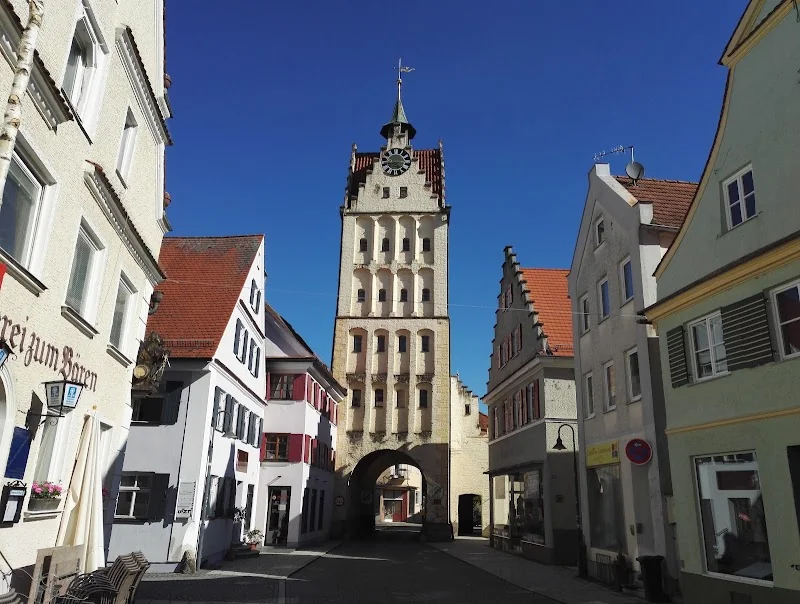
Weißenhorn
Kirchstraße 3, 89264 Weißenhorn-Grafertshofen, Deutschland
Schlossplatz Weißenhorn | Events & History
The Schlossplatz Weißenhorn is one of the most impressive historical sites in the center of the Swabian Fugger city. Between the Old Castle, the Fugger Castle, the Town Hall, the Church Square, and the streets of the old town, a space is created that closely connects history, urban life, gastronomy, and culture. Those searching for Schlossplatz Weißenhorn, Schlossplatz 1 Weißenhorn, or events in Weißenhorn will find here not an anonymous multipurpose building, but a historically grown ensemble with a special atmosphere. The square is part of an urban area that has been shaped over centuries by rule, administration, trade, religion, and public life.
Today, the surroundings of the Schlossplatz serve as a starting point for a tour of the old town, a restaurant visit, a market visit, or attendance at a cultural event. The historic buildings form a striking backdrop, while the nearby Church Square and the city center are regularly used for public events. These include markets, concerts, festivals, and other dates from the Weißenhorn event calendar. At the same time, the Schlossplatz remains a place where the architectural development of the city can be particularly well read. The historical arc extends from the medieval seat of power through the time of the Fugger to the present location of the Town Hall.
The designation of the location may vary depending on the provider. The provided dataset specifies Kirchstraße 3, 89264 Weißenhorn-Grafertshofen. Public gastronomic and municipal entries also mention Schlossplatz 1, 89264 Weißenhorn in the immediate vicinity of the Schlossplatz. Therefore, anyone attending a specific event should always check the current address for the respective date. Regardless, the spatial reference remains clear: it refers to the historic center around Schlossplatz, Church Square, and the castle ensemble of Weißenhorn.
Schlossplatz Weißenhorn Events and Program
The most important practical search term related to the Schlossplatz is events Weißenhorn. The square and its immediate surroundings are integrated into the public life of the old town. A dedicated year-round program with events exclusively taking place at the Schlossplatz is not permanently established. Instead, events frequently appear in the general calendar of the city, in the vicinity of the Church Square, or with the respective clubs, cultural organizers, and gastronomy businesses. For visitors, this means: if you are looking for a current program, you should not only search for the exact name Schlossplatz Weißenhorn but also consider the official event calendar of the city of Weißenhorn and the entries around the Town Hall, Church Square, and old town.
Recurring forms of public life include markets and municipal events. The city points out that the old town transforms several times a year for a traditional merchant market between the Upper and Lower Gate as well as around the Church Square and Schlossplatz into a market hustle. Such dates combine shopping, gastronomy, and sightseeing. For visitors, the Schlossplatz is not only a destination but also a point of orientation: from here, the historic buildings, the church, and other areas of the city center can be easily reached on foot.
In the summer months, Town Hall concerts are also held in the area of the Church Square. The historic urban space then serves as an open stage for music and encounters. The concert visit can be combined with a tour of the castle ensemble or a gastronomic stay. Larger city festivals, cultural series, and seasonal events can also enliven the surroundings. Which dates actually take place depends on the respective annual program and organizational decisions. Therefore, visitors should always read the date, start time, venue, access, and possible seating information in the current announcement.
For planning a visit, a simple sequence is recommended. First, the official event calendar should be searched for Weißenhorn, Town Hall concerts, markets, or old town festivals. Then it is worthwhile to check whether the event takes place at the Schlossplatz, Church Square, Town Hall, or another location in the city center. Finally, the opening hours of gastronomy, possible closures, and the need for reservations should be considered. This way, it can be avoided that an event takes place in the old town but not directly at the Schlossplatz.
Fuggerschloss, Old Castle, and History of the Schlossplatz
The historical significance of the Schlossplatz primarily arises from the castle ensemble. It includes the Old Castle, the Fugger Castle, and the intermediate building. According to the available architectural historical investigations, the Old Castle was built in the 15th century. The year of construction is cited as around 1460; dendrochronological studies assign parts of the building history to the mid-1460s. The building was integrated into the city fortifications and served as a seat of power. Thus, the location was from the beginning not only representative but also part of the medieval urban layout.
A new era began when the rule of Weißenhorn was pledged to Jakob Fugger in 1507. The connection with the Augsburg merchant family shapes the identity of the city to this day. The New Castle, also known as the Fugger Castle, was built in 1513 and 1514. It was designed as a representative three-story building in the early Renaissance style. A stair tower at the northeast corner was part of the original design. The architecture shows that Weißenhorn at this time went far beyond the significance of a small rural town and was to be visibly represented as a center of power and administration.
The square in front of the castle buildings also changed over the centuries. For the creation of a castle terrace, parts of older fortification structures were modified in the 17th century. Archaeological investigations have provided evidence of earlier walls, foundations, and the design of the area. The present Schlossplatz is therefore not simply an open space in front of historic houses but the result of various construction phases. City fortifications, castle gardens, walls, transitions, and later square designs have continually shaped the space anew.
After the end of princely or sovereign use, the functions of the buildings changed. The castles were used for public and administrative purposes. The Old Castle temporarily housed various municipal institutions, while rooms were also made available to clubs, exhibitions, and musical groups. The historical development of the Schlossplatz is therefore closely linked to the development of Weißenhorn as an administrative and cultural site. Today's users and events stand in a long tradition of public use.
A comprehensive renovation of the castle ensemble took place between 2009 and 2013. Historical building substance, archaeological findings, and modern requirements were brought together. The buildings are now used as a Town Hall. The Schlossplatz was then redesigned between 2015 and 2017. The prominently visible red letters TOWN HALL mark the entrance and give the ensemble a modern, easily recognizable orientation. It is precisely this contrast of Renaissance architecture, historical square structure, and contemporary use that makes the place particularly interesting for city tours and events.
Weißenhorn Old Town, Church Square, and Cultural Atmosphere
The Schlossplatz should not be viewed in isolation. Its effect arises from the interplay with the Weißenhorn old town, the Church Square, the parish church, and the adjacent alleys. Those visiting the square experience a central area where different historical layers lie closely together. The castle ensemble recalls medieval and early modern rule, the parish church shapes the religious center, and the surrounding buildings give the area the character of a grown old town.
The Church Square has been an important focal point of urban life for centuries. Changes to the church, city wall, and adjacent areas also influenced the use of the Schlossplatz. In the 19th and 20th centuries, the spaces between the castle, church, and brewery were reorganized several times. In the 1980s, the Church Square was extensively redesigned. The area between the castles and the brewery was cleared of disruptive constructions, fences, and excessive planting. A new delineation drew on historical design ideas and established a connection between memory and contemporary urban planning.
The cultural atmosphere is supported by clubs, music groups, and local organizers. Historically, spaces in the castle were used for art exhibitions, rehearsals, club activities, and festivals. The Kult(o)ur association in Weißenhorn organized an artists' market in the ground floor rooms of the castle in earlier years. The city band also used spaces in the ensemble and organized the wine festival under the stork's nest for an extended period. These examples show that the Schlossplatz was not only a backdrop for representative events but also a space for civic engagement.
Today, the surroundings are particularly suitable for a combination of culture and enjoyment. A visit can begin with a tour of the old town, take in the architectural history at the Schlossplatz, and then lead to a concert, market, or restaurant visit. In summer, the character of the square's surroundings changes due to outdoor areas and events. During markets and city festivals, the historical backdrop is more publicly utilized, while the square serves as a point of orientation and photo motif on quieter days.
For families, out-of-town guests, and day visitors, the location is attractive because several destinations are close together. The castle ensemble, Church Square, old town alleys, museum, and gastronomic offerings can generally be integrated into a short city tour. It should be noted that historical city centers are not always barrier-free or designed for large groups of visitors. Therefore, information on access, seating options, and temporary restrictions is particularly important for specific events.
Gastronomy at Schlossplatz Weißenhorn
An important search term related to Schlossplatz 1 Weißenhorn is gastronomy. In the immediate vicinity is the restaurant ANNO 1460. The name refers to the historical year associated with the construction of the Old Castle and underscores the connection between regional cuisine and city history. According to published information, the establishment has about 80 to 100 seats in the dining area as well as a separate room with 36 seats. In summer, a shady beer garden and a terrace with approximately 130 seats are also available.
This information makes the restaurant interesting for various occasions. Individual guests can combine a city visit with a meal, while groups, birthday parties, and event visitors can use a separate room or the outdoor area. For celebrations, a prior inquiry is advisable, as available rooms, opening hours, and reservation conditions depend on the specific date. Especially on event days in the old town, demand may be higher than on regular weekdays.
The published opening hours indicate lunch service from Wednesday to Friday between 11 AM and 2 PM, as well as à la carte service from Tuesday to Saturday between 5 PM and 11 PM. On Sundays, the establishment is open for events, occasions, and birthdays, provided this is individually arranged. Mondays are a day off. Since gastronomy opening hours can change seasonally or for operational reasons, guests should check the current menu, reservation situation, and opening hours directly with the restaurant before arriving.
The culinary stay can be well combined with a historical visit. Before or after the meal, visitors can explore the castle ensemble, the Church Square, and the old town. The combination of historic buildings, regional character, and outdoor spaces creates an atmosphere that differs from a typical restaurant location. In summer, the terrace or beer garden can be particularly pleasant, while the indoor area provides a practical addition during concerts, markets, or inclement weather.
For event planners, it is also relevant that not every date at the Schlossplatz automatically takes place in the restaurant. The square, the Town Hall, the Church Square, and the gastronomic spaces are different areas. An invitation or event entry should therefore be carefully checked. Those planning a celebration, reception, or meeting should coordinate capacity, seating, technology, catering, and access directly with the respective provider. Binding information on a general event capacity of the Schlossplatz is not available in the verified information.
Directions, Address, and Parking at Schlossplatz Weißenhorn
The central location of the Schlossplatz is practical for visitors but requires a precise check of the address. The provided location dataset specifies Kirchstraße 3, 89264 Weißenhorn-Grafertshofen, Germany. Public entries in the immediate Schlossplatz area, on the other hand, refer to Schlossplatz 1, 89264 Weißenhorn, for example, for the restaurant ANNO 1460. This different spelling may arise because various buildings, entrances, or providers refer to the same historical area differently. For a specific arrival, the address in the official event entry or with the respective organizer should always be decisive.
The Schlossplatz is located within or at the edge of the historic city center. This means that the last section of the journey may need to be done on foot depending on the destination, and not every area may be accessed directly in front of the building. During markets, concerts, city festivals, or other larger events, access may be temporarily restricted. Delivery traffic, resident regulations, and temporary closures can also affect accessibility. Visitors should therefore plan enough time for orientation and not arrive just before the start of the event.
Regarding parking, it is important to distinguish between a general visit to the old town and an event with special traffic regulations. The available information does not document a clearly designated parking lot exclusively assigned to the Schlossplatz with binding parking space numbers. Therefore, visitors should pay attention to the municipal signage, current city notices, and the information from the respective organizer. Those arriving by car should plan possible walking distances from the parking lot to the Schlossplatz and not equate access with a guaranteed parking space.
For groups, older guests, or people with limited mobility, it is advisable to check access early. Historical square areas may have different surfaces, bottlenecks, or level transitions. Organizers can often better inform which entrance is barrier-free accessible and whether a short drop-off is possible. This information is particularly relevant for events with seating, evening appointments, or larger visitor numbers.
Those visiting the Schlossplatz not just for a single date but as part of a day trip can plan their arrival more relaxed. A combination of city stroll, castle ensemble, Church Square, gastronomy, and event reduces time pressure. At the same time, visitors should keep in mind that individual facilities have their own opening hours and that the actual event space may change depending on the date. Safe orientation thus arises from the interplay of the urban event calendar, organizer notices, and current signage on site.
Sights and Experiences around Schlossplatz
The Schlossplatz serves as a starting point to experience Weißenhorn's historical identity. The Old Castle and the Fugger Castle form the architectural focus. The buildings represent the development from a medieval seat of power to a representative Renaissance building and finally to a modern administrative site. Those who take their time can trace how the city has changed over centuries at the facades, the layout of the square, and the transitions to the Church Square.
In the immediate vicinity are further destinations of the Weißenhorn old town. This includes the Fugger wool and weighing house, built in the 16th century, which now houses the local museum. The parish church of the Assumption of Mary, the cemetery church of St. Bartholomew, and the Fugger garden castle are also among the historical sights of the city. Depending on opening and event conditions, these destinations can be combined with a visit to the Schlossplatz.
For culture enthusiasts, an appointment in the Schlossplatz area can therefore be more than just a single program point. A concert becomes an occasion for a tour of the old town, a market visit can be combined with regional gastronomy, and a restaurant visit can be complemented by a view of the castle ensemble. Particularly appealing is the mixture of everyday life and history: Town Hall, shops, clubs, churches, taverns, and event spaces lie in an area that has already been shaped by administration, trade, and public life in the past.
Recurring events in the city also give the Schlossplatz a larger cultural context. These include, among others, the old town festival, the cultural night, the weekly market, the European weeks, and seasonal city events. Not every one of these events takes place entirely at the Schlossplatz. Frequently, the offerings extend over several areas of the old town. Precisely for this reason, it is worthwhile to take a look at the entire event calendar of Weißenhorn instead of searching for just one single place name.
For photographers and history enthusiasts, the Schlossplatz offers several perspectives. The contrast between historic facades, the open square, modern orientation elements, and lively use creates different impressions at any time of day. While markets and concerts enliven the space, quiet mornings show the architectural structure more strongly. The square is thus both a venue in the broader sense and a vivid chapter of the city's history.
Those visiting the place should be aware that the special quality lies not solely in a single attraction. It arises from the connection of castle architecture, city history, public use, gastronomy, and events. This combination makes Schlossplatz Weißenhorn a suitable destination for a cultural day trip and a prominent address in the historic center of the city.
Practical Tips for Visiting the Schlossplatz
The best visit planning depends on the occasion. For a city stroll, a flexible plan with enough time for the old town is usually sufficient. For concerts, markets, or other public events, however, visitors should check the current date, start time, venue, and possible access information. The term Schlossplatz in announcements may refer to the entire surroundings, while the specific program point takes place at the Church Square, in the Town Hall, in a dining area, or at another location in the city center.
For gastronomic visits, a reservation is advisable if a larger group, a birthday, or an appointment following an event is planned. The restaurant ANNO 1460 claims to have several indoor and outdoor areas, but actual availability depends on the respective day. In summer, the beer garden and terrace can be in high demand. In bad weather or on heavily visited event days, the indoor area may fill up more quickly.
For families and older guests, it is sensible to realistically assess the route from the parking lot or stop to the destination. Historical centers can have short distances that, due to cobblestones, square designs, or crowds, may still take more time. For evening events, attention should also be paid to the return journey, lighting, and the opening of the chosen parking or transportation options.
Those interested in history can prepare their visit with thematic research. Particularly helpful are information about the Old Castle, the Fugger Castle, its use as a Town Hall, and the redesign of the Schlossplatz. On-site, even simple details like wall edges, square boundaries, building positions, and sightlines gain significance when one knows their historical development. The Schlossplatz then becomes not just a beautiful backdrop but also understandable as the result of many construction and usage phases.
For organizers, the location is especially interesting due to its historical impact. A reception, cultural event, or gastronomic event can benefit from the proximity to the castle ensemble. At the same time, organizers must consider the limited significance of general online information. Binding information on technology, electricity, seating, weather protection, permits, accessibility, delivery, and capacity should be clarified directly with the city, the operator, or the respective venue. A general capacity number for the Schlossplatz is not published and should therefore not be assumed.
Overall, the Schlossplatz Weißenhorn is a place for various visiting occasions: historical sightseeing, cultural events, markets, concerts, restaurant visits, or relaxed old town strolls. Its strength lies in the connection of past and present. The Renaissance history of the Fugger, the public use as a Town Hall, the proximity to the Church Square, and the regular activities of the Weißenhorn city center make the square one of the most prominent addresses in the city.
Sources:
Mehr anzeigenWeniger anzeigen
Schlossplatz Weißenhorn | Events & History
The Schlossplatz Weißenhorn is one of the most impressive historical sites in the center of the Swabian Fugger city. Between the Old Castle, the Fugger Castle, the Town Hall, the Church Square, and the streets of the old town, a space is created that closely connects history, urban life, gastronomy, and culture. Those searching for Schlossplatz Weißenhorn, Schlossplatz 1 Weißenhorn, or events in Weißenhorn will find here not an anonymous multipurpose building, but a historically grown ensemble with a special atmosphere. The square is part of an urban area that has been shaped over centuries by rule, administration, trade, religion, and public life.
Today, the surroundings of the Schlossplatz serve as a starting point for a tour of the old town, a restaurant visit, a market visit, or attendance at a cultural event. The historic buildings form a striking backdrop, while the nearby Church Square and the city center are regularly used for public events. These include markets, concerts, festivals, and other dates from the Weißenhorn event calendar. At the same time, the Schlossplatz remains a place where the architectural development of the city can be particularly well read. The historical arc extends from the medieval seat of power through the time of the Fugger to the present location of the Town Hall.
The designation of the location may vary depending on the provider. The provided dataset specifies Kirchstraße 3, 89264 Weißenhorn-Grafertshofen. Public gastronomic and municipal entries also mention Schlossplatz 1, 89264 Weißenhorn in the immediate vicinity of the Schlossplatz. Therefore, anyone attending a specific event should always check the current address for the respective date. Regardless, the spatial reference remains clear: it refers to the historic center around Schlossplatz, Church Square, and the castle ensemble of Weißenhorn.
Schlossplatz Weißenhorn Events and Program
The most important practical search term related to the Schlossplatz is events Weißenhorn. The square and its immediate surroundings are integrated into the public life of the old town. A dedicated year-round program with events exclusively taking place at the Schlossplatz is not permanently established. Instead, events frequently appear in the general calendar of the city, in the vicinity of the Church Square, or with the respective clubs, cultural organizers, and gastronomy businesses. For visitors, this means: if you are looking for a current program, you should not only search for the exact name Schlossplatz Weißenhorn but also consider the official event calendar of the city of Weißenhorn and the entries around the Town Hall, Church Square, and old town.
Recurring forms of public life include markets and municipal events. The city points out that the old town transforms several times a year for a traditional merchant market between the Upper and Lower Gate as well as around the Church Square and Schlossplatz into a market hustle. Such dates combine shopping, gastronomy, and sightseeing. For visitors, the Schlossplatz is not only a destination but also a point of orientation: from here, the historic buildings, the church, and other areas of the city center can be easily reached on foot.
In the summer months, Town Hall concerts are also held in the area of the Church Square. The historic urban space then serves as an open stage for music and encounters. The concert visit can be combined with a tour of the castle ensemble or a gastronomic stay. Larger city festivals, cultural series, and seasonal events can also enliven the surroundings. Which dates actually take place depends on the respective annual program and organizational decisions. Therefore, visitors should always read the date, start time, venue, access, and possible seating information in the current announcement.
For planning a visit, a simple sequence is recommended. First, the official event calendar should be searched for Weißenhorn, Town Hall concerts, markets, or old town festivals. Then it is worthwhile to check whether the event takes place at the Schlossplatz, Church Square, Town Hall, or another location in the city center. Finally, the opening hours of gastronomy, possible closures, and the need for reservations should be considered. This way, it can be avoided that an event takes place in the old town but not directly at the Schlossplatz.
Fuggerschloss, Old Castle, and History of the Schlossplatz
The historical significance of the Schlossplatz primarily arises from the castle ensemble. It includes the Old Castle, the Fugger Castle, and the intermediate building. According to the available architectural historical investigations, the Old Castle was built in the 15th century. The year of construction is cited as around 1460; dendrochronological studies assign parts of the building history to the mid-1460s. The building was integrated into the city fortifications and served as a seat of power. Thus, the location was from the beginning not only representative but also part of the medieval urban layout.
A new era began when the rule of Weißenhorn was pledged to Jakob Fugger in 1507. The connection with the Augsburg merchant family shapes the identity of the city to this day. The New Castle, also known as the Fugger Castle, was built in 1513 and 1514. It was designed as a representative three-story building in the early Renaissance style. A stair tower at the northeast corner was part of the original design. The architecture shows that Weißenhorn at this time went far beyond the significance of a small rural town and was to be visibly represented as a center of power and administration.
The square in front of the castle buildings also changed over the centuries. For the creation of a castle terrace, parts of older fortification structures were modified in the 17th century. Archaeological investigations have provided evidence of earlier walls, foundations, and the design of the area. The present Schlossplatz is therefore not simply an open space in front of historic houses but the result of various construction phases. City fortifications, castle gardens, walls, transitions, and later square designs have continually shaped the space anew.
After the end of princely or sovereign use, the functions of the buildings changed. The castles were used for public and administrative purposes. The Old Castle temporarily housed various municipal institutions, while rooms were also made available to clubs, exhibitions, and musical groups. The historical development of the Schlossplatz is therefore closely linked to the development of Weißenhorn as an administrative and cultural site. Today's users and events stand in a long tradition of public use.
A comprehensive renovation of the castle ensemble took place between 2009 and 2013. Historical building substance, archaeological findings, and modern requirements were brought together. The buildings are now used as a Town Hall. The Schlossplatz was then redesigned between 2015 and 2017. The prominently visible red letters TOWN HALL mark the entrance and give the ensemble a modern, easily recognizable orientation. It is precisely this contrast of Renaissance architecture, historical square structure, and contemporary use that makes the place particularly interesting for city tours and events.
Weißenhorn Old Town, Church Square, and Cultural Atmosphere
The Schlossplatz should not be viewed in isolation. Its effect arises from the interplay with the Weißenhorn old town, the Church Square, the parish church, and the adjacent alleys. Those visiting the square experience a central area where different historical layers lie closely together. The castle ensemble recalls medieval and early modern rule, the parish church shapes the religious center, and the surrounding buildings give the area the character of a grown old town.
The Church Square has been an important focal point of urban life for centuries. Changes to the church, city wall, and adjacent areas also influenced the use of the Schlossplatz. In the 19th and 20th centuries, the spaces between the castle, church, and brewery were reorganized several times. In the 1980s, the Church Square was extensively redesigned. The area between the castles and the brewery was cleared of disruptive constructions, fences, and excessive planting. A new delineation drew on historical design ideas and established a connection between memory and contemporary urban planning.
The cultural atmosphere is supported by clubs, music groups, and local organizers. Historically, spaces in the castle were used for art exhibitions, rehearsals, club activities, and festivals. The Kult(o)ur association in Weißenhorn organized an artists' market in the ground floor rooms of the castle in earlier years. The city band also used spaces in the ensemble and organized the wine festival under the stork's nest for an extended period. These examples show that the Schlossplatz was not only a backdrop for representative events but also a space for civic engagement.
Today, the surroundings are particularly suitable for a combination of culture and enjoyment. A visit can begin with a tour of the old town, take in the architectural history at the Schlossplatz, and then lead to a concert, market, or restaurant visit. In summer, the character of the square's surroundings changes due to outdoor areas and events. During markets and city festivals, the historical backdrop is more publicly utilized, while the square serves as a point of orientation and photo motif on quieter days.
For families, out-of-town guests, and day visitors, the location is attractive because several destinations are close together. The castle ensemble, Church Square, old town alleys, museum, and gastronomic offerings can generally be integrated into a short city tour. It should be noted that historical city centers are not always barrier-free or designed for large groups of visitors. Therefore, information on access, seating options, and temporary restrictions is particularly important for specific events.
Gastronomy at Schlossplatz Weißenhorn
An important search term related to Schlossplatz 1 Weißenhorn is gastronomy. In the immediate vicinity is the restaurant ANNO 1460. The name refers to the historical year associated with the construction of the Old Castle and underscores the connection between regional cuisine and city history. According to published information, the establishment has about 80 to 100 seats in the dining area as well as a separate room with 36 seats. In summer, a shady beer garden and a terrace with approximately 130 seats are also available.
This information makes the restaurant interesting for various occasions. Individual guests can combine a city visit with a meal, while groups, birthday parties, and event visitors can use a separate room or the outdoor area. For celebrations, a prior inquiry is advisable, as available rooms, opening hours, and reservation conditions depend on the specific date. Especially on event days in the old town, demand may be higher than on regular weekdays.
The published opening hours indicate lunch service from Wednesday to Friday between 11 AM and 2 PM, as well as à la carte service from Tuesday to Saturday between 5 PM and 11 PM. On Sundays, the establishment is open for events, occasions, and birthdays, provided this is individually arranged. Mondays are a day off. Since gastronomy opening hours can change seasonally or for operational reasons, guests should check the current menu, reservation situation, and opening hours directly with the restaurant before arriving.
The culinary stay can be well combined with a historical visit. Before or after the meal, visitors can explore the castle ensemble, the Church Square, and the old town. The combination of historic buildings, regional character, and outdoor spaces creates an atmosphere that differs from a typical restaurant location. In summer, the terrace or beer garden can be particularly pleasant, while the indoor area provides a practical addition during concerts, markets, or inclement weather.
For event planners, it is also relevant that not every date at the Schlossplatz automatically takes place in the restaurant. The square, the Town Hall, the Church Square, and the gastronomic spaces are different areas. An invitation or event entry should therefore be carefully checked. Those planning a celebration, reception, or meeting should coordinate capacity, seating, technology, catering, and access directly with the respective provider. Binding information on a general event capacity of the Schlossplatz is not available in the verified information.
Directions, Address, and Parking at Schlossplatz Weißenhorn
The central location of the Schlossplatz is practical for visitors but requires a precise check of the address. The provided location dataset specifies Kirchstraße 3, 89264 Weißenhorn-Grafertshofen, Germany. Public entries in the immediate Schlossplatz area, on the other hand, refer to Schlossplatz 1, 89264 Weißenhorn, for example, for the restaurant ANNO 1460. This different spelling may arise because various buildings, entrances, or providers refer to the same historical area differently. For a specific arrival, the address in the official event entry or with the respective organizer should always be decisive.
The Schlossplatz is located within or at the edge of the historic city center. This means that the last section of the journey may need to be done on foot depending on the destination, and not every area may be accessed directly in front of the building. During markets, concerts, city festivals, or other larger events, access may be temporarily restricted. Delivery traffic, resident regulations, and temporary closures can also affect accessibility. Visitors should therefore plan enough time for orientation and not arrive just before the start of the event.
Regarding parking, it is important to distinguish between a general visit to the old town and an event with special traffic regulations. The available information does not document a clearly designated parking lot exclusively assigned to the Schlossplatz with binding parking space numbers. Therefore, visitors should pay attention to the municipal signage, current city notices, and the information from the respective organizer. Those arriving by car should plan possible walking distances from the parking lot to the Schlossplatz and not equate access with a guaranteed parking space.
For groups, older guests, or people with limited mobility, it is advisable to check access early. Historical square areas may have different surfaces, bottlenecks, or level transitions. Organizers can often better inform which entrance is barrier-free accessible and whether a short drop-off is possible. This information is particularly relevant for events with seating, evening appointments, or larger visitor numbers.
Those visiting the Schlossplatz not just for a single date but as part of a day trip can plan their arrival more relaxed. A combination of city stroll, castle ensemble, Church Square, gastronomy, and event reduces time pressure. At the same time, visitors should keep in mind that individual facilities have their own opening hours and that the actual event space may change depending on the date. Safe orientation thus arises from the interplay of the urban event calendar, organizer notices, and current signage on site.
Sights and Experiences around Schlossplatz
The Schlossplatz serves as a starting point to experience Weißenhorn's historical identity. The Old Castle and the Fugger Castle form the architectural focus. The buildings represent the development from a medieval seat of power to a representative Renaissance building and finally to a modern administrative site. Those who take their time can trace how the city has changed over centuries at the facades, the layout of the square, and the transitions to the Church Square.
In the immediate vicinity are further destinations of the Weißenhorn old town. This includes the Fugger wool and weighing house, built in the 16th century, which now houses the local museum. The parish church of the Assumption of Mary, the cemetery church of St. Bartholomew, and the Fugger garden castle are also among the historical sights of the city. Depending on opening and event conditions, these destinations can be combined with a visit to the Schlossplatz.
For culture enthusiasts, an appointment in the Schlossplatz area can therefore be more than just a single program point. A concert becomes an occasion for a tour of the old town, a market visit can be combined with regional gastronomy, and a restaurant visit can be complemented by a view of the castle ensemble. Particularly appealing is the mixture of everyday life and history: Town Hall, shops, clubs, churches, taverns, and event spaces lie in an area that has already been shaped by administration, trade, and public life in the past.
Recurring events in the city also give the Schlossplatz a larger cultural context. These include, among others, the old town festival, the cultural night, the weekly market, the European weeks, and seasonal city events. Not every one of these events takes place entirely at the Schlossplatz. Frequently, the offerings extend over several areas of the old town. Precisely for this reason, it is worthwhile to take a look at the entire event calendar of Weißenhorn instead of searching for just one single place name.
For photographers and history enthusiasts, the Schlossplatz offers several perspectives. The contrast between historic facades, the open square, modern orientation elements, and lively use creates different impressions at any time of day. While markets and concerts enliven the space, quiet mornings show the architectural structure more strongly. The square is thus both a venue in the broader sense and a vivid chapter of the city's history.
Those visiting the place should be aware that the special quality lies not solely in a single attraction. It arises from the connection of castle architecture, city history, public use, gastronomy, and events. This combination makes Schlossplatz Weißenhorn a suitable destination for a cultural day trip and a prominent address in the historic center of the city.
Practical Tips for Visiting the Schlossplatz
The best visit planning depends on the occasion. For a city stroll, a flexible plan with enough time for the old town is usually sufficient. For concerts, markets, or other public events, however, visitors should check the current date, start time, venue, and possible access information. The term Schlossplatz in announcements may refer to the entire surroundings, while the specific program point takes place at the Church Square, in the Town Hall, in a dining area, or at another location in the city center.
For gastronomic visits, a reservation is advisable if a larger group, a birthday, or an appointment following an event is planned. The restaurant ANNO 1460 claims to have several indoor and outdoor areas, but actual availability depends on the respective day. In summer, the beer garden and terrace can be in high demand. In bad weather or on heavily visited event days, the indoor area may fill up more quickly.
For families and older guests, it is sensible to realistically assess the route from the parking lot or stop to the destination. Historical centers can have short distances that, due to cobblestones, square designs, or crowds, may still take more time. For evening events, attention should also be paid to the return journey, lighting, and the opening of the chosen parking or transportation options.
Those interested in history can prepare their visit with thematic research. Particularly helpful are information about the Old Castle, the Fugger Castle, its use as a Town Hall, and the redesign of the Schlossplatz. On-site, even simple details like wall edges, square boundaries, building positions, and sightlines gain significance when one knows their historical development. The Schlossplatz then becomes not just a beautiful backdrop but also understandable as the result of many construction and usage phases.
For organizers, the location is especially interesting due to its historical impact. A reception, cultural event, or gastronomic event can benefit from the proximity to the castle ensemble. At the same time, organizers must consider the limited significance of general online information. Binding information on technology, electricity, seating, weather protection, permits, accessibility, delivery, and capacity should be clarified directly with the city, the operator, or the respective venue. A general capacity number for the Schlossplatz is not published and should therefore not be assumed.
Overall, the Schlossplatz Weißenhorn is a place for various visiting occasions: historical sightseeing, cultural events, markets, concerts, restaurant visits, or relaxed old town strolls. Its strength lies in the connection of past and present. The Renaissance history of the Fugger, the public use as a Town Hall, the proximity to the Church Square, and the regular activities of the Weißenhorn city center make the square one of the most prominent addresses in the city.
Sources:
Upcoming Events
No events found
Frequently Asked Questions
Reviews
fatih öz
14. July 2026
Cute, small city center.
Dueffert Matthias
28. March 2021
This artwork was there for 20 hours. Too short, what's your opinion?
CHAMPIONS LEAGUE
7. August 2022
Super.
Juergen Gruhler
29. September 2020
Always suitable for a walk.
Peter Gábor “Logo-Peter” Vučić-Woelfle
23. September 2019
From the dreary Upper Swabian town of my childhood and youth to a gem at the gates of Ulm with cozy gastronomy that invites you to stay and enjoy relaxed. The view of the castles, the Upper Gate with the Habsburg double eagle, and the parish church has never been more beautiful. Always a reason for a visit home.