
Ulm
Adlerbastei 2, 89073 Ulm, Deutschland
Rosengarten Ulm | Danube Bank & Access
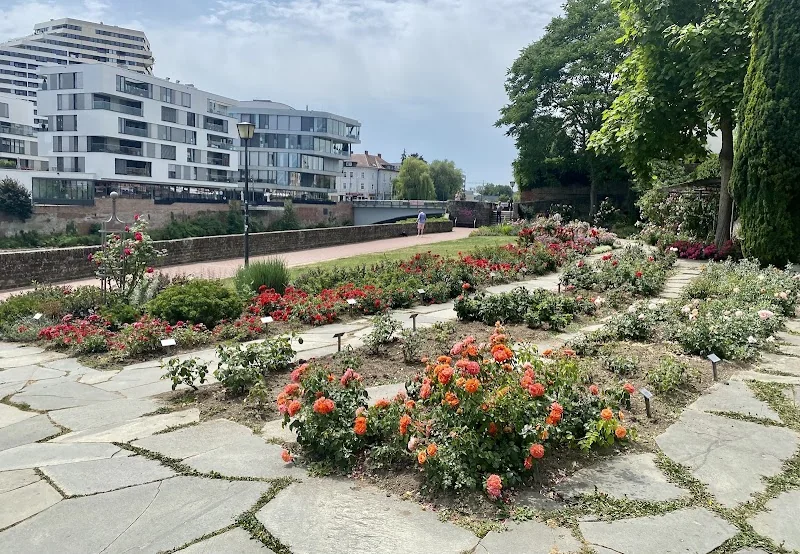
The Rosengarten Ulm is one of those places where you perceive the city differently for a moment: quieter, softer, more fragrant. It is located directly on the Danube bank between Herd and Gänstor bridges and is one of the favorite spots of many locals. The official city website describes it as a small gem in the heart of Ulm, while the tourism site highlights its location on the Adlerbastion near the Herd bridge. This combination of an urban location and surprising tranquility is what makes the site appealing. Visitors to the Rosengarten will not find a loud amusement park, but a place to breathe, stroll, gaze, and linger. This is also the reason why search intentions around this name can be so varied: some specifically search for the Rosengarten as a garden facility, others want photos, location, access, or opening hours, and yet others stumble upon the pet burial service in Blaustein due to the name. For clear orientation, it is important to note: this refers to the Rosengarten on the Ulm Danube bank. ([ulm.de](https://www.ulm.de/leben-in-ulm/freizeit-und-sport/ausfl%C3%BCge-und-natur/garten-und-parks/rosengarten))
Rosengarten Ulm on the Danube Bank: Location, Path, and First Impression
The geographical location is the major advantage of this facility. The Rosengarten is situated on the Ulm side of the Danube, nestled between the city wall, the river, and the two well-known bridges that shape the area. The city of Ulm assigns it to the green space management and lists the contact address as Münchner Straße 2; the tourist information refers to the same location as An der Donau/Adlerbastei. These different address details may seem confusing at first glance, but they essentially express the same location. Those coming from the city center can easily make their way towards the Danube bank, which is why the Rosengarten is well-suited for a detour during a city stroll, a round tour along the city wall, or as a quiet stop after wandering in the old town. The official tourist site describes it as a place where one can unwind, enjoy blossoms, and experience the scent of roses. This captures the character quite well: The Rosengarten is not monumental, but rather delicate, dense, and atmospheric. Its strength lies in its central location in the city while still feeling like a protected garden space. ([ulm.de](https://www.ulm.de/leben-in-ulm/freizeit-und-sport/ausfl%C3%BCge-und-natur/garten-und-parks/rosengarten))
For access, the central location is particularly relevant. The event page for the Rosengarten provides a route planner, a timetable link, and references to parking garages. This is practical because the location is not an isolated excursion destination on the outskirts, but part of the urban network around the Danube, Adlerbastei, and city center. Therefore, those arriving by car should plan to use city center parking garages or Park+Ride options rather than expecting a large, dedicated visitor parking lot on-site. The city of Ulm offers a central overview of parking garages, disabled parking spaces, and Park+Ride locations and generally recommends these solutions for the city center. This is convenient for visitors, as a visit to the Rosengarten can easily be combined with other destinations: a walk along the Danube, a detour into the city center, or a cultural event in the heart of the city. This combination of green space and urban logistics makes the Rosengarten particularly relevant for inquiries about access and parking. ([veranstaltungen.ulm.de](https://veranstaltungen.ulm.de/leoonline/portals/ulm/veranstaltungen/id/staette/1590))
From Elendsgarten to Rosengarten: History with Ulm's Signature
The history of the Rosengarten is closely linked to the development of the Danube bank. The Ulm/Neu-Ulm tourist information describes the area as the former Elendsgarten, a term that dates back to the time of the imperial city and persisted for a long time. Nearby was once the landing stage for Danube ships, and the area was historically connected to the city wall and life along the Danube. In 1964, the first Rosengarten was established on this site. In 1970, it was transformed into the charming garden facility known as a place to linger. However, the Rosengarten took its current form only after the major redesign in 2007, in which the Ulm rose friends were involved. The facility was officially opened in June 2008. Thus, while the Rosengarten is not a centuries-old park, it is still a place with clear historical depth, as it connects city history, memory, and modern garden design. This transformation from the burdened-sounding Elendsgarten to the friendly Rosengarten makes the site content-wise interesting and explains why it is now read as a counterpoint to past severity and urban harshness. ([tourismus.ulm.de](https://tourismus.ulm.de/de/entdecken/sehen-und-erleben/freizeit/gaerten_parks/rosengarten))
The official city site complements this picture with the note that the maintenance of the garden is carried out by the city of Ulm together with the Ulm rose friends. This is an important point, as it shows that the Rosengarten is not just intended as a decorative area, but as a jointly supported city project. The facility is thus an example of how public green spaces in Ulm work together with civic engagement. The history of the garden reflects not only a structural development but also a form of local identity. Those interested in Ulm's urban spaces will recognize a typical pattern here: from a historically charged area, a place emerges through careful planning and maintenance that radiates joy of life today. The fact that the redesign in 2007 was not done in isolation but in collaboration with the rose friends gives the Rosengarten a particularly local character. It is not an interchangeable standard flowerbed but a piece of Ulm's garden culture with a developed signature. ([ulm.de](https://www.ulm.de/leben-in-ulm/freizeit-und-sport/ausfl%C3%BCge-und-natur/garten-und-parks/rosengarten))
Diversity of Roses, Color Concept, and Special Plants
If one had to describe the Rosengarten Ulm in one sentence, it would be best as a concentrated rose landscape in a small space. On 3,000 square meters, around 200 different rose varieties and more than 1,300 individual specimens grow here, according to the city of Ulm. The tourist information adds that among them are English roses, waterfall roses, potato roses, and the white Sofie Scholl rose. Particularly exciting is the mentioned color concept of the planting community. It shows that the Rosengarten was not planted randomly but functions like a carefully composed garden facility, where shapes, flower colors, and heights are coordinated. Such details make the place interesting for garden lovers, but also for anyone looking for a very clear, almost staged green space in the city center. The Rosengarten thrives on its density: instead of extensive paths and large areas, there is much to see, smell, and discover in a small space. This effect is particularly strong in the warm season when the bloom repeatedly directs the gaze from the water to the garden and back to the city. ([ulm.de](https://www.ulm.de/leben-in-ulm/freizeit-und-sport/ausfl%C3%BCge-und-natur/garten-und-parks/rosengarten))
The city site also mentions that more than 1,300 individual specimens in the Rosengarten are arranged according to a special color concept. This number clearly indicates how intensively the place is planted. It is not just a simple green strip along a road but a proper garden space with significant plant density. For visitors, this means that the Rosengarten functions especially well in the changing seasons: in spring as a new beginning, in summer as a fragrant flowering place, and in autumn as a quiet, still colorful city garden. The combination of roses, perennials, and lavender, as highlighted by the tourism site, further enhances this impression. Those looking for photos will also find a gallery on the city site with seven images that provide a good visual impression of the atmosphere. This is why the keyword around photos and images is relevant here: The Rosengarten is very photogenic because it is small, structured, and visually striking. Those seeking a location for harmonious garden pictures, quiet city moments, and classic rose aesthetics will find a very clear motif here. ([ulm.de](https://www.ulm.de/leben-in-ulm/freizeit-und-sport/ausfl%C3%BCge-und-natur/garten-und-parks/rosengarten))
Access, Parking, and Practical Tips for the Visit
Practically speaking, the Rosengarten is uncomplicated but should not be understood as a classic event location with a separate visitor parking lot. The event page for Rosengarten Ulm directly links to route planners, timetables, and parking garages. This shows that planning should utilize the existing city center infrastructure. Those arriving by public transport are well accommodated since the area is clearly integrated into the urban network. For drivers, it is advisable to orient themselves towards city center parking garages or Park+Ride options and walk the last stretch. This corresponds to the location of the garden, which is situated in a densely utilized urban area. The Rosengarten is therefore not a place you drive to via a large parking model, but a destination that you consciously integrate into a city tour. This form of accessibility fits well with the character of the facility: you do not just pass by, but take the time for a quiet section along the Danube. ([veranstaltungen.ulm.de](https://veranstaltungen.ulm.de/leoonline/portals/ulm/veranstaltungen/id/staette/1590))
Regarding opening hours, it is important to know that the official pages of the Rosengarten do not specify fixed visiting times. This suggests understanding it as a freely accessible urban garden facility primarily intended for strolling and lingering. Therefore, those looking for specific entry or ticket times will not find corresponding ticket logic on the official Rosengarten pages, but rather the language of a public green space. This makes planning pleasantly flexible. You can incorporate the Rosengarten into a city round, spontaneously drop by in nice weather, or use it as a short break point between two appointments. This point is particularly relevant for people searching for opening hours or prices on Google: the search intention often stems from the logic of event venues or paid attractions, but at Rosengarten Ulm, the public experience of an urban garden is at the forefront. Therefore, the best answer to many practical questions is not a ticket link but the recommendation to treat the place as an accessible part of the city center and plan the visit accordingly. ([ulm.de](https://www.ulm.de/leben-in-ulm/freizeit-und-sport/ausfl%C3%BCge-und-natur/garten-und-parks/rosengarten))
Photos, Events, and the Distinction from Pet Burial in Blaustein
The Rosengarten is not only a quiet garden but also a place with cultural use. On the official event calendar of the city of Ulm, the Rosengarten appears as an event venue with the address Adlerbastei 2, 89073 Ulm. Among other things, fairy tale evenings of the Ulm fairy tale circle are listed there. This is important for search intentions around programs and photos, as it shows that the Rosengarten is not perceived solely as a botanical area but also functions as a charming event venue. Smaller formats particularly benefit from the garden's atmosphere: the place is manageable, charming, and directly connected to the city. This creates an exciting mix of nature, history, and culture in its external effect. Therefore, those searching for current programs or a special evening location in Ulm will find a genuine, concrete use here. At the same time, the calendar, with its route and parking garage references, once again confirms that the connection to the city logic has been considered. ([veranstaltungen.ulm.de](https://veranstaltungen.ulm.de/leoonline/portals/ulm/veranstaltungen/id/staette/1590))
However, due to the search terms from the autocomplete list, a second classification is also important. Several search queries target ROSENGARTEN pet burial Ulm, pet crematorium, prices, or Blaustein. This is a different entity than the Rosengarten on the Danube bank. The ROSENGARTEN pet burial Ulm is located in Blaustein, Bühlwiesen 8, and describes its Ulm branch on its own website as a location for pet burial, care, and cremation. This means: the Rosengarten in Ulm is the garden facility on the Danube, while the pet burial service in Blaustein is a separate provider with a different purpose and address. For SEO, this distinction is important because search engines can group both topics under the same name. For users, it is even more crucial because it concerns completely different needs: once a public city garden, once sensitive services around farewell and care. A good content page should clarify this separation instead of mixing the two places. This way, a seemingly chaotic keyword set becomes a clear, user-oriented explanation. ([tierbestatter-ulm.de](https://www.tierbestatter-ulm.de/))
Sources:
Mehr anzeigenWeniger anzeigen
Rosengarten Ulm | Danube Bank & Access
The Rosengarten Ulm is one of those places where you perceive the city differently for a moment: quieter, softer, more fragrant. It is located directly on the Danube bank between Herd and Gänstor bridges and is one of the favorite spots of many locals. The official city website describes it as a small gem in the heart of Ulm, while the tourism site highlights its location on the Adlerbastion near the Herd bridge. This combination of an urban location and surprising tranquility is what makes the site appealing. Visitors to the Rosengarten will not find a loud amusement park, but a place to breathe, stroll, gaze, and linger. This is also the reason why search intentions around this name can be so varied: some specifically search for the Rosengarten as a garden facility, others want photos, location, access, or opening hours, and yet others stumble upon the pet burial service in Blaustein due to the name. For clear orientation, it is important to note: this refers to the Rosengarten on the Ulm Danube bank. ([ulm.de](https://www.ulm.de/leben-in-ulm/freizeit-und-sport/ausfl%C3%BCge-und-natur/garten-und-parks/rosengarten))
Rosengarten Ulm on the Danube Bank: Location, Path, and First Impression
The geographical location is the major advantage of this facility. The Rosengarten is situated on the Ulm side of the Danube, nestled between the city wall, the river, and the two well-known bridges that shape the area. The city of Ulm assigns it to the green space management and lists the contact address as Münchner Straße 2; the tourist information refers to the same location as An der Donau/Adlerbastei. These different address details may seem confusing at first glance, but they essentially express the same location. Those coming from the city center can easily make their way towards the Danube bank, which is why the Rosengarten is well-suited for a detour during a city stroll, a round tour along the city wall, or as a quiet stop after wandering in the old town. The official tourist site describes it as a place where one can unwind, enjoy blossoms, and experience the scent of roses. This captures the character quite well: The Rosengarten is not monumental, but rather delicate, dense, and atmospheric. Its strength lies in its central location in the city while still feeling like a protected garden space. ([ulm.de](https://www.ulm.de/leben-in-ulm/freizeit-und-sport/ausfl%C3%BCge-und-natur/garten-und-parks/rosengarten))
For access, the central location is particularly relevant. The event page for the Rosengarten provides a route planner, a timetable link, and references to parking garages. This is practical because the location is not an isolated excursion destination on the outskirts, but part of the urban network around the Danube, Adlerbastei, and city center. Therefore, those arriving by car should plan to use city center parking garages or Park+Ride options rather than expecting a large, dedicated visitor parking lot on-site. The city of Ulm offers a central overview of parking garages, disabled parking spaces, and Park+Ride locations and generally recommends these solutions for the city center. This is convenient for visitors, as a visit to the Rosengarten can easily be combined with other destinations: a walk along the Danube, a detour into the city center, or a cultural event in the heart of the city. This combination of green space and urban logistics makes the Rosengarten particularly relevant for inquiries about access and parking. ([veranstaltungen.ulm.de](https://veranstaltungen.ulm.de/leoonline/portals/ulm/veranstaltungen/id/staette/1590))
From Elendsgarten to Rosengarten: History with Ulm's Signature
The history of the Rosengarten is closely linked to the development of the Danube bank. The Ulm/Neu-Ulm tourist information describes the area as the former Elendsgarten, a term that dates back to the time of the imperial city and persisted for a long time. Nearby was once the landing stage for Danube ships, and the area was historically connected to the city wall and life along the Danube. In 1964, the first Rosengarten was established on this site. In 1970, it was transformed into the charming garden facility known as a place to linger. However, the Rosengarten took its current form only after the major redesign in 2007, in which the Ulm rose friends were involved. The facility was officially opened in June 2008. Thus, while the Rosengarten is not a centuries-old park, it is still a place with clear historical depth, as it connects city history, memory, and modern garden design. This transformation from the burdened-sounding Elendsgarten to the friendly Rosengarten makes the site content-wise interesting and explains why it is now read as a counterpoint to past severity and urban harshness. ([tourismus.ulm.de](https://tourismus.ulm.de/de/entdecken/sehen-und-erleben/freizeit/gaerten_parks/rosengarten))
The official city site complements this picture with the note that the maintenance of the garden is carried out by the city of Ulm together with the Ulm rose friends. This is an important point, as it shows that the Rosengarten is not just intended as a decorative area, but as a jointly supported city project. The facility is thus an example of how public green spaces in Ulm work together with civic engagement. The history of the garden reflects not only a structural development but also a form of local identity. Those interested in Ulm's urban spaces will recognize a typical pattern here: from a historically charged area, a place emerges through careful planning and maintenance that radiates joy of life today. The fact that the redesign in 2007 was not done in isolation but in collaboration with the rose friends gives the Rosengarten a particularly local character. It is not an interchangeable standard flowerbed but a piece of Ulm's garden culture with a developed signature. ([ulm.de](https://www.ulm.de/leben-in-ulm/freizeit-und-sport/ausfl%C3%BCge-und-natur/garten-und-parks/rosengarten))
Diversity of Roses, Color Concept, and Special Plants
If one had to describe the Rosengarten Ulm in one sentence, it would be best as a concentrated rose landscape in a small space. On 3,000 square meters, around 200 different rose varieties and more than 1,300 individual specimens grow here, according to the city of Ulm. The tourist information adds that among them are English roses, waterfall roses, potato roses, and the white Sofie Scholl rose. Particularly exciting is the mentioned color concept of the planting community. It shows that the Rosengarten was not planted randomly but functions like a carefully composed garden facility, where shapes, flower colors, and heights are coordinated. Such details make the place interesting for garden lovers, but also for anyone looking for a very clear, almost staged green space in the city center. The Rosengarten thrives on its density: instead of extensive paths and large areas, there is much to see, smell, and discover in a small space. This effect is particularly strong in the warm season when the bloom repeatedly directs the gaze from the water to the garden and back to the city. ([ulm.de](https://www.ulm.de/leben-in-ulm/freizeit-und-sport/ausfl%C3%BCge-und-natur/garten-und-parks/rosengarten))
The city site also mentions that more than 1,300 individual specimens in the Rosengarten are arranged according to a special color concept. This number clearly indicates how intensively the place is planted. It is not just a simple green strip along a road but a proper garden space with significant plant density. For visitors, this means that the Rosengarten functions especially well in the changing seasons: in spring as a new beginning, in summer as a fragrant flowering place, and in autumn as a quiet, still colorful city garden. The combination of roses, perennials, and lavender, as highlighted by the tourism site, further enhances this impression. Those looking for photos will also find a gallery on the city site with seven images that provide a good visual impression of the atmosphere. This is why the keyword around photos and images is relevant here: The Rosengarten is very photogenic because it is small, structured, and visually striking. Those seeking a location for harmonious garden pictures, quiet city moments, and classic rose aesthetics will find a very clear motif here. ([ulm.de](https://www.ulm.de/leben-in-ulm/freizeit-und-sport/ausfl%C3%BCge-und-natur/garten-und-parks/rosengarten))
Access, Parking, and Practical Tips for the Visit
Practically speaking, the Rosengarten is uncomplicated but should not be understood as a classic event location with a separate visitor parking lot. The event page for Rosengarten Ulm directly links to route planners, timetables, and parking garages. This shows that planning should utilize the existing city center infrastructure. Those arriving by public transport are well accommodated since the area is clearly integrated into the urban network. For drivers, it is advisable to orient themselves towards city center parking garages or Park+Ride options and walk the last stretch. This corresponds to the location of the garden, which is situated in a densely utilized urban area. The Rosengarten is therefore not a place you drive to via a large parking model, but a destination that you consciously integrate into a city tour. This form of accessibility fits well with the character of the facility: you do not just pass by, but take the time for a quiet section along the Danube. ([veranstaltungen.ulm.de](https://veranstaltungen.ulm.de/leoonline/portals/ulm/veranstaltungen/id/staette/1590))
Regarding opening hours, it is important to know that the official pages of the Rosengarten do not specify fixed visiting times. This suggests understanding it as a freely accessible urban garden facility primarily intended for strolling and lingering. Therefore, those looking for specific entry or ticket times will not find corresponding ticket logic on the official Rosengarten pages, but rather the language of a public green space. This makes planning pleasantly flexible. You can incorporate the Rosengarten into a city round, spontaneously drop by in nice weather, or use it as a short break point between two appointments. This point is particularly relevant for people searching for opening hours or prices on Google: the search intention often stems from the logic of event venues or paid attractions, but at Rosengarten Ulm, the public experience of an urban garden is at the forefront. Therefore, the best answer to many practical questions is not a ticket link but the recommendation to treat the place as an accessible part of the city center and plan the visit accordingly. ([ulm.de](https://www.ulm.de/leben-in-ulm/freizeit-und-sport/ausfl%C3%BCge-und-natur/garten-und-parks/rosengarten))
Photos, Events, and the Distinction from Pet Burial in Blaustein
The Rosengarten is not only a quiet garden but also a place with cultural use. On the official event calendar of the city of Ulm, the Rosengarten appears as an event venue with the address Adlerbastei 2, 89073 Ulm. Among other things, fairy tale evenings of the Ulm fairy tale circle are listed there. This is important for search intentions around programs and photos, as it shows that the Rosengarten is not perceived solely as a botanical area but also functions as a charming event venue. Smaller formats particularly benefit from the garden's atmosphere: the place is manageable, charming, and directly connected to the city. This creates an exciting mix of nature, history, and culture in its external effect. Therefore, those searching for current programs or a special evening location in Ulm will find a genuine, concrete use here. At the same time, the calendar, with its route and parking garage references, once again confirms that the connection to the city logic has been considered. ([veranstaltungen.ulm.de](https://veranstaltungen.ulm.de/leoonline/portals/ulm/veranstaltungen/id/staette/1590))
However, due to the search terms from the autocomplete list, a second classification is also important. Several search queries target ROSENGARTEN pet burial Ulm, pet crematorium, prices, or Blaustein. This is a different entity than the Rosengarten on the Danube bank. The ROSENGARTEN pet burial Ulm is located in Blaustein, Bühlwiesen 8, and describes its Ulm branch on its own website as a location for pet burial, care, and cremation. This means: the Rosengarten in Ulm is the garden facility on the Danube, while the pet burial service in Blaustein is a separate provider with a different purpose and address. For SEO, this distinction is important because search engines can group both topics under the same name. For users, it is even more crucial because it concerns completely different needs: once a public city garden, once sensitive services around farewell and care. A good content page should clarify this separation instead of mixing the two places. This way, a seemingly chaotic keyword set becomes a clear, user-oriented explanation. ([tierbestatter-ulm.de](https://www.tierbestatter-ulm.de/))
Sources:
Rosengarten Ulm | Danube Bank & Access
The Rosengarten Ulm is one of those places where you perceive the city differently for a moment: quieter, softer, more fragrant. It is located directly on the Danube bank between Herd and Gänstor bridges and is one of the favorite spots of many locals. The official city website describes it as a small gem in the heart of Ulm, while the tourism site highlights its location on the Adlerbastion near the Herd bridge. This combination of an urban location and surprising tranquility is what makes the site appealing. Visitors to the Rosengarten will not find a loud amusement park, but a place to breathe, stroll, gaze, and linger. This is also the reason why search intentions around this name can be so varied: some specifically search for the Rosengarten as a garden facility, others want photos, location, access, or opening hours, and yet others stumble upon the pet burial service in Blaustein due to the name. For clear orientation, it is important to note: this refers to the Rosengarten on the Ulm Danube bank. ([ulm.de](https://www.ulm.de/leben-in-ulm/freizeit-und-sport/ausfl%C3%BCge-und-natur/garten-und-parks/rosengarten))
Rosengarten Ulm on the Danube Bank: Location, Path, and First Impression
The geographical location is the major advantage of this facility. The Rosengarten is situated on the Ulm side of the Danube, nestled between the city wall, the river, and the two well-known bridges that shape the area. The city of Ulm assigns it to the green space management and lists the contact address as Münchner Straße 2; the tourist information refers to the same location as An der Donau/Adlerbastei. These different address details may seem confusing at first glance, but they essentially express the same location. Those coming from the city center can easily make their way towards the Danube bank, which is why the Rosengarten is well-suited for a detour during a city stroll, a round tour along the city wall, or as a quiet stop after wandering in the old town. The official tourist site describes it as a place where one can unwind, enjoy blossoms, and experience the scent of roses. This captures the character quite well: The Rosengarten is not monumental, but rather delicate, dense, and atmospheric. Its strength lies in its central location in the city while still feeling like a protected garden space. ([ulm.de](https://www.ulm.de/leben-in-ulm/freizeit-und-sport/ausfl%C3%BCge-und-natur/garten-und-parks/rosengarten))
For access, the central location is particularly relevant. The event page for the Rosengarten provides a route planner, a timetable link, and references to parking garages. This is practical because the location is not an isolated excursion destination on the outskirts, but part of the urban network around the Danube, Adlerbastei, and city center. Therefore, those arriving by car should plan to use city center parking garages or Park+Ride options rather than expecting a large, dedicated visitor parking lot on-site. The city of Ulm offers a central overview of parking garages, disabled parking spaces, and Park+Ride locations and generally recommends these solutions for the city center. This is convenient for visitors, as a visit to the Rosengarten can easily be combined with other destinations: a walk along the Danube, a detour into the city center, or a cultural event in the heart of the city. This combination of green space and urban logistics makes the Rosengarten particularly relevant for inquiries about access and parking. ([veranstaltungen.ulm.de](https://veranstaltungen.ulm.de/leoonline/portals/ulm/veranstaltungen/id/staette/1590))
From Elendsgarten to Rosengarten: History with Ulm's Signature
The history of the Rosengarten is closely linked to the development of the Danube bank. The Ulm/Neu-Ulm tourist information describes the area as the former Elendsgarten, a term that dates back to the time of the imperial city and persisted for a long time. Nearby was once the landing stage for Danube ships, and the area was historically connected to the city wall and life along the Danube. In 1964, the first Rosengarten was established on this site. In 1970, it was transformed into the charming garden facility known as a place to linger. However, the Rosengarten took its current form only after the major redesign in 2007, in which the Ulm rose friends were involved. The facility was officially opened in June 2008. Thus, while the Rosengarten is not a centuries-old park, it is still a place with clear historical depth, as it connects city history, memory, and modern garden design. This transformation from the burdened-sounding Elendsgarten to the friendly Rosengarten makes the site content-wise interesting and explains why it is now read as a counterpoint to past severity and urban harshness. ([tourismus.ulm.de](https://tourismus.ulm.de/de/entdecken/sehen-und-erleben/freizeit/gaerten_parks/rosengarten))
The official city site complements this picture with the note that the maintenance of the garden is carried out by the city of Ulm together with the Ulm rose friends. This is an important point, as it shows that the Rosengarten is not just intended as a decorative area, but as a jointly supported city project. The facility is thus an example of how public green spaces in Ulm work together with civic engagement. The history of the garden reflects not only a structural development but also a form of local identity. Those interested in Ulm's urban spaces will recognize a typical pattern here: from a historically charged area, a place emerges through careful planning and maintenance that radiates joy of life today. The fact that the redesign in 2007 was not done in isolation but in collaboration with the rose friends gives the Rosengarten a particularly local character. It is not an interchangeable standard flowerbed but a piece of Ulm's garden culture with a developed signature. ([ulm.de](https://www.ulm.de/leben-in-ulm/freizeit-und-sport/ausfl%C3%BCge-und-natur/garten-und-parks/rosengarten))
Diversity of Roses, Color Concept, and Special Plants
If one had to describe the Rosengarten Ulm in one sentence, it would be best as a concentrated rose landscape in a small space. On 3,000 square meters, around 200 different rose varieties and more than 1,300 individual specimens grow here, according to the city of Ulm. The tourist information adds that among them are English roses, waterfall roses, potato roses, and the white Sofie Scholl rose. Particularly exciting is the mentioned color concept of the planting community. It shows that the Rosengarten was not planted randomly but functions like a carefully composed garden facility, where shapes, flower colors, and heights are coordinated. Such details make the place interesting for garden lovers, but also for anyone looking for a very clear, almost staged green space in the city center. The Rosengarten thrives on its density: instead of extensive paths and large areas, there is much to see, smell, and discover in a small space. This effect is particularly strong in the warm season when the bloom repeatedly directs the gaze from the water to the garden and back to the city. ([ulm.de](https://www.ulm.de/leben-in-ulm/freizeit-und-sport/ausfl%C3%BCge-und-natur/garten-und-parks/rosengarten))
The city site also mentions that more than 1,300 individual specimens in the Rosengarten are arranged according to a special color concept. This number clearly indicates how intensively the place is planted. It is not just a simple green strip along a road but a proper garden space with significant plant density. For visitors, this means that the Rosengarten functions especially well in the changing seasons: in spring as a new beginning, in summer as a fragrant flowering place, and in autumn as a quiet, still colorful city garden. The combination of roses, perennials, and lavender, as highlighted by the tourism site, further enhances this impression. Those looking for photos will also find a gallery on the city site with seven images that provide a good visual impression of the atmosphere. This is why the keyword around photos and images is relevant here: The Rosengarten is very photogenic because it is small, structured, and visually striking. Those seeking a location for harmonious garden pictures, quiet city moments, and classic rose aesthetics will find a very clear motif here. ([ulm.de](https://www.ulm.de/leben-in-ulm/freizeit-und-sport/ausfl%C3%BCge-und-natur/garten-und-parks/rosengarten))
Access, Parking, and Practical Tips for the Visit
Practically speaking, the Rosengarten is uncomplicated but should not be understood as a classic event location with a separate visitor parking lot. The event page for Rosengarten Ulm directly links to route planners, timetables, and parking garages. This shows that planning should utilize the existing city center infrastructure. Those arriving by public transport are well accommodated since the area is clearly integrated into the urban network. For drivers, it is advisable to orient themselves towards city center parking garages or Park+Ride options and walk the last stretch. This corresponds to the location of the garden, which is situated in a densely utilized urban area. The Rosengarten is therefore not a place you drive to via a large parking model, but a destination that you consciously integrate into a city tour. This form of accessibility fits well with the character of the facility: you do not just pass by, but take the time for a quiet section along the Danube. ([veranstaltungen.ulm.de](https://veranstaltungen.ulm.de/leoonline/portals/ulm/veranstaltungen/id/staette/1590))
Regarding opening hours, it is important to know that the official pages of the Rosengarten do not specify fixed visiting times. This suggests understanding it as a freely accessible urban garden facility primarily intended for strolling and lingering. Therefore, those looking for specific entry or ticket times will not find corresponding ticket logic on the official Rosengarten pages, but rather the language of a public green space. This makes planning pleasantly flexible. You can incorporate the Rosengarten into a city round, spontaneously drop by in nice weather, or use it as a short break point between two appointments. This point is particularly relevant for people searching for opening hours or prices on Google: the search intention often stems from the logic of event venues or paid attractions, but at Rosengarten Ulm, the public experience of an urban garden is at the forefront. Therefore, the best answer to many practical questions is not a ticket link but the recommendation to treat the place as an accessible part of the city center and plan the visit accordingly. ([ulm.de](https://www.ulm.de/leben-in-ulm/freizeit-und-sport/ausfl%C3%BCge-und-natur/garten-und-parks/rosengarten))
Photos, Events, and the Distinction from Pet Burial in Blaustein
The Rosengarten is not only a quiet garden but also a place with cultural use. On the official event calendar of the city of Ulm, the Rosengarten appears as an event venue with the address Adlerbastei 2, 89073 Ulm. Among other things, fairy tale evenings of the Ulm fairy tale circle are listed there. This is important for search intentions around programs and photos, as it shows that the Rosengarten is not perceived solely as a botanical area but also functions as a charming event venue. Smaller formats particularly benefit from the garden's atmosphere: the place is manageable, charming, and directly connected to the city. This creates an exciting mix of nature, history, and culture in its external effect. Therefore, those searching for current programs or a special evening location in Ulm will find a genuine, concrete use here. At the same time, the calendar, with its route and parking garage references, once again confirms that the connection to the city logic has been considered. ([veranstaltungen.ulm.de](https://veranstaltungen.ulm.de/leoonline/portals/ulm/veranstaltungen/id/staette/1590))
However, due to the search terms from the autocomplete list, a second classification is also important. Several search queries target ROSENGARTEN pet burial Ulm, pet crematorium, prices, or Blaustein. This is a different entity than the Rosengarten on the Danube bank. The ROSENGARTEN pet burial Ulm is located in Blaustein, Bühlwiesen 8, and describes its Ulm branch on its own website as a location for pet burial, care, and cremation. This means: the Rosengarten in Ulm is the garden facility on the Danube, while the pet burial service in Blaustein is a separate provider with a different purpose and address. For SEO, this distinction is important because search engines can group both topics under the same name. For users, it is even more crucial because it concerns completely different needs: once a public city garden, once sensitive services around farewell and care. A good content page should clarify this separation instead of mixing the two places. This way, a seemingly chaotic keyword set becomes a clear, user-oriented explanation. ([tierbestatter-ulm.de](https://www.tierbestatter-ulm.de/))
Sources:
Upcoming Events
No events found
Frequently Asked Questions
Reviews
No reviews found