
Ulm
Platzgasse 18, 89073 Ulm, Deutschland
Radio free FM | Livestream & Mediathek
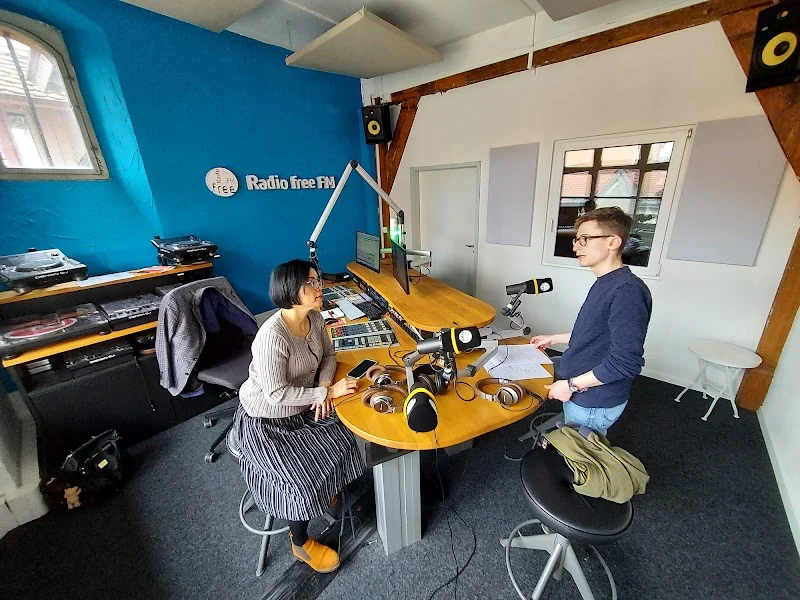
Radio free FM is the free, non-commercial community radio from Ulm and thus much more than a classic local station. The location at Platzgasse 18, the legal form as a non-profit GmbH, and the clear focus on free expression of opinion show at first glance what this is about: a radio project with a regional core and open access. Those looking for Radio free FM will find the station not only on the FM frequency 102.6 MHz but also in the livestream, in the media library, and through podcast and download offerings. This combination of live, digital, and archived makes the station interesting for listeners from Ulm, Neu-Ulm, and far beyond. The history refers to a long development that began in 1992 with the first ideas and led to the launch in 1995. A radio culture has emerged that not only claims diversity, participation, and initiative but actually lives it in everyday life. ([freefm.de](https://freefm.de/kontakt))
Listen to Radio free FM live: Livestream, FM, and online reception
If you want to listen to Radio free FM live, there are several equally valid ways, and this is a significant advantage for a modern radio brand. The frequency page confirms the FM broadcast at 102.60 MHz, while the website repeatedly refers to the livestream. Thus, the station is not limited to the local reception area but is also accessible on the go, at work, or outside the region. This is particularly important for search queries like radio free fm live, radio free fm hören, or radio free fm online, because there is real user intent behind them: People want to tune in without detours, and they want to hear content as it becomes available. The media library sensibly complements this access, as Radio free FM provides a selection from the program free of charge as streaming, podcast, and download, explicitly for private use. This makes the station relevant not only live but also time-shifted. ([freefm.de](https://www.freefm.de/info))
In practice, this means: The livestream is the bridge between the classic FM experience and the digital world, where listeners want to adapt to their own times. If someone misses a show, they can listen to it later in the media library; if someone is looking for a specific editorial team or topic, they jump directly into the archive; if someone wants to tune in spontaneously, they simply use the stream. The contact page also makes it clear that the station operates at Platzgasse 18 with office and studio hours and clearly named contacts. This shows the closeness to the audience and makes the station not an anonymous media product but an accessible point of contact. This openness supports the search terms radio free fm ulm livestream and radio free fm hören, as they refer not only to technology but to a concrete, accessible radio practice. ([freefm.de](https://freefm.de/kontakt))
Program of Radio free FM: Music, talk, and daily shows
The program of Radio free FM is designed for diversity rather than uniform sound, and this is already evident in the daily structure. The program page features fixed formats such as High Noon, Ulmer Freiheit, radio.mikrowelle, Projektplatz, and Russkij Express, along with additional airtime slots supported by editorial teams, projects, and initiatives. The mix ranges from music shows to magazine formats to content with a strong local reference. Ulmer Freiheit is explicitly described as an alternative to easily digestible afternoon shows and presents progressive, innovative music that is not yet played by other stations. radio.mikrowelle even works with the claim of children for children, while Projektplatz gives space to special projects and training exercises. This creates a daily program that is not only filled but curated. It reflects the city, its music scene, and its topics in an open radio format. ([freefm.de](https://www.freefm.de/programm))
The music logic also follows a clear stance. On the rotation page, Radio free FM explains that the inclusion of a song in the rotation is more like an award than the usual continuous play that one knows from format radios. The selection criterion is not format compulsion but the search for good music, and the presented titles run daily between 6 AM and 5 PM in the program. This stance is important for the keyword radio free fm playlist, as it is not about an arbitrary tracklist but about an editorially justified selection. Additionally, projects like Sperrstunde show how the station brings local bands live to the FM frequency 102.6 MHz and simultaneously into the stream. Thus, Radio free FM connects daily programming, music promotion, and local scenes in a way that is almost programmatic in free radio. ([freefm.de](https://www.freefm.de/musik/rotation))
Media library, podcast, and listening to shows again
The media library is one of the strongest digital anchors of Radio free FM because it transforms the linear listening moment into a permanently usable archive. The media library page collects podcasts from numerous shows, and the page already shows at first glance how broad the offering is. Additionally, the official usage conditions in the imprint state that Radio free FM provides a selection from the program free of charge as streaming, podcast, and download for private use. This is practical for listeners because they do not have to tie shows to a fixed time. If someone misses a report, an interview, or a music show, they can simply jump back later. If someone is specifically looking for content, they can use show pages and archive functions. This is precisely why search queries like radio free fm mediathek and radio free fm podcast work so well: They meet a real need for retrievable, sortable content. ([freefm.de](https://www.freefm.de/mediathek))
The added value is particularly evident in formats with a close connection to the editorial team or current topics. The platform show is broadcast live and made available for listening and downloading the next day. Ulmer Freiheit, Wissensstrahlung, or Get up! also work with show blogs, audio players, and archive views, so a show does not end with the broadcast date. Instead, it remains findable, shareable, and content-wise comprehensible. This is especially important for longer conversations, local cultural contributions, and topics with social relevance. The station thus turns the keyword radio free fm online into a real listening practice: online means not only stream but also archive, podcast, and retrievability. For a free radio, this fits well because transparency and accessibility are not just buzzwords here but part of the publication model. ([freefm.de](https://www.freefm.de/mitmachen/plattform))
Frequency, reception, and technical data in Ulm
Radio free FM can be received in Ulm via FM at 102.60 MHz, and the official frequency page also lists cable routes with 97.70 MHz and 93.45 MHz. The transmitter location is indicated as the Ulm-Ermingen telecommunications tower, the transmission power is 1 kW, and the orientation goes southeast. The page also lists the broadcasting area for Ulm, Neu-Ulm, and several surrounding areas such as Senden, Vöhringen, Weißenhorn, or Illertissen. This is enormously helpful for seekers because radio free fm frequenz is not just a technical figure but a question of availability in everyday life. Those living in the city or surrounding area can tune in traditionally via radio; those further away or listening on the go can access the livestream. The frequency page makes this combination of local reception and digital access very transparent. ([freefm.de](https://www.freefm.de/info))
The current frequency also has an exciting past. In its history, Radio free FM itself writes that the station first went on air in 1995 with 100.8 MHz and later received the old AFN frequency 102.6 MHz. Since January 1, 2004, Radio free FM has been broadcasting with a 24-hour and 365-day full licensing; since January 1, 2015, the fourth licensing period for 102.6 MHz in Ulm has been in effect. These dates show how closely technology, regulation, and local identity are interconnected. For listeners, this means: The frequency is not just a channel but part of the station's history. This is why the combination of free radio, regional reception, and internet stream remains so important for the Radio free FM brand. ([freefm.de](https://www.freefm.de/info/historie))
Platform, participation, and editorial involvement
With the platform, Radio free FM offers engaged individuals a real forum to present a topic, an association, an initiative, or a project to a larger audience. The show runs live on Radio free FM from Monday to Thursday from 4 PM to 5 PM and is explicitly intended for people who want to contribute something rather than just consume. The platform page describes that one can contact by phone or email, that the topic will be discussed in advance with staff, and that the technology will be supported during the live broadcast. Particularly important is: The contributions will be offered the next day on the homepage for listening and downloading. This makes the platform a program that connects participation, reach, and archiving function. For search queries like radio free fm plattform, this is the central added value. ([freefm.de](https://www.freefm.de/mitmachen/plattform))
Organizationally, the station is also clearly designed for participation. The gGmbH holds the license and technology, two non-profit associations support the project, and active editors are organized in the editorial association. The program council G7 decides on guidelines, airtime slots, and program structure, while the Jour fixe bundles organizational questions. On the goals page, Radio free FM also describes workshops, training, and the transfer of know-how as fixed components of the project. This is important because free radio here is not just an attitude but also a learning structure. Those who broadcast learn technology, editorial work, and responsibility; those who join learn a path into the medium. This is how the keyword radio free fm online or radio free fm hören in the background becomes an open space for real participation. ([freefm.de](https://www.freefm.de/info/orga))
History, goals, and public value
The history of Radio free FM begins with an unusually early idea: In 1992, a group of music fanatics met in KöWi and discussed what a free radio in Ulm could look like. In 1994, information events followed, and finally, the broadcast started on June 17, 1995. The history recalls the building days, the first studio situations, the licensing negotiations, and the later steps to the current frequency. This also includes anniversaries such as the 30-hour live broadcast in June 2025, celebrating 30 years of Radio free FM. The history is documented not only textually but also visually: galleries feature anniversary celebrations or project series like RR Reihe Radiostücke. Those searching for radio free fm fotos will find image material that shows the station as a cultural project and not just as an audio brand. ([freefm.de](https://www.freefm.de/info/historie))
The station's self-description is equally clear. Radio free FM aims to enable free access to the expression of opinion, address cultural and social developments, try out new radio forms, and promote education. On the goals page, this means specifically: presenting young and unknown music styles, providing a platform for cultural and social topics, developing experimental formats, and passing on know-how. This also fits with the status as a Public Value offering that the independent local station from Ulm has held since June 1, 2022. This status underscores the journalistic and social value of the program for diversity of opinion and offerings. At the same time, Radio free FM remains dependent on donations and membership fees. This mix of public benefit, civic participation, and independent funding makes the station a special voice in Ulm. ([freefm.de](https://www.freefm.de/info/ziele))
Sources:
Show moreShow less
Radio free FM | Livestream & Mediathek
Radio free FM is the free, non-commercial community radio from Ulm and thus much more than a classic local station. The location at Platzgasse 18, the legal form as a non-profit GmbH, and the clear focus on free expression of opinion show at first glance what this is about: a radio project with a regional core and open access. Those looking for Radio free FM will find the station not only on the FM frequency 102.6 MHz but also in the livestream, in the media library, and through podcast and download offerings. This combination of live, digital, and archived makes the station interesting for listeners from Ulm, Neu-Ulm, and far beyond. The history refers to a long development that began in 1992 with the first ideas and led to the launch in 1995. A radio culture has emerged that not only claims diversity, participation, and initiative but actually lives it in everyday life. ([freefm.de](https://freefm.de/kontakt))
Listen to Radio free FM live: Livestream, FM, and online reception
If you want to listen to Radio free FM live, there are several equally valid ways, and this is a significant advantage for a modern radio brand. The frequency page confirms the FM broadcast at 102.60 MHz, while the website repeatedly refers to the livestream. Thus, the station is not limited to the local reception area but is also accessible on the go, at work, or outside the region. This is particularly important for search queries like radio free fm live, radio free fm hören, or radio free fm online, because there is real user intent behind them: People want to tune in without detours, and they want to hear content as it becomes available. The media library sensibly complements this access, as Radio free FM provides a selection from the program free of charge as streaming, podcast, and download, explicitly for private use. This makes the station relevant not only live but also time-shifted. ([freefm.de](https://www.freefm.de/info))
In practice, this means: The livestream is the bridge between the classic FM experience and the digital world, where listeners want to adapt to their own times. If someone misses a show, they can listen to it later in the media library; if someone is looking for a specific editorial team or topic, they jump directly into the archive; if someone wants to tune in spontaneously, they simply use the stream. The contact page also makes it clear that the station operates at Platzgasse 18 with office and studio hours and clearly named contacts. This shows the closeness to the audience and makes the station not an anonymous media product but an accessible point of contact. This openness supports the search terms radio free fm ulm livestream and radio free fm hören, as they refer not only to technology but to a concrete, accessible radio practice. ([freefm.de](https://freefm.de/kontakt))
Program of Radio free FM: Music, talk, and daily shows
The program of Radio free FM is designed for diversity rather than uniform sound, and this is already evident in the daily structure. The program page features fixed formats such as High Noon, Ulmer Freiheit, radio.mikrowelle, Projektplatz, and Russkij Express, along with additional airtime slots supported by editorial teams, projects, and initiatives. The mix ranges from music shows to magazine formats to content with a strong local reference. Ulmer Freiheit is explicitly described as an alternative to easily digestible afternoon shows and presents progressive, innovative music that is not yet played by other stations. radio.mikrowelle even works with the claim of children for children, while Projektplatz gives space to special projects and training exercises. This creates a daily program that is not only filled but curated. It reflects the city, its music scene, and its topics in an open radio format. ([freefm.de](https://www.freefm.de/programm))
The music logic also follows a clear stance. On the rotation page, Radio free FM explains that the inclusion of a song in the rotation is more like an award than the usual continuous play that one knows from format radios. The selection criterion is not format compulsion but the search for good music, and the presented titles run daily between 6 AM and 5 PM in the program. This stance is important for the keyword radio free fm playlist, as it is not about an arbitrary tracklist but about an editorially justified selection. Additionally, projects like Sperrstunde show how the station brings local bands live to the FM frequency 102.6 MHz and simultaneously into the stream. Thus, Radio free FM connects daily programming, music promotion, and local scenes in a way that is almost programmatic in free radio. ([freefm.de](https://www.freefm.de/musik/rotation))
Media library, podcast, and listening to shows again
The media library is one of the strongest digital anchors of Radio free FM because it transforms the linear listening moment into a permanently usable archive. The media library page collects podcasts from numerous shows, and the page already shows at first glance how broad the offering is. Additionally, the official usage conditions in the imprint state that Radio free FM provides a selection from the program free of charge as streaming, podcast, and download for private use. This is practical for listeners because they do not have to tie shows to a fixed time. If someone misses a report, an interview, or a music show, they can simply jump back later. If someone is specifically looking for content, they can use show pages and archive functions. This is precisely why search queries like radio free fm mediathek and radio free fm podcast work so well: They meet a real need for retrievable, sortable content. ([freefm.de](https://www.freefm.de/mediathek))
The added value is particularly evident in formats with a close connection to the editorial team or current topics. The platform show is broadcast live and made available for listening and downloading the next day. Ulmer Freiheit, Wissensstrahlung, or Get up! also work with show blogs, audio players, and archive views, so a show does not end with the broadcast date. Instead, it remains findable, shareable, and content-wise comprehensible. This is especially important for longer conversations, local cultural contributions, and topics with social relevance. The station thus turns the keyword radio free fm online into a real listening practice: online means not only stream but also archive, podcast, and retrievability. For a free radio, this fits well because transparency and accessibility are not just buzzwords here but part of the publication model. ([freefm.de](https://www.freefm.de/mitmachen/plattform))
Frequency, reception, and technical data in Ulm
Radio free FM can be received in Ulm via FM at 102.60 MHz, and the official frequency page also lists cable routes with 97.70 MHz and 93.45 MHz. The transmitter location is indicated as the Ulm-Ermingen telecommunications tower, the transmission power is 1 kW, and the orientation goes southeast. The page also lists the broadcasting area for Ulm, Neu-Ulm, and several surrounding areas such as Senden, Vöhringen, Weißenhorn, or Illertissen. This is enormously helpful for seekers because radio free fm frequenz is not just a technical figure but a question of availability in everyday life. Those living in the city or surrounding area can tune in traditionally via radio; those further away or listening on the go can access the livestream. The frequency page makes this combination of local reception and digital access very transparent. ([freefm.de](https://www.freefm.de/info))
The current frequency also has an exciting past. In its history, Radio free FM itself writes that the station first went on air in 1995 with 100.8 MHz and later received the old AFN frequency 102.6 MHz. Since January 1, 2004, Radio free FM has been broadcasting with a 24-hour and 365-day full licensing; since January 1, 2015, the fourth licensing period for 102.6 MHz in Ulm has been in effect. These dates show how closely technology, regulation, and local identity are interconnected. For listeners, this means: The frequency is not just a channel but part of the station's history. This is why the combination of free radio, regional reception, and internet stream remains so important for the Radio free FM brand. ([freefm.de](https://www.freefm.de/info/historie))
Platform, participation, and editorial involvement
With the platform, Radio free FM offers engaged individuals a real forum to present a topic, an association, an initiative, or a project to a larger audience. The show runs live on Radio free FM from Monday to Thursday from 4 PM to 5 PM and is explicitly intended for people who want to contribute something rather than just consume. The platform page describes that one can contact by phone or email, that the topic will be discussed in advance with staff, and that the technology will be supported during the live broadcast. Particularly important is: The contributions will be offered the next day on the homepage for listening and downloading. This makes the platform a program that connects participation, reach, and archiving function. For search queries like radio free fm plattform, this is the central added value. ([freefm.de](https://www.freefm.de/mitmachen/plattform))
Organizationally, the station is also clearly designed for participation. The gGmbH holds the license and technology, two non-profit associations support the project, and active editors are organized in the editorial association. The program council G7 decides on guidelines, airtime slots, and program structure, while the Jour fixe bundles organizational questions. On the goals page, Radio free FM also describes workshops, training, and the transfer of know-how as fixed components of the project. This is important because free radio here is not just an attitude but also a learning structure. Those who broadcast learn technology, editorial work, and responsibility; those who join learn a path into the medium. This is how the keyword radio free fm online or radio free fm hören in the background becomes an open space for real participation. ([freefm.de](https://www.freefm.de/info/orga))
History, goals, and public value
The history of Radio free FM begins with an unusually early idea: In 1992, a group of music fanatics met in KöWi and discussed what a free radio in Ulm could look like. In 1994, information events followed, and finally, the broadcast started on June 17, 1995. The history recalls the building days, the first studio situations, the licensing negotiations, and the later steps to the current frequency. This also includes anniversaries such as the 30-hour live broadcast in June 2025, celebrating 30 years of Radio free FM. The history is documented not only textually but also visually: galleries feature anniversary celebrations or project series like RR Reihe Radiostücke. Those searching for radio free fm fotos will find image material that shows the station as a cultural project and not just as an audio brand. ([freefm.de](https://www.freefm.de/info/historie))
The station's self-description is equally clear. Radio free FM aims to enable free access to the expression of opinion, address cultural and social developments, try out new radio forms, and promote education. On the goals page, this means specifically: presenting young and unknown music styles, providing a platform for cultural and social topics, developing experimental formats, and passing on know-how. This also fits with the status as a Public Value offering that the independent local station from Ulm has held since June 1, 2022. This status underscores the journalistic and social value of the program for diversity of opinion and offerings. At the same time, Radio free FM remains dependent on donations and membership fees. This mix of public benefit, civic participation, and independent funding makes the station a special voice in Ulm. ([freefm.de](https://www.freefm.de/info/ziele))
Sources:
Radio free FM | Livestream & Mediathek
Radio free FM is the free, non-commercial community radio from Ulm and thus much more than a classic local station. The location at Platzgasse 18, the legal form as a non-profit GmbH, and the clear focus on free expression of opinion show at first glance what this is about: a radio project with a regional core and open access. Those looking for Radio free FM will find the station not only on the FM frequency 102.6 MHz but also in the livestream, in the media library, and through podcast and download offerings. This combination of live, digital, and archived makes the station interesting for listeners from Ulm, Neu-Ulm, and far beyond. The history refers to a long development that began in 1992 with the first ideas and led to the launch in 1995. A radio culture has emerged that not only claims diversity, participation, and initiative but actually lives it in everyday life. ([freefm.de](https://freefm.de/kontakt))
Listen to Radio free FM live: Livestream, FM, and online reception
If you want to listen to Radio free FM live, there are several equally valid ways, and this is a significant advantage for a modern radio brand. The frequency page confirms the FM broadcast at 102.60 MHz, while the website repeatedly refers to the livestream. Thus, the station is not limited to the local reception area but is also accessible on the go, at work, or outside the region. This is particularly important for search queries like radio free fm live, radio free fm hören, or radio free fm online, because there is real user intent behind them: People want to tune in without detours, and they want to hear content as it becomes available. The media library sensibly complements this access, as Radio free FM provides a selection from the program free of charge as streaming, podcast, and download, explicitly for private use. This makes the station relevant not only live but also time-shifted. ([freefm.de](https://www.freefm.de/info))
In practice, this means: The livestream is the bridge between the classic FM experience and the digital world, where listeners want to adapt to their own times. If someone misses a show, they can listen to it later in the media library; if someone is looking for a specific editorial team or topic, they jump directly into the archive; if someone wants to tune in spontaneously, they simply use the stream. The contact page also makes it clear that the station operates at Platzgasse 18 with office and studio hours and clearly named contacts. This shows the closeness to the audience and makes the station not an anonymous media product but an accessible point of contact. This openness supports the search terms radio free fm ulm livestream and radio free fm hören, as they refer not only to technology but to a concrete, accessible radio practice. ([freefm.de](https://freefm.de/kontakt))
Program of Radio free FM: Music, talk, and daily shows
The program of Radio free FM is designed for diversity rather than uniform sound, and this is already evident in the daily structure. The program page features fixed formats such as High Noon, Ulmer Freiheit, radio.mikrowelle, Projektplatz, and Russkij Express, along with additional airtime slots supported by editorial teams, projects, and initiatives. The mix ranges from music shows to magazine formats to content with a strong local reference. Ulmer Freiheit is explicitly described as an alternative to easily digestible afternoon shows and presents progressive, innovative music that is not yet played by other stations. radio.mikrowelle even works with the claim of children for children, while Projektplatz gives space to special projects and training exercises. This creates a daily program that is not only filled but curated. It reflects the city, its music scene, and its topics in an open radio format. ([freefm.de](https://www.freefm.de/programm))
The music logic also follows a clear stance. On the rotation page, Radio free FM explains that the inclusion of a song in the rotation is more like an award than the usual continuous play that one knows from format radios. The selection criterion is not format compulsion but the search for good music, and the presented titles run daily between 6 AM and 5 PM in the program. This stance is important for the keyword radio free fm playlist, as it is not about an arbitrary tracklist but about an editorially justified selection. Additionally, projects like Sperrstunde show how the station brings local bands live to the FM frequency 102.6 MHz and simultaneously into the stream. Thus, Radio free FM connects daily programming, music promotion, and local scenes in a way that is almost programmatic in free radio. ([freefm.de](https://www.freefm.de/musik/rotation))
Media library, podcast, and listening to shows again
The media library is one of the strongest digital anchors of Radio free FM because it transforms the linear listening moment into a permanently usable archive. The media library page collects podcasts from numerous shows, and the page already shows at first glance how broad the offering is. Additionally, the official usage conditions in the imprint state that Radio free FM provides a selection from the program free of charge as streaming, podcast, and download for private use. This is practical for listeners because they do not have to tie shows to a fixed time. If someone misses a report, an interview, or a music show, they can simply jump back later. If someone is specifically looking for content, they can use show pages and archive functions. This is precisely why search queries like radio free fm mediathek and radio free fm podcast work so well: They meet a real need for retrievable, sortable content. ([freefm.de](https://www.freefm.de/mediathek))
The added value is particularly evident in formats with a close connection to the editorial team or current topics. The platform show is broadcast live and made available for listening and downloading the next day. Ulmer Freiheit, Wissensstrahlung, or Get up! also work with show blogs, audio players, and archive views, so a show does not end with the broadcast date. Instead, it remains findable, shareable, and content-wise comprehensible. This is especially important for longer conversations, local cultural contributions, and topics with social relevance. The station thus turns the keyword radio free fm online into a real listening practice: online means not only stream but also archive, podcast, and retrievability. For a free radio, this fits well because transparency and accessibility are not just buzzwords here but part of the publication model. ([freefm.de](https://www.freefm.de/mitmachen/plattform))
Frequency, reception, and technical data in Ulm
Radio free FM can be received in Ulm via FM at 102.60 MHz, and the official frequency page also lists cable routes with 97.70 MHz and 93.45 MHz. The transmitter location is indicated as the Ulm-Ermingen telecommunications tower, the transmission power is 1 kW, and the orientation goes southeast. The page also lists the broadcasting area for Ulm, Neu-Ulm, and several surrounding areas such as Senden, Vöhringen, Weißenhorn, or Illertissen. This is enormously helpful for seekers because radio free fm frequenz is not just a technical figure but a question of availability in everyday life. Those living in the city or surrounding area can tune in traditionally via radio; those further away or listening on the go can access the livestream. The frequency page makes this combination of local reception and digital access very transparent. ([freefm.de](https://www.freefm.de/info))
The current frequency also has an exciting past. In its history, Radio free FM itself writes that the station first went on air in 1995 with 100.8 MHz and later received the old AFN frequency 102.6 MHz. Since January 1, 2004, Radio free FM has been broadcasting with a 24-hour and 365-day full licensing; since January 1, 2015, the fourth licensing period for 102.6 MHz in Ulm has been in effect. These dates show how closely technology, regulation, and local identity are interconnected. For listeners, this means: The frequency is not just a channel but part of the station's history. This is why the combination of free radio, regional reception, and internet stream remains so important for the Radio free FM brand. ([freefm.de](https://www.freefm.de/info/historie))
Platform, participation, and editorial involvement
With the platform, Radio free FM offers engaged individuals a real forum to present a topic, an association, an initiative, or a project to a larger audience. The show runs live on Radio free FM from Monday to Thursday from 4 PM to 5 PM and is explicitly intended for people who want to contribute something rather than just consume. The platform page describes that one can contact by phone or email, that the topic will be discussed in advance with staff, and that the technology will be supported during the live broadcast. Particularly important is: The contributions will be offered the next day on the homepage for listening and downloading. This makes the platform a program that connects participation, reach, and archiving function. For search queries like radio free fm plattform, this is the central added value. ([freefm.de](https://www.freefm.de/mitmachen/plattform))
Organizationally, the station is also clearly designed for participation. The gGmbH holds the license and technology, two non-profit associations support the project, and active editors are organized in the editorial association. The program council G7 decides on guidelines, airtime slots, and program structure, while the Jour fixe bundles organizational questions. On the goals page, Radio free FM also describes workshops, training, and the transfer of know-how as fixed components of the project. This is important because free radio here is not just an attitude but also a learning structure. Those who broadcast learn technology, editorial work, and responsibility; those who join learn a path into the medium. This is how the keyword radio free fm online or radio free fm hören in the background becomes an open space for real participation. ([freefm.de](https://www.freefm.de/info/orga))
History, goals, and public value
The history of Radio free FM begins with an unusually early idea: In 1992, a group of music fanatics met in KöWi and discussed what a free radio in Ulm could look like. In 1994, information events followed, and finally, the broadcast started on June 17, 1995. The history recalls the building days, the first studio situations, the licensing negotiations, and the later steps to the current frequency. This also includes anniversaries such as the 30-hour live broadcast in June 2025, celebrating 30 years of Radio free FM. The history is documented not only textually but also visually: galleries feature anniversary celebrations or project series like RR Reihe Radiostücke. Those searching for radio free fm fotos will find image material that shows the station as a cultural project and not just as an audio brand. ([freefm.de](https://www.freefm.de/info/historie))
The station's self-description is equally clear. Radio free FM aims to enable free access to the expression of opinion, address cultural and social developments, try out new radio forms, and promote education. On the goals page, this means specifically: presenting young and unknown music styles, providing a platform for cultural and social topics, developing experimental formats, and passing on know-how. This also fits with the status as a Public Value offering that the independent local station from Ulm has held since June 1, 2022. This status underscores the journalistic and social value of the program for diversity of opinion and offerings. At the same time, Radio free FM remains dependent on donations and membership fees. This mix of public benefit, civic participation, and independent funding makes the station a special voice in Ulm. ([freefm.de](https://www.freefm.de/info/ziele))
Sources:
Frequently Asked Questions
Reviews
No reviews found