
Roggenburg
Klosterstraße 5, 89297 Roggenburg, Deutschland
Premonstratensian Monastery Roggenburg | Photos & Reviews
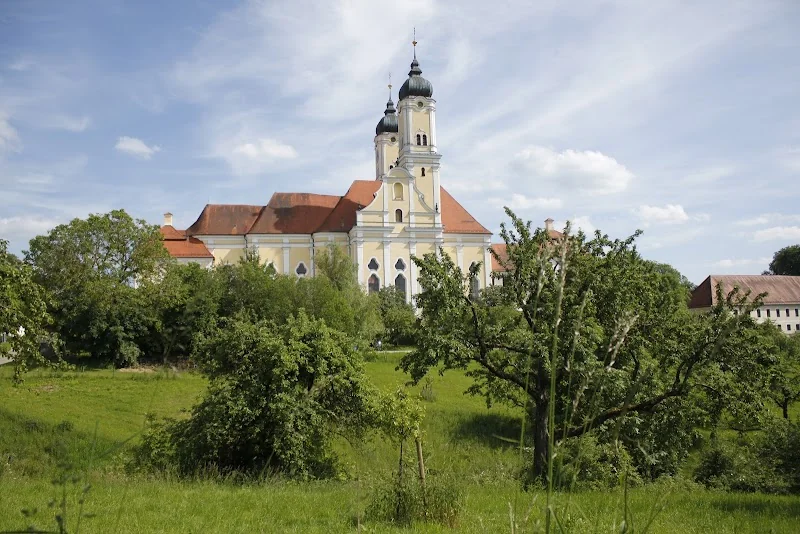
The Premonstratensian Monastery Roggenburg is one of those locations that immediately reveals multiple layers at once: historical architecture, lived monastic life, educational offerings, hospitality, and events. The complex dates back to the founding in 1126 and became a vibrant place in the region again after the return of a new convent in 1982. Today, the monastery church, museum, educational center, monastery inn, and monastery shop combine to form an ensemble that is equally exciting for day-trippers, conference guests, groups, and culture enthusiasts. Therefore, those searching for Premonstratensian Monastery Roggenburg are not just referring to a single building, but to a historical overall experience of baroque splendor, tranquil courtyards, and a clear usage profile for the present and future. ([kloster-roggenburg.de](https://www.kloster-roggenburg.de/))
History and Baroque Complex of the Premonstratensian Monastery Roggenburg
The history begins, according to tradition, around 1126, when the Counts of Bibereck founded the monastery. The first canons came from Ursberg, initially settling near a pond and later moving to the castle hill. The community developed dynamically early on, so that Roggenburg was elevated to an independent abbey in 1444. This is important because it shows that not just a regional monastery was established here, but a religious center with its own radiance. For today's visitors, this long breath is palpable: the complex is not preserved as a museum fragment, but as a historically significant place where continuity and change are closely intertwined. ([kloster-roggenburg.de](https://www.kloster-roggenburg.de/web/en/index.php))
In the 18th century, Roggenburg received its present baroque appearance. Under the abbots Dominikus Schwaninger, Kaspar Geisler, and Georg Lienharth, the architectural and artistic accents were set that are still recognizable today. The expansion of the west wing began around 1732, in 1752 the foundations of the new church and east wing were laid, the first buildings were opened in 1758, and the south wing was completed in 1766. These construction phases explain why the monastery appears so architecturally cohesive: here, a clear overall concept was followed for decades. This is exactly what makes the complex so attractive for visitors interested in baroque, monastic history, and architectural culture. ([kloster-roggenburg.de](https://www.kloster-roggenburg.de/web/en/index.php))
However, history did not stop at periods of prosperity. In 1802, the Bavarian army occupied the abbey, the abbot had to resign, and the monastery was dissolved. Decades later, the Premonstratensians returned: in 1982, the current resettlement began, and since then Roggenburg has been a place where pastoral care, education, culture, and hospitality converge again. This return gives it a special character. Visitors do not experience a mere monument of the past here, but a monastery that preserves its historical identity while simultaneously focusing on modern use. This blend of memory and present is one of the strongest reasons why Roggenburg remains interesting for both day visitors and seminar groups and families. ([kloster-roggenburg.de](https://www.kloster-roggenburg.de/web/en/index.php))
Monastery Church and Museum: the Baroque Heart of the Complex
The monastery church of the Assumption of Mary is one of the most striking buildings of the complex and is among the most significant rococo buildings in Swabia. It was built between 1752 and 1758, initiated by Simpert Kramer and completed by his son Martin Kramer. The building measures about 70 meters in length, 35 meters in width, and 28 meters in height, which explains the impressive spatial effect. Typical for the order is the side entrance; thus, the church is integrated into the monastery complex and not staged as a freestanding showcase. The two tall towers, the bright interior effect from the rows of windows, and the elaborate roof structure shape a space that is convincing both liturgically and aesthetically. ([kloster-roggenburg.de](https://www.kloster-roggenburg.de/web/en/klosterkirche.php))
The artistic quality of the ensemble is also evident inside. The ceiling fresco, the altars, the figures, and the restoration history demonstrate how much craftsmanship, iconography, and liturgical ideas come together here. The church is therefore not only exciting for architecture enthusiasts but also for visitors seeking a calm, impressive atmosphere. Right next to the church portal begins the tour of the monastery museum, which vividly presents the history of the monastery from its founding to its secularization. Among other things, art treasures from the 17th and 18th centuries are the focus, including Augsburg goldsmith works, embroidered paraments, and paintings by Franz Martin Kuen and Konrad Huber. Thus, those visiting Roggenburg get both: the vibrant sacred space and the historical deepening in the museum. ([kloster-roggenburg.de](https://www.kloster-roggenburg.de/web/en/klosterkirche.php))
Conference Rooms, Accommodation, and Facilities at Monastery Roggenburg
For conference guests, Monastery Roggenburg is remarkably flexible. The site offers 23 rooms of varying sizes for events with 10 to 300 people; the rooms are equipped with modern conference technology and free Wi-Fi. Additionally, there is an exclusive conference area in the House for Art and Culture, which has been available since 2022 with six bright rooms on two floors. This is particularly interesting for companies, associations, or groups seeking a quiet environment with historical character without sacrificing modern infrastructure. The combination of monastic ambiance and professional conference logistics is one of the main reasons why Roggenburg is also in demand in the B2B and educational sectors. ([kloster-roggenburg.de](https://www.kloster-roggenburg.de/web/de/tagen/tagungsraeume.php))
In the educational center itself, modern, light-filled seminar rooms for 10 to 150 people are available. This is complemented by flexible seating, modern technology, and various specialized rooms, such as for environmental work, meditation, children's education, as well as group studios and music rehearsal rooms in the House for Art and Culture. For events with a practical orientation, this is a real advantage because theory and application are spatially close together. Breaks, group work, and creative formats can thus be planned much more easily. So, if you are looking for a place for further education, retreat meetings, workshops, or rehearsal weekends, you will find a professional yet atmospheric overall package here. ([kloster-roggenburg.de](https://www.kloster-roggenburg.de/web/de/bildungszentrum/03_gruppen-seminaraufenthalte/gruppen-seminaraufenthalte.php))
In addition, there are accommodation options that make the location particularly attractive for multi-day formats. The educational center has 120 beds in 55 guest rooms, including eight barrier-free rooms, and the adjacent 3*** Superior monastery inn offers another 25 rooms. The rooms in the educational center can be used as single, double, or family rooms and are equipped with shower and toilet; baby equipment is available upon request. This provides planning security for family groups, church groups, choirs, or seminar organizers who need not just a room but a functional accommodation solution. ([kloster-roggenburg.de](https://www.kloster-roggenburg.de/web/de/bildungszentrum/03_gruppen-seminaraufenthalte/gruppen-seminaraufenthalte.php))
The infrastructure includes a foyer with seating areas and exhibitions, an internet café, lounges, a TV room, a recreation room with table tennis, kicker, and games, a children's playground, outdoor seating, a barbecue area, and upon request, a gym, hard court, and soccer field. The catering is also clearly designed for groups: full board in buffet form, various snack options, and a rich selection in the monastery inn. Therefore, those planning conferences or group stays receive not only rooms but a practical environment for exchange, relaxation, and community. ([kloster-roggenburg.de](https://www.kloster-roggenburg.de/web/de/bildungszentrum/03_gruppen-seminaraufenthalte/gruppen-seminaraufenthalte.php))
Access, Parking, and Public Transport Connections
Getting there is straightforward. The monastery is quickly accessible from the A7, A8, and A96 highways, and there are large, free parking spaces available on the monastery grounds. For guests of the educational center, parking lot 3 is the best choice; those checking in at the monastery inn can also use parking lot 1. Additionally, there are two electric charging stations at parking lot 3. By public transport, one can take the train to Weißenhorn and then continue by bus to Roggenburg. The address Klosterstraße 5 in 89297 Roggenburg makes orientation easy. Especially for groups, this combination of proximity to highways, generous parking spaces, and e-mobility is a clear advantage. ([kloster-roggenburg.de](https://www.kloster-roggenburg.de/web/de/informationen/anfahrt.php))
Events, Tours, and Excursion Destination Roggenburg
Roggenburg is not a quiet monument but a place with ongoing cultural and event life. On the monastery's homepage, current events, tours, service times, exhibitions, and offers for groups, children, and youth groups, as well as the Roggenburg Summer as a cultural program, can be found. Weddings and family celebrations also take place here, making the complex open not only to visitors but also for private occasions. The use ranges from concerts in the refectory to spiritual formats and thematic lectures. Those who only know the name may underestimate how versatile the complex is today. This connection of historical backdrop and active calendar makes the place so interesting for inquiries about programs, tickets, or special events. ([kloster-roggenburg.de](https://www.kloster-roggenburg.de/))
The anniversary year 2026 also shows how strongly tradition and present intertwine. The website presents anniversary Sundays, an escape room, Actionbound, and various program points around the monastery. Such formats make the place attractive not only for classic cultural guests but also for families, school classes, and groups seeking an interactive approach. At the same time, church tours, exhibition visits, and spiritual offerings remain available. Therefore, anyone visiting Monastery Roggenburg should not only think of architecture but of a versatile site that can be experienced very differently depending on the occasion. ([kloster-roggenburg.de](https://www.kloster-roggenburg.de/))
Photos, Reviews, and First Impressions Before the Visit
For the search intent of photos, reviews, and first impressions, it is worth taking a look at the visual offerings on the website: there, photo impressions, a 360° tour, and various perspectives on the monastery, monastery inn, and complex are offered. This helps in preparing for a visit, as paths, buildings, and atmosphere can be assessed in advance. According to the available location data, the rating is 4.6 out of 5 stars based on 182 reviews, which further supports the good overall impression among guests and visitors. A practical tip for the visit is also the monastery shop: it offers religious literature, CDs, devotional items, gifts, as well as wines, spirits, and culinary specialties. The opening hours on the homepage are clearly indicated, making it easy to combine a visit with a tour. ([kloster-roggenburg.de](https://www.kloster-roggenburg.de/web/de/kloster/04_klosteranlage/klostermuseum.php))
Monastery Museum, Monastery Shop, and Practical Visit Planning
The monastery museum ideally complements the visit because it connects the great history of the place with concrete objects and rooms. According to the official description, the entrance is located directly next to the church portal, and the exhibition shows the development of the monastery from its founding around 1126 to its dissolution in 1802. The focus is on art treasures from the 17th and 18th centuries, including goldsmith works from Augsburg, artistically embroidered paraments, and paintings by Franz Martin Kuen and Konrad Huber. Thus, anyone planning a cultural trip to Roggenburg receives a very dense mix of architecture, monastic history, and craftsmanship. The museum makes visible what has shaped the complex over centuries and helps to classify the place not only aesthetically but also historically. ([kloster-roggenburg.de](https://www.kloster-roggenburg.de/web/de/kloster/04_klosteranlage/klostermuseum.php))
The opening hours are also helpful for planning: the monastery museum is open on Saturdays, Sundays, and public holidays from 2 PM to 5 PM, and from April to October additionally on Thursdays and Fridays from 2 PM to 5 PM; it is closed on Christmas Eve and New Year's Eve. Outside of opening hours, admission and tours are possible by arrangement. The monastery shop, on the other hand, is closed on Mondays and open from Tuesday to Saturday from 9 AM to 5 PM and on Sundays and public holidays from 11 AM to 4 PM. This allows for a well-structured visit: first the church and museum, then a detour to the shop or the monastery inn, and perhaps a walk around the grounds afterward. This simple yet very coherent visit logic makes Roggenburg so pleasant for day visitors. ([kloster-roggenburg.de](https://www.kloster-roggenburg.de/web/de/kloster/04_klosteranlage/klostermuseum.php))
Sources:
- Monastery Roggenburg - Homepage
- Monastery Roggenburg - Directions and Parking
- Monastery Roggenburg - Conference Rooms
- Monastery Roggenburg - Group and Seminar Stays
- Monastery Roggenburg - Conference Area House for Art and Culture
- Monastery Roggenburg - Monastery Museum
- Monastery Roggenburg - Monastery Shop
- Monastery Roggenburg - Monastery Church
Show moreShow less
Premonstratensian Monastery Roggenburg | Photos & Reviews
The Premonstratensian Monastery Roggenburg is one of those locations that immediately reveals multiple layers at once: historical architecture, lived monastic life, educational offerings, hospitality, and events. The complex dates back to the founding in 1126 and became a vibrant place in the region again after the return of a new convent in 1982. Today, the monastery church, museum, educational center, monastery inn, and monastery shop combine to form an ensemble that is equally exciting for day-trippers, conference guests, groups, and culture enthusiasts. Therefore, those searching for Premonstratensian Monastery Roggenburg are not just referring to a single building, but to a historical overall experience of baroque splendor, tranquil courtyards, and a clear usage profile for the present and future. ([kloster-roggenburg.de](https://www.kloster-roggenburg.de/))
History and Baroque Complex of the Premonstratensian Monastery Roggenburg
The history begins, according to tradition, around 1126, when the Counts of Bibereck founded the monastery. The first canons came from Ursberg, initially settling near a pond and later moving to the castle hill. The community developed dynamically early on, so that Roggenburg was elevated to an independent abbey in 1444. This is important because it shows that not just a regional monastery was established here, but a religious center with its own radiance. For today's visitors, this long breath is palpable: the complex is not preserved as a museum fragment, but as a historically significant place where continuity and change are closely intertwined. ([kloster-roggenburg.de](https://www.kloster-roggenburg.de/web/en/index.php))
In the 18th century, Roggenburg received its present baroque appearance. Under the abbots Dominikus Schwaninger, Kaspar Geisler, and Georg Lienharth, the architectural and artistic accents were set that are still recognizable today. The expansion of the west wing began around 1732, in 1752 the foundations of the new church and east wing were laid, the first buildings were opened in 1758, and the south wing was completed in 1766. These construction phases explain why the monastery appears so architecturally cohesive: here, a clear overall concept was followed for decades. This is exactly what makes the complex so attractive for visitors interested in baroque, monastic history, and architectural culture. ([kloster-roggenburg.de](https://www.kloster-roggenburg.de/web/en/index.php))
However, history did not stop at periods of prosperity. In 1802, the Bavarian army occupied the abbey, the abbot had to resign, and the monastery was dissolved. Decades later, the Premonstratensians returned: in 1982, the current resettlement began, and since then Roggenburg has been a place where pastoral care, education, culture, and hospitality converge again. This return gives it a special character. Visitors do not experience a mere monument of the past here, but a monastery that preserves its historical identity while simultaneously focusing on modern use. This blend of memory and present is one of the strongest reasons why Roggenburg remains interesting for both day visitors and seminar groups and families. ([kloster-roggenburg.de](https://www.kloster-roggenburg.de/web/en/index.php))
Monastery Church and Museum: the Baroque Heart of the Complex
The monastery church of the Assumption of Mary is one of the most striking buildings of the complex and is among the most significant rococo buildings in Swabia. It was built between 1752 and 1758, initiated by Simpert Kramer and completed by his son Martin Kramer. The building measures about 70 meters in length, 35 meters in width, and 28 meters in height, which explains the impressive spatial effect. Typical for the order is the side entrance; thus, the church is integrated into the monastery complex and not staged as a freestanding showcase. The two tall towers, the bright interior effect from the rows of windows, and the elaborate roof structure shape a space that is convincing both liturgically and aesthetically. ([kloster-roggenburg.de](https://www.kloster-roggenburg.de/web/en/klosterkirche.php))
The artistic quality of the ensemble is also evident inside. The ceiling fresco, the altars, the figures, and the restoration history demonstrate how much craftsmanship, iconography, and liturgical ideas come together here. The church is therefore not only exciting for architecture enthusiasts but also for visitors seeking a calm, impressive atmosphere. Right next to the church portal begins the tour of the monastery museum, which vividly presents the history of the monastery from its founding to its secularization. Among other things, art treasures from the 17th and 18th centuries are the focus, including Augsburg goldsmith works, embroidered paraments, and paintings by Franz Martin Kuen and Konrad Huber. Thus, those visiting Roggenburg get both: the vibrant sacred space and the historical deepening in the museum. ([kloster-roggenburg.de](https://www.kloster-roggenburg.de/web/en/klosterkirche.php))
Conference Rooms, Accommodation, and Facilities at Monastery Roggenburg
For conference guests, Monastery Roggenburg is remarkably flexible. The site offers 23 rooms of varying sizes for events with 10 to 300 people; the rooms are equipped with modern conference technology and free Wi-Fi. Additionally, there is an exclusive conference area in the House for Art and Culture, which has been available since 2022 with six bright rooms on two floors. This is particularly interesting for companies, associations, or groups seeking a quiet environment with historical character without sacrificing modern infrastructure. The combination of monastic ambiance and professional conference logistics is one of the main reasons why Roggenburg is also in demand in the B2B and educational sectors. ([kloster-roggenburg.de](https://www.kloster-roggenburg.de/web/de/tagen/tagungsraeume.php))
In the educational center itself, modern, light-filled seminar rooms for 10 to 150 people are available. This is complemented by flexible seating, modern technology, and various specialized rooms, such as for environmental work, meditation, children's education, as well as group studios and music rehearsal rooms in the House for Art and Culture. For events with a practical orientation, this is a real advantage because theory and application are spatially close together. Breaks, group work, and creative formats can thus be planned much more easily. So, if you are looking for a place for further education, retreat meetings, workshops, or rehearsal weekends, you will find a professional yet atmospheric overall package here. ([kloster-roggenburg.de](https://www.kloster-roggenburg.de/web/de/bildungszentrum/03_gruppen-seminaraufenthalte/gruppen-seminaraufenthalte.php))
In addition, there are accommodation options that make the location particularly attractive for multi-day formats. The educational center has 120 beds in 55 guest rooms, including eight barrier-free rooms, and the adjacent 3*** Superior monastery inn offers another 25 rooms. The rooms in the educational center can be used as single, double, or family rooms and are equipped with shower and toilet; baby equipment is available upon request. This provides planning security for family groups, church groups, choirs, or seminar organizers who need not just a room but a functional accommodation solution. ([kloster-roggenburg.de](https://www.kloster-roggenburg.de/web/de/bildungszentrum/03_gruppen-seminaraufenthalte/gruppen-seminaraufenthalte.php))
The infrastructure includes a foyer with seating areas and exhibitions, an internet café, lounges, a TV room, a recreation room with table tennis, kicker, and games, a children's playground, outdoor seating, a barbecue area, and upon request, a gym, hard court, and soccer field. The catering is also clearly designed for groups: full board in buffet form, various snack options, and a rich selection in the monastery inn. Therefore, those planning conferences or group stays receive not only rooms but a practical environment for exchange, relaxation, and community. ([kloster-roggenburg.de](https://www.kloster-roggenburg.de/web/de/bildungszentrum/03_gruppen-seminaraufenthalte/gruppen-seminaraufenthalte.php))
Access, Parking, and Public Transport Connections
Getting there is straightforward. The monastery is quickly accessible from the A7, A8, and A96 highways, and there are large, free parking spaces available on the monastery grounds. For guests of the educational center, parking lot 3 is the best choice; those checking in at the monastery inn can also use parking lot 1. Additionally, there are two electric charging stations at parking lot 3. By public transport, one can take the train to Weißenhorn and then continue by bus to Roggenburg. The address Klosterstraße 5 in 89297 Roggenburg makes orientation easy. Especially for groups, this combination of proximity to highways, generous parking spaces, and e-mobility is a clear advantage. ([kloster-roggenburg.de](https://www.kloster-roggenburg.de/web/de/informationen/anfahrt.php))
Events, Tours, and Excursion Destination Roggenburg
Roggenburg is not a quiet monument but a place with ongoing cultural and event life. On the monastery's homepage, current events, tours, service times, exhibitions, and offers for groups, children, and youth groups, as well as the Roggenburg Summer as a cultural program, can be found. Weddings and family celebrations also take place here, making the complex open not only to visitors but also for private occasions. The use ranges from concerts in the refectory to spiritual formats and thematic lectures. Those who only know the name may underestimate how versatile the complex is today. This connection of historical backdrop and active calendar makes the place so interesting for inquiries about programs, tickets, or special events. ([kloster-roggenburg.de](https://www.kloster-roggenburg.de/))
The anniversary year 2026 also shows how strongly tradition and present intertwine. The website presents anniversary Sundays, an escape room, Actionbound, and various program points around the monastery. Such formats make the place attractive not only for classic cultural guests but also for families, school classes, and groups seeking an interactive approach. At the same time, church tours, exhibition visits, and spiritual offerings remain available. Therefore, anyone visiting Monastery Roggenburg should not only think of architecture but of a versatile site that can be experienced very differently depending on the occasion. ([kloster-roggenburg.de](https://www.kloster-roggenburg.de/))
Photos, Reviews, and First Impressions Before the Visit
For the search intent of photos, reviews, and first impressions, it is worth taking a look at the visual offerings on the website: there, photo impressions, a 360° tour, and various perspectives on the monastery, monastery inn, and complex are offered. This helps in preparing for a visit, as paths, buildings, and atmosphere can be assessed in advance. According to the available location data, the rating is 4.6 out of 5 stars based on 182 reviews, which further supports the good overall impression among guests and visitors. A practical tip for the visit is also the monastery shop: it offers religious literature, CDs, devotional items, gifts, as well as wines, spirits, and culinary specialties. The opening hours on the homepage are clearly indicated, making it easy to combine a visit with a tour. ([kloster-roggenburg.de](https://www.kloster-roggenburg.de/web/de/kloster/04_klosteranlage/klostermuseum.php))
Monastery Museum, Monastery Shop, and Practical Visit Planning
The monastery museum ideally complements the visit because it connects the great history of the place with concrete objects and rooms. According to the official description, the entrance is located directly next to the church portal, and the exhibition shows the development of the monastery from its founding around 1126 to its dissolution in 1802. The focus is on art treasures from the 17th and 18th centuries, including goldsmith works from Augsburg, artistically embroidered paraments, and paintings by Franz Martin Kuen and Konrad Huber. Thus, anyone planning a cultural trip to Roggenburg receives a very dense mix of architecture, monastic history, and craftsmanship. The museum makes visible what has shaped the complex over centuries and helps to classify the place not only aesthetically but also historically. ([kloster-roggenburg.de](https://www.kloster-roggenburg.de/web/de/kloster/04_klosteranlage/klostermuseum.php))
The opening hours are also helpful for planning: the monastery museum is open on Saturdays, Sundays, and public holidays from 2 PM to 5 PM, and from April to October additionally on Thursdays and Fridays from 2 PM to 5 PM; it is closed on Christmas Eve and New Year's Eve. Outside of opening hours, admission and tours are possible by arrangement. The monastery shop, on the other hand, is closed on Mondays and open from Tuesday to Saturday from 9 AM to 5 PM and on Sundays and public holidays from 11 AM to 4 PM. This allows for a well-structured visit: first the church and museum, then a detour to the shop or the monastery inn, and perhaps a walk around the grounds afterward. This simple yet very coherent visit logic makes Roggenburg so pleasant for day visitors. ([kloster-roggenburg.de](https://www.kloster-roggenburg.de/web/de/kloster/04_klosteranlage/klostermuseum.php))
Sources:
- Monastery Roggenburg - Homepage
- Monastery Roggenburg - Directions and Parking
- Monastery Roggenburg - Conference Rooms
- Monastery Roggenburg - Group and Seminar Stays
- Monastery Roggenburg - Conference Area House for Art and Culture
- Monastery Roggenburg - Monastery Museum
- Monastery Roggenburg - Monastery Shop
- Monastery Roggenburg - Monastery Church
Premonstratensian Monastery Roggenburg | Photos & Reviews
The Premonstratensian Monastery Roggenburg is one of those locations that immediately reveals multiple layers at once: historical architecture, lived monastic life, educational offerings, hospitality, and events. The complex dates back to the founding in 1126 and became a vibrant place in the region again after the return of a new convent in 1982. Today, the monastery church, museum, educational center, monastery inn, and monastery shop combine to form an ensemble that is equally exciting for day-trippers, conference guests, groups, and culture enthusiasts. Therefore, those searching for Premonstratensian Monastery Roggenburg are not just referring to a single building, but to a historical overall experience of baroque splendor, tranquil courtyards, and a clear usage profile for the present and future. ([kloster-roggenburg.de](https://www.kloster-roggenburg.de/))
History and Baroque Complex of the Premonstratensian Monastery Roggenburg
The history begins, according to tradition, around 1126, when the Counts of Bibereck founded the monastery. The first canons came from Ursberg, initially settling near a pond and later moving to the castle hill. The community developed dynamically early on, so that Roggenburg was elevated to an independent abbey in 1444. This is important because it shows that not just a regional monastery was established here, but a religious center with its own radiance. For today's visitors, this long breath is palpable: the complex is not preserved as a museum fragment, but as a historically significant place where continuity and change are closely intertwined. ([kloster-roggenburg.de](https://www.kloster-roggenburg.de/web/en/index.php))
In the 18th century, Roggenburg received its present baroque appearance. Under the abbots Dominikus Schwaninger, Kaspar Geisler, and Georg Lienharth, the architectural and artistic accents were set that are still recognizable today. The expansion of the west wing began around 1732, in 1752 the foundations of the new church and east wing were laid, the first buildings were opened in 1758, and the south wing was completed in 1766. These construction phases explain why the monastery appears so architecturally cohesive: here, a clear overall concept was followed for decades. This is exactly what makes the complex so attractive for visitors interested in baroque, monastic history, and architectural culture. ([kloster-roggenburg.de](https://www.kloster-roggenburg.de/web/en/index.php))
However, history did not stop at periods of prosperity. In 1802, the Bavarian army occupied the abbey, the abbot had to resign, and the monastery was dissolved. Decades later, the Premonstratensians returned: in 1982, the current resettlement began, and since then Roggenburg has been a place where pastoral care, education, culture, and hospitality converge again. This return gives it a special character. Visitors do not experience a mere monument of the past here, but a monastery that preserves its historical identity while simultaneously focusing on modern use. This blend of memory and present is one of the strongest reasons why Roggenburg remains interesting for both day visitors and seminar groups and families. ([kloster-roggenburg.de](https://www.kloster-roggenburg.de/web/en/index.php))
Monastery Church and Museum: the Baroque Heart of the Complex
The monastery church of the Assumption of Mary is one of the most striking buildings of the complex and is among the most significant rococo buildings in Swabia. It was built between 1752 and 1758, initiated by Simpert Kramer and completed by his son Martin Kramer. The building measures about 70 meters in length, 35 meters in width, and 28 meters in height, which explains the impressive spatial effect. Typical for the order is the side entrance; thus, the church is integrated into the monastery complex and not staged as a freestanding showcase. The two tall towers, the bright interior effect from the rows of windows, and the elaborate roof structure shape a space that is convincing both liturgically and aesthetically. ([kloster-roggenburg.de](https://www.kloster-roggenburg.de/web/en/klosterkirche.php))
The artistic quality of the ensemble is also evident inside. The ceiling fresco, the altars, the figures, and the restoration history demonstrate how much craftsmanship, iconography, and liturgical ideas come together here. The church is therefore not only exciting for architecture enthusiasts but also for visitors seeking a calm, impressive atmosphere. Right next to the church portal begins the tour of the monastery museum, which vividly presents the history of the monastery from its founding to its secularization. Among other things, art treasures from the 17th and 18th centuries are the focus, including Augsburg goldsmith works, embroidered paraments, and paintings by Franz Martin Kuen and Konrad Huber. Thus, those visiting Roggenburg get both: the vibrant sacred space and the historical deepening in the museum. ([kloster-roggenburg.de](https://www.kloster-roggenburg.de/web/en/klosterkirche.php))
Conference Rooms, Accommodation, and Facilities at Monastery Roggenburg
For conference guests, Monastery Roggenburg is remarkably flexible. The site offers 23 rooms of varying sizes for events with 10 to 300 people; the rooms are equipped with modern conference technology and free Wi-Fi. Additionally, there is an exclusive conference area in the House for Art and Culture, which has been available since 2022 with six bright rooms on two floors. This is particularly interesting for companies, associations, or groups seeking a quiet environment with historical character without sacrificing modern infrastructure. The combination of monastic ambiance and professional conference logistics is one of the main reasons why Roggenburg is also in demand in the B2B and educational sectors. ([kloster-roggenburg.de](https://www.kloster-roggenburg.de/web/de/tagen/tagungsraeume.php))
In the educational center itself, modern, light-filled seminar rooms for 10 to 150 people are available. This is complemented by flexible seating, modern technology, and various specialized rooms, such as for environmental work, meditation, children's education, as well as group studios and music rehearsal rooms in the House for Art and Culture. For events with a practical orientation, this is a real advantage because theory and application are spatially close together. Breaks, group work, and creative formats can thus be planned much more easily. So, if you are looking for a place for further education, retreat meetings, workshops, or rehearsal weekends, you will find a professional yet atmospheric overall package here. ([kloster-roggenburg.de](https://www.kloster-roggenburg.de/web/de/bildungszentrum/03_gruppen-seminaraufenthalte/gruppen-seminaraufenthalte.php))
In addition, there are accommodation options that make the location particularly attractive for multi-day formats. The educational center has 120 beds in 55 guest rooms, including eight barrier-free rooms, and the adjacent 3*** Superior monastery inn offers another 25 rooms. The rooms in the educational center can be used as single, double, or family rooms and are equipped with shower and toilet; baby equipment is available upon request. This provides planning security for family groups, church groups, choirs, or seminar organizers who need not just a room but a functional accommodation solution. ([kloster-roggenburg.de](https://www.kloster-roggenburg.de/web/de/bildungszentrum/03_gruppen-seminaraufenthalte/gruppen-seminaraufenthalte.php))
The infrastructure includes a foyer with seating areas and exhibitions, an internet café, lounges, a TV room, a recreation room with table tennis, kicker, and games, a children's playground, outdoor seating, a barbecue area, and upon request, a gym, hard court, and soccer field. The catering is also clearly designed for groups: full board in buffet form, various snack options, and a rich selection in the monastery inn. Therefore, those planning conferences or group stays receive not only rooms but a practical environment for exchange, relaxation, and community. ([kloster-roggenburg.de](https://www.kloster-roggenburg.de/web/de/bildungszentrum/03_gruppen-seminaraufenthalte/gruppen-seminaraufenthalte.php))
Access, Parking, and Public Transport Connections
Getting there is straightforward. The monastery is quickly accessible from the A7, A8, and A96 highways, and there are large, free parking spaces available on the monastery grounds. For guests of the educational center, parking lot 3 is the best choice; those checking in at the monastery inn can also use parking lot 1. Additionally, there are two electric charging stations at parking lot 3. By public transport, one can take the train to Weißenhorn and then continue by bus to Roggenburg. The address Klosterstraße 5 in 89297 Roggenburg makes orientation easy. Especially for groups, this combination of proximity to highways, generous parking spaces, and e-mobility is a clear advantage. ([kloster-roggenburg.de](https://www.kloster-roggenburg.de/web/de/informationen/anfahrt.php))
Events, Tours, and Excursion Destination Roggenburg
Roggenburg is not a quiet monument but a place with ongoing cultural and event life. On the monastery's homepage, current events, tours, service times, exhibitions, and offers for groups, children, and youth groups, as well as the Roggenburg Summer as a cultural program, can be found. Weddings and family celebrations also take place here, making the complex open not only to visitors but also for private occasions. The use ranges from concerts in the refectory to spiritual formats and thematic lectures. Those who only know the name may underestimate how versatile the complex is today. This connection of historical backdrop and active calendar makes the place so interesting for inquiries about programs, tickets, or special events. ([kloster-roggenburg.de](https://www.kloster-roggenburg.de/))
The anniversary year 2026 also shows how strongly tradition and present intertwine. The website presents anniversary Sundays, an escape room, Actionbound, and various program points around the monastery. Such formats make the place attractive not only for classic cultural guests but also for families, school classes, and groups seeking an interactive approach. At the same time, church tours, exhibition visits, and spiritual offerings remain available. Therefore, anyone visiting Monastery Roggenburg should not only think of architecture but of a versatile site that can be experienced very differently depending on the occasion. ([kloster-roggenburg.de](https://www.kloster-roggenburg.de/))
Photos, Reviews, and First Impressions Before the Visit
For the search intent of photos, reviews, and first impressions, it is worth taking a look at the visual offerings on the website: there, photo impressions, a 360° tour, and various perspectives on the monastery, monastery inn, and complex are offered. This helps in preparing for a visit, as paths, buildings, and atmosphere can be assessed in advance. According to the available location data, the rating is 4.6 out of 5 stars based on 182 reviews, which further supports the good overall impression among guests and visitors. A practical tip for the visit is also the monastery shop: it offers religious literature, CDs, devotional items, gifts, as well as wines, spirits, and culinary specialties. The opening hours on the homepage are clearly indicated, making it easy to combine a visit with a tour. ([kloster-roggenburg.de](https://www.kloster-roggenburg.de/web/de/kloster/04_klosteranlage/klostermuseum.php))
Monastery Museum, Monastery Shop, and Practical Visit Planning
The monastery museum ideally complements the visit because it connects the great history of the place with concrete objects and rooms. According to the official description, the entrance is located directly next to the church portal, and the exhibition shows the development of the monastery from its founding around 1126 to its dissolution in 1802. The focus is on art treasures from the 17th and 18th centuries, including goldsmith works from Augsburg, artistically embroidered paraments, and paintings by Franz Martin Kuen and Konrad Huber. Thus, anyone planning a cultural trip to Roggenburg receives a very dense mix of architecture, monastic history, and craftsmanship. The museum makes visible what has shaped the complex over centuries and helps to classify the place not only aesthetically but also historically. ([kloster-roggenburg.de](https://www.kloster-roggenburg.de/web/de/kloster/04_klosteranlage/klostermuseum.php))
The opening hours are also helpful for planning: the monastery museum is open on Saturdays, Sundays, and public holidays from 2 PM to 5 PM, and from April to October additionally on Thursdays and Fridays from 2 PM to 5 PM; it is closed on Christmas Eve and New Year's Eve. Outside of opening hours, admission and tours are possible by arrangement. The monastery shop, on the other hand, is closed on Mondays and open from Tuesday to Saturday from 9 AM to 5 PM and on Sundays and public holidays from 11 AM to 4 PM. This allows for a well-structured visit: first the church and museum, then a detour to the shop or the monastery inn, and perhaps a walk around the grounds afterward. This simple yet very coherent visit logic makes Roggenburg so pleasant for day visitors. ([kloster-roggenburg.de](https://www.kloster-roggenburg.de/web/de/kloster/04_klosteranlage/klostermuseum.php))
Sources:
- Monastery Roggenburg - Homepage
- Monastery Roggenburg - Directions and Parking
- Monastery Roggenburg - Conference Rooms
- Monastery Roggenburg - Group and Seminar Stays
- Monastery Roggenburg - Conference Area House for Art and Culture
- Monastery Roggenburg - Monastery Museum
- Monastery Roggenburg - Monastery Shop
- Monastery Roggenburg - Monastery Church
Upcoming Events
No events found
Frequently Asked Questions
Reviews
Markku Miettinen
25. January 2018
Nice place. Worth a visit definitely if you're wandering around in the region.
Johannes J.
13. October 2025
A very impressive monastery complex. Unfortunately, the church nave is almost completely scaffolded inside due to restoration. You can only see a very small part of the ceiling paintings. But it absolutely makes you want to see more. I'm very curious how the overall artwork will look.
Petra T.
15. February 2026
The Valentine's Day dinner at the monastery inn was fantastic! Beautifully decorated table, food at star-star level! Very attentive service. The overnight stay at the hotel left no wishes unfulfilled! All in all, an absolute hit!
Susan Schudelski
23. May 2026
We stayed here for two nights while passing through. We liked it so much that we would have preferred to stay longer. Very friendly staff at the inn and the beautiful area. We will definitely come back.
Tobias Gersbach
28. December 2025
We were on site for business and used a conference room! Great stay!