
Langenau
Kirchgasse 9, 89129 Langenau, Deutschland
Pfleghof Langenau | Program & Tickets 2026
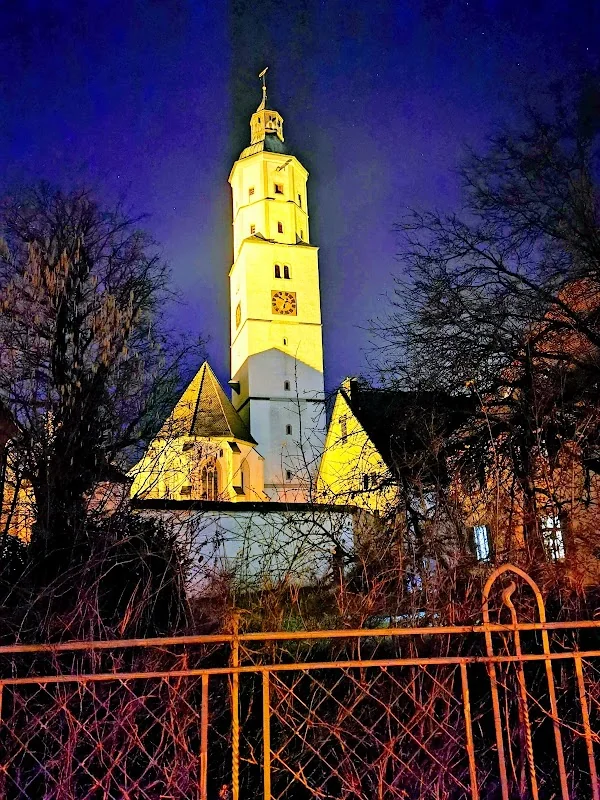
The Pfleghof Langenau is much more than a venue with a historic name: At Kirchgasse 9, it bundles culture, knowledge, and memory in a place that has played a special role for the city of Langenau for years. The monument documentation describes the Pfleghof as the former Pfleghof of the Anhausen monastery; today, it houses the city archive and museum, while the city library is also part of this vibrant ensemble. For visitors, this means an unusual mix of historical substance, everyday use, and cultural radiance. Those searching for Pfleghof Langenau program, Pfleghofsaal Langenau, or Pfleghof Langenau today will find a place that not only collects dates but also creates identity. The cultural offerings are supported by the city of Langenau and range, according to tourism and event portals, from concerts to cabaret to readings and theater. The Pfleghof is thus a meeting point for regular guests, families, culture enthusiasts, and anyone looking for a place with character in Langenau. ([leo-bw.de](https://www.leo-bw.de/web/guest/detail-gis/-/Detail/details/DOKUMENT/lad_denkmale/101641520/Pfleghof%20Freistegstra%C3%9Fe%2014%20Kirchgasse%209%20Langenau?utm_source=openai))
Program, Tickets, and Events at Pfleghof Langenau
Those looking for the Pfleghof Langenau program 2026 will find a culturally broad semi-annual offering presented by the cultural office of Langenau. The current reporting names Triosence in January 2026 as a kickoff, referring to a schedule that places musical diversity at its center. In parallel, ticket portals list events such as Patrizia Moresco in March 2026 and Lars Reichow in May 2026; concerts, cabaret, and readings also appear in the advance announcements. This very mix explains why Pfleghof Langenau program and tickets are so frequently searched: The house does not offer a narrow specialty format, but rather a curated series with changing genres and well-known names. The presale runs not only online but also through the cultural office, the city library of Langenau, and other local institutions. For visitors, this is practical because they can choose between digital search and personal advice. At the same time, this shows the regional roots of the house: The program is not produced anonymously but is supported by a municipal cultural work that focuses on closeness, selection, and continuity. Especially in 2026, it will become clear that the Pfleghof remains a central address for music, word art, and cabaret. ([swp.de](https://www.swp.de/kultur/pfleghof-langenau-langenau-startet-mit-mit-musik-kabarett-und-lesungen-ins-jahr-2026-78510180.html))
The profile of the Pfleghof is explicitly not limited to high culture in the narrow sense. The tourism site of the Alb-Donau district describes it as a well-known and respected cultural center beyond the region with a selected offering and culture with standards. Regular children's cultural programs, children's participation and clown theater, puppet shows, readings, children's and youth cinema, as well as Frederick Days are mentioned. This is exactly what makes the search queries for Pfleghof Langenau today or events Pfleghof Langenau so relevant: It is not just about individual evenings, but about an ongoing, intergenerational cultural offering. The cultural office of the city of Langenau primarily conceives and organizes the program itself, according to the event portal. Additionally, the city library, adult education center, a local bookstore, and culturally active associations contribute. In practice, this creates a schedule that brings together the regional scene, supra-regional guests, and local partners. Therefore, those looking for tickets should not only look at the individual date but also at the overall picture: The Pfleghof is a place in Langenau where musical discoveries, big names, readings, and family offerings complement each other. ([tourismus.alb-donau-kreis.de](https://www.tourismus.alb-donau-kreis.de/thema/kleinkunstbuehne-pfleghof-in-langenau/?utm_source=openai))
History of the Pfleghof and its Listed Substance
The historical depth of the Pfleghof is an essential part of its radiance. The monument portal LEO-BW describes the site as the former Pfleghof of the Anhausen monastery; the building complex is listed there as an ensemble with several components, including a residential house, gatehouse, barn, Freitörle, and Freihäusle. The details refer to construction and usage layers that range from the late 16th century to the 20th century. This is crucial for the impression on site: The Pfleghof is not a smoothly modernized cultural house but a historically grown place with visible depth. Individual components such as the gatehouse are dated to around 1591, while other parts like the barn are from the 18th century and the Freihäusle has an older core from 1810. This layering explains why Pfleghof Langenau appears in search queries about history, peculiarities, and background. Those interested in the development of the place recognize here the connection between monastic economic structure, urban use, and later public function. The former monastery courtyard has become an urban cultural and memorial site, whose existence is not only architecturally significant but also identity-forming. The fact that the city archive and museum are now housed in the Pfleghof underscores this continuity particularly clearly. The place preserves history not abstractly but in the everyday life of a vibrant city. ([leo-bw.de](https://www.leo-bw.de/web/guest/detail-gis/-/Detail/details/DOKUMENT/lad_denkmale/101641520/Pfleghof%20Freistegstra%C3%9Fe%2014%20Kirchgasse%209%20Langenau?utm_source=openai))
The current perception of the house is also built on this history. Langenau's event and tourism portals emphasize the special charm of the building, the closeness to the artists, and the incomparable atmosphere that arises precisely from the historical environment. This impression is important because it explains why the Pfleghof does not only function as a place for administration, library, or exhibition but also as a stage for evenings with a special mood. In a time when many venues seem interchangeable, the Pfleghof provides a clear counter-design: It combines historical authenticity with a contemporary cultural program. This makes it interesting for locals as well as for guests who are looking for not just dates but character in Langenau. The historical building substance is therefore not just a backdrop but part of the experience. Those visiting the Pfleghof feel that here stands a building ensemble with a long history that is consciously continued and maintained. This approach to the existing structure shapes the special position of the Pfleghof in the cityscape. ([ulmer-kalender.de](https://www.ulmer-kalender.de/locations/view/id/1566/))
City Library, Museum, and City Archive Under One Roof
A central unique feature of the Pfleghof is the close interconnection of cultural events, library, and museum. The city library of Langenau has been located in the former Pfleghof of the Anhausen monastery since 1988, according to the regional library guide of the University of Ulm. It includes around 29,000 media, including books, magazines, CDs, games, DVDs, Blu-rays, and e-books. The library is not only a lending place but also an everyday meeting space for residents of the city and the surrounding communities. Opening hours and services are clearly described: Tuesdays and Fridays from 10 AM to 6 PM, Wednesdays from 10 AM to 12 PM, Thursdays from 12 PM to 7 PM, and Saturdays from 10 AM to 1 PM; it is closed on Mondays. The Museum of Prehistory and Early History is open every 1st and 3rd Sunday of the month from 2 PM to 4 PM, and also by appointment; it remains closed during the summer holidays. This ideally complements the library: The city library stands for the present, education, and information, while the museum represents the deeper historical dimension of the region. That both institutions are located in the Pfleghof or the Pfleghof area makes the place a small cultural quarter in the center of Langenau. Additionally, the city archive, which is also located in the ensemble according to the monument documentation, creates a dense network of archive, exhibition, book culture, and events, giving the Pfleghof significance far beyond the function of a simple location. ([tourismus.alb-donau-kreis.de](https://www.tourismus.alb-donau-kreis.de/thema/museum-fuer-vor-und-fruehgeschichte-langenau-2/))
Hall, Atmosphere, and Capacity for Concerts and Small Arts
The Pfleghof Langenau is described in event portals as having a hall that accommodates about 160 visitors. This capacity is small enough to create intimacy and large enough to support a varied cultural program. This is precisely where the special atmosphere of the house arises: not an anonymous large space but a compact hall where the audience remains close to the artists. The portals explicitly emphasize the incomparable atmosphere of the building and the direct proximity to the performers. This is particularly important for search behavior around Pfleghofsaal Langenau, Pfleghofhalle Langenau, and tickets because many users are not only looking for a date but for an experience with tangible character. The hall is thus not just a technical space but a deliberately designed framework for focused evenings. Concerts, cabaret, small arts, and readings gain impact when the audience is not sitting far away and the acoustics do not dissipate in a huge hall. This intimacy distinguishes the Pfleghof from many other venues in the region. At the same time, the program diversity shows that the space is flexible enough to accommodate very different formats. This explains why internationally renowned artists perform here as well as children's cultural formats, theater, and regional series. The hall is therefore not only small but extremely versatile. ([ulmer-kalender.de](https://www.ulmer-kalender.de/locations/view/id/1566/))
The organizational side also supports this effect. The cultural office of the city conceives and organizes most of the program itself, resulting in a clear profile instead of a random mix of events. Complementary partners such as the city library, adult education center, bookstores, and associations expand the spectrum without diluting the identity of the house. This makes it visible in Langenau how a community-supported cultural house can have a regional impact. Therefore, those searching for Pfleghof Langenau today will find not only a place for evening events but also a compact cultural political concept: local access, strong content, manageable size, and personal atmosphere. For visitors, this means that they can expect an intense, close, and often very direct cultural moment at many events. This is also the reason why the Pfleghof is perceived as a cultural center beyond the region. It does not offer the distance of large houses but the closeness of a smaller stage where program and audience visibly interact. This quality makes the Pfleghof Langenau particularly valuable for concerts, cabaret, and readings. ([ulmer-kalender.de](https://www.ulmer-kalender.de/locations/view/id/1566/))
Address, Opening Hours, Arrival, and Public Transport
For practical planning, the address is clear: Pfleghof Langenau, Kirchgasse 9, 89129 Langenau. The monument documentation also mentions the complex at Freistegstraße 14 and Kirchgasse 9, making it clear that the historic area extends over several building parts. Those wishing to use the city library will find clear times there as well as for the museum. The library is open on Tuesdays and Fridays from 10 AM to 6 PM, Wednesdays from 10 AM to 12 PM, Thursdays from 12 PM to 7 PM, and Saturdays from 10 AM to 1 PM; it is closed on Mondays. The Museum of Prehistory and Early History welcomes visitors every 1st and 3rd Sunday of the month from 2 PM to 4 PM, and also by appointment. For arrival, the central location in the city center is helpful. The tourism site of the Alb-Donau district also points out a public transport connection, so the Pfleghof is well integrated into the city logistics not only by car but also by bus and train. This is important for search queries regarding parking or arrival, even if specific long-term parking spaces are not detailed in the sources used here. Practically, this means: Those planning a concert, reading, or museum visit should pay attention to the opening hours of the institutions in addition to the event date and arrive early for special formats. Especially at flea markets and similar events, there is a clear emphasis on keeping driveways and emergency routes clear, which shows that the location can also be heavily frequented organizationally. ([ulmer-kalender.de](https://www.ulmer-kalender.de/locations/view/id/1566/))
The practical strength of the Pfleghof lies in the fact that multiple uses can be combined here. Those who are in the city library in the afternoon can subsequently visit the museum or experience an event in the hall in the evening. This makes a visit to Langenau both efficient and varied. The location in the urban center supports this because the paths remain short and the individual offerings are closely located. This is particularly attractive for families: children's culture, library, and museum complement each other well. For cultural travelers, the combination of historical backdrop and central location is interesting. For locals, the Pfleghof is a place that can be visited multiple times a year without losing relevance. Especially because the offerings are so diverse, it is worthwhile to look at the current opening hours and the program for 2026. Therefore, those planning Pfleghof Langenau today should not only keep an eye on the evening date but also on the daytime use of the house: library, museum, and event operation interconnect. This multifunctionality makes the Pfleghof a particularly practical cultural address in Langenau. ([uni-ulm.de](https://www.uni-ulm.de/einrichtungen/kiz/service-katalog/bibliotheksnutzung/regionaler-bibliotheksfuehrer/langenau/lang-st/))
Why Pfleghof Langenau Shapes Cultural Life
The Pfleghof is so important for Langenau because it serves multiple levels simultaneously: history, education, culture, and encounter. The tourism site describes it as a well-known and respected cultural center beyond the region, whose profile stands for selected entertainment and culture with standards. This combination makes it an identity-forming place. Many cities have a hall, a library, or a museum; Langenau combines these functions in the Pfleghof into a particularly dense ensemble. This also explains why the place frequently appears in search queries for Pfleghof Langenau program, Pfleghofsaal Langenau, city library in the Pfleghof, or museum of prehistory and early history. The Pfleghof is not just a single building but a system of cultural offerings that shapes the city in the long term. Its strength lies in the balance of tradition and present: historical walls, modern use, regional roots, and supra-regional radiance. Additionally, there is the deliberately not oversized hall, which makes many events feel particularly close and personal. In a cultural city like Langenau, this is a decisive advantage. The Pfleghof ensures that culture does not only take place sporadically but remains regularly visible and anchored in the everyday lives of people. This makes it one of the most important addresses for visitors who are looking for not just an appointment but a coherent cultural milieu in Langenau. ([tourismus.alb-donau-kreis.de](https://www.tourismus.alb-donau-kreis.de/thema/kleinkunstbuehne-pfleghof-in-langenau/?utm_source=openai))
Even in 2026, this significance will again be clearly visible. The first half of the year is filled with music, cabaret, and readings, and the advance announcements make it clear that the cultural office is using the Pfleghof as a fixed stage for demanding yet accessible formats. For the city, this is more than event planning: it is cultural mediation in the best sense. The Pfleghof brings together people who come for a concert, stay for a reading, return because of the library, or visit the museum. It is precisely in this repeatability that its strength lies. A good cultural place is not only visited once but accompanies the everyday life of a city over the years. The Pfleghof Langenau fulfills this role in a remarkable way. It is both old and new, historical and practical, locally and regionally relevant. Those who enter it experience not a museum-like stiffness but a place where the past continues to work and the present becomes visible. Therefore, the Pfleghof is not just an address for events but a core component of Langenau's cultural self-understanding. ([swp.de](https://www.swp.de/kultur/pfleghof-langenau-langenau-startet-mit-mit-musik-kabarett-und-lesungen-ins-jahr-2026-78510180.html))
Sources:
- Alb-Donau-Kreis Tourism - Small Arts Stage Pfleghof in Langenau
- LEO-BW - Pfleghof Freistegstraße 14 Kirchgasse 9 Langenau
- University of Ulm - City Library Langenau in the regional library guide
- Alb-Donau-Kreis Tourism - Museum of Prehistory and Early History, Langenau
- Ulmer Calendar - Pfleghof Langenau
- SWP - Pfleghof Langenau starts with music, cabaret, and readings in 2026
Show moreShow less
Pfleghof Langenau | Program & Tickets 2026
The Pfleghof Langenau is much more than a venue with a historic name: At Kirchgasse 9, it bundles culture, knowledge, and memory in a place that has played a special role for the city of Langenau for years. The monument documentation describes the Pfleghof as the former Pfleghof of the Anhausen monastery; today, it houses the city archive and museum, while the city library is also part of this vibrant ensemble. For visitors, this means an unusual mix of historical substance, everyday use, and cultural radiance. Those searching for Pfleghof Langenau program, Pfleghofsaal Langenau, or Pfleghof Langenau today will find a place that not only collects dates but also creates identity. The cultural offerings are supported by the city of Langenau and range, according to tourism and event portals, from concerts to cabaret to readings and theater. The Pfleghof is thus a meeting point for regular guests, families, culture enthusiasts, and anyone looking for a place with character in Langenau. ([leo-bw.de](https://www.leo-bw.de/web/guest/detail-gis/-/Detail/details/DOKUMENT/lad_denkmale/101641520/Pfleghof%20Freistegstra%C3%9Fe%2014%20Kirchgasse%209%20Langenau?utm_source=openai))
Program, Tickets, and Events at Pfleghof Langenau
Those looking for the Pfleghof Langenau program 2026 will find a culturally broad semi-annual offering presented by the cultural office of Langenau. The current reporting names Triosence in January 2026 as a kickoff, referring to a schedule that places musical diversity at its center. In parallel, ticket portals list events such as Patrizia Moresco in March 2026 and Lars Reichow in May 2026; concerts, cabaret, and readings also appear in the advance announcements. This very mix explains why Pfleghof Langenau program and tickets are so frequently searched: The house does not offer a narrow specialty format, but rather a curated series with changing genres and well-known names. The presale runs not only online but also through the cultural office, the city library of Langenau, and other local institutions. For visitors, this is practical because they can choose between digital search and personal advice. At the same time, this shows the regional roots of the house: The program is not produced anonymously but is supported by a municipal cultural work that focuses on closeness, selection, and continuity. Especially in 2026, it will become clear that the Pfleghof remains a central address for music, word art, and cabaret. ([swp.de](https://www.swp.de/kultur/pfleghof-langenau-langenau-startet-mit-mit-musik-kabarett-und-lesungen-ins-jahr-2026-78510180.html))
The profile of the Pfleghof is explicitly not limited to high culture in the narrow sense. The tourism site of the Alb-Donau district describes it as a well-known and respected cultural center beyond the region with a selected offering and culture with standards. Regular children's cultural programs, children's participation and clown theater, puppet shows, readings, children's and youth cinema, as well as Frederick Days are mentioned. This is exactly what makes the search queries for Pfleghof Langenau today or events Pfleghof Langenau so relevant: It is not just about individual evenings, but about an ongoing, intergenerational cultural offering. The cultural office of the city of Langenau primarily conceives and organizes the program itself, according to the event portal. Additionally, the city library, adult education center, a local bookstore, and culturally active associations contribute. In practice, this creates a schedule that brings together the regional scene, supra-regional guests, and local partners. Therefore, those looking for tickets should not only look at the individual date but also at the overall picture: The Pfleghof is a place in Langenau where musical discoveries, big names, readings, and family offerings complement each other. ([tourismus.alb-donau-kreis.de](https://www.tourismus.alb-donau-kreis.de/thema/kleinkunstbuehne-pfleghof-in-langenau/?utm_source=openai))
History of the Pfleghof and its Listed Substance
The historical depth of the Pfleghof is an essential part of its radiance. The monument portal LEO-BW describes the site as the former Pfleghof of the Anhausen monastery; the building complex is listed there as an ensemble with several components, including a residential house, gatehouse, barn, Freitörle, and Freihäusle. The details refer to construction and usage layers that range from the late 16th century to the 20th century. This is crucial for the impression on site: The Pfleghof is not a smoothly modernized cultural house but a historically grown place with visible depth. Individual components such as the gatehouse are dated to around 1591, while other parts like the barn are from the 18th century and the Freihäusle has an older core from 1810. This layering explains why Pfleghof Langenau appears in search queries about history, peculiarities, and background. Those interested in the development of the place recognize here the connection between monastic economic structure, urban use, and later public function. The former monastery courtyard has become an urban cultural and memorial site, whose existence is not only architecturally significant but also identity-forming. The fact that the city archive and museum are now housed in the Pfleghof underscores this continuity particularly clearly. The place preserves history not abstractly but in the everyday life of a vibrant city. ([leo-bw.de](https://www.leo-bw.de/web/guest/detail-gis/-/Detail/details/DOKUMENT/lad_denkmale/101641520/Pfleghof%20Freistegstra%C3%9Fe%2014%20Kirchgasse%209%20Langenau?utm_source=openai))
The current perception of the house is also built on this history. Langenau's event and tourism portals emphasize the special charm of the building, the closeness to the artists, and the incomparable atmosphere that arises precisely from the historical environment. This impression is important because it explains why the Pfleghof does not only function as a place for administration, library, or exhibition but also as a stage for evenings with a special mood. In a time when many venues seem interchangeable, the Pfleghof provides a clear counter-design: It combines historical authenticity with a contemporary cultural program. This makes it interesting for locals as well as for guests who are looking for not just dates but character in Langenau. The historical building substance is therefore not just a backdrop but part of the experience. Those visiting the Pfleghof feel that here stands a building ensemble with a long history that is consciously continued and maintained. This approach to the existing structure shapes the special position of the Pfleghof in the cityscape. ([ulmer-kalender.de](https://www.ulmer-kalender.de/locations/view/id/1566/))
City Library, Museum, and City Archive Under One Roof
A central unique feature of the Pfleghof is the close interconnection of cultural events, library, and museum. The city library of Langenau has been located in the former Pfleghof of the Anhausen monastery since 1988, according to the regional library guide of the University of Ulm. It includes around 29,000 media, including books, magazines, CDs, games, DVDs, Blu-rays, and e-books. The library is not only a lending place but also an everyday meeting space for residents of the city and the surrounding communities. Opening hours and services are clearly described: Tuesdays and Fridays from 10 AM to 6 PM, Wednesdays from 10 AM to 12 PM, Thursdays from 12 PM to 7 PM, and Saturdays from 10 AM to 1 PM; it is closed on Mondays. The Museum of Prehistory and Early History is open every 1st and 3rd Sunday of the month from 2 PM to 4 PM, and also by appointment; it remains closed during the summer holidays. This ideally complements the library: The city library stands for the present, education, and information, while the museum represents the deeper historical dimension of the region. That both institutions are located in the Pfleghof or the Pfleghof area makes the place a small cultural quarter in the center of Langenau. Additionally, the city archive, which is also located in the ensemble according to the monument documentation, creates a dense network of archive, exhibition, book culture, and events, giving the Pfleghof significance far beyond the function of a simple location. ([tourismus.alb-donau-kreis.de](https://www.tourismus.alb-donau-kreis.de/thema/museum-fuer-vor-und-fruehgeschichte-langenau-2/))
Hall, Atmosphere, and Capacity for Concerts and Small Arts
The Pfleghof Langenau is described in event portals as having a hall that accommodates about 160 visitors. This capacity is small enough to create intimacy and large enough to support a varied cultural program. This is precisely where the special atmosphere of the house arises: not an anonymous large space but a compact hall where the audience remains close to the artists. The portals explicitly emphasize the incomparable atmosphere of the building and the direct proximity to the performers. This is particularly important for search behavior around Pfleghofsaal Langenau, Pfleghofhalle Langenau, and tickets because many users are not only looking for a date but for an experience with tangible character. The hall is thus not just a technical space but a deliberately designed framework for focused evenings. Concerts, cabaret, small arts, and readings gain impact when the audience is not sitting far away and the acoustics do not dissipate in a huge hall. This intimacy distinguishes the Pfleghof from many other venues in the region. At the same time, the program diversity shows that the space is flexible enough to accommodate very different formats. This explains why internationally renowned artists perform here as well as children's cultural formats, theater, and regional series. The hall is therefore not only small but extremely versatile. ([ulmer-kalender.de](https://www.ulmer-kalender.de/locations/view/id/1566/))
The organizational side also supports this effect. The cultural office of the city conceives and organizes most of the program itself, resulting in a clear profile instead of a random mix of events. Complementary partners such as the city library, adult education center, bookstores, and associations expand the spectrum without diluting the identity of the house. This makes it visible in Langenau how a community-supported cultural house can have a regional impact. Therefore, those searching for Pfleghof Langenau today will find not only a place for evening events but also a compact cultural political concept: local access, strong content, manageable size, and personal atmosphere. For visitors, this means that they can expect an intense, close, and often very direct cultural moment at many events. This is also the reason why the Pfleghof is perceived as a cultural center beyond the region. It does not offer the distance of large houses but the closeness of a smaller stage where program and audience visibly interact. This quality makes the Pfleghof Langenau particularly valuable for concerts, cabaret, and readings. ([ulmer-kalender.de](https://www.ulmer-kalender.de/locations/view/id/1566/))
Address, Opening Hours, Arrival, and Public Transport
For practical planning, the address is clear: Pfleghof Langenau, Kirchgasse 9, 89129 Langenau. The monument documentation also mentions the complex at Freistegstraße 14 and Kirchgasse 9, making it clear that the historic area extends over several building parts. Those wishing to use the city library will find clear times there as well as for the museum. The library is open on Tuesdays and Fridays from 10 AM to 6 PM, Wednesdays from 10 AM to 12 PM, Thursdays from 12 PM to 7 PM, and Saturdays from 10 AM to 1 PM; it is closed on Mondays. The Museum of Prehistory and Early History welcomes visitors every 1st and 3rd Sunday of the month from 2 PM to 4 PM, and also by appointment. For arrival, the central location in the city center is helpful. The tourism site of the Alb-Donau district also points out a public transport connection, so the Pfleghof is well integrated into the city logistics not only by car but also by bus and train. This is important for search queries regarding parking or arrival, even if specific long-term parking spaces are not detailed in the sources used here. Practically, this means: Those planning a concert, reading, or museum visit should pay attention to the opening hours of the institutions in addition to the event date and arrive early for special formats. Especially at flea markets and similar events, there is a clear emphasis on keeping driveways and emergency routes clear, which shows that the location can also be heavily frequented organizationally. ([ulmer-kalender.de](https://www.ulmer-kalender.de/locations/view/id/1566/))
The practical strength of the Pfleghof lies in the fact that multiple uses can be combined here. Those who are in the city library in the afternoon can subsequently visit the museum or experience an event in the hall in the evening. This makes a visit to Langenau both efficient and varied. The location in the urban center supports this because the paths remain short and the individual offerings are closely located. This is particularly attractive for families: children's culture, library, and museum complement each other well. For cultural travelers, the combination of historical backdrop and central location is interesting. For locals, the Pfleghof is a place that can be visited multiple times a year without losing relevance. Especially because the offerings are so diverse, it is worthwhile to look at the current opening hours and the program for 2026. Therefore, those planning Pfleghof Langenau today should not only keep an eye on the evening date but also on the daytime use of the house: library, museum, and event operation interconnect. This multifunctionality makes the Pfleghof a particularly practical cultural address in Langenau. ([uni-ulm.de](https://www.uni-ulm.de/einrichtungen/kiz/service-katalog/bibliotheksnutzung/regionaler-bibliotheksfuehrer/langenau/lang-st/))
Why Pfleghof Langenau Shapes Cultural Life
The Pfleghof is so important for Langenau because it serves multiple levels simultaneously: history, education, culture, and encounter. The tourism site describes it as a well-known and respected cultural center beyond the region, whose profile stands for selected entertainment and culture with standards. This combination makes it an identity-forming place. Many cities have a hall, a library, or a museum; Langenau combines these functions in the Pfleghof into a particularly dense ensemble. This also explains why the place frequently appears in search queries for Pfleghof Langenau program, Pfleghofsaal Langenau, city library in the Pfleghof, or museum of prehistory and early history. The Pfleghof is not just a single building but a system of cultural offerings that shapes the city in the long term. Its strength lies in the balance of tradition and present: historical walls, modern use, regional roots, and supra-regional radiance. Additionally, there is the deliberately not oversized hall, which makes many events feel particularly close and personal. In a cultural city like Langenau, this is a decisive advantage. The Pfleghof ensures that culture does not only take place sporadically but remains regularly visible and anchored in the everyday lives of people. This makes it one of the most important addresses for visitors who are looking for not just an appointment but a coherent cultural milieu in Langenau. ([tourismus.alb-donau-kreis.de](https://www.tourismus.alb-donau-kreis.de/thema/kleinkunstbuehne-pfleghof-in-langenau/?utm_source=openai))
Even in 2026, this significance will again be clearly visible. The first half of the year is filled with music, cabaret, and readings, and the advance announcements make it clear that the cultural office is using the Pfleghof as a fixed stage for demanding yet accessible formats. For the city, this is more than event planning: it is cultural mediation in the best sense. The Pfleghof brings together people who come for a concert, stay for a reading, return because of the library, or visit the museum. It is precisely in this repeatability that its strength lies. A good cultural place is not only visited once but accompanies the everyday life of a city over the years. The Pfleghof Langenau fulfills this role in a remarkable way. It is both old and new, historical and practical, locally and regionally relevant. Those who enter it experience not a museum-like stiffness but a place where the past continues to work and the present becomes visible. Therefore, the Pfleghof is not just an address for events but a core component of Langenau's cultural self-understanding. ([swp.de](https://www.swp.de/kultur/pfleghof-langenau-langenau-startet-mit-mit-musik-kabarett-und-lesungen-ins-jahr-2026-78510180.html))
Sources:
- Alb-Donau-Kreis Tourism - Small Arts Stage Pfleghof in Langenau
- LEO-BW - Pfleghof Freistegstraße 14 Kirchgasse 9 Langenau
- University of Ulm - City Library Langenau in the regional library guide
- Alb-Donau-Kreis Tourism - Museum of Prehistory and Early History, Langenau
- Ulmer Calendar - Pfleghof Langenau
- SWP - Pfleghof Langenau starts with music, cabaret, and readings in 2026
Pfleghof Langenau | Program & Tickets 2026
The Pfleghof Langenau is much more than a venue with a historic name: At Kirchgasse 9, it bundles culture, knowledge, and memory in a place that has played a special role for the city of Langenau for years. The monument documentation describes the Pfleghof as the former Pfleghof of the Anhausen monastery; today, it houses the city archive and museum, while the city library is also part of this vibrant ensemble. For visitors, this means an unusual mix of historical substance, everyday use, and cultural radiance. Those searching for Pfleghof Langenau program, Pfleghofsaal Langenau, or Pfleghof Langenau today will find a place that not only collects dates but also creates identity. The cultural offerings are supported by the city of Langenau and range, according to tourism and event portals, from concerts to cabaret to readings and theater. The Pfleghof is thus a meeting point for regular guests, families, culture enthusiasts, and anyone looking for a place with character in Langenau. ([leo-bw.de](https://www.leo-bw.de/web/guest/detail-gis/-/Detail/details/DOKUMENT/lad_denkmale/101641520/Pfleghof%20Freistegstra%C3%9Fe%2014%20Kirchgasse%209%20Langenau?utm_source=openai))
Program, Tickets, and Events at Pfleghof Langenau
Those looking for the Pfleghof Langenau program 2026 will find a culturally broad semi-annual offering presented by the cultural office of Langenau. The current reporting names Triosence in January 2026 as a kickoff, referring to a schedule that places musical diversity at its center. In parallel, ticket portals list events such as Patrizia Moresco in March 2026 and Lars Reichow in May 2026; concerts, cabaret, and readings also appear in the advance announcements. This very mix explains why Pfleghof Langenau program and tickets are so frequently searched: The house does not offer a narrow specialty format, but rather a curated series with changing genres and well-known names. The presale runs not only online but also through the cultural office, the city library of Langenau, and other local institutions. For visitors, this is practical because they can choose between digital search and personal advice. At the same time, this shows the regional roots of the house: The program is not produced anonymously but is supported by a municipal cultural work that focuses on closeness, selection, and continuity. Especially in 2026, it will become clear that the Pfleghof remains a central address for music, word art, and cabaret. ([swp.de](https://www.swp.de/kultur/pfleghof-langenau-langenau-startet-mit-mit-musik-kabarett-und-lesungen-ins-jahr-2026-78510180.html))
The profile of the Pfleghof is explicitly not limited to high culture in the narrow sense. The tourism site of the Alb-Donau district describes it as a well-known and respected cultural center beyond the region with a selected offering and culture with standards. Regular children's cultural programs, children's participation and clown theater, puppet shows, readings, children's and youth cinema, as well as Frederick Days are mentioned. This is exactly what makes the search queries for Pfleghof Langenau today or events Pfleghof Langenau so relevant: It is not just about individual evenings, but about an ongoing, intergenerational cultural offering. The cultural office of the city of Langenau primarily conceives and organizes the program itself, according to the event portal. Additionally, the city library, adult education center, a local bookstore, and culturally active associations contribute. In practice, this creates a schedule that brings together the regional scene, supra-regional guests, and local partners. Therefore, those looking for tickets should not only look at the individual date but also at the overall picture: The Pfleghof is a place in Langenau where musical discoveries, big names, readings, and family offerings complement each other. ([tourismus.alb-donau-kreis.de](https://www.tourismus.alb-donau-kreis.de/thema/kleinkunstbuehne-pfleghof-in-langenau/?utm_source=openai))
History of the Pfleghof and its Listed Substance
The historical depth of the Pfleghof is an essential part of its radiance. The monument portal LEO-BW describes the site as the former Pfleghof of the Anhausen monastery; the building complex is listed there as an ensemble with several components, including a residential house, gatehouse, barn, Freitörle, and Freihäusle. The details refer to construction and usage layers that range from the late 16th century to the 20th century. This is crucial for the impression on site: The Pfleghof is not a smoothly modernized cultural house but a historically grown place with visible depth. Individual components such as the gatehouse are dated to around 1591, while other parts like the barn are from the 18th century and the Freihäusle has an older core from 1810. This layering explains why Pfleghof Langenau appears in search queries about history, peculiarities, and background. Those interested in the development of the place recognize here the connection between monastic economic structure, urban use, and later public function. The former monastery courtyard has become an urban cultural and memorial site, whose existence is not only architecturally significant but also identity-forming. The fact that the city archive and museum are now housed in the Pfleghof underscores this continuity particularly clearly. The place preserves history not abstractly but in the everyday life of a vibrant city. ([leo-bw.de](https://www.leo-bw.de/web/guest/detail-gis/-/Detail/details/DOKUMENT/lad_denkmale/101641520/Pfleghof%20Freistegstra%C3%9Fe%2014%20Kirchgasse%209%20Langenau?utm_source=openai))
The current perception of the house is also built on this history. Langenau's event and tourism portals emphasize the special charm of the building, the closeness to the artists, and the incomparable atmosphere that arises precisely from the historical environment. This impression is important because it explains why the Pfleghof does not only function as a place for administration, library, or exhibition but also as a stage for evenings with a special mood. In a time when many venues seem interchangeable, the Pfleghof provides a clear counter-design: It combines historical authenticity with a contemporary cultural program. This makes it interesting for locals as well as for guests who are looking for not just dates but character in Langenau. The historical building substance is therefore not just a backdrop but part of the experience. Those visiting the Pfleghof feel that here stands a building ensemble with a long history that is consciously continued and maintained. This approach to the existing structure shapes the special position of the Pfleghof in the cityscape. ([ulmer-kalender.de](https://www.ulmer-kalender.de/locations/view/id/1566/))
City Library, Museum, and City Archive Under One Roof
A central unique feature of the Pfleghof is the close interconnection of cultural events, library, and museum. The city library of Langenau has been located in the former Pfleghof of the Anhausen monastery since 1988, according to the regional library guide of the University of Ulm. It includes around 29,000 media, including books, magazines, CDs, games, DVDs, Blu-rays, and e-books. The library is not only a lending place but also an everyday meeting space for residents of the city and the surrounding communities. Opening hours and services are clearly described: Tuesdays and Fridays from 10 AM to 6 PM, Wednesdays from 10 AM to 12 PM, Thursdays from 12 PM to 7 PM, and Saturdays from 10 AM to 1 PM; it is closed on Mondays. The Museum of Prehistory and Early History is open every 1st and 3rd Sunday of the month from 2 PM to 4 PM, and also by appointment; it remains closed during the summer holidays. This ideally complements the library: The city library stands for the present, education, and information, while the museum represents the deeper historical dimension of the region. That both institutions are located in the Pfleghof or the Pfleghof area makes the place a small cultural quarter in the center of Langenau. Additionally, the city archive, which is also located in the ensemble according to the monument documentation, creates a dense network of archive, exhibition, book culture, and events, giving the Pfleghof significance far beyond the function of a simple location. ([tourismus.alb-donau-kreis.de](https://www.tourismus.alb-donau-kreis.de/thema/museum-fuer-vor-und-fruehgeschichte-langenau-2/))
Hall, Atmosphere, and Capacity for Concerts and Small Arts
The Pfleghof Langenau is described in event portals as having a hall that accommodates about 160 visitors. This capacity is small enough to create intimacy and large enough to support a varied cultural program. This is precisely where the special atmosphere of the house arises: not an anonymous large space but a compact hall where the audience remains close to the artists. The portals explicitly emphasize the incomparable atmosphere of the building and the direct proximity to the performers. This is particularly important for search behavior around Pfleghofsaal Langenau, Pfleghofhalle Langenau, and tickets because many users are not only looking for a date but for an experience with tangible character. The hall is thus not just a technical space but a deliberately designed framework for focused evenings. Concerts, cabaret, small arts, and readings gain impact when the audience is not sitting far away and the acoustics do not dissipate in a huge hall. This intimacy distinguishes the Pfleghof from many other venues in the region. At the same time, the program diversity shows that the space is flexible enough to accommodate very different formats. This explains why internationally renowned artists perform here as well as children's cultural formats, theater, and regional series. The hall is therefore not only small but extremely versatile. ([ulmer-kalender.de](https://www.ulmer-kalender.de/locations/view/id/1566/))
The organizational side also supports this effect. The cultural office of the city conceives and organizes most of the program itself, resulting in a clear profile instead of a random mix of events. Complementary partners such as the city library, adult education center, bookstores, and associations expand the spectrum without diluting the identity of the house. This makes it visible in Langenau how a community-supported cultural house can have a regional impact. Therefore, those searching for Pfleghof Langenau today will find not only a place for evening events but also a compact cultural political concept: local access, strong content, manageable size, and personal atmosphere. For visitors, this means that they can expect an intense, close, and often very direct cultural moment at many events. This is also the reason why the Pfleghof is perceived as a cultural center beyond the region. It does not offer the distance of large houses but the closeness of a smaller stage where program and audience visibly interact. This quality makes the Pfleghof Langenau particularly valuable for concerts, cabaret, and readings. ([ulmer-kalender.de](https://www.ulmer-kalender.de/locations/view/id/1566/))
Address, Opening Hours, Arrival, and Public Transport
For practical planning, the address is clear: Pfleghof Langenau, Kirchgasse 9, 89129 Langenau. The monument documentation also mentions the complex at Freistegstraße 14 and Kirchgasse 9, making it clear that the historic area extends over several building parts. Those wishing to use the city library will find clear times there as well as for the museum. The library is open on Tuesdays and Fridays from 10 AM to 6 PM, Wednesdays from 10 AM to 12 PM, Thursdays from 12 PM to 7 PM, and Saturdays from 10 AM to 1 PM; it is closed on Mondays. The Museum of Prehistory and Early History welcomes visitors every 1st and 3rd Sunday of the month from 2 PM to 4 PM, and also by appointment. For arrival, the central location in the city center is helpful. The tourism site of the Alb-Donau district also points out a public transport connection, so the Pfleghof is well integrated into the city logistics not only by car but also by bus and train. This is important for search queries regarding parking or arrival, even if specific long-term parking spaces are not detailed in the sources used here. Practically, this means: Those planning a concert, reading, or museum visit should pay attention to the opening hours of the institutions in addition to the event date and arrive early for special formats. Especially at flea markets and similar events, there is a clear emphasis on keeping driveways and emergency routes clear, which shows that the location can also be heavily frequented organizationally. ([ulmer-kalender.de](https://www.ulmer-kalender.de/locations/view/id/1566/))
The practical strength of the Pfleghof lies in the fact that multiple uses can be combined here. Those who are in the city library in the afternoon can subsequently visit the museum or experience an event in the hall in the evening. This makes a visit to Langenau both efficient and varied. The location in the urban center supports this because the paths remain short and the individual offerings are closely located. This is particularly attractive for families: children's culture, library, and museum complement each other well. For cultural travelers, the combination of historical backdrop and central location is interesting. For locals, the Pfleghof is a place that can be visited multiple times a year without losing relevance. Especially because the offerings are so diverse, it is worthwhile to look at the current opening hours and the program for 2026. Therefore, those planning Pfleghof Langenau today should not only keep an eye on the evening date but also on the daytime use of the house: library, museum, and event operation interconnect. This multifunctionality makes the Pfleghof a particularly practical cultural address in Langenau. ([uni-ulm.de](https://www.uni-ulm.de/einrichtungen/kiz/service-katalog/bibliotheksnutzung/regionaler-bibliotheksfuehrer/langenau/lang-st/))
Why Pfleghof Langenau Shapes Cultural Life
The Pfleghof is so important for Langenau because it serves multiple levels simultaneously: history, education, culture, and encounter. The tourism site describes it as a well-known and respected cultural center beyond the region, whose profile stands for selected entertainment and culture with standards. This combination makes it an identity-forming place. Many cities have a hall, a library, or a museum; Langenau combines these functions in the Pfleghof into a particularly dense ensemble. This also explains why the place frequently appears in search queries for Pfleghof Langenau program, Pfleghofsaal Langenau, city library in the Pfleghof, or museum of prehistory and early history. The Pfleghof is not just a single building but a system of cultural offerings that shapes the city in the long term. Its strength lies in the balance of tradition and present: historical walls, modern use, regional roots, and supra-regional radiance. Additionally, there is the deliberately not oversized hall, which makes many events feel particularly close and personal. In a cultural city like Langenau, this is a decisive advantage. The Pfleghof ensures that culture does not only take place sporadically but remains regularly visible and anchored in the everyday lives of people. This makes it one of the most important addresses for visitors who are looking for not just an appointment but a coherent cultural milieu in Langenau. ([tourismus.alb-donau-kreis.de](https://www.tourismus.alb-donau-kreis.de/thema/kleinkunstbuehne-pfleghof-in-langenau/?utm_source=openai))
Even in 2026, this significance will again be clearly visible. The first half of the year is filled with music, cabaret, and readings, and the advance announcements make it clear that the cultural office is using the Pfleghof as a fixed stage for demanding yet accessible formats. For the city, this is more than event planning: it is cultural mediation in the best sense. The Pfleghof brings together people who come for a concert, stay for a reading, return because of the library, or visit the museum. It is precisely in this repeatability that its strength lies. A good cultural place is not only visited once but accompanies the everyday life of a city over the years. The Pfleghof Langenau fulfills this role in a remarkable way. It is both old and new, historical and practical, locally and regionally relevant. Those who enter it experience not a museum-like stiffness but a place where the past continues to work and the present becomes visible. Therefore, the Pfleghof is not just an address for events but a core component of Langenau's cultural self-understanding. ([swp.de](https://www.swp.de/kultur/pfleghof-langenau-langenau-startet-mit-mit-musik-kabarett-und-lesungen-ins-jahr-2026-78510180.html))
Sources:
- Alb-Donau-Kreis Tourism - Small Arts Stage Pfleghof in Langenau
- LEO-BW - Pfleghof Freistegstraße 14 Kirchgasse 9 Langenau
- University of Ulm - City Library Langenau in the regional library guide
- Alb-Donau-Kreis Tourism - Museum of Prehistory and Early History, Langenau
- Ulmer Calendar - Pfleghof Langenau
- SWP - Pfleghof Langenau starts with music, cabaret, and readings in 2026
Upcoming Events
No events found
Frequently Asked Questions
Reviews
Hans Field
14. August 2022
There. For an International Karate festival
Zeitenwende
26. June 2022
Top
He Rudolph
11. October 2025
Laughed tears at Sarah Hakenberg. Very friendly service around entry and drink distribution.
Angelika Weichsel
6. January 2026
There are always really interesting events
Melissa Grosser
17. May 2025
Great location. We had an awesome evening with songwriter Falk.