
Ulm
Ehmannstraße 30, 89081 Ulm, Deutschland
Peter and Paul Church Jungingen | Services & History
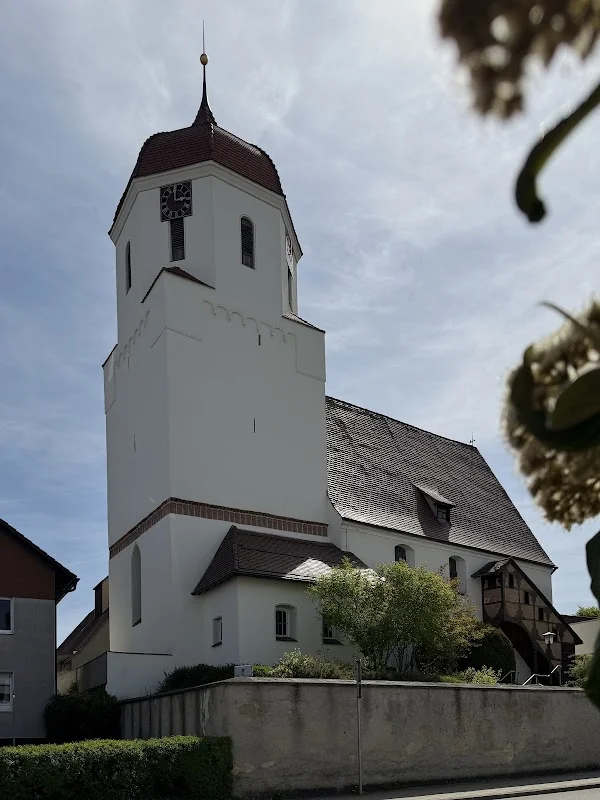
The Peter and Paul Church in Ulm-Jungingen is much more than just a church building for the northern district. It is a landmark, a meeting point, and a place where local history and community life continue to overlap to this day. The Protestant congregation describes Jungingen as a developed community in the north of Ulm, with around 1200 members who usually celebrate their services in the Peter and Paul Church. At the same time, it is part of the merged congregation of Jungingen-Lehr-Mähringen, which addresses people from the three villages and the surrounding area. This connection between a historic church and vibrant present is what makes the place appealing: it is not just about architecture, but also about encounters, faith, music, and neighborhood. ([ev-kirche-ulm-jungingen.de](https://www.ev-kirche-ulm-jungingen.de/angebote))
History of the Peter and Paul Church in Jungingen
The roots of the church go back a long way and show how deeply the establishment is anchored in local memory. The official community page mentions a chapel for Jungingen as early as 1284; a chaplaincy was added in 1356. The church itself essentially dates from 1499 and was remodeled in 1697. Since 1699, it has been known as Peter and Paul. This is significant for local history because the church has thus become not only a religious but also an identity-forming focal point. After the Reformation, the parish of Jungingen was temporarily dissolved and managed from Ulm; it was not until 1829 that a separate parish was reestablished. This sequence shows how closely church development and regional history are intertwined here, and it also explains why the church remains so present in the consciousness of the district to this day. ([ev-kirche-ulm-jungingen.de](https://www.ev-kirche-ulm-jungingen.de/angebote/kirche-jungingen?utm_source=openai))
Architecturally, the church is also a witness to several eras. The official site mentions a renovation from 1956 to 1959, which carefully preserved the building in the 20th century. The city of Ulm describes the Peter and Paul Church as a landmark of the place at its highest point and refers to its early documentary mention in 1499. Together, this creates the image of a church that has been repeatedly adapted over centuries without losing its historical character. For visitors, this is precisely what is exciting: one does not see a museum in stasis, but a building that visibly carries its history and is still used today. This continuity is an essential part of its appeal and explains why the church in Jungingen holds a special position not only architecturally but also culturally. ([ulm.de](https://www.ulm.de/leben-in-ulm/umwelt-energie-entsorgung/lokale-agenda-ulm-21/unterwegs-in-ulm/jungingen))
Services and Community Life in Jungingen-Lehr-Mähringen
The Peter and Paul Church is actively integrated into the daily life of the community. The merged Protestant congregation of Jungingen-Lehr-Mähringen sees itself as an open community for Jungingen, Lehr, Mähringen, and the surrounding areas. The community page emphasizes that community is more than just Sunday services: it includes encounters, joint activities, events, and a togetherness that connects generations. For Jungingen, particular emphasis is placed on the good ecumenical relationship with the Catholic parish of St. Josef as well as contact with local associations. Therefore, those who visit the church experience not only a place of worship but also a social hub in local life. This openness is important because it does not make the church appear as a closed institution, but as a space where people with different life situations and expectations are welcome. ([ev-kirche-ulm-jungingen.de](https://www.ev-kirche-ulm-jungingen.de/angebote))
Practically, this is also reflected in the established structures on site. The parish office is located at Fröbelstraße 3, directly in Ulm-Jungingen, and offers reliable office hours on Wednesday afternoons and Friday mornings. The community also refers to its offerings, contacts with the church district of Ulm, and exchanges with other church institutions in the area. This picture is complemented by the fact that events and offerings are organized through the pages of the congregation and that the community is consciously open to various age groups. This creates a church environment that functions not only with a sense of tradition but also very close to everyday life. Those looking for a community that connects historical heritage and communal life will find here a clear structure, short distances, and a noticeably local profile. ([ev-kirche-ulm-jungingen.de](https://www.ev-kirche-ulm-jungingen.de/meta/kontakt))
Organ, Confessional Image, and Church Furnishings
A special highlight of the Peter and Paul Church is its church furnishings. The official community reports that the church received its first organ in 1771 as the culmination of its baroque furnishings, built by organ builder Johann Friedrich Schmahl. Thus, music is not just an addition but part of the historical identity of the space. For visitors, this means: the church tells its story not only through walls and dates but also through sound, liturgical order, and furnishings that have grown out of a specific era. Especially in a Protestant village church, the interplay of space and music is often particularly palpable, and in Jungingen, it seems to have a distinct historical emphasis. The organ therefore marks not just an instrument but a cultural moment in which liturgical practice, craftsmanship, and community understanding come together. ([ev-kirche-ulm-jungingen.de](https://www.ev-kirche-ulm-jungingen.de/angebote/kirche-jungingen?utm_source=openai))
Equally extraordinary is the confessional image from 1711. According to the Protestant site, it was donated by the shoemaker Ulrich Feßlen from Jungingen and executed by an unknown painter; the Württemberg Church History Online confirms this classification. In the image, the cross of Christ stands at the center, surrounded by scenes of the Last Supper, baptism, confession, church music, and the Trinity. Particularly noteworthy is that an organ is depicted here, even though there was no organ in the church at that time. This makes the image an exciting theological testimony of the confessional era, which is rare in the southwest and has therefore attracted regional interest. The official community also emphasizes that the image has been loaned multiple times for exhibitions, which further underscores its artistic and pious historical significance. Therefore, those visiting the church should not only look forward at the altar and space but also open their eyes to the images and their theological language. ([ev-kirche-ulm-jungingen.de](https://www.ev-kirche-ulm-jungingen.de/angebote/kirche-jungingen?utm_source=openai))
Address, Parish Office, and Directions to the Church
For practical planning, the clear address is important: the church is located in Ulm-Jungingen at Ehmannstraße 30, and the Protestant parish office of the Jungingen-Lehr-Mähringen congregation is at Fröbelstraße 3. There, you can reach the parish office by phone at 0731 65132; fax and email contact are also provided on the official page. The office hours are Wednesday from 3:00 PM to 6:00 PM and Friday from 9:00 AM to 12:00 PM. So, if you need an appointment, information, or registration, you have reliable points of contact right on site. The local administration also explicitly lists the Protestant community under the name Peter and Paul and names Fröbelstraße as the parish office address. This is helpful for visitors because it makes planning the most important routes very simple: first the church, then the parish office if needed. ([ev-kirche-ulm-jungingen.de](https://www.ev-kirche-ulm-jungingen.de/meta/kontakt))
The official city description also helps with orientation. The city of Ulm locates the Peter and Paul Church as a landmark of the place at its highest point and names it as a prominent focal point on the Jungingen district map. In the described village routes, the church appears as a landmark, among other things along Ehmannstraße towards the town center. This shows that the church is not located off the beaten path in everyday life but serves as a well-perceived point in the local landscape. For people exploring Jungingen on foot, this is a clear advantage: the church does not seem hidden but is integrated into the developed structure of the place. The sources found do not indicate a dedicated parking service; therefore, the address, parish office information, and city directions are the most reliable. Those visiting the community thus receive the most important practical information without detours and can prepare well for the way to the service, event, or conversation. ([ulm.de](https://www.ulm.de/leben-in-ulm/umwelt-energie-entsorgung/lokale-agenda-ulm-21/unterwegs-in-ulm/jungingen))
Children, Baptisms, and Nativity Play in the Community
The community consciously thinks beyond the Sunday service. The official page for the nativity play describes that it has a long tradition in Jungingen and is performed every year on the afternoon of Christmas Eve. From mid-November, children meet weekly for rehearsals in the community center; children from the last year of kindergarten to well into elementary school can participate. This is more than just a program point: it is a cross-generational learning and meeting space where children experience liturgical stories, roles, costumes, and community. For families, this is precisely what makes it appealing because they find a place where children can not only watch but also actively participate. The nativity play also shows how the Peter and Paul Church is filled with life throughout the year and how strongly the Advent and Christmas cycle is anchored in the community. ([ev-kirche-ulm-jungingen.de](https://www.ev-kirche-ulm-jungingen.de/gottesdienste/krippenspiel?utm_source=openai))
Baptisms are also well organized. The baptism page of the congregation explains that baptisms take place by arrangement in all three congregations. This is practical for families from the extended community area and simultaneously shows the close networking of Jungingen, Lehr, and Mähringen. This is complemented by further offerings such as the playgroup Kleine Wichtel for children aged 0 to 3 years, which takes place on Mondays in the community center on Fröbelstraße and is consciously open to all. Additionally, there is the ecumenical community library, which is open twice a week and has been supported by a volunteer team for decades. Thus, around the Peter and Paul Church, a network of education, family, faith, and neighborhood emerges that clearly extends beyond the actual church building. This is a convincing sign of lived openness, especially for young families and for people seeking a low-threshold church connection. ([ev-kirche-ulm-jungingen.de](https://www.ev-kirche-ulm-jungingen.de/gottesdienste/tauf-termine?utm_source=openai))
Why the Peter and Paul Church Shapes the Local Landscape of Jungingen
The strong impact of the church on the local landscape is also due to its location and historical role. The city of Ulm names it as a landmark at the highest point of the place; at the same time, the local panorama and village round path explicitly lead past the church. Therefore, those exploring Jungingen on foot almost inevitably encounter it. In a district that has grown yet emphasizes its rural roots, such a church creates orientation, identity, and atmosphere. It is a building that one does not just look at but that shapes the place. Precisely for this reason, the Peter and Paul Church is also suitable as a starting or ending point for a walk through Jungingen, especially when one wants to experience the connection between old building substance, newer residential areas, and the traditional town center. ([ulm.de](https://www.ulm.de/leben-in-ulm/umwelt-energie-entsorgung/lokale-agenda-ulm-21/unterwegs-in-ulm/jungingen))
In the end, it is precisely the connection of history, community life, and clear address that makes the special appeal of this location. The church is historically deeply rooted, liturgically active, and well anchored in everyday life through offerings for children, families, and community members. Those interested in Protestant church history, local identity, or a quiet, authentic place in Ulm will find a very harmonious point of contact in the Peter and Paul Church. It is not an event temple or an anonymous large church but a developed community church with visible tradition and vibrant present. It is precisely this mix of continuity and openness that defines its character and explains why it remains so important for Jungingen to this day. ([ev-kirche-ulm-jungingen.de](https://www.ev-kirche-ulm-jungingen.de/angebote))
Sources:
- Protestant Congregation Jungingen-Lehr-Mähringen - Contact
- Protestant Congregation Jungingen-Lehr-Mähringen - Community Life
- Protestant Congregation Jungingen-Lehr-Mähringen - Church Jungingen
- Protestant Congregation Jungingen-Lehr-Mähringen - Nativity Play
- Protestant Congregation Jungingen-Lehr-Mähringen - Baptism Dates
- Local Administration Jungingen - Churches and Faith Communities
- City of Ulm - Jungingen
- Württemberg Church History Online - Confessional Image
Show moreShow less
Peter and Paul Church Jungingen | Services & History
The Peter and Paul Church in Ulm-Jungingen is much more than just a church building for the northern district. It is a landmark, a meeting point, and a place where local history and community life continue to overlap to this day. The Protestant congregation describes Jungingen as a developed community in the north of Ulm, with around 1200 members who usually celebrate their services in the Peter and Paul Church. At the same time, it is part of the merged congregation of Jungingen-Lehr-Mähringen, which addresses people from the three villages and the surrounding area. This connection between a historic church and vibrant present is what makes the place appealing: it is not just about architecture, but also about encounters, faith, music, and neighborhood. ([ev-kirche-ulm-jungingen.de](https://www.ev-kirche-ulm-jungingen.de/angebote))
History of the Peter and Paul Church in Jungingen
The roots of the church go back a long way and show how deeply the establishment is anchored in local memory. The official community page mentions a chapel for Jungingen as early as 1284; a chaplaincy was added in 1356. The church itself essentially dates from 1499 and was remodeled in 1697. Since 1699, it has been known as Peter and Paul. This is significant for local history because the church has thus become not only a religious but also an identity-forming focal point. After the Reformation, the parish of Jungingen was temporarily dissolved and managed from Ulm; it was not until 1829 that a separate parish was reestablished. This sequence shows how closely church development and regional history are intertwined here, and it also explains why the church remains so present in the consciousness of the district to this day. ([ev-kirche-ulm-jungingen.de](https://www.ev-kirche-ulm-jungingen.de/angebote/kirche-jungingen?utm_source=openai))
Architecturally, the church is also a witness to several eras. The official site mentions a renovation from 1956 to 1959, which carefully preserved the building in the 20th century. The city of Ulm describes the Peter and Paul Church as a landmark of the place at its highest point and refers to its early documentary mention in 1499. Together, this creates the image of a church that has been repeatedly adapted over centuries without losing its historical character. For visitors, this is precisely what is exciting: one does not see a museum in stasis, but a building that visibly carries its history and is still used today. This continuity is an essential part of its appeal and explains why the church in Jungingen holds a special position not only architecturally but also culturally. ([ulm.de](https://www.ulm.de/leben-in-ulm/umwelt-energie-entsorgung/lokale-agenda-ulm-21/unterwegs-in-ulm/jungingen))
Services and Community Life in Jungingen-Lehr-Mähringen
The Peter and Paul Church is actively integrated into the daily life of the community. The merged Protestant congregation of Jungingen-Lehr-Mähringen sees itself as an open community for Jungingen, Lehr, Mähringen, and the surrounding areas. The community page emphasizes that community is more than just Sunday services: it includes encounters, joint activities, events, and a togetherness that connects generations. For Jungingen, particular emphasis is placed on the good ecumenical relationship with the Catholic parish of St. Josef as well as contact with local associations. Therefore, those who visit the church experience not only a place of worship but also a social hub in local life. This openness is important because it does not make the church appear as a closed institution, but as a space where people with different life situations and expectations are welcome. ([ev-kirche-ulm-jungingen.de](https://www.ev-kirche-ulm-jungingen.de/angebote))
Practically, this is also reflected in the established structures on site. The parish office is located at Fröbelstraße 3, directly in Ulm-Jungingen, and offers reliable office hours on Wednesday afternoons and Friday mornings. The community also refers to its offerings, contacts with the church district of Ulm, and exchanges with other church institutions in the area. This picture is complemented by the fact that events and offerings are organized through the pages of the congregation and that the community is consciously open to various age groups. This creates a church environment that functions not only with a sense of tradition but also very close to everyday life. Those looking for a community that connects historical heritage and communal life will find here a clear structure, short distances, and a noticeably local profile. ([ev-kirche-ulm-jungingen.de](https://www.ev-kirche-ulm-jungingen.de/meta/kontakt))
Organ, Confessional Image, and Church Furnishings
A special highlight of the Peter and Paul Church is its church furnishings. The official community reports that the church received its first organ in 1771 as the culmination of its baroque furnishings, built by organ builder Johann Friedrich Schmahl. Thus, music is not just an addition but part of the historical identity of the space. For visitors, this means: the church tells its story not only through walls and dates but also through sound, liturgical order, and furnishings that have grown out of a specific era. Especially in a Protestant village church, the interplay of space and music is often particularly palpable, and in Jungingen, it seems to have a distinct historical emphasis. The organ therefore marks not just an instrument but a cultural moment in which liturgical practice, craftsmanship, and community understanding come together. ([ev-kirche-ulm-jungingen.de](https://www.ev-kirche-ulm-jungingen.de/angebote/kirche-jungingen?utm_source=openai))
Equally extraordinary is the confessional image from 1711. According to the Protestant site, it was donated by the shoemaker Ulrich Feßlen from Jungingen and executed by an unknown painter; the Württemberg Church History Online confirms this classification. In the image, the cross of Christ stands at the center, surrounded by scenes of the Last Supper, baptism, confession, church music, and the Trinity. Particularly noteworthy is that an organ is depicted here, even though there was no organ in the church at that time. This makes the image an exciting theological testimony of the confessional era, which is rare in the southwest and has therefore attracted regional interest. The official community also emphasizes that the image has been loaned multiple times for exhibitions, which further underscores its artistic and pious historical significance. Therefore, those visiting the church should not only look forward at the altar and space but also open their eyes to the images and their theological language. ([ev-kirche-ulm-jungingen.de](https://www.ev-kirche-ulm-jungingen.de/angebote/kirche-jungingen?utm_source=openai))
Address, Parish Office, and Directions to the Church
For practical planning, the clear address is important: the church is located in Ulm-Jungingen at Ehmannstraße 30, and the Protestant parish office of the Jungingen-Lehr-Mähringen congregation is at Fröbelstraße 3. There, you can reach the parish office by phone at 0731 65132; fax and email contact are also provided on the official page. The office hours are Wednesday from 3:00 PM to 6:00 PM and Friday from 9:00 AM to 12:00 PM. So, if you need an appointment, information, or registration, you have reliable points of contact right on site. The local administration also explicitly lists the Protestant community under the name Peter and Paul and names Fröbelstraße as the parish office address. This is helpful for visitors because it makes planning the most important routes very simple: first the church, then the parish office if needed. ([ev-kirche-ulm-jungingen.de](https://www.ev-kirche-ulm-jungingen.de/meta/kontakt))
The official city description also helps with orientation. The city of Ulm locates the Peter and Paul Church as a landmark of the place at its highest point and names it as a prominent focal point on the Jungingen district map. In the described village routes, the church appears as a landmark, among other things along Ehmannstraße towards the town center. This shows that the church is not located off the beaten path in everyday life but serves as a well-perceived point in the local landscape. For people exploring Jungingen on foot, this is a clear advantage: the church does not seem hidden but is integrated into the developed structure of the place. The sources found do not indicate a dedicated parking service; therefore, the address, parish office information, and city directions are the most reliable. Those visiting the community thus receive the most important practical information without detours and can prepare well for the way to the service, event, or conversation. ([ulm.de](https://www.ulm.de/leben-in-ulm/umwelt-energie-entsorgung/lokale-agenda-ulm-21/unterwegs-in-ulm/jungingen))
Children, Baptisms, and Nativity Play in the Community
The community consciously thinks beyond the Sunday service. The official page for the nativity play describes that it has a long tradition in Jungingen and is performed every year on the afternoon of Christmas Eve. From mid-November, children meet weekly for rehearsals in the community center; children from the last year of kindergarten to well into elementary school can participate. This is more than just a program point: it is a cross-generational learning and meeting space where children experience liturgical stories, roles, costumes, and community. For families, this is precisely what makes it appealing because they find a place where children can not only watch but also actively participate. The nativity play also shows how the Peter and Paul Church is filled with life throughout the year and how strongly the Advent and Christmas cycle is anchored in the community. ([ev-kirche-ulm-jungingen.de](https://www.ev-kirche-ulm-jungingen.de/gottesdienste/krippenspiel?utm_source=openai))
Baptisms are also well organized. The baptism page of the congregation explains that baptisms take place by arrangement in all three congregations. This is practical for families from the extended community area and simultaneously shows the close networking of Jungingen, Lehr, and Mähringen. This is complemented by further offerings such as the playgroup Kleine Wichtel for children aged 0 to 3 years, which takes place on Mondays in the community center on Fröbelstraße and is consciously open to all. Additionally, there is the ecumenical community library, which is open twice a week and has been supported by a volunteer team for decades. Thus, around the Peter and Paul Church, a network of education, family, faith, and neighborhood emerges that clearly extends beyond the actual church building. This is a convincing sign of lived openness, especially for young families and for people seeking a low-threshold church connection. ([ev-kirche-ulm-jungingen.de](https://www.ev-kirche-ulm-jungingen.de/gottesdienste/tauf-termine?utm_source=openai))
Why the Peter and Paul Church Shapes the Local Landscape of Jungingen
The strong impact of the church on the local landscape is also due to its location and historical role. The city of Ulm names it as a landmark at the highest point of the place; at the same time, the local panorama and village round path explicitly lead past the church. Therefore, those exploring Jungingen on foot almost inevitably encounter it. In a district that has grown yet emphasizes its rural roots, such a church creates orientation, identity, and atmosphere. It is a building that one does not just look at but that shapes the place. Precisely for this reason, the Peter and Paul Church is also suitable as a starting or ending point for a walk through Jungingen, especially when one wants to experience the connection between old building substance, newer residential areas, and the traditional town center. ([ulm.de](https://www.ulm.de/leben-in-ulm/umwelt-energie-entsorgung/lokale-agenda-ulm-21/unterwegs-in-ulm/jungingen))
In the end, it is precisely the connection of history, community life, and clear address that makes the special appeal of this location. The church is historically deeply rooted, liturgically active, and well anchored in everyday life through offerings for children, families, and community members. Those interested in Protestant church history, local identity, or a quiet, authentic place in Ulm will find a very harmonious point of contact in the Peter and Paul Church. It is not an event temple or an anonymous large church but a developed community church with visible tradition and vibrant present. It is precisely this mix of continuity and openness that defines its character and explains why it remains so important for Jungingen to this day. ([ev-kirche-ulm-jungingen.de](https://www.ev-kirche-ulm-jungingen.de/angebote))
Sources:
- Protestant Congregation Jungingen-Lehr-Mähringen - Contact
- Protestant Congregation Jungingen-Lehr-Mähringen - Community Life
- Protestant Congregation Jungingen-Lehr-Mähringen - Church Jungingen
- Protestant Congregation Jungingen-Lehr-Mähringen - Nativity Play
- Protestant Congregation Jungingen-Lehr-Mähringen - Baptism Dates
- Local Administration Jungingen - Churches and Faith Communities
- City of Ulm - Jungingen
- Württemberg Church History Online - Confessional Image
Peter and Paul Church Jungingen | Services & History
The Peter and Paul Church in Ulm-Jungingen is much more than just a church building for the northern district. It is a landmark, a meeting point, and a place where local history and community life continue to overlap to this day. The Protestant congregation describes Jungingen as a developed community in the north of Ulm, with around 1200 members who usually celebrate their services in the Peter and Paul Church. At the same time, it is part of the merged congregation of Jungingen-Lehr-Mähringen, which addresses people from the three villages and the surrounding area. This connection between a historic church and vibrant present is what makes the place appealing: it is not just about architecture, but also about encounters, faith, music, and neighborhood. ([ev-kirche-ulm-jungingen.de](https://www.ev-kirche-ulm-jungingen.de/angebote))
History of the Peter and Paul Church in Jungingen
The roots of the church go back a long way and show how deeply the establishment is anchored in local memory. The official community page mentions a chapel for Jungingen as early as 1284; a chaplaincy was added in 1356. The church itself essentially dates from 1499 and was remodeled in 1697. Since 1699, it has been known as Peter and Paul. This is significant for local history because the church has thus become not only a religious but also an identity-forming focal point. After the Reformation, the parish of Jungingen was temporarily dissolved and managed from Ulm; it was not until 1829 that a separate parish was reestablished. This sequence shows how closely church development and regional history are intertwined here, and it also explains why the church remains so present in the consciousness of the district to this day. ([ev-kirche-ulm-jungingen.de](https://www.ev-kirche-ulm-jungingen.de/angebote/kirche-jungingen?utm_source=openai))
Architecturally, the church is also a witness to several eras. The official site mentions a renovation from 1956 to 1959, which carefully preserved the building in the 20th century. The city of Ulm describes the Peter and Paul Church as a landmark of the place at its highest point and refers to its early documentary mention in 1499. Together, this creates the image of a church that has been repeatedly adapted over centuries without losing its historical character. For visitors, this is precisely what is exciting: one does not see a museum in stasis, but a building that visibly carries its history and is still used today. This continuity is an essential part of its appeal and explains why the church in Jungingen holds a special position not only architecturally but also culturally. ([ulm.de](https://www.ulm.de/leben-in-ulm/umwelt-energie-entsorgung/lokale-agenda-ulm-21/unterwegs-in-ulm/jungingen))
Services and Community Life in Jungingen-Lehr-Mähringen
The Peter and Paul Church is actively integrated into the daily life of the community. The merged Protestant congregation of Jungingen-Lehr-Mähringen sees itself as an open community for Jungingen, Lehr, Mähringen, and the surrounding areas. The community page emphasizes that community is more than just Sunday services: it includes encounters, joint activities, events, and a togetherness that connects generations. For Jungingen, particular emphasis is placed on the good ecumenical relationship with the Catholic parish of St. Josef as well as contact with local associations. Therefore, those who visit the church experience not only a place of worship but also a social hub in local life. This openness is important because it does not make the church appear as a closed institution, but as a space where people with different life situations and expectations are welcome. ([ev-kirche-ulm-jungingen.de](https://www.ev-kirche-ulm-jungingen.de/angebote))
Practically, this is also reflected in the established structures on site. The parish office is located at Fröbelstraße 3, directly in Ulm-Jungingen, and offers reliable office hours on Wednesday afternoons and Friday mornings. The community also refers to its offerings, contacts with the church district of Ulm, and exchanges with other church institutions in the area. This picture is complemented by the fact that events and offerings are organized through the pages of the congregation and that the community is consciously open to various age groups. This creates a church environment that functions not only with a sense of tradition but also very close to everyday life. Those looking for a community that connects historical heritage and communal life will find here a clear structure, short distances, and a noticeably local profile. ([ev-kirche-ulm-jungingen.de](https://www.ev-kirche-ulm-jungingen.de/meta/kontakt))
Organ, Confessional Image, and Church Furnishings
A special highlight of the Peter and Paul Church is its church furnishings. The official community reports that the church received its first organ in 1771 as the culmination of its baroque furnishings, built by organ builder Johann Friedrich Schmahl. Thus, music is not just an addition but part of the historical identity of the space. For visitors, this means: the church tells its story not only through walls and dates but also through sound, liturgical order, and furnishings that have grown out of a specific era. Especially in a Protestant village church, the interplay of space and music is often particularly palpable, and in Jungingen, it seems to have a distinct historical emphasis. The organ therefore marks not just an instrument but a cultural moment in which liturgical practice, craftsmanship, and community understanding come together. ([ev-kirche-ulm-jungingen.de](https://www.ev-kirche-ulm-jungingen.de/angebote/kirche-jungingen?utm_source=openai))
Equally extraordinary is the confessional image from 1711. According to the Protestant site, it was donated by the shoemaker Ulrich Feßlen from Jungingen and executed by an unknown painter; the Württemberg Church History Online confirms this classification. In the image, the cross of Christ stands at the center, surrounded by scenes of the Last Supper, baptism, confession, church music, and the Trinity. Particularly noteworthy is that an organ is depicted here, even though there was no organ in the church at that time. This makes the image an exciting theological testimony of the confessional era, which is rare in the southwest and has therefore attracted regional interest. The official community also emphasizes that the image has been loaned multiple times for exhibitions, which further underscores its artistic and pious historical significance. Therefore, those visiting the church should not only look forward at the altar and space but also open their eyes to the images and their theological language. ([ev-kirche-ulm-jungingen.de](https://www.ev-kirche-ulm-jungingen.de/angebote/kirche-jungingen?utm_source=openai))
Address, Parish Office, and Directions to the Church
For practical planning, the clear address is important: the church is located in Ulm-Jungingen at Ehmannstraße 30, and the Protestant parish office of the Jungingen-Lehr-Mähringen congregation is at Fröbelstraße 3. There, you can reach the parish office by phone at 0731 65132; fax and email contact are also provided on the official page. The office hours are Wednesday from 3:00 PM to 6:00 PM and Friday from 9:00 AM to 12:00 PM. So, if you need an appointment, information, or registration, you have reliable points of contact right on site. The local administration also explicitly lists the Protestant community under the name Peter and Paul and names Fröbelstraße as the parish office address. This is helpful for visitors because it makes planning the most important routes very simple: first the church, then the parish office if needed. ([ev-kirche-ulm-jungingen.de](https://www.ev-kirche-ulm-jungingen.de/meta/kontakt))
The official city description also helps with orientation. The city of Ulm locates the Peter and Paul Church as a landmark of the place at its highest point and names it as a prominent focal point on the Jungingen district map. In the described village routes, the church appears as a landmark, among other things along Ehmannstraße towards the town center. This shows that the church is not located off the beaten path in everyday life but serves as a well-perceived point in the local landscape. For people exploring Jungingen on foot, this is a clear advantage: the church does not seem hidden but is integrated into the developed structure of the place. The sources found do not indicate a dedicated parking service; therefore, the address, parish office information, and city directions are the most reliable. Those visiting the community thus receive the most important practical information without detours and can prepare well for the way to the service, event, or conversation. ([ulm.de](https://www.ulm.de/leben-in-ulm/umwelt-energie-entsorgung/lokale-agenda-ulm-21/unterwegs-in-ulm/jungingen))
Children, Baptisms, and Nativity Play in the Community
The community consciously thinks beyond the Sunday service. The official page for the nativity play describes that it has a long tradition in Jungingen and is performed every year on the afternoon of Christmas Eve. From mid-November, children meet weekly for rehearsals in the community center; children from the last year of kindergarten to well into elementary school can participate. This is more than just a program point: it is a cross-generational learning and meeting space where children experience liturgical stories, roles, costumes, and community. For families, this is precisely what makes it appealing because they find a place where children can not only watch but also actively participate. The nativity play also shows how the Peter and Paul Church is filled with life throughout the year and how strongly the Advent and Christmas cycle is anchored in the community. ([ev-kirche-ulm-jungingen.de](https://www.ev-kirche-ulm-jungingen.de/gottesdienste/krippenspiel?utm_source=openai))
Baptisms are also well organized. The baptism page of the congregation explains that baptisms take place by arrangement in all three congregations. This is practical for families from the extended community area and simultaneously shows the close networking of Jungingen, Lehr, and Mähringen. This is complemented by further offerings such as the playgroup Kleine Wichtel for children aged 0 to 3 years, which takes place on Mondays in the community center on Fröbelstraße and is consciously open to all. Additionally, there is the ecumenical community library, which is open twice a week and has been supported by a volunteer team for decades. Thus, around the Peter and Paul Church, a network of education, family, faith, and neighborhood emerges that clearly extends beyond the actual church building. This is a convincing sign of lived openness, especially for young families and for people seeking a low-threshold church connection. ([ev-kirche-ulm-jungingen.de](https://www.ev-kirche-ulm-jungingen.de/gottesdienste/tauf-termine?utm_source=openai))
Why the Peter and Paul Church Shapes the Local Landscape of Jungingen
The strong impact of the church on the local landscape is also due to its location and historical role. The city of Ulm names it as a landmark at the highest point of the place; at the same time, the local panorama and village round path explicitly lead past the church. Therefore, those exploring Jungingen on foot almost inevitably encounter it. In a district that has grown yet emphasizes its rural roots, such a church creates orientation, identity, and atmosphere. It is a building that one does not just look at but that shapes the place. Precisely for this reason, the Peter and Paul Church is also suitable as a starting or ending point for a walk through Jungingen, especially when one wants to experience the connection between old building substance, newer residential areas, and the traditional town center. ([ulm.de](https://www.ulm.de/leben-in-ulm/umwelt-energie-entsorgung/lokale-agenda-ulm-21/unterwegs-in-ulm/jungingen))
In the end, it is precisely the connection of history, community life, and clear address that makes the special appeal of this location. The church is historically deeply rooted, liturgically active, and well anchored in everyday life through offerings for children, families, and community members. Those interested in Protestant church history, local identity, or a quiet, authentic place in Ulm will find a very harmonious point of contact in the Peter and Paul Church. It is not an event temple or an anonymous large church but a developed community church with visible tradition and vibrant present. It is precisely this mix of continuity and openness that defines its character and explains why it remains so important for Jungingen to this day. ([ev-kirche-ulm-jungingen.de](https://www.ev-kirche-ulm-jungingen.de/angebote))
Sources:
- Protestant Congregation Jungingen-Lehr-Mähringen - Contact
- Protestant Congregation Jungingen-Lehr-Mähringen - Community Life
- Protestant Congregation Jungingen-Lehr-Mähringen - Church Jungingen
- Protestant Congregation Jungingen-Lehr-Mähringen - Nativity Play
- Protestant Congregation Jungingen-Lehr-Mähringen - Baptism Dates
- Local Administration Jungingen - Churches and Faith Communities
- City of Ulm - Jungingen
- Württemberg Church History Online - Confessional Image
Upcoming Events
No events found
Frequently Asked Questions
Reviews
No reviews found