
Ulm
Frauenstraße 110, 89073 Ulm, Deutschland
Pauluskirche and Congregation | Vesper Church & Concerts
The Pauluskirche and congregation in Ulm is much more than a classic church space. It is a community church, concert venue, social meeting place, and a prominent building at Frauenstraße 110. Those who visit the Pauluskirche encounter a place that consciously connects spirituality, culture, and community life, rather than keeping them separate. The official website consolidates services, groups, concerts, cultural offerings, Vesper Church, and practical visitor information; additionally, there is a 360° tour that allows one to explore the interior in advance. For visitors, the church is not just a destination for a quick photo stop, but a vibrant place with a clear identity and high quality of stay. The opening hours are also easy to understand: the church is open from 9 AM to 4 PM, except on Mondays. For those who want to get to know the Pauluskirche for the first time, this provides easy access to one of the most well-known Protestant places in Ulm. ([pauluskirche-ulm.de](https://pauluskirche-ulm.de/))
Vesper Church at the Pauluskirche Ulm
The most important social theme surrounding the Pauluskirche is undoubtedly the Vesper Church. Since 1996, the church has opened its doors for several weeks during the winter for the Ulm Vesper Church, which is aimed at needy and lonely people, providing them with a warm meal in a dignified setting. What is crucial is not just the food, but the togetherness: the congregation describes the Vesper Church as a meal community where everyone can come into contact with each other on equal terms. Up to 600 guests can be served daily in the festive church space. This number shows the significance of the place for Ulm and how strongly the church opens its spaces for social responsibility. With Vesper Church Plus, this commitment extends beyond the winter action. The concept continues to support lonely and elderly people in the neighborhood throughout the year and creates additional meeting formats such as coffee and pastries in the foyer of the Pauluskirche. This makes it clear: the Pauluskirche is not just a venue, but a place of lived diaconia. It combines practical help, dignified hospitality, and Christian charity with a remarkable urban presence. That is precisely why the Vesper Church is one of the most defining search topics surrounding this location. ([pauluskirche-ulm.de](https://www.pauluskirche-ulm.de/die-idee.html))
The social impact of the Pauluskirche is also explained by its atmosphere. The church space is deliberately redesigned during the Vesper Church period so that eating, conversation, and encounters can take place in a friendly environment. The congregation emphasizes the dignified character of the meals and the sense of community that should arise. This combination of practical help and architectural openness distinguishes the Pauluskirche from many other places. For those searching for terms like Vesper Church, social church, help in Ulm, or church meal community, it is thus a central meeting point. Additionally, Vesper Church Plus shows that the work is not limited to individual action days but is intended as sustainable support. This is as important for the church's identity as it is for visitors who want to experience a church with character and social profile. So, anyone looking for a place where Christian faith is translated into concrete practice will find one of the most distinctive examples in southern Germany here. ([pauluskirche-ulm.de](https://www.pauluskirche-ulm.de/die-idee.html))
Concerts, Acoustics, and Culture in the Pauluskirche
A second major theme is concerts and culture. The congregation describes the Pauluskirche as a concert church with exceptional acoustics, where many important church concerts in the wider area take place. The spectrum ranges from smaller guitar concerts to large gospel events with up to 1200 visitors. Thus, the church is not only a spiritual space but also a cultural attraction for Ulm and the region. Particularly important is the connection between architecture and sound: the spacious church space contributes to the effect of choral music, organ, and orchestra, making the Pauluskirche attractive for various musical formats. The congregation also refers to its own cultural work and regular concert dates throughout the year. For people searching for church concerts in Ulm, cultural church, organ concert, or special acoustics, the Pauluskirche is therefore a very strong search target. ([pauluskirche-ulm.de](https://pauluskirche-ulm.de/kirchen-musik.html))
Part of the special musical identity is also the historical organ. The Pauluskirche preserves the Link-Gaida organ, an instrument that claims a high rank for romantic church music. The congregation calls it one of the treasures of the house and emphasizes that the large space of the church supports its profile as a concert and cultural church. In practice, this means: the Pauluskirche is not just a backdrop for music but is itself an essential part of the musical experience. Those attending a concert there do not simply experience an event in a church but a staging of space, sound, and liturgical history. This is why the location provides a clear, robust profile for search queries with the terms concerts, music, culture, organ, or gospel. The fact that the congregation even provides organizational support for larger concerts further underscores the significance of the house as a cultural venue. ([pauluskirche-ulm.de](https://www.pauluskirche-ulm.de/ulmerpauluskirche.html))
Directions, Parking, and Opening Hours at Frauenstraße 110
For practical planning, the Pauluskirche is very well described. The address is Frauenstraße 110, 89073 Ulm. Those arriving by car can reach the church from the B10 roundabout next to IKEA via Karlstraße and turn into Frauenstraße after about 1.2 kilometers; the church is then on the left. This is particularly helpful for visitors who need a clear route description coming from city traffic. An important note about parking: parking spaces in the courtyard next to the Pauluskirche are only available during church events. This makes it clear that while the location is easily accessible, parking options are linked to the event operation. For public transport users, the congregation lists several options: bus line 7 with a stop at Keplerstraße, tram line 1 with a stop at Justizgebäude, or bus line 4 with a stop at Rosengasse. From all stops, it is only a few minutes on foot. Especially for search queries about directions, parking, public transport, and Frauenstraße 110, the Pauluskirche is thus very concrete and user-friendly. ([pauluskirche-ulm.de](https://www.pauluskirche-ulm.de/anschrift-und-anfahrt.html))
The opening hours are also well suited for visits. The church is open from 9 AM to 4 PM, except on Mondays. Additionally, the sacristan service is staffed at certain times, which can be useful for practical questions on-site. Those planning a quiet visit, a brief tour, a prayer, or a look at the interior will find a relatively generous time window. The combination of a central location in the city center, good public transport connections, and clear daytime openings makes the Pauluskirche a location that can be visited both spontaneously and planned. For travelers and excursion seekers, it is also interesting that the church can already be explored digitally via the 360° tour. This allows for good preparation of the route and first impressions. In the search intentions surrounding opening hours, parking, and directions, the Pauluskirche thus fulfills exactly what visitors expect today: clear information, understandable routes, and a reliable arrival situation. ([pauluskirche-ulm.de](https://www.pauluskirche-ulm.de/kontakt.html))
History and Architecture of the Pauluskirche
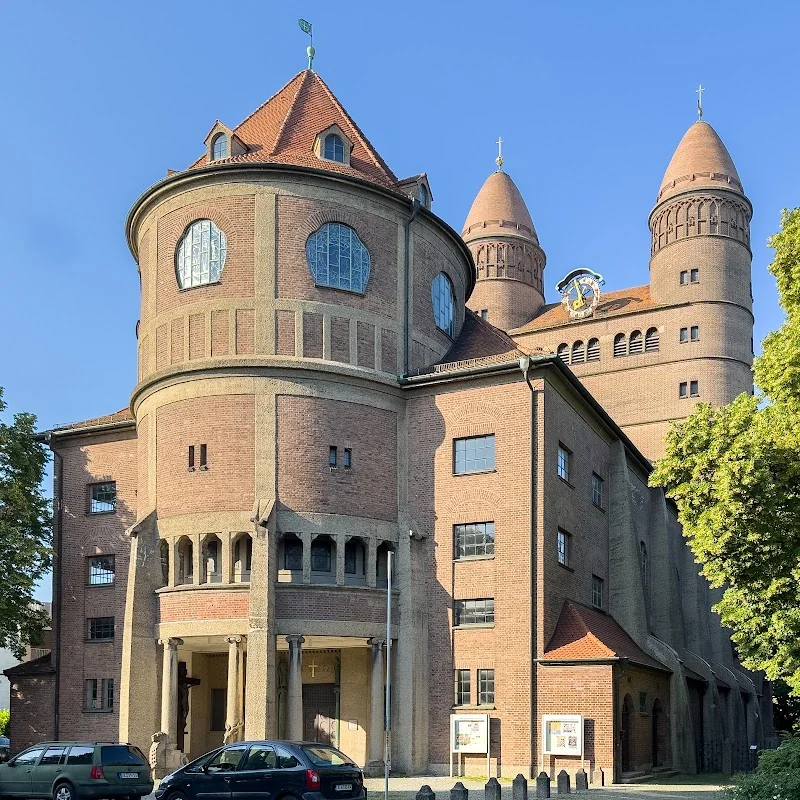
The Pauluskirche has an exceptionally exciting construction history. It was inaugurated in 1910 by Theodor Fischer as a Protestant garrison church and was initially oriented towards military use. Later, the context changed fundamentally: with the purchase by the Ulm congregation in 1964, a comprehensive restoration began, during which war damage was repaired and the interior adapted to the needs of a community church. From a church for a large garrison, it became a space for a normal city congregation. Particularly formative was the renovation in the 1970s when the closely arranged pews were replaced by rows of chairs. This created an open, more flexible, and less rigid spatial effect. Today, the Pauluskirche presents itself as a house that does not hide history but has consciously developed it further. For search queries about history, architecture, Theodor Fischer, or garrison church, it is therefore one of the most interesting churches in Ulm. ([pauluskirche-ulm.de](https://www.pauluskirche-ulm.de/ulmerpauluskirche.html))
Architecturally, the Pauluskirche is significant beyond its historical origin. The congregation points out that it was the first church in Germany where reinforced concrete was openly and artistically used. The view of the building thus shows not only a sacred but also a construction-historical milestone. This makes the place exciting for architecture enthusiasts, monument lovers, and cultural travelers alike. The interior was developed during the redesign so that the altar moves more to the center and the church space gains a greater community orientation. The current capacity is estimated at about 1100 people, while the Vesper Church and larger concerts allow for different uses of the space. Thus, anyone associating the terms seating plan, room size, or capacity with the Pauluskirche will not find an anonymous hall but a complex, historically evolved, and functionally very versatile church. Additionally, the status as a listed building with art-historical relevant elements makes the place significant beyond the congregation. ([pauluskirche-ulm.de](https://www.pauluskirche-ulm.de/pauluskirche-bauunterhalt.html))
It is also important to connect construction history and subsequent use. The Pauluskirche is not a preserved museum but a space that has been reinterpreted repeatedly over decades. The renovation after the acquisition in 1964 preserved central artworks such as the Christ mural while also leading to a contemporary use for worship, music, and community life. This mixture of historical continuity and practical adaptation is what makes the building appealing. Those entering the church today see the traces of early modernity, recognize the handwriting of a significant architect, and simultaneously experience a space that is actively used. This is relevant for both SEO and visitor information: the Pauluskirche stands for history, architecture, modernity, monument preservation, and lively use. Through the exposed concrete structure, the spacious effect, and the artistic furnishings, it possesses a profile that is unique in Ulm and goes far beyond an ordinary community hall. ([pauluskirche-ulm.de](https://www.pauluskirche-ulm.de/pauluskirche-bauunterhalt.html))
Photos, 360° Tour, and Artworks in the Pauluskirche
Those looking for photos of the Pauluskirche or impressions from the interior will find several good entry points on the official website. The congregation provides a gallery of images with reflections from community life and also offers a 360° tour that allows for a comprehensive view of every room. This is particularly helpful for people who want to get to know the church before a visit or who are interested in the interior, seating, and spatial effect. Especially for search queries with the word photos, this combination of gallery and digital tour is very strong, as it conveys both current community moments and architectural impressions. Instead of just showing individual still images, the tour allows for a spatial understanding of the Pauluskirche and makes its openness, brightness, and structure tangible. For visitors, this is a convincing added value, as one can grasp the place in advance. ([pauluskirche-ulm.de](https://www.pauluskirche-ulm.de/bildergalerie.html?utm_source=openai))
Among the special artworks of the Pauluskirche are the Christ mural by Adolf Hölzel and the windows by Klaus Arnold. The windows on the north and south walls depict different themes in their design and imagery: the north side presents the life and passion of the Apostle Paul in stylized form, while the south side works with Christ symbols and visions of the eschatological city of God. This makes the Pauluskirche not only a place of prayer but also a space of visual art and theological narrative. The art is not merely decorative but part of the substantive identity of the house. Thus, those visiting the church experience not only a sacred space but also a consciously composed image and light architecture. This is a very strong attraction for people interested in photos, art, stained glass, and modern church aesthetics. ([pauluskirche-ulm.de](https://www.pauluskirche-ulm.de/fenster-der-pauluskirche.html?utm_source=openai))
The visual perception of the Pauluskirche is closely linked to its spatial openness. The spacious interior, the clear order of the seating, and the visible materiality of the building create an atmosphere that feels both solemn and accessible. This is precisely why photos from the Pauluskirche are also well-suited for social media, travel planning, and event research. They do not depict an arbitrary hall but a church with character. The congregation consciously uses this character for exhibitions, reflections, and cultural formats. So, anyone searching for images usually wants not just a beautiful motif but also an idea of the experience on-site. The Pauluskirche fulfills this wish very well, as it is immediately recognizable in images as a special place: historical, modern, open, and at the same time very clear in structure. This makes it particularly interesting for visual search intentions. ([pauluskirche-ulm.de](https://www.pauluskirche-ulm.de/bildergalerie.html?utm_source=openai))
Services and Community Life of the Pauluskirche Congregation
The Pauluskirche is also a vibrant community church in everyday life. The website consolidates current services, groups, children's and youth offerings, offerings for the elderly, and church musical formats. Thus, the church is relevant not only for individual events but for a broad and regular community life. This is particularly visible in the services that take place in the church, as well as in offerings such as Taizé evening prayers, church council, senior work, and various circles. This makes the Pauluskirche particularly important for search queries about services, community Ulm, church life, and events throughout the year. Those seeking a lively Protestant community will find here a clearly structured, well-organized, and publicly accessible point of contact. ([pauluskirche-ulm.de](https://www.pauluskirche-ulm.de/gottesdienste.html?utm_source=openai))
Especially the Taizé evening prayer is a good example of how the Pauluskirche combines spiritual depth and openness. The regular prayers on Thursday create a meditative framework that invites silent concentration and communal singing. Together with group offerings, musical events, and social-diaconal work, a multifaceted profile emerges. The Pauluskirche is not only a place for major occasions but also for small, reliable forms of togetherness. This is important for visitors who are not only looking for an architectural destination but a community with rhythm, ritual, and open structure. The official representation makes it clear that here worship, culture, and diaconal action are not separated but support each other. That is precisely why the Pauluskirche is so attractive for many search queries: it stands for faith, community, music, and help in a single, clearly recognizable place. ([pauluskirche-ulm.de](https://www.pauluskirche-ulm.de/taize-gebet.html?utm_source=openai))
Sources:
- Protestant Congregation Pauluskirche Ulm - Homepage ([pauluskirche-ulm.de](https://pauluskirche-ulm.de/))
- Protestant Congregation Pauluskirche Ulm - The Pauluskirche ([pauluskirche-ulm.de](https://www.pauluskirche-ulm.de/ulmerpauluskirche.html))
- Protestant Congregation Pauluskirche Ulm - Directions and Opening Hours ([pauluskirche-ulm.de](https://www.pauluskirche-ulm.de/anschrift-und-anfahrt.html))
- Protestant Congregation Pauluskirche Ulm - Vesper Church and Vesper Church Plus ([pauluskirche-ulm.de](https://www.pauluskirche-ulm.de/die-idee.html))
- Protestant Congregation Pauluskirche Ulm - Concerts and Culture ([pauluskirche-ulm.de](https://pauluskirche-ulm.de/kirchen-musik.html))
- Protestant Congregation Pauluskirche Ulm - Photos, Windows, and 360° Tour ([pauluskirche-ulm.de](https://www.pauluskirche-ulm.de/bildergalerie.html?utm_source=openai))
- LEO-BW - Pauluskirche Frauenstraße 110, Ulm ([leo-bw.de](https://www.leo-bw.de/detail-gis/-/Detail/details/DOKUMENT/lad_denkmale/100404588/Pauluskirche%2BFrauenstra%C3%9Fe%2B110%2BUlm))
Show moreShow less
Pauluskirche and Congregation | Vesper Church & Concerts
The Pauluskirche and congregation in Ulm is much more than a classic church space. It is a community church, concert venue, social meeting place, and a prominent building at Frauenstraße 110. Those who visit the Pauluskirche encounter a place that consciously connects spirituality, culture, and community life, rather than keeping them separate. The official website consolidates services, groups, concerts, cultural offerings, Vesper Church, and practical visitor information; additionally, there is a 360° tour that allows one to explore the interior in advance. For visitors, the church is not just a destination for a quick photo stop, but a vibrant place with a clear identity and high quality of stay. The opening hours are also easy to understand: the church is open from 9 AM to 4 PM, except on Mondays. For those who want to get to know the Pauluskirche for the first time, this provides easy access to one of the most well-known Protestant places in Ulm. ([pauluskirche-ulm.de](https://pauluskirche-ulm.de/))
Vesper Church at the Pauluskirche Ulm
The most important social theme surrounding the Pauluskirche is undoubtedly the Vesper Church. Since 1996, the church has opened its doors for several weeks during the winter for the Ulm Vesper Church, which is aimed at needy and lonely people, providing them with a warm meal in a dignified setting. What is crucial is not just the food, but the togetherness: the congregation describes the Vesper Church as a meal community where everyone can come into contact with each other on equal terms. Up to 600 guests can be served daily in the festive church space. This number shows the significance of the place for Ulm and how strongly the church opens its spaces for social responsibility. With Vesper Church Plus, this commitment extends beyond the winter action. The concept continues to support lonely and elderly people in the neighborhood throughout the year and creates additional meeting formats such as coffee and pastries in the foyer of the Pauluskirche. This makes it clear: the Pauluskirche is not just a venue, but a place of lived diaconia. It combines practical help, dignified hospitality, and Christian charity with a remarkable urban presence. That is precisely why the Vesper Church is one of the most defining search topics surrounding this location. ([pauluskirche-ulm.de](https://www.pauluskirche-ulm.de/die-idee.html))
The social impact of the Pauluskirche is also explained by its atmosphere. The church space is deliberately redesigned during the Vesper Church period so that eating, conversation, and encounters can take place in a friendly environment. The congregation emphasizes the dignified character of the meals and the sense of community that should arise. This combination of practical help and architectural openness distinguishes the Pauluskirche from many other places. For those searching for terms like Vesper Church, social church, help in Ulm, or church meal community, it is thus a central meeting point. Additionally, Vesper Church Plus shows that the work is not limited to individual action days but is intended as sustainable support. This is as important for the church's identity as it is for visitors who want to experience a church with character and social profile. So, anyone looking for a place where Christian faith is translated into concrete practice will find one of the most distinctive examples in southern Germany here. ([pauluskirche-ulm.de](https://www.pauluskirche-ulm.de/die-idee.html))
Concerts, Acoustics, and Culture in the Pauluskirche
A second major theme is concerts and culture. The congregation describes the Pauluskirche as a concert church with exceptional acoustics, where many important church concerts in the wider area take place. The spectrum ranges from smaller guitar concerts to large gospel events with up to 1200 visitors. Thus, the church is not only a spiritual space but also a cultural attraction for Ulm and the region. Particularly important is the connection between architecture and sound: the spacious church space contributes to the effect of choral music, organ, and orchestra, making the Pauluskirche attractive for various musical formats. The congregation also refers to its own cultural work and regular concert dates throughout the year. For people searching for church concerts in Ulm, cultural church, organ concert, or special acoustics, the Pauluskirche is therefore a very strong search target. ([pauluskirche-ulm.de](https://pauluskirche-ulm.de/kirchen-musik.html))
Part of the special musical identity is also the historical organ. The Pauluskirche preserves the Link-Gaida organ, an instrument that claims a high rank for romantic church music. The congregation calls it one of the treasures of the house and emphasizes that the large space of the church supports its profile as a concert and cultural church. In practice, this means: the Pauluskirche is not just a backdrop for music but is itself an essential part of the musical experience. Those attending a concert there do not simply experience an event in a church but a staging of space, sound, and liturgical history. This is why the location provides a clear, robust profile for search queries with the terms concerts, music, culture, organ, or gospel. The fact that the congregation even provides organizational support for larger concerts further underscores the significance of the house as a cultural venue. ([pauluskirche-ulm.de](https://www.pauluskirche-ulm.de/ulmerpauluskirche.html))
Directions, Parking, and Opening Hours at Frauenstraße 110
For practical planning, the Pauluskirche is very well described. The address is Frauenstraße 110, 89073 Ulm. Those arriving by car can reach the church from the B10 roundabout next to IKEA via Karlstraße and turn into Frauenstraße after about 1.2 kilometers; the church is then on the left. This is particularly helpful for visitors who need a clear route description coming from city traffic. An important note about parking: parking spaces in the courtyard next to the Pauluskirche are only available during church events. This makes it clear that while the location is easily accessible, parking options are linked to the event operation. For public transport users, the congregation lists several options: bus line 7 with a stop at Keplerstraße, tram line 1 with a stop at Justizgebäude, or bus line 4 with a stop at Rosengasse. From all stops, it is only a few minutes on foot. Especially for search queries about directions, parking, public transport, and Frauenstraße 110, the Pauluskirche is thus very concrete and user-friendly. ([pauluskirche-ulm.de](https://www.pauluskirche-ulm.de/anschrift-und-anfahrt.html))
The opening hours are also well suited for visits. The church is open from 9 AM to 4 PM, except on Mondays. Additionally, the sacristan service is staffed at certain times, which can be useful for practical questions on-site. Those planning a quiet visit, a brief tour, a prayer, or a look at the interior will find a relatively generous time window. The combination of a central location in the city center, good public transport connections, and clear daytime openings makes the Pauluskirche a location that can be visited both spontaneously and planned. For travelers and excursion seekers, it is also interesting that the church can already be explored digitally via the 360° tour. This allows for good preparation of the route and first impressions. In the search intentions surrounding opening hours, parking, and directions, the Pauluskirche thus fulfills exactly what visitors expect today: clear information, understandable routes, and a reliable arrival situation. ([pauluskirche-ulm.de](https://www.pauluskirche-ulm.de/kontakt.html))
History and Architecture of the Pauluskirche
The Pauluskirche has an exceptionally exciting construction history. It was inaugurated in 1910 by Theodor Fischer as a Protestant garrison church and was initially oriented towards military use. Later, the context changed fundamentally: with the purchase by the Ulm congregation in 1964, a comprehensive restoration began, during which war damage was repaired and the interior adapted to the needs of a community church. From a church for a large garrison, it became a space for a normal city congregation. Particularly formative was the renovation in the 1970s when the closely arranged pews were replaced by rows of chairs. This created an open, more flexible, and less rigid spatial effect. Today, the Pauluskirche presents itself as a house that does not hide history but has consciously developed it further. For search queries about history, architecture, Theodor Fischer, or garrison church, it is therefore one of the most interesting churches in Ulm. ([pauluskirche-ulm.de](https://www.pauluskirche-ulm.de/ulmerpauluskirche.html))
Architecturally, the Pauluskirche is significant beyond its historical origin. The congregation points out that it was the first church in Germany where reinforced concrete was openly and artistically used. The view of the building thus shows not only a sacred but also a construction-historical milestone. This makes the place exciting for architecture enthusiasts, monument lovers, and cultural travelers alike. The interior was developed during the redesign so that the altar moves more to the center and the church space gains a greater community orientation. The current capacity is estimated at about 1100 people, while the Vesper Church and larger concerts allow for different uses of the space. Thus, anyone associating the terms seating plan, room size, or capacity with the Pauluskirche will not find an anonymous hall but a complex, historically evolved, and functionally very versatile church. Additionally, the status as a listed building with art-historical relevant elements makes the place significant beyond the congregation. ([pauluskirche-ulm.de](https://www.pauluskirche-ulm.de/pauluskirche-bauunterhalt.html))
It is also important to connect construction history and subsequent use. The Pauluskirche is not a preserved museum but a space that has been reinterpreted repeatedly over decades. The renovation after the acquisition in 1964 preserved central artworks such as the Christ mural while also leading to a contemporary use for worship, music, and community life. This mixture of historical continuity and practical adaptation is what makes the building appealing. Those entering the church today see the traces of early modernity, recognize the handwriting of a significant architect, and simultaneously experience a space that is actively used. This is relevant for both SEO and visitor information: the Pauluskirche stands for history, architecture, modernity, monument preservation, and lively use. Through the exposed concrete structure, the spacious effect, and the artistic furnishings, it possesses a profile that is unique in Ulm and goes far beyond an ordinary community hall. ([pauluskirche-ulm.de](https://www.pauluskirche-ulm.de/pauluskirche-bauunterhalt.html))
Photos, 360° Tour, and Artworks in the Pauluskirche
Those looking for photos of the Pauluskirche or impressions from the interior will find several good entry points on the official website. The congregation provides a gallery of images with reflections from community life and also offers a 360° tour that allows for a comprehensive view of every room. This is particularly helpful for people who want to get to know the church before a visit or who are interested in the interior, seating, and spatial effect. Especially for search queries with the word photos, this combination of gallery and digital tour is very strong, as it conveys both current community moments and architectural impressions. Instead of just showing individual still images, the tour allows for a spatial understanding of the Pauluskirche and makes its openness, brightness, and structure tangible. For visitors, this is a convincing added value, as one can grasp the place in advance. ([pauluskirche-ulm.de](https://www.pauluskirche-ulm.de/bildergalerie.html?utm_source=openai))
Among the special artworks of the Pauluskirche are the Christ mural by Adolf Hölzel and the windows by Klaus Arnold. The windows on the north and south walls depict different themes in their design and imagery: the north side presents the life and passion of the Apostle Paul in stylized form, while the south side works with Christ symbols and visions of the eschatological city of God. This makes the Pauluskirche not only a place of prayer but also a space of visual art and theological narrative. The art is not merely decorative but part of the substantive identity of the house. Thus, those visiting the church experience not only a sacred space but also a consciously composed image and light architecture. This is a very strong attraction for people interested in photos, art, stained glass, and modern church aesthetics. ([pauluskirche-ulm.de](https://www.pauluskirche-ulm.de/fenster-der-pauluskirche.html?utm_source=openai))
The visual perception of the Pauluskirche is closely linked to its spatial openness. The spacious interior, the clear order of the seating, and the visible materiality of the building create an atmosphere that feels both solemn and accessible. This is precisely why photos from the Pauluskirche are also well-suited for social media, travel planning, and event research. They do not depict an arbitrary hall but a church with character. The congregation consciously uses this character for exhibitions, reflections, and cultural formats. So, anyone searching for images usually wants not just a beautiful motif but also an idea of the experience on-site. The Pauluskirche fulfills this wish very well, as it is immediately recognizable in images as a special place: historical, modern, open, and at the same time very clear in structure. This makes it particularly interesting for visual search intentions. ([pauluskirche-ulm.de](https://www.pauluskirche-ulm.de/bildergalerie.html?utm_source=openai))
Services and Community Life of the Pauluskirche Congregation
The Pauluskirche is also a vibrant community church in everyday life. The website consolidates current services, groups, children's and youth offerings, offerings for the elderly, and church musical formats. Thus, the church is relevant not only for individual events but for a broad and regular community life. This is particularly visible in the services that take place in the church, as well as in offerings such as Taizé evening prayers, church council, senior work, and various circles. This makes the Pauluskirche particularly important for search queries about services, community Ulm, church life, and events throughout the year. Those seeking a lively Protestant community will find here a clearly structured, well-organized, and publicly accessible point of contact. ([pauluskirche-ulm.de](https://www.pauluskirche-ulm.de/gottesdienste.html?utm_source=openai))
Especially the Taizé evening prayer is a good example of how the Pauluskirche combines spiritual depth and openness. The regular prayers on Thursday create a meditative framework that invites silent concentration and communal singing. Together with group offerings, musical events, and social-diaconal work, a multifaceted profile emerges. The Pauluskirche is not only a place for major occasions but also for small, reliable forms of togetherness. This is important for visitors who are not only looking for an architectural destination but a community with rhythm, ritual, and open structure. The official representation makes it clear that here worship, culture, and diaconal action are not separated but support each other. That is precisely why the Pauluskirche is so attractive for many search queries: it stands for faith, community, music, and help in a single, clearly recognizable place. ([pauluskirche-ulm.de](https://www.pauluskirche-ulm.de/taize-gebet.html?utm_source=openai))
Sources:
- Protestant Congregation Pauluskirche Ulm - Homepage ([pauluskirche-ulm.de](https://pauluskirche-ulm.de/))
- Protestant Congregation Pauluskirche Ulm - The Pauluskirche ([pauluskirche-ulm.de](https://www.pauluskirche-ulm.de/ulmerpauluskirche.html))
- Protestant Congregation Pauluskirche Ulm - Directions and Opening Hours ([pauluskirche-ulm.de](https://www.pauluskirche-ulm.de/anschrift-und-anfahrt.html))
- Protestant Congregation Pauluskirche Ulm - Vesper Church and Vesper Church Plus ([pauluskirche-ulm.de](https://www.pauluskirche-ulm.de/die-idee.html))
- Protestant Congregation Pauluskirche Ulm - Concerts and Culture ([pauluskirche-ulm.de](https://pauluskirche-ulm.de/kirchen-musik.html))
- Protestant Congregation Pauluskirche Ulm - Photos, Windows, and 360° Tour ([pauluskirche-ulm.de](https://www.pauluskirche-ulm.de/bildergalerie.html?utm_source=openai))
- LEO-BW - Pauluskirche Frauenstraße 110, Ulm ([leo-bw.de](https://www.leo-bw.de/detail-gis/-/Detail/details/DOKUMENT/lad_denkmale/100404588/Pauluskirche%2BFrauenstra%C3%9Fe%2B110%2BUlm))
Pauluskirche and Congregation | Vesper Church & Concerts
The Pauluskirche and congregation in Ulm is much more than a classic church space. It is a community church, concert venue, social meeting place, and a prominent building at Frauenstraße 110. Those who visit the Pauluskirche encounter a place that consciously connects spirituality, culture, and community life, rather than keeping them separate. The official website consolidates services, groups, concerts, cultural offerings, Vesper Church, and practical visitor information; additionally, there is a 360° tour that allows one to explore the interior in advance. For visitors, the church is not just a destination for a quick photo stop, but a vibrant place with a clear identity and high quality of stay. The opening hours are also easy to understand: the church is open from 9 AM to 4 PM, except on Mondays. For those who want to get to know the Pauluskirche for the first time, this provides easy access to one of the most well-known Protestant places in Ulm. ([pauluskirche-ulm.de](https://pauluskirche-ulm.de/))
Vesper Church at the Pauluskirche Ulm
The most important social theme surrounding the Pauluskirche is undoubtedly the Vesper Church. Since 1996, the church has opened its doors for several weeks during the winter for the Ulm Vesper Church, which is aimed at needy and lonely people, providing them with a warm meal in a dignified setting. What is crucial is not just the food, but the togetherness: the congregation describes the Vesper Church as a meal community where everyone can come into contact with each other on equal terms. Up to 600 guests can be served daily in the festive church space. This number shows the significance of the place for Ulm and how strongly the church opens its spaces for social responsibility. With Vesper Church Plus, this commitment extends beyond the winter action. The concept continues to support lonely and elderly people in the neighborhood throughout the year and creates additional meeting formats such as coffee and pastries in the foyer of the Pauluskirche. This makes it clear: the Pauluskirche is not just a venue, but a place of lived diaconia. It combines practical help, dignified hospitality, and Christian charity with a remarkable urban presence. That is precisely why the Vesper Church is one of the most defining search topics surrounding this location. ([pauluskirche-ulm.de](https://www.pauluskirche-ulm.de/die-idee.html))
The social impact of the Pauluskirche is also explained by its atmosphere. The church space is deliberately redesigned during the Vesper Church period so that eating, conversation, and encounters can take place in a friendly environment. The congregation emphasizes the dignified character of the meals and the sense of community that should arise. This combination of practical help and architectural openness distinguishes the Pauluskirche from many other places. For those searching for terms like Vesper Church, social church, help in Ulm, or church meal community, it is thus a central meeting point. Additionally, Vesper Church Plus shows that the work is not limited to individual action days but is intended as sustainable support. This is as important for the church's identity as it is for visitors who want to experience a church with character and social profile. So, anyone looking for a place where Christian faith is translated into concrete practice will find one of the most distinctive examples in southern Germany here. ([pauluskirche-ulm.de](https://www.pauluskirche-ulm.de/die-idee.html))
Concerts, Acoustics, and Culture in the Pauluskirche
A second major theme is concerts and culture. The congregation describes the Pauluskirche as a concert church with exceptional acoustics, where many important church concerts in the wider area take place. The spectrum ranges from smaller guitar concerts to large gospel events with up to 1200 visitors. Thus, the church is not only a spiritual space but also a cultural attraction for Ulm and the region. Particularly important is the connection between architecture and sound: the spacious church space contributes to the effect of choral music, organ, and orchestra, making the Pauluskirche attractive for various musical formats. The congregation also refers to its own cultural work and regular concert dates throughout the year. For people searching for church concerts in Ulm, cultural church, organ concert, or special acoustics, the Pauluskirche is therefore a very strong search target. ([pauluskirche-ulm.de](https://pauluskirche-ulm.de/kirchen-musik.html))
Part of the special musical identity is also the historical organ. The Pauluskirche preserves the Link-Gaida organ, an instrument that claims a high rank for romantic church music. The congregation calls it one of the treasures of the house and emphasizes that the large space of the church supports its profile as a concert and cultural church. In practice, this means: the Pauluskirche is not just a backdrop for music but is itself an essential part of the musical experience. Those attending a concert there do not simply experience an event in a church but a staging of space, sound, and liturgical history. This is why the location provides a clear, robust profile for search queries with the terms concerts, music, culture, organ, or gospel. The fact that the congregation even provides organizational support for larger concerts further underscores the significance of the house as a cultural venue. ([pauluskirche-ulm.de](https://www.pauluskirche-ulm.de/ulmerpauluskirche.html))
Directions, Parking, and Opening Hours at Frauenstraße 110
For practical planning, the Pauluskirche is very well described. The address is Frauenstraße 110, 89073 Ulm. Those arriving by car can reach the church from the B10 roundabout next to IKEA via Karlstraße and turn into Frauenstraße after about 1.2 kilometers; the church is then on the left. This is particularly helpful for visitors who need a clear route description coming from city traffic. An important note about parking: parking spaces in the courtyard next to the Pauluskirche are only available during church events. This makes it clear that while the location is easily accessible, parking options are linked to the event operation. For public transport users, the congregation lists several options: bus line 7 with a stop at Keplerstraße, tram line 1 with a stop at Justizgebäude, or bus line 4 with a stop at Rosengasse. From all stops, it is only a few minutes on foot. Especially for search queries about directions, parking, public transport, and Frauenstraße 110, the Pauluskirche is thus very concrete and user-friendly. ([pauluskirche-ulm.de](https://www.pauluskirche-ulm.de/anschrift-und-anfahrt.html))
The opening hours are also well suited for visits. The church is open from 9 AM to 4 PM, except on Mondays. Additionally, the sacristan service is staffed at certain times, which can be useful for practical questions on-site. Those planning a quiet visit, a brief tour, a prayer, or a look at the interior will find a relatively generous time window. The combination of a central location in the city center, good public transport connections, and clear daytime openings makes the Pauluskirche a location that can be visited both spontaneously and planned. For travelers and excursion seekers, it is also interesting that the church can already be explored digitally via the 360° tour. This allows for good preparation of the route and first impressions. In the search intentions surrounding opening hours, parking, and directions, the Pauluskirche thus fulfills exactly what visitors expect today: clear information, understandable routes, and a reliable arrival situation. ([pauluskirche-ulm.de](https://www.pauluskirche-ulm.de/kontakt.html))
History and Architecture of the Pauluskirche
The Pauluskirche has an exceptionally exciting construction history. It was inaugurated in 1910 by Theodor Fischer as a Protestant garrison church and was initially oriented towards military use. Later, the context changed fundamentally: with the purchase by the Ulm congregation in 1964, a comprehensive restoration began, during which war damage was repaired and the interior adapted to the needs of a community church. From a church for a large garrison, it became a space for a normal city congregation. Particularly formative was the renovation in the 1970s when the closely arranged pews were replaced by rows of chairs. This created an open, more flexible, and less rigid spatial effect. Today, the Pauluskirche presents itself as a house that does not hide history but has consciously developed it further. For search queries about history, architecture, Theodor Fischer, or garrison church, it is therefore one of the most interesting churches in Ulm. ([pauluskirche-ulm.de](https://www.pauluskirche-ulm.de/ulmerpauluskirche.html))
Architecturally, the Pauluskirche is significant beyond its historical origin. The congregation points out that it was the first church in Germany where reinforced concrete was openly and artistically used. The view of the building thus shows not only a sacred but also a construction-historical milestone. This makes the place exciting for architecture enthusiasts, monument lovers, and cultural travelers alike. The interior was developed during the redesign so that the altar moves more to the center and the church space gains a greater community orientation. The current capacity is estimated at about 1100 people, while the Vesper Church and larger concerts allow for different uses of the space. Thus, anyone associating the terms seating plan, room size, or capacity with the Pauluskirche will not find an anonymous hall but a complex, historically evolved, and functionally very versatile church. Additionally, the status as a listed building with art-historical relevant elements makes the place significant beyond the congregation. ([pauluskirche-ulm.de](https://www.pauluskirche-ulm.de/pauluskirche-bauunterhalt.html))
It is also important to connect construction history and subsequent use. The Pauluskirche is not a preserved museum but a space that has been reinterpreted repeatedly over decades. The renovation after the acquisition in 1964 preserved central artworks such as the Christ mural while also leading to a contemporary use for worship, music, and community life. This mixture of historical continuity and practical adaptation is what makes the building appealing. Those entering the church today see the traces of early modernity, recognize the handwriting of a significant architect, and simultaneously experience a space that is actively used. This is relevant for both SEO and visitor information: the Pauluskirche stands for history, architecture, modernity, monument preservation, and lively use. Through the exposed concrete structure, the spacious effect, and the artistic furnishings, it possesses a profile that is unique in Ulm and goes far beyond an ordinary community hall. ([pauluskirche-ulm.de](https://www.pauluskirche-ulm.de/pauluskirche-bauunterhalt.html))
Photos, 360° Tour, and Artworks in the Pauluskirche
Those looking for photos of the Pauluskirche or impressions from the interior will find several good entry points on the official website. The congregation provides a gallery of images with reflections from community life and also offers a 360° tour that allows for a comprehensive view of every room. This is particularly helpful for people who want to get to know the church before a visit or who are interested in the interior, seating, and spatial effect. Especially for search queries with the word photos, this combination of gallery and digital tour is very strong, as it conveys both current community moments and architectural impressions. Instead of just showing individual still images, the tour allows for a spatial understanding of the Pauluskirche and makes its openness, brightness, and structure tangible. For visitors, this is a convincing added value, as one can grasp the place in advance. ([pauluskirche-ulm.de](https://www.pauluskirche-ulm.de/bildergalerie.html?utm_source=openai))
Among the special artworks of the Pauluskirche are the Christ mural by Adolf Hölzel and the windows by Klaus Arnold. The windows on the north and south walls depict different themes in their design and imagery: the north side presents the life and passion of the Apostle Paul in stylized form, while the south side works with Christ symbols and visions of the eschatological city of God. This makes the Pauluskirche not only a place of prayer but also a space of visual art and theological narrative. The art is not merely decorative but part of the substantive identity of the house. Thus, those visiting the church experience not only a sacred space but also a consciously composed image and light architecture. This is a very strong attraction for people interested in photos, art, stained glass, and modern church aesthetics. ([pauluskirche-ulm.de](https://www.pauluskirche-ulm.de/fenster-der-pauluskirche.html?utm_source=openai))
The visual perception of the Pauluskirche is closely linked to its spatial openness. The spacious interior, the clear order of the seating, and the visible materiality of the building create an atmosphere that feels both solemn and accessible. This is precisely why photos from the Pauluskirche are also well-suited for social media, travel planning, and event research. They do not depict an arbitrary hall but a church with character. The congregation consciously uses this character for exhibitions, reflections, and cultural formats. So, anyone searching for images usually wants not just a beautiful motif but also an idea of the experience on-site. The Pauluskirche fulfills this wish very well, as it is immediately recognizable in images as a special place: historical, modern, open, and at the same time very clear in structure. This makes it particularly interesting for visual search intentions. ([pauluskirche-ulm.de](https://www.pauluskirche-ulm.de/bildergalerie.html?utm_source=openai))
Services and Community Life of the Pauluskirche Congregation
The Pauluskirche is also a vibrant community church in everyday life. The website consolidates current services, groups, children's and youth offerings, offerings for the elderly, and church musical formats. Thus, the church is relevant not only for individual events but for a broad and regular community life. This is particularly visible in the services that take place in the church, as well as in offerings such as Taizé evening prayers, church council, senior work, and various circles. This makes the Pauluskirche particularly important for search queries about services, community Ulm, church life, and events throughout the year. Those seeking a lively Protestant community will find here a clearly structured, well-organized, and publicly accessible point of contact. ([pauluskirche-ulm.de](https://www.pauluskirche-ulm.de/gottesdienste.html?utm_source=openai))
Especially the Taizé evening prayer is a good example of how the Pauluskirche combines spiritual depth and openness. The regular prayers on Thursday create a meditative framework that invites silent concentration and communal singing. Together with group offerings, musical events, and social-diaconal work, a multifaceted profile emerges. The Pauluskirche is not only a place for major occasions but also for small, reliable forms of togetherness. This is important for visitors who are not only looking for an architectural destination but a community with rhythm, ritual, and open structure. The official representation makes it clear that here worship, culture, and diaconal action are not separated but support each other. That is precisely why the Pauluskirche is so attractive for many search queries: it stands for faith, community, music, and help in a single, clearly recognizable place. ([pauluskirche-ulm.de](https://www.pauluskirche-ulm.de/taize-gebet.html?utm_source=openai))
Sources:
- Protestant Congregation Pauluskirche Ulm - Homepage ([pauluskirche-ulm.de](https://pauluskirche-ulm.de/))
- Protestant Congregation Pauluskirche Ulm - The Pauluskirche ([pauluskirche-ulm.de](https://www.pauluskirche-ulm.de/ulmerpauluskirche.html))
- Protestant Congregation Pauluskirche Ulm - Directions and Opening Hours ([pauluskirche-ulm.de](https://www.pauluskirche-ulm.de/anschrift-und-anfahrt.html))
- Protestant Congregation Pauluskirche Ulm - Vesper Church and Vesper Church Plus ([pauluskirche-ulm.de](https://www.pauluskirche-ulm.de/die-idee.html))
- Protestant Congregation Pauluskirche Ulm - Concerts and Culture ([pauluskirche-ulm.de](https://pauluskirche-ulm.de/kirchen-musik.html))
- Protestant Congregation Pauluskirche Ulm - Photos, Windows, and 360° Tour ([pauluskirche-ulm.de](https://www.pauluskirche-ulm.de/bildergalerie.html?utm_source=openai))
- LEO-BW - Pauluskirche Frauenstraße 110, Ulm ([leo-bw.de](https://www.leo-bw.de/detail-gis/-/Detail/details/DOKUMENT/lad_denkmale/100404588/Pauluskirche%2BFrauenstra%C3%9Fe%2B110%2BUlm))
Upcoming Events
No events found
Frequently Asked Questions
Reviews
Jaguraov
8. January 2026
A beautiful and peaceful church with impressive architecture and a calm atmosphere. The design is elegant, and the interior feels welcoming and well maintained. It’s a nice place to take a quiet break, reflect, or simply admire the details. While it may not be as monumental as some of the more famous landmarks, it has its own charm and character. Definitely worth a visit if you’re nearby.
Kent Wang
21. August 2025
Church of St. Paul (Pauluskirche) in Ulm. Architect Theodor Fischer, 1910. Art Nouveau with some Neo-Romanesque elements.
Shad Elm
3. September 2018
The bell is chiming all day and night based on no algorithm, waking you up during the night many times and early morning at 6:45am with max volume and speed chiming for 5 to 10 mins nonstop to wake you up again with a bad mood and headache for starting your day. The way of chiming is like an old style movie where people used the church bell in case of fire to warn others. I had medical problems during the summer and needed to take rest to heal, but it was impossible to sleep even 5 hours continuously, and I had to leave my own home for 2 weeks and go somewhere quiet just to take rest. Seriously, is this the mission of the church in our neighborhood? After many conversations with the church to provide logical reasons about this, the only answer we got was 'tradition'. It seems none of them are thinking about the consequences of it and how many people are suffering because of this. The beauty of tradition is as long as you don't hurt others. We are in a country where people can complain against their neighbors for late-night showers, but why is the church above the law? After long conversations with people who work in the church, we noticed the person who makes decisions about the chiming of the bell doesn’t even live in this area to see the consequences. They also mentioned they have a technical problem with the bell, that's why it's loud. This made me think about the 1% tax which is for the church.
Ina Revnic
4. March 2019
Very nice baptism service! They allowed the family to invite a priest for the service from a different town! And have a concert during the event as well!
Gumiho Sasson
28. January 2020
Very unusual looking church with amazing art nouveau windows!