
Marktpl. 9, Ulm
Marktpl. 9, 89073 Ulm, Germany
Museum Ulm | Lion Man & Opening Hours
Museum Ulm currently represents an exciting transition between past, present, and future. The building is located in the heart of the city of Ulm in a listed ensemble of buildings from several centuries and conveys, according to its own presentation, 40,000 years of art, culture, and design history. At the same time, the museum has been under renovation since April 17, 2023, and is temporarily closed at the marketplace. This is important for visitors because the focus of the experience is currently distributed among the neighboring Kunsthalle Weishaupt, the still-open HfG Archive, and the Natural History Museum Ulm. This is precisely what makes this address particularly appealing: it is not just a classic museum, but a place where archaeology, ancient art, modern positions, design history, and natural knowledge come together. Therefore, anyone searching for Museum Ulm opening hours, Museum Ulm renovation, or Museum Ulm Lion Man will find a house that is visibly re-establishing itself while preserving its most important collection strengths. ([museumulm.de](https://museumulm.de/leitbild/?utm_source=openai))
Lion Man and Archaeology at Museum Ulm
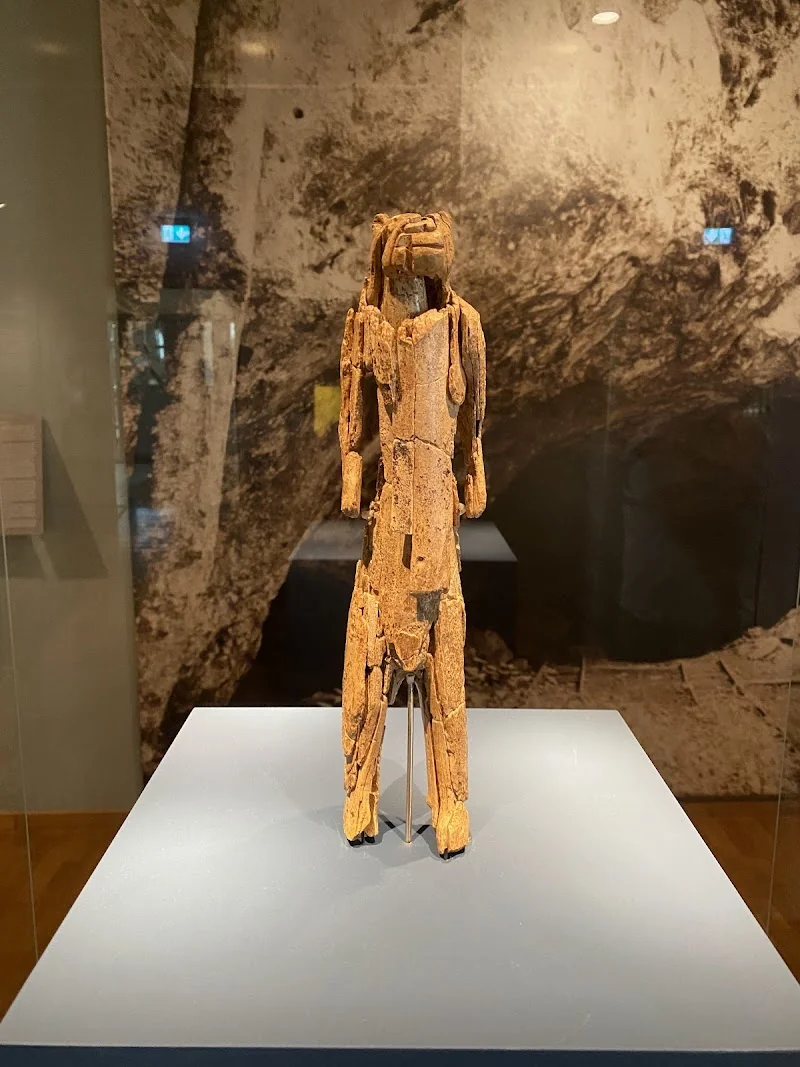
The archaeological collection is the emotional heart of many inquiries surrounding Museum Ulm. It spans from the era of the Neanderthals to Ulm in the late Middle Ages and early modern times. Its most famous treasure is the Lion Man, a roughly 40,000-year-old human-animal sculpture made of mammoth ivory, discovered in the Stadel Cave in the Lonetal. The museum describes the work as unique in the world and as one of the oldest figurative carvings in the world; at the same time, it refers to the close connection to the UNESCO World Heritage site of caves and Ice Age art of the Swabian Jura. For many guests, this point is precisely the reason for their visit: here, one encounters not just any archaeological object, but a key work of human history. Currently, the Lion Man has been on display since December 13, 2025, in a small presentation on the first floor of Kunsthalle Weishaupt. This presentation runs until October 4, 2026; however, during an exhibition renovation from April 20 to May 1, 2026, the figure will be temporarily inaccessible. After that, the Lion Man is expected to return to the new permanent exhibition Archaeology at Museum Ulm at the end of 2026. It is particularly strong that the new archaeological permanent exhibition is to be created over 500 square meters across three floors of the renovated building section Ehinger Stadel and will feature interactive participation areas, media stations, and atmospheric illustrations. Thus, a famous figure becomes a whole narrative space about the Ice Age, Stone Age, and early settlement history. ([museumulm.de](https://museumulm.de/sammlungen/die-archaeologische-sammlung/))
Museum Ulm Under Renovation: Opening Hours, Tickets, and Current Visitor Situation
Anyone searching for Museum Ulm opening hours should be well aware of the current construction and alternative situation. The museum has been closed since April 17, 2023, due to renovation and restoration, and the work is officially stated to continue step by step until 2029. Out of seven buildings in the museum ensemble, four are being renovated and restored. This has concrete consequences for visitors: the main entrance is not accessible during the closure, and Schelergasse 5 in 89073 Ulm is mentioned as the postal address and side entrance. At the same time, the HfG Archive remains regularly open. For Kunsthalle Weishaupt and the HfG Archive, opening hours are from Tuesday to Sunday and on public holidays from 11 AM to 5 PM. The Natural History Museum Ulm has its own hours, namely Tuesday from 2 PM to 8 PM, Wednesday to Friday from 10 AM to 4 PM, and Saturday, Sunday, and public holidays from 11 AM to 5 PM. The admission regulations are also transparent: for a visit to the museum as a guest in Kunsthalle Weishaupt, the regular admission is 8 euros and 6 euros reduced; for children and young people up to and including 18 years as well as for other eligible groups, admission is free. Additionally, there is free admission for Kunsthalle Weishaupt and the HfG Archive on the first Friday of the month. Exciting for spontaneous visitors is also the weather action: if wetter.de reports at 11 AM in Ulm at least 25 degrees, admission to the exhibitions on that hot day is free. There is also an annual pass for 40 euros, which also includes the HfG Archive. These details make it clear: Museum Ulm is currently less a classic single house than a networked cultural offering with changing spatial logic. ([museumulm.de](https://museumulm.de/besucherinfos/))
Museum Ulm and Surroundings: Access, Parking, and Barrier-Free Access
At Museum Ulm and its surroundings, it is not just about a city address, but about a well-accessible city center location in the center of Ulm. The official contact information refers to Museum Ulm @Kunsthalle Weishaupt at Hans-und-Sophie-Scholl-Platz 1 and to the museum location at Marktplatz 9. For access by public transport, the museum mentions bus lines 4, 5, 6, and 9 to the town hall. Those arriving by car will find several parking garages in the immediate vicinity: the parking garage at the town hall in Neue Straße, the parking garage in the Fischerviertel in Schwilmengasse, the parking garage Deutschhaus in Friedrich-Ebert-Straße, and the parking garage Kornhaus in Rosengasse. This mix of central location and several parking options is practical for visitors, especially when arriving with family, strollers, or out-of-town guests. Additionally, there is barrier-free access: all exhibition rooms in Kunsthalle Weishaupt are barrier-free accessible, and there is a toilet for people with disabilities. This makes the current visitor guidance significantly more practical than might be expected in a purely historical city center location. For users searching for Museum Ulm photos, Museum Ulm Weishaupt, or Museum Ulm surroundings, the urban embedding is also interesting: the museum sees itself as part of an ensemble that connects architecture, monument protection, cultural neighborhoods, and urban pathways. This location makes the visit planable, even if the main building at the marketplace is currently being renovated. ([museumulm.de](https://museumulm.de/en/visit/))
Children, Families, and Natural History Museum Ulm
The keywords Museum Ulm children, Museum Ulm children's birthday, and Museum Ulm nature refer to two closely related areas: the educational offerings for families and the Natural History Museum Ulm. In cooperation with the neighboring Kunsthalle Weishaupt, Museum Ulm offers a varied program for children and families. This includes regular interactive children's tours, workshops, and holiday programs where artistic techniques can be tried out and museum spaces explored. Because the museum at the marketplace is currently closed, these offerings are currently taking place in the rooms of Kunsthalle. The Natural History Museum Ulm naturally complements this profile and has been structurally affiliated with Museum Ulm since January 1, 2026. It looks back on more than 100 years of history and provides insights into Ulm's prehistory as well as the natural diversity of the region. The exhibition includes carefully preserved fish dinosaurs from the Jurassic Sea, remains of Ulm's woolly mammoths, luminous minerals, giant insects, bears, beavers, and other natural finds. The offerings are explicitly suitable for all age groups and school levels; tours can be booked for kindergarten groups, families, schools, and interested groups. Particularly family-friendly: a company outing or a children's birthday can also become a special experience there. Thus, Museum Ulm answers not only the question of a single exhibition visit but also the question of a place where learning, wonder, and participation come together. So, anyone looking for a child-friendly museum in Ulm will find here a combination of art education, natural history, and participatory formats that also work well in bad weather or for groups. ([museumulm.de](https://museumulm.de/vermittlungsangebote/angebote-fuer-kinder-und-familien/))
Collection, HfG Archive, and Museum Shop
The inquiries Museum Ulm collection, Museum Ulm University of Design, and Museum Ulm shop show how broadly the house is positioned in content. Museum Ulm describes itself as a unique art and cultural history universal museum with outstanding collections of national, international, and world cultural significance. The Old Art is dedicated to Ulm's art and cultural history from the Middle Ages to 1900 and includes painting, sculpture, works on paper, goldsmithing, furniture, clocks, guilds, as well as historical views and city models. A focus is on late Gothic art from Ulm and Upper Swabia; additionally, around eighty preserved works from the former art and wonder chamber of Christoph Weickmann are of particular importance. Modern art is strongly represented, especially through the graphic collection: around 25,000 works make it a significant collection, ranging from French graphics of the 19th and 20th centuries to Picasso, Expressionism, Blue Rider, Bridge, and Bauhaus. Closely related to this is the HfG Archive. The University of Design was founded in 1953 by Inge Scholl, Otl Aicher, and Max Bill and significantly shaped design history until 1968. For many users, the shop inquiries are also relevant: the museum shop offers catalogs, books, replicas, and gifts for children and adults. Iconic HfG objects such as the Ulm stool by Max Bill or the famous stacking dishes by Nick Roericht are also sold there. Thus, the shop is not just a souvenir place but a visible extension of the collection into everyday life. ([museumulm.de](https://museumulm.de/sammlungen/alte-kunst/?utm_source=openai))
Team, Education, and the Museum of Tomorrow
Behind Museum Ulm stands a broadly positioned team that organizes work in several areas. The direction is led by Dr. Stefanie Dathe, who also curates the art of the 20th and 21st centuries. In addition, curators work for the Middle Ages to the 19th century, for the archaeological collection, for education and outreach, for digital content, restoration, shop, technology, and museum education. The HfG Archive and the Natural History Museum Ulm are also integrated into the team structure. For archaeology, a new permanent exhibition is being prepared by a seven-member team from the areas of archaeological collection and education and outreach; it will be implemented with a design office and with the support of the federal funding program for national cultural institutions. This aligns with the house's guiding principle: Museum Ulm sees itself as a lively place of cultural identification, as an interdisciplinary forum for cultural participation, as a public space for encounters, and as a space for experiencing art, culture, and education. This attitude becomes visible especially during the renovation. Four out of seven buildings are being renewed, the appearance and the spatial program are changing significantly, and the new museum is to become a third place where people can come together, learn, and orient themselves. For the keyword world of Museum Ulm team, Museum Ulm renovation, and Museum Ulm Weishaupt, this is the most important message: here, not only is renovation taking place, but content is being rethought. The museum is building a future where history, design, nature, and education will interact even more closely. ([museumulm.de](https://museumulm.de/museum/team/))
Sources:
- Museum Ulm - Guiding Principle ([museumulm.de](https://museumulm.de/leitbild/?utm_source=openai))
- Museum Ulm - Renovation ([museumulm.de](https://museumulm.de/umbau/))
- Museum Ulm - Visitor Information ([museumulm.de](https://museumulm.de/besucherinfos/))
- Museum Ulm - Archaeological Collection ([museumulm.de](https://museumulm.de/sammlungen/die-archaeologische-sammlung/))
- Museum Ulm - HfG Archive ([museumulm.de](https://museumulm.de/sammlungen/hfg-ulm/))
- Museum Ulm - Natural History Museum Ulm ([museumulm.de](https://museumulm.de/sammlungen/naturmuseum-ulm/))
- Museum Ulm - Team ([museumulm.de](https://museumulm.de/museum/team/))
- Museum Ulm - Museum Shop ([museumulm.de](https://museumulm.de/museum/museumsshop/?utm_source=openai))
Show moreShow less
Museum Ulm | Lion Man & Opening Hours
Museum Ulm currently represents an exciting transition between past, present, and future. The building is located in the heart of the city of Ulm in a listed ensemble of buildings from several centuries and conveys, according to its own presentation, 40,000 years of art, culture, and design history. At the same time, the museum has been under renovation since April 17, 2023, and is temporarily closed at the marketplace. This is important for visitors because the focus of the experience is currently distributed among the neighboring Kunsthalle Weishaupt, the still-open HfG Archive, and the Natural History Museum Ulm. This is precisely what makes this address particularly appealing: it is not just a classic museum, but a place where archaeology, ancient art, modern positions, design history, and natural knowledge come together. Therefore, anyone searching for Museum Ulm opening hours, Museum Ulm renovation, or Museum Ulm Lion Man will find a house that is visibly re-establishing itself while preserving its most important collection strengths. ([museumulm.de](https://museumulm.de/leitbild/?utm_source=openai))
Lion Man and Archaeology at Museum Ulm
The archaeological collection is the emotional heart of many inquiries surrounding Museum Ulm. It spans from the era of the Neanderthals to Ulm in the late Middle Ages and early modern times. Its most famous treasure is the Lion Man, a roughly 40,000-year-old human-animal sculpture made of mammoth ivory, discovered in the Stadel Cave in the Lonetal. The museum describes the work as unique in the world and as one of the oldest figurative carvings in the world; at the same time, it refers to the close connection to the UNESCO World Heritage site of caves and Ice Age art of the Swabian Jura. For many guests, this point is precisely the reason for their visit: here, one encounters not just any archaeological object, but a key work of human history. Currently, the Lion Man has been on display since December 13, 2025, in a small presentation on the first floor of Kunsthalle Weishaupt. This presentation runs until October 4, 2026; however, during an exhibition renovation from April 20 to May 1, 2026, the figure will be temporarily inaccessible. After that, the Lion Man is expected to return to the new permanent exhibition Archaeology at Museum Ulm at the end of 2026. It is particularly strong that the new archaeological permanent exhibition is to be created over 500 square meters across three floors of the renovated building section Ehinger Stadel and will feature interactive participation areas, media stations, and atmospheric illustrations. Thus, a famous figure becomes a whole narrative space about the Ice Age, Stone Age, and early settlement history. ([museumulm.de](https://museumulm.de/sammlungen/die-archaeologische-sammlung/))
Museum Ulm Under Renovation: Opening Hours, Tickets, and Current Visitor Situation
Anyone searching for Museum Ulm opening hours should be well aware of the current construction and alternative situation. The museum has been closed since April 17, 2023, due to renovation and restoration, and the work is officially stated to continue step by step until 2029. Out of seven buildings in the museum ensemble, four are being renovated and restored. This has concrete consequences for visitors: the main entrance is not accessible during the closure, and Schelergasse 5 in 89073 Ulm is mentioned as the postal address and side entrance. At the same time, the HfG Archive remains regularly open. For Kunsthalle Weishaupt and the HfG Archive, opening hours are from Tuesday to Sunday and on public holidays from 11 AM to 5 PM. The Natural History Museum Ulm has its own hours, namely Tuesday from 2 PM to 8 PM, Wednesday to Friday from 10 AM to 4 PM, and Saturday, Sunday, and public holidays from 11 AM to 5 PM. The admission regulations are also transparent: for a visit to the museum as a guest in Kunsthalle Weishaupt, the regular admission is 8 euros and 6 euros reduced; for children and young people up to and including 18 years as well as for other eligible groups, admission is free. Additionally, there is free admission for Kunsthalle Weishaupt and the HfG Archive on the first Friday of the month. Exciting for spontaneous visitors is also the weather action: if wetter.de reports at 11 AM in Ulm at least 25 degrees, admission to the exhibitions on that hot day is free. There is also an annual pass for 40 euros, which also includes the HfG Archive. These details make it clear: Museum Ulm is currently less a classic single house than a networked cultural offering with changing spatial logic. ([museumulm.de](https://museumulm.de/besucherinfos/))
Museum Ulm and Surroundings: Access, Parking, and Barrier-Free Access
At Museum Ulm and its surroundings, it is not just about a city address, but about a well-accessible city center location in the center of Ulm. The official contact information refers to Museum Ulm @Kunsthalle Weishaupt at Hans-und-Sophie-Scholl-Platz 1 and to the museum location at Marktplatz 9. For access by public transport, the museum mentions bus lines 4, 5, 6, and 9 to the town hall. Those arriving by car will find several parking garages in the immediate vicinity: the parking garage at the town hall in Neue Straße, the parking garage in the Fischerviertel in Schwilmengasse, the parking garage Deutschhaus in Friedrich-Ebert-Straße, and the parking garage Kornhaus in Rosengasse. This mix of central location and several parking options is practical for visitors, especially when arriving with family, strollers, or out-of-town guests. Additionally, there is barrier-free access: all exhibition rooms in Kunsthalle Weishaupt are barrier-free accessible, and there is a toilet for people with disabilities. This makes the current visitor guidance significantly more practical than might be expected in a purely historical city center location. For users searching for Museum Ulm photos, Museum Ulm Weishaupt, or Museum Ulm surroundings, the urban embedding is also interesting: the museum sees itself as part of an ensemble that connects architecture, monument protection, cultural neighborhoods, and urban pathways. This location makes the visit planable, even if the main building at the marketplace is currently being renovated. ([museumulm.de](https://museumulm.de/en/visit/))
Children, Families, and Natural History Museum Ulm
The keywords Museum Ulm children, Museum Ulm children's birthday, and Museum Ulm nature refer to two closely related areas: the educational offerings for families and the Natural History Museum Ulm. In cooperation with the neighboring Kunsthalle Weishaupt, Museum Ulm offers a varied program for children and families. This includes regular interactive children's tours, workshops, and holiday programs where artistic techniques can be tried out and museum spaces explored. Because the museum at the marketplace is currently closed, these offerings are currently taking place in the rooms of Kunsthalle. The Natural History Museum Ulm naturally complements this profile and has been structurally affiliated with Museum Ulm since January 1, 2026. It looks back on more than 100 years of history and provides insights into Ulm's prehistory as well as the natural diversity of the region. The exhibition includes carefully preserved fish dinosaurs from the Jurassic Sea, remains of Ulm's woolly mammoths, luminous minerals, giant insects, bears, beavers, and other natural finds. The offerings are explicitly suitable for all age groups and school levels; tours can be booked for kindergarten groups, families, schools, and interested groups. Particularly family-friendly: a company outing or a children's birthday can also become a special experience there. Thus, Museum Ulm answers not only the question of a single exhibition visit but also the question of a place where learning, wonder, and participation come together. So, anyone looking for a child-friendly museum in Ulm will find here a combination of art education, natural history, and participatory formats that also work well in bad weather or for groups. ([museumulm.de](https://museumulm.de/vermittlungsangebote/angebote-fuer-kinder-und-familien/))
Collection, HfG Archive, and Museum Shop
The inquiries Museum Ulm collection, Museum Ulm University of Design, and Museum Ulm shop show how broadly the house is positioned in content. Museum Ulm describes itself as a unique art and cultural history universal museum with outstanding collections of national, international, and world cultural significance. The Old Art is dedicated to Ulm's art and cultural history from the Middle Ages to 1900 and includes painting, sculpture, works on paper, goldsmithing, furniture, clocks, guilds, as well as historical views and city models. A focus is on late Gothic art from Ulm and Upper Swabia; additionally, around eighty preserved works from the former art and wonder chamber of Christoph Weickmann are of particular importance. Modern art is strongly represented, especially through the graphic collection: around 25,000 works make it a significant collection, ranging from French graphics of the 19th and 20th centuries to Picasso, Expressionism, Blue Rider, Bridge, and Bauhaus. Closely related to this is the HfG Archive. The University of Design was founded in 1953 by Inge Scholl, Otl Aicher, and Max Bill and significantly shaped design history until 1968. For many users, the shop inquiries are also relevant: the museum shop offers catalogs, books, replicas, and gifts for children and adults. Iconic HfG objects such as the Ulm stool by Max Bill or the famous stacking dishes by Nick Roericht are also sold there. Thus, the shop is not just a souvenir place but a visible extension of the collection into everyday life. ([museumulm.de](https://museumulm.de/sammlungen/alte-kunst/?utm_source=openai))
Team, Education, and the Museum of Tomorrow
Behind Museum Ulm stands a broadly positioned team that organizes work in several areas. The direction is led by Dr. Stefanie Dathe, who also curates the art of the 20th and 21st centuries. In addition, curators work for the Middle Ages to the 19th century, for the archaeological collection, for education and outreach, for digital content, restoration, shop, technology, and museum education. The HfG Archive and the Natural History Museum Ulm are also integrated into the team structure. For archaeology, a new permanent exhibition is being prepared by a seven-member team from the areas of archaeological collection and education and outreach; it will be implemented with a design office and with the support of the federal funding program for national cultural institutions. This aligns with the house's guiding principle: Museum Ulm sees itself as a lively place of cultural identification, as an interdisciplinary forum for cultural participation, as a public space for encounters, and as a space for experiencing art, culture, and education. This attitude becomes visible especially during the renovation. Four out of seven buildings are being renewed, the appearance and the spatial program are changing significantly, and the new museum is to become a third place where people can come together, learn, and orient themselves. For the keyword world of Museum Ulm team, Museum Ulm renovation, and Museum Ulm Weishaupt, this is the most important message: here, not only is renovation taking place, but content is being rethought. The museum is building a future where history, design, nature, and education will interact even more closely. ([museumulm.de](https://museumulm.de/museum/team/))
Sources:
- Museum Ulm - Guiding Principle ([museumulm.de](https://museumulm.de/leitbild/?utm_source=openai))
- Museum Ulm - Renovation ([museumulm.de](https://museumulm.de/umbau/))
- Museum Ulm - Visitor Information ([museumulm.de](https://museumulm.de/besucherinfos/))
- Museum Ulm - Archaeological Collection ([museumulm.de](https://museumulm.de/sammlungen/die-archaeologische-sammlung/))
- Museum Ulm - HfG Archive ([museumulm.de](https://museumulm.de/sammlungen/hfg-ulm/))
- Museum Ulm - Natural History Museum Ulm ([museumulm.de](https://museumulm.de/sammlungen/naturmuseum-ulm/))
- Museum Ulm - Team ([museumulm.de](https://museumulm.de/museum/team/))
- Museum Ulm - Museum Shop ([museumulm.de](https://museumulm.de/museum/museumsshop/?utm_source=openai))
Museum Ulm | Lion Man & Opening Hours
Museum Ulm currently represents an exciting transition between past, present, and future. The building is located in the heart of the city of Ulm in a listed ensemble of buildings from several centuries and conveys, according to its own presentation, 40,000 years of art, culture, and design history. At the same time, the museum has been under renovation since April 17, 2023, and is temporarily closed at the marketplace. This is important for visitors because the focus of the experience is currently distributed among the neighboring Kunsthalle Weishaupt, the still-open HfG Archive, and the Natural History Museum Ulm. This is precisely what makes this address particularly appealing: it is not just a classic museum, but a place where archaeology, ancient art, modern positions, design history, and natural knowledge come together. Therefore, anyone searching for Museum Ulm opening hours, Museum Ulm renovation, or Museum Ulm Lion Man will find a house that is visibly re-establishing itself while preserving its most important collection strengths. ([museumulm.de](https://museumulm.de/leitbild/?utm_source=openai))
Lion Man and Archaeology at Museum Ulm
The archaeological collection is the emotional heart of many inquiries surrounding Museum Ulm. It spans from the era of the Neanderthals to Ulm in the late Middle Ages and early modern times. Its most famous treasure is the Lion Man, a roughly 40,000-year-old human-animal sculpture made of mammoth ivory, discovered in the Stadel Cave in the Lonetal. The museum describes the work as unique in the world and as one of the oldest figurative carvings in the world; at the same time, it refers to the close connection to the UNESCO World Heritage site of caves and Ice Age art of the Swabian Jura. For many guests, this point is precisely the reason for their visit: here, one encounters not just any archaeological object, but a key work of human history. Currently, the Lion Man has been on display since December 13, 2025, in a small presentation on the first floor of Kunsthalle Weishaupt. This presentation runs until October 4, 2026; however, during an exhibition renovation from April 20 to May 1, 2026, the figure will be temporarily inaccessible. After that, the Lion Man is expected to return to the new permanent exhibition Archaeology at Museum Ulm at the end of 2026. It is particularly strong that the new archaeological permanent exhibition is to be created over 500 square meters across three floors of the renovated building section Ehinger Stadel and will feature interactive participation areas, media stations, and atmospheric illustrations. Thus, a famous figure becomes a whole narrative space about the Ice Age, Stone Age, and early settlement history. ([museumulm.de](https://museumulm.de/sammlungen/die-archaeologische-sammlung/))
Museum Ulm Under Renovation: Opening Hours, Tickets, and Current Visitor Situation
Anyone searching for Museum Ulm opening hours should be well aware of the current construction and alternative situation. The museum has been closed since April 17, 2023, due to renovation and restoration, and the work is officially stated to continue step by step until 2029. Out of seven buildings in the museum ensemble, four are being renovated and restored. This has concrete consequences for visitors: the main entrance is not accessible during the closure, and Schelergasse 5 in 89073 Ulm is mentioned as the postal address and side entrance. At the same time, the HfG Archive remains regularly open. For Kunsthalle Weishaupt and the HfG Archive, opening hours are from Tuesday to Sunday and on public holidays from 11 AM to 5 PM. The Natural History Museum Ulm has its own hours, namely Tuesday from 2 PM to 8 PM, Wednesday to Friday from 10 AM to 4 PM, and Saturday, Sunday, and public holidays from 11 AM to 5 PM. The admission regulations are also transparent: for a visit to the museum as a guest in Kunsthalle Weishaupt, the regular admission is 8 euros and 6 euros reduced; for children and young people up to and including 18 years as well as for other eligible groups, admission is free. Additionally, there is free admission for Kunsthalle Weishaupt and the HfG Archive on the first Friday of the month. Exciting for spontaneous visitors is also the weather action: if wetter.de reports at 11 AM in Ulm at least 25 degrees, admission to the exhibitions on that hot day is free. There is also an annual pass for 40 euros, which also includes the HfG Archive. These details make it clear: Museum Ulm is currently less a classic single house than a networked cultural offering with changing spatial logic. ([museumulm.de](https://museumulm.de/besucherinfos/))
Museum Ulm and Surroundings: Access, Parking, and Barrier-Free Access
At Museum Ulm and its surroundings, it is not just about a city address, but about a well-accessible city center location in the center of Ulm. The official contact information refers to Museum Ulm @Kunsthalle Weishaupt at Hans-und-Sophie-Scholl-Platz 1 and to the museum location at Marktplatz 9. For access by public transport, the museum mentions bus lines 4, 5, 6, and 9 to the town hall. Those arriving by car will find several parking garages in the immediate vicinity: the parking garage at the town hall in Neue Straße, the parking garage in the Fischerviertel in Schwilmengasse, the parking garage Deutschhaus in Friedrich-Ebert-Straße, and the parking garage Kornhaus in Rosengasse. This mix of central location and several parking options is practical for visitors, especially when arriving with family, strollers, or out-of-town guests. Additionally, there is barrier-free access: all exhibition rooms in Kunsthalle Weishaupt are barrier-free accessible, and there is a toilet for people with disabilities. This makes the current visitor guidance significantly more practical than might be expected in a purely historical city center location. For users searching for Museum Ulm photos, Museum Ulm Weishaupt, or Museum Ulm surroundings, the urban embedding is also interesting: the museum sees itself as part of an ensemble that connects architecture, monument protection, cultural neighborhoods, and urban pathways. This location makes the visit planable, even if the main building at the marketplace is currently being renovated. ([museumulm.de](https://museumulm.de/en/visit/))
Children, Families, and Natural History Museum Ulm
The keywords Museum Ulm children, Museum Ulm children's birthday, and Museum Ulm nature refer to two closely related areas: the educational offerings for families and the Natural History Museum Ulm. In cooperation with the neighboring Kunsthalle Weishaupt, Museum Ulm offers a varied program for children and families. This includes regular interactive children's tours, workshops, and holiday programs where artistic techniques can be tried out and museum spaces explored. Because the museum at the marketplace is currently closed, these offerings are currently taking place in the rooms of Kunsthalle. The Natural History Museum Ulm naturally complements this profile and has been structurally affiliated with Museum Ulm since January 1, 2026. It looks back on more than 100 years of history and provides insights into Ulm's prehistory as well as the natural diversity of the region. The exhibition includes carefully preserved fish dinosaurs from the Jurassic Sea, remains of Ulm's woolly mammoths, luminous minerals, giant insects, bears, beavers, and other natural finds. The offerings are explicitly suitable for all age groups and school levels; tours can be booked for kindergarten groups, families, schools, and interested groups. Particularly family-friendly: a company outing or a children's birthday can also become a special experience there. Thus, Museum Ulm answers not only the question of a single exhibition visit but also the question of a place where learning, wonder, and participation come together. So, anyone looking for a child-friendly museum in Ulm will find here a combination of art education, natural history, and participatory formats that also work well in bad weather or for groups. ([museumulm.de](https://museumulm.de/vermittlungsangebote/angebote-fuer-kinder-und-familien/))
Collection, HfG Archive, and Museum Shop
The inquiries Museum Ulm collection, Museum Ulm University of Design, and Museum Ulm shop show how broadly the house is positioned in content. Museum Ulm describes itself as a unique art and cultural history universal museum with outstanding collections of national, international, and world cultural significance. The Old Art is dedicated to Ulm's art and cultural history from the Middle Ages to 1900 and includes painting, sculpture, works on paper, goldsmithing, furniture, clocks, guilds, as well as historical views and city models. A focus is on late Gothic art from Ulm and Upper Swabia; additionally, around eighty preserved works from the former art and wonder chamber of Christoph Weickmann are of particular importance. Modern art is strongly represented, especially through the graphic collection: around 25,000 works make it a significant collection, ranging from French graphics of the 19th and 20th centuries to Picasso, Expressionism, Blue Rider, Bridge, and Bauhaus. Closely related to this is the HfG Archive. The University of Design was founded in 1953 by Inge Scholl, Otl Aicher, and Max Bill and significantly shaped design history until 1968. For many users, the shop inquiries are also relevant: the museum shop offers catalogs, books, replicas, and gifts for children and adults. Iconic HfG objects such as the Ulm stool by Max Bill or the famous stacking dishes by Nick Roericht are also sold there. Thus, the shop is not just a souvenir place but a visible extension of the collection into everyday life. ([museumulm.de](https://museumulm.de/sammlungen/alte-kunst/?utm_source=openai))
Team, Education, and the Museum of Tomorrow
Behind Museum Ulm stands a broadly positioned team that organizes work in several areas. The direction is led by Dr. Stefanie Dathe, who also curates the art of the 20th and 21st centuries. In addition, curators work for the Middle Ages to the 19th century, for the archaeological collection, for education and outreach, for digital content, restoration, shop, technology, and museum education. The HfG Archive and the Natural History Museum Ulm are also integrated into the team structure. For archaeology, a new permanent exhibition is being prepared by a seven-member team from the areas of archaeological collection and education and outreach; it will be implemented with a design office and with the support of the federal funding program for national cultural institutions. This aligns with the house's guiding principle: Museum Ulm sees itself as a lively place of cultural identification, as an interdisciplinary forum for cultural participation, as a public space for encounters, and as a space for experiencing art, culture, and education. This attitude becomes visible especially during the renovation. Four out of seven buildings are being renewed, the appearance and the spatial program are changing significantly, and the new museum is to become a third place where people can come together, learn, and orient themselves. For the keyword world of Museum Ulm team, Museum Ulm renovation, and Museum Ulm Weishaupt, this is the most important message: here, not only is renovation taking place, but content is being rethought. The museum is building a future where history, design, nature, and education will interact even more closely. ([museumulm.de](https://museumulm.de/museum/team/))
Sources:
- Museum Ulm - Guiding Principle ([museumulm.de](https://museumulm.de/leitbild/?utm_source=openai))
- Museum Ulm - Renovation ([museumulm.de](https://museumulm.de/umbau/))
- Museum Ulm - Visitor Information ([museumulm.de](https://museumulm.de/besucherinfos/))
- Museum Ulm - Archaeological Collection ([museumulm.de](https://museumulm.de/sammlungen/die-archaeologische-sammlung/))
- Museum Ulm - HfG Archive ([museumulm.de](https://museumulm.de/sammlungen/hfg-ulm/))
- Museum Ulm - Natural History Museum Ulm ([museumulm.de](https://museumulm.de/sammlungen/naturmuseum-ulm/))
- Museum Ulm - Team ([museumulm.de](https://museumulm.de/museum/team/))
- Museum Ulm - Museum Shop ([museumulm.de](https://museumulm.de/museum/museumsshop/?utm_source=openai))
Upcoming Events
No events found
Frequently Asked Questions
Reviews
Vladimir Eftenov
30. April 2023
A totally unplanned visit turned into a nice little walk amidst a mix of modern art, archeology, play and experiment areas. The exhibition can be seen in about 2-3 hours and I absolutely recommend the visit.
MARIMAR Ramirez
5. October 2022
It is good that I live here and I see the deal if you were a tourist. I visited this museum with a friend and obviously we made videos but a woman crossed and even walked past where I was recording. At the same time she raised her voice to me and told me that she couldn't make a video of her or the people who work there. I don't want videos of her....I was making a video for myself and my friend. If I were a tourist I would never go back to that museum. But I know the arrogance of the people who work in that museum so I just ignored it. Visit but never expect a good welcome, or a helpful smile.
Mowgli Dandamudi
10. November 2018
It's a small but quite an interesting museum. The Löwenmensch exhibit is quite spectacular. The related archeological exhibits are also good. The art is very limited but this one violin piece really interested me. Very worth a visit.
Dajana Grgurić
7. February 2023
A great place to see some modern art (they even have two Andy Warhol works) and important archeology findings. You definitely must see the famous Löwenmensch!
Виктория Зайцева
3. May 2023
We couldn't get into the museum, it was a public holiday, but we will come again. This museum is worth seeing.