
Ulm
Klosterhof 18, 89077 Ulm, Deutschland
Museum in the Klostermühle | Exhibitions & Tickets
The Museum in the Klostermühle is not a loud large museum, but a finely narrated neighborhood museum with a strong connection to Söflingen, the historical core in the west of Ulm. Housed in the old Klostermühle at the Klosterhof, it preserves the memory of the district, the former Clarissan convent, and the people who have lived, worked, and made history here over generations. It is precisely this connection of architecture, history, and civic engagement that makes the charm of the house. Those looking for events, tickets, or clear orientation for their visit will find here a museum that consciously operates differently than classic permanent establishments: not open daily, but with changing themes, a strong local identity, and a program that is oriented to the seasons and the history of the neighborhood. The museum is supported by the Museumsverein Ulm-Söflingen e. V. and sees itself as a lively place for remembrance, discovery, and encounter. ([museum-soeflingen.de](https://museum-soeflingen.de/?utm_source=openai))
Tickets, Admission and Opening Hours
Those looking for tickets should first know that the visit is described as free in the official event information, so a classic ticket purchase is not the focus. Instead of conventional ticket logic, the museum association relies on open visiting hours around the changing exhibitions and on donations, which are explicitly welcome. This makes the visit low-threshold and very personal. The museum is open during the duration of its changing exhibitions, usually on Sundays from 2 to 5 PM. Additionally, special opening days are announced for each exhibition, so that seasonal themes and special presentations can also be accessible on other days. Those wishing to come with a group can coordinate tours outside these times with the association. For SEO and user searches, this mix is important: The terms tickets, opening hours, and events meet here a real, volunteer-organized structure that does not rely on mass operations but on planable cultural moments. ([chancengerechtigkeitundvielfalt.ulm.de](https://chancengerechtigkeitundvielfalt.ulm.de/global/datenpool/veranstaltungen/2025/08/27/02/05/ein-traum-in-rosa-49874?utm_source=openai))
Practically, this means for the visit: A spontaneous detour is especially worthwhile when a changing exhibition is running or a special opening day is announced. The museum's website also points out that the next changing exhibition is scheduled for autumn 2026. This keeps the rhythm of the presentations clearly seasonal and consciously manageable. Those coming with family, friends, club, or school group benefit from the fact that the stay is not characterized by a long waiting line or a complicated reservation system. Instead, it is about the conscious experience of a manageable, content-rich house that welcomes its visitors with original exhibits, personal stories, and a very local perspective. This form of museum visit is particularly attractive for people seeking an authentic cultural destination in Ulm: It is not a mass attraction, but a place with tranquility, identity, and clear visiting hours. ([museum-soeflingen.de](https://museum-soeflingen.de/?utm_source=openai))
History, Permanent Exhibition and the Convent Model
The content strength of the museum lies in its permanent exhibition. It not only tells individual anecdotes but traces the development of Söflingen from the beginnings of the settlement to the present. Thematically, the focus is on the Clarissan convent, the club life of the district, traditional crafts, former companies, and the everyday life of earlier generations. This is particularly vividly illustrated by costumes, authentic furnishings, dowry items, and a fully represented corner shop that evokes the charm of past shopping culture. The district, incorporated into Ulm in 1905, has preserved its identity to a high degree according to the museum, and this feeling is what the exhibition aims to convey with original exhibits. Thus, history is not explained abstractly but made tangible with concrete things. Those interested in local cultural history will find here not a loose collection but a narratively structured memory of the district. ([museum-soeflingen.de](https://museum-soeflingen.de/s03.php?utm_source=openai))
A special highlight is the model of the Söflingen convent, which, according to museum information, was created with great care and high craftsmanship by Marie-Luise and Dieter Geiß. This point is also important for visitors and seekers, as the museum is not only a place for texts and photos but for illustrative reconstruction. The model takes you back to a time when the convent and its surroundings shaped the face of the neighborhood. Additionally, the tourism information points out that the historical core of Söflingen is still visible today through the Klosterhof, the old mill, the former rectory, and the former confession house. The museum visit thus becomes almost a tour through the entire local history. Instead of just looking at a single display case, one follows a development that is closely linked to the place, its architecture, and its social life. This is precisely what makes the Klostermühle so valuable for visitors who want to experience history in space and not just read about it in a catalog. ([museum-soeflingen.de](https://museum-soeflingen.de/s02.php?utm_source=openai))
Changing Exhibitions, Events and Seasonal Themes
Those looking for events at the Museum in the Klostermühle will encounter a deliberately changing exhibition concept. The museum association regularly organizes exhibitions during the Advent and Christmas season, during Lent and Easter, as well as in autumn for the church consecration. Additionally, further special exhibitions are added throughout the year, which are usually announced through local press according to the association. This strategy is typical for the house, as it was explicitly not intended to be a static local museum. Instead, interest should remain lively through changing themes. This is also relevant from an SEO perspective: Search queries for events, programs, exhibitions, or current shows meet here a real, repeatedly renewed event character. The museum is thus not only a place of remembrance but also a place of the cultural-historical calendar of Söflingen. ([museum-soeflingen.de](https://museum-soeflingen.de/s03.php?utm_source=openai))
On the museum's website, previous and current thematic exhibitions are shown as examples, including works related to Easter eggs, Rosaline glass, angel motifs, or manga images by young people. This range shows that the Klostermühle consciously works with unusual, lovingly curated themes and thus addresses various target groups. Important is not only the theme itself but also the way the museum connects history, customs, and the present. An exhibition about Easter eggs can refer to regional or international traditions, a show about Rosaline glass to everyday and design history, and a project with children or young people to the openness of the house for current perspectives. This creates a profile that goes far beyond the term local museum. Visitors do not receive a museum standard but regularly new occasions to visit the house again. For event and ticket inquiries, this is crucial: The museum lives from the respective exhibition, not from a constantly the same permanent operation. ([museum-soeflingen.de](https://museum-soeflingen.de/?utm_source=openai))
Access, Parking and Public Transport
Access to the museum is straightforward when one understands the historic Klosterhof in Söflingen as the destination. The tourism information describes the Klosterhof as the heart of the district, where the Baroque imprint of the surroundings remains visible to this day. For visitors arriving by car, it is particularly helpful that there are public parking spaces in the Klosterhof; the city of Ulm points out parking with a parking disc. This is an important practical point because the area does not function like a modern exhibition center but like a grown district core with limited space availability. Therefore, those wishing to visit an exhibition or plan a tour should allow enough time for parking search and the short walk. The museum visit can thus be well combined with a walk through the Klosterhof, which is already part of the historical atmosphere. ([tourismus.ulm.de](https://tourismus.ulm.de/de/entdecken/sehen-und-erleben/sehenswuerdigkeiten/historisches/klosterhof-soeflingen-ulm?utm_source=openai))
Public transport also provides good access to the location. In the official information about the service center Söflingen, the stops Clarissenstraße and Söflingen are mentioned. Additionally, the city of Ulm describes Söflingen as the final stop of tram line 1, thus referring to a clear connection through the western Ulm urban area. Those coming by public transport can conveniently combine their museum visit with a city tour or a detour to the historic Klosterhof. This is a plus point, especially for guests without a car, as the museum is not located in isolation but is embedded in a developed neighborhood. The path from the stop to the museum leads right through a quarter that has preserved its historical identity. Thus, the museum visit does not begin at the door but already with the arrival in the neighborhood. This fits perfectly with a house that not only shows local history but also makes it spatially experienceable. ([service-bw.de](https://www.service-bw.de/zufi/organisationseinheiten/6009857?utm_source=openai))
Accessibility, Group Tours and Practical Visiting Tips
An important practical note for planning states: According to an official event entry, the museum is unfortunately not barrier-free. This information should be taken seriously before a visit, especially if mobility, strollers, wheelchairs, or other restrictions play a role. At the same time, the same source shows that admission is free and group tours are possible by arrangement. Therefore, anyone planning a visit should contact the museum association in advance to clarify their needs. This is also sensible because the house does not operate in the rhythm of large crowds but in a smaller, more personal framework. This can be an advantage for groups because tours outside regular opening hours can better explore the content depth of the museum. ([chancengerechtigkeitundvielfalt.ulm.de](https://chancengerechtigkeitundvielfalt.ulm.de/global/datenpool/veranstaltungen/2025/08/27/02/05/ein-traum-in-rosa-49874?utm_source=openai))
For a successful visit, simple preparation is therefore recommended: Check opening hours, note special opening days, inquire in advance for groups, and consider the parking situation in the Klosterhof. Those who view the museum not just as a single destination but as part of a neighborhood walk will experience Söflingen in its historical density particularly intensely. The Klosterhof, the preserved remnants of the former convent, the old mill, and the Baroque surroundings make the environment a unique experience space. In addition, the museum's special exhibition practice creates new occasions for a visit time and again. This is the core of the house: It combines freely accessible culture, locally rooted memory, and changing themes into a compact, credible offering. Those looking for exhibitions, tickets, or simply an authentic museum in Ulm-Söflingen will find here a place with character, volunteer work, history, and surprising detail depth. ([tourismus.ulm.de](https://tourismus.ulm.de/de/entdecken/sehen-und-erleben/sehenswuerdigkeiten/historisches/klosterhof-soeflingen-ulm?utm_source=openai))
Sources:
- Official Website Museum in the Klostermühle, Museumsverein Ulm-Söflingen e. V. ([museum-soeflingen.de](https://museum-soeflingen.de/?utm_source=openai))
- State Office for Museums in Baden-Württemberg: Museum in the Klostermühle ([landesstelle.de](https://www.landesstelle.de/museen-in-baden-wuerttemberg/museum/museum-in-der-klostermuehle/?utm_source=openai))
- Tourism Ulm/Neu-Ulm: Klosterhof Söflingen ([tourismus.ulm.de](https://tourismus.ulm.de/de/entdecken/sehen-und-erleben/sehenswuerdigkeiten/historisches/klosterhof-soeflingen-ulm?utm_source=openai))
- Service-BW: Service Center Söflingen with Parking and Public Transport Stops ([service-bw.de](https://www.service-bw.de/zufi/organisationseinheiten/6009857?utm_source=openai))
- City of Ulm: Söflingen and Parking Concept Söflingen ([ulm.de](https://www.ulm.de/rathaus/ortsteile-und-sozialr%C3%A4ume/sozialr%C3%A4ume/sozialraum-west-mit-s%C3%B6flingen/willkommen-im-sozr-west?utm_source=openai))
- Official Event Entry from the City of Ulm: Admission free, special opening days, not barrier-free ([chancengerechtigkeitundvielfalt.ulm.de](https://chancengerechtigkeitundvielfalt.ulm.de/global/datenpool/veranstaltungen/2025/08/27/02/05/ein-traum-in-rosa-49874?utm_source=openai))
Mehr anzeigenWeniger anzeigen
Museum in the Klostermühle | Exhibitions & Tickets
The Museum in the Klostermühle is not a loud large museum, but a finely narrated neighborhood museum with a strong connection to Söflingen, the historical core in the west of Ulm. Housed in the old Klostermühle at the Klosterhof, it preserves the memory of the district, the former Clarissan convent, and the people who have lived, worked, and made history here over generations. It is precisely this connection of architecture, history, and civic engagement that makes the charm of the house. Those looking for events, tickets, or clear orientation for their visit will find here a museum that consciously operates differently than classic permanent establishments: not open daily, but with changing themes, a strong local identity, and a program that is oriented to the seasons and the history of the neighborhood. The museum is supported by the Museumsverein Ulm-Söflingen e. V. and sees itself as a lively place for remembrance, discovery, and encounter. ([museum-soeflingen.de](https://museum-soeflingen.de/?utm_source=openai))
Tickets, Admission and Opening Hours
Those looking for tickets should first know that the visit is described as free in the official event information, so a classic ticket purchase is not the focus. Instead of conventional ticket logic, the museum association relies on open visiting hours around the changing exhibitions and on donations, which are explicitly welcome. This makes the visit low-threshold and very personal. The museum is open during the duration of its changing exhibitions, usually on Sundays from 2 to 5 PM. Additionally, special opening days are announced for each exhibition, so that seasonal themes and special presentations can also be accessible on other days. Those wishing to come with a group can coordinate tours outside these times with the association. For SEO and user searches, this mix is important: The terms tickets, opening hours, and events meet here a real, volunteer-organized structure that does not rely on mass operations but on planable cultural moments. ([chancengerechtigkeitundvielfalt.ulm.de](https://chancengerechtigkeitundvielfalt.ulm.de/global/datenpool/veranstaltungen/2025/08/27/02/05/ein-traum-in-rosa-49874?utm_source=openai))
Practically, this means for the visit: A spontaneous detour is especially worthwhile when a changing exhibition is running or a special opening day is announced. The museum's website also points out that the next changing exhibition is scheduled for autumn 2026. This keeps the rhythm of the presentations clearly seasonal and consciously manageable. Those coming with family, friends, club, or school group benefit from the fact that the stay is not characterized by a long waiting line or a complicated reservation system. Instead, it is about the conscious experience of a manageable, content-rich house that welcomes its visitors with original exhibits, personal stories, and a very local perspective. This form of museum visit is particularly attractive for people seeking an authentic cultural destination in Ulm: It is not a mass attraction, but a place with tranquility, identity, and clear visiting hours. ([museum-soeflingen.de](https://museum-soeflingen.de/?utm_source=openai))
History, Permanent Exhibition and the Convent Model
The content strength of the museum lies in its permanent exhibition. It not only tells individual anecdotes but traces the development of Söflingen from the beginnings of the settlement to the present. Thematically, the focus is on the Clarissan convent, the club life of the district, traditional crafts, former companies, and the everyday life of earlier generations. This is particularly vividly illustrated by costumes, authentic furnishings, dowry items, and a fully represented corner shop that evokes the charm of past shopping culture. The district, incorporated into Ulm in 1905, has preserved its identity to a high degree according to the museum, and this feeling is what the exhibition aims to convey with original exhibits. Thus, history is not explained abstractly but made tangible with concrete things. Those interested in local cultural history will find here not a loose collection but a narratively structured memory of the district. ([museum-soeflingen.de](https://museum-soeflingen.de/s03.php?utm_source=openai))
A special highlight is the model of the Söflingen convent, which, according to museum information, was created with great care and high craftsmanship by Marie-Luise and Dieter Geiß. This point is also important for visitors and seekers, as the museum is not only a place for texts and photos but for illustrative reconstruction. The model takes you back to a time when the convent and its surroundings shaped the face of the neighborhood. Additionally, the tourism information points out that the historical core of Söflingen is still visible today through the Klosterhof, the old mill, the former rectory, and the former confession house. The museum visit thus becomes almost a tour through the entire local history. Instead of just looking at a single display case, one follows a development that is closely linked to the place, its architecture, and its social life. This is precisely what makes the Klostermühle so valuable for visitors who want to experience history in space and not just read about it in a catalog. ([museum-soeflingen.de](https://museum-soeflingen.de/s02.php?utm_source=openai))
Changing Exhibitions, Events and Seasonal Themes
Those looking for events at the Museum in the Klostermühle will encounter a deliberately changing exhibition concept. The museum association regularly organizes exhibitions during the Advent and Christmas season, during Lent and Easter, as well as in autumn for the church consecration. Additionally, further special exhibitions are added throughout the year, which are usually announced through local press according to the association. This strategy is typical for the house, as it was explicitly not intended to be a static local museum. Instead, interest should remain lively through changing themes. This is also relevant from an SEO perspective: Search queries for events, programs, exhibitions, or current shows meet here a real, repeatedly renewed event character. The museum is thus not only a place of remembrance but also a place of the cultural-historical calendar of Söflingen. ([museum-soeflingen.de](https://museum-soeflingen.de/s03.php?utm_source=openai))
On the museum's website, previous and current thematic exhibitions are shown as examples, including works related to Easter eggs, Rosaline glass, angel motifs, or manga images by young people. This range shows that the Klostermühle consciously works with unusual, lovingly curated themes and thus addresses various target groups. Important is not only the theme itself but also the way the museum connects history, customs, and the present. An exhibition about Easter eggs can refer to regional or international traditions, a show about Rosaline glass to everyday and design history, and a project with children or young people to the openness of the house for current perspectives. This creates a profile that goes far beyond the term local museum. Visitors do not receive a museum standard but regularly new occasions to visit the house again. For event and ticket inquiries, this is crucial: The museum lives from the respective exhibition, not from a constantly the same permanent operation. ([museum-soeflingen.de](https://museum-soeflingen.de/?utm_source=openai))
Access, Parking and Public Transport
Access to the museum is straightforward when one understands the historic Klosterhof in Söflingen as the destination. The tourism information describes the Klosterhof as the heart of the district, where the Baroque imprint of the surroundings remains visible to this day. For visitors arriving by car, it is particularly helpful that there are public parking spaces in the Klosterhof; the city of Ulm points out parking with a parking disc. This is an important practical point because the area does not function like a modern exhibition center but like a grown district core with limited space availability. Therefore, those wishing to visit an exhibition or plan a tour should allow enough time for parking search and the short walk. The museum visit can thus be well combined with a walk through the Klosterhof, which is already part of the historical atmosphere. ([tourismus.ulm.de](https://tourismus.ulm.de/de/entdecken/sehen-und-erleben/sehenswuerdigkeiten/historisches/klosterhof-soeflingen-ulm?utm_source=openai))
Public transport also provides good access to the location. In the official information about the service center Söflingen, the stops Clarissenstraße and Söflingen are mentioned. Additionally, the city of Ulm describes Söflingen as the final stop of tram line 1, thus referring to a clear connection through the western Ulm urban area. Those coming by public transport can conveniently combine their museum visit with a city tour or a detour to the historic Klosterhof. This is a plus point, especially for guests without a car, as the museum is not located in isolation but is embedded in a developed neighborhood. The path from the stop to the museum leads right through a quarter that has preserved its historical identity. Thus, the museum visit does not begin at the door but already with the arrival in the neighborhood. This fits perfectly with a house that not only shows local history but also makes it spatially experienceable. ([service-bw.de](https://www.service-bw.de/zufi/organisationseinheiten/6009857?utm_source=openai))
Accessibility, Group Tours and Practical Visiting Tips
An important practical note for planning states: According to an official event entry, the museum is unfortunately not barrier-free. This information should be taken seriously before a visit, especially if mobility, strollers, wheelchairs, or other restrictions play a role. At the same time, the same source shows that admission is free and group tours are possible by arrangement. Therefore, anyone planning a visit should contact the museum association in advance to clarify their needs. This is also sensible because the house does not operate in the rhythm of large crowds but in a smaller, more personal framework. This can be an advantage for groups because tours outside regular opening hours can better explore the content depth of the museum. ([chancengerechtigkeitundvielfalt.ulm.de](https://chancengerechtigkeitundvielfalt.ulm.de/global/datenpool/veranstaltungen/2025/08/27/02/05/ein-traum-in-rosa-49874?utm_source=openai))
For a successful visit, simple preparation is therefore recommended: Check opening hours, note special opening days, inquire in advance for groups, and consider the parking situation in the Klosterhof. Those who view the museum not just as a single destination but as part of a neighborhood walk will experience Söflingen in its historical density particularly intensely. The Klosterhof, the preserved remnants of the former convent, the old mill, and the Baroque surroundings make the environment a unique experience space. In addition, the museum's special exhibition practice creates new occasions for a visit time and again. This is the core of the house: It combines freely accessible culture, locally rooted memory, and changing themes into a compact, credible offering. Those looking for exhibitions, tickets, or simply an authentic museum in Ulm-Söflingen will find here a place with character, volunteer work, history, and surprising detail depth. ([tourismus.ulm.de](https://tourismus.ulm.de/de/entdecken/sehen-und-erleben/sehenswuerdigkeiten/historisches/klosterhof-soeflingen-ulm?utm_source=openai))
Sources:
- Official Website Museum in the Klostermühle, Museumsverein Ulm-Söflingen e. V. ([museum-soeflingen.de](https://museum-soeflingen.de/?utm_source=openai))
- State Office for Museums in Baden-Württemberg: Museum in the Klostermühle ([landesstelle.de](https://www.landesstelle.de/museen-in-baden-wuerttemberg/museum/museum-in-der-klostermuehle/?utm_source=openai))
- Tourism Ulm/Neu-Ulm: Klosterhof Söflingen ([tourismus.ulm.de](https://tourismus.ulm.de/de/entdecken/sehen-und-erleben/sehenswuerdigkeiten/historisches/klosterhof-soeflingen-ulm?utm_source=openai))
- Service-BW: Service Center Söflingen with Parking and Public Transport Stops ([service-bw.de](https://www.service-bw.de/zufi/organisationseinheiten/6009857?utm_source=openai))
- City of Ulm: Söflingen and Parking Concept Söflingen ([ulm.de](https://www.ulm.de/rathaus/ortsteile-und-sozialr%C3%A4ume/sozialr%C3%A4ume/sozialraum-west-mit-s%C3%B6flingen/willkommen-im-sozr-west?utm_source=openai))
- Official Event Entry from the City of Ulm: Admission free, special opening days, not barrier-free ([chancengerechtigkeitundvielfalt.ulm.de](https://chancengerechtigkeitundvielfalt.ulm.de/global/datenpool/veranstaltungen/2025/08/27/02/05/ein-traum-in-rosa-49874?utm_source=openai))
Museum in the Klostermühle | Exhibitions & Tickets
The Museum in the Klostermühle is not a loud large museum, but a finely narrated neighborhood museum with a strong connection to Söflingen, the historical core in the west of Ulm. Housed in the old Klostermühle at the Klosterhof, it preserves the memory of the district, the former Clarissan convent, and the people who have lived, worked, and made history here over generations. It is precisely this connection of architecture, history, and civic engagement that makes the charm of the house. Those looking for events, tickets, or clear orientation for their visit will find here a museum that consciously operates differently than classic permanent establishments: not open daily, but with changing themes, a strong local identity, and a program that is oriented to the seasons and the history of the neighborhood. The museum is supported by the Museumsverein Ulm-Söflingen e. V. and sees itself as a lively place for remembrance, discovery, and encounter. ([museum-soeflingen.de](https://museum-soeflingen.de/?utm_source=openai))
Tickets, Admission and Opening Hours
Those looking for tickets should first know that the visit is described as free in the official event information, so a classic ticket purchase is not the focus. Instead of conventional ticket logic, the museum association relies on open visiting hours around the changing exhibitions and on donations, which are explicitly welcome. This makes the visit low-threshold and very personal. The museum is open during the duration of its changing exhibitions, usually on Sundays from 2 to 5 PM. Additionally, special opening days are announced for each exhibition, so that seasonal themes and special presentations can also be accessible on other days. Those wishing to come with a group can coordinate tours outside these times with the association. For SEO and user searches, this mix is important: The terms tickets, opening hours, and events meet here a real, volunteer-organized structure that does not rely on mass operations but on planable cultural moments. ([chancengerechtigkeitundvielfalt.ulm.de](https://chancengerechtigkeitundvielfalt.ulm.de/global/datenpool/veranstaltungen/2025/08/27/02/05/ein-traum-in-rosa-49874?utm_source=openai))
Practically, this means for the visit: A spontaneous detour is especially worthwhile when a changing exhibition is running or a special opening day is announced. The museum's website also points out that the next changing exhibition is scheduled for autumn 2026. This keeps the rhythm of the presentations clearly seasonal and consciously manageable. Those coming with family, friends, club, or school group benefit from the fact that the stay is not characterized by a long waiting line or a complicated reservation system. Instead, it is about the conscious experience of a manageable, content-rich house that welcomes its visitors with original exhibits, personal stories, and a very local perspective. This form of museum visit is particularly attractive for people seeking an authentic cultural destination in Ulm: It is not a mass attraction, but a place with tranquility, identity, and clear visiting hours. ([museum-soeflingen.de](https://museum-soeflingen.de/?utm_source=openai))
History, Permanent Exhibition and the Convent Model
The content strength of the museum lies in its permanent exhibition. It not only tells individual anecdotes but traces the development of Söflingen from the beginnings of the settlement to the present. Thematically, the focus is on the Clarissan convent, the club life of the district, traditional crafts, former companies, and the everyday life of earlier generations. This is particularly vividly illustrated by costumes, authentic furnishings, dowry items, and a fully represented corner shop that evokes the charm of past shopping culture. The district, incorporated into Ulm in 1905, has preserved its identity to a high degree according to the museum, and this feeling is what the exhibition aims to convey with original exhibits. Thus, history is not explained abstractly but made tangible with concrete things. Those interested in local cultural history will find here not a loose collection but a narratively structured memory of the district. ([museum-soeflingen.de](https://museum-soeflingen.de/s03.php?utm_source=openai))
A special highlight is the model of the Söflingen convent, which, according to museum information, was created with great care and high craftsmanship by Marie-Luise and Dieter Geiß. This point is also important for visitors and seekers, as the museum is not only a place for texts and photos but for illustrative reconstruction. The model takes you back to a time when the convent and its surroundings shaped the face of the neighborhood. Additionally, the tourism information points out that the historical core of Söflingen is still visible today through the Klosterhof, the old mill, the former rectory, and the former confession house. The museum visit thus becomes almost a tour through the entire local history. Instead of just looking at a single display case, one follows a development that is closely linked to the place, its architecture, and its social life. This is precisely what makes the Klostermühle so valuable for visitors who want to experience history in space and not just read about it in a catalog. ([museum-soeflingen.de](https://museum-soeflingen.de/s02.php?utm_source=openai))
Changing Exhibitions, Events and Seasonal Themes
Those looking for events at the Museum in the Klostermühle will encounter a deliberately changing exhibition concept. The museum association regularly organizes exhibitions during the Advent and Christmas season, during Lent and Easter, as well as in autumn for the church consecration. Additionally, further special exhibitions are added throughout the year, which are usually announced through local press according to the association. This strategy is typical for the house, as it was explicitly not intended to be a static local museum. Instead, interest should remain lively through changing themes. This is also relevant from an SEO perspective: Search queries for events, programs, exhibitions, or current shows meet here a real, repeatedly renewed event character. The museum is thus not only a place of remembrance but also a place of the cultural-historical calendar of Söflingen. ([museum-soeflingen.de](https://museum-soeflingen.de/s03.php?utm_source=openai))
On the museum's website, previous and current thematic exhibitions are shown as examples, including works related to Easter eggs, Rosaline glass, angel motifs, or manga images by young people. This range shows that the Klostermühle consciously works with unusual, lovingly curated themes and thus addresses various target groups. Important is not only the theme itself but also the way the museum connects history, customs, and the present. An exhibition about Easter eggs can refer to regional or international traditions, a show about Rosaline glass to everyday and design history, and a project with children or young people to the openness of the house for current perspectives. This creates a profile that goes far beyond the term local museum. Visitors do not receive a museum standard but regularly new occasions to visit the house again. For event and ticket inquiries, this is crucial: The museum lives from the respective exhibition, not from a constantly the same permanent operation. ([museum-soeflingen.de](https://museum-soeflingen.de/?utm_source=openai))
Access, Parking and Public Transport
Access to the museum is straightforward when one understands the historic Klosterhof in Söflingen as the destination. The tourism information describes the Klosterhof as the heart of the district, where the Baroque imprint of the surroundings remains visible to this day. For visitors arriving by car, it is particularly helpful that there are public parking spaces in the Klosterhof; the city of Ulm points out parking with a parking disc. This is an important practical point because the area does not function like a modern exhibition center but like a grown district core with limited space availability. Therefore, those wishing to visit an exhibition or plan a tour should allow enough time for parking search and the short walk. The museum visit can thus be well combined with a walk through the Klosterhof, which is already part of the historical atmosphere. ([tourismus.ulm.de](https://tourismus.ulm.de/de/entdecken/sehen-und-erleben/sehenswuerdigkeiten/historisches/klosterhof-soeflingen-ulm?utm_source=openai))
Public transport also provides good access to the location. In the official information about the service center Söflingen, the stops Clarissenstraße and Söflingen are mentioned. Additionally, the city of Ulm describes Söflingen as the final stop of tram line 1, thus referring to a clear connection through the western Ulm urban area. Those coming by public transport can conveniently combine their museum visit with a city tour or a detour to the historic Klosterhof. This is a plus point, especially for guests without a car, as the museum is not located in isolation but is embedded in a developed neighborhood. The path from the stop to the museum leads right through a quarter that has preserved its historical identity. Thus, the museum visit does not begin at the door but already with the arrival in the neighborhood. This fits perfectly with a house that not only shows local history but also makes it spatially experienceable. ([service-bw.de](https://www.service-bw.de/zufi/organisationseinheiten/6009857?utm_source=openai))
Accessibility, Group Tours and Practical Visiting Tips
An important practical note for planning states: According to an official event entry, the museum is unfortunately not barrier-free. This information should be taken seriously before a visit, especially if mobility, strollers, wheelchairs, or other restrictions play a role. At the same time, the same source shows that admission is free and group tours are possible by arrangement. Therefore, anyone planning a visit should contact the museum association in advance to clarify their needs. This is also sensible because the house does not operate in the rhythm of large crowds but in a smaller, more personal framework. This can be an advantage for groups because tours outside regular opening hours can better explore the content depth of the museum. ([chancengerechtigkeitundvielfalt.ulm.de](https://chancengerechtigkeitundvielfalt.ulm.de/global/datenpool/veranstaltungen/2025/08/27/02/05/ein-traum-in-rosa-49874?utm_source=openai))
For a successful visit, simple preparation is therefore recommended: Check opening hours, note special opening days, inquire in advance for groups, and consider the parking situation in the Klosterhof. Those who view the museum not just as a single destination but as part of a neighborhood walk will experience Söflingen in its historical density particularly intensely. The Klosterhof, the preserved remnants of the former convent, the old mill, and the Baroque surroundings make the environment a unique experience space. In addition, the museum's special exhibition practice creates new occasions for a visit time and again. This is the core of the house: It combines freely accessible culture, locally rooted memory, and changing themes into a compact, credible offering. Those looking for exhibitions, tickets, or simply an authentic museum in Ulm-Söflingen will find here a place with character, volunteer work, history, and surprising detail depth. ([tourismus.ulm.de](https://tourismus.ulm.de/de/entdecken/sehen-und-erleben/sehenswuerdigkeiten/historisches/klosterhof-soeflingen-ulm?utm_source=openai))
Sources:
- Official Website Museum in the Klostermühle, Museumsverein Ulm-Söflingen e. V. ([museum-soeflingen.de](https://museum-soeflingen.de/?utm_source=openai))
- State Office for Museums in Baden-Württemberg: Museum in the Klostermühle ([landesstelle.de](https://www.landesstelle.de/museen-in-baden-wuerttemberg/museum/museum-in-der-klostermuehle/?utm_source=openai))
- Tourism Ulm/Neu-Ulm: Klosterhof Söflingen ([tourismus.ulm.de](https://tourismus.ulm.de/de/entdecken/sehen-und-erleben/sehenswuerdigkeiten/historisches/klosterhof-soeflingen-ulm?utm_source=openai))
- Service-BW: Service Center Söflingen with Parking and Public Transport Stops ([service-bw.de](https://www.service-bw.de/zufi/organisationseinheiten/6009857?utm_source=openai))
- City of Ulm: Söflingen and Parking Concept Söflingen ([ulm.de](https://www.ulm.de/rathaus/ortsteile-und-sozialr%C3%A4ume/sozialr%C3%A4ume/sozialraum-west-mit-s%C3%B6flingen/willkommen-im-sozr-west?utm_source=openai))
- Official Event Entry from the City of Ulm: Admission free, special opening days, not barrier-free ([chancengerechtigkeitundvielfalt.ulm.de](https://chancengerechtigkeitundvielfalt.ulm.de/global/datenpool/veranstaltungen/2025/08/27/02/05/ein-traum-in-rosa-49874?utm_source=openai))
Upcoming Events
No events found
Frequently Asked Questions
Reviews
Peter W. Schwarz
8. July 2021
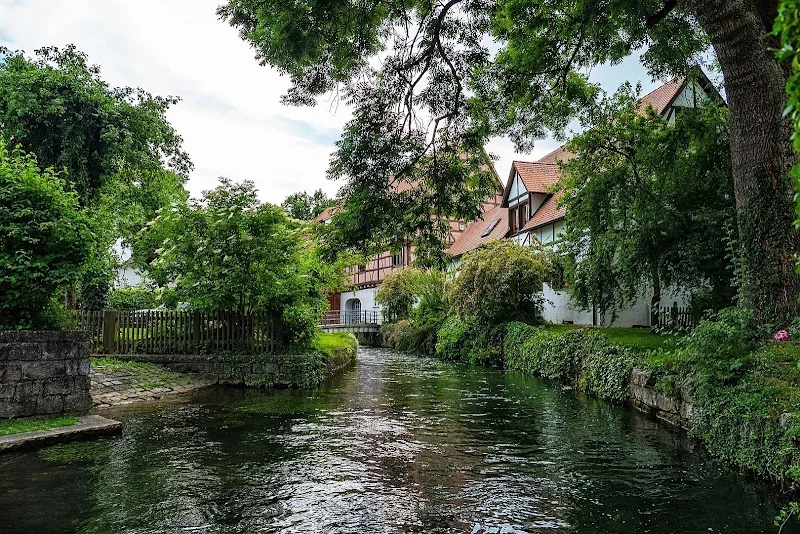
A little walk in the monastery courtyard of Söflingen – a suburb of Ulm, not a large monastery complex, but a charming idyll. A Clarissan monastery was relocated to Söflingen in 1258. The actual monastery building was demolished during the secularization, but the old rectory and the former confession house are still preserved, as well as the museum in the monastery mill. The monastery church was renovated and rebuilt in 1820. The surrounding buildings of the Söflingen monastery courtyard, the former brewery, and the old monastery mill with water wheel were rebuilt in Baroque style. The remaining parts of the monastery complex are now enclosed by houses built around the courtyard.
Sechs Wengentor
31. December 2019
Please note - the opening hours on Google are incorrect! The museum is only open during the changing exhibitions on Sundays and public holidays from 2:00 PM to 5:00 PM! Best regards, the museum management
Ulrich Scheller
3. November 2018
Local history of the monastery and Söflingen. Exhibits from textiles and church, including dog boxes, nativity scenes, traditional costumes.. lovingly put together. Knowledgeable guided tour.
Maria Greiner
2. May 2026
How beautiful it is in the monastery courtyard 🤩
Helmut Arndt
16. October 2023
Changing exhibitions, always worth a visit, donations requested, otherwise free