
Jungviehweide 1, Illertissen
Jungviehweide 1, 89257 Illertissen, Germany
Museum of Garden Culture | Tickets & Café
The Museum of Garden Culture in Illertissen is a place where exhibition, museum gardens, garden library, aroma workshop, greenhouse, and museum café come together to create a single experience space. The Foundation for Garden Culture sees the site at Jungviehweide as a network for people who care about nature, sustainability, and vibrant garden culture. Since mid-2025, the museum has been showcasing a long-term exhibition on the history and future of garden culture, while the gardens are open year-round, thus also appealing outside of traditional museum visits. Those looking for a green excursion destination will find expertise, enjoyment, interactive offerings, and quiet paths in a facility that vividly connects historical perspectives and current garden issues. ([museum-der-gartenkultur.de](https://www.museum-der-gartenkultur.de/))
Tickets, Prices, and Opening Hours at the Museum of Garden Culture
For planning a visit, the current opening hours are particularly important, as they clearly and family-friendly summarize the day. Since March 3, 2026, the museum has been open from Tuesday to Saturday from 10 AM to 5 PM, and on Sundays from 11 AM to 5 PM. The museum café has followed the same pattern since March 2, 2026. On public holidays, the museum and café remain closed, while the museum gardens are accessible year-round. Therefore, those who want to stop by spontaneously can also plan a pure walk through the grounds without necessarily visiting the exhibition part. ([museum-der-gartenkultur.de](https://www.museum-der-gartenkultur.de/))
Upon entry, the museum relies on a consciously low pricing model: Admission to the museum costs 3 euros, children and teenagers up to 18 years pay nothing, and access to the outdoor area is free. This is a fair entry point for garden fans, families, and excursion groups, as the place is defined not only by classical collection culture but by a whole structure of knowledge, plants, and experience spaces. Those who want to dive deeper can book guided tours. These last about 60 to 90 minutes upon request, are a flat rate of 120 euros for up to 20 people, and cost 6 euros per person for groups of more than 20. This keeps the visit both individual and well-planned as a group program. ([museum-der-gartenkultur.de](https://www.museum-der-gartenkultur.de/preise))
Directions, Parking, and Accessibility
The Museum of Garden Culture is conveniently located near the A7 Ulm-Kempten at exit 124 Illertissen, approximately 25 kilometers from Ulm and about 28 kilometers from Memmingen. Those traveling from the north or south should follow the signs towards Illertissen from the highway exit and then the signs to Jungviehweide or the perennial nursery. The driving distance to the parking lot is about 2 kilometers. This location makes the place particularly attractive for day visitors who want to combine the museum with an excursion into the surrounding area. ([museum-der-gartenkultur.de](https://www.museum-der-gartenkultur.de/adresse-und-anfahrt))
On-site, there are plenty of free parking spaces available, making the visit comfortable. However, prior registration is required for bus groups, as space for buses is limited. The museum is also well-prepared in terms of accessibility: a disabled parking space is designated, the museum is accessible without steps, and an unpaved but wheelchair-accessible path of about 100 meters leads from the parking lot to the entrance. Additionally, there is a disabled-friendly toilet. An important note for planning is that the museum is currently not reachable by public transport. Therefore, for many visitors, arriving by car or as a group remains the most practical solution. ([museum-der-gartenkultur.de](https://www.museum-der-gartenkultur.de/adresse-und-anfahrt))
Museum Café, Garden Library, and Photos
The museum café is one of the pleasant surprises of the house, as it combines the museum visit with a real enjoyment component. Visitors can get cakes, pastries, and a small selection of hot and cold dishes there. The kitchen focuses on fresh herbs, regional ingredients, and an uncomplicated setting for breaks between the exhibition and garden stroll. For groups, the Foundation for Garden Culture recommends prior registration, and table reservations are also accepted by phone or email. Those combining the café with a longer excursion can easily incorporate a relaxed stop there. ([museum-der-gartenkultur.de](https://www.museum-der-gartenkultur.de/museumscaf%C3%A9))
The garden library also contributes to the special atmosphere. It includes, in addition to the large exhibition space and the museum gardens, a scientific collection of around 5,000 books and numerous journal volumes. Thematic focuses include perennials, garden design, historical children's books, crops, medicinal plants, cottage gardens, and gardens of the world. The books and journals can only be used in the reading room during opening hours, emphasizing the scientific character of the offering. Additionally, the museum offers a digital extension via the fabulApp. Those planning photos should know the rules: commercial indoor and outdoor shots as well as private wedding shoots are only possible with prior registration and a paid photography permit. This protects the facility and ensures a respectful approach to the place. ([museum-der-gartenkultur.de](https://www.museum-der-gartenkultur.de/gartenbibliothek))
Museum Gardens, Exhibition, and History of Garden Culture
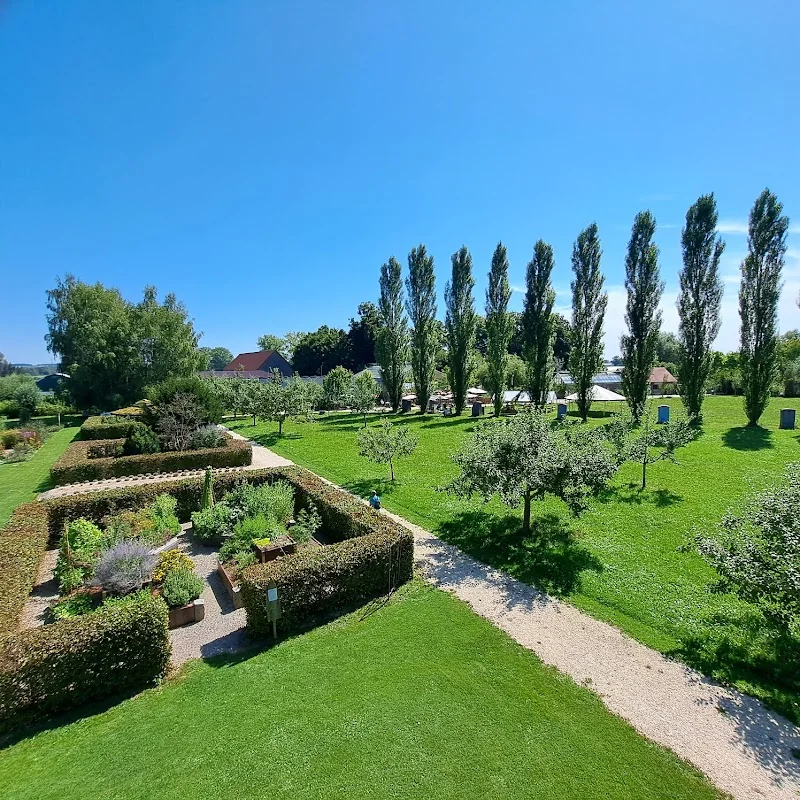
The museum gardens are one of the strongest reasons for a visit, as they not only explain the theme of garden culture but also make it directly experienceable. More than 25 plant cabinets are geometrically arranged within the gardens, each dedicated to its own focus. These include form fruit, vegetables, berry bushes, hazelnuts, roses, perennials, summer flowers, climbing plants, water lilies, and binding willows. The area is thus not just an ornamental space but a living arsenal of varieties. The Foundation for Garden Culture works with cultivation, seed propagation, and other measures to preserve and pass on old and rare useful and ornamental plants. Thus, biodiversity is not only used as a buzzword but is concretely cared for as cultural heritage. ([museum-der-gartenkultur.de](https://www.museum-der-gartenkultur.de/gaerten))
Historically, the museum also has a clear line. The Foundation for Garden Culture was founded in 2010 by three passionate collectors, Dieter Gaißmayer, Wolfgang E. Hundbiss, and Dr. Reinhard Hemmer, after the original plan to establish an old greenhouse as a museum turned into an ambitious new building. Today, the heart of the foundation is the museum for historical gardening tools, complemented by the library of historical garden literature and the surrounding garden facilities. The new museum design, established since mid-2025, guides visitors through regional and European garden history, from medieval monastery gardens to Renaissance gardens to private paradises and today's climate-conscious garden ideas. This connects the house's memory and future in a very accessible way. ([museum-der-gartenkultur.de](https://www.museum-der-gartenkultur.de/stiftung))
Illertissen Seed Day, Tours, and Events 2026
The annual program for 2026 shows how strongly the Museum of Garden Culture functions as an event location. Once a month, there is an open participatory program for children with the Garden Explorers, which usually lasts two hours and playfully introduces garden themes. Additionally, there is the offering 'Longing for the Garden' with coffee, where a guided visit to the exhibition is combined with subsequent coffee and cake time. The current announcements also feature the exhibition 'Rooted in Swabia' for the 150th anniversary of the Swabian District Association for Horticulture and Landscape Care, as well as other seasonal themes. The event calendar makes it clear that the museum is not just a bad weather destination but a place for recurring experiences throughout the year. ([museum-der-gartenkultur.de](https://www.museum-der-gartenkultur.de/))
Particularly relevant for inquiries regarding the seed market and seed day is the Illertissen Seed Day. It is described on the official page as an event with lectures, exhibitors, and actions around the seed diversity of cultural and wild plants. In the current calendar, it takes place on Saturday, March 14, 2026, from 10 AM to 4 PM. The offering is complemented by guided tours, market days, workshops, and thematic actions on the grounds of Jungviehweide. For bus groups, it remains important that prior coordination is necessary due to limited capacities. Therefore, those planning a group visit should not only organize the date but also registration, arrival, and accompanying program in advance. ([museum-der-gartenkultur.de](https://www.museum-der-gartenkultur.de/veranstaltungen?utm_source=openai))
Reviews, Image Motifs, and Tips for the Visit
Those looking for photos or reviews will quickly come across an image of a small green oasis at the Museum of Garden Culture. This effect fits the character of the place: quiet paths, diverse plant spaces, a café for lingering, and an atmosphere that closely connects nature and knowledge. The visitor impressions in the provided material describe the place as a space for relaxation, strolling, and recharging; at the same time, the offering of plants, herbs, and garden ideas is highlighted. For image motifs, the geometric garden spaces, flower and herb areas, the garden library, and the café are particularly interesting as they visibly showcase the blend of expertise and enjoyment. The digital fabulApp enhances this impression with additional information and makes the grounds even more tangible on the go. ([museum-der-gartenkultur.de](https://www.museum-der-gartenkultur.de/fabulapp?utm_source=openai))
For a practical visit, a little planning is worthwhile. Since arriving by car is the most convenient and public transport currently does not lead directly to the museum, one should check the route in advance and allow enough time. Comfortable shoes are advisable, as the path from the parking lot to the museum is wheelchair-accessible but unpaved and gravelled. Those who want to experience the café, exhibition, and museum gardens in peace should not calculate too tightly, as the grounds invite longer stays. The visit is particularly enjoyable when one coordinates the current opening hours, the daily program, and any guided tours in advance. This turns a spontaneous excursion into a rounded day filled with garden culture, coffee, knowledge, and many small discoveries. ([museum-der-gartenkultur.de](https://www.museum-der-gartenkultur.de/adresse-und-anfahrt))
Sources:
Show moreShow less
Museum of Garden Culture | Tickets & Café
The Museum of Garden Culture in Illertissen is a place where exhibition, museum gardens, garden library, aroma workshop, greenhouse, and museum café come together to create a single experience space. The Foundation for Garden Culture sees the site at Jungviehweide as a network for people who care about nature, sustainability, and vibrant garden culture. Since mid-2025, the museum has been showcasing a long-term exhibition on the history and future of garden culture, while the gardens are open year-round, thus also appealing outside of traditional museum visits. Those looking for a green excursion destination will find expertise, enjoyment, interactive offerings, and quiet paths in a facility that vividly connects historical perspectives and current garden issues. ([museum-der-gartenkultur.de](https://www.museum-der-gartenkultur.de/))
Tickets, Prices, and Opening Hours at the Museum of Garden Culture
For planning a visit, the current opening hours are particularly important, as they clearly and family-friendly summarize the day. Since March 3, 2026, the museum has been open from Tuesday to Saturday from 10 AM to 5 PM, and on Sundays from 11 AM to 5 PM. The museum café has followed the same pattern since March 2, 2026. On public holidays, the museum and café remain closed, while the museum gardens are accessible year-round. Therefore, those who want to stop by spontaneously can also plan a pure walk through the grounds without necessarily visiting the exhibition part. ([museum-der-gartenkultur.de](https://www.museum-der-gartenkultur.de/))
Upon entry, the museum relies on a consciously low pricing model: Admission to the museum costs 3 euros, children and teenagers up to 18 years pay nothing, and access to the outdoor area is free. This is a fair entry point for garden fans, families, and excursion groups, as the place is defined not only by classical collection culture but by a whole structure of knowledge, plants, and experience spaces. Those who want to dive deeper can book guided tours. These last about 60 to 90 minutes upon request, are a flat rate of 120 euros for up to 20 people, and cost 6 euros per person for groups of more than 20. This keeps the visit both individual and well-planned as a group program. ([museum-der-gartenkultur.de](https://www.museum-der-gartenkultur.de/preise))
Directions, Parking, and Accessibility
The Museum of Garden Culture is conveniently located near the A7 Ulm-Kempten at exit 124 Illertissen, approximately 25 kilometers from Ulm and about 28 kilometers from Memmingen. Those traveling from the north or south should follow the signs towards Illertissen from the highway exit and then the signs to Jungviehweide or the perennial nursery. The driving distance to the parking lot is about 2 kilometers. This location makes the place particularly attractive for day visitors who want to combine the museum with an excursion into the surrounding area. ([museum-der-gartenkultur.de](https://www.museum-der-gartenkultur.de/adresse-und-anfahrt))
On-site, there are plenty of free parking spaces available, making the visit comfortable. However, prior registration is required for bus groups, as space for buses is limited. The museum is also well-prepared in terms of accessibility: a disabled parking space is designated, the museum is accessible without steps, and an unpaved but wheelchair-accessible path of about 100 meters leads from the parking lot to the entrance. Additionally, there is a disabled-friendly toilet. An important note for planning is that the museum is currently not reachable by public transport. Therefore, for many visitors, arriving by car or as a group remains the most practical solution. ([museum-der-gartenkultur.de](https://www.museum-der-gartenkultur.de/adresse-und-anfahrt))
Museum Café, Garden Library, and Photos
The museum café is one of the pleasant surprises of the house, as it combines the museum visit with a real enjoyment component. Visitors can get cakes, pastries, and a small selection of hot and cold dishes there. The kitchen focuses on fresh herbs, regional ingredients, and an uncomplicated setting for breaks between the exhibition and garden stroll. For groups, the Foundation for Garden Culture recommends prior registration, and table reservations are also accepted by phone or email. Those combining the café with a longer excursion can easily incorporate a relaxed stop there. ([museum-der-gartenkultur.de](https://www.museum-der-gartenkultur.de/museumscaf%C3%A9))
The garden library also contributes to the special atmosphere. It includes, in addition to the large exhibition space and the museum gardens, a scientific collection of around 5,000 books and numerous journal volumes. Thematic focuses include perennials, garden design, historical children's books, crops, medicinal plants, cottage gardens, and gardens of the world. The books and journals can only be used in the reading room during opening hours, emphasizing the scientific character of the offering. Additionally, the museum offers a digital extension via the fabulApp. Those planning photos should know the rules: commercial indoor and outdoor shots as well as private wedding shoots are only possible with prior registration and a paid photography permit. This protects the facility and ensures a respectful approach to the place. ([museum-der-gartenkultur.de](https://www.museum-der-gartenkultur.de/gartenbibliothek))
Museum Gardens, Exhibition, and History of Garden Culture
The museum gardens are one of the strongest reasons for a visit, as they not only explain the theme of garden culture but also make it directly experienceable. More than 25 plant cabinets are geometrically arranged within the gardens, each dedicated to its own focus. These include form fruit, vegetables, berry bushes, hazelnuts, roses, perennials, summer flowers, climbing plants, water lilies, and binding willows. The area is thus not just an ornamental space but a living arsenal of varieties. The Foundation for Garden Culture works with cultivation, seed propagation, and other measures to preserve and pass on old and rare useful and ornamental plants. Thus, biodiversity is not only used as a buzzword but is concretely cared for as cultural heritage. ([museum-der-gartenkultur.de](https://www.museum-der-gartenkultur.de/gaerten))
Historically, the museum also has a clear line. The Foundation for Garden Culture was founded in 2010 by three passionate collectors, Dieter Gaißmayer, Wolfgang E. Hundbiss, and Dr. Reinhard Hemmer, after the original plan to establish an old greenhouse as a museum turned into an ambitious new building. Today, the heart of the foundation is the museum for historical gardening tools, complemented by the library of historical garden literature and the surrounding garden facilities. The new museum design, established since mid-2025, guides visitors through regional and European garden history, from medieval monastery gardens to Renaissance gardens to private paradises and today's climate-conscious garden ideas. This connects the house's memory and future in a very accessible way. ([museum-der-gartenkultur.de](https://www.museum-der-gartenkultur.de/stiftung))
Illertissen Seed Day, Tours, and Events 2026
The annual program for 2026 shows how strongly the Museum of Garden Culture functions as an event location. Once a month, there is an open participatory program for children with the Garden Explorers, which usually lasts two hours and playfully introduces garden themes. Additionally, there is the offering 'Longing for the Garden' with coffee, where a guided visit to the exhibition is combined with subsequent coffee and cake time. The current announcements also feature the exhibition 'Rooted in Swabia' for the 150th anniversary of the Swabian District Association for Horticulture and Landscape Care, as well as other seasonal themes. The event calendar makes it clear that the museum is not just a bad weather destination but a place for recurring experiences throughout the year. ([museum-der-gartenkultur.de](https://www.museum-der-gartenkultur.de/))
Particularly relevant for inquiries regarding the seed market and seed day is the Illertissen Seed Day. It is described on the official page as an event with lectures, exhibitors, and actions around the seed diversity of cultural and wild plants. In the current calendar, it takes place on Saturday, March 14, 2026, from 10 AM to 4 PM. The offering is complemented by guided tours, market days, workshops, and thematic actions on the grounds of Jungviehweide. For bus groups, it remains important that prior coordination is necessary due to limited capacities. Therefore, those planning a group visit should not only organize the date but also registration, arrival, and accompanying program in advance. ([museum-der-gartenkultur.de](https://www.museum-der-gartenkultur.de/veranstaltungen?utm_source=openai))
Reviews, Image Motifs, and Tips for the Visit
Those looking for photos or reviews will quickly come across an image of a small green oasis at the Museum of Garden Culture. This effect fits the character of the place: quiet paths, diverse plant spaces, a café for lingering, and an atmosphere that closely connects nature and knowledge. The visitor impressions in the provided material describe the place as a space for relaxation, strolling, and recharging; at the same time, the offering of plants, herbs, and garden ideas is highlighted. For image motifs, the geometric garden spaces, flower and herb areas, the garden library, and the café are particularly interesting as they visibly showcase the blend of expertise and enjoyment. The digital fabulApp enhances this impression with additional information and makes the grounds even more tangible on the go. ([museum-der-gartenkultur.de](https://www.museum-der-gartenkultur.de/fabulapp?utm_source=openai))
For a practical visit, a little planning is worthwhile. Since arriving by car is the most convenient and public transport currently does not lead directly to the museum, one should check the route in advance and allow enough time. Comfortable shoes are advisable, as the path from the parking lot to the museum is wheelchair-accessible but unpaved and gravelled. Those who want to experience the café, exhibition, and museum gardens in peace should not calculate too tightly, as the grounds invite longer stays. The visit is particularly enjoyable when one coordinates the current opening hours, the daily program, and any guided tours in advance. This turns a spontaneous excursion into a rounded day filled with garden culture, coffee, knowledge, and many small discoveries. ([museum-der-gartenkultur.de](https://www.museum-der-gartenkultur.de/adresse-und-anfahrt))
Sources:
Museum of Garden Culture | Tickets & Café
The Museum of Garden Culture in Illertissen is a place where exhibition, museum gardens, garden library, aroma workshop, greenhouse, and museum café come together to create a single experience space. The Foundation for Garden Culture sees the site at Jungviehweide as a network for people who care about nature, sustainability, and vibrant garden culture. Since mid-2025, the museum has been showcasing a long-term exhibition on the history and future of garden culture, while the gardens are open year-round, thus also appealing outside of traditional museum visits. Those looking for a green excursion destination will find expertise, enjoyment, interactive offerings, and quiet paths in a facility that vividly connects historical perspectives and current garden issues. ([museum-der-gartenkultur.de](https://www.museum-der-gartenkultur.de/))
Tickets, Prices, and Opening Hours at the Museum of Garden Culture
For planning a visit, the current opening hours are particularly important, as they clearly and family-friendly summarize the day. Since March 3, 2026, the museum has been open from Tuesday to Saturday from 10 AM to 5 PM, and on Sundays from 11 AM to 5 PM. The museum café has followed the same pattern since March 2, 2026. On public holidays, the museum and café remain closed, while the museum gardens are accessible year-round. Therefore, those who want to stop by spontaneously can also plan a pure walk through the grounds without necessarily visiting the exhibition part. ([museum-der-gartenkultur.de](https://www.museum-der-gartenkultur.de/))
Upon entry, the museum relies on a consciously low pricing model: Admission to the museum costs 3 euros, children and teenagers up to 18 years pay nothing, and access to the outdoor area is free. This is a fair entry point for garden fans, families, and excursion groups, as the place is defined not only by classical collection culture but by a whole structure of knowledge, plants, and experience spaces. Those who want to dive deeper can book guided tours. These last about 60 to 90 minutes upon request, are a flat rate of 120 euros for up to 20 people, and cost 6 euros per person for groups of more than 20. This keeps the visit both individual and well-planned as a group program. ([museum-der-gartenkultur.de](https://www.museum-der-gartenkultur.de/preise))
Directions, Parking, and Accessibility
The Museum of Garden Culture is conveniently located near the A7 Ulm-Kempten at exit 124 Illertissen, approximately 25 kilometers from Ulm and about 28 kilometers from Memmingen. Those traveling from the north or south should follow the signs towards Illertissen from the highway exit and then the signs to Jungviehweide or the perennial nursery. The driving distance to the parking lot is about 2 kilometers. This location makes the place particularly attractive for day visitors who want to combine the museum with an excursion into the surrounding area. ([museum-der-gartenkultur.de](https://www.museum-der-gartenkultur.de/adresse-und-anfahrt))
On-site, there are plenty of free parking spaces available, making the visit comfortable. However, prior registration is required for bus groups, as space for buses is limited. The museum is also well-prepared in terms of accessibility: a disabled parking space is designated, the museum is accessible without steps, and an unpaved but wheelchair-accessible path of about 100 meters leads from the parking lot to the entrance. Additionally, there is a disabled-friendly toilet. An important note for planning is that the museum is currently not reachable by public transport. Therefore, for many visitors, arriving by car or as a group remains the most practical solution. ([museum-der-gartenkultur.de](https://www.museum-der-gartenkultur.de/adresse-und-anfahrt))
Museum Café, Garden Library, and Photos
The museum café is one of the pleasant surprises of the house, as it combines the museum visit with a real enjoyment component. Visitors can get cakes, pastries, and a small selection of hot and cold dishes there. The kitchen focuses on fresh herbs, regional ingredients, and an uncomplicated setting for breaks between the exhibition and garden stroll. For groups, the Foundation for Garden Culture recommends prior registration, and table reservations are also accepted by phone or email. Those combining the café with a longer excursion can easily incorporate a relaxed stop there. ([museum-der-gartenkultur.de](https://www.museum-der-gartenkultur.de/museumscaf%C3%A9))
The garden library also contributes to the special atmosphere. It includes, in addition to the large exhibition space and the museum gardens, a scientific collection of around 5,000 books and numerous journal volumes. Thematic focuses include perennials, garden design, historical children's books, crops, medicinal plants, cottage gardens, and gardens of the world. The books and journals can only be used in the reading room during opening hours, emphasizing the scientific character of the offering. Additionally, the museum offers a digital extension via the fabulApp. Those planning photos should know the rules: commercial indoor and outdoor shots as well as private wedding shoots are only possible with prior registration and a paid photography permit. This protects the facility and ensures a respectful approach to the place. ([museum-der-gartenkultur.de](https://www.museum-der-gartenkultur.de/gartenbibliothek))
Museum Gardens, Exhibition, and History of Garden Culture
The museum gardens are one of the strongest reasons for a visit, as they not only explain the theme of garden culture but also make it directly experienceable. More than 25 plant cabinets are geometrically arranged within the gardens, each dedicated to its own focus. These include form fruit, vegetables, berry bushes, hazelnuts, roses, perennials, summer flowers, climbing plants, water lilies, and binding willows. The area is thus not just an ornamental space but a living arsenal of varieties. The Foundation for Garden Culture works with cultivation, seed propagation, and other measures to preserve and pass on old and rare useful and ornamental plants. Thus, biodiversity is not only used as a buzzword but is concretely cared for as cultural heritage. ([museum-der-gartenkultur.de](https://www.museum-der-gartenkultur.de/gaerten))
Historically, the museum also has a clear line. The Foundation for Garden Culture was founded in 2010 by three passionate collectors, Dieter Gaißmayer, Wolfgang E. Hundbiss, and Dr. Reinhard Hemmer, after the original plan to establish an old greenhouse as a museum turned into an ambitious new building. Today, the heart of the foundation is the museum for historical gardening tools, complemented by the library of historical garden literature and the surrounding garden facilities. The new museum design, established since mid-2025, guides visitors through regional and European garden history, from medieval monastery gardens to Renaissance gardens to private paradises and today's climate-conscious garden ideas. This connects the house's memory and future in a very accessible way. ([museum-der-gartenkultur.de](https://www.museum-der-gartenkultur.de/stiftung))
Illertissen Seed Day, Tours, and Events 2026
The annual program for 2026 shows how strongly the Museum of Garden Culture functions as an event location. Once a month, there is an open participatory program for children with the Garden Explorers, which usually lasts two hours and playfully introduces garden themes. Additionally, there is the offering 'Longing for the Garden' with coffee, where a guided visit to the exhibition is combined with subsequent coffee and cake time. The current announcements also feature the exhibition 'Rooted in Swabia' for the 150th anniversary of the Swabian District Association for Horticulture and Landscape Care, as well as other seasonal themes. The event calendar makes it clear that the museum is not just a bad weather destination but a place for recurring experiences throughout the year. ([museum-der-gartenkultur.de](https://www.museum-der-gartenkultur.de/))
Particularly relevant for inquiries regarding the seed market and seed day is the Illertissen Seed Day. It is described on the official page as an event with lectures, exhibitors, and actions around the seed diversity of cultural and wild plants. In the current calendar, it takes place on Saturday, March 14, 2026, from 10 AM to 4 PM. The offering is complemented by guided tours, market days, workshops, and thematic actions on the grounds of Jungviehweide. For bus groups, it remains important that prior coordination is necessary due to limited capacities. Therefore, those planning a group visit should not only organize the date but also registration, arrival, and accompanying program in advance. ([museum-der-gartenkultur.de](https://www.museum-der-gartenkultur.de/veranstaltungen?utm_source=openai))
Reviews, Image Motifs, and Tips for the Visit
Those looking for photos or reviews will quickly come across an image of a small green oasis at the Museum of Garden Culture. This effect fits the character of the place: quiet paths, diverse plant spaces, a café for lingering, and an atmosphere that closely connects nature and knowledge. The visitor impressions in the provided material describe the place as a space for relaxation, strolling, and recharging; at the same time, the offering of plants, herbs, and garden ideas is highlighted. For image motifs, the geometric garden spaces, flower and herb areas, the garden library, and the café are particularly interesting as they visibly showcase the blend of expertise and enjoyment. The digital fabulApp enhances this impression with additional information and makes the grounds even more tangible on the go. ([museum-der-gartenkultur.de](https://www.museum-der-gartenkultur.de/fabulapp?utm_source=openai))
For a practical visit, a little planning is worthwhile. Since arriving by car is the most convenient and public transport currently does not lead directly to the museum, one should check the route in advance and allow enough time. Comfortable shoes are advisable, as the path from the parking lot to the museum is wheelchair-accessible but unpaved and gravelled. Those who want to experience the café, exhibition, and museum gardens in peace should not calculate too tightly, as the grounds invite longer stays. The visit is particularly enjoyable when one coordinates the current opening hours, the daily program, and any guided tours in advance. This turns a spontaneous excursion into a rounded day filled with garden culture, coffee, knowledge, and many small discoveries. ([museum-der-gartenkultur.de](https://www.museum-der-gartenkultur.de/adresse-und-anfahrt))
Sources:

Frequently Asked Questions
Reviews
PR
5. March 2019
Closed on Sunday and half day open on Saturday, that is the only time available to visit for most of the folks. How one comes to such opening times is hard to understand.
Ralf Kuemm
25. April 2019
Cool
Julia Krauberger
17. August 2025
A great place, a small oasis to relax, recharge your batteries, take a walk or even buy something for your own garden, whether flowers, trees, herbs - everything is there.
Ingrid K.
29. April 2023
A wonderful café located in the Museum of Garden Culture, or in the outdoor area. It's open even when the museum is closed. They offer good, light meals and delicious cakes. The service is very friendly. Definitely worth a visit. A fantastic outing for families, seniors, or visitors to the Gaißmaier perennial nursery. The garden is exceptionally beautifully designed. Don't miss it! Tickets are not required for the café or the nursery.
Carl Carter
2. July 2025
This small but excellent museum is definitely worth a visit. The current exhibition on the regional development of garden culture in Bavaria and Baden-Württemberg is brand new. It's colorful, very creative, multimedia, and lovingly detailed. For children, there are garden pictures to color and lots of interesting things to see and hear. A microscope allows you to take a closer look at various seeds. The large information panels on the walls are bilingual – in German and English. There's something for every gardening enthusiast here! From texts about watering cans and allotments to articles about expensive tulips and earthworms! Afterward, you can relax in the café or browse through gardening books or buy seeds next door.