
Ulm
Unter der Metzg 6, 89073 Ulm, Deutschland
Metzgerturm | History & Art
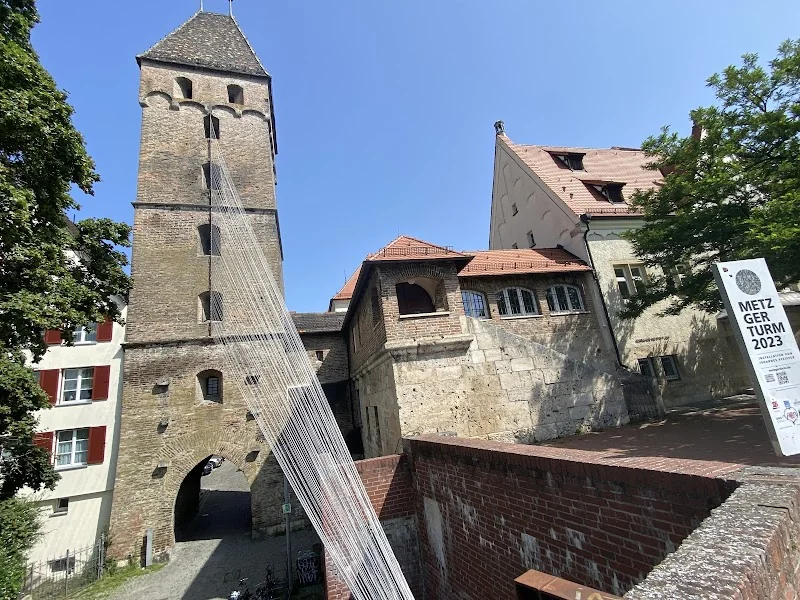
The Metzgerturm is one of those Ulm buildings that you not only look at but also remember immediately. The distinctive city tower on the old city wall stands in the Ulm old town, bearing the weight of centuries of city history and is simultaneously a place where today's cultural life is presented anew. With its noticeable tilt, its location near the Danube and the fishermen's and tanners' quarters, as well as its current use as an art venue, it connects medieval city fortifications, urban landmarks, and contemporary use in a very small space. For visitors looking for Metzgerturm Ulm, Metzgerturm history, Metzgerturm legend, or Metzgerturm art, it is more than just a photo motif: it is a compact piece of Ulm identity. Officially, it is described as a 36.1-meter high city tower, with a tilt of 2.05 meters. At the same time, the current use shows that historical monuments in Ulm are not only preserved but also made newly experienceable. ([tourismus.ulm.de](https://tourismus.ulm.de/de/entdecken/sehen-und-erleben/sehenswuerdigkeiten/historisches/metzgerturm-ulm?utm_source=openai))
History, Legend, and Origin of the Metzgerturm
The history of the Metzgerturm begins in the 14th century. Tourism Ulm states that it was built around 1349 and classifies it within the medieval city fortifications. The tower was not randomly placed at this location but is directly related to the city's development at the time and the Metzig, which was the municipal slaughterhouse. The official explanation also emphasizes that although the tower and gate are connected, the Metzgerturm itself was not a city gate. This correction is important because many simplifications circulate around the name and function of the building. The tower was understood as part of a fortification and usage context, not as a classic city entrance gate. In Ulm's history, it is therefore more a testimony to how closely everyday life, trade, supply, and defense were intertwined in the Middle Ages. For the search queries metzgerturm ulm geschichte, metzgerturm geschichte, and metzgerturm ulm sage, this context is central because it separates the real history from later narratives. ([tourismus.ulm.de](https://tourismus.ulm.de/de/entdecken/sehen-und-erleben/sehenswuerdigkeiten/historisches/metzgerturm-ulm?utm_source=openai))
One of the most well-known stories is the legend of the butchers, who are said to have been punished for making sausages too small and, fearing the punishment, tilted the tower. Tourism Ulm explicitly tells this story as a tradition and clearly distinguishes it from the historical explanation. This is precisely where the charm of the Metzgerturm lies: it is not just a building, but a place where urban memory, local anecdotes, and verifiable architectural history overlap. So, those searching for Metzgerturm Ulm legend or Metzgerturm sage will find not just a nice myth here, but a beautiful example of how cities tell their past. The name Metzgerturm refers to the old Metzig and thus to a function in the economic and supply life of the imperial city of Ulm. Thus, a single tower becomes a reading piece about urban development, language, and everyday history. This makes it as exciting for culturally interested guests as for anyone who wants to discover Ulm through its most popular landmarks. ([tourismus.ulm.de](https://tourismus.ulm.de/de/entdecken/sehen-und-erleben/sehenswuerdigkeiten/historisches/metzgerturm-ulm?utm_source=openai))
Why the Metzgerturm is Tilted: Foundation, Inclination, and Roof
The famous tilt of the Metzgerturm can be explained quite accurately. According to Tourism Ulm, the cause lies in the historical foundation: on the Danube side, the building rested on the old city wall, while on the city side, it stood on wooden logs. As the water level of the Danube dropped, these wooden logs decayed over time, causing the structure to tilt westward. In 1911, concrete foundations were introduced, and since then, the further inclination has slowed significantly. Today, the deviation is stated to be 2.05 meters. This is particularly interesting for visitors because the tilt should not be understood as a modern measurement error or a romantic exaggeration, but as a historically traceable result of early construction methods. The key figures of 36.1 meters in height and 2.05 meters in inclination are therefore among the most important facts regarding metzgerturm ulm inclination and metzgerturm ulm tilt. They provide the landmark with its precise architectural classification and clarify why the tower stands out so much in the city view. ([tourismus.ulm.de](https://tourismus.ulm.de/de/entdecken/sehen-und-erleben/sehenswuerdigkeiten/historisches/metzgerturm-ulm?utm_source=openai))
The Metzgerturm also has several visual details that make it unmistakable. The official site mentions that the roof is covered with tiles from historical Ulm buildings. This is a nice detail for those searching for metzgerturm ulm roof, as it shows that even with a historical tower, not only the shape but also the material plays a narrative role. Together with the tilt, the wall connection, and the location on the city wall, a picture emerges that is very different from most other city towers. The combination of medieval substance, later security measures, and contemporary use makes the place so exciting. The Metzgerturm is not a static monument but a building that has been adapted, secured, and reinterpreted multiple times over the centuries. The concrete foundations from 1911 mark a turning point because they did not change the tower but slowed its further movement. Therefore, anyone seeing the tower today is looking not only at an old structure but at a living example of historical building maintenance. ([tourismus.ulm.de](https://tourismus.ulm.de/de/entdecken/sehen-und-erleben/sehenswuerdigkeiten/historisches/metzgerturm-ulm?utm_source=openai))
Another reason for the strong impact of the Metzgerturm is its location in the urban space. It stands directly at the Ulm city wall, at a point that is hardly conceivable to be omitted from the city's development history. The tourist information describes the city wall along the Danube bank as a place where changes since the late 15th century can be particularly well read. It also becomes clear that the Ulm city view around 1493 was still directly on the river, while today's riverbank area has long been designed differently. The Metzgerturm should therefore not be viewed in isolation but as a visible remnant of a larger defense and border facility. The fact that it stands out as the only remaining tower of the wall front enhances its character as a landmark. Those searching for Metzgerturm photos will therefore find not only the building itself interesting but also the relationship between the tower, wall, Danube, and old town. This spatial anchoring explains why the tower appears so present even without grand staging. ([tourismus.ulm.de](https://tourismus.ulm.de/en/discover/ulm-and-neu-ulm/sights/historical-sights/stadtmauer-ulm))
Art in the Metzgerturm: Exhibitions, Levels, and Opening Hours
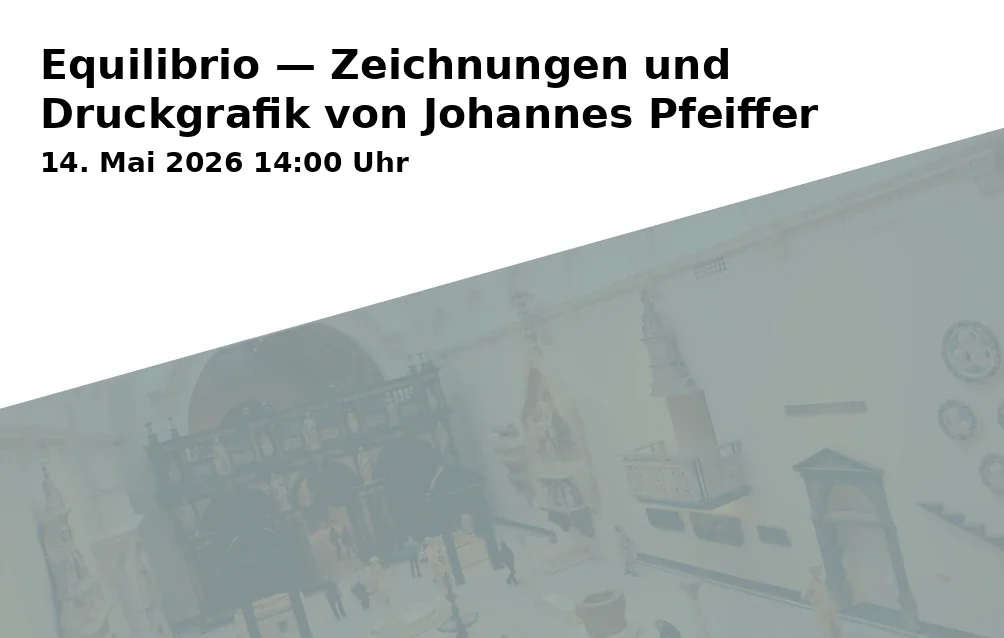
In 2026, the Metzgerturm will present itself not only as a monument but also as an active cultural venue. Tourism Ulm describes it in a current event as a vertical gallery, where historical building culture and contemporary art meet on five levels. The Ulm Art Association uses the monument for changing exhibitions, making the tower accessible in a way that respects its historical structure while also reinterpreting it. For search queries like metzgerturm ulm art, this is the most important current development: the place is not museum-like closed off but transformed into a lively exhibition use. The kickoff for the current programming is the exhibition by Johannes Pfeiffer, whose rope installation has already been rewriting the tilted tower into the cityscape since 2022. This makes the Metzgerturm a place where cityscape, public art, and monument preservation connect. The official description states that here historical substance and contemporary art are closely intertwined. This fits very well with a building that already mediates between the past and the present. ([tourismus.ulm.de](https://tourismus.ulm.de/de/entdecken/veranstaltungen/diesen-monat/metzgerturm-pfeiffer?utm_source=openai))
Visitors also benefit from clear practical information. For the period from May 13 to October 13, 2026, the official site states opening hours from Friday to Sunday, each from 2 PM to 6 PM, and free admission. The address is also precisely given: Metzgerturm Ulm, Unter der Metzig 6, 89073 Ulm. The five levels are accessed via steep wooden stairs, making the exploration of the tower itself an intense little tour. This close spatial experience is typical for the art venue because the architecture is not just a backdrop but part of the perception. The combination of monument, art, narrow levels, and free admission makes the place attractive for both culture enthusiasts and spontaneous visits to the old town. Therefore, those searching for Metzgerturm 2026 will find a clear answer: the tower is not just a silent eye-catcher but an actively used space with a program. This also gives the question of the Metzgerturm today a clear significance: it is historical but by no means only backward-looking. ([tourismus.ulm.de](https://tourismus.ulm.de/de/entdecken/veranstaltungen/diesen-monat/metzgerturm-pfeiffer?utm_source=openai))
The way the Metzgerturm is used is also consistent in the urban context. The official description emphasizes that the tower is one of the most popular monuments in the city and is also being carefully renovated and preserved in a monument-compliant manner. This is precisely what appeals to an audience that does not want to see art, history, and architecture separately. The tower is an example of how a city not only conserves a landmark but actively brings it into the present. For the search intent around metzgerturm ulm art, it is also important that the offering is not arbitrary but closely related to the Ulm Art Association. This organizes changing presentations, creating a lively framework for repeated visits. Therefore, anyone who sees the Metzgerturm once does not necessarily experience the same exhibition on their next visit. This makes the place interesting for repeated stays in Ulm. Especially in combination with the short distance to the Danube, city wall, and old town, it becomes clear that the tower is very compact as a cultural venue but surprisingly versatile in content. ([tourismus.ulm.de](https://tourismus.ulm.de/de/entdecken/veranstaltungen/diesen-monat/metzgerturm-pfeiffer?utm_source=openai))
Address, Maps, and Directions to the Metzgerturm in the Ulm Old Town
For those specifically searching for metzgerturm ulm address or metzgerturm ulm maps, the location is easy to remember: Unter der Metzig 6 in 89073 Ulm. The official tourism site also places the tower in the vicinity of the old town, with immediate proximity to the Danube, city wall, and fishermen's and tanners' quarters. This is particularly helpful for orientation on site because the tower is not located at a remote edge but in the middle of one of the historically densest areas of the city. Those coming from the city center can therefore easily combine the way through the old town with a walk. The surroundings are urbanistically compact and thus also interesting for people who want to discover Ulm on foot. For practical travel planning, it is also important that the tower is closely connected to the city wall on the Danube bank. This means that anyone walking along the wall will almost automatically come across the Metzgerturm. Therefore, for orientation in map mode, it is a very good reference point in the historical cityscape. ([tourismus.ulm.de](https://tourismus.ulm.de/de/entdecken/veranstaltungen/diesen-monat/metzgerturm-pfeiffer?utm_source=openai))
When arriving by car, the city of Ulm does not recommend looking for a special solution in the immediate vicinity of the tower but rather relying on the regular city parking options. The official parking page explains that there are several parking garages in the city center and that Park & Ride offers a particularly convenient way to get to the city. So, anyone planning a visit to the Metzgerturm should first head towards the city center or use a Park-and-Ride option and continue the last section by tram or on foot. Especially since the Metzgerturm is located in the old town, this combination is usually more relaxed than directly searching for a single parking space in the immediate vicinity. The tourist information also mentions specific Park & Ride options and emphasizes the quick access to the center. For visitors, this is good news because it allows for an uncomplicated combination of the tower visit with a city stroll. Therefore, those searching for Metzgerturm Ulm address and parking should not only know the point on the map but also consider the historical city center character. ([tourismus.ulm.de](https://tourismus.ulm.de/en/planning/travel-planning/arrival-and-publictransport/parking/?utm_source=openai))
For groups and travel planning, the location is also easy to place. The city wall along the Danube bank is marked as a walking path and sight, and the Metzgerturm is designated as a neighboring point of interest. This facilitates its integration into city tours, for example, in combination with the fishermen's and tanners' quarters or a visit to the Danube. Those arriving by public transport benefit from the fact that the city center as a target area is clearly structured and the tourist points of interest are close together. Especially in a city like Ulm, where many of the most important sights are within walking distance, the Metzgerturm is an ideal orientation and stopover point. Its location makes it interesting not only for classic sightseeing tours but also for spontaneous stops on an old town walk. For the search intent metzgerturm ulm maps, it is particularly important: the tower is easy to find, excellently integrable into city routes, and hardly missable due to its position on the city wall. ([tourismus.ulm.de](https://tourismus.ulm.de/en/discover/ulm-and-neu-ulm/sights/historical-sights/stadtmauer-ulm))
Metzgerturm Photos, City Wall, and Walk Along the Danube Bank
Those searching for Metzgerturm photos are usually interested not only in the building itself but also in the overall effect of the place. And this effect in Ulm arises from the interplay of the tower, city wall, Danube, and old town. The Metzgerturm stands in such a way that it immediately catches the eye in the city silhouette. Its tilt, the height of 36.1 meters, and its direct location at the wall give it a strong visual presence. This is particularly appealing because the surroundings do not appear over-staged but credibly show historical urban space. For photos, this is an advantage: the tower works both as a single motif and as part of a larger city panorama. The proximity to the fishermen's and tanners' quarters as well as the Danube bank ensures that one quickly gets different perspectives. So, anyone bringing a camera or simply a good eye will find at the Metzgerturm a motif that allows for many perspectives in a short distance. Its location makes it a typical Ulm landmark that one experiences not abstractly but in an urban context. ([tourismus.ulm.de](https://tourismus.ulm.de/de/entdecken/veranstaltungen/diesen-monat/metzgerturm-pfeiffer?utm_source=openai))
Particularly exciting is also the walk along the city wall. The tourist information describes that the wall on the Danube bank once stood directly on the river and that the current landscape only emerged later through fill and renovations. Iron rings are still visible in the city wall that once served to moor boats. This is a strong detail because it shows how closely the place was once connected to the river. At the same time, the official presentation emphasizes that most towers are now missing and only the Metzgerturm has been preserved. This unique historical position explains why the tower stands out in the cityscape. Therefore, those who continue walking from the Metzgerturm are not only moving through a pretty old town zone but through a section of Ulm's history that makes the development from the medieval bank to today's city edge visible. For search queries like metzgerturm ulm geschichte and metzgerturm fotos, this is particularly valuable because photography and historical interest almost automatically come together here. ([tourismus.ulm.de](https://tourismus.ulm.de/en/discover/ulm-and-neu-ulm/sights/historical-sights/stadtmauer-ulm))
In the end, the Metzgerturm beautifully illustrates why some places in Ulm go beyond the mere label of a sight. It is a monument, an art venue, a memorial, and a point of orientation at the same time. Its legends make it entertaining, its construction history makes it credible, and its current use makes it lively. The combination of historical city wall, Danube bank, old town, and art program creates a place that cannot be reduced to a single view. Those visiting the tower can reflect on the medieval city fortifications, old city stories, contemporary art, and the modern use of monuments in the same tour. This is precisely why the Metzgerturm remains interesting for repeated visits. It is not just a point on the map but a piece of Ulm that can be read differently in every context. Therefore, anyone exploring the city on foot should plan it as a fixed part of an old town walk. ([tourismus.ulm.de](https://tourismus.ulm.de/de/entdecken/veranstaltungen/diesen-monat/metzgerturm-pfeiffer?utm_source=openai))
Sources:
Show moreShow less
Metzgerturm | History & Art
The Metzgerturm is one of those Ulm buildings that you not only look at but also remember immediately. The distinctive city tower on the old city wall stands in the Ulm old town, bearing the weight of centuries of city history and is simultaneously a place where today's cultural life is presented anew. With its noticeable tilt, its location near the Danube and the fishermen's and tanners' quarters, as well as its current use as an art venue, it connects medieval city fortifications, urban landmarks, and contemporary use in a very small space. For visitors looking for Metzgerturm Ulm, Metzgerturm history, Metzgerturm legend, or Metzgerturm art, it is more than just a photo motif: it is a compact piece of Ulm identity. Officially, it is described as a 36.1-meter high city tower, with a tilt of 2.05 meters. At the same time, the current use shows that historical monuments in Ulm are not only preserved but also made newly experienceable. ([tourismus.ulm.de](https://tourismus.ulm.de/de/entdecken/sehen-und-erleben/sehenswuerdigkeiten/historisches/metzgerturm-ulm?utm_source=openai))
History, Legend, and Origin of the Metzgerturm
The history of the Metzgerturm begins in the 14th century. Tourism Ulm states that it was built around 1349 and classifies it within the medieval city fortifications. The tower was not randomly placed at this location but is directly related to the city's development at the time and the Metzig, which was the municipal slaughterhouse. The official explanation also emphasizes that although the tower and gate are connected, the Metzgerturm itself was not a city gate. This correction is important because many simplifications circulate around the name and function of the building. The tower was understood as part of a fortification and usage context, not as a classic city entrance gate. In Ulm's history, it is therefore more a testimony to how closely everyday life, trade, supply, and defense were intertwined in the Middle Ages. For the search queries metzgerturm ulm geschichte, metzgerturm geschichte, and metzgerturm ulm sage, this context is central because it separates the real history from later narratives. ([tourismus.ulm.de](https://tourismus.ulm.de/de/entdecken/sehen-und-erleben/sehenswuerdigkeiten/historisches/metzgerturm-ulm?utm_source=openai))
One of the most well-known stories is the legend of the butchers, who are said to have been punished for making sausages too small and, fearing the punishment, tilted the tower. Tourism Ulm explicitly tells this story as a tradition and clearly distinguishes it from the historical explanation. This is precisely where the charm of the Metzgerturm lies: it is not just a building, but a place where urban memory, local anecdotes, and verifiable architectural history overlap. So, those searching for Metzgerturm Ulm legend or Metzgerturm sage will find not just a nice myth here, but a beautiful example of how cities tell their past. The name Metzgerturm refers to the old Metzig and thus to a function in the economic and supply life of the imperial city of Ulm. Thus, a single tower becomes a reading piece about urban development, language, and everyday history. This makes it as exciting for culturally interested guests as for anyone who wants to discover Ulm through its most popular landmarks. ([tourismus.ulm.de](https://tourismus.ulm.de/de/entdecken/sehen-und-erleben/sehenswuerdigkeiten/historisches/metzgerturm-ulm?utm_source=openai))
Why the Metzgerturm is Tilted: Foundation, Inclination, and Roof
The famous tilt of the Metzgerturm can be explained quite accurately. According to Tourism Ulm, the cause lies in the historical foundation: on the Danube side, the building rested on the old city wall, while on the city side, it stood on wooden logs. As the water level of the Danube dropped, these wooden logs decayed over time, causing the structure to tilt westward. In 1911, concrete foundations were introduced, and since then, the further inclination has slowed significantly. Today, the deviation is stated to be 2.05 meters. This is particularly interesting for visitors because the tilt should not be understood as a modern measurement error or a romantic exaggeration, but as a historically traceable result of early construction methods. The key figures of 36.1 meters in height and 2.05 meters in inclination are therefore among the most important facts regarding metzgerturm ulm inclination and metzgerturm ulm tilt. They provide the landmark with its precise architectural classification and clarify why the tower stands out so much in the city view. ([tourismus.ulm.de](https://tourismus.ulm.de/de/entdecken/sehen-und-erleben/sehenswuerdigkeiten/historisches/metzgerturm-ulm?utm_source=openai))
The Metzgerturm also has several visual details that make it unmistakable. The official site mentions that the roof is covered with tiles from historical Ulm buildings. This is a nice detail for those searching for metzgerturm ulm roof, as it shows that even with a historical tower, not only the shape but also the material plays a narrative role. Together with the tilt, the wall connection, and the location on the city wall, a picture emerges that is very different from most other city towers. The combination of medieval substance, later security measures, and contemporary use makes the place so exciting. The Metzgerturm is not a static monument but a building that has been adapted, secured, and reinterpreted multiple times over the centuries. The concrete foundations from 1911 mark a turning point because they did not change the tower but slowed its further movement. Therefore, anyone seeing the tower today is looking not only at an old structure but at a living example of historical building maintenance. ([tourismus.ulm.de](https://tourismus.ulm.de/de/entdecken/sehen-und-erleben/sehenswuerdigkeiten/historisches/metzgerturm-ulm?utm_source=openai))
Another reason for the strong impact of the Metzgerturm is its location in the urban space. It stands directly at the Ulm city wall, at a point that is hardly conceivable to be omitted from the city's development history. The tourist information describes the city wall along the Danube bank as a place where changes since the late 15th century can be particularly well read. It also becomes clear that the Ulm city view around 1493 was still directly on the river, while today's riverbank area has long been designed differently. The Metzgerturm should therefore not be viewed in isolation but as a visible remnant of a larger defense and border facility. The fact that it stands out as the only remaining tower of the wall front enhances its character as a landmark. Those searching for Metzgerturm photos will therefore find not only the building itself interesting but also the relationship between the tower, wall, Danube, and old town. This spatial anchoring explains why the tower appears so present even without grand staging. ([tourismus.ulm.de](https://tourismus.ulm.de/en/discover/ulm-and-neu-ulm/sights/historical-sights/stadtmauer-ulm))
Art in the Metzgerturm: Exhibitions, Levels, and Opening Hours
In 2026, the Metzgerturm will present itself not only as a monument but also as an active cultural venue. Tourism Ulm describes it in a current event as a vertical gallery, where historical building culture and contemporary art meet on five levels. The Ulm Art Association uses the monument for changing exhibitions, making the tower accessible in a way that respects its historical structure while also reinterpreting it. For search queries like metzgerturm ulm art, this is the most important current development: the place is not museum-like closed off but transformed into a lively exhibition use. The kickoff for the current programming is the exhibition by Johannes Pfeiffer, whose rope installation has already been rewriting the tilted tower into the cityscape since 2022. This makes the Metzgerturm a place where cityscape, public art, and monument preservation connect. The official description states that here historical substance and contemporary art are closely intertwined. This fits very well with a building that already mediates between the past and the present. ([tourismus.ulm.de](https://tourismus.ulm.de/de/entdecken/veranstaltungen/diesen-monat/metzgerturm-pfeiffer?utm_source=openai))
Visitors also benefit from clear practical information. For the period from May 13 to October 13, 2026, the official site states opening hours from Friday to Sunday, each from 2 PM to 6 PM, and free admission. The address is also precisely given: Metzgerturm Ulm, Unter der Metzig 6, 89073 Ulm. The five levels are accessed via steep wooden stairs, making the exploration of the tower itself an intense little tour. This close spatial experience is typical for the art venue because the architecture is not just a backdrop but part of the perception. The combination of monument, art, narrow levels, and free admission makes the place attractive for both culture enthusiasts and spontaneous visits to the old town. Therefore, those searching for Metzgerturm 2026 will find a clear answer: the tower is not just a silent eye-catcher but an actively used space with a program. This also gives the question of the Metzgerturm today a clear significance: it is historical but by no means only backward-looking. ([tourismus.ulm.de](https://tourismus.ulm.de/de/entdecken/veranstaltungen/diesen-monat/metzgerturm-pfeiffer?utm_source=openai))
The way the Metzgerturm is used is also consistent in the urban context. The official description emphasizes that the tower is one of the most popular monuments in the city and is also being carefully renovated and preserved in a monument-compliant manner. This is precisely what appeals to an audience that does not want to see art, history, and architecture separately. The tower is an example of how a city not only conserves a landmark but actively brings it into the present. For the search intent around metzgerturm ulm art, it is also important that the offering is not arbitrary but closely related to the Ulm Art Association. This organizes changing presentations, creating a lively framework for repeated visits. Therefore, anyone who sees the Metzgerturm once does not necessarily experience the same exhibition on their next visit. This makes the place interesting for repeated stays in Ulm. Especially in combination with the short distance to the Danube, city wall, and old town, it becomes clear that the tower is very compact as a cultural venue but surprisingly versatile in content. ([tourismus.ulm.de](https://tourismus.ulm.de/de/entdecken/veranstaltungen/diesen-monat/metzgerturm-pfeiffer?utm_source=openai))
Address, Maps, and Directions to the Metzgerturm in the Ulm Old Town
For those specifically searching for metzgerturm ulm address or metzgerturm ulm maps, the location is easy to remember: Unter der Metzig 6 in 89073 Ulm. The official tourism site also places the tower in the vicinity of the old town, with immediate proximity to the Danube, city wall, and fishermen's and tanners' quarters. This is particularly helpful for orientation on site because the tower is not located at a remote edge but in the middle of one of the historically densest areas of the city. Those coming from the city center can therefore easily combine the way through the old town with a walk. The surroundings are urbanistically compact and thus also interesting for people who want to discover Ulm on foot. For practical travel planning, it is also important that the tower is closely connected to the city wall on the Danube bank. This means that anyone walking along the wall will almost automatically come across the Metzgerturm. Therefore, for orientation in map mode, it is a very good reference point in the historical cityscape. ([tourismus.ulm.de](https://tourismus.ulm.de/de/entdecken/veranstaltungen/diesen-monat/metzgerturm-pfeiffer?utm_source=openai))
When arriving by car, the city of Ulm does not recommend looking for a special solution in the immediate vicinity of the tower but rather relying on the regular city parking options. The official parking page explains that there are several parking garages in the city center and that Park & Ride offers a particularly convenient way to get to the city. So, anyone planning a visit to the Metzgerturm should first head towards the city center or use a Park-and-Ride option and continue the last section by tram or on foot. Especially since the Metzgerturm is located in the old town, this combination is usually more relaxed than directly searching for a single parking space in the immediate vicinity. The tourist information also mentions specific Park & Ride options and emphasizes the quick access to the center. For visitors, this is good news because it allows for an uncomplicated combination of the tower visit with a city stroll. Therefore, those searching for Metzgerturm Ulm address and parking should not only know the point on the map but also consider the historical city center character. ([tourismus.ulm.de](https://tourismus.ulm.de/en/planning/travel-planning/arrival-and-publictransport/parking/?utm_source=openai))
For groups and travel planning, the location is also easy to place. The city wall along the Danube bank is marked as a walking path and sight, and the Metzgerturm is designated as a neighboring point of interest. This facilitates its integration into city tours, for example, in combination with the fishermen's and tanners' quarters or a visit to the Danube. Those arriving by public transport benefit from the fact that the city center as a target area is clearly structured and the tourist points of interest are close together. Especially in a city like Ulm, where many of the most important sights are within walking distance, the Metzgerturm is an ideal orientation and stopover point. Its location makes it interesting not only for classic sightseeing tours but also for spontaneous stops on an old town walk. For the search intent metzgerturm ulm maps, it is particularly important: the tower is easy to find, excellently integrable into city routes, and hardly missable due to its position on the city wall. ([tourismus.ulm.de](https://tourismus.ulm.de/en/discover/ulm-and-neu-ulm/sights/historical-sights/stadtmauer-ulm))
Metzgerturm Photos, City Wall, and Walk Along the Danube Bank
Those searching for Metzgerturm photos are usually interested not only in the building itself but also in the overall effect of the place. And this effect in Ulm arises from the interplay of the tower, city wall, Danube, and old town. The Metzgerturm stands in such a way that it immediately catches the eye in the city silhouette. Its tilt, the height of 36.1 meters, and its direct location at the wall give it a strong visual presence. This is particularly appealing because the surroundings do not appear over-staged but credibly show historical urban space. For photos, this is an advantage: the tower works both as a single motif and as part of a larger city panorama. The proximity to the fishermen's and tanners' quarters as well as the Danube bank ensures that one quickly gets different perspectives. So, anyone bringing a camera or simply a good eye will find at the Metzgerturm a motif that allows for many perspectives in a short distance. Its location makes it a typical Ulm landmark that one experiences not abstractly but in an urban context. ([tourismus.ulm.de](https://tourismus.ulm.de/de/entdecken/veranstaltungen/diesen-monat/metzgerturm-pfeiffer?utm_source=openai))
Particularly exciting is also the walk along the city wall. The tourist information describes that the wall on the Danube bank once stood directly on the river and that the current landscape only emerged later through fill and renovations. Iron rings are still visible in the city wall that once served to moor boats. This is a strong detail because it shows how closely the place was once connected to the river. At the same time, the official presentation emphasizes that most towers are now missing and only the Metzgerturm has been preserved. This unique historical position explains why the tower stands out in the cityscape. Therefore, those who continue walking from the Metzgerturm are not only moving through a pretty old town zone but through a section of Ulm's history that makes the development from the medieval bank to today's city edge visible. For search queries like metzgerturm ulm geschichte and metzgerturm fotos, this is particularly valuable because photography and historical interest almost automatically come together here. ([tourismus.ulm.de](https://tourismus.ulm.de/en/discover/ulm-and-neu-ulm/sights/historical-sights/stadtmauer-ulm))
In the end, the Metzgerturm beautifully illustrates why some places in Ulm go beyond the mere label of a sight. It is a monument, an art venue, a memorial, and a point of orientation at the same time. Its legends make it entertaining, its construction history makes it credible, and its current use makes it lively. The combination of historical city wall, Danube bank, old town, and art program creates a place that cannot be reduced to a single view. Those visiting the tower can reflect on the medieval city fortifications, old city stories, contemporary art, and the modern use of monuments in the same tour. This is precisely why the Metzgerturm remains interesting for repeated visits. It is not just a point on the map but a piece of Ulm that can be read differently in every context. Therefore, anyone exploring the city on foot should plan it as a fixed part of an old town walk. ([tourismus.ulm.de](https://tourismus.ulm.de/de/entdecken/veranstaltungen/diesen-monat/metzgerturm-pfeiffer?utm_source=openai))
Sources:
Metzgerturm | History & Art
The Metzgerturm is one of those Ulm buildings that you not only look at but also remember immediately. The distinctive city tower on the old city wall stands in the Ulm old town, bearing the weight of centuries of city history and is simultaneously a place where today's cultural life is presented anew. With its noticeable tilt, its location near the Danube and the fishermen's and tanners' quarters, as well as its current use as an art venue, it connects medieval city fortifications, urban landmarks, and contemporary use in a very small space. For visitors looking for Metzgerturm Ulm, Metzgerturm history, Metzgerturm legend, or Metzgerturm art, it is more than just a photo motif: it is a compact piece of Ulm identity. Officially, it is described as a 36.1-meter high city tower, with a tilt of 2.05 meters. At the same time, the current use shows that historical monuments in Ulm are not only preserved but also made newly experienceable. ([tourismus.ulm.de](https://tourismus.ulm.de/de/entdecken/sehen-und-erleben/sehenswuerdigkeiten/historisches/metzgerturm-ulm?utm_source=openai))
History, Legend, and Origin of the Metzgerturm
The history of the Metzgerturm begins in the 14th century. Tourism Ulm states that it was built around 1349 and classifies it within the medieval city fortifications. The tower was not randomly placed at this location but is directly related to the city's development at the time and the Metzig, which was the municipal slaughterhouse. The official explanation also emphasizes that although the tower and gate are connected, the Metzgerturm itself was not a city gate. This correction is important because many simplifications circulate around the name and function of the building. The tower was understood as part of a fortification and usage context, not as a classic city entrance gate. In Ulm's history, it is therefore more a testimony to how closely everyday life, trade, supply, and defense were intertwined in the Middle Ages. For the search queries metzgerturm ulm geschichte, metzgerturm geschichte, and metzgerturm ulm sage, this context is central because it separates the real history from later narratives. ([tourismus.ulm.de](https://tourismus.ulm.de/de/entdecken/sehen-und-erleben/sehenswuerdigkeiten/historisches/metzgerturm-ulm?utm_source=openai))
One of the most well-known stories is the legend of the butchers, who are said to have been punished for making sausages too small and, fearing the punishment, tilted the tower. Tourism Ulm explicitly tells this story as a tradition and clearly distinguishes it from the historical explanation. This is precisely where the charm of the Metzgerturm lies: it is not just a building, but a place where urban memory, local anecdotes, and verifiable architectural history overlap. So, those searching for Metzgerturm Ulm legend or Metzgerturm sage will find not just a nice myth here, but a beautiful example of how cities tell their past. The name Metzgerturm refers to the old Metzig and thus to a function in the economic and supply life of the imperial city of Ulm. Thus, a single tower becomes a reading piece about urban development, language, and everyday history. This makes it as exciting for culturally interested guests as for anyone who wants to discover Ulm through its most popular landmarks. ([tourismus.ulm.de](https://tourismus.ulm.de/de/entdecken/sehen-und-erleben/sehenswuerdigkeiten/historisches/metzgerturm-ulm?utm_source=openai))
Why the Metzgerturm is Tilted: Foundation, Inclination, and Roof
The famous tilt of the Metzgerturm can be explained quite accurately. According to Tourism Ulm, the cause lies in the historical foundation: on the Danube side, the building rested on the old city wall, while on the city side, it stood on wooden logs. As the water level of the Danube dropped, these wooden logs decayed over time, causing the structure to tilt westward. In 1911, concrete foundations were introduced, and since then, the further inclination has slowed significantly. Today, the deviation is stated to be 2.05 meters. This is particularly interesting for visitors because the tilt should not be understood as a modern measurement error or a romantic exaggeration, but as a historically traceable result of early construction methods. The key figures of 36.1 meters in height and 2.05 meters in inclination are therefore among the most important facts regarding metzgerturm ulm inclination and metzgerturm ulm tilt. They provide the landmark with its precise architectural classification and clarify why the tower stands out so much in the city view. ([tourismus.ulm.de](https://tourismus.ulm.de/de/entdecken/sehen-und-erleben/sehenswuerdigkeiten/historisches/metzgerturm-ulm?utm_source=openai))
The Metzgerturm also has several visual details that make it unmistakable. The official site mentions that the roof is covered with tiles from historical Ulm buildings. This is a nice detail for those searching for metzgerturm ulm roof, as it shows that even with a historical tower, not only the shape but also the material plays a narrative role. Together with the tilt, the wall connection, and the location on the city wall, a picture emerges that is very different from most other city towers. The combination of medieval substance, later security measures, and contemporary use makes the place so exciting. The Metzgerturm is not a static monument but a building that has been adapted, secured, and reinterpreted multiple times over the centuries. The concrete foundations from 1911 mark a turning point because they did not change the tower but slowed its further movement. Therefore, anyone seeing the tower today is looking not only at an old structure but at a living example of historical building maintenance. ([tourismus.ulm.de](https://tourismus.ulm.de/de/entdecken/sehen-und-erleben/sehenswuerdigkeiten/historisches/metzgerturm-ulm?utm_source=openai))
Another reason for the strong impact of the Metzgerturm is its location in the urban space. It stands directly at the Ulm city wall, at a point that is hardly conceivable to be omitted from the city's development history. The tourist information describes the city wall along the Danube bank as a place where changes since the late 15th century can be particularly well read. It also becomes clear that the Ulm city view around 1493 was still directly on the river, while today's riverbank area has long been designed differently. The Metzgerturm should therefore not be viewed in isolation but as a visible remnant of a larger defense and border facility. The fact that it stands out as the only remaining tower of the wall front enhances its character as a landmark. Those searching for Metzgerturm photos will therefore find not only the building itself interesting but also the relationship between the tower, wall, Danube, and old town. This spatial anchoring explains why the tower appears so present even without grand staging. ([tourismus.ulm.de](https://tourismus.ulm.de/en/discover/ulm-and-neu-ulm/sights/historical-sights/stadtmauer-ulm))
Art in the Metzgerturm: Exhibitions, Levels, and Opening Hours
In 2026, the Metzgerturm will present itself not only as a monument but also as an active cultural venue. Tourism Ulm describes it in a current event as a vertical gallery, where historical building culture and contemporary art meet on five levels. The Ulm Art Association uses the monument for changing exhibitions, making the tower accessible in a way that respects its historical structure while also reinterpreting it. For search queries like metzgerturm ulm art, this is the most important current development: the place is not museum-like closed off but transformed into a lively exhibition use. The kickoff for the current programming is the exhibition by Johannes Pfeiffer, whose rope installation has already been rewriting the tilted tower into the cityscape since 2022. This makes the Metzgerturm a place where cityscape, public art, and monument preservation connect. The official description states that here historical substance and contemporary art are closely intertwined. This fits very well with a building that already mediates between the past and the present. ([tourismus.ulm.de](https://tourismus.ulm.de/de/entdecken/veranstaltungen/diesen-monat/metzgerturm-pfeiffer?utm_source=openai))
Visitors also benefit from clear practical information. For the period from May 13 to October 13, 2026, the official site states opening hours from Friday to Sunday, each from 2 PM to 6 PM, and free admission. The address is also precisely given: Metzgerturm Ulm, Unter der Metzig 6, 89073 Ulm. The five levels are accessed via steep wooden stairs, making the exploration of the tower itself an intense little tour. This close spatial experience is typical for the art venue because the architecture is not just a backdrop but part of the perception. The combination of monument, art, narrow levels, and free admission makes the place attractive for both culture enthusiasts and spontaneous visits to the old town. Therefore, those searching for Metzgerturm 2026 will find a clear answer: the tower is not just a silent eye-catcher but an actively used space with a program. This also gives the question of the Metzgerturm today a clear significance: it is historical but by no means only backward-looking. ([tourismus.ulm.de](https://tourismus.ulm.de/de/entdecken/veranstaltungen/diesen-monat/metzgerturm-pfeiffer?utm_source=openai))
The way the Metzgerturm is used is also consistent in the urban context. The official description emphasizes that the tower is one of the most popular monuments in the city and is also being carefully renovated and preserved in a monument-compliant manner. This is precisely what appeals to an audience that does not want to see art, history, and architecture separately. The tower is an example of how a city not only conserves a landmark but actively brings it into the present. For the search intent around metzgerturm ulm art, it is also important that the offering is not arbitrary but closely related to the Ulm Art Association. This organizes changing presentations, creating a lively framework for repeated visits. Therefore, anyone who sees the Metzgerturm once does not necessarily experience the same exhibition on their next visit. This makes the place interesting for repeated stays in Ulm. Especially in combination with the short distance to the Danube, city wall, and old town, it becomes clear that the tower is very compact as a cultural venue but surprisingly versatile in content. ([tourismus.ulm.de](https://tourismus.ulm.de/de/entdecken/veranstaltungen/diesen-monat/metzgerturm-pfeiffer?utm_source=openai))
Address, Maps, and Directions to the Metzgerturm in the Ulm Old Town
For those specifically searching for metzgerturm ulm address or metzgerturm ulm maps, the location is easy to remember: Unter der Metzig 6 in 89073 Ulm. The official tourism site also places the tower in the vicinity of the old town, with immediate proximity to the Danube, city wall, and fishermen's and tanners' quarters. This is particularly helpful for orientation on site because the tower is not located at a remote edge but in the middle of one of the historically densest areas of the city. Those coming from the city center can therefore easily combine the way through the old town with a walk. The surroundings are urbanistically compact and thus also interesting for people who want to discover Ulm on foot. For practical travel planning, it is also important that the tower is closely connected to the city wall on the Danube bank. This means that anyone walking along the wall will almost automatically come across the Metzgerturm. Therefore, for orientation in map mode, it is a very good reference point in the historical cityscape. ([tourismus.ulm.de](https://tourismus.ulm.de/de/entdecken/veranstaltungen/diesen-monat/metzgerturm-pfeiffer?utm_source=openai))
When arriving by car, the city of Ulm does not recommend looking for a special solution in the immediate vicinity of the tower but rather relying on the regular city parking options. The official parking page explains that there are several parking garages in the city center and that Park & Ride offers a particularly convenient way to get to the city. So, anyone planning a visit to the Metzgerturm should first head towards the city center or use a Park-and-Ride option and continue the last section by tram or on foot. Especially since the Metzgerturm is located in the old town, this combination is usually more relaxed than directly searching for a single parking space in the immediate vicinity. The tourist information also mentions specific Park & Ride options and emphasizes the quick access to the center. For visitors, this is good news because it allows for an uncomplicated combination of the tower visit with a city stroll. Therefore, those searching for Metzgerturm Ulm address and parking should not only know the point on the map but also consider the historical city center character. ([tourismus.ulm.de](https://tourismus.ulm.de/en/planning/travel-planning/arrival-and-publictransport/parking/?utm_source=openai))
For groups and travel planning, the location is also easy to place. The city wall along the Danube bank is marked as a walking path and sight, and the Metzgerturm is designated as a neighboring point of interest. This facilitates its integration into city tours, for example, in combination with the fishermen's and tanners' quarters or a visit to the Danube. Those arriving by public transport benefit from the fact that the city center as a target area is clearly structured and the tourist points of interest are close together. Especially in a city like Ulm, where many of the most important sights are within walking distance, the Metzgerturm is an ideal orientation and stopover point. Its location makes it interesting not only for classic sightseeing tours but also for spontaneous stops on an old town walk. For the search intent metzgerturm ulm maps, it is particularly important: the tower is easy to find, excellently integrable into city routes, and hardly missable due to its position on the city wall. ([tourismus.ulm.de](https://tourismus.ulm.de/en/discover/ulm-and-neu-ulm/sights/historical-sights/stadtmauer-ulm))
Metzgerturm Photos, City Wall, and Walk Along the Danube Bank
Those searching for Metzgerturm photos are usually interested not only in the building itself but also in the overall effect of the place. And this effect in Ulm arises from the interplay of the tower, city wall, Danube, and old town. The Metzgerturm stands in such a way that it immediately catches the eye in the city silhouette. Its tilt, the height of 36.1 meters, and its direct location at the wall give it a strong visual presence. This is particularly appealing because the surroundings do not appear over-staged but credibly show historical urban space. For photos, this is an advantage: the tower works both as a single motif and as part of a larger city panorama. The proximity to the fishermen's and tanners' quarters as well as the Danube bank ensures that one quickly gets different perspectives. So, anyone bringing a camera or simply a good eye will find at the Metzgerturm a motif that allows for many perspectives in a short distance. Its location makes it a typical Ulm landmark that one experiences not abstractly but in an urban context. ([tourismus.ulm.de](https://tourismus.ulm.de/de/entdecken/veranstaltungen/diesen-monat/metzgerturm-pfeiffer?utm_source=openai))
Particularly exciting is also the walk along the city wall. The tourist information describes that the wall on the Danube bank once stood directly on the river and that the current landscape only emerged later through fill and renovations. Iron rings are still visible in the city wall that once served to moor boats. This is a strong detail because it shows how closely the place was once connected to the river. At the same time, the official presentation emphasizes that most towers are now missing and only the Metzgerturm has been preserved. This unique historical position explains why the tower stands out in the cityscape. Therefore, those who continue walking from the Metzgerturm are not only moving through a pretty old town zone but through a section of Ulm's history that makes the development from the medieval bank to today's city edge visible. For search queries like metzgerturm ulm geschichte and metzgerturm fotos, this is particularly valuable because photography and historical interest almost automatically come together here. ([tourismus.ulm.de](https://tourismus.ulm.de/en/discover/ulm-and-neu-ulm/sights/historical-sights/stadtmauer-ulm))
In the end, the Metzgerturm beautifully illustrates why some places in Ulm go beyond the mere label of a sight. It is a monument, an art venue, a memorial, and a point of orientation at the same time. Its legends make it entertaining, its construction history makes it credible, and its current use makes it lively. The combination of historical city wall, Danube bank, old town, and art program creates a place that cannot be reduced to a single view. Those visiting the tower can reflect on the medieval city fortifications, old city stories, contemporary art, and the modern use of monuments in the same tour. This is precisely why the Metzgerturm remains interesting for repeated visits. It is not just a point on the map but a piece of Ulm that can be read differently in every context. Therefore, anyone exploring the city on foot should plan it as a fixed part of an old town walk. ([tourismus.ulm.de](https://tourismus.ulm.de/de/entdecken/veranstaltungen/diesen-monat/metzgerturm-pfeiffer?utm_source=openai))
Sources:
Frequently Asked Questions
Reviews
Chang Yang
29. October 2025
Beautiful Roof
Abdelrhman Bondok
13. August 2025
Nothing interesting
Manfred Grosch
27. January 2026
Auch dieser Teil gehört zu einem Rundgang durch die Altstadt. Der Turm ist mit Stahlseilen gesichert, weil er sich etwas zur Seite neigt.
franz wolfinger
11. May 2025
Markanter Bestandteil der ehemals mächtigen Stadtbefestigungen, der bis zur Gegenwart im Wesentlichen unverändert geblieben ist. Die Schieflage ist nicht ganz so deutlich wie beim Turm in Pisa, aber es gibt eine recht lustige Legende, die u.a. im Internet nachgelesen werden kann. 😂
Klaus Tolkmitt
16. May 2025
Der Metzgerturm verdankt seinen Namen dem mittelalterlichen Schlachthof, der hier 1350 vor der Stadtmauer angesiedelt wurde. Weil der Standort unter dem Einfluss der Donau schon Sumpfgebiet war, wurden zusätzlich Holzpfähle in den Untergrund gerammt, um ihm mehr Standfestigkeit zu verleihen. Doch im Laufe der Jahrhunderte hat sich das Bauwerk Richtung Altstadt geneigt. Die Neigung des Turms entspricht 3,3 Grad und er neigt sich in fünf Jahren jeweils um weitere 0,2 Millimeter. Seine schräge Stellung soll er der Sage nach einigen Metzgern zu verdanken haben, die hier im 18. oder 19. Jahrhundert eingesperrt waren, „weil sie ihre Wurst angeblich mit Sägespänen streckten“. Die Metzger sollen derart kräftige Burschen gewesen sein, dass ihr Gewicht die Schieflage des Turms verursachte. Denn als der Bürgermeister die dicken Männer eines Tages in Begleitung seines Henkers aufsuchte, um sie für die gestreckte Wurst abzustrafen, sollen sich diese aus Angst in eine Ecke gedrängt haben — und der Turm neigte sich. Du möchtest mehr Geschichten aus Ulm erfahren, dann schau mal in die App von lialo und suche nach der Tour „Ulm Stadtführung Fischerviertel Münster“. Du wirst mit deinem Smartphone spielerisch durch die Altstadt geführt und lernst zahlreiche Sehenswürdigkeiten kennen.