
Roggenburg
89297 Roggenburg, Deutschland
Assumption of Mary Roggenburg | Events & Tickets
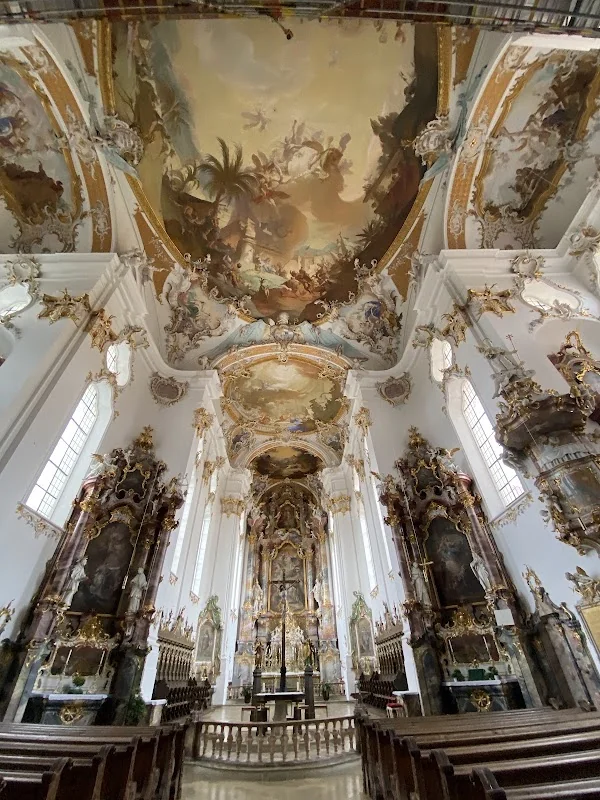
The parish and abbey church of the Assumption of Mary in Roggenburg is a place where spiritual tradition, Southern German Rococo, and vibrant culture come together. Those looking for events in Roggenburg will discover not an ordinary event hall, but a historic church within a spacious monastery complex. The building was constructed between 1752 and 1758 and is one of the most significant Rococo buildings in Swabia. Its light-filled architecture, colorful furnishings, the two tall towers, and the impressive main organ make every visit a special experience.
The address of the church and the Premonstratensian monastery is Klosterstraße 5 in 89297 Roggenburg. The site features large free parking spaces, good connections via the A7, A8, and A96 highways, as well as options for arriving by train and bus. Depending on the date, services, church tours, monastery tours, organ concerts, and special festive events are on the agenda. The following information provides a comprehensive overview of history, architecture, events, tickets, tours, access, and parking.
Assumption of Mary Roggenburg Events and Current Program
The event program surrounding the Assumption of Mary Roggenburg combines regular church appointments with cultural highlights. The focus is on the services of the parish and the Premonstratensian convent. After the renovation of the monastery church, Sunday and holiday services are once again held in the historic church. Visitors should always pay attention to the current notices from the parish community when planning, as service locations, times, or access may change during construction work and special occasions.
Moreover, the monastery church is an important venue for church music. The main organ, the Great Roggenburg Organ, shapes the cultural profile of the house. Since 1986, regular organ concerts have been held featuring organists from both domestic and international backgrounds. The size of the church space and its unique acoustics create ideal conditions for festive organ music, spiritual concerts, and musically designed services. Concerts or special musical events can also be offered in the context of anniversaries, cultural series, and church festivals.
An outstanding example of the church's significance in the event calendar is the anniversary year 2026. The monastery celebrates 900 years of history, spiritual tradition, and cultural heritage. For this anniversary, concerts, lectures, tours, spiritual offerings, and festive days have been announced. The festive weekend on October 3 and 4, 2026, includes a festive service, a monastery festival, a church tour with a small organ performance, and the performance of Johann Sebastian Bach's Mass in B minor. Such dates make Roggenburg interesting for guests seeking a combination of music, architecture, and monastery culture.
Those wishing to follow the program of the Assumption of Mary Roggenburg should pay attention to two official areas: the event calendar of the monastery and the current dates of the parish community. There, services, pilgrimages, tours, and cultural events are published. For individual concerts, advance sales may be provided. Normally, no ticket is required for services, while specific ticket information may apply for musical special events or anniversary concerts.
The church is also suitable as a destination for groups, cultural trips, and excursions. The monastery offers tours of the church and other historical rooms. In connection with the educational center, the monastery museum, the monastery garden, the ivy labyrinth, and the monastery inn, a versatile stay can be created that goes beyond a single event date. A visit can thus be planned as a half-day excursion or as a longer stay in the monastery landscape.
Monastery Church Roggenburg: Architecture, Rococo, and History
The parish and monastery church of the Assumption of Mary was built from 1752 to 1758. The construction was initiated by Simpert Kraemer, who died in 1753 at the age of 77. His son Martin Kraemer continued the project and completed the church. The construction history falls within the great flourishing period of the Roggenburg monastery, during which the Premonstratensians rebuilt or expanded their monastery complex and numerous churches in the influence area of the abbey.
The floor plan of the church is cross-shaped. The house of worship is approximately 70 meters long, 35 meters wide, and has an interior height of around 28 meters. The single-nave longhouse is crossed by a narrower, shallow transept. This creates a centralizing spatial impression despite the large dimensions. The church does not appear as an elongated passageway but opens up in its center to an impressive architectural center.
A peculiarity is that the church does not have an independent representative facade. According to the customs of the Premonstratensian order, it is integrated into the monastery buildings and is entered from the side. For visitors, this access is unusual because the church building is not staged with a classical front facing the square. However, this integration into the monastery gives the ensemble its special character. Church, convent, historical rooms, and outdoor facilities form a cohesive monastery landscape.
Two towers, each about 70 meters high, rise above the tower chapels. The ringing includes seven bells, some of which date back to earlier centuries and are partially preserved from the predecessor church of the current house of worship. The towers give the complex its widely visible silhouette and anchor the monastery church in the local landscape of Roggenburg.
Two rows of windows let in plenty of daylight into the interior. The bright light supports the cheerful, dynamic effect of the Rococo furnishings. Rococo here means not only decorative forms but also an interplay of architecture, color, stucco, painting, sculpture, and light. Upon entering, a spatial feeling is created that feels both festive and light. The height of the interior, the orientation towards the altar, and the rich furnishings make the church a place where art history can be experienced directly.
The history of the monastery also includes the tumultuous development after the flourishing period of the 18th century. The monastery was dissolved in 1802 during the secularization. It was not until the 20th century that the Premonstratensian tradition was revived in Roggenburg. In 1986, the monastery was officially reestablished. Today, the Premonstratensians combine pastoral care, education, culture, environmental work, and hospitality. The monastery church is therefore not only a monument but also a living religious and social center.
Church Tours and Monastery Tours in Roggenburg
A church tour is the best way to systematically learn about the special features of the Assumption of Mary Roggenburg. The tours are organized through the Catholic parish office and begin at the monastery shop. According to published information, church and monastery tours are possible from Monday to Saturday between 9:00 and 11:30 AM and between 12:30 and 5:30 PM. The start must be arranged in advance.
The classic church tour includes the monastery church and lasts about 45 minutes. It is aimed at visitors who primarily want to learn about the architecture, Rococo furnishings, history, and religious significance of the house of worship. The maximum number of participants is 50 people. For groups, this limitation is important because it keeps the tour manageable and the explanations can be well followed even in the large space.
The large tour lasts about 90 minutes and includes, in addition to the monastery church, the monastery refectory and the historical library. This broadens the view from sacred architecture to the everyday life and knowledge history of the monastery. The refectory refers to the communal lifestyle of the religious community, while the historical library provides an impression of education, administration, and intellectual work of earlier generations. The large tour is particularly suitable for cultural associations, school classes, travel groups, and visitors who want to see more than just the church space.
Specific formats are offered for children. The children's church tour and the children's large tour are shorter and designed to be age-appropriate. Families and groups should indicate how many children will participate and which age group should be addressed when registering. This way, the pace of the tour can be better adjusted. It is also advisable for adults to book in advance, as tours do not simply take place spontaneously at any time.
Registration takes place through the parish office of the Assumption of Mary, Klosterstraße 5, 89297 Roggenburg. The contact details include the phone number 07300 9600-950 and the email address pg.roggenburg@bistum-augsburg.de. The current construction condition of the church should be considered before booking. For 2026, it has been announced that church tours will be possible again starting July 27. At the same time, there may still be restrictions in the altar area due to scaffolding. Such notices are particularly important for persons with limited mobility or for groups expecting a completely unobstructed view of all areas.
A tour can be combined with other offerings on the monastery grounds. For example, after arrangement, a wine or beer tasting can be booked. The monastery inn, the museum, the monastery garden, and the ivy labyrinth also offer opportunities to extend the stay. This way, the church tour becomes a component of an entire monastery day.
Great Roggenburg Organ and Organ Concerts in the Monastery Church
The main organ of the parish and monastery church is colloquially known as the Great Roggenburg Organ. Its impressive prospect is one of the most striking elements of the interior and almost resembles a large altar. Experts have described the organ prospect as particularly elegant. Its effect arises from the interplay of size, architectural integration, ornamental design, and position in the church space.
The first instrument in the historical organ prospect was completed in 1761, three years after the church building was finished, by the Ulm organ builder Georg Friedrich Schmahl. The prospect itself was created by the altar carpenter family Bergmüller from Türkheim. Over the following centuries, the case housed various organ works. Thus, the Great Roggenburg Organ not only reflects the Baroque period of the church but also the further development of organ building.
Between 1996 and 2008, the instrument was technically and acoustically further developed. The goal was to expand the possibilities for romantic and symphonic organ literature without giving up the existing Baroque sound spectrum. Among other things, characterful flute voices and a powerful trumpet stop were added. In 2008, a new five-manual console was introduced, modeled after historical examples.
This makes the organ suitable for a wide concert repertoire. Baroque works can be just as effective as music from the 19th and 20th centuries. The regularly held organ concerts featuring organists from both domestic and international backgrounds have made Roggenburg known beyond regional borders. For music lovers, attending a concert is therefore a good reason to visit the church not only from an art historical perspective but also to experience its spatial effect acoustically.
An organ concert in the Assumption of Mary Roggenburg differs from a performance in a neutral concert hall. The music resonates in a historical sacred space, whose architecture, light, and furnishings are directly part of the experience. The sound spreads in a high, cross-shaped space. Visitors should therefore prepare for an atmosphere in which musical perception, religious place, and cultural history are interconnected.
Information about specific organ concerts can be found in the monastery's event calendar. For some dates, admission prices or a ticket pre-sale may apply. Other musical contributions are part of a service or a church celebration. Those specifically looking for tickets should therefore check the respective date and not assume a uniform admission model.
Tickets, Services, and Practical Information for Your Visit
The search query Assumption of Mary Roggenburg Tickets can encompass different concerns. For a regular visit to the church or participation in a service, a ticket is usually not required. However, for concerts, special events, and individual anniversary dates, a ticket may be necessary. The specific regulation is stated in the event calendar or in the announcement from the organizer.
An example from the anniversary program 2026 is the performance of Bach's Mass in B minor on October 4, 2026. For this event, the ticket pre-sale has been announced through the DIADEMUS Festival. Anyone wishing to attend such a special event should check the advance sales point, the start time, possible seating arrangements, and the admission regulations directly with the respective organizer. Different conditions apply for services than for concerts: Access is usually free, but special festive days can lead to high demand.
When planning a visit, the renovation notices should also be taken into account. According to official information, Sunday and holiday services are once again held in the monastery church. At the same time, scaffolding may still be present in the altar area and outside. Access may be signposted and temporarily lead around the construction site. For photography, wheelchairs, strollers, and groups, it is advisable to plan some extra time.
A classic seating plan is not published for the monastery church. This is understandable for a parish and monastery church, as the use is organized differently depending on the service, concert, tour, or festive event. A general visitor capacity is also not indicated on the official information pages. Those needing reserved seats or special viewing conditions for a specific event should contact the organizer directly.
The church is part of the monastery complex. In the immediate vicinity are the monastery shop, the monastery inn, the educational center, the monastery museum, as well as garden and outdoor facilities. The monastery inn is suitable for a meal before or after an appointment. For groups, framework programs with tours, gastronomic offerings, and further activities can also be organized. The combination of culture, spirituality, and landscape makes the visit attractive even for people who do not come exclusively for a service.
When attending a concert, it is advisable to check the entry time and the actual event location carefully. There are several buildings and event rooms on the monastery grounds. The church is entered from the side of the monastery building and is therefore not necessarily immediately recognizable by a large exterior facade. Signage on the grounds helps with orientation. For groups, the meeting point for a tour may be at the monastery shop.
Access and Parking at the Monastery Church Roggenburg
The monastery church is located at Klosterstraße 5 in 89297 Roggenburg. The monastery is easily accessible by car from the A7, A8, and A96 highways. The official access information points to large free parking spaces on the monastery grounds. This makes the journey practical for families, travel groups, and visitors with longer stays.
There are several numbered parking spaces on the grounds. For guests of the educational center, parking lot 3 is recommended. Visitors to the monastery inn can also use parking lot 1. A site plan of the monastery area shows the parking spaces, the monastery church, the monastery shop, the monastery inn, the museum, the educational center, and other facilities. Those arriving for the first time should pay attention to the signage on the grounds and not look for a separate church parking space directly in front of the church.
Parking lot 3 also offers two charging stations for electric vehicles. This allows the stay in Roggenburg to be combined with charging the vehicle. For e-bikes, there is a charging station at the monastery inn or at the monastery shop. Especially when combining a church visit, tour, walk, and gastronomy, this infrastructure can be helpful.
Traveling by public transport is also possible. The monastery mentions the train connection to Weißenhorn station with a subsequent bus to Roggenburg. Another possible arrival station mentioned by the monastery is Krumbach in Swabia. Since bus schedules and connections depend on time, travelers should check the connection for the respective event day. When attending a concert or service, it is advisable to plan some time reserve for the journey from the stop to the monastery area.
The surroundings of the monastery are suitable for walks and excursions. A hiking trail leads past the Roggenburg pond, the monastery church, and the Wannen chapel, with parking lot P3 serving as a reference point for hikers. Those wishing to experience the monastery landscape can combine the church visit with a circular walk, a stay in the monastery garden, or a visit to the museum.
For people with mobility restrictions, it is advisable to inquire in advance with the monastery or the organizer. The church is integrated into a historical complex, and due to restoration work, paths or access may be temporarily altered. The official contact points can provide information about current access, meeting points, and possible restrictions.
Monastery Roggenburg as a Destination and Cultural Experience
The Assumption of Mary Roggenburg is more than just a single church. The house of worship stands at the center of a historical ensemble that has been shaped by the Premonstratensians for centuries. According to the monastery, the Premonstratensians have lived and worked in and around Roggenburg for about 900 years. In the anniversary year 2026, this long history will be made visible with an extensive program of concerts, lectures, tours, spiritual offerings, and festive events.
The monastery complex includes, in addition to the church, a museum, a monastery garden, and an ivy labyrinth. These offerings expand the visit to include natural history, historical, and family-friendly aspects. The garden invites for a quiet stay, while the museum provides insights into the history of the order and the monastery complex. The ivy labyrinth is particularly interesting for families and children as it playfully enhances the stay.
The historical library and the monastery refectory are also important components of the cultural identity of the place. Both rooms can be visited as part of a large tour. They show that monasteries were not only places of prayer but also centers for education, administration, music, agriculture, and social interaction. In Roggenburg, this connection continues to this day: the monastery is both a parish location, an educational site, a cultural venue, and a destination.
For organizers and groups, Roggenburg offers special opportunities. The educational center has various rooms and can be combined with tours or gastronomic offerings. A shared day can begin with a church tour, continue with lunch at the monastery inn, and end with a concert, organ music, or a walk through the outdoor facilities. Such combinations are suitable for club outings, educational trips, church groups, school classes, and private celebrations.
The atmosphere of the place arises from the contrast between peaceful landscape and artistic interior design. From the outside, the monastery grounds appear spacious and restrained. Inside the church, however, a bright, dynamic Rococo world opens up. This change makes the visit particularly impressive. Those who take their time can first admire the architecture, then discover the organ prospect, and afterwards deepen their knowledge of the monastery's history during a tour.
Even for visitors without a religious background, the church offers a cultural access. The construction history, the dimensions of the space, the light design, the restoration, and the organ are independent reasons for a visit. At the same time, the Assumption of Mary remains an active place of worship. Respectful behavior, appropriate clothing, and consideration for services or prayer times are therefore naturally part of the stay.
Those looking for events, tickets, or tours should always plan their visit based on the current official program. Dates may change, and not every event takes place in the church itself. With the right preparation, however, Roggenburg becomes a versatile destination for architecture enthusiasts, music lovers, families, pilgrims, cultural travelers, and anyone wishing to experience a special place between history and the present.
Sources:
- Monastery Church Info – Premonstratensian Monastery Roggenburg
- The Great Roggenburg Organ – Main Organ of the Monastery Church
- Tours of the Church and Monastery – Monastery Roggenburg
- Access and Parking – Monastery Roggenburg
- Current Dates of the Parish Community Roggenburg
- 900 Years Monastery Roggenburg – Anniversary Program
- Festive Service and Monastery Festival 2026
- Excursion Destination Monastery Roggenburg
Mehr anzeigenWeniger anzeigen
Assumption of Mary Roggenburg | Events & Tickets
The parish and abbey church of the Assumption of Mary in Roggenburg is a place where spiritual tradition, Southern German Rococo, and vibrant culture come together. Those looking for events in Roggenburg will discover not an ordinary event hall, but a historic church within a spacious monastery complex. The building was constructed between 1752 and 1758 and is one of the most significant Rococo buildings in Swabia. Its light-filled architecture, colorful furnishings, the two tall towers, and the impressive main organ make every visit a special experience.
The address of the church and the Premonstratensian monastery is Klosterstraße 5 in 89297 Roggenburg. The site features large free parking spaces, good connections via the A7, A8, and A96 highways, as well as options for arriving by train and bus. Depending on the date, services, church tours, monastery tours, organ concerts, and special festive events are on the agenda. The following information provides a comprehensive overview of history, architecture, events, tickets, tours, access, and parking.
Assumption of Mary Roggenburg Events and Current Program
The event program surrounding the Assumption of Mary Roggenburg combines regular church appointments with cultural highlights. The focus is on the services of the parish and the Premonstratensian convent. After the renovation of the monastery church, Sunday and holiday services are once again held in the historic church. Visitors should always pay attention to the current notices from the parish community when planning, as service locations, times, or access may change during construction work and special occasions.
Moreover, the monastery church is an important venue for church music. The main organ, the Great Roggenburg Organ, shapes the cultural profile of the house. Since 1986, regular organ concerts have been held featuring organists from both domestic and international backgrounds. The size of the church space and its unique acoustics create ideal conditions for festive organ music, spiritual concerts, and musically designed services. Concerts or special musical events can also be offered in the context of anniversaries, cultural series, and church festivals.
An outstanding example of the church's significance in the event calendar is the anniversary year 2026. The monastery celebrates 900 years of history, spiritual tradition, and cultural heritage. For this anniversary, concerts, lectures, tours, spiritual offerings, and festive days have been announced. The festive weekend on October 3 and 4, 2026, includes a festive service, a monastery festival, a church tour with a small organ performance, and the performance of Johann Sebastian Bach's Mass in B minor. Such dates make Roggenburg interesting for guests seeking a combination of music, architecture, and monastery culture.
Those wishing to follow the program of the Assumption of Mary Roggenburg should pay attention to two official areas: the event calendar of the monastery and the current dates of the parish community. There, services, pilgrimages, tours, and cultural events are published. For individual concerts, advance sales may be provided. Normally, no ticket is required for services, while specific ticket information may apply for musical special events or anniversary concerts.
The church is also suitable as a destination for groups, cultural trips, and excursions. The monastery offers tours of the church and other historical rooms. In connection with the educational center, the monastery museum, the monastery garden, the ivy labyrinth, and the monastery inn, a versatile stay can be created that goes beyond a single event date. A visit can thus be planned as a half-day excursion or as a longer stay in the monastery landscape.
Monastery Church Roggenburg: Architecture, Rococo, and History
The parish and monastery church of the Assumption of Mary was built from 1752 to 1758. The construction was initiated by Simpert Kraemer, who died in 1753 at the age of 77. His son Martin Kraemer continued the project and completed the church. The construction history falls within the great flourishing period of the Roggenburg monastery, during which the Premonstratensians rebuilt or expanded their monastery complex and numerous churches in the influence area of the abbey.
The floor plan of the church is cross-shaped. The house of worship is approximately 70 meters long, 35 meters wide, and has an interior height of around 28 meters. The single-nave longhouse is crossed by a narrower, shallow transept. This creates a centralizing spatial impression despite the large dimensions. The church does not appear as an elongated passageway but opens up in its center to an impressive architectural center.
A peculiarity is that the church does not have an independent representative facade. According to the customs of the Premonstratensian order, it is integrated into the monastery buildings and is entered from the side. For visitors, this access is unusual because the church building is not staged with a classical front facing the square. However, this integration into the monastery gives the ensemble its special character. Church, convent, historical rooms, and outdoor facilities form a cohesive monastery landscape.
Two towers, each about 70 meters high, rise above the tower chapels. The ringing includes seven bells, some of which date back to earlier centuries and are partially preserved from the predecessor church of the current house of worship. The towers give the complex its widely visible silhouette and anchor the monastery church in the local landscape of Roggenburg.
Two rows of windows let in plenty of daylight into the interior. The bright light supports the cheerful, dynamic effect of the Rococo furnishings. Rococo here means not only decorative forms but also an interplay of architecture, color, stucco, painting, sculpture, and light. Upon entering, a spatial feeling is created that feels both festive and light. The height of the interior, the orientation towards the altar, and the rich furnishings make the church a place where art history can be experienced directly.
The history of the monastery also includes the tumultuous development after the flourishing period of the 18th century. The monastery was dissolved in 1802 during the secularization. It was not until the 20th century that the Premonstratensian tradition was revived in Roggenburg. In 1986, the monastery was officially reestablished. Today, the Premonstratensians combine pastoral care, education, culture, environmental work, and hospitality. The monastery church is therefore not only a monument but also a living religious and social center.
Church Tours and Monastery Tours in Roggenburg
A church tour is the best way to systematically learn about the special features of the Assumption of Mary Roggenburg. The tours are organized through the Catholic parish office and begin at the monastery shop. According to published information, church and monastery tours are possible from Monday to Saturday between 9:00 and 11:30 AM and between 12:30 and 5:30 PM. The start must be arranged in advance.
The classic church tour includes the monastery church and lasts about 45 minutes. It is aimed at visitors who primarily want to learn about the architecture, Rococo furnishings, history, and religious significance of the house of worship. The maximum number of participants is 50 people. For groups, this limitation is important because it keeps the tour manageable and the explanations can be well followed even in the large space.
The large tour lasts about 90 minutes and includes, in addition to the monastery church, the monastery refectory and the historical library. This broadens the view from sacred architecture to the everyday life and knowledge history of the monastery. The refectory refers to the communal lifestyle of the religious community, while the historical library provides an impression of education, administration, and intellectual work of earlier generations. The large tour is particularly suitable for cultural associations, school classes, travel groups, and visitors who want to see more than just the church space.
Specific formats are offered for children. The children's church tour and the children's large tour are shorter and designed to be age-appropriate. Families and groups should indicate how many children will participate and which age group should be addressed when registering. This way, the pace of the tour can be better adjusted. It is also advisable for adults to book in advance, as tours do not simply take place spontaneously at any time.
Registration takes place through the parish office of the Assumption of Mary, Klosterstraße 5, 89297 Roggenburg. The contact details include the phone number 07300 9600-950 and the email address pg.roggenburg@bistum-augsburg.de. The current construction condition of the church should be considered before booking. For 2026, it has been announced that church tours will be possible again starting July 27. At the same time, there may still be restrictions in the altar area due to scaffolding. Such notices are particularly important for persons with limited mobility or for groups expecting a completely unobstructed view of all areas.
A tour can be combined with other offerings on the monastery grounds. For example, after arrangement, a wine or beer tasting can be booked. The monastery inn, the museum, the monastery garden, and the ivy labyrinth also offer opportunities to extend the stay. This way, the church tour becomes a component of an entire monastery day.
Great Roggenburg Organ and Organ Concerts in the Monastery Church
The main organ of the parish and monastery church is colloquially known as the Great Roggenburg Organ. Its impressive prospect is one of the most striking elements of the interior and almost resembles a large altar. Experts have described the organ prospect as particularly elegant. Its effect arises from the interplay of size, architectural integration, ornamental design, and position in the church space.
The first instrument in the historical organ prospect was completed in 1761, three years after the church building was finished, by the Ulm organ builder Georg Friedrich Schmahl. The prospect itself was created by the altar carpenter family Bergmüller from Türkheim. Over the following centuries, the case housed various organ works. Thus, the Great Roggenburg Organ not only reflects the Baroque period of the church but also the further development of organ building.
Between 1996 and 2008, the instrument was technically and acoustically further developed. The goal was to expand the possibilities for romantic and symphonic organ literature without giving up the existing Baroque sound spectrum. Among other things, characterful flute voices and a powerful trumpet stop were added. In 2008, a new five-manual console was introduced, modeled after historical examples.
This makes the organ suitable for a wide concert repertoire. Baroque works can be just as effective as music from the 19th and 20th centuries. The regularly held organ concerts featuring organists from both domestic and international backgrounds have made Roggenburg known beyond regional borders. For music lovers, attending a concert is therefore a good reason to visit the church not only from an art historical perspective but also to experience its spatial effect acoustically.
An organ concert in the Assumption of Mary Roggenburg differs from a performance in a neutral concert hall. The music resonates in a historical sacred space, whose architecture, light, and furnishings are directly part of the experience. The sound spreads in a high, cross-shaped space. Visitors should therefore prepare for an atmosphere in which musical perception, religious place, and cultural history are interconnected.
Information about specific organ concerts can be found in the monastery's event calendar. For some dates, admission prices or a ticket pre-sale may apply. Other musical contributions are part of a service or a church celebration. Those specifically looking for tickets should therefore check the respective date and not assume a uniform admission model.
Tickets, Services, and Practical Information for Your Visit
The search query Assumption of Mary Roggenburg Tickets can encompass different concerns. For a regular visit to the church or participation in a service, a ticket is usually not required. However, for concerts, special events, and individual anniversary dates, a ticket may be necessary. The specific regulation is stated in the event calendar or in the announcement from the organizer.
An example from the anniversary program 2026 is the performance of Bach's Mass in B minor on October 4, 2026. For this event, the ticket pre-sale has been announced through the DIADEMUS Festival. Anyone wishing to attend such a special event should check the advance sales point, the start time, possible seating arrangements, and the admission regulations directly with the respective organizer. Different conditions apply for services than for concerts: Access is usually free, but special festive days can lead to high demand.
When planning a visit, the renovation notices should also be taken into account. According to official information, Sunday and holiday services are once again held in the monastery church. At the same time, scaffolding may still be present in the altar area and outside. Access may be signposted and temporarily lead around the construction site. For photography, wheelchairs, strollers, and groups, it is advisable to plan some extra time.
A classic seating plan is not published for the monastery church. This is understandable for a parish and monastery church, as the use is organized differently depending on the service, concert, tour, or festive event. A general visitor capacity is also not indicated on the official information pages. Those needing reserved seats or special viewing conditions for a specific event should contact the organizer directly.
The church is part of the monastery complex. In the immediate vicinity are the monastery shop, the monastery inn, the educational center, the monastery museum, as well as garden and outdoor facilities. The monastery inn is suitable for a meal before or after an appointment. For groups, framework programs with tours, gastronomic offerings, and further activities can also be organized. The combination of culture, spirituality, and landscape makes the visit attractive even for people who do not come exclusively for a service.
When attending a concert, it is advisable to check the entry time and the actual event location carefully. There are several buildings and event rooms on the monastery grounds. The church is entered from the side of the monastery building and is therefore not necessarily immediately recognizable by a large exterior facade. Signage on the grounds helps with orientation. For groups, the meeting point for a tour may be at the monastery shop.
Access and Parking at the Monastery Church Roggenburg
The monastery church is located at Klosterstraße 5 in 89297 Roggenburg. The monastery is easily accessible by car from the A7, A8, and A96 highways. The official access information points to large free parking spaces on the monastery grounds. This makes the journey practical for families, travel groups, and visitors with longer stays.
There are several numbered parking spaces on the grounds. For guests of the educational center, parking lot 3 is recommended. Visitors to the monastery inn can also use parking lot 1. A site plan of the monastery area shows the parking spaces, the monastery church, the monastery shop, the monastery inn, the museum, the educational center, and other facilities. Those arriving for the first time should pay attention to the signage on the grounds and not look for a separate church parking space directly in front of the church.
Parking lot 3 also offers two charging stations for electric vehicles. This allows the stay in Roggenburg to be combined with charging the vehicle. For e-bikes, there is a charging station at the monastery inn or at the monastery shop. Especially when combining a church visit, tour, walk, and gastronomy, this infrastructure can be helpful.
Traveling by public transport is also possible. The monastery mentions the train connection to Weißenhorn station with a subsequent bus to Roggenburg. Another possible arrival station mentioned by the monastery is Krumbach in Swabia. Since bus schedules and connections depend on time, travelers should check the connection for the respective event day. When attending a concert or service, it is advisable to plan some time reserve for the journey from the stop to the monastery area.
The surroundings of the monastery are suitable for walks and excursions. A hiking trail leads past the Roggenburg pond, the monastery church, and the Wannen chapel, with parking lot P3 serving as a reference point for hikers. Those wishing to experience the monastery landscape can combine the church visit with a circular walk, a stay in the monastery garden, or a visit to the museum.
For people with mobility restrictions, it is advisable to inquire in advance with the monastery or the organizer. The church is integrated into a historical complex, and due to restoration work, paths or access may be temporarily altered. The official contact points can provide information about current access, meeting points, and possible restrictions.
Monastery Roggenburg as a Destination and Cultural Experience
The Assumption of Mary Roggenburg is more than just a single church. The house of worship stands at the center of a historical ensemble that has been shaped by the Premonstratensians for centuries. According to the monastery, the Premonstratensians have lived and worked in and around Roggenburg for about 900 years. In the anniversary year 2026, this long history will be made visible with an extensive program of concerts, lectures, tours, spiritual offerings, and festive events.
The monastery complex includes, in addition to the church, a museum, a monastery garden, and an ivy labyrinth. These offerings expand the visit to include natural history, historical, and family-friendly aspects. The garden invites for a quiet stay, while the museum provides insights into the history of the order and the monastery complex. The ivy labyrinth is particularly interesting for families and children as it playfully enhances the stay.
The historical library and the monastery refectory are also important components of the cultural identity of the place. Both rooms can be visited as part of a large tour. They show that monasteries were not only places of prayer but also centers for education, administration, music, agriculture, and social interaction. In Roggenburg, this connection continues to this day: the monastery is both a parish location, an educational site, a cultural venue, and a destination.
For organizers and groups, Roggenburg offers special opportunities. The educational center has various rooms and can be combined with tours or gastronomic offerings. A shared day can begin with a church tour, continue with lunch at the monastery inn, and end with a concert, organ music, or a walk through the outdoor facilities. Such combinations are suitable for club outings, educational trips, church groups, school classes, and private celebrations.
The atmosphere of the place arises from the contrast between peaceful landscape and artistic interior design. From the outside, the monastery grounds appear spacious and restrained. Inside the church, however, a bright, dynamic Rococo world opens up. This change makes the visit particularly impressive. Those who take their time can first admire the architecture, then discover the organ prospect, and afterwards deepen their knowledge of the monastery's history during a tour.
Even for visitors without a religious background, the church offers a cultural access. The construction history, the dimensions of the space, the light design, the restoration, and the organ are independent reasons for a visit. At the same time, the Assumption of Mary remains an active place of worship. Respectful behavior, appropriate clothing, and consideration for services or prayer times are therefore naturally part of the stay.
Those looking for events, tickets, or tours should always plan their visit based on the current official program. Dates may change, and not every event takes place in the church itself. With the right preparation, however, Roggenburg becomes a versatile destination for architecture enthusiasts, music lovers, families, pilgrims, cultural travelers, and anyone wishing to experience a special place between history and the present.
Sources:
- Monastery Church Info – Premonstratensian Monastery Roggenburg
- The Great Roggenburg Organ – Main Organ of the Monastery Church
- Tours of the Church and Monastery – Monastery Roggenburg
- Access and Parking – Monastery Roggenburg
- Current Dates of the Parish Community Roggenburg
- 900 Years Monastery Roggenburg – Anniversary Program
- Festive Service and Monastery Festival 2026
- Excursion Destination Monastery Roggenburg
Upcoming Events
No events found
Frequently Asked Questions
Reviews
Paul Gudi
17. April 2026
Built in honor of God. Currently, the interior is largely scaffolded. Once the renovation is completed, it will surely be very magnificent again.
Journal - das Magazin
31. March 2025
Due to the restoration and renovation work, the church is completely scaffolded inside as well. It creates a special impression of this church construction site when you walk up to the altar. A moment of silence...
Bernhard Beier
17. March 2025
A uniform Baroque building created by Simpert Kraemer. Beautiful distant effect from the two onion domes. Inside, it stands out due to the high ceiling and brightness. The brocade fields in the vaults of the choir area look particularly beautiful. The high altar measures over 20m in height. Uniform furnishings from the construction period by local artists. Only the large frescoes were painted at the beginning of the 20th century by Waldemar Kolmsperger, after the earlier ones by F. M. Kuen were no longer present. The organ, also known as the great Roggenburger, is not only visually appealing. It houses a modern 5-manual instrument that can be heard in many concerts and recordings.
Jürgen Hubrich
27. January 2018
The parish and monastery church of the Assumption of Mary is one of the most beautiful Rococo church buildings in Swabia. The organ is noteworthy for its size and sound quality. It's no wonder that the organ concerts are a major attraction.
Flipper
31. August 2023
"The Lord be with you"