
Blaubeuren
89143 Blaubeuren, Deutschland
Klostersaal Blaubeuren | Visit & Parking
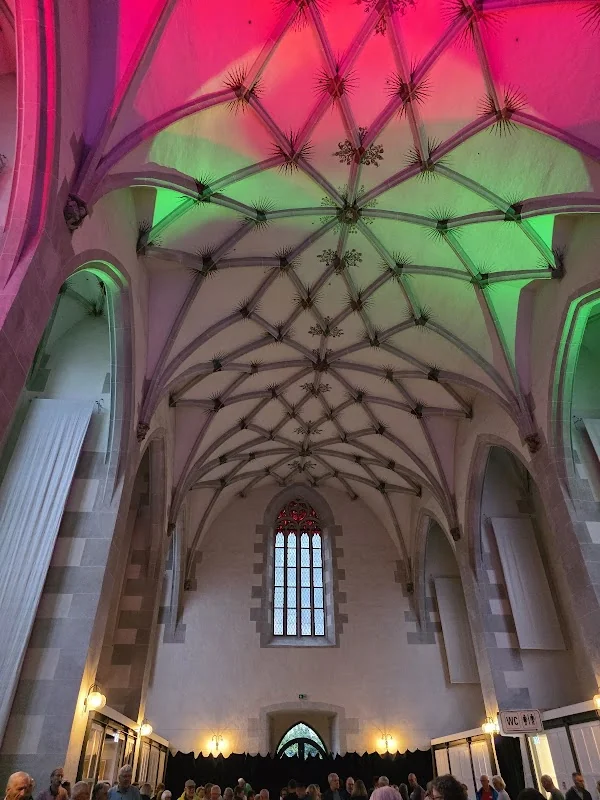
The Klostersaal Blaubeuren, often referred to as the monastery church hall of the Blaubeuren Monastery, is located in the heart of the historic ensemble at Klosterhof 2 in 89143 Blaubeuren. Today, it is part of the Protestant seminaries and thus not only a monument space but also a vibrant place for culture, education, and spiritual moments. The complex itself is one of the most well-known destinations in Blaubeuren: the cloister, choir, high altar, chapter house, and bathhouse together form an exceptionally well-preserved monastery ensemble with late Gothic features. According to the renovation brochure, the monastery church hall has a usable area of 404 m²; at the same time, the official history of the monastery shows how closely this place is connected to the development of the town and the region. Therefore, those searching for Klostersaal Blaubeuren, Klosterkirchensaal Blaubeuren, monastery Blaubeuren tours, or monastery Blaubeuren photos will find here not just any event location, but a space with genuine historical depth. ([seminar-blaubeuren.de](https://seminar-blaubeuren.de/index.php/kloster/geschichte-des-klosters/))
Particularly exciting is the mix of monument, school, and event venue. The Protestant Seminar Blaubeuren has been using the monastery complex as an educational site for many decades, while visitors can tour selected parts of the complex. At the same time, cultural evenings, concerts, devotions, and school celebrations take place in the Klosterkirchensaal. This very complexity makes the place interesting for users looking for a space with history, atmosphere, and modern use. The following sections categorize the most important themes from the search terms: events, tours, history, parking, photos, and practical information. ([seminar-blaubeuren.de](https://seminar-blaubeuren.de/index.php/kloster/besucherinformationen/))
Events in the Klosterkirchensaal Blaubeuren
When people search for Klostersaal Blaubeuren or Klosterkirchensaal Blaubeuren, it often concerns current events, cultural dates, and the question of what this space actually is today. The found official and regional sources present a clear picture: The Klosterkirchensaal is regularly used for concerts, devotions, lectures, school celebrations, and cultural formats. A good example is the summer stage at the Blautopf, which takes place in Blaubeuren in the Klosterkirchensaal. For 2026, the performance period there is scheduled from July 10 to August 2; among other things, the program includes music evenings with Robbi & Friends, Cordes y Butons, and Joo Kraus & Sirius Quartet. Thus, the hall is not only a historical interior but also an active stage for regional and supra-regional culture. ([sommerbuehne.com](https://www.sommerbuehne.com/?utm_source=openai))
The ecclesiastical and educational use is also well documented. The Protestant Seminar Blaubeuren invites to ecumenical Advent devotions in the Klosterkirchensaal; there are also concerts such as the performance of the Franz Schubert Choir Hamburg or internal seminar events. The seminar's contributions also report that the Blaubeuren city conversation takes place annually in the Klosterkirchensaal, addressing larger societal and historical questions. Additionally, other seminar contributions show that certificate awards, prize ceremonies, and other festive occasions have their place there. For practice, this means: Those looking for an event venue with dignity, history, and an intense atmosphere will find in the Klosterkirchensaal a space that is much more than an empty hall. ([seminar-blaubeuren.de](https://seminar-blaubeuren.de/index.php/category/allgemein/?utm_source=openai))
For the search intent around Google Autocomplete, it is also important that the place should not be viewed in isolation. The events benefit from the entire monastery environment: the monastery courtyard, cloister, choir, and the proximity to the Blautopf shape the experience. Precisely for this reason, the hall often appears in cultural announcements as a special venue. The seminar system and cultural use create a rare combination of historical surroundings and a lively program. So, those searching for programs, tickets, or Klostersaal Blaubeuren photos will find here a location that is distinct and clearly positioned in its appearance, but also in its current function. ([seminar-blaubeuren.de](https://seminar-blaubeuren.de/index.php/kloster/besucherinformationen/))
Visit, Opening Hours, and Tours
A central theme behind the search terms monastery Blaubeuren visit and monastery Blaubeuren opening hours is the question of how one can experience the complex at all. The visitor information from the seminar makes it clear: The monastery is open daily from March 1 to November 1 from 10 am to 5 pm. There are also admission prices for individuals, discounts, and a combination ticket with the monks' bathhouse. Children and teenagers under 18 have free admission, and holders of the AlbCard receive free access. This information is important as it makes the visit planable and makes the complex an attractive excursion destination for individual guests, families, and groups. ([seminar-blaubeuren.de](https://seminar-blaubeuren.de/index.php/kloster/besucherinformationen/))
Equally relevant are the tours. According to the official page, they are only possible by prior arrangement and are booked through the Tourist Information Blaubeuren. There are several formats: the classic monastery tour, a longer tour with the monks' bathhouse, costume tours with Brother Gregorius or Sister Fides, and a children's tour with Jakobus. The classic tour begins in the rib-vaulted cloister and leads through the fountain chapel and chapter house to the choir with the famous high altar. The tours are limited to a maximum of 25 participants, which speaks for a calm and intensive presentation. This is a strong argument, especially for groups, associations, school classes, or visitors with historical interest. ([seminar-blaubeuren.de](https://seminar-blaubeuren.de/index.php/kloster/besucherinformationen/))
Those looking for monastery Blaubeuren photos or a guided tour with clear orientation will find the best structure with the tours. The official description clearly shows the waypoints: cloister, cloister garden, fountain chapel, chapter house, Petrikapelle, Urbanskapelle, sacristy, and choir with high altar. The entrance is also designed so that one can sensibly combine the complex with the bathhouse. This is especially helpful for visitors who do not just want to make a quick stop but truly want to understand the place. From a content and SEO perspective, the search terms visit, tour, opening hours, and admission are closely linked and should be considered together. ([seminar-blaubeuren.de](https://seminar-blaubeuren.de/index.php/kloster/besucherinformationen/))
History of the Blaubeuren Monastery
The history of the Blaubeuren Monastery begins very early and is crucial for the monastery's present appearance. The official chronicle of the seminar mentions the construction of St. John's Church at the Blautopf in the 7th century, the founding of the monastery by the Counts of Ruck and Tübingen in 1085, the arrival of Abbot Azelinus with the first monks from Hirsau in 1090, and the consecration of the monastery church in 1124. These key dates show that the place has had religious and cultural significance since the High Middle Ages. Subsequently, the monastery was politically and architecturally altered several times, for example, through the transition of the bailiwick, integration into Württemberg rule, and the later transformation into a monastery school. ([seminar-blaubeuren.de](https://seminar-blaubeuren.de/index.php/kloster/geschichte-des-klosters/))
Particularly formative was the large reconstruction starting in 1466. The chronicle names Abbot Ulrich Kondig as the initiator of the monastery reconstruction, later continued by Heinrich III. Fabri and Gregor Rösch. In 1493, the high altar and choir stalls were created by the Ulm school, and the reconstruction phase ended in 1510. This resulted in the late Gothic form that visitors see today. This also explains why the search terms monastery Blaubeuren high altar, chapter house, and photos are so strongly associated with this place. The high altar is not only a standalone artwork but part of a comprehensively conceived spiritual space. The official history also documents that in 1556 the Protestant monastery school was founded, in 1563 Matthäus Alber served as the first Protestant abbot and saved the high altar. This connection of art, reformation, and education makes the monastery unique. ([seminar-blaubeuren.de](https://seminar-blaubeuren.de/index.php/kloster/geschichte-des-klosters/))
Later centuries are also important. The chronicle mentions the founding of the Protestant theological seminar in 1817, its dissolution by the NSDAP in 1941, and the re-establishment of the seminar in 1945. The renovation brochure adds that the monastery complex was extensively renovated from 2006 to 2018 and that the Klosterkirchensaal was part of the large-scale renewal. The usable area of the hall was stated as 404 m². This makes it understandable why the space functions so well today for events, concerts, and educational use: it has grown historically but has been technically and architecturally modernized. So, those searching for monastery Blaubeuren history will find a complex where medieval substance and current use merge. ([seminar-blaubeuren.de](https://seminar-blaubeuren.de/index.php/kloster/geschichte-des-klosters/))
Directions and Parking at Klosterhof 2
At a historic site like the Blaubeuren Monastery, directions and parking are important topics for visitors. The official address is Klosterhof 2, 89143 Blaubeuren. This is the best orientation for navigation systems, for tourists, and for anyone traveling to a tour, concert, or event. Since the complex is located in the middle of the historic environment, it makes sense to check the parking logic of the city of Blaubeuren in advance. The municipal parking page shows that parking is organized through different zones, including Zone 1 Old Town Underground Garage Krone, Zone 1 Old Town, and Zone 2 At the Old Town. This makes it clear: Parking in Blaubeuren is deliberately regulated and not just random parking at the edge of the monastery. ([seminar-blaubeuren.de](https://seminar-blaubeuren.de/index.php/kloster/geschichte-des-klosters/))
Particularly concrete are the details about the annual parking tickets. The ticket for Zone 1 Old Town Underground Garage Krone allows parking in the Krone underground garage as well as in Zones 1 and 2. The ticket for Zone 2 At the Old Town, on the other hand, is not valid in Zone 1 or in the Krone underground garage. Therefore, those who regularly use the area around Klosterhof and the Old Town receive clear rules and a definitive price structure on the city page. This is important for visitors of a single event as it helps to realistically plan the search for parking. The city also offers an online viewable rate table and sells tickets digitally through the municipal shop. ([shopparken.blaubeuren.de](https://shopparken.blaubeuren.de/?utm_source=openai))
From the practical search intent for Kloster Blaubeuren parking, it can be derived: It is best to arrive with some buffer time, check the city’s parking zones, and consider the historical location in the old town area for events with larger crowds. Especially for concerts or special cultural dates, demand may increase. The official city page is the most reliable orientation for this. Since the search terms directions, parking, and Klosterhof 2 Blaubeuren often appear together, this block in the content should always be linked with the real administrative information instead of vague formulations. This is exactly what makes the page helpful and credible. ([shopparken.blaubeuren.de](https://shopparken.blaubeuren.de/?utm_source=openai))
Photos, High Altar, and Special Rooms
Those searching for Kloster Blaubeuren photos are usually looking not just for a beautiful image, but for the most defining perspectives of the place. The official information provides a clear selection for this: The cloister is a central attraction, the cloister garden creates tranquility and depth, the fountain chapel and chapter house connect spatial art with history, and the choir with the famous high altar is the actual highlight of the complex. Additionally, there are Petrikapelle, Urbanskapelle, and sacristy with floral ceiling paintings. These rooms form the visual identity of the monastery and are therefore the most important motifs for photos, layouts, and content pages. ([seminar-blaubeuren.de](https://seminar-blaubeuren.de/index.php/kloster/besucherinformationen/))
The chapter house is particularly interesting because it is described in the official sights page as a two-aisled room with ribbed vaulting where the daily meetings of the convent took place. Today, there are Gothic tombstones of the Counts of Helfenstein. This connection of architectural clarity and historical function makes the room appealing not only for visitors but also for photographers and content creators. The John fountain in the monastery courtyard, created in the 16th century by a sculptor from Reutlingen, provides another strong motif. That the patron saint of the monastery is John the Baptist connects the image directly with the spiritual history of the place. ([seminar-blaubeuren.de](https://seminar-blaubeuren.de/index.php/kloster/sehenswertes/?utm_source=openai))
The question of weddings also appears in the keyword landscape, but the found official pages present the place primarily as a site for visits and culture with tours, concerts, devotions, and school events. A public standard information about weddings is not explicitly described there. Therefore, anyone considering the Klosterkirchensaal for a wedding, private celebration, or shooting should inquire directly with the Protestant seminar and clarify the use. From a content perspective, this is the right tone: no invention, but a clear reference to the documented use and the historical backdrop that makes the place interesting for special occasions. ([seminar-blaubeuren.de](https://seminar-blaubeuren.de/index.php/kloster/besucherinformationen/))
In summary, Blaubeuren is a location where strong imagery and solid facts can be well combined. The high altar, the cloister, the John fountain, and the Klosterkirchensaal are not only cultural motifs but also practical anchor points for SEO, social media, and travel planning. This is precisely why search queries like Kloster Blaubeuren photos, Kloster Blaubeuren high altar, Kloster Blaubeuren chapter house, and Klostersaal Blaubeuren work so well together: they lead to a place that is historically significant and at the same time visible, accessible, and utilized today. ([seminar-blaubeuren.de](https://seminar-blaubeuren.de/index.php/kloster/besucherinformationen/))
Sources:
- Seminar Blaubeuren - History of the Monastery
- Seminar Blaubeuren - Visitor Information
- Seminar Blaubeuren - Sights
- Property and Construction Baden-Württemberg - Reconstruction and Renovation of the Protestant Seminar Blaubeuren
- City of Blaubeuren - Parking in the Blautopf City
- City of Blaubeuren - Annual Parking Ticket Zone 1 Old Town Underground Garage Krone
- City of Blaubeuren - Annual Parking Ticket Zone 2 At the Old Town
- Summer Stage at the Blautopf - Performance Season 2026
Mehr anzeigenWeniger anzeigen
Klostersaal Blaubeuren | Visit & Parking
The Klostersaal Blaubeuren, often referred to as the monastery church hall of the Blaubeuren Monastery, is located in the heart of the historic ensemble at Klosterhof 2 in 89143 Blaubeuren. Today, it is part of the Protestant seminaries and thus not only a monument space but also a vibrant place for culture, education, and spiritual moments. The complex itself is one of the most well-known destinations in Blaubeuren: the cloister, choir, high altar, chapter house, and bathhouse together form an exceptionally well-preserved monastery ensemble with late Gothic features. According to the renovation brochure, the monastery church hall has a usable area of 404 m²; at the same time, the official history of the monastery shows how closely this place is connected to the development of the town and the region. Therefore, those searching for Klostersaal Blaubeuren, Klosterkirchensaal Blaubeuren, monastery Blaubeuren tours, or monastery Blaubeuren photos will find here not just any event location, but a space with genuine historical depth. ([seminar-blaubeuren.de](https://seminar-blaubeuren.de/index.php/kloster/geschichte-des-klosters/))
Particularly exciting is the mix of monument, school, and event venue. The Protestant Seminar Blaubeuren has been using the monastery complex as an educational site for many decades, while visitors can tour selected parts of the complex. At the same time, cultural evenings, concerts, devotions, and school celebrations take place in the Klosterkirchensaal. This very complexity makes the place interesting for users looking for a space with history, atmosphere, and modern use. The following sections categorize the most important themes from the search terms: events, tours, history, parking, photos, and practical information. ([seminar-blaubeuren.de](https://seminar-blaubeuren.de/index.php/kloster/besucherinformationen/))
Events in the Klosterkirchensaal Blaubeuren
When people search for Klostersaal Blaubeuren or Klosterkirchensaal Blaubeuren, it often concerns current events, cultural dates, and the question of what this space actually is today. The found official and regional sources present a clear picture: The Klosterkirchensaal is regularly used for concerts, devotions, lectures, school celebrations, and cultural formats. A good example is the summer stage at the Blautopf, which takes place in Blaubeuren in the Klosterkirchensaal. For 2026, the performance period there is scheduled from July 10 to August 2; among other things, the program includes music evenings with Robbi & Friends, Cordes y Butons, and Joo Kraus & Sirius Quartet. Thus, the hall is not only a historical interior but also an active stage for regional and supra-regional culture. ([sommerbuehne.com](https://www.sommerbuehne.com/?utm_source=openai))
The ecclesiastical and educational use is also well documented. The Protestant Seminar Blaubeuren invites to ecumenical Advent devotions in the Klosterkirchensaal; there are also concerts such as the performance of the Franz Schubert Choir Hamburg or internal seminar events. The seminar's contributions also report that the Blaubeuren city conversation takes place annually in the Klosterkirchensaal, addressing larger societal and historical questions. Additionally, other seminar contributions show that certificate awards, prize ceremonies, and other festive occasions have their place there. For practice, this means: Those looking for an event venue with dignity, history, and an intense atmosphere will find in the Klosterkirchensaal a space that is much more than an empty hall. ([seminar-blaubeuren.de](https://seminar-blaubeuren.de/index.php/category/allgemein/?utm_source=openai))
For the search intent around Google Autocomplete, it is also important that the place should not be viewed in isolation. The events benefit from the entire monastery environment: the monastery courtyard, cloister, choir, and the proximity to the Blautopf shape the experience. Precisely for this reason, the hall often appears in cultural announcements as a special venue. The seminar system and cultural use create a rare combination of historical surroundings and a lively program. So, those searching for programs, tickets, or Klostersaal Blaubeuren photos will find here a location that is distinct and clearly positioned in its appearance, but also in its current function. ([seminar-blaubeuren.de](https://seminar-blaubeuren.de/index.php/kloster/besucherinformationen/))
Visit, Opening Hours, and Tours
A central theme behind the search terms monastery Blaubeuren visit and monastery Blaubeuren opening hours is the question of how one can experience the complex at all. The visitor information from the seminar makes it clear: The monastery is open daily from March 1 to November 1 from 10 am to 5 pm. There are also admission prices for individuals, discounts, and a combination ticket with the monks' bathhouse. Children and teenagers under 18 have free admission, and holders of the AlbCard receive free access. This information is important as it makes the visit planable and makes the complex an attractive excursion destination for individual guests, families, and groups. ([seminar-blaubeuren.de](https://seminar-blaubeuren.de/index.php/kloster/besucherinformationen/))
Equally relevant are the tours. According to the official page, they are only possible by prior arrangement and are booked through the Tourist Information Blaubeuren. There are several formats: the classic monastery tour, a longer tour with the monks' bathhouse, costume tours with Brother Gregorius or Sister Fides, and a children's tour with Jakobus. The classic tour begins in the rib-vaulted cloister and leads through the fountain chapel and chapter house to the choir with the famous high altar. The tours are limited to a maximum of 25 participants, which speaks for a calm and intensive presentation. This is a strong argument, especially for groups, associations, school classes, or visitors with historical interest. ([seminar-blaubeuren.de](https://seminar-blaubeuren.de/index.php/kloster/besucherinformationen/))
Those looking for monastery Blaubeuren photos or a guided tour with clear orientation will find the best structure with the tours. The official description clearly shows the waypoints: cloister, cloister garden, fountain chapel, chapter house, Petrikapelle, Urbanskapelle, sacristy, and choir with high altar. The entrance is also designed so that one can sensibly combine the complex with the bathhouse. This is especially helpful for visitors who do not just want to make a quick stop but truly want to understand the place. From a content and SEO perspective, the search terms visit, tour, opening hours, and admission are closely linked and should be considered together. ([seminar-blaubeuren.de](https://seminar-blaubeuren.de/index.php/kloster/besucherinformationen/))
History of the Blaubeuren Monastery
The history of the Blaubeuren Monastery begins very early and is crucial for the monastery's present appearance. The official chronicle of the seminar mentions the construction of St. John's Church at the Blautopf in the 7th century, the founding of the monastery by the Counts of Ruck and Tübingen in 1085, the arrival of Abbot Azelinus with the first monks from Hirsau in 1090, and the consecration of the monastery church in 1124. These key dates show that the place has had religious and cultural significance since the High Middle Ages. Subsequently, the monastery was politically and architecturally altered several times, for example, through the transition of the bailiwick, integration into Württemberg rule, and the later transformation into a monastery school. ([seminar-blaubeuren.de](https://seminar-blaubeuren.de/index.php/kloster/geschichte-des-klosters/))
Particularly formative was the large reconstruction starting in 1466. The chronicle names Abbot Ulrich Kondig as the initiator of the monastery reconstruction, later continued by Heinrich III. Fabri and Gregor Rösch. In 1493, the high altar and choir stalls were created by the Ulm school, and the reconstruction phase ended in 1510. This resulted in the late Gothic form that visitors see today. This also explains why the search terms monastery Blaubeuren high altar, chapter house, and photos are so strongly associated with this place. The high altar is not only a standalone artwork but part of a comprehensively conceived spiritual space. The official history also documents that in 1556 the Protestant monastery school was founded, in 1563 Matthäus Alber served as the first Protestant abbot and saved the high altar. This connection of art, reformation, and education makes the monastery unique. ([seminar-blaubeuren.de](https://seminar-blaubeuren.de/index.php/kloster/geschichte-des-klosters/))
Later centuries are also important. The chronicle mentions the founding of the Protestant theological seminar in 1817, its dissolution by the NSDAP in 1941, and the re-establishment of the seminar in 1945. The renovation brochure adds that the monastery complex was extensively renovated from 2006 to 2018 and that the Klosterkirchensaal was part of the large-scale renewal. The usable area of the hall was stated as 404 m². This makes it understandable why the space functions so well today for events, concerts, and educational use: it has grown historically but has been technically and architecturally modernized. So, those searching for monastery Blaubeuren history will find a complex where medieval substance and current use merge. ([seminar-blaubeuren.de](https://seminar-blaubeuren.de/index.php/kloster/geschichte-des-klosters/))
Directions and Parking at Klosterhof 2
At a historic site like the Blaubeuren Monastery, directions and parking are important topics for visitors. The official address is Klosterhof 2, 89143 Blaubeuren. This is the best orientation for navigation systems, for tourists, and for anyone traveling to a tour, concert, or event. Since the complex is located in the middle of the historic environment, it makes sense to check the parking logic of the city of Blaubeuren in advance. The municipal parking page shows that parking is organized through different zones, including Zone 1 Old Town Underground Garage Krone, Zone 1 Old Town, and Zone 2 At the Old Town. This makes it clear: Parking in Blaubeuren is deliberately regulated and not just random parking at the edge of the monastery. ([seminar-blaubeuren.de](https://seminar-blaubeuren.de/index.php/kloster/geschichte-des-klosters/))
Particularly concrete are the details about the annual parking tickets. The ticket for Zone 1 Old Town Underground Garage Krone allows parking in the Krone underground garage as well as in Zones 1 and 2. The ticket for Zone 2 At the Old Town, on the other hand, is not valid in Zone 1 or in the Krone underground garage. Therefore, those who regularly use the area around Klosterhof and the Old Town receive clear rules and a definitive price structure on the city page. This is important for visitors of a single event as it helps to realistically plan the search for parking. The city also offers an online viewable rate table and sells tickets digitally through the municipal shop. ([shopparken.blaubeuren.de](https://shopparken.blaubeuren.de/?utm_source=openai))
From the practical search intent for Kloster Blaubeuren parking, it can be derived: It is best to arrive with some buffer time, check the city’s parking zones, and consider the historical location in the old town area for events with larger crowds. Especially for concerts or special cultural dates, demand may increase. The official city page is the most reliable orientation for this. Since the search terms directions, parking, and Klosterhof 2 Blaubeuren often appear together, this block in the content should always be linked with the real administrative information instead of vague formulations. This is exactly what makes the page helpful and credible. ([shopparken.blaubeuren.de](https://shopparken.blaubeuren.de/?utm_source=openai))
Photos, High Altar, and Special Rooms
Those searching for Kloster Blaubeuren photos are usually looking not just for a beautiful image, but for the most defining perspectives of the place. The official information provides a clear selection for this: The cloister is a central attraction, the cloister garden creates tranquility and depth, the fountain chapel and chapter house connect spatial art with history, and the choir with the famous high altar is the actual highlight of the complex. Additionally, there are Petrikapelle, Urbanskapelle, and sacristy with floral ceiling paintings. These rooms form the visual identity of the monastery and are therefore the most important motifs for photos, layouts, and content pages. ([seminar-blaubeuren.de](https://seminar-blaubeuren.de/index.php/kloster/besucherinformationen/))
The chapter house is particularly interesting because it is described in the official sights page as a two-aisled room with ribbed vaulting where the daily meetings of the convent took place. Today, there are Gothic tombstones of the Counts of Helfenstein. This connection of architectural clarity and historical function makes the room appealing not only for visitors but also for photographers and content creators. The John fountain in the monastery courtyard, created in the 16th century by a sculptor from Reutlingen, provides another strong motif. That the patron saint of the monastery is John the Baptist connects the image directly with the spiritual history of the place. ([seminar-blaubeuren.de](https://seminar-blaubeuren.de/index.php/kloster/sehenswertes/?utm_source=openai))
The question of weddings also appears in the keyword landscape, but the found official pages present the place primarily as a site for visits and culture with tours, concerts, devotions, and school events. A public standard information about weddings is not explicitly described there. Therefore, anyone considering the Klosterkirchensaal for a wedding, private celebration, or shooting should inquire directly with the Protestant seminar and clarify the use. From a content perspective, this is the right tone: no invention, but a clear reference to the documented use and the historical backdrop that makes the place interesting for special occasions. ([seminar-blaubeuren.de](https://seminar-blaubeuren.de/index.php/kloster/besucherinformationen/))
In summary, Blaubeuren is a location where strong imagery and solid facts can be well combined. The high altar, the cloister, the John fountain, and the Klosterkirchensaal are not only cultural motifs but also practical anchor points for SEO, social media, and travel planning. This is precisely why search queries like Kloster Blaubeuren photos, Kloster Blaubeuren high altar, Kloster Blaubeuren chapter house, and Klostersaal Blaubeuren work so well together: they lead to a place that is historically significant and at the same time visible, accessible, and utilized today. ([seminar-blaubeuren.de](https://seminar-blaubeuren.de/index.php/kloster/besucherinformationen/))
Sources:
- Seminar Blaubeuren - History of the Monastery
- Seminar Blaubeuren - Visitor Information
- Seminar Blaubeuren - Sights
- Property and Construction Baden-Württemberg - Reconstruction and Renovation of the Protestant Seminar Blaubeuren
- City of Blaubeuren - Parking in the Blautopf City
- City of Blaubeuren - Annual Parking Ticket Zone 1 Old Town Underground Garage Krone
- City of Blaubeuren - Annual Parking Ticket Zone 2 At the Old Town
- Summer Stage at the Blautopf - Performance Season 2026
Klostersaal Blaubeuren | Visit & Parking
The Klostersaal Blaubeuren, often referred to as the monastery church hall of the Blaubeuren Monastery, is located in the heart of the historic ensemble at Klosterhof 2 in 89143 Blaubeuren. Today, it is part of the Protestant seminaries and thus not only a monument space but also a vibrant place for culture, education, and spiritual moments. The complex itself is one of the most well-known destinations in Blaubeuren: the cloister, choir, high altar, chapter house, and bathhouse together form an exceptionally well-preserved monastery ensemble with late Gothic features. According to the renovation brochure, the monastery church hall has a usable area of 404 m²; at the same time, the official history of the monastery shows how closely this place is connected to the development of the town and the region. Therefore, those searching for Klostersaal Blaubeuren, Klosterkirchensaal Blaubeuren, monastery Blaubeuren tours, or monastery Blaubeuren photos will find here not just any event location, but a space with genuine historical depth. ([seminar-blaubeuren.de](https://seminar-blaubeuren.de/index.php/kloster/geschichte-des-klosters/))
Particularly exciting is the mix of monument, school, and event venue. The Protestant Seminar Blaubeuren has been using the monastery complex as an educational site for many decades, while visitors can tour selected parts of the complex. At the same time, cultural evenings, concerts, devotions, and school celebrations take place in the Klosterkirchensaal. This very complexity makes the place interesting for users looking for a space with history, atmosphere, and modern use. The following sections categorize the most important themes from the search terms: events, tours, history, parking, photos, and practical information. ([seminar-blaubeuren.de](https://seminar-blaubeuren.de/index.php/kloster/besucherinformationen/))
Events in the Klosterkirchensaal Blaubeuren
When people search for Klostersaal Blaubeuren or Klosterkirchensaal Blaubeuren, it often concerns current events, cultural dates, and the question of what this space actually is today. The found official and regional sources present a clear picture: The Klosterkirchensaal is regularly used for concerts, devotions, lectures, school celebrations, and cultural formats. A good example is the summer stage at the Blautopf, which takes place in Blaubeuren in the Klosterkirchensaal. For 2026, the performance period there is scheduled from July 10 to August 2; among other things, the program includes music evenings with Robbi & Friends, Cordes y Butons, and Joo Kraus & Sirius Quartet. Thus, the hall is not only a historical interior but also an active stage for regional and supra-regional culture. ([sommerbuehne.com](https://www.sommerbuehne.com/?utm_source=openai))
The ecclesiastical and educational use is also well documented. The Protestant Seminar Blaubeuren invites to ecumenical Advent devotions in the Klosterkirchensaal; there are also concerts such as the performance of the Franz Schubert Choir Hamburg or internal seminar events. The seminar's contributions also report that the Blaubeuren city conversation takes place annually in the Klosterkirchensaal, addressing larger societal and historical questions. Additionally, other seminar contributions show that certificate awards, prize ceremonies, and other festive occasions have their place there. For practice, this means: Those looking for an event venue with dignity, history, and an intense atmosphere will find in the Klosterkirchensaal a space that is much more than an empty hall. ([seminar-blaubeuren.de](https://seminar-blaubeuren.de/index.php/category/allgemein/?utm_source=openai))
For the search intent around Google Autocomplete, it is also important that the place should not be viewed in isolation. The events benefit from the entire monastery environment: the monastery courtyard, cloister, choir, and the proximity to the Blautopf shape the experience. Precisely for this reason, the hall often appears in cultural announcements as a special venue. The seminar system and cultural use create a rare combination of historical surroundings and a lively program. So, those searching for programs, tickets, or Klostersaal Blaubeuren photos will find here a location that is distinct and clearly positioned in its appearance, but also in its current function. ([seminar-blaubeuren.de](https://seminar-blaubeuren.de/index.php/kloster/besucherinformationen/))
Visit, Opening Hours, and Tours
A central theme behind the search terms monastery Blaubeuren visit and monastery Blaubeuren opening hours is the question of how one can experience the complex at all. The visitor information from the seminar makes it clear: The monastery is open daily from March 1 to November 1 from 10 am to 5 pm. There are also admission prices for individuals, discounts, and a combination ticket with the monks' bathhouse. Children and teenagers under 18 have free admission, and holders of the AlbCard receive free access. This information is important as it makes the visit planable and makes the complex an attractive excursion destination for individual guests, families, and groups. ([seminar-blaubeuren.de](https://seminar-blaubeuren.de/index.php/kloster/besucherinformationen/))
Equally relevant are the tours. According to the official page, they are only possible by prior arrangement and are booked through the Tourist Information Blaubeuren. There are several formats: the classic monastery tour, a longer tour with the monks' bathhouse, costume tours with Brother Gregorius or Sister Fides, and a children's tour with Jakobus. The classic tour begins in the rib-vaulted cloister and leads through the fountain chapel and chapter house to the choir with the famous high altar. The tours are limited to a maximum of 25 participants, which speaks for a calm and intensive presentation. This is a strong argument, especially for groups, associations, school classes, or visitors with historical interest. ([seminar-blaubeuren.de](https://seminar-blaubeuren.de/index.php/kloster/besucherinformationen/))
Those looking for monastery Blaubeuren photos or a guided tour with clear orientation will find the best structure with the tours. The official description clearly shows the waypoints: cloister, cloister garden, fountain chapel, chapter house, Petrikapelle, Urbanskapelle, sacristy, and choir with high altar. The entrance is also designed so that one can sensibly combine the complex with the bathhouse. This is especially helpful for visitors who do not just want to make a quick stop but truly want to understand the place. From a content and SEO perspective, the search terms visit, tour, opening hours, and admission are closely linked and should be considered together. ([seminar-blaubeuren.de](https://seminar-blaubeuren.de/index.php/kloster/besucherinformationen/))
History of the Blaubeuren Monastery
The history of the Blaubeuren Monastery begins very early and is crucial for the monastery's present appearance. The official chronicle of the seminar mentions the construction of St. John's Church at the Blautopf in the 7th century, the founding of the monastery by the Counts of Ruck and Tübingen in 1085, the arrival of Abbot Azelinus with the first monks from Hirsau in 1090, and the consecration of the monastery church in 1124. These key dates show that the place has had religious and cultural significance since the High Middle Ages. Subsequently, the monastery was politically and architecturally altered several times, for example, through the transition of the bailiwick, integration into Württemberg rule, and the later transformation into a monastery school. ([seminar-blaubeuren.de](https://seminar-blaubeuren.de/index.php/kloster/geschichte-des-klosters/))
Particularly formative was the large reconstruction starting in 1466. The chronicle names Abbot Ulrich Kondig as the initiator of the monastery reconstruction, later continued by Heinrich III. Fabri and Gregor Rösch. In 1493, the high altar and choir stalls were created by the Ulm school, and the reconstruction phase ended in 1510. This resulted in the late Gothic form that visitors see today. This also explains why the search terms monastery Blaubeuren high altar, chapter house, and photos are so strongly associated with this place. The high altar is not only a standalone artwork but part of a comprehensively conceived spiritual space. The official history also documents that in 1556 the Protestant monastery school was founded, in 1563 Matthäus Alber served as the first Protestant abbot and saved the high altar. This connection of art, reformation, and education makes the monastery unique. ([seminar-blaubeuren.de](https://seminar-blaubeuren.de/index.php/kloster/geschichte-des-klosters/))
Later centuries are also important. The chronicle mentions the founding of the Protestant theological seminar in 1817, its dissolution by the NSDAP in 1941, and the re-establishment of the seminar in 1945. The renovation brochure adds that the monastery complex was extensively renovated from 2006 to 2018 and that the Klosterkirchensaal was part of the large-scale renewal. The usable area of the hall was stated as 404 m². This makes it understandable why the space functions so well today for events, concerts, and educational use: it has grown historically but has been technically and architecturally modernized. So, those searching for monastery Blaubeuren history will find a complex where medieval substance and current use merge. ([seminar-blaubeuren.de](https://seminar-blaubeuren.de/index.php/kloster/geschichte-des-klosters/))
Directions and Parking at Klosterhof 2
At a historic site like the Blaubeuren Monastery, directions and parking are important topics for visitors. The official address is Klosterhof 2, 89143 Blaubeuren. This is the best orientation for navigation systems, for tourists, and for anyone traveling to a tour, concert, or event. Since the complex is located in the middle of the historic environment, it makes sense to check the parking logic of the city of Blaubeuren in advance. The municipal parking page shows that parking is organized through different zones, including Zone 1 Old Town Underground Garage Krone, Zone 1 Old Town, and Zone 2 At the Old Town. This makes it clear: Parking in Blaubeuren is deliberately regulated and not just random parking at the edge of the monastery. ([seminar-blaubeuren.de](https://seminar-blaubeuren.de/index.php/kloster/geschichte-des-klosters/))
Particularly concrete are the details about the annual parking tickets. The ticket for Zone 1 Old Town Underground Garage Krone allows parking in the Krone underground garage as well as in Zones 1 and 2. The ticket for Zone 2 At the Old Town, on the other hand, is not valid in Zone 1 or in the Krone underground garage. Therefore, those who regularly use the area around Klosterhof and the Old Town receive clear rules and a definitive price structure on the city page. This is important for visitors of a single event as it helps to realistically plan the search for parking. The city also offers an online viewable rate table and sells tickets digitally through the municipal shop. ([shopparken.blaubeuren.de](https://shopparken.blaubeuren.de/?utm_source=openai))
From the practical search intent for Kloster Blaubeuren parking, it can be derived: It is best to arrive with some buffer time, check the city’s parking zones, and consider the historical location in the old town area for events with larger crowds. Especially for concerts or special cultural dates, demand may increase. The official city page is the most reliable orientation for this. Since the search terms directions, parking, and Klosterhof 2 Blaubeuren often appear together, this block in the content should always be linked with the real administrative information instead of vague formulations. This is exactly what makes the page helpful and credible. ([shopparken.blaubeuren.de](https://shopparken.blaubeuren.de/?utm_source=openai))
Photos, High Altar, and Special Rooms
Those searching for Kloster Blaubeuren photos are usually looking not just for a beautiful image, but for the most defining perspectives of the place. The official information provides a clear selection for this: The cloister is a central attraction, the cloister garden creates tranquility and depth, the fountain chapel and chapter house connect spatial art with history, and the choir with the famous high altar is the actual highlight of the complex. Additionally, there are Petrikapelle, Urbanskapelle, and sacristy with floral ceiling paintings. These rooms form the visual identity of the monastery and are therefore the most important motifs for photos, layouts, and content pages. ([seminar-blaubeuren.de](https://seminar-blaubeuren.de/index.php/kloster/besucherinformationen/))
The chapter house is particularly interesting because it is described in the official sights page as a two-aisled room with ribbed vaulting where the daily meetings of the convent took place. Today, there are Gothic tombstones of the Counts of Helfenstein. This connection of architectural clarity and historical function makes the room appealing not only for visitors but also for photographers and content creators. The John fountain in the monastery courtyard, created in the 16th century by a sculptor from Reutlingen, provides another strong motif. That the patron saint of the monastery is John the Baptist connects the image directly with the spiritual history of the place. ([seminar-blaubeuren.de](https://seminar-blaubeuren.de/index.php/kloster/sehenswertes/?utm_source=openai))
The question of weddings also appears in the keyword landscape, but the found official pages present the place primarily as a site for visits and culture with tours, concerts, devotions, and school events. A public standard information about weddings is not explicitly described there. Therefore, anyone considering the Klosterkirchensaal for a wedding, private celebration, or shooting should inquire directly with the Protestant seminar and clarify the use. From a content perspective, this is the right tone: no invention, but a clear reference to the documented use and the historical backdrop that makes the place interesting for special occasions. ([seminar-blaubeuren.de](https://seminar-blaubeuren.de/index.php/kloster/besucherinformationen/))
In summary, Blaubeuren is a location where strong imagery and solid facts can be well combined. The high altar, the cloister, the John fountain, and the Klosterkirchensaal are not only cultural motifs but also practical anchor points for SEO, social media, and travel planning. This is precisely why search queries like Kloster Blaubeuren photos, Kloster Blaubeuren high altar, Kloster Blaubeuren chapter house, and Klostersaal Blaubeuren work so well together: they lead to a place that is historically significant and at the same time visible, accessible, and utilized today. ([seminar-blaubeuren.de](https://seminar-blaubeuren.de/index.php/kloster/besucherinformationen/))
Sources:
- Seminar Blaubeuren - History of the Monastery
- Seminar Blaubeuren - Visitor Information
- Seminar Blaubeuren - Sights
- Property and Construction Baden-Württemberg - Reconstruction and Renovation of the Protestant Seminar Blaubeuren
- City of Blaubeuren - Parking in the Blautopf City
- City of Blaubeuren - Annual Parking Ticket Zone 1 Old Town Underground Garage Krone
- City of Blaubeuren - Annual Parking Ticket Zone 2 At the Old Town
- Summer Stage at the Blautopf - Performance Season 2026

Frequently Asked Questions
Reviews
No reviews found