
Roggenburg
Klosterstraße 7, 89297 Roggenburg, Deutschland
Klostermuseum Roggenburg | Exhibition & Opening Hours
The Klostermuseum Roggenburg is a place where history, art, and monastic atmosphere come together in a compact space. The entrance is located right next to the church portal, and the exhibition is housed in the former rooms of the cellarer. This is what makes the visit so special: Instead of an abstract museum space, guests are welcomed into a historically shaped place that vividly narrates the development of the monastery from its founding around 1126 to its violent dissolution in 1802. At the same time, the house offers a direct view of the rich monastic culture of Swabia and the artworks that have shaped the former imperial abbey of Roggenburg for centuries. Admission is free, making the museum attractive not only for targeted cultural visits but also for spontaneous outings. Those who plan their visit well will find clear opening hours, good parking options on the monastery grounds, and even the option to book guided tours outside regular hours by arrangement. ([kloster-roggenburg.de](https://www.kloster-roggenburg.de/web/de/kloster/04_klosteranlage/klostermuseum.php))
Exhibition and Baroque Art Treasures in the Klostermuseum Roggenburg
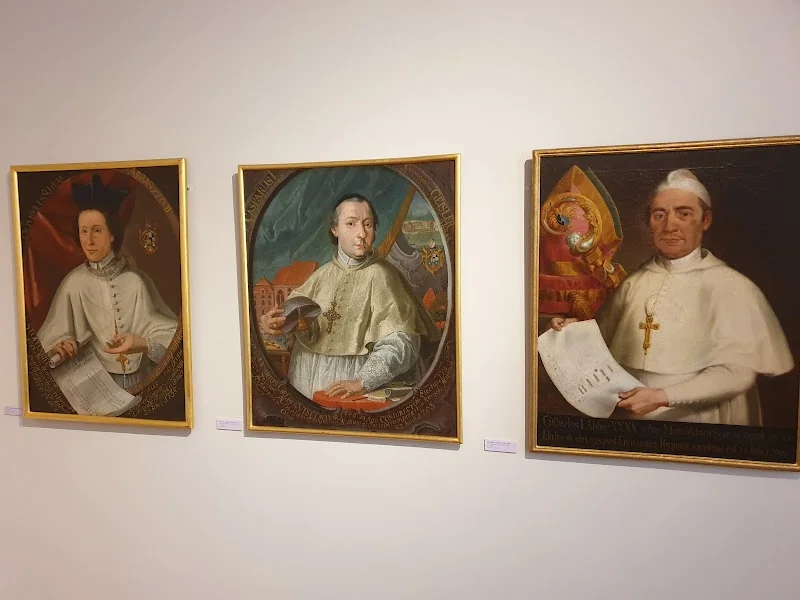
At the center of the Klostermuseum are art treasures from the 17th and 18th centuries. The official museum text explicitly mentions Augsburg goldsmith works, artistically embroidered paraments, and paintings by the Weißenhorn fresco artists and painters Franz Martin Kuen and Konrad Huber. These exhibits were once part of the furnishings of the imperial abbey and were lent to the museum. For visitors, this means: The exhibition not only showcases beautiful objects but also provides a genuine glimpse into the liturgical, representative, and artistic world of a Swabian monastery in its heyday. The combination of sacred function and artisanal quality is a central appeal of the house. Those interested in Baroque art, ecclesiastical art, or regional cultural history will find a compact yet content-rich access here. The museum also not only displays individual pieces but places them in the larger context of the former imperial abbey. This helps to understand why the Klostermuseum is regarded as a place of remembrance of the history of Roggenburg and monastic culture in Swabia. ([kloster-roggenburg.de](https://www.kloster-roggenburg.de/web/de/kloster/04_klosteranlage/klostermuseum.php))
Particularly interesting is also the manner of presentation. The museum is not located in a modern new building but in historical rooms that are part of the narrative themselves. This creates an authentic setting where content and surroundings mutually enhance each other. The exhibition is closely connected to the history of the last imperial prelate Thaddäus Aigler, whose estate shaped a large part of the exhibited objects. He entrusted the items to the poor fund of the parish office of Roggenburg in 1822 with the request to keep them together in one place because they belong to the history of Roggenburg. This historical origin gives the exhibits a special depth, as they are not only artworks but also testimonies of a conscious cultural preservation. Those searching for klostermuseum roggenburg exhibition are essentially looking for this blend of history, art, and originality. The museum delivers this in a concentrated form. ([kloster-roggenburg.de](https://www.kloster-roggenburg.de/web/de/kloster/04_klosteranlage/klostermuseum.php))
Compared to larger museums, Roggenburg does not feel overloaded but focused. This clarity is an advantage: one can truly absorb the most important pieces instead of being overwhelmed by an abundance of materials. The Baroque goldsmith works, embroidered textiles, and frescoes refer to craftsmanship, piety, and representation at the same time. The visit is therefore suitable for both specialists and families or day visitors looking for a quiet and culturally valuable stop. In conjunction with the monastery ensemble, a harmonious overall picture emerges that goes far beyond the mere function of a museum. Those who observe the exhibition attentively will quickly understand that Roggenburg is not just a place for the past but a vibrant cultural space where the history of the order and local memory remain present to this day. ([kloster-roggenburg.de](https://www.kloster-roggenburg.de/web/de/kloster/04_klosteranlage/klostermuseum.php))
History of the Kloster Roggenburg from Foundation to Secularization
The history of the Kloster Roggenburg dates back to 1126 according to official records. At that time, Bertold von Bibereck, together with his wife and his brothers Konrad, the Bishop of Chur, and Siegfried, a canon in Augsburg, is said to have founded the monastery. The first Premonstratensians came from the nearby Ursberg. Over time, the original site developed into a significant monastic place, which was elevated to an independent abbey in 1444 and even received imperial immediacy. This long development is important as it explains why the museum is so deeply rooted in regional history today. The monastery survived wars, upheavals, and religious conflicts, shaping the spiritual, cultural, and economic landscape of the region for centuries. The Baroque structure of the 18th century is still visible today and is vividly continued in the museum and monastery areas. ([kloster-roggenburg.de](https://www.kloster-roggenburg.de/web/en/))
The flourishing phase of the 18th century officially began with the great abbots Dominikus Schwaninger, Kaspar Geisler, and Georg Lienharth, who significantly shaped the Baroque appearance of the monastery. From 1732, the west wing was rebuilt, in 1752 the foundations of the new church and east wing followed, and in 1758 the first construction phase was ceremoniously opened. The south wing was completed in 1766. This building history is also relevant because the museum is situated in an environment that draws from that very epoch. The monastery was thus not only a religious place but also a center of ambitious building and furnishing culture. In the present rooms, this historical claim can still be felt, especially when one considers the museum-preserved artworks in conjunction with the Baroque architecture of the entire ensemble. Those interested in kloster roggenburg museum will find here not just a collection but a historically grown overall picture. ([kloster-roggenburg.de](https://www.kloster-roggenburg.de/web/en/))
The turning point came with the secularization. After the Peace of Lunéville, Bavarian troops occupied the imperial abbey in 1802, the last abbot Thaddäus Aigler was deposed, and the monastery with its 36 canons was dissolved. It is precisely in this context that the estate of the last imperial prelate gains significance, as part of the objects displayed today were preserved in this historical break and later made accessible to the museum. After about 180 years, the Premonstratensians returned to Roggenburg in 1982; in 1986, the monastery was officially re-established. This return is remarkable because it reestablished the continuity of the place under modern conditions. For visitors to the museum, this means: The exhibition is not a static memorial piece but a window into a history that continues to resonate and shapes the entire monastery complex. ([kloster-roggenburg.de](https://www.kloster-roggenburg.de/web/en/))
Opening Hours, Admission, and Tours by Arrangement
For good visit planning, the opening hours of the Klostermuseum Roggenburg are particularly helpful. According to the official site, the museum is open on Saturdays, Sundays, and public holidays from 2 PM to 5 PM. Additionally, from April to October, the same hours apply on Thursdays and Fridays. The museum is closed on Christmas Eve and New Year's Eve. This clear structure makes it easy to plan a visit as part of an outing to the Kloster Roggenburg, whether as a short cultural stop or as part of a longer day program in the region. Because the museum is thematically and spatially compact, it fits well into various travel plans: from spontaneous weekend trips to deliberately prepared cultural routes. Those searching for klostermuseum roggenburg opening hours will find a well-planned framework. Particularly attractive is also that admission is free. This lowers the barrier for the first visit and makes the museum interesting for families, school groups, or travelers who want to get to know the place initially without commitment. ([kloster-roggenburg.de](https://www.kloster-roggenburg.de/web/de/kloster/04_klosteranlage/klostermuseum.php))
Another practical advantage is the possibility to arrange entry and tours outside regular opening hours. This is important for groups, associations, or individually organized outings, as special appointments can also be realized this way. The cultural team of the Neu-Ulm district office is responsible for inquiries, which is explicitly mentioned in the museum text. This organizational integration shows that the museum is not operated in isolation but is part of a regional museum structure. This is advantageous for visitors because they can rely on a public and reliable contact structure. Therefore, those who do not want to walk through the rooms independently but wish for a deeper mediation can utilize the guided tour option. Especially in a house that is so closely linked to the history of the monastery and the Baroque furnishings, a guided explanation is particularly worthwhile. ([kloster-roggenburg.de](https://www.kloster-roggenburg.de/web/de/kloster/04_klosteranlage/klostermuseum.php))
The museum is also easily found for digital research. The official pages of the monastery refer to further information about the museum as well as accompanying programs. This is relevant because many visitors search in advance for current information, special appointments, or supplementary content. Even if the main visit remains very compact, the cultural added value can be significantly increased through good preparation. It is also practical that admission is free and the visiting hours are concentrated in the afternoon. This leaves enough room to combine the tour with a walk around the grounds, a look at the monastery church, or a break in the vicinity of the monastery. For search queries like klostermuseum roggenburg admission or klostermuseum roggenburg tour, the official information is therefore the most important facts. ([kloster-roggenburg.de](https://www.kloster-roggenburg.de/web/de/kloster/04_klosteranlage/klostermuseum.php))
Directions, Parking, and Public Transport Connections
The Klostermuseum Roggenburg is easily accessible, which is particularly important for an excursion destination in rural areas. The official directions page lists the A7, A8, and A96 motorways as quick accesses to Kloster Roggenburg. This is especially relevant for guests from Ulm, Neu-Ulm, Augsburg, Memmingen, the surrounding Swabian region, and day-trippers from a larger catchment area. On-site, there are large free parking spaces available on the monastery grounds. This combination of good road accessibility and free parking makes the visit pleasantly uncomplicated. Those searching for klostermuseum roggenburg directions or klostermuseum roggenburg parking receive a very practical answer: The grounds are set up for visitors arriving by car. For the educational center, the official site recommends parking lot 3, and for guests of the monastery guesthouse, parking lot 1; parking lot 3 also has two charging stations for electric vehicles. ([kloster-roggenburg.de](https://www.kloster-roggenburg.de/web/de/informationen/anfahrt.php))
Public transport access is also possible. According to official information, one can take the train to Weißenhorn station and then continue by bus to Roggenburg. This is particularly interesting for guests who want to travel sustainably or do not use their own car. Although the last stretch by bus is part of the excursion, this can slow down the visit and underscore the character of a rural cultural location. The distance between the bus stop and the entrance is described in the monastery's accessibility information as approximately 180 meters, which can be a helpful orientation for many visitors. Overall, the access situation shows that Roggenburg is a consciously accessible excursion destination without losing the character of a quiet monastery ensemble. Especially for a location with a museum, ecclesiastical context, and outdoor area, this mix of accessibility and tranquility is a real plus. ([kloster-roggenburg.de](https://www.kloster-roggenburg.de/web/de/informationen/anfahrt.php))
Monastery Complex, Church, and Visitor Experience Around the Museum
The Klostermuseum is only a part of the overall complex, and therein lies a great appeal of the place. The official monastery profile describes the ensemble as a lively place with a church, museum, garden, guesthouse, and other offerings. Particularly noteworthy is the monastery church, which is one of the most important Rococo buildings in Swabia. It was built between 1752 and 1758, has a cross-shaped floor plan, and impressive dimensions of 70 meters in length, 35 meters in width, and 28 meters in height. The side access also corresponds to the tradition of order. For the museum visit, this means: The art and history experience does not end at the museum boundary but continues in the church and on the grounds. Those interested in Baroque and Rococo architecture can therefore easily extend their visit. The historical space does not feel like a backdrop but like an organic environment where the museum has its place. ([kloster-roggenburg.de](https://www.kloster-roggenburg.de/web/en/klosterkirche.php))
Among the special rooms of the monastery are also a historical Rococo refectory with rich stucco and an old library with intricate wood carvings and a large ceiling fresco by Konrad Huber. Both rooms can be visited as part of a guided tour. This is important for visitors who want to see not only the museum itself but also understand the overall character of the complex. Additionally, there is the Baroque-designed monastery garden landscape with terraced gardens, a meditation zone with an ivy maze, and a herb garden with around 150 medicinal plants in twelve beds. These outdoor spaces make the place a destination worth visiting at any time of the year. The official site explicitly describes the church, museum, and gardens as an experience that brings joy in every season. This makes it clear why many visitors perceive Roggenburg not just as a museum but as an excursion destination. ([kloster-roggenburg.de](https://www.kloster-roggenburg.de/web/en/kloster.php))
For a relaxed visit, the infrastructure around the monastery is also relevant. The monastery offers additional services such as gastronomy, guesthouse, shop, and event areas. This allows a museum visit to be effortlessly combined with a walk, a break, or a longer stay. The historical environment thus does not feel museum-like in the narrow sense but as a vibrant cultural space. This fits well with search intentions like kloster roggenburg museum or klostermuseum roggenburg images, as many visitors want to see in advance how the place feels and how the ensemble interacts. Roggenburg meets this expectation with a densely woven mix of religious tradition, art history, and scenic tranquility. ([kloster-roggenburg.de](https://www.kloster-roggenburg.de/web/en/kloster.php))
Images, Photo Impressions, and the Visual Impression of the Klostermuseum Roggenburg
Those searching for images usually want one thing above all: a first impression of the character of the place. For this, the official monastery site offers several visual options. In the navigation, photo impressions and a 360° tour of the monastery complex are listed. This is particularly helpful for the Klostermuseum Roggenburg because the place not only impresses with its exhibits but also with its architecture and atmosphere. The visual impression is an important part of the decision of whether to travel or plan a visit. Especially the combination of Baroque church, museum, garden, and historical interiors makes it sensible to get a picture in advance. Those searching for klostermuseum roggenburg images thus receive not just decorative motifs but a sense of how rich and simultaneously tranquil the complex appears. The visual language of the place is characterized by bright, historical surfaces, sacred art, and a clear monastic order. ([kloster-roggenburg.de](https://www.kloster-roggenburg.de/web/de/kloster/04_klosteranlage/klostermuseum.php))
Ultimately, the Klostermuseum Roggenburg is an ideal destination for all who wish to combine Baroque art, Swabian monastic culture, and a quiet outing. The exhibition is clearly focused, the history well documented, and the entire complex carefully maintained. Additionally, there is free admission, well-explained opening hours, free parking, and the possibility to arrange guided tours. Especially in combination with the church, gardens, and visual impressions, a convincing overall picture emerges. Roggenburg is thus not just a museum entry but a place with real charisma that can be visited both spontaneously and prepared. Those seeking a culturally dense yet relaxed outing will find here a place with substance, tranquility, and historical depth. ([kloster-roggenburg.de](https://www.kloster-roggenburg.de/web/de/kloster/04_klosteranlage/klostermuseum.php))
Sources:
- Klostermuseum Roggenburg - Official Museum Page ([kloster-roggenburg.de](https://www.kloster-roggenburg.de/web/de/kloster/04_klosteranlage/klostermuseum.php))
- Kloster Roggenburg - Directions and Parking ([kloster-roggenburg.de](https://www.kloster-roggenburg.de/web/de/informationen/anfahrt.php))
- Kloster Roggenburg - History of the Monastery ([kloster-roggenburg.de](https://www.kloster-roggenburg.de/web/en/))
- Kloster Roggenburg - The Monastery Church ([kloster-roggenburg.de](https://www.kloster-roggenburg.de/web/en/klosterkirche.php))
- Kloster Roggenburg - Monastery Overview ([kloster-roggenburg.de](https://www.kloster-roggenburg.de/web/en/))
Show moreShow less
Klostermuseum Roggenburg | Exhibition & Opening Hours
The Klostermuseum Roggenburg is a place where history, art, and monastic atmosphere come together in a compact space. The entrance is located right next to the church portal, and the exhibition is housed in the former rooms of the cellarer. This is what makes the visit so special: Instead of an abstract museum space, guests are welcomed into a historically shaped place that vividly narrates the development of the monastery from its founding around 1126 to its violent dissolution in 1802. At the same time, the house offers a direct view of the rich monastic culture of Swabia and the artworks that have shaped the former imperial abbey of Roggenburg for centuries. Admission is free, making the museum attractive not only for targeted cultural visits but also for spontaneous outings. Those who plan their visit well will find clear opening hours, good parking options on the monastery grounds, and even the option to book guided tours outside regular hours by arrangement. ([kloster-roggenburg.de](https://www.kloster-roggenburg.de/web/de/kloster/04_klosteranlage/klostermuseum.php))
Exhibition and Baroque Art Treasures in the Klostermuseum Roggenburg
At the center of the Klostermuseum are art treasures from the 17th and 18th centuries. The official museum text explicitly mentions Augsburg goldsmith works, artistically embroidered paraments, and paintings by the Weißenhorn fresco artists and painters Franz Martin Kuen and Konrad Huber. These exhibits were once part of the furnishings of the imperial abbey and were lent to the museum. For visitors, this means: The exhibition not only showcases beautiful objects but also provides a genuine glimpse into the liturgical, representative, and artistic world of a Swabian monastery in its heyday. The combination of sacred function and artisanal quality is a central appeal of the house. Those interested in Baroque art, ecclesiastical art, or regional cultural history will find a compact yet content-rich access here. The museum also not only displays individual pieces but places them in the larger context of the former imperial abbey. This helps to understand why the Klostermuseum is regarded as a place of remembrance of the history of Roggenburg and monastic culture in Swabia. ([kloster-roggenburg.de](https://www.kloster-roggenburg.de/web/de/kloster/04_klosteranlage/klostermuseum.php))
Particularly interesting is also the manner of presentation. The museum is not located in a modern new building but in historical rooms that are part of the narrative themselves. This creates an authentic setting where content and surroundings mutually enhance each other. The exhibition is closely connected to the history of the last imperial prelate Thaddäus Aigler, whose estate shaped a large part of the exhibited objects. He entrusted the items to the poor fund of the parish office of Roggenburg in 1822 with the request to keep them together in one place because they belong to the history of Roggenburg. This historical origin gives the exhibits a special depth, as they are not only artworks but also testimonies of a conscious cultural preservation. Those searching for klostermuseum roggenburg exhibition are essentially looking for this blend of history, art, and originality. The museum delivers this in a concentrated form. ([kloster-roggenburg.de](https://www.kloster-roggenburg.de/web/de/kloster/04_klosteranlage/klostermuseum.php))
Compared to larger museums, Roggenburg does not feel overloaded but focused. This clarity is an advantage: one can truly absorb the most important pieces instead of being overwhelmed by an abundance of materials. The Baroque goldsmith works, embroidered textiles, and frescoes refer to craftsmanship, piety, and representation at the same time. The visit is therefore suitable for both specialists and families or day visitors looking for a quiet and culturally valuable stop. In conjunction with the monastery ensemble, a harmonious overall picture emerges that goes far beyond the mere function of a museum. Those who observe the exhibition attentively will quickly understand that Roggenburg is not just a place for the past but a vibrant cultural space where the history of the order and local memory remain present to this day. ([kloster-roggenburg.de](https://www.kloster-roggenburg.de/web/de/kloster/04_klosteranlage/klostermuseum.php))
History of the Kloster Roggenburg from Foundation to Secularization
The history of the Kloster Roggenburg dates back to 1126 according to official records. At that time, Bertold von Bibereck, together with his wife and his brothers Konrad, the Bishop of Chur, and Siegfried, a canon in Augsburg, is said to have founded the monastery. The first Premonstratensians came from the nearby Ursberg. Over time, the original site developed into a significant monastic place, which was elevated to an independent abbey in 1444 and even received imperial immediacy. This long development is important as it explains why the museum is so deeply rooted in regional history today. The monastery survived wars, upheavals, and religious conflicts, shaping the spiritual, cultural, and economic landscape of the region for centuries. The Baroque structure of the 18th century is still visible today and is vividly continued in the museum and monastery areas. ([kloster-roggenburg.de](https://www.kloster-roggenburg.de/web/en/))
The flourishing phase of the 18th century officially began with the great abbots Dominikus Schwaninger, Kaspar Geisler, and Georg Lienharth, who significantly shaped the Baroque appearance of the monastery. From 1732, the west wing was rebuilt, in 1752 the foundations of the new church and east wing followed, and in 1758 the first construction phase was ceremoniously opened. The south wing was completed in 1766. This building history is also relevant because the museum is situated in an environment that draws from that very epoch. The monastery was thus not only a religious place but also a center of ambitious building and furnishing culture. In the present rooms, this historical claim can still be felt, especially when one considers the museum-preserved artworks in conjunction with the Baroque architecture of the entire ensemble. Those interested in kloster roggenburg museum will find here not just a collection but a historically grown overall picture. ([kloster-roggenburg.de](https://www.kloster-roggenburg.de/web/en/))
The turning point came with the secularization. After the Peace of Lunéville, Bavarian troops occupied the imperial abbey in 1802, the last abbot Thaddäus Aigler was deposed, and the monastery with its 36 canons was dissolved. It is precisely in this context that the estate of the last imperial prelate gains significance, as part of the objects displayed today were preserved in this historical break and later made accessible to the museum. After about 180 years, the Premonstratensians returned to Roggenburg in 1982; in 1986, the monastery was officially re-established. This return is remarkable because it reestablished the continuity of the place under modern conditions. For visitors to the museum, this means: The exhibition is not a static memorial piece but a window into a history that continues to resonate and shapes the entire monastery complex. ([kloster-roggenburg.de](https://www.kloster-roggenburg.de/web/en/))
Opening Hours, Admission, and Tours by Arrangement
For good visit planning, the opening hours of the Klostermuseum Roggenburg are particularly helpful. According to the official site, the museum is open on Saturdays, Sundays, and public holidays from 2 PM to 5 PM. Additionally, from April to October, the same hours apply on Thursdays and Fridays. The museum is closed on Christmas Eve and New Year's Eve. This clear structure makes it easy to plan a visit as part of an outing to the Kloster Roggenburg, whether as a short cultural stop or as part of a longer day program in the region. Because the museum is thematically and spatially compact, it fits well into various travel plans: from spontaneous weekend trips to deliberately prepared cultural routes. Those searching for klostermuseum roggenburg opening hours will find a well-planned framework. Particularly attractive is also that admission is free. This lowers the barrier for the first visit and makes the museum interesting for families, school groups, or travelers who want to get to know the place initially without commitment. ([kloster-roggenburg.de](https://www.kloster-roggenburg.de/web/de/kloster/04_klosteranlage/klostermuseum.php))
Another practical advantage is the possibility to arrange entry and tours outside regular opening hours. This is important for groups, associations, or individually organized outings, as special appointments can also be realized this way. The cultural team of the Neu-Ulm district office is responsible for inquiries, which is explicitly mentioned in the museum text. This organizational integration shows that the museum is not operated in isolation but is part of a regional museum structure. This is advantageous for visitors because they can rely on a public and reliable contact structure. Therefore, those who do not want to walk through the rooms independently but wish for a deeper mediation can utilize the guided tour option. Especially in a house that is so closely linked to the history of the monastery and the Baroque furnishings, a guided explanation is particularly worthwhile. ([kloster-roggenburg.de](https://www.kloster-roggenburg.de/web/de/kloster/04_klosteranlage/klostermuseum.php))
The museum is also easily found for digital research. The official pages of the monastery refer to further information about the museum as well as accompanying programs. This is relevant because many visitors search in advance for current information, special appointments, or supplementary content. Even if the main visit remains very compact, the cultural added value can be significantly increased through good preparation. It is also practical that admission is free and the visiting hours are concentrated in the afternoon. This leaves enough room to combine the tour with a walk around the grounds, a look at the monastery church, or a break in the vicinity of the monastery. For search queries like klostermuseum roggenburg admission or klostermuseum roggenburg tour, the official information is therefore the most important facts. ([kloster-roggenburg.de](https://www.kloster-roggenburg.de/web/de/kloster/04_klosteranlage/klostermuseum.php))
Directions, Parking, and Public Transport Connections
The Klostermuseum Roggenburg is easily accessible, which is particularly important for an excursion destination in rural areas. The official directions page lists the A7, A8, and A96 motorways as quick accesses to Kloster Roggenburg. This is especially relevant for guests from Ulm, Neu-Ulm, Augsburg, Memmingen, the surrounding Swabian region, and day-trippers from a larger catchment area. On-site, there are large free parking spaces available on the monastery grounds. This combination of good road accessibility and free parking makes the visit pleasantly uncomplicated. Those searching for klostermuseum roggenburg directions or klostermuseum roggenburg parking receive a very practical answer: The grounds are set up for visitors arriving by car. For the educational center, the official site recommends parking lot 3, and for guests of the monastery guesthouse, parking lot 1; parking lot 3 also has two charging stations for electric vehicles. ([kloster-roggenburg.de](https://www.kloster-roggenburg.de/web/de/informationen/anfahrt.php))
Public transport access is also possible. According to official information, one can take the train to Weißenhorn station and then continue by bus to Roggenburg. This is particularly interesting for guests who want to travel sustainably or do not use their own car. Although the last stretch by bus is part of the excursion, this can slow down the visit and underscore the character of a rural cultural location. The distance between the bus stop and the entrance is described in the monastery's accessibility information as approximately 180 meters, which can be a helpful orientation for many visitors. Overall, the access situation shows that Roggenburg is a consciously accessible excursion destination without losing the character of a quiet monastery ensemble. Especially for a location with a museum, ecclesiastical context, and outdoor area, this mix of accessibility and tranquility is a real plus. ([kloster-roggenburg.de](https://www.kloster-roggenburg.de/web/de/informationen/anfahrt.php))
Monastery Complex, Church, and Visitor Experience Around the Museum
The Klostermuseum is only a part of the overall complex, and therein lies a great appeal of the place. The official monastery profile describes the ensemble as a lively place with a church, museum, garden, guesthouse, and other offerings. Particularly noteworthy is the monastery church, which is one of the most important Rococo buildings in Swabia. It was built between 1752 and 1758, has a cross-shaped floor plan, and impressive dimensions of 70 meters in length, 35 meters in width, and 28 meters in height. The side access also corresponds to the tradition of order. For the museum visit, this means: The art and history experience does not end at the museum boundary but continues in the church and on the grounds. Those interested in Baroque and Rococo architecture can therefore easily extend their visit. The historical space does not feel like a backdrop but like an organic environment where the museum has its place. ([kloster-roggenburg.de](https://www.kloster-roggenburg.de/web/en/klosterkirche.php))
Among the special rooms of the monastery are also a historical Rococo refectory with rich stucco and an old library with intricate wood carvings and a large ceiling fresco by Konrad Huber. Both rooms can be visited as part of a guided tour. This is important for visitors who want to see not only the museum itself but also understand the overall character of the complex. Additionally, there is the Baroque-designed monastery garden landscape with terraced gardens, a meditation zone with an ivy maze, and a herb garden with around 150 medicinal plants in twelve beds. These outdoor spaces make the place a destination worth visiting at any time of the year. The official site explicitly describes the church, museum, and gardens as an experience that brings joy in every season. This makes it clear why many visitors perceive Roggenburg not just as a museum but as an excursion destination. ([kloster-roggenburg.de](https://www.kloster-roggenburg.de/web/en/kloster.php))
For a relaxed visit, the infrastructure around the monastery is also relevant. The monastery offers additional services such as gastronomy, guesthouse, shop, and event areas. This allows a museum visit to be effortlessly combined with a walk, a break, or a longer stay. The historical environment thus does not feel museum-like in the narrow sense but as a vibrant cultural space. This fits well with search intentions like kloster roggenburg museum or klostermuseum roggenburg images, as many visitors want to see in advance how the place feels and how the ensemble interacts. Roggenburg meets this expectation with a densely woven mix of religious tradition, art history, and scenic tranquility. ([kloster-roggenburg.de](https://www.kloster-roggenburg.de/web/en/kloster.php))
Images, Photo Impressions, and the Visual Impression of the Klostermuseum Roggenburg
Those searching for images usually want one thing above all: a first impression of the character of the place. For this, the official monastery site offers several visual options. In the navigation, photo impressions and a 360° tour of the monastery complex are listed. This is particularly helpful for the Klostermuseum Roggenburg because the place not only impresses with its exhibits but also with its architecture and atmosphere. The visual impression is an important part of the decision of whether to travel or plan a visit. Especially the combination of Baroque church, museum, garden, and historical interiors makes it sensible to get a picture in advance. Those searching for klostermuseum roggenburg images thus receive not just decorative motifs but a sense of how rich and simultaneously tranquil the complex appears. The visual language of the place is characterized by bright, historical surfaces, sacred art, and a clear monastic order. ([kloster-roggenburg.de](https://www.kloster-roggenburg.de/web/de/kloster/04_klosteranlage/klostermuseum.php))
Ultimately, the Klostermuseum Roggenburg is an ideal destination for all who wish to combine Baroque art, Swabian monastic culture, and a quiet outing. The exhibition is clearly focused, the history well documented, and the entire complex carefully maintained. Additionally, there is free admission, well-explained opening hours, free parking, and the possibility to arrange guided tours. Especially in combination with the church, gardens, and visual impressions, a convincing overall picture emerges. Roggenburg is thus not just a museum entry but a place with real charisma that can be visited both spontaneously and prepared. Those seeking a culturally dense yet relaxed outing will find here a place with substance, tranquility, and historical depth. ([kloster-roggenburg.de](https://www.kloster-roggenburg.de/web/de/kloster/04_klosteranlage/klostermuseum.php))
Sources:
- Klostermuseum Roggenburg - Official Museum Page ([kloster-roggenburg.de](https://www.kloster-roggenburg.de/web/de/kloster/04_klosteranlage/klostermuseum.php))
- Kloster Roggenburg - Directions and Parking ([kloster-roggenburg.de](https://www.kloster-roggenburg.de/web/de/informationen/anfahrt.php))
- Kloster Roggenburg - History of the Monastery ([kloster-roggenburg.de](https://www.kloster-roggenburg.de/web/en/))
- Kloster Roggenburg - The Monastery Church ([kloster-roggenburg.de](https://www.kloster-roggenburg.de/web/en/klosterkirche.php))
- Kloster Roggenburg - Monastery Overview ([kloster-roggenburg.de](https://www.kloster-roggenburg.de/web/en/))
Klostermuseum Roggenburg | Exhibition & Opening Hours
The Klostermuseum Roggenburg is a place where history, art, and monastic atmosphere come together in a compact space. The entrance is located right next to the church portal, and the exhibition is housed in the former rooms of the cellarer. This is what makes the visit so special: Instead of an abstract museum space, guests are welcomed into a historically shaped place that vividly narrates the development of the monastery from its founding around 1126 to its violent dissolution in 1802. At the same time, the house offers a direct view of the rich monastic culture of Swabia and the artworks that have shaped the former imperial abbey of Roggenburg for centuries. Admission is free, making the museum attractive not only for targeted cultural visits but also for spontaneous outings. Those who plan their visit well will find clear opening hours, good parking options on the monastery grounds, and even the option to book guided tours outside regular hours by arrangement. ([kloster-roggenburg.de](https://www.kloster-roggenburg.de/web/de/kloster/04_klosteranlage/klostermuseum.php))
Exhibition and Baroque Art Treasures in the Klostermuseum Roggenburg
At the center of the Klostermuseum are art treasures from the 17th and 18th centuries. The official museum text explicitly mentions Augsburg goldsmith works, artistically embroidered paraments, and paintings by the Weißenhorn fresco artists and painters Franz Martin Kuen and Konrad Huber. These exhibits were once part of the furnishings of the imperial abbey and were lent to the museum. For visitors, this means: The exhibition not only showcases beautiful objects but also provides a genuine glimpse into the liturgical, representative, and artistic world of a Swabian monastery in its heyday. The combination of sacred function and artisanal quality is a central appeal of the house. Those interested in Baroque art, ecclesiastical art, or regional cultural history will find a compact yet content-rich access here. The museum also not only displays individual pieces but places them in the larger context of the former imperial abbey. This helps to understand why the Klostermuseum is regarded as a place of remembrance of the history of Roggenburg and monastic culture in Swabia. ([kloster-roggenburg.de](https://www.kloster-roggenburg.de/web/de/kloster/04_klosteranlage/klostermuseum.php))
Particularly interesting is also the manner of presentation. The museum is not located in a modern new building but in historical rooms that are part of the narrative themselves. This creates an authentic setting where content and surroundings mutually enhance each other. The exhibition is closely connected to the history of the last imperial prelate Thaddäus Aigler, whose estate shaped a large part of the exhibited objects. He entrusted the items to the poor fund of the parish office of Roggenburg in 1822 with the request to keep them together in one place because they belong to the history of Roggenburg. This historical origin gives the exhibits a special depth, as they are not only artworks but also testimonies of a conscious cultural preservation. Those searching for klostermuseum roggenburg exhibition are essentially looking for this blend of history, art, and originality. The museum delivers this in a concentrated form. ([kloster-roggenburg.de](https://www.kloster-roggenburg.de/web/de/kloster/04_klosteranlage/klostermuseum.php))
Compared to larger museums, Roggenburg does not feel overloaded but focused. This clarity is an advantage: one can truly absorb the most important pieces instead of being overwhelmed by an abundance of materials. The Baroque goldsmith works, embroidered textiles, and frescoes refer to craftsmanship, piety, and representation at the same time. The visit is therefore suitable for both specialists and families or day visitors looking for a quiet and culturally valuable stop. In conjunction with the monastery ensemble, a harmonious overall picture emerges that goes far beyond the mere function of a museum. Those who observe the exhibition attentively will quickly understand that Roggenburg is not just a place for the past but a vibrant cultural space where the history of the order and local memory remain present to this day. ([kloster-roggenburg.de](https://www.kloster-roggenburg.de/web/de/kloster/04_klosteranlage/klostermuseum.php))
History of the Kloster Roggenburg from Foundation to Secularization
The history of the Kloster Roggenburg dates back to 1126 according to official records. At that time, Bertold von Bibereck, together with his wife and his brothers Konrad, the Bishop of Chur, and Siegfried, a canon in Augsburg, is said to have founded the monastery. The first Premonstratensians came from the nearby Ursberg. Over time, the original site developed into a significant monastic place, which was elevated to an independent abbey in 1444 and even received imperial immediacy. This long development is important as it explains why the museum is so deeply rooted in regional history today. The monastery survived wars, upheavals, and religious conflicts, shaping the spiritual, cultural, and economic landscape of the region for centuries. The Baroque structure of the 18th century is still visible today and is vividly continued in the museum and monastery areas. ([kloster-roggenburg.de](https://www.kloster-roggenburg.de/web/en/))
The flourishing phase of the 18th century officially began with the great abbots Dominikus Schwaninger, Kaspar Geisler, and Georg Lienharth, who significantly shaped the Baroque appearance of the monastery. From 1732, the west wing was rebuilt, in 1752 the foundations of the new church and east wing followed, and in 1758 the first construction phase was ceremoniously opened. The south wing was completed in 1766. This building history is also relevant because the museum is situated in an environment that draws from that very epoch. The monastery was thus not only a religious place but also a center of ambitious building and furnishing culture. In the present rooms, this historical claim can still be felt, especially when one considers the museum-preserved artworks in conjunction with the Baroque architecture of the entire ensemble. Those interested in kloster roggenburg museum will find here not just a collection but a historically grown overall picture. ([kloster-roggenburg.de](https://www.kloster-roggenburg.de/web/en/))
The turning point came with the secularization. After the Peace of Lunéville, Bavarian troops occupied the imperial abbey in 1802, the last abbot Thaddäus Aigler was deposed, and the monastery with its 36 canons was dissolved. It is precisely in this context that the estate of the last imperial prelate gains significance, as part of the objects displayed today were preserved in this historical break and later made accessible to the museum. After about 180 years, the Premonstratensians returned to Roggenburg in 1982; in 1986, the monastery was officially re-established. This return is remarkable because it reestablished the continuity of the place under modern conditions. For visitors to the museum, this means: The exhibition is not a static memorial piece but a window into a history that continues to resonate and shapes the entire monastery complex. ([kloster-roggenburg.de](https://www.kloster-roggenburg.de/web/en/))
Opening Hours, Admission, and Tours by Arrangement
For good visit planning, the opening hours of the Klostermuseum Roggenburg are particularly helpful. According to the official site, the museum is open on Saturdays, Sundays, and public holidays from 2 PM to 5 PM. Additionally, from April to October, the same hours apply on Thursdays and Fridays. The museum is closed on Christmas Eve and New Year's Eve. This clear structure makes it easy to plan a visit as part of an outing to the Kloster Roggenburg, whether as a short cultural stop or as part of a longer day program in the region. Because the museum is thematically and spatially compact, it fits well into various travel plans: from spontaneous weekend trips to deliberately prepared cultural routes. Those searching for klostermuseum roggenburg opening hours will find a well-planned framework. Particularly attractive is also that admission is free. This lowers the barrier for the first visit and makes the museum interesting for families, school groups, or travelers who want to get to know the place initially without commitment. ([kloster-roggenburg.de](https://www.kloster-roggenburg.de/web/de/kloster/04_klosteranlage/klostermuseum.php))
Another practical advantage is the possibility to arrange entry and tours outside regular opening hours. This is important for groups, associations, or individually organized outings, as special appointments can also be realized this way. The cultural team of the Neu-Ulm district office is responsible for inquiries, which is explicitly mentioned in the museum text. This organizational integration shows that the museum is not operated in isolation but is part of a regional museum structure. This is advantageous for visitors because they can rely on a public and reliable contact structure. Therefore, those who do not want to walk through the rooms independently but wish for a deeper mediation can utilize the guided tour option. Especially in a house that is so closely linked to the history of the monastery and the Baroque furnishings, a guided explanation is particularly worthwhile. ([kloster-roggenburg.de](https://www.kloster-roggenburg.de/web/de/kloster/04_klosteranlage/klostermuseum.php))
The museum is also easily found for digital research. The official pages of the monastery refer to further information about the museum as well as accompanying programs. This is relevant because many visitors search in advance for current information, special appointments, or supplementary content. Even if the main visit remains very compact, the cultural added value can be significantly increased through good preparation. It is also practical that admission is free and the visiting hours are concentrated in the afternoon. This leaves enough room to combine the tour with a walk around the grounds, a look at the monastery church, or a break in the vicinity of the monastery. For search queries like klostermuseum roggenburg admission or klostermuseum roggenburg tour, the official information is therefore the most important facts. ([kloster-roggenburg.de](https://www.kloster-roggenburg.de/web/de/kloster/04_klosteranlage/klostermuseum.php))
Directions, Parking, and Public Transport Connections
The Klostermuseum Roggenburg is easily accessible, which is particularly important for an excursion destination in rural areas. The official directions page lists the A7, A8, and A96 motorways as quick accesses to Kloster Roggenburg. This is especially relevant for guests from Ulm, Neu-Ulm, Augsburg, Memmingen, the surrounding Swabian region, and day-trippers from a larger catchment area. On-site, there are large free parking spaces available on the monastery grounds. This combination of good road accessibility and free parking makes the visit pleasantly uncomplicated. Those searching for klostermuseum roggenburg directions or klostermuseum roggenburg parking receive a very practical answer: The grounds are set up for visitors arriving by car. For the educational center, the official site recommends parking lot 3, and for guests of the monastery guesthouse, parking lot 1; parking lot 3 also has two charging stations for electric vehicles. ([kloster-roggenburg.de](https://www.kloster-roggenburg.de/web/de/informationen/anfahrt.php))
Public transport access is also possible. According to official information, one can take the train to Weißenhorn station and then continue by bus to Roggenburg. This is particularly interesting for guests who want to travel sustainably or do not use their own car. Although the last stretch by bus is part of the excursion, this can slow down the visit and underscore the character of a rural cultural location. The distance between the bus stop and the entrance is described in the monastery's accessibility information as approximately 180 meters, which can be a helpful orientation for many visitors. Overall, the access situation shows that Roggenburg is a consciously accessible excursion destination without losing the character of a quiet monastery ensemble. Especially for a location with a museum, ecclesiastical context, and outdoor area, this mix of accessibility and tranquility is a real plus. ([kloster-roggenburg.de](https://www.kloster-roggenburg.de/web/de/informationen/anfahrt.php))
Monastery Complex, Church, and Visitor Experience Around the Museum
The Klostermuseum is only a part of the overall complex, and therein lies a great appeal of the place. The official monastery profile describes the ensemble as a lively place with a church, museum, garden, guesthouse, and other offerings. Particularly noteworthy is the monastery church, which is one of the most important Rococo buildings in Swabia. It was built between 1752 and 1758, has a cross-shaped floor plan, and impressive dimensions of 70 meters in length, 35 meters in width, and 28 meters in height. The side access also corresponds to the tradition of order. For the museum visit, this means: The art and history experience does not end at the museum boundary but continues in the church and on the grounds. Those interested in Baroque and Rococo architecture can therefore easily extend their visit. The historical space does not feel like a backdrop but like an organic environment where the museum has its place. ([kloster-roggenburg.de](https://www.kloster-roggenburg.de/web/en/klosterkirche.php))
Among the special rooms of the monastery are also a historical Rococo refectory with rich stucco and an old library with intricate wood carvings and a large ceiling fresco by Konrad Huber. Both rooms can be visited as part of a guided tour. This is important for visitors who want to see not only the museum itself but also understand the overall character of the complex. Additionally, there is the Baroque-designed monastery garden landscape with terraced gardens, a meditation zone with an ivy maze, and a herb garden with around 150 medicinal plants in twelve beds. These outdoor spaces make the place a destination worth visiting at any time of the year. The official site explicitly describes the church, museum, and gardens as an experience that brings joy in every season. This makes it clear why many visitors perceive Roggenburg not just as a museum but as an excursion destination. ([kloster-roggenburg.de](https://www.kloster-roggenburg.de/web/en/kloster.php))
For a relaxed visit, the infrastructure around the monastery is also relevant. The monastery offers additional services such as gastronomy, guesthouse, shop, and event areas. This allows a museum visit to be effortlessly combined with a walk, a break, or a longer stay. The historical environment thus does not feel museum-like in the narrow sense but as a vibrant cultural space. This fits well with search intentions like kloster roggenburg museum or klostermuseum roggenburg images, as many visitors want to see in advance how the place feels and how the ensemble interacts. Roggenburg meets this expectation with a densely woven mix of religious tradition, art history, and scenic tranquility. ([kloster-roggenburg.de](https://www.kloster-roggenburg.de/web/en/kloster.php))
Images, Photo Impressions, and the Visual Impression of the Klostermuseum Roggenburg
Those searching for images usually want one thing above all: a first impression of the character of the place. For this, the official monastery site offers several visual options. In the navigation, photo impressions and a 360° tour of the monastery complex are listed. This is particularly helpful for the Klostermuseum Roggenburg because the place not only impresses with its exhibits but also with its architecture and atmosphere. The visual impression is an important part of the decision of whether to travel or plan a visit. Especially the combination of Baroque church, museum, garden, and historical interiors makes it sensible to get a picture in advance. Those searching for klostermuseum roggenburg images thus receive not just decorative motifs but a sense of how rich and simultaneously tranquil the complex appears. The visual language of the place is characterized by bright, historical surfaces, sacred art, and a clear monastic order. ([kloster-roggenburg.de](https://www.kloster-roggenburg.de/web/de/kloster/04_klosteranlage/klostermuseum.php))
Ultimately, the Klostermuseum Roggenburg is an ideal destination for all who wish to combine Baroque art, Swabian monastic culture, and a quiet outing. The exhibition is clearly focused, the history well documented, and the entire complex carefully maintained. Additionally, there is free admission, well-explained opening hours, free parking, and the possibility to arrange guided tours. Especially in combination with the church, gardens, and visual impressions, a convincing overall picture emerges. Roggenburg is thus not just a museum entry but a place with real charisma that can be visited both spontaneously and prepared. Those seeking a culturally dense yet relaxed outing will find here a place with substance, tranquility, and historical depth. ([kloster-roggenburg.de](https://www.kloster-roggenburg.de/web/de/kloster/04_klosteranlage/klostermuseum.php))
Sources:
- Klostermuseum Roggenburg - Official Museum Page ([kloster-roggenburg.de](https://www.kloster-roggenburg.de/web/de/kloster/04_klosteranlage/klostermuseum.php))
- Kloster Roggenburg - Directions and Parking ([kloster-roggenburg.de](https://www.kloster-roggenburg.de/web/de/informationen/anfahrt.php))
- Kloster Roggenburg - History of the Monastery ([kloster-roggenburg.de](https://www.kloster-roggenburg.de/web/en/))
- Kloster Roggenburg - The Monastery Church ([kloster-roggenburg.de](https://www.kloster-roggenburg.de/web/en/klosterkirche.php))
- Kloster Roggenburg - Monastery Overview ([kloster-roggenburg.de](https://www.kloster-roggenburg.de/web/en/))
Upcoming Events
No events found
Frequently Asked Questions
Reviews
No reviews found