
Elchingen
Klosterhof, 89275 Elchingen, Deutschland
Monastery Garden - Garden of Pilgrims | Events & Tickets
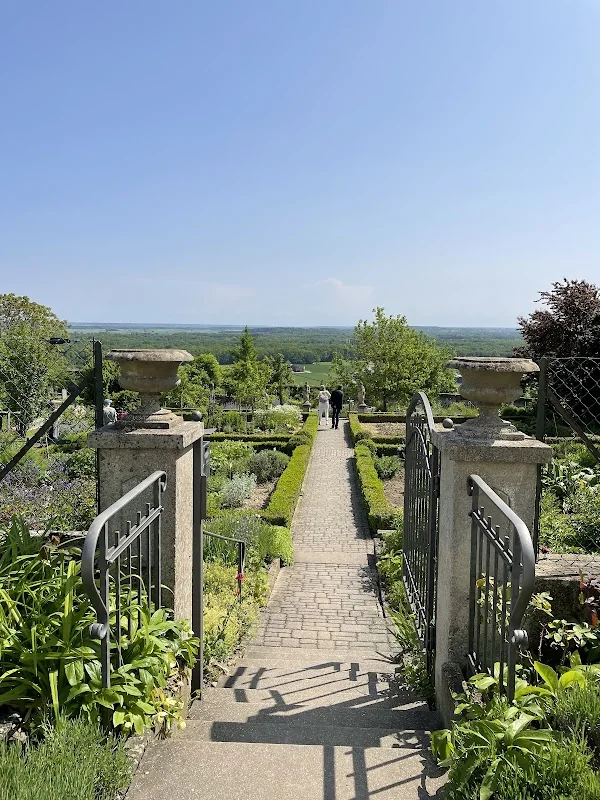
The Monastery Garden - Garden of Pilgrims in Oberelchingen is a place where history, tranquility, herbal knowledge, and wide landscape views connect in a special way. Those looking for events, tickets, or an extraordinary destination for a quiet outing will find here not a loud event backdrop, but a carefully maintained historical garden with spiritual depth. The garden is part of the grounds of the former monastery complex, located opposite the rectory, and was redesigned and planted in 2006. Thus, it is not only a relic from earlier times but a living place that continues the monastic tradition in a modern form. Particularly striking is the mix of typical plants from a medieval monastery garden and today's medicinal plants. Milk thistle, wormwood, and other herbs make the site a small open-air educational trail. At the same time, the view opens wide into the countryside, making the visit not only botanically impressive but also visually stunning. This combination of utility, tranquility, and outlook characterizes the garden. For inquiries regarding events and tickets, it is important to note: The Monastery Garden is freely accessible, while guided offerings such as the herb tour can be booked by appointment. ([elchingen.de](https://www.elchingen.de/index.php?Detail=1145&id=5004&utm_source=openai))
Events and Herb Tours in the Monastery Garden Oberelchingen
When people search for events in the Monastery Garden Oberelchingen, they usually mean an experience with content, atmosphere, and regional relevance. This is exactly what the officially mentioned herb tour in the historical monastery garden offers. The municipality of Elchingen describes it as a guided tour by appointment lasting about 1 to 1.5 hours. The meeting point is located between the rectory and the monastery garden at the gate, precisely where the visit consciously leads into the historical space. The content is not only about plants but also about the place itself: those who book the tour will learn more about the garden, its layout, and the herbs growing there. This makes the event particularly suitable for people who want more than just a simple walk during an outing. They seek knowledge, contemplation, and a genuine connection to the place. The pricing is manageable and transparent: 65 euros for about 15 people, of which 5 euros go to the parish community. Thus, the tour is aimed more at small groups than at a large audience format. From an SEO perspective, this is important because the search intent behind events cannot be equated with stage programs, concert tickets, or festival operations. The garden is rather a quiet cultural and knowledge space where the theme of events is experienced in the form of a guided discovery. So, if someone is looking for an authentic appointment, a group activity, or a special program point in Elchingen, they will find a clear, natural answer here. The official information mentions specific contacts for booking, which underscores the character of an individually organized offering. It can be inferred that the Monastery Garden is currently more of a flexibly bookable cultural and nature experience than a classic event hall. ([elchingen.de](https://www.elchingen.de/index.php?Detail=1145&id=5004&utm_source=openai))
For visitors searching with the keyword events, it is also crucial what is not offered. The official pages do not list a regular ticket calendar, no box office, and no standardized program with fixed performance days. Instead, the free accessibility of the garden and the possibility of booking a guided tour by appointment dominate. This distinction is very valuable for user intent: those who simply want to drop by can experience the Monastery Garden without an entrance fee. Those who want to dive deeper, for example, with a group, family, travel community, or church group, can choose the herb tour as a bookable experience. This creates a clear division between an open place and bookable mediation. This is exactly what makes the search for tickets in this case so special. There is no classic ticket sales model like in a hall or theater, but a low-threshold, location-based offering. The Monastery Garden is thus, on one hand, spontaneously experienceable and, on the other hand, planable for small groups. This is ideal for seekers who expect not only tickets but also a quiet, high-quality program with local relevance. The connection of garden, knowledge, and devotion is the actual event concept here. Those who understand the place as an event location in the broader sense discover a format that consciously remains small, personal, and content-rich. ([elchingen.de](https://www.elchingen.de/index.php?Detail=1145&id=5004&utm_source=openai))
Tickets, Prices, and Booking for the Garden of Pilgrims
When searching for tickets for the Monastery Garden - Garden of Pilgrims, the most important information is initially very simple: The garden itself is freely accessible. There is no indication of an entrance fee for the pure visit on the official pages, no sales counter, and no obligation to purchase a ticket on-site. This clearly distinguishes the Monastery Garden from classic event venues or attractions with controlled access. Those who simply want to experience peace, herbs, and views can generally visit the place without an entrance fee. The situation is different for the herb tour. Here, the municipality of Elchingen states a price of 65 euros for about 15 people, with 5 euros going to the parish community. This is the only clearly designated paid form of interaction with the garden that can be derived from the official information. For users searching for tickets, this is the most practical answer: There is no general entrance ticket, but there is a booked group tour. This tour is thus more of a scheduled booking than a ticket purchase in the conventional sense. The search intent behind the keyword tickets is therefore answered not with a shop but with an inquiry process. This is both serious and transparent, as no nonexistent online ticket structure is suggested. Especially in the SEO context, this clarity is important because visitors want to know if they have to pay an entrance fee, if there is a box office, or if prior registration is necessary. In the case of the Monastery Garden, the answer is: No for free visits, yes for the tour, and by prior arrangement. ([elchingen.de](https://www.elchingen.de/index.php?Detail=1145&id=5004&utm_source=openai))
The booking of the tour is also clearly described in the official information. Two contacts are mentioned, a phytotherapist and animal healer as well as a diploma biologist. This shows that the mediation is professionally sound and botanical knowledge is at the center. The duration of 1 to 1.5 hours fits a compact but content-rich program that is well-suited for small groups. Those who book the tour should therefore not expect a large show but a quiet, educational, and very personal format. This is exactly where the added value lies compared to a normal ticket purchase. The participant number of about 15 people makes the experience manageable and allows for questions, observations, and a slow walk through the garden. This can be particularly attractive for travel groups, clubs, or private outings because the appointment is flexibly arranged and not tied to rigid opening hours. From a search perspective, it can therefore be said: The keyword tickets is best answered here through the booking of a herb tour, not through a classic ticket shop. Those who want to experience the place spontaneously do not need a ticket. Those who want to dive deeper should reserve the tour. This clear structure ensures that visitors already know what form of access to expect before their arrival. ([elchingen.de](https://www.elchingen.de/index.php?id=5004&utm_source=openai))
Directions, Parking, and Location at the Monastery Courtyard in Elchingen
The location of the Monastery Garden is an important part of the experience for visitors. The official location is given as Klosterhof 7 in 89275 Elchingen, right in the historical surroundings of Oberelchingen. The municipality describes the place as part of the historical grounds of the monastery complex, and DonauTäler emphasizes that the garden is surrounded by the walls of the former Benedictine monastery. This means: Those who arrive here do not enter just any city garden, but a place that is closely connected to the local history. For directions, the tourist sources explicitly mention the possibility of public transport. At the same time, Oberelchingen has been a train station on the Ulm-Aalen line since 1900 and has been connected to the A8 since 1954, which underscores the general accessibility of the place. However, it is important for drivers that no large, separate parking facility is advertised on the official pages for the garden itself. Therefore, it is advisable to keep an eye on the Napoleonshöhe parking lot at Göttinger Weg 1 during outings in the area, which is mentioned by DonauTäler as a starting point for a tour. This is not a direct parking guarantee for the garden, but a real and reliable orientation for arrival and walking around. So, those looking for parking should plan their visit more as part of a local or round trip. This also fits the character of the destination: It is not about arriving at a large parking deck but about a conscious arrival in a historical cultural landscape. The journey there is thus part of the experience and not just a means to an end. ([donautaeler.com](https://donautaeler.com/gruener-thronsaal/?utm_source=openai))
Also, for the content-related search for directions and parking, the surroundings of the Monastery Garden are helpful. The municipality of Elchingen designates the district of Oberelchingen as a developed location with historical monastery influence. DonauTäler and the municipality also link the Monastery Garden with cycling and hiking trails, such as the Danube Cycle Path, the Panorama Heights Trail, and the regional cycling network. This is relevant for visitors because the journey does not have to be thought of only by car. Those arriving on foot or by bike experience the garden particularly harmoniously, as the place is described as a space for peace and meditation. Especially the Panorama Heights Trail makes it clear that Oberelchingen is oriented towards elevation and views. There, the Monastery Garden is mentioned as an attraction together with the monastery, parish, and pilgrimage church, the model of the former imperial abbey, and the Martin Gate. This shows that the garden should not be viewed in isolation but as part of a round trip. For visitors, this means practically: Plan the journey, possibly park at the outskirts or at a tour starting point, and explore the actual garden on foot or as part of a longer stay. Those who proceed this way avoid unnecessary parking searches and simultaneously make good use of the historical structure of the place. This is exactly what makes the journey to the Monastery Garden so pleasant: It is uncomplicated if understood as part of a local discovery, and yet remains calm enough for a decelerated visit experience. ([elchingen.de](https://www.elchingen.de/index.php?Detail=724&id=150&utm_source=openai))
Seven Sorrows Way, Viewing Platform, and Special Highlights
The special highlights of the Monastery Garden are not spectacular in a loud sense but quiet, symbolically strong, and very atmospheric. Particularly defining is the processional path known as the Seven Sorrows Way. According to DonauTäler, it is equipped with bronze sculptures and meditation texts and invites contemplation. In September 2015, this path was consecrated and has since been open year-round for spiritual and quiet visits. This is a central point for all those seeking the Garden of Pilgrims, as here the connection of landscape, faith, and spatial design is particularly evident. Next to the processional path is a viewing platform with an orientation panel. From there, one looks over the landscape of the Ulm Winkel, and on a clear day, even the Alps are visible. This is also a strong unique selling point, as the visit thus connects two levels: inside the meditation, outside the wide landscape horizon. The picture is complemented by the typical plants of a medieval monastery garden and modern medicinal plants, making the place convincing both historically and botanically. For guests looking for photo opportunities, the walls, the herb beds, the path, and the distant view are equally appealing. For visitors seeking tranquility, the combination of open sky, orientation panel, and quiet contemplation is ideal. The Monastery Garden is therefore not just a beautiful garden but a deliberately staged place of gathering. Especially in the interplay of bronze sculptures, meditation texts, and open views, the special quality of the place emerges. Those who stroll here experience a garden that wants to be not only seen but slowly walked through. ([donautaeler.com](https://donautaeler.com/gruener-thronsaal/?utm_source=openai))
Another highlight is the free accessibility. Many visitors appreciate that the Monastery Garden does not have to be accessed through a ticket or a box office but is always present as a quiet space in the local landscape. This makes it a place for spontaneous breaks, short visits, or consciously planned time-outs. The municipality describes it as a true feel-good place with a magnificent view of the countryside, and this formulation fits well with the experience on-site. Those looking towards the panorama from there not only gain a landscape impression but also a sense of why monasteries could arise in such locations: somewhat elevated, protected, with openness and overview. DonauTäler adds this perspective with the spiritual level and describes the walled space as a place of peace and meditation. Thus, several levels arise simultaneously. The visitor sees herbs, perhaps hears birds or wind, reads meditation words, and looks at the landscape. This very multilayeredness makes the Monastery Garden a destination that goes far beyond a classic garden experience. For SEO and user intent, this is important because seekers looking for highlights seek not only attractions but also atmosphere. The Monastery Garden delivers both in a very credible form. It is neither over-staged nor empty, but simple, concentrated, and coherent in itself. Therefore, it fits excellently with pilgrimage thoughts, contemplative walks, and a day trip where attention, not speed, counts. ([elchingen.de](https://www.elchingen.de/index.php?Detail=1145&id=5004&utm_source=openai))
History of the Monastery Garden and the Former Benedictine Monastery
The history of the Monastery Garden cannot be understood without the history of Oberelchingen. The municipality of Elchingen explains that the place originated from the Benedictine monastery of Elchingen, which was founded after 1100. Originally located by the Danube, it was moved to the castle around 1140. In the following centuries, the complex was destroyed and renewed multiple times, including in 1546 and during the Thirty Years' War. At the end of the 17th and beginning of the 18th century, the buildings were renewed before the monastery was dissolved in 1802 during the secularization and was demolished in 1807, except for the church, Martin Gate, administrative building, and part of the wall. The current monastery church has been a parish church since 1804. A model of the former monastery complex completed in 2002 in the church reminds of the size of the former imperial abbey. These key dates are important for the Monastery Garden because they historically charge the space and explain why the garden does not merely appear decorative. It is located on grounds that have been religiously, economically, and culturally shaped over centuries. Additionally, there is the pilgrimage tradition: The image of the painful Mother of God has been the destination for many pilgrims for centuries, and the Brotherhood of the Seven Sorrows of Mary has enhanced the pilgrimage's radiance since 1644. In this context, the garden as a meditation and processional space also finds its meaning. It is not just an arbitrary park but a place where monastic memory and current use come together. The historical foundation makes today's visit particularly credible and atmospheric. ([elchingen.de](https://www.elchingen.de/index.php?Detail=46&id=42&utm_source=openai))
The current Monastery Garden is also an expression of a conscious reinterpretation of this history. The municipality reports that the garden was redesigned and planted in 2006 opposite the rectory. Thus, it connects historical forms with contemporary care and mediation work. DonauTäler describes it as freely accessible, surrounded by walls, and as a place of peace and meditation. This description is important because it shows that the garden is not museum-like but is used vibrantly. The selection of plants with edible and otherwise usable herbs ties back to old monastic kitchen gardens but also meets modern educational and experiential demands. For visitors, this creates a meaningful bridge between the past and the present: standing here, one sees not only beds but a piece of cultural history that continues to resonate in everyday life. The place Oberelchingen itself is also historically strongly shaped. It lies between the Danube and the southern slope of the Swabian Jura, and the official municipal website emphasizes its supra-regional significance through the monastery, pilgrimage, and Napoleonic history. Additionally, Oberelchingen has long been well-connected, making the place easier to visit. The Monastery Garden thus becomes a starting point into the history of the Holy Mountain, into pilgrimage culture, and into the visible traces of the former Benedictine monastery. This connection of local detail and great historical line makes the place so strong. It is a small garden with a great past and a surprisingly clear present. ([elchingen.de](https://www.elchingen.de/index.php?Detail=1145&id=5004&utm_source=openai))
Practical Tips for Visiting, Groups, and Orientation
Those wishing to visit the Monastery Garden - Garden of Pilgrims should ideally plan the stay as a small round trip. The garden is located at the Monastery Courtyard in Oberelchingen and can be easily connected with other stations, such as the pilgrimage church, the Martin Gate, or the model of the former imperial abbey. The municipality and DonauTäler clearly show that the place is part of a larger historical ensemble. Practically, this means: Not only is the garden itself worth seeing, but also the paths leading there and the surroundings. For groups, the herb tour is particularly interesting because it can be flexibly scheduled and thus adapted to the needs of clubs, families, or travel groups. For individual visitors, the free accessibility is attractive because no fixed ticket purchase is required. Those who simply want to linger briefly can use the garden as a quiet pause; those who want to learn more should book the tour. The best strategy is therefore to clarify one's visit intentions in advance. If it is about tranquility, a spontaneous detour is sufficient. If it is about knowledge, herbs, and history, scheduling an appointment is recommended. This mix of openness and bookability is a plus point of the place. It makes the Monastery Garden interesting for many target groups without overloading it. For SEO users, this also means: The search queries for events, tickets, parking, or directions are not answered here with exaggerated promises but with an honest, calm, and very well-fitting visit logic. ([elchingen.de](https://www.elchingen.de/index.php?Detail=1145&id=5004&utm_source=openai))
Another practical tip concerns the timing of the visit. Because the Monastery Garden is described as a place of peace and meditation, it is particularly suitable for times of day with little hustle and bustle. Then the view, plants, and wall structure come into their own. Those who want to photograph benefit from the open location and the wide view over the Ulm Winkel. Those coming with children or in a small travel group should focus on slow walking and observing, as this is precisely what the garden is intended for. The combination of herbs, orientation panel, and processional path makes the place interesting without complicating it. Also, for visitors seeking a pilgrimage connection, the garden is ideal because it is not only botanically but spiritually readable. It connects the tradition of pilgrimage with a modern form of deceleration. The best results are achieved by those who do not see the visit as a mandatory program but as a conscious pause. Then the garden unfolds its full effect: it becomes a place of looking, reading, walking, and reflecting. For the journey, it still applies that public transport is mentioned, and for tours in the area, the Napoleonshöhe parking lot serves as orientation. This makes the place manageable for both spontaneous outings and planned group visits. Those who plan wisely experience exactly what the name promises: a garden for pilgrims, for seekers, and for people who want to make a quiet, lasting impression from a small outing. ([donautaeler.com](https://donautaeler.com/gruener-thronsaal/?utm_source=openai))
Sources:
Mehr anzeigenWeniger anzeigen
Monastery Garden - Garden of Pilgrims | Events & Tickets
The Monastery Garden - Garden of Pilgrims in Oberelchingen is a place where history, tranquility, herbal knowledge, and wide landscape views connect in a special way. Those looking for events, tickets, or an extraordinary destination for a quiet outing will find here not a loud event backdrop, but a carefully maintained historical garden with spiritual depth. The garden is part of the grounds of the former monastery complex, located opposite the rectory, and was redesigned and planted in 2006. Thus, it is not only a relic from earlier times but a living place that continues the monastic tradition in a modern form. Particularly striking is the mix of typical plants from a medieval monastery garden and today's medicinal plants. Milk thistle, wormwood, and other herbs make the site a small open-air educational trail. At the same time, the view opens wide into the countryside, making the visit not only botanically impressive but also visually stunning. This combination of utility, tranquility, and outlook characterizes the garden. For inquiries regarding events and tickets, it is important to note: The Monastery Garden is freely accessible, while guided offerings such as the herb tour can be booked by appointment. ([elchingen.de](https://www.elchingen.de/index.php?Detail=1145&id=5004&utm_source=openai))
Events and Herb Tours in the Monastery Garden Oberelchingen
When people search for events in the Monastery Garden Oberelchingen, they usually mean an experience with content, atmosphere, and regional relevance. This is exactly what the officially mentioned herb tour in the historical monastery garden offers. The municipality of Elchingen describes it as a guided tour by appointment lasting about 1 to 1.5 hours. The meeting point is located between the rectory and the monastery garden at the gate, precisely where the visit consciously leads into the historical space. The content is not only about plants but also about the place itself: those who book the tour will learn more about the garden, its layout, and the herbs growing there. This makes the event particularly suitable for people who want more than just a simple walk during an outing. They seek knowledge, contemplation, and a genuine connection to the place. The pricing is manageable and transparent: 65 euros for about 15 people, of which 5 euros go to the parish community. Thus, the tour is aimed more at small groups than at a large audience format. From an SEO perspective, this is important because the search intent behind events cannot be equated with stage programs, concert tickets, or festival operations. The garden is rather a quiet cultural and knowledge space where the theme of events is experienced in the form of a guided discovery. So, if someone is looking for an authentic appointment, a group activity, or a special program point in Elchingen, they will find a clear, natural answer here. The official information mentions specific contacts for booking, which underscores the character of an individually organized offering. It can be inferred that the Monastery Garden is currently more of a flexibly bookable cultural and nature experience than a classic event hall. ([elchingen.de](https://www.elchingen.de/index.php?Detail=1145&id=5004&utm_source=openai))
For visitors searching with the keyword events, it is also crucial what is not offered. The official pages do not list a regular ticket calendar, no box office, and no standardized program with fixed performance days. Instead, the free accessibility of the garden and the possibility of booking a guided tour by appointment dominate. This distinction is very valuable for user intent: those who simply want to drop by can experience the Monastery Garden without an entrance fee. Those who want to dive deeper, for example, with a group, family, travel community, or church group, can choose the herb tour as a bookable experience. This creates a clear division between an open place and bookable mediation. This is exactly what makes the search for tickets in this case so special. There is no classic ticket sales model like in a hall or theater, but a low-threshold, location-based offering. The Monastery Garden is thus, on one hand, spontaneously experienceable and, on the other hand, planable for small groups. This is ideal for seekers who expect not only tickets but also a quiet, high-quality program with local relevance. The connection of garden, knowledge, and devotion is the actual event concept here. Those who understand the place as an event location in the broader sense discover a format that consciously remains small, personal, and content-rich. ([elchingen.de](https://www.elchingen.de/index.php?Detail=1145&id=5004&utm_source=openai))
Tickets, Prices, and Booking for the Garden of Pilgrims
When searching for tickets for the Monastery Garden - Garden of Pilgrims, the most important information is initially very simple: The garden itself is freely accessible. There is no indication of an entrance fee for the pure visit on the official pages, no sales counter, and no obligation to purchase a ticket on-site. This clearly distinguishes the Monastery Garden from classic event venues or attractions with controlled access. Those who simply want to experience peace, herbs, and views can generally visit the place without an entrance fee. The situation is different for the herb tour. Here, the municipality of Elchingen states a price of 65 euros for about 15 people, with 5 euros going to the parish community. This is the only clearly designated paid form of interaction with the garden that can be derived from the official information. For users searching for tickets, this is the most practical answer: There is no general entrance ticket, but there is a booked group tour. This tour is thus more of a scheduled booking than a ticket purchase in the conventional sense. The search intent behind the keyword tickets is therefore answered not with a shop but with an inquiry process. This is both serious and transparent, as no nonexistent online ticket structure is suggested. Especially in the SEO context, this clarity is important because visitors want to know if they have to pay an entrance fee, if there is a box office, or if prior registration is necessary. In the case of the Monastery Garden, the answer is: No for free visits, yes for the tour, and by prior arrangement. ([elchingen.de](https://www.elchingen.de/index.php?Detail=1145&id=5004&utm_source=openai))
The booking of the tour is also clearly described in the official information. Two contacts are mentioned, a phytotherapist and animal healer as well as a diploma biologist. This shows that the mediation is professionally sound and botanical knowledge is at the center. The duration of 1 to 1.5 hours fits a compact but content-rich program that is well-suited for small groups. Those who book the tour should therefore not expect a large show but a quiet, educational, and very personal format. This is exactly where the added value lies compared to a normal ticket purchase. The participant number of about 15 people makes the experience manageable and allows for questions, observations, and a slow walk through the garden. This can be particularly attractive for travel groups, clubs, or private outings because the appointment is flexibly arranged and not tied to rigid opening hours. From a search perspective, it can therefore be said: The keyword tickets is best answered here through the booking of a herb tour, not through a classic ticket shop. Those who want to experience the place spontaneously do not need a ticket. Those who want to dive deeper should reserve the tour. This clear structure ensures that visitors already know what form of access to expect before their arrival. ([elchingen.de](https://www.elchingen.de/index.php?id=5004&utm_source=openai))
Directions, Parking, and Location at the Monastery Courtyard in Elchingen
The location of the Monastery Garden is an important part of the experience for visitors. The official location is given as Klosterhof 7 in 89275 Elchingen, right in the historical surroundings of Oberelchingen. The municipality describes the place as part of the historical grounds of the monastery complex, and DonauTäler emphasizes that the garden is surrounded by the walls of the former Benedictine monastery. This means: Those who arrive here do not enter just any city garden, but a place that is closely connected to the local history. For directions, the tourist sources explicitly mention the possibility of public transport. At the same time, Oberelchingen has been a train station on the Ulm-Aalen line since 1900 and has been connected to the A8 since 1954, which underscores the general accessibility of the place. However, it is important for drivers that no large, separate parking facility is advertised on the official pages for the garden itself. Therefore, it is advisable to keep an eye on the Napoleonshöhe parking lot at Göttinger Weg 1 during outings in the area, which is mentioned by DonauTäler as a starting point for a tour. This is not a direct parking guarantee for the garden, but a real and reliable orientation for arrival and walking around. So, those looking for parking should plan their visit more as part of a local or round trip. This also fits the character of the destination: It is not about arriving at a large parking deck but about a conscious arrival in a historical cultural landscape. The journey there is thus part of the experience and not just a means to an end. ([donautaeler.com](https://donautaeler.com/gruener-thronsaal/?utm_source=openai))
Also, for the content-related search for directions and parking, the surroundings of the Monastery Garden are helpful. The municipality of Elchingen designates the district of Oberelchingen as a developed location with historical monastery influence. DonauTäler and the municipality also link the Monastery Garden with cycling and hiking trails, such as the Danube Cycle Path, the Panorama Heights Trail, and the regional cycling network. This is relevant for visitors because the journey does not have to be thought of only by car. Those arriving on foot or by bike experience the garden particularly harmoniously, as the place is described as a space for peace and meditation. Especially the Panorama Heights Trail makes it clear that Oberelchingen is oriented towards elevation and views. There, the Monastery Garden is mentioned as an attraction together with the monastery, parish, and pilgrimage church, the model of the former imperial abbey, and the Martin Gate. This shows that the garden should not be viewed in isolation but as part of a round trip. For visitors, this means practically: Plan the journey, possibly park at the outskirts or at a tour starting point, and explore the actual garden on foot or as part of a longer stay. Those who proceed this way avoid unnecessary parking searches and simultaneously make good use of the historical structure of the place. This is exactly what makes the journey to the Monastery Garden so pleasant: It is uncomplicated if understood as part of a local discovery, and yet remains calm enough for a decelerated visit experience. ([elchingen.de](https://www.elchingen.de/index.php?Detail=724&id=150&utm_source=openai))
Seven Sorrows Way, Viewing Platform, and Special Highlights
The special highlights of the Monastery Garden are not spectacular in a loud sense but quiet, symbolically strong, and very atmospheric. Particularly defining is the processional path known as the Seven Sorrows Way. According to DonauTäler, it is equipped with bronze sculptures and meditation texts and invites contemplation. In September 2015, this path was consecrated and has since been open year-round for spiritual and quiet visits. This is a central point for all those seeking the Garden of Pilgrims, as here the connection of landscape, faith, and spatial design is particularly evident. Next to the processional path is a viewing platform with an orientation panel. From there, one looks over the landscape of the Ulm Winkel, and on a clear day, even the Alps are visible. This is also a strong unique selling point, as the visit thus connects two levels: inside the meditation, outside the wide landscape horizon. The picture is complemented by the typical plants of a medieval monastery garden and modern medicinal plants, making the place convincing both historically and botanically. For guests looking for photo opportunities, the walls, the herb beds, the path, and the distant view are equally appealing. For visitors seeking tranquility, the combination of open sky, orientation panel, and quiet contemplation is ideal. The Monastery Garden is therefore not just a beautiful garden but a deliberately staged place of gathering. Especially in the interplay of bronze sculptures, meditation texts, and open views, the special quality of the place emerges. Those who stroll here experience a garden that wants to be not only seen but slowly walked through. ([donautaeler.com](https://donautaeler.com/gruener-thronsaal/?utm_source=openai))
Another highlight is the free accessibility. Many visitors appreciate that the Monastery Garden does not have to be accessed through a ticket or a box office but is always present as a quiet space in the local landscape. This makes it a place for spontaneous breaks, short visits, or consciously planned time-outs. The municipality describes it as a true feel-good place with a magnificent view of the countryside, and this formulation fits well with the experience on-site. Those looking towards the panorama from there not only gain a landscape impression but also a sense of why monasteries could arise in such locations: somewhat elevated, protected, with openness and overview. DonauTäler adds this perspective with the spiritual level and describes the walled space as a place of peace and meditation. Thus, several levels arise simultaneously. The visitor sees herbs, perhaps hears birds or wind, reads meditation words, and looks at the landscape. This very multilayeredness makes the Monastery Garden a destination that goes far beyond a classic garden experience. For SEO and user intent, this is important because seekers looking for highlights seek not only attractions but also atmosphere. The Monastery Garden delivers both in a very credible form. It is neither over-staged nor empty, but simple, concentrated, and coherent in itself. Therefore, it fits excellently with pilgrimage thoughts, contemplative walks, and a day trip where attention, not speed, counts. ([elchingen.de](https://www.elchingen.de/index.php?Detail=1145&id=5004&utm_source=openai))
History of the Monastery Garden and the Former Benedictine Monastery
The history of the Monastery Garden cannot be understood without the history of Oberelchingen. The municipality of Elchingen explains that the place originated from the Benedictine monastery of Elchingen, which was founded after 1100. Originally located by the Danube, it was moved to the castle around 1140. In the following centuries, the complex was destroyed and renewed multiple times, including in 1546 and during the Thirty Years' War. At the end of the 17th and beginning of the 18th century, the buildings were renewed before the monastery was dissolved in 1802 during the secularization and was demolished in 1807, except for the church, Martin Gate, administrative building, and part of the wall. The current monastery church has been a parish church since 1804. A model of the former monastery complex completed in 2002 in the church reminds of the size of the former imperial abbey. These key dates are important for the Monastery Garden because they historically charge the space and explain why the garden does not merely appear decorative. It is located on grounds that have been religiously, economically, and culturally shaped over centuries. Additionally, there is the pilgrimage tradition: The image of the painful Mother of God has been the destination for many pilgrims for centuries, and the Brotherhood of the Seven Sorrows of Mary has enhanced the pilgrimage's radiance since 1644. In this context, the garden as a meditation and processional space also finds its meaning. It is not just an arbitrary park but a place where monastic memory and current use come together. The historical foundation makes today's visit particularly credible and atmospheric. ([elchingen.de](https://www.elchingen.de/index.php?Detail=46&id=42&utm_source=openai))
The current Monastery Garden is also an expression of a conscious reinterpretation of this history. The municipality reports that the garden was redesigned and planted in 2006 opposite the rectory. Thus, it connects historical forms with contemporary care and mediation work. DonauTäler describes it as freely accessible, surrounded by walls, and as a place of peace and meditation. This description is important because it shows that the garden is not museum-like but is used vibrantly. The selection of plants with edible and otherwise usable herbs ties back to old monastic kitchen gardens but also meets modern educational and experiential demands. For visitors, this creates a meaningful bridge between the past and the present: standing here, one sees not only beds but a piece of cultural history that continues to resonate in everyday life. The place Oberelchingen itself is also historically strongly shaped. It lies between the Danube and the southern slope of the Swabian Jura, and the official municipal website emphasizes its supra-regional significance through the monastery, pilgrimage, and Napoleonic history. Additionally, Oberelchingen has long been well-connected, making the place easier to visit. The Monastery Garden thus becomes a starting point into the history of the Holy Mountain, into pilgrimage culture, and into the visible traces of the former Benedictine monastery. This connection of local detail and great historical line makes the place so strong. It is a small garden with a great past and a surprisingly clear present. ([elchingen.de](https://www.elchingen.de/index.php?Detail=1145&id=5004&utm_source=openai))
Practical Tips for Visiting, Groups, and Orientation
Those wishing to visit the Monastery Garden - Garden of Pilgrims should ideally plan the stay as a small round trip. The garden is located at the Monastery Courtyard in Oberelchingen and can be easily connected with other stations, such as the pilgrimage church, the Martin Gate, or the model of the former imperial abbey. The municipality and DonauTäler clearly show that the place is part of a larger historical ensemble. Practically, this means: Not only is the garden itself worth seeing, but also the paths leading there and the surroundings. For groups, the herb tour is particularly interesting because it can be flexibly scheduled and thus adapted to the needs of clubs, families, or travel groups. For individual visitors, the free accessibility is attractive because no fixed ticket purchase is required. Those who simply want to linger briefly can use the garden as a quiet pause; those who want to learn more should book the tour. The best strategy is therefore to clarify one's visit intentions in advance. If it is about tranquility, a spontaneous detour is sufficient. If it is about knowledge, herbs, and history, scheduling an appointment is recommended. This mix of openness and bookability is a plus point of the place. It makes the Monastery Garden interesting for many target groups without overloading it. For SEO users, this also means: The search queries for events, tickets, parking, or directions are not answered here with exaggerated promises but with an honest, calm, and very well-fitting visit logic. ([elchingen.de](https://www.elchingen.de/index.php?Detail=1145&id=5004&utm_source=openai))
Another practical tip concerns the timing of the visit. Because the Monastery Garden is described as a place of peace and meditation, it is particularly suitable for times of day with little hustle and bustle. Then the view, plants, and wall structure come into their own. Those who want to photograph benefit from the open location and the wide view over the Ulm Winkel. Those coming with children or in a small travel group should focus on slow walking and observing, as this is precisely what the garden is intended for. The combination of herbs, orientation panel, and processional path makes the place interesting without complicating it. Also, for visitors seeking a pilgrimage connection, the garden is ideal because it is not only botanically but spiritually readable. It connects the tradition of pilgrimage with a modern form of deceleration. The best results are achieved by those who do not see the visit as a mandatory program but as a conscious pause. Then the garden unfolds its full effect: it becomes a place of looking, reading, walking, and reflecting. For the journey, it still applies that public transport is mentioned, and for tours in the area, the Napoleonshöhe parking lot serves as orientation. This makes the place manageable for both spontaneous outings and planned group visits. Those who plan wisely experience exactly what the name promises: a garden for pilgrims, for seekers, and for people who want to make a quiet, lasting impression from a small outing. ([donautaeler.com](https://donautaeler.com/gruener-thronsaal/?utm_source=openai))
Sources:
Monastery Garden - Garden of Pilgrims | Events & Tickets
The Monastery Garden - Garden of Pilgrims in Oberelchingen is a place where history, tranquility, herbal knowledge, and wide landscape views connect in a special way. Those looking for events, tickets, or an extraordinary destination for a quiet outing will find here not a loud event backdrop, but a carefully maintained historical garden with spiritual depth. The garden is part of the grounds of the former monastery complex, located opposite the rectory, and was redesigned and planted in 2006. Thus, it is not only a relic from earlier times but a living place that continues the monastic tradition in a modern form. Particularly striking is the mix of typical plants from a medieval monastery garden and today's medicinal plants. Milk thistle, wormwood, and other herbs make the site a small open-air educational trail. At the same time, the view opens wide into the countryside, making the visit not only botanically impressive but also visually stunning. This combination of utility, tranquility, and outlook characterizes the garden. For inquiries regarding events and tickets, it is important to note: The Monastery Garden is freely accessible, while guided offerings such as the herb tour can be booked by appointment. ([elchingen.de](https://www.elchingen.de/index.php?Detail=1145&id=5004&utm_source=openai))
Events and Herb Tours in the Monastery Garden Oberelchingen
When people search for events in the Monastery Garden Oberelchingen, they usually mean an experience with content, atmosphere, and regional relevance. This is exactly what the officially mentioned herb tour in the historical monastery garden offers. The municipality of Elchingen describes it as a guided tour by appointment lasting about 1 to 1.5 hours. The meeting point is located between the rectory and the monastery garden at the gate, precisely where the visit consciously leads into the historical space. The content is not only about plants but also about the place itself: those who book the tour will learn more about the garden, its layout, and the herbs growing there. This makes the event particularly suitable for people who want more than just a simple walk during an outing. They seek knowledge, contemplation, and a genuine connection to the place. The pricing is manageable and transparent: 65 euros for about 15 people, of which 5 euros go to the parish community. Thus, the tour is aimed more at small groups than at a large audience format. From an SEO perspective, this is important because the search intent behind events cannot be equated with stage programs, concert tickets, or festival operations. The garden is rather a quiet cultural and knowledge space where the theme of events is experienced in the form of a guided discovery. So, if someone is looking for an authentic appointment, a group activity, or a special program point in Elchingen, they will find a clear, natural answer here. The official information mentions specific contacts for booking, which underscores the character of an individually organized offering. It can be inferred that the Monastery Garden is currently more of a flexibly bookable cultural and nature experience than a classic event hall. ([elchingen.de](https://www.elchingen.de/index.php?Detail=1145&id=5004&utm_source=openai))
For visitors searching with the keyword events, it is also crucial what is not offered. The official pages do not list a regular ticket calendar, no box office, and no standardized program with fixed performance days. Instead, the free accessibility of the garden and the possibility of booking a guided tour by appointment dominate. This distinction is very valuable for user intent: those who simply want to drop by can experience the Monastery Garden without an entrance fee. Those who want to dive deeper, for example, with a group, family, travel community, or church group, can choose the herb tour as a bookable experience. This creates a clear division between an open place and bookable mediation. This is exactly what makes the search for tickets in this case so special. There is no classic ticket sales model like in a hall or theater, but a low-threshold, location-based offering. The Monastery Garden is thus, on one hand, spontaneously experienceable and, on the other hand, planable for small groups. This is ideal for seekers who expect not only tickets but also a quiet, high-quality program with local relevance. The connection of garden, knowledge, and devotion is the actual event concept here. Those who understand the place as an event location in the broader sense discover a format that consciously remains small, personal, and content-rich. ([elchingen.de](https://www.elchingen.de/index.php?Detail=1145&id=5004&utm_source=openai))
Tickets, Prices, and Booking for the Garden of Pilgrims
When searching for tickets for the Monastery Garden - Garden of Pilgrims, the most important information is initially very simple: The garden itself is freely accessible. There is no indication of an entrance fee for the pure visit on the official pages, no sales counter, and no obligation to purchase a ticket on-site. This clearly distinguishes the Monastery Garden from classic event venues or attractions with controlled access. Those who simply want to experience peace, herbs, and views can generally visit the place without an entrance fee. The situation is different for the herb tour. Here, the municipality of Elchingen states a price of 65 euros for about 15 people, with 5 euros going to the parish community. This is the only clearly designated paid form of interaction with the garden that can be derived from the official information. For users searching for tickets, this is the most practical answer: There is no general entrance ticket, but there is a booked group tour. This tour is thus more of a scheduled booking than a ticket purchase in the conventional sense. The search intent behind the keyword tickets is therefore answered not with a shop but with an inquiry process. This is both serious and transparent, as no nonexistent online ticket structure is suggested. Especially in the SEO context, this clarity is important because visitors want to know if they have to pay an entrance fee, if there is a box office, or if prior registration is necessary. In the case of the Monastery Garden, the answer is: No for free visits, yes for the tour, and by prior arrangement. ([elchingen.de](https://www.elchingen.de/index.php?Detail=1145&id=5004&utm_source=openai))
The booking of the tour is also clearly described in the official information. Two contacts are mentioned, a phytotherapist and animal healer as well as a diploma biologist. This shows that the mediation is professionally sound and botanical knowledge is at the center. The duration of 1 to 1.5 hours fits a compact but content-rich program that is well-suited for small groups. Those who book the tour should therefore not expect a large show but a quiet, educational, and very personal format. This is exactly where the added value lies compared to a normal ticket purchase. The participant number of about 15 people makes the experience manageable and allows for questions, observations, and a slow walk through the garden. This can be particularly attractive for travel groups, clubs, or private outings because the appointment is flexibly arranged and not tied to rigid opening hours. From a search perspective, it can therefore be said: The keyword tickets is best answered here through the booking of a herb tour, not through a classic ticket shop. Those who want to experience the place spontaneously do not need a ticket. Those who want to dive deeper should reserve the tour. This clear structure ensures that visitors already know what form of access to expect before their arrival. ([elchingen.de](https://www.elchingen.de/index.php?id=5004&utm_source=openai))
Directions, Parking, and Location at the Monastery Courtyard in Elchingen
The location of the Monastery Garden is an important part of the experience for visitors. The official location is given as Klosterhof 7 in 89275 Elchingen, right in the historical surroundings of Oberelchingen. The municipality describes the place as part of the historical grounds of the monastery complex, and DonauTäler emphasizes that the garden is surrounded by the walls of the former Benedictine monastery. This means: Those who arrive here do not enter just any city garden, but a place that is closely connected to the local history. For directions, the tourist sources explicitly mention the possibility of public transport. At the same time, Oberelchingen has been a train station on the Ulm-Aalen line since 1900 and has been connected to the A8 since 1954, which underscores the general accessibility of the place. However, it is important for drivers that no large, separate parking facility is advertised on the official pages for the garden itself. Therefore, it is advisable to keep an eye on the Napoleonshöhe parking lot at Göttinger Weg 1 during outings in the area, which is mentioned by DonauTäler as a starting point for a tour. This is not a direct parking guarantee for the garden, but a real and reliable orientation for arrival and walking around. So, those looking for parking should plan their visit more as part of a local or round trip. This also fits the character of the destination: It is not about arriving at a large parking deck but about a conscious arrival in a historical cultural landscape. The journey there is thus part of the experience and not just a means to an end. ([donautaeler.com](https://donautaeler.com/gruener-thronsaal/?utm_source=openai))
Also, for the content-related search for directions and parking, the surroundings of the Monastery Garden are helpful. The municipality of Elchingen designates the district of Oberelchingen as a developed location with historical monastery influence. DonauTäler and the municipality also link the Monastery Garden with cycling and hiking trails, such as the Danube Cycle Path, the Panorama Heights Trail, and the regional cycling network. This is relevant for visitors because the journey does not have to be thought of only by car. Those arriving on foot or by bike experience the garden particularly harmoniously, as the place is described as a space for peace and meditation. Especially the Panorama Heights Trail makes it clear that Oberelchingen is oriented towards elevation and views. There, the Monastery Garden is mentioned as an attraction together with the monastery, parish, and pilgrimage church, the model of the former imperial abbey, and the Martin Gate. This shows that the garden should not be viewed in isolation but as part of a round trip. For visitors, this means practically: Plan the journey, possibly park at the outskirts or at a tour starting point, and explore the actual garden on foot or as part of a longer stay. Those who proceed this way avoid unnecessary parking searches and simultaneously make good use of the historical structure of the place. This is exactly what makes the journey to the Monastery Garden so pleasant: It is uncomplicated if understood as part of a local discovery, and yet remains calm enough for a decelerated visit experience. ([elchingen.de](https://www.elchingen.de/index.php?Detail=724&id=150&utm_source=openai))
Seven Sorrows Way, Viewing Platform, and Special Highlights
The special highlights of the Monastery Garden are not spectacular in a loud sense but quiet, symbolically strong, and very atmospheric. Particularly defining is the processional path known as the Seven Sorrows Way. According to DonauTäler, it is equipped with bronze sculptures and meditation texts and invites contemplation. In September 2015, this path was consecrated and has since been open year-round for spiritual and quiet visits. This is a central point for all those seeking the Garden of Pilgrims, as here the connection of landscape, faith, and spatial design is particularly evident. Next to the processional path is a viewing platform with an orientation panel. From there, one looks over the landscape of the Ulm Winkel, and on a clear day, even the Alps are visible. This is also a strong unique selling point, as the visit thus connects two levels: inside the meditation, outside the wide landscape horizon. The picture is complemented by the typical plants of a medieval monastery garden and modern medicinal plants, making the place convincing both historically and botanically. For guests looking for photo opportunities, the walls, the herb beds, the path, and the distant view are equally appealing. For visitors seeking tranquility, the combination of open sky, orientation panel, and quiet contemplation is ideal. The Monastery Garden is therefore not just a beautiful garden but a deliberately staged place of gathering. Especially in the interplay of bronze sculptures, meditation texts, and open views, the special quality of the place emerges. Those who stroll here experience a garden that wants to be not only seen but slowly walked through. ([donautaeler.com](https://donautaeler.com/gruener-thronsaal/?utm_source=openai))
Another highlight is the free accessibility. Many visitors appreciate that the Monastery Garden does not have to be accessed through a ticket or a box office but is always present as a quiet space in the local landscape. This makes it a place for spontaneous breaks, short visits, or consciously planned time-outs. The municipality describes it as a true feel-good place with a magnificent view of the countryside, and this formulation fits well with the experience on-site. Those looking towards the panorama from there not only gain a landscape impression but also a sense of why monasteries could arise in such locations: somewhat elevated, protected, with openness and overview. DonauTäler adds this perspective with the spiritual level and describes the walled space as a place of peace and meditation. Thus, several levels arise simultaneously. The visitor sees herbs, perhaps hears birds or wind, reads meditation words, and looks at the landscape. This very multilayeredness makes the Monastery Garden a destination that goes far beyond a classic garden experience. For SEO and user intent, this is important because seekers looking for highlights seek not only attractions but also atmosphere. The Monastery Garden delivers both in a very credible form. It is neither over-staged nor empty, but simple, concentrated, and coherent in itself. Therefore, it fits excellently with pilgrimage thoughts, contemplative walks, and a day trip where attention, not speed, counts. ([elchingen.de](https://www.elchingen.de/index.php?Detail=1145&id=5004&utm_source=openai))
History of the Monastery Garden and the Former Benedictine Monastery
The history of the Monastery Garden cannot be understood without the history of Oberelchingen. The municipality of Elchingen explains that the place originated from the Benedictine monastery of Elchingen, which was founded after 1100. Originally located by the Danube, it was moved to the castle around 1140. In the following centuries, the complex was destroyed and renewed multiple times, including in 1546 and during the Thirty Years' War. At the end of the 17th and beginning of the 18th century, the buildings were renewed before the monastery was dissolved in 1802 during the secularization and was demolished in 1807, except for the church, Martin Gate, administrative building, and part of the wall. The current monastery church has been a parish church since 1804. A model of the former monastery complex completed in 2002 in the church reminds of the size of the former imperial abbey. These key dates are important for the Monastery Garden because they historically charge the space and explain why the garden does not merely appear decorative. It is located on grounds that have been religiously, economically, and culturally shaped over centuries. Additionally, there is the pilgrimage tradition: The image of the painful Mother of God has been the destination for many pilgrims for centuries, and the Brotherhood of the Seven Sorrows of Mary has enhanced the pilgrimage's radiance since 1644. In this context, the garden as a meditation and processional space also finds its meaning. It is not just an arbitrary park but a place where monastic memory and current use come together. The historical foundation makes today's visit particularly credible and atmospheric. ([elchingen.de](https://www.elchingen.de/index.php?Detail=46&id=42&utm_source=openai))
The current Monastery Garden is also an expression of a conscious reinterpretation of this history. The municipality reports that the garden was redesigned and planted in 2006 opposite the rectory. Thus, it connects historical forms with contemporary care and mediation work. DonauTäler describes it as freely accessible, surrounded by walls, and as a place of peace and meditation. This description is important because it shows that the garden is not museum-like but is used vibrantly. The selection of plants with edible and otherwise usable herbs ties back to old monastic kitchen gardens but also meets modern educational and experiential demands. For visitors, this creates a meaningful bridge between the past and the present: standing here, one sees not only beds but a piece of cultural history that continues to resonate in everyday life. The place Oberelchingen itself is also historically strongly shaped. It lies between the Danube and the southern slope of the Swabian Jura, and the official municipal website emphasizes its supra-regional significance through the monastery, pilgrimage, and Napoleonic history. Additionally, Oberelchingen has long been well-connected, making the place easier to visit. The Monastery Garden thus becomes a starting point into the history of the Holy Mountain, into pilgrimage culture, and into the visible traces of the former Benedictine monastery. This connection of local detail and great historical line makes the place so strong. It is a small garden with a great past and a surprisingly clear present. ([elchingen.de](https://www.elchingen.de/index.php?Detail=1145&id=5004&utm_source=openai))
Practical Tips for Visiting, Groups, and Orientation
Those wishing to visit the Monastery Garden - Garden of Pilgrims should ideally plan the stay as a small round trip. The garden is located at the Monastery Courtyard in Oberelchingen and can be easily connected with other stations, such as the pilgrimage church, the Martin Gate, or the model of the former imperial abbey. The municipality and DonauTäler clearly show that the place is part of a larger historical ensemble. Practically, this means: Not only is the garden itself worth seeing, but also the paths leading there and the surroundings. For groups, the herb tour is particularly interesting because it can be flexibly scheduled and thus adapted to the needs of clubs, families, or travel groups. For individual visitors, the free accessibility is attractive because no fixed ticket purchase is required. Those who simply want to linger briefly can use the garden as a quiet pause; those who want to learn more should book the tour. The best strategy is therefore to clarify one's visit intentions in advance. If it is about tranquility, a spontaneous detour is sufficient. If it is about knowledge, herbs, and history, scheduling an appointment is recommended. This mix of openness and bookability is a plus point of the place. It makes the Monastery Garden interesting for many target groups without overloading it. For SEO users, this also means: The search queries for events, tickets, parking, or directions are not answered here with exaggerated promises but with an honest, calm, and very well-fitting visit logic. ([elchingen.de](https://www.elchingen.de/index.php?Detail=1145&id=5004&utm_source=openai))
Another practical tip concerns the timing of the visit. Because the Monastery Garden is described as a place of peace and meditation, it is particularly suitable for times of day with little hustle and bustle. Then the view, plants, and wall structure come into their own. Those who want to photograph benefit from the open location and the wide view over the Ulm Winkel. Those coming with children or in a small travel group should focus on slow walking and observing, as this is precisely what the garden is intended for. The combination of herbs, orientation panel, and processional path makes the place interesting without complicating it. Also, for visitors seeking a pilgrimage connection, the garden is ideal because it is not only botanically but spiritually readable. It connects the tradition of pilgrimage with a modern form of deceleration. The best results are achieved by those who do not see the visit as a mandatory program but as a conscious pause. Then the garden unfolds its full effect: it becomes a place of looking, reading, walking, and reflecting. For the journey, it still applies that public transport is mentioned, and for tours in the area, the Napoleonshöhe parking lot serves as orientation. This makes the place manageable for both spontaneous outings and planned group visits. Those who plan wisely experience exactly what the name promises: a garden for pilgrims, for seekers, and for people who want to make a quiet, lasting impression from a small outing. ([donautaeler.com](https://donautaeler.com/gruener-thronsaal/?utm_source=openai))
Sources:
Upcoming Events
No events found
Frequently Asked Questions
Reviews
No reviews found