
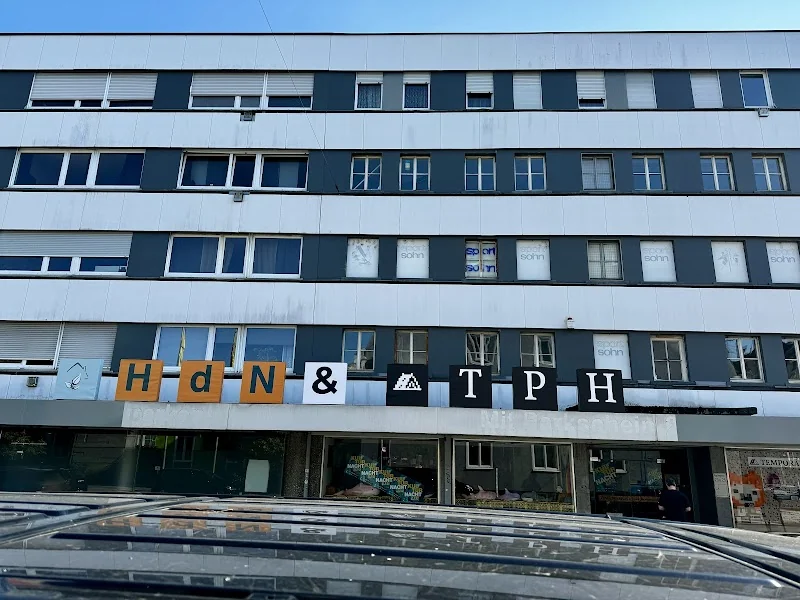
Augsburger Str. 23, Neu-Ulm
Augsburger Str. 23, 89231 Neu-Ulm, Germany
House of Sustainability Neu-Ulm | Rooms & Events
The House of Sustainability in Neu-Ulm is a place where sustainability is not only explained but also made tangible in everyday life. The official website describes the HdN as a common meeting point for Ulm, Neu-Ulm, and the region, where citizens, businesses, municipalities, educational actors, science, and civil society initiatives come together. At Augsburg Street 23-25, the House of Sustainability Ulm, Neu-Ulm and Region e.V. and temporärhaus e.V. jointly operate a building with around 1,200 square meters over three floors. Thus, the HdN is more than just a classic event space: it is a meeting place, networking space, workshop, learning location, and platform for concrete projects. Those looking for photos can find images and a short video on the website that vividly show the atmosphere of the house and its diverse use. This blend of practice, openness, and thematic clarity makes the location particularly interesting for anyone looking for spaces, events, and sustainable impulses in Neu-Ulm. ([h-d-n.org](https://www.h-d-n.org/kopie-von-leihbar))
House of Sustainability Neu-Ulm: Location, Idea, and Profile
The idea behind the house is deliberately broad. According to its own representation, a tangible place is to be created in Neu-Ulm where society, businesses, municipalities, educational actors, and science can network to work together towards a sustainable lifestyle. On the page about the idea of the house, the HdN is described as a common place for encounters, exchange, and creativity. This is also the core of the location: not only individual events are to take place, but long-term connections, new collaborations, and concrete steps towards sustainable development. This also explains why the house thematically does not limit itself to a single area. Instead, it connects social, ecological, and economic perspectives with a clear regional reference to Ulm, Neu-Ulm, and the surrounding area. For those searching for the House of Sustainability Neu-Ulm or the House of Sustainability Ulm, it is important to note: This is about a real place with a clear mission and not just a name in the urban landscape. ([h-d-n.org](https://www.h-d-n.org/idee))
The spatial positioning also supports this profile. The website of temporärhaus describes the building as the former Sport-Sohn building at Augsburg Street 23-25 in 89231 Neu-Ulm. This gives the location an additional profile between proximity to the city, visible address, and recognizable use. The house is jointly supported by both associations, which underscores the cooperative structure of the project. This collaboration is particularly relevant for the external presentation because it explains why different formats can function side by side in the HdN: open encounter evenings, club and networking meetings, workshops, repair offers, lending operations, and co-working. Therefore, those visiting the house do not just experience a hall or an office but a collaboratively structured, thematically connected house with a clear stance. This is exactly what creates the special appeal of the location: it does not stand for event staging but for lived sustainability in a building that is deliberately designed for exchange and participation. ([temporaerhaus.de](https://temporaerhaus.de/das-haus/))
Rooms, Equipment, and Accessibility in the HdN
Particularly important for the search for space and location are the specific areas in the house. On the rooms page, the salon is described as a space for up to 100 people. It is flexibly usable for seminars, lectures, and workshops, making it ideal for formats that switch between presentation, exchange, and group work. Additionally, the website mentions small group islands that can be used for smaller work phases during events or workshops. A welcome area with signposts, vending machines, and a coffee machine ensures that guests can orient themselves directly. The lending shop is also spatially integrated and features thematic shelves as well as a meeting corner for smaller groups. This makes it clear that the HdN does not just talk about spaces but organizes them in a way that fosters encounters and practical use. The imagery on the website conveys an open, functional, and human impression. ([h-d-n.org](https://www.h-d-n.org/r%C3%A4ume))
In addition, the functional equipment relevant for seminars, meetings, and project work is available. In the so-called meeting room on the 1st floor, video conferencing, projectors, flip charts, and pin boards are available. For accessibility, the website mentions a barrier-free toilet on the ground floor. This equipment is a real plus, especially for organizations, clubs, and initiatives planning workshops, training, or discussion formats. The area repair4U is also clearly anchored spatially: there is a fully equipped workshop for large electrical appliances. The combination of salon, meeting rooms, workshop, and lending area makes the house an unusually versatile location. Those interested in House of Sustainability Neu-Ulm photos therefore not only receive pretty impressions but also a good picture of how the rooms function practically. This is as important for SEO as it is for actual visitors, as the location promises not only atmosphere but also concrete usability. ([h-d-n.org](https://www.h-d-n.org/r%C3%A4ume))
Opening Hours, Contact, and Use of the Rooms
For a location like the HdN, opening hours are a central search topic because they make access to the rooms planable. The official website currently states opening hours for the house itself on Monday from 6:00 PM to 9:00 PM and on Tuesday from 7:00 PM to 8:30 PM. Additionally, the house is open for public events, which are displayed in the event calendar. Fixed times apply for repair4U and the LeihBar, and on the 1st Monday of the month, there is the encounter evening Open House from 5:30 PM to 8:00 PM. This structure shows that the HdN is not a rigidly open building with classic public hours but a program-oriented place with appointment logic. For everyone specifically searching for House of Sustainability opening hours, it is therefore important: The best entry point is the event calendar, supplemented by the recurring opening hours of individual offers. ([h-d-n.org](https://www.h-d-n.org/kopie-von-leihbar))
Those wishing to use the rooms will find a clear contact method on the website. The rooms page refers to the contact form and the email address veranstaltungen@h-d-n.org. It is explicitly stated that initiatives, NGOs, and other groups that advocate for the 17 Sustainable Development Goals are supported. The FAQ also clarifies the usage model: For non-profit organizations, the principle of gift economy applies, meaning each initiative decides for itself how much the use is worth to them or what they can contribute. For non-profit organizations, there is a fixed flat rate. This is an important difference from many classic event locations, where prices and usage rules are often communicated only in general terms. In the HdN, usage is linked to the idea of the house. Therefore, those requesting rooms should not only mention the number of people but also the technical requirements, goals, and type of event. This transparency makes the house particularly accessible for engaged groups. ([h-d-n.org](https://www.h-d-n.org/r%C3%A4ume))
Events, Network, and Companies in the House of Sustainability
A significant part of the search intent surrounding the House of Sustainability Neu-Ulm is the event offerings. The website announces seminars, lectures, workshops, and cultural events that take place in collaboration with cooperation partners. The house does not see itself as an isolated stage but as a platform for different topics and target groups. This is particularly evident on the company page, where the Business Roundtable Sustainability is described as a regular format. There, the exchange begins with a short thematic impulse and transitions into a casual dialogue. Additionally, there is the workshop series #NiU, which addresses specific sustainability topics for regional companies, such as risk analyses, supply chains, CO2 issues, or ESG requirements. Furthermore, the Business Network Sustainability Ulm/Neu-Ulm allows entrepreneurs to discuss sustainability on equal terms. Thus, the HdN is not only a cultural or initiative place but also a relevant location for business-related sustainability in the region. ([h-d-n.org](https://www.h-d-n.org/))
The network dimension is also remarkable. On the network page, it states that over 100 citizens or representatives of various organizations, clubs, universities, research projects, municipal institutions, and companies are engaged in the HdN. This illustrates why the house is open to many topics: it brings together different perspectives and thus creates a real social infrastructure. The page also regularly names active groups such as the Working Group on Inclusion and Diversity as well as other organizations like Greenpeace, the Indian Community, FireFlyHopes, and Kulturdächle e.V. In this context, the term Open House is also important as it marks the regular encounter evening as a low-threshold entry into the house. For those searching for House of Sustainability events, this is particularly relevant: it is not just about individual dates but about a permanent network consisting of meetings, focus groups, projects, and events. This network of actors makes the HdN a place with depth and not just an event address. ([h-d-n.org](https://www.h-d-n.org/netzwerk?utm_source=openai))
LeihBar and repair4U: Sustainability in Everyday Life
The two strongest everyday offerings of the house are the LeihBar and repair4U. The LeihBar describes itself as a lending shop where various items can be borrowed that one does not need often. The goal is to provide consumption alternatives, avoid waste, and raise awareness for sustainable consumption. Particularly interesting for users: members pay 24 euros per year and can borrow items unlimitedly and free of charge. This makes the principle of sharing very concrete and close to everyday life. The official opening hours are Tuesday from 6:30 PM to 8:00 PM and Wednesday from 10:30 AM to 12:00 PM. Additionally, there is an online lending catalog that further facilitates use. Thus, the LeihBar appeals to people who want to consume consciously but do not need to own everything themselves. In the search logic, this is a strong meeting point for terms like LeihBar, lending shop, and sustainable everyday life. ([h-d-n.org](https://www.h-d-n.org/leihbar-1?utm_source=openai))
repair4U complements this principle with repair instead of new purchase. The website describes the offering as free repair of washing machines, dishwashers, and dryers; usually, only the costs for replacement parts need to be covered. The work takes place in a dedicated workshop in the house, and transport within the city can be organized with the cargo e-bike of the temporärhaus. Therefore, when someone drops off a device, they can not only get rid of it but ideally receive a functioning device back or help save resources. A blog post from the HdN also reports that nearly 90 percent of the washing machines dropped off can be repaired, thus avoiding electronic waste. Although such numbers may fluctuate over time, the post vividly illustrates how effective the project is. This is where the idea of the house becomes tangible in everyday life: sustainability is not just a topic for lectures but a concrete practice with screwdriver, replacement part, and reuse. ([h-d-n.org](https://www.h-d-n.org/repair4u?utm_source=openai))
Co-Working, Education, and Participation in the HdN
In addition to events and everyday projects, the house is also developing work and learning spaces. The co-working page describes that in collaboration with the Founders Space of the Neu-Ulm University, the facilities on the third floor are being expanded. Co-working spaces and studio areas for social entrepreneurs and cultural creators are being created there. Workspaces can be rented temporarily or permanently; users pay a small rental fee and also contribute working hours to the house. This is a particularly exciting approach because it not only rents out space but also connects it with co-responsibility. For people searching for co-working Neu-Ulm or House of Sustainability co-working, this is exactly the difference: it is not about a neutral office product but about a collaborative space with a societal goal. This fits very well with the core idea of the HdN, which is to connect creative ideas, regional impact, and sustainable development. ([h-d-n.org](https://www.h-d-n.org/coworking))
The house is also clearly positioned in the education sector. On the homepage, the HdN refers to the Ulm Theses, which aim to provide impulses for future-proof education systems. At the same time, the FAQ makes it clear that the development of further educational offerings, such as for school classes, is an important goal for the further development of the house. Those who want to get involved can also participate through membership, donations, or working in focus groups. The website emphasizes a collaboration on equal terms and describes sociocratic structures as well as the consent principle as part of the internal culture. This is relevant for external perception because it shows that the house does not only offer events but also lives a stance. For users, this means: The House of Sustainability Neu-Ulm is a place where one can book rooms, start projects, repair things, borrow items, network, and also participate in the long term. This multifaceted nature explains why the location is so strongly anchored in the region. ([h-d-n.org](https://www.h-d-n.org/ulmer-thesen?utm_source=openai))
Sources:
- House of Sustainability Ulm, Neu-Ulm and Region e.V. - Homepage
- House of Sustainability Ulm, Neu-Ulm and Region e.V. - The Idea of Our House
- House of Sustainability Ulm, Neu-Ulm and Region e.V. - The Concept Behind the HdN
- House of Sustainability Ulm, Neu-Ulm and Region e.V. - FAQ about the HdN
- House of Sustainability Ulm, Neu-Ulm and Region e.V. - LeihBar
- House of Sustainability Ulm, Neu-Ulm and Region e.V. - repair4U
- House of Sustainability Ulm, Neu-Ulm and Region e.V. - Co-Working Space
- House of Sustainability Ulm, Neu-Ulm and Region e.V. - Companies
- temporärhaus e.V. - The House
Show moreShow less
House of Sustainability Neu-Ulm | Rooms & Events
The House of Sustainability in Neu-Ulm is a place where sustainability is not only explained but also made tangible in everyday life. The official website describes the HdN as a common meeting point for Ulm, Neu-Ulm, and the region, where citizens, businesses, municipalities, educational actors, science, and civil society initiatives come together. At Augsburg Street 23-25, the House of Sustainability Ulm, Neu-Ulm and Region e.V. and temporärhaus e.V. jointly operate a building with around 1,200 square meters over three floors. Thus, the HdN is more than just a classic event space: it is a meeting place, networking space, workshop, learning location, and platform for concrete projects. Those looking for photos can find images and a short video on the website that vividly show the atmosphere of the house and its diverse use. This blend of practice, openness, and thematic clarity makes the location particularly interesting for anyone looking for spaces, events, and sustainable impulses in Neu-Ulm. ([h-d-n.org](https://www.h-d-n.org/kopie-von-leihbar))
House of Sustainability Neu-Ulm: Location, Idea, and Profile
The idea behind the house is deliberately broad. According to its own representation, a tangible place is to be created in Neu-Ulm where society, businesses, municipalities, educational actors, and science can network to work together towards a sustainable lifestyle. On the page about the idea of the house, the HdN is described as a common place for encounters, exchange, and creativity. This is also the core of the location: not only individual events are to take place, but long-term connections, new collaborations, and concrete steps towards sustainable development. This also explains why the house thematically does not limit itself to a single area. Instead, it connects social, ecological, and economic perspectives with a clear regional reference to Ulm, Neu-Ulm, and the surrounding area. For those searching for the House of Sustainability Neu-Ulm or the House of Sustainability Ulm, it is important to note: This is about a real place with a clear mission and not just a name in the urban landscape. ([h-d-n.org](https://www.h-d-n.org/idee))
The spatial positioning also supports this profile. The website of temporärhaus describes the building as the former Sport-Sohn building at Augsburg Street 23-25 in 89231 Neu-Ulm. This gives the location an additional profile between proximity to the city, visible address, and recognizable use. The house is jointly supported by both associations, which underscores the cooperative structure of the project. This collaboration is particularly relevant for the external presentation because it explains why different formats can function side by side in the HdN: open encounter evenings, club and networking meetings, workshops, repair offers, lending operations, and co-working. Therefore, those visiting the house do not just experience a hall or an office but a collaboratively structured, thematically connected house with a clear stance. This is exactly what creates the special appeal of the location: it does not stand for event staging but for lived sustainability in a building that is deliberately designed for exchange and participation. ([temporaerhaus.de](https://temporaerhaus.de/das-haus/))
Rooms, Equipment, and Accessibility in the HdN
Particularly important for the search for space and location are the specific areas in the house. On the rooms page, the salon is described as a space for up to 100 people. It is flexibly usable for seminars, lectures, and workshops, making it ideal for formats that switch between presentation, exchange, and group work. Additionally, the website mentions small group islands that can be used for smaller work phases during events or workshops. A welcome area with signposts, vending machines, and a coffee machine ensures that guests can orient themselves directly. The lending shop is also spatially integrated and features thematic shelves as well as a meeting corner for smaller groups. This makes it clear that the HdN does not just talk about spaces but organizes them in a way that fosters encounters and practical use. The imagery on the website conveys an open, functional, and human impression. ([h-d-n.org](https://www.h-d-n.org/r%C3%A4ume))
In addition, the functional equipment relevant for seminars, meetings, and project work is available. In the so-called meeting room on the 1st floor, video conferencing, projectors, flip charts, and pin boards are available. For accessibility, the website mentions a barrier-free toilet on the ground floor. This equipment is a real plus, especially for organizations, clubs, and initiatives planning workshops, training, or discussion formats. The area repair4U is also clearly anchored spatially: there is a fully equipped workshop for large electrical appliances. The combination of salon, meeting rooms, workshop, and lending area makes the house an unusually versatile location. Those interested in House of Sustainability Neu-Ulm photos therefore not only receive pretty impressions but also a good picture of how the rooms function practically. This is as important for SEO as it is for actual visitors, as the location promises not only atmosphere but also concrete usability. ([h-d-n.org](https://www.h-d-n.org/r%C3%A4ume))
Opening Hours, Contact, and Use of the Rooms
For a location like the HdN, opening hours are a central search topic because they make access to the rooms planable. The official website currently states opening hours for the house itself on Monday from 6:00 PM to 9:00 PM and on Tuesday from 7:00 PM to 8:30 PM. Additionally, the house is open for public events, which are displayed in the event calendar. Fixed times apply for repair4U and the LeihBar, and on the 1st Monday of the month, there is the encounter evening Open House from 5:30 PM to 8:00 PM. This structure shows that the HdN is not a rigidly open building with classic public hours but a program-oriented place with appointment logic. For everyone specifically searching for House of Sustainability opening hours, it is therefore important: The best entry point is the event calendar, supplemented by the recurring opening hours of individual offers. ([h-d-n.org](https://www.h-d-n.org/kopie-von-leihbar))
Those wishing to use the rooms will find a clear contact method on the website. The rooms page refers to the contact form and the email address veranstaltungen@h-d-n.org. It is explicitly stated that initiatives, NGOs, and other groups that advocate for the 17 Sustainable Development Goals are supported. The FAQ also clarifies the usage model: For non-profit organizations, the principle of gift economy applies, meaning each initiative decides for itself how much the use is worth to them or what they can contribute. For non-profit organizations, there is a fixed flat rate. This is an important difference from many classic event locations, where prices and usage rules are often communicated only in general terms. In the HdN, usage is linked to the idea of the house. Therefore, those requesting rooms should not only mention the number of people but also the technical requirements, goals, and type of event. This transparency makes the house particularly accessible for engaged groups. ([h-d-n.org](https://www.h-d-n.org/r%C3%A4ume))
Events, Network, and Companies in the House of Sustainability
A significant part of the search intent surrounding the House of Sustainability Neu-Ulm is the event offerings. The website announces seminars, lectures, workshops, and cultural events that take place in collaboration with cooperation partners. The house does not see itself as an isolated stage but as a platform for different topics and target groups. This is particularly evident on the company page, where the Business Roundtable Sustainability is described as a regular format. There, the exchange begins with a short thematic impulse and transitions into a casual dialogue. Additionally, there is the workshop series #NiU, which addresses specific sustainability topics for regional companies, such as risk analyses, supply chains, CO2 issues, or ESG requirements. Furthermore, the Business Network Sustainability Ulm/Neu-Ulm allows entrepreneurs to discuss sustainability on equal terms. Thus, the HdN is not only a cultural or initiative place but also a relevant location for business-related sustainability in the region. ([h-d-n.org](https://www.h-d-n.org/))
The network dimension is also remarkable. On the network page, it states that over 100 citizens or representatives of various organizations, clubs, universities, research projects, municipal institutions, and companies are engaged in the HdN. This illustrates why the house is open to many topics: it brings together different perspectives and thus creates a real social infrastructure. The page also regularly names active groups such as the Working Group on Inclusion and Diversity as well as other organizations like Greenpeace, the Indian Community, FireFlyHopes, and Kulturdächle e.V. In this context, the term Open House is also important as it marks the regular encounter evening as a low-threshold entry into the house. For those searching for House of Sustainability events, this is particularly relevant: it is not just about individual dates but about a permanent network consisting of meetings, focus groups, projects, and events. This network of actors makes the HdN a place with depth and not just an event address. ([h-d-n.org](https://www.h-d-n.org/netzwerk?utm_source=openai))
LeihBar and repair4U: Sustainability in Everyday Life
The two strongest everyday offerings of the house are the LeihBar and repair4U. The LeihBar describes itself as a lending shop where various items can be borrowed that one does not need often. The goal is to provide consumption alternatives, avoid waste, and raise awareness for sustainable consumption. Particularly interesting for users: members pay 24 euros per year and can borrow items unlimitedly and free of charge. This makes the principle of sharing very concrete and close to everyday life. The official opening hours are Tuesday from 6:30 PM to 8:00 PM and Wednesday from 10:30 AM to 12:00 PM. Additionally, there is an online lending catalog that further facilitates use. Thus, the LeihBar appeals to people who want to consume consciously but do not need to own everything themselves. In the search logic, this is a strong meeting point for terms like LeihBar, lending shop, and sustainable everyday life. ([h-d-n.org](https://www.h-d-n.org/leihbar-1?utm_source=openai))
repair4U complements this principle with repair instead of new purchase. The website describes the offering as free repair of washing machines, dishwashers, and dryers; usually, only the costs for replacement parts need to be covered. The work takes place in a dedicated workshop in the house, and transport within the city can be organized with the cargo e-bike of the temporärhaus. Therefore, when someone drops off a device, they can not only get rid of it but ideally receive a functioning device back or help save resources. A blog post from the HdN also reports that nearly 90 percent of the washing machines dropped off can be repaired, thus avoiding electronic waste. Although such numbers may fluctuate over time, the post vividly illustrates how effective the project is. This is where the idea of the house becomes tangible in everyday life: sustainability is not just a topic for lectures but a concrete practice with screwdriver, replacement part, and reuse. ([h-d-n.org](https://www.h-d-n.org/repair4u?utm_source=openai))
Co-Working, Education, and Participation in the HdN
In addition to events and everyday projects, the house is also developing work and learning spaces. The co-working page describes that in collaboration with the Founders Space of the Neu-Ulm University, the facilities on the third floor are being expanded. Co-working spaces and studio areas for social entrepreneurs and cultural creators are being created there. Workspaces can be rented temporarily or permanently; users pay a small rental fee and also contribute working hours to the house. This is a particularly exciting approach because it not only rents out space but also connects it with co-responsibility. For people searching for co-working Neu-Ulm or House of Sustainability co-working, this is exactly the difference: it is not about a neutral office product but about a collaborative space with a societal goal. This fits very well with the core idea of the HdN, which is to connect creative ideas, regional impact, and sustainable development. ([h-d-n.org](https://www.h-d-n.org/coworking))
The house is also clearly positioned in the education sector. On the homepage, the HdN refers to the Ulm Theses, which aim to provide impulses for future-proof education systems. At the same time, the FAQ makes it clear that the development of further educational offerings, such as for school classes, is an important goal for the further development of the house. Those who want to get involved can also participate through membership, donations, or working in focus groups. The website emphasizes a collaboration on equal terms and describes sociocratic structures as well as the consent principle as part of the internal culture. This is relevant for external perception because it shows that the house does not only offer events but also lives a stance. For users, this means: The House of Sustainability Neu-Ulm is a place where one can book rooms, start projects, repair things, borrow items, network, and also participate in the long term. This multifaceted nature explains why the location is so strongly anchored in the region. ([h-d-n.org](https://www.h-d-n.org/ulmer-thesen?utm_source=openai))
Sources:
- House of Sustainability Ulm, Neu-Ulm and Region e.V. - Homepage
- House of Sustainability Ulm, Neu-Ulm and Region e.V. - The Idea of Our House
- House of Sustainability Ulm, Neu-Ulm and Region e.V. - The Concept Behind the HdN
- House of Sustainability Ulm, Neu-Ulm and Region e.V. - FAQ about the HdN
- House of Sustainability Ulm, Neu-Ulm and Region e.V. - LeihBar
- House of Sustainability Ulm, Neu-Ulm and Region e.V. - repair4U
- House of Sustainability Ulm, Neu-Ulm and Region e.V. - Co-Working Space
- House of Sustainability Ulm, Neu-Ulm and Region e.V. - Companies
- temporärhaus e.V. - The House
House of Sustainability Neu-Ulm | Rooms & Events
The House of Sustainability in Neu-Ulm is a place where sustainability is not only explained but also made tangible in everyday life. The official website describes the HdN as a common meeting point for Ulm, Neu-Ulm, and the region, where citizens, businesses, municipalities, educational actors, science, and civil society initiatives come together. At Augsburg Street 23-25, the House of Sustainability Ulm, Neu-Ulm and Region e.V. and temporärhaus e.V. jointly operate a building with around 1,200 square meters over three floors. Thus, the HdN is more than just a classic event space: it is a meeting place, networking space, workshop, learning location, and platform for concrete projects. Those looking for photos can find images and a short video on the website that vividly show the atmosphere of the house and its diverse use. This blend of practice, openness, and thematic clarity makes the location particularly interesting for anyone looking for spaces, events, and sustainable impulses in Neu-Ulm. ([h-d-n.org](https://www.h-d-n.org/kopie-von-leihbar))
House of Sustainability Neu-Ulm: Location, Idea, and Profile
The idea behind the house is deliberately broad. According to its own representation, a tangible place is to be created in Neu-Ulm where society, businesses, municipalities, educational actors, and science can network to work together towards a sustainable lifestyle. On the page about the idea of the house, the HdN is described as a common place for encounters, exchange, and creativity. This is also the core of the location: not only individual events are to take place, but long-term connections, new collaborations, and concrete steps towards sustainable development. This also explains why the house thematically does not limit itself to a single area. Instead, it connects social, ecological, and economic perspectives with a clear regional reference to Ulm, Neu-Ulm, and the surrounding area. For those searching for the House of Sustainability Neu-Ulm or the House of Sustainability Ulm, it is important to note: This is about a real place with a clear mission and not just a name in the urban landscape. ([h-d-n.org](https://www.h-d-n.org/idee))
The spatial positioning also supports this profile. The website of temporärhaus describes the building as the former Sport-Sohn building at Augsburg Street 23-25 in 89231 Neu-Ulm. This gives the location an additional profile between proximity to the city, visible address, and recognizable use. The house is jointly supported by both associations, which underscores the cooperative structure of the project. This collaboration is particularly relevant for the external presentation because it explains why different formats can function side by side in the HdN: open encounter evenings, club and networking meetings, workshops, repair offers, lending operations, and co-working. Therefore, those visiting the house do not just experience a hall or an office but a collaboratively structured, thematically connected house with a clear stance. This is exactly what creates the special appeal of the location: it does not stand for event staging but for lived sustainability in a building that is deliberately designed for exchange and participation. ([temporaerhaus.de](https://temporaerhaus.de/das-haus/))
Rooms, Equipment, and Accessibility in the HdN
Particularly important for the search for space and location are the specific areas in the house. On the rooms page, the salon is described as a space for up to 100 people. It is flexibly usable for seminars, lectures, and workshops, making it ideal for formats that switch between presentation, exchange, and group work. Additionally, the website mentions small group islands that can be used for smaller work phases during events or workshops. A welcome area with signposts, vending machines, and a coffee machine ensures that guests can orient themselves directly. The lending shop is also spatially integrated and features thematic shelves as well as a meeting corner for smaller groups. This makes it clear that the HdN does not just talk about spaces but organizes them in a way that fosters encounters and practical use. The imagery on the website conveys an open, functional, and human impression. ([h-d-n.org](https://www.h-d-n.org/r%C3%A4ume))
In addition, the functional equipment relevant for seminars, meetings, and project work is available. In the so-called meeting room on the 1st floor, video conferencing, projectors, flip charts, and pin boards are available. For accessibility, the website mentions a barrier-free toilet on the ground floor. This equipment is a real plus, especially for organizations, clubs, and initiatives planning workshops, training, or discussion formats. The area repair4U is also clearly anchored spatially: there is a fully equipped workshop for large electrical appliances. The combination of salon, meeting rooms, workshop, and lending area makes the house an unusually versatile location. Those interested in House of Sustainability Neu-Ulm photos therefore not only receive pretty impressions but also a good picture of how the rooms function practically. This is as important for SEO as it is for actual visitors, as the location promises not only atmosphere but also concrete usability. ([h-d-n.org](https://www.h-d-n.org/r%C3%A4ume))
Opening Hours, Contact, and Use of the Rooms
For a location like the HdN, opening hours are a central search topic because they make access to the rooms planable. The official website currently states opening hours for the house itself on Monday from 6:00 PM to 9:00 PM and on Tuesday from 7:00 PM to 8:30 PM. Additionally, the house is open for public events, which are displayed in the event calendar. Fixed times apply for repair4U and the LeihBar, and on the 1st Monday of the month, there is the encounter evening Open House from 5:30 PM to 8:00 PM. This structure shows that the HdN is not a rigidly open building with classic public hours but a program-oriented place with appointment logic. For everyone specifically searching for House of Sustainability opening hours, it is therefore important: The best entry point is the event calendar, supplemented by the recurring opening hours of individual offers. ([h-d-n.org](https://www.h-d-n.org/kopie-von-leihbar))
Those wishing to use the rooms will find a clear contact method on the website. The rooms page refers to the contact form and the email address veranstaltungen@h-d-n.org. It is explicitly stated that initiatives, NGOs, and other groups that advocate for the 17 Sustainable Development Goals are supported. The FAQ also clarifies the usage model: For non-profit organizations, the principle of gift economy applies, meaning each initiative decides for itself how much the use is worth to them or what they can contribute. For non-profit organizations, there is a fixed flat rate. This is an important difference from many classic event locations, where prices and usage rules are often communicated only in general terms. In the HdN, usage is linked to the idea of the house. Therefore, those requesting rooms should not only mention the number of people but also the technical requirements, goals, and type of event. This transparency makes the house particularly accessible for engaged groups. ([h-d-n.org](https://www.h-d-n.org/r%C3%A4ume))
Events, Network, and Companies in the House of Sustainability
A significant part of the search intent surrounding the House of Sustainability Neu-Ulm is the event offerings. The website announces seminars, lectures, workshops, and cultural events that take place in collaboration with cooperation partners. The house does not see itself as an isolated stage but as a platform for different topics and target groups. This is particularly evident on the company page, where the Business Roundtable Sustainability is described as a regular format. There, the exchange begins with a short thematic impulse and transitions into a casual dialogue. Additionally, there is the workshop series #NiU, which addresses specific sustainability topics for regional companies, such as risk analyses, supply chains, CO2 issues, or ESG requirements. Furthermore, the Business Network Sustainability Ulm/Neu-Ulm allows entrepreneurs to discuss sustainability on equal terms. Thus, the HdN is not only a cultural or initiative place but also a relevant location for business-related sustainability in the region. ([h-d-n.org](https://www.h-d-n.org/))
The network dimension is also remarkable. On the network page, it states that over 100 citizens or representatives of various organizations, clubs, universities, research projects, municipal institutions, and companies are engaged in the HdN. This illustrates why the house is open to many topics: it brings together different perspectives and thus creates a real social infrastructure. The page also regularly names active groups such as the Working Group on Inclusion and Diversity as well as other organizations like Greenpeace, the Indian Community, FireFlyHopes, and Kulturdächle e.V. In this context, the term Open House is also important as it marks the regular encounter evening as a low-threshold entry into the house. For those searching for House of Sustainability events, this is particularly relevant: it is not just about individual dates but about a permanent network consisting of meetings, focus groups, projects, and events. This network of actors makes the HdN a place with depth and not just an event address. ([h-d-n.org](https://www.h-d-n.org/netzwerk?utm_source=openai))
LeihBar and repair4U: Sustainability in Everyday Life
The two strongest everyday offerings of the house are the LeihBar and repair4U. The LeihBar describes itself as a lending shop where various items can be borrowed that one does not need often. The goal is to provide consumption alternatives, avoid waste, and raise awareness for sustainable consumption. Particularly interesting for users: members pay 24 euros per year and can borrow items unlimitedly and free of charge. This makes the principle of sharing very concrete and close to everyday life. The official opening hours are Tuesday from 6:30 PM to 8:00 PM and Wednesday from 10:30 AM to 12:00 PM. Additionally, there is an online lending catalog that further facilitates use. Thus, the LeihBar appeals to people who want to consume consciously but do not need to own everything themselves. In the search logic, this is a strong meeting point for terms like LeihBar, lending shop, and sustainable everyday life. ([h-d-n.org](https://www.h-d-n.org/leihbar-1?utm_source=openai))
repair4U complements this principle with repair instead of new purchase. The website describes the offering as free repair of washing machines, dishwashers, and dryers; usually, only the costs for replacement parts need to be covered. The work takes place in a dedicated workshop in the house, and transport within the city can be organized with the cargo e-bike of the temporärhaus. Therefore, when someone drops off a device, they can not only get rid of it but ideally receive a functioning device back or help save resources. A blog post from the HdN also reports that nearly 90 percent of the washing machines dropped off can be repaired, thus avoiding electronic waste. Although such numbers may fluctuate over time, the post vividly illustrates how effective the project is. This is where the idea of the house becomes tangible in everyday life: sustainability is not just a topic for lectures but a concrete practice with screwdriver, replacement part, and reuse. ([h-d-n.org](https://www.h-d-n.org/repair4u?utm_source=openai))
Co-Working, Education, and Participation in the HdN
In addition to events and everyday projects, the house is also developing work and learning spaces. The co-working page describes that in collaboration with the Founders Space of the Neu-Ulm University, the facilities on the third floor are being expanded. Co-working spaces and studio areas for social entrepreneurs and cultural creators are being created there. Workspaces can be rented temporarily or permanently; users pay a small rental fee and also contribute working hours to the house. This is a particularly exciting approach because it not only rents out space but also connects it with co-responsibility. For people searching for co-working Neu-Ulm or House of Sustainability co-working, this is exactly the difference: it is not about a neutral office product but about a collaborative space with a societal goal. This fits very well with the core idea of the HdN, which is to connect creative ideas, regional impact, and sustainable development. ([h-d-n.org](https://www.h-d-n.org/coworking))
The house is also clearly positioned in the education sector. On the homepage, the HdN refers to the Ulm Theses, which aim to provide impulses for future-proof education systems. At the same time, the FAQ makes it clear that the development of further educational offerings, such as for school classes, is an important goal for the further development of the house. Those who want to get involved can also participate through membership, donations, or working in focus groups. The website emphasizes a collaboration on equal terms and describes sociocratic structures as well as the consent principle as part of the internal culture. This is relevant for external perception because it shows that the house does not only offer events but also lives a stance. For users, this means: The House of Sustainability Neu-Ulm is a place where one can book rooms, start projects, repair things, borrow items, network, and also participate in the long term. This multifaceted nature explains why the location is so strongly anchored in the region. ([h-d-n.org](https://www.h-d-n.org/ulmer-thesen?utm_source=openai))
Sources:
- House of Sustainability Ulm, Neu-Ulm and Region e.V. - Homepage
- House of Sustainability Ulm, Neu-Ulm and Region e.V. - The Idea of Our House
- House of Sustainability Ulm, Neu-Ulm and Region e.V. - The Concept Behind the HdN
- House of Sustainability Ulm, Neu-Ulm and Region e.V. - FAQ about the HdN
- House of Sustainability Ulm, Neu-Ulm and Region e.V. - LeihBar
- House of Sustainability Ulm, Neu-Ulm and Region e.V. - repair4U
- House of Sustainability Ulm, Neu-Ulm and Region e.V. - Co-Working Space
- House of Sustainability Ulm, Neu-Ulm and Region e.V. - Companies
- temporärhaus e.V. - The House
Upcoming Events
No events found
Frequently Asked Questions
Reviews
Jule Brischar
14. September 2024
A great place to meet, discuss, motivate, and create. Awesome coworking space, always useful things to borrow, and sometimes they even serve really delicious food (e.g., at the Culture Night). I just love it here.
Svetlana Umaha
16. February 2024
I gave an amigurumi crochet lesson to everyone who wanted to learn it.
Murat Güclü
22. February 2026
salona sahni
29. December 2025
Marc Oliver Feuring
26. November 2025