
Petruspl. 4, Neu-Ulm
Petruspl. 4, 89231 Neu-Ulm, Germany
Edwin Scharff Museum | Opening Hours & Tickets
The Edwin Scharff Museum is located at Petrusplatz in the middle of Neu-Ulm and is one of the special places in the twin city of Ulm/Neu-Ulm, as it is not only an art museum but also a children's museum for families, school classes, and curious individual visitors. Those who come here experience two worlds under one roof that complement each other: the calm, art-historical engagement with Edwin Scharff and Ernst Geitlinger in the art museum and the playful, action-oriented exploration in the children's museum. This combination makes the location interesting for different target groups, from art enthusiasts to parents with children to groups looking for a cultural stop in a central downtown location. The house operates with permanent collections, regularly changing special exhibitions, media stations, and interactive zones, so the visit never feels static but always opens up new perspectives. For the current season, the art museum focuses on the double exhibition on artistic dance and a preview of Ernst Barlach, while the children's museum features an interactive exhibition on what one can do. The location is also a plus: the train station, downtown, and Petrusplatz are quickly accessible, and the museum is clearly oriented towards family-friendly, barrier-free, and well-organized visits. ([edwinscharffmuseum.de](https://edwinscharffmuseum.de/))
Opening Hours and Tickets for the Edwin Scharff Museum
For the search intent regarding opening hours and tickets, the Edwin Scharff Museum provides very concrete and user-friendly information. The museum is closed on Mondays and Tuesdays, open on Wednesdays from 1 PM to 5 PM, Thursdays and Fridays from 1 PM to 6 PM, and Saturdays, Sundays, and public holidays from 10 AM to 6 PM. Additionally, the house points out special opening hours, such as on public holidays, and also mentions closing days like Carnival Monday, Carnival Tuesday, Good Friday, and December 24th and 31st. This is important for visitors who want to plan their stay not only based on the city location but also according to a precise time window. Particularly attractive is the free admission on Wednesdays, which makes the museum interesting for spontaneous visits. Pricing remains relatively moderate: regular admission costs 6 euros, a family ticket 11 euros, and reduced tickets 5 euros. Children and teenagers up to 18 years have free admission, which adds additional value for families. Frequent visitors can also purchase annual passes; vouchers and seasonal tickets are available according to the museum in the foyer area during opening hours. This makes the ticket model clear and easy to understand for both occasional visitors and returning guests. Another plus: registered groups, school classes, and kindergartens can visit outside normal opening hours, increasing flexibility for educational institutions. ([edwinscharffmuseum.de](https://edwinscharffmuseum.de/en/visit/))
In practice, this means: Those planning a weekend trip to the Edwin Scharff Museum should inform themselves early about the suitable time slot and the respective daily logic. Visiting on Wednesdays is worthwhile not only because of the free admission but also because the museum is regularly open on this day, making it particularly suitable for a cultural appointment during the week. Families who bring several hours of time benefit from the clear pricing tiers and free admissions for children and teenagers. For adult companions with children, the family ticket is interesting because it makes costs calculable. Those interested in art education or barrier-free offerings will also find a transparent structure here, as the ticket counter serves not only for entry but also as a central point of contact for information, media guides, shops, and other visit components. Through this combination of clear pricing, free visit opportunities on Wednesdays, and clearly defined special regulations, the museum is quickly understandable for those searching for tickets, prices, and opening hours. This strengthens visibility in search engines as well as the actual user experience on-site. ([edwinscharffmuseum.de](https://edwinscharffmuseum.de/en/visit/))
Children's Museum: Time Slots, Interactive Exhibitions, and Family Visits
The children's museum is one of the biggest attractions of the house and a central reason why the Edwin Scharff Museum is relevant not only for art-affine adults. According to the museum, the children's museum covers around 500 square meters, and the experience exhibitions change annually. The themes are deliberately broad: previous and current formats deal with family, death, body, globalization, or other socially and culturally relevant questions. The approach of playful exploration is crucial here. Children and adults should not just look but search, discover, build, try out, and experience with all their senses. This is exactly what makes the children's museum a place that goes beyond classic exhibitions and creates an active learning space. The house confidently formulates the visit as an interactive exhibition and points out that hands-on is explicitly welcome. This attitude is supported by the so-called interactive zones and media stations, which also bridge to the art museum. This creates a museum experience that combines knowledge transfer and movement, perception and creativity. It is also important for families that the visit is not arbitrary but meaningfully organized: on weekends, public holidays, Wednesdays, and during school holidays, a binding time slot must be reserved. Booking should ideally be done two days before the desired date. On weekdays, Tuesday, Thursday, and Friday, reservation is not mandatory but can be helpful for longer journeys. The museum works with fixed slot times and asks visitors to adhere to the booked period. Those who arrive late risk having their reservation canceled in favor of other guests. ([edwinscharffmuseum.de](https://edwinscharffmuseum.de/))
For the family logic in the children's museum, clear and fair rules apply. Inside the house, socks are worn, shoes are left outside, and those who wish can bring their own slippers. Children up to 14 years may only enter the children's museum when accompanied by an adult; teenagers from 14 years may visit alone but may not supervise younger children. The duty of supervision lies primarily with parents or guardians. Additionally, the museum reserves the right to limit entry on heavily frequented days to ensure that the visit remains pleasant. The idea behind this is understandable: the children's museum should not appear overcrowded but allow space for concentrated, free exploration. Additionally, the museum offers a wide range of educational programs, from workshops and holiday offerings to Sunday stories and children's birthdays. Such offerings must be booked in advance, ideally at least two weeks ahead, and are only considered binding after confirmation via email. This positions the children's museum not only as an exhibition space but as an educational and experiential platform for families, kindergartens, schools, and anyone seeking an interactive museum experience. For SEO search queries like children's museum, family museum, interactive exhibition, or children's program, the house thus provides a content-rich, everyday-relevant, and very concrete answer. ([edwinscharffmuseum.de](https://edwinscharffmuseum.de/en/childrens-museum/))
Directions and Parking at Petrusplatz in Neu-Ulm
The location of the Edwin Scharff Museum is one of its greatest practical strengths, as it combines a central downtown location with good accessibility. The museum is located at Petrusplatz 4 in 89231 Neu-Ulm, directly in the city center, near the Neu-Ulm train station and just a few minutes' walk from the Ulm city center. Visitors need about five to eight minutes on foot from Neu-Ulm station, about twelve minutes from Münsterplatz in Ulm, and about twenty minutes from Ulm main station. This is ideal for many guests from the region, as the museum visit can easily be integrated into a city stroll, a market visit, or a cultural weekend. Those arriving by public transport can reach the museum via line 5 to Petrusplatz or line 7 to Schützenstraße. This connection is particularly valuable for a museum that appeals to both families and older visitors and groups, as it facilitates access without a car. For drivers, the official signage for museums at Petrusplatz leads to the underground parking garage at Petrusplatz, accessible via Hermann-Köhl-Straße. Additionally, there is a Park & Ride parking lot with 150 spaces available at Neu-Ulm station. This creates additional flexibility for guests who want to park outside the city center and then conveniently switch. ([edwinscharffmuseum.de](https://edwinscharffmuseum.de/en/visit/))
Especially regarding parking questions, the museum is transparent and practical. It refers to barrier-free parking spaces in the underground garage at Petrusplatz and additional free parking options at St. Johann Baptist Church or Johannesplatz in Neu-Ulm. This makes the house interesting for mobility-impaired visitors who need a short and planable route to the entrance. The city of Neu-Ulm complements the parking landscape with further downtown information, allowing visitors to prepare their arrival through official municipal structures. Those who come at the right time of day can also combine their museum visit with a short stroll over Petrusplatz, which is located in the middle of urban life. This central location pays off especially for families or groups with several people, as arrival, entrance, tickets, and later city walks are spatially close together. For search queries like directions Neu-Ulm, parking at Petrusplatz, or museum with underground parking, the Edwin Scharff Museum thus offers a very clear, easily understandable solution. This is not only comfortable but also a strong local SEO signal, as the most important visitor questions are answered directly and without detours. ([edwinscharffmuseum.de](https://edwinscharffmuseum.de/en/visit/))
Art Museum, Edwin Scharff, Ernst Geitlinger, and Changing Special Exhibitions
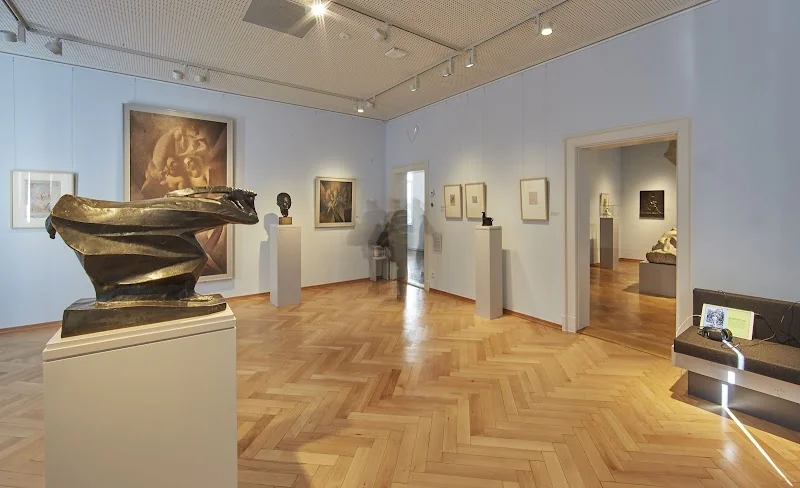
In the art museum, the Edwin Scharff Museum showcases its core museum competence: the connection of collection, research, and changing exhibition culture. The permanent exhibitions are dedicated to Edwin Scharff, the painter, graphic artist, and sculptor born in Neu-Ulm after whom the museum is named, as well as Ernst Geitlinger, who is considered a pioneer of geometric abstract art in Germany. The museum emphasizes that Scharff is among the most significant German sculptors of the first half of the 20th century and was particularly successful during his years in Berlin between 1923 and 1932. The focus is on the art of classical modernity, i.e., the period from the late 19th century to the first half of the 20th century, with a special emphasis on sculpture and three-dimensional art. The collection relates Scharff to contemporary and friendly artists such as Käthe Kollwitz, Ernst Barlach, and Georg Kolbe. The profile is complemented by the Geitlinger collection, which makes the transition from representational to abstract art visible. This makes the house exciting not only for art connoisseurs but also for anyone wanting to trace the transformation of modern art through concrete positions. The museum narrative is clearly structured: a strong local origin, a significant artist's name, a second collection as a dialogue partner, and regularly new special exhibitions that broaden the perspective. ([edwinscharffmuseum.de](https://edwinscharffmuseum.de/en/art-museum/))
Particularly interesting for current visitors is the changing exhibition situation. The website currently features the special exhibition “Dance Your Life – Dance Yourself,” which under the subtitle “Dance Becomes Art” highlights the facets of artistic dance. The focus is on the highlights of expressionist dance in the 1920s; the exhibition works with sculptures, graphics, photographs, costumes, and other media, making the dialogue between dance and contemporary art visible. This is exciting for visitors because the museum not only shows historical objects but also establishes content connections between movement, body, image, and stage. Additionally, the house announces a preview of the special exhibition “Ernst Barlach. Facets of Love,” which is set to run from May 23, 2026. This keeps the art museum relevant and varied in the coming months. Furthermore, there is an atmospheric bonus: in the museum's courtyard, two significant sculptures by Scharff are on display, and in summer, visitors can enjoy coffee or lemonade there. This is a nice proof that the location impresses not only academically but also spatially and atmospherically. Those interested in photos, exhibitions, and the unique profile of the house will find here not only a museum with a collection but a place with a clear curatorial signature and real revisit character. ([edwinscharffmuseum.de](https://edwinscharffmuseum.de/))
Accessibility, Media Guide, and Tours
Another important search and decision point is accessibility, and here too, the Edwin Scharff Museum offers solid, well-documented solutions. The museum is step-free accessible via the main entrance, all rooms and floors are reachable by elevator, and at the ticket counter, there is a tactile orientation map that illustrates the layout of the house. For visitors with limited mobility, a wheelchair and a walker are available in the foyer, and there is also a barrier-free sanitary area. The visitor guidance system is clearly described: the museum openly states that there is no floor system for blind people but recommends visiting with a companion if needed. This honesty is important because it creates realistic expectations and still shows that the house takes different needs seriously. Additionally, the museum provides information on its website in easy language, further improving access to information. For people with hearing or visual impairments, the media guide is also a strong offering: it is available for free at the ticket counter and includes tours in German and English. Additionally, there are audio tracks in German, English, easy language, and for families with children. For people with visual impairments, spoken content is available, and for deaf visitors, videos in German sign language are provided. This is a remarkably broad spectrum for a municipal museum and shows that inclusion is not just a buzzword here but is practically implemented. ([edwinscharffmuseum.de](https://edwinscharffmuseum.de/en/about-the-museum/participation/))
The house is also well-equipped for tours and educational formats. On selected dates, public tours in the art museums are accompanied by a sign language interpreter, allowing hearing-impaired visitors to read the spoken content simultaneously. According to the museum, no additional fees are charged for this besides the admission. Furthermore, the media stations in the permanent exhibition on Edwin Scharff and his contemporaries are designed to convey information through texts, audio, and video; they are even usable by wheelchair users, although not all content is fully barrier-free. Two tactile brochures complement the mediation for blind and visually impaired visitors. Additionally, the exhibition in the children's museum is based on the principle of perspective change and consciously includes different sensory accesses. For SEO relevance, this is particularly valuable, as search queries like barrier-free, tour, media guide, or easy language find a real, fact-based answer here. The museum is thus not only architecturally accessible but also communicatively, didactically, and digitally geared towards various target groups. So, anyone looking for a museum with an inclusive claim will find an offering at Petrusplatz that clearly goes beyond the standard. ([edwinscharffmuseum.de](https://edwinscharffmuseum.de/en/about-the-museum/participation/))
Café, Shop, and Practical Tips for Visiting
For a relaxed museum visit, the small practical details often play a big role, and here too, the Edwin Scharff Museum is well prepared. In the foyer, visitors can pay the admission fee during opening hours, purchase seasonal tickets and vouchers, and browse the shop. There is also a café that can be particularly pleasant to use in summer; in the courtyard, visitors can enjoy coffee or lemonade. Toilets, cloakroom, and lockers are located in the basement and are accessible by stairs or elevator. This may sound unremarkable, but in practice, it is exactly what makes the stay pleasant: clear paths, short distances, and a structure that works well with strollers, groups, or older individuals. It is also important for families that children are required to wear socks in the children's museum. This is not only a hygienic but also an organizational rule that supports the interactive character of the house. Those coming with small children should also take the reservation notice seriously, as the museum wants to ensure a smooth and planable process on heavily demanded days. For groups, school classes, and kindergartens, there are even offerings outside regular opening hours, making the house interesting for education and extracurricular learning. ([edwinscharffmuseum.de](https://edwinscharffmuseum.de/en/visit/))
Another practical advantage is the clear combination of free admission on Wednesdays and regular afternoon opening hours. Those who are flexible can thus plan a culturally rich but cost-effective visit. The location directly at Petrusplatz and near the city center also makes the museum a good destination for half or a whole day in Neu-Ulm. Visitors who have little time can specifically plan the collection, a special exhibition, or the courtyard with the café. Those who have more time can combine the museum visit with a stroll over the square, a city walk, or a detour to Ulm. The shop offers the classic added value of a museum visit: books, cards, posters, and small souvenirs are possible takeaways that extend and deepen the visit. Overall, the impression is of a location that not only showcases content but also provides a well-organized framework for the stay. This is crucial for search intents related to planning a visit, buying tickets, reserving the children's museum, or practical museum visits. The Edwin Scharff Museum delivers a clear, modern, and visitor-oriented solution here. ([edwinscharffmuseum.de](https://edwinscharffmuseum.de/en/visit/))
Museum Festival and Special Events
In addition to the regular exhibition situation, it is also worthwhile to look at special events, as they sharpen the profile of the museum as a lively cultural venue. A concrete example is the museum festival, which is currently announced on the website for Saturday, May 2, 2026, from 10 AM to 6 PM as a special event for the entire museum. Another date is mentioned for Sunday, May 3, 2026, at 11 AM. Admission is free, and the festival runs parallel to the arts and crafts market at Petrusplatz. Such formats are particularly relevant for search queries related to museum festivals, events, or family events, as they demonstrate that the house is not just a quiet exhibition space but part of the city's event calendar. The connection between the museum and Petrusplatz is particularly typical: the cultural experience is linked to the public space of the city, which increases the reach of the event and attracts new visitor groups. ([edwinscharffmuseum.de](https://edwinscharffmuseum.de/event/museumsfest/))
This is important for visitors because special events often offer a different atmosphere than the normal museum routine. During the museum festival, the entire place becomes a meeting point for adults, families, groups, teenagers, and children, precisely for those target groups that the permanent offerings of the house also address. Therefore, those looking for current dates should not only keep an eye on the exhibitions but also on the museum's event page. There, additional formats, tours, or special actions may be found temporarily, and the information naturally changes throughout the year. From an SEO perspective, this is ideal because it is not only about classic museum content but also about local events, family festivals, and recurring special dates. The museum thus shows that it is flexible both programmatically and organizationally as a cultural venue. ([edwinscharffmuseum.de](https://edwinscharffmuseum.de/event/museumsfest/))
Sources:
- Edwin Scharff Museum – Official Website
- Edwin Scharff Museum – Visit, Admission & Location
- Edwin Scharff Museum – About the Museum
- Edwin Scharff Museum – Art Museum
- Edwin Scharff Museum – Children's Museum
- Edwin Scharff Museum – Participation and Accessibility
- Edwin Scharff Museum – Museumsfest 2026
- City of Neu-Ulm – Parking in the City Center
Show moreShow less
Edwin Scharff Museum | Opening Hours & Tickets
The Edwin Scharff Museum is located at Petrusplatz in the middle of Neu-Ulm and is one of the special places in the twin city of Ulm/Neu-Ulm, as it is not only an art museum but also a children's museum for families, school classes, and curious individual visitors. Those who come here experience two worlds under one roof that complement each other: the calm, art-historical engagement with Edwin Scharff and Ernst Geitlinger in the art museum and the playful, action-oriented exploration in the children's museum. This combination makes the location interesting for different target groups, from art enthusiasts to parents with children to groups looking for a cultural stop in a central downtown location. The house operates with permanent collections, regularly changing special exhibitions, media stations, and interactive zones, so the visit never feels static but always opens up new perspectives. For the current season, the art museum focuses on the double exhibition on artistic dance and a preview of Ernst Barlach, while the children's museum features an interactive exhibition on what one can do. The location is also a plus: the train station, downtown, and Petrusplatz are quickly accessible, and the museum is clearly oriented towards family-friendly, barrier-free, and well-organized visits. ([edwinscharffmuseum.de](https://edwinscharffmuseum.de/))
Opening Hours and Tickets for the Edwin Scharff Museum
For the search intent regarding opening hours and tickets, the Edwin Scharff Museum provides very concrete and user-friendly information. The museum is closed on Mondays and Tuesdays, open on Wednesdays from 1 PM to 5 PM, Thursdays and Fridays from 1 PM to 6 PM, and Saturdays, Sundays, and public holidays from 10 AM to 6 PM. Additionally, the house points out special opening hours, such as on public holidays, and also mentions closing days like Carnival Monday, Carnival Tuesday, Good Friday, and December 24th and 31st. This is important for visitors who want to plan their stay not only based on the city location but also according to a precise time window. Particularly attractive is the free admission on Wednesdays, which makes the museum interesting for spontaneous visits. Pricing remains relatively moderate: regular admission costs 6 euros, a family ticket 11 euros, and reduced tickets 5 euros. Children and teenagers up to 18 years have free admission, which adds additional value for families. Frequent visitors can also purchase annual passes; vouchers and seasonal tickets are available according to the museum in the foyer area during opening hours. This makes the ticket model clear and easy to understand for both occasional visitors and returning guests. Another plus: registered groups, school classes, and kindergartens can visit outside normal opening hours, increasing flexibility for educational institutions. ([edwinscharffmuseum.de](https://edwinscharffmuseum.de/en/visit/))
In practice, this means: Those planning a weekend trip to the Edwin Scharff Museum should inform themselves early about the suitable time slot and the respective daily logic. Visiting on Wednesdays is worthwhile not only because of the free admission but also because the museum is regularly open on this day, making it particularly suitable for a cultural appointment during the week. Families who bring several hours of time benefit from the clear pricing tiers and free admissions for children and teenagers. For adult companions with children, the family ticket is interesting because it makes costs calculable. Those interested in art education or barrier-free offerings will also find a transparent structure here, as the ticket counter serves not only for entry but also as a central point of contact for information, media guides, shops, and other visit components. Through this combination of clear pricing, free visit opportunities on Wednesdays, and clearly defined special regulations, the museum is quickly understandable for those searching for tickets, prices, and opening hours. This strengthens visibility in search engines as well as the actual user experience on-site. ([edwinscharffmuseum.de](https://edwinscharffmuseum.de/en/visit/))
Children's Museum: Time Slots, Interactive Exhibitions, and Family Visits
The children's museum is one of the biggest attractions of the house and a central reason why the Edwin Scharff Museum is relevant not only for art-affine adults. According to the museum, the children's museum covers around 500 square meters, and the experience exhibitions change annually. The themes are deliberately broad: previous and current formats deal with family, death, body, globalization, or other socially and culturally relevant questions. The approach of playful exploration is crucial here. Children and adults should not just look but search, discover, build, try out, and experience with all their senses. This is exactly what makes the children's museum a place that goes beyond classic exhibitions and creates an active learning space. The house confidently formulates the visit as an interactive exhibition and points out that hands-on is explicitly welcome. This attitude is supported by the so-called interactive zones and media stations, which also bridge to the art museum. This creates a museum experience that combines knowledge transfer and movement, perception and creativity. It is also important for families that the visit is not arbitrary but meaningfully organized: on weekends, public holidays, Wednesdays, and during school holidays, a binding time slot must be reserved. Booking should ideally be done two days before the desired date. On weekdays, Tuesday, Thursday, and Friday, reservation is not mandatory but can be helpful for longer journeys. The museum works with fixed slot times and asks visitors to adhere to the booked period. Those who arrive late risk having their reservation canceled in favor of other guests. ([edwinscharffmuseum.de](https://edwinscharffmuseum.de/))
For the family logic in the children's museum, clear and fair rules apply. Inside the house, socks are worn, shoes are left outside, and those who wish can bring their own slippers. Children up to 14 years may only enter the children's museum when accompanied by an adult; teenagers from 14 years may visit alone but may not supervise younger children. The duty of supervision lies primarily with parents or guardians. Additionally, the museum reserves the right to limit entry on heavily frequented days to ensure that the visit remains pleasant. The idea behind this is understandable: the children's museum should not appear overcrowded but allow space for concentrated, free exploration. Additionally, the museum offers a wide range of educational programs, from workshops and holiday offerings to Sunday stories and children's birthdays. Such offerings must be booked in advance, ideally at least two weeks ahead, and are only considered binding after confirmation via email. This positions the children's museum not only as an exhibition space but as an educational and experiential platform for families, kindergartens, schools, and anyone seeking an interactive museum experience. For SEO search queries like children's museum, family museum, interactive exhibition, or children's program, the house thus provides a content-rich, everyday-relevant, and very concrete answer. ([edwinscharffmuseum.de](https://edwinscharffmuseum.de/en/childrens-museum/))
Directions and Parking at Petrusplatz in Neu-Ulm
The location of the Edwin Scharff Museum is one of its greatest practical strengths, as it combines a central downtown location with good accessibility. The museum is located at Petrusplatz 4 in 89231 Neu-Ulm, directly in the city center, near the Neu-Ulm train station and just a few minutes' walk from the Ulm city center. Visitors need about five to eight minutes on foot from Neu-Ulm station, about twelve minutes from Münsterplatz in Ulm, and about twenty minutes from Ulm main station. This is ideal for many guests from the region, as the museum visit can easily be integrated into a city stroll, a market visit, or a cultural weekend. Those arriving by public transport can reach the museum via line 5 to Petrusplatz or line 7 to Schützenstraße. This connection is particularly valuable for a museum that appeals to both families and older visitors and groups, as it facilitates access without a car. For drivers, the official signage for museums at Petrusplatz leads to the underground parking garage at Petrusplatz, accessible via Hermann-Köhl-Straße. Additionally, there is a Park & Ride parking lot with 150 spaces available at Neu-Ulm station. This creates additional flexibility for guests who want to park outside the city center and then conveniently switch. ([edwinscharffmuseum.de](https://edwinscharffmuseum.de/en/visit/))
Especially regarding parking questions, the museum is transparent and practical. It refers to barrier-free parking spaces in the underground garage at Petrusplatz and additional free parking options at St. Johann Baptist Church or Johannesplatz in Neu-Ulm. This makes the house interesting for mobility-impaired visitors who need a short and planable route to the entrance. The city of Neu-Ulm complements the parking landscape with further downtown information, allowing visitors to prepare their arrival through official municipal structures. Those who come at the right time of day can also combine their museum visit with a short stroll over Petrusplatz, which is located in the middle of urban life. This central location pays off especially for families or groups with several people, as arrival, entrance, tickets, and later city walks are spatially close together. For search queries like directions Neu-Ulm, parking at Petrusplatz, or museum with underground parking, the Edwin Scharff Museum thus offers a very clear, easily understandable solution. This is not only comfortable but also a strong local SEO signal, as the most important visitor questions are answered directly and without detours. ([edwinscharffmuseum.de](https://edwinscharffmuseum.de/en/visit/))
Art Museum, Edwin Scharff, Ernst Geitlinger, and Changing Special Exhibitions
In the art museum, the Edwin Scharff Museum showcases its core museum competence: the connection of collection, research, and changing exhibition culture. The permanent exhibitions are dedicated to Edwin Scharff, the painter, graphic artist, and sculptor born in Neu-Ulm after whom the museum is named, as well as Ernst Geitlinger, who is considered a pioneer of geometric abstract art in Germany. The museum emphasizes that Scharff is among the most significant German sculptors of the first half of the 20th century and was particularly successful during his years in Berlin between 1923 and 1932. The focus is on the art of classical modernity, i.e., the period from the late 19th century to the first half of the 20th century, with a special emphasis on sculpture and three-dimensional art. The collection relates Scharff to contemporary and friendly artists such as Käthe Kollwitz, Ernst Barlach, and Georg Kolbe. The profile is complemented by the Geitlinger collection, which makes the transition from representational to abstract art visible. This makes the house exciting not only for art connoisseurs but also for anyone wanting to trace the transformation of modern art through concrete positions. The museum narrative is clearly structured: a strong local origin, a significant artist's name, a second collection as a dialogue partner, and regularly new special exhibitions that broaden the perspective. ([edwinscharffmuseum.de](https://edwinscharffmuseum.de/en/art-museum/))
Particularly interesting for current visitors is the changing exhibition situation. The website currently features the special exhibition “Dance Your Life – Dance Yourself,” which under the subtitle “Dance Becomes Art” highlights the facets of artistic dance. The focus is on the highlights of expressionist dance in the 1920s; the exhibition works with sculptures, graphics, photographs, costumes, and other media, making the dialogue between dance and contemporary art visible. This is exciting for visitors because the museum not only shows historical objects but also establishes content connections between movement, body, image, and stage. Additionally, the house announces a preview of the special exhibition “Ernst Barlach. Facets of Love,” which is set to run from May 23, 2026. This keeps the art museum relevant and varied in the coming months. Furthermore, there is an atmospheric bonus: in the museum's courtyard, two significant sculptures by Scharff are on display, and in summer, visitors can enjoy coffee or lemonade there. This is a nice proof that the location impresses not only academically but also spatially and atmospherically. Those interested in photos, exhibitions, and the unique profile of the house will find here not only a museum with a collection but a place with a clear curatorial signature and real revisit character. ([edwinscharffmuseum.de](https://edwinscharffmuseum.de/))
Accessibility, Media Guide, and Tours
Another important search and decision point is accessibility, and here too, the Edwin Scharff Museum offers solid, well-documented solutions. The museum is step-free accessible via the main entrance, all rooms and floors are reachable by elevator, and at the ticket counter, there is a tactile orientation map that illustrates the layout of the house. For visitors with limited mobility, a wheelchair and a walker are available in the foyer, and there is also a barrier-free sanitary area. The visitor guidance system is clearly described: the museum openly states that there is no floor system for blind people but recommends visiting with a companion if needed. This honesty is important because it creates realistic expectations and still shows that the house takes different needs seriously. Additionally, the museum provides information on its website in easy language, further improving access to information. For people with hearing or visual impairments, the media guide is also a strong offering: it is available for free at the ticket counter and includes tours in German and English. Additionally, there are audio tracks in German, English, easy language, and for families with children. For people with visual impairments, spoken content is available, and for deaf visitors, videos in German sign language are provided. This is a remarkably broad spectrum for a municipal museum and shows that inclusion is not just a buzzword here but is practically implemented. ([edwinscharffmuseum.de](https://edwinscharffmuseum.de/en/about-the-museum/participation/))
The house is also well-equipped for tours and educational formats. On selected dates, public tours in the art museums are accompanied by a sign language interpreter, allowing hearing-impaired visitors to read the spoken content simultaneously. According to the museum, no additional fees are charged for this besides the admission. Furthermore, the media stations in the permanent exhibition on Edwin Scharff and his contemporaries are designed to convey information through texts, audio, and video; they are even usable by wheelchair users, although not all content is fully barrier-free. Two tactile brochures complement the mediation for blind and visually impaired visitors. Additionally, the exhibition in the children's museum is based on the principle of perspective change and consciously includes different sensory accesses. For SEO relevance, this is particularly valuable, as search queries like barrier-free, tour, media guide, or easy language find a real, fact-based answer here. The museum is thus not only architecturally accessible but also communicatively, didactically, and digitally geared towards various target groups. So, anyone looking for a museum with an inclusive claim will find an offering at Petrusplatz that clearly goes beyond the standard. ([edwinscharffmuseum.de](https://edwinscharffmuseum.de/en/about-the-museum/participation/))
Café, Shop, and Practical Tips for Visiting
For a relaxed museum visit, the small practical details often play a big role, and here too, the Edwin Scharff Museum is well prepared. In the foyer, visitors can pay the admission fee during opening hours, purchase seasonal tickets and vouchers, and browse the shop. There is also a café that can be particularly pleasant to use in summer; in the courtyard, visitors can enjoy coffee or lemonade. Toilets, cloakroom, and lockers are located in the basement and are accessible by stairs or elevator. This may sound unremarkable, but in practice, it is exactly what makes the stay pleasant: clear paths, short distances, and a structure that works well with strollers, groups, or older individuals. It is also important for families that children are required to wear socks in the children's museum. This is not only a hygienic but also an organizational rule that supports the interactive character of the house. Those coming with small children should also take the reservation notice seriously, as the museum wants to ensure a smooth and planable process on heavily demanded days. For groups, school classes, and kindergartens, there are even offerings outside regular opening hours, making the house interesting for education and extracurricular learning. ([edwinscharffmuseum.de](https://edwinscharffmuseum.de/en/visit/))
Another practical advantage is the clear combination of free admission on Wednesdays and regular afternoon opening hours. Those who are flexible can thus plan a culturally rich but cost-effective visit. The location directly at Petrusplatz and near the city center also makes the museum a good destination for half or a whole day in Neu-Ulm. Visitors who have little time can specifically plan the collection, a special exhibition, or the courtyard with the café. Those who have more time can combine the museum visit with a stroll over the square, a city walk, or a detour to Ulm. The shop offers the classic added value of a museum visit: books, cards, posters, and small souvenirs are possible takeaways that extend and deepen the visit. Overall, the impression is of a location that not only showcases content but also provides a well-organized framework for the stay. This is crucial for search intents related to planning a visit, buying tickets, reserving the children's museum, or practical museum visits. The Edwin Scharff Museum delivers a clear, modern, and visitor-oriented solution here. ([edwinscharffmuseum.de](https://edwinscharffmuseum.de/en/visit/))
Museum Festival and Special Events
In addition to the regular exhibition situation, it is also worthwhile to look at special events, as they sharpen the profile of the museum as a lively cultural venue. A concrete example is the museum festival, which is currently announced on the website for Saturday, May 2, 2026, from 10 AM to 6 PM as a special event for the entire museum. Another date is mentioned for Sunday, May 3, 2026, at 11 AM. Admission is free, and the festival runs parallel to the arts and crafts market at Petrusplatz. Such formats are particularly relevant for search queries related to museum festivals, events, or family events, as they demonstrate that the house is not just a quiet exhibition space but part of the city's event calendar. The connection between the museum and Petrusplatz is particularly typical: the cultural experience is linked to the public space of the city, which increases the reach of the event and attracts new visitor groups. ([edwinscharffmuseum.de](https://edwinscharffmuseum.de/event/museumsfest/))
This is important for visitors because special events often offer a different atmosphere than the normal museum routine. During the museum festival, the entire place becomes a meeting point for adults, families, groups, teenagers, and children, precisely for those target groups that the permanent offerings of the house also address. Therefore, those looking for current dates should not only keep an eye on the exhibitions but also on the museum's event page. There, additional formats, tours, or special actions may be found temporarily, and the information naturally changes throughout the year. From an SEO perspective, this is ideal because it is not only about classic museum content but also about local events, family festivals, and recurring special dates. The museum thus shows that it is flexible both programmatically and organizationally as a cultural venue. ([edwinscharffmuseum.de](https://edwinscharffmuseum.de/event/museumsfest/))
Sources:
- Edwin Scharff Museum – Official Website
- Edwin Scharff Museum – Visit, Admission & Location
- Edwin Scharff Museum – About the Museum
- Edwin Scharff Museum – Art Museum
- Edwin Scharff Museum – Children's Museum
- Edwin Scharff Museum – Participation and Accessibility
- Edwin Scharff Museum – Museumsfest 2026
- City of Neu-Ulm – Parking in the City Center
Edwin Scharff Museum | Opening Hours & Tickets
The Edwin Scharff Museum is located at Petrusplatz in the middle of Neu-Ulm and is one of the special places in the twin city of Ulm/Neu-Ulm, as it is not only an art museum but also a children's museum for families, school classes, and curious individual visitors. Those who come here experience two worlds under one roof that complement each other: the calm, art-historical engagement with Edwin Scharff and Ernst Geitlinger in the art museum and the playful, action-oriented exploration in the children's museum. This combination makes the location interesting for different target groups, from art enthusiasts to parents with children to groups looking for a cultural stop in a central downtown location. The house operates with permanent collections, regularly changing special exhibitions, media stations, and interactive zones, so the visit never feels static but always opens up new perspectives. For the current season, the art museum focuses on the double exhibition on artistic dance and a preview of Ernst Barlach, while the children's museum features an interactive exhibition on what one can do. The location is also a plus: the train station, downtown, and Petrusplatz are quickly accessible, and the museum is clearly oriented towards family-friendly, barrier-free, and well-organized visits. ([edwinscharffmuseum.de](https://edwinscharffmuseum.de/))
Opening Hours and Tickets for the Edwin Scharff Museum
For the search intent regarding opening hours and tickets, the Edwin Scharff Museum provides very concrete and user-friendly information. The museum is closed on Mondays and Tuesdays, open on Wednesdays from 1 PM to 5 PM, Thursdays and Fridays from 1 PM to 6 PM, and Saturdays, Sundays, and public holidays from 10 AM to 6 PM. Additionally, the house points out special opening hours, such as on public holidays, and also mentions closing days like Carnival Monday, Carnival Tuesday, Good Friday, and December 24th and 31st. This is important for visitors who want to plan their stay not only based on the city location but also according to a precise time window. Particularly attractive is the free admission on Wednesdays, which makes the museum interesting for spontaneous visits. Pricing remains relatively moderate: regular admission costs 6 euros, a family ticket 11 euros, and reduced tickets 5 euros. Children and teenagers up to 18 years have free admission, which adds additional value for families. Frequent visitors can also purchase annual passes; vouchers and seasonal tickets are available according to the museum in the foyer area during opening hours. This makes the ticket model clear and easy to understand for both occasional visitors and returning guests. Another plus: registered groups, school classes, and kindergartens can visit outside normal opening hours, increasing flexibility for educational institutions. ([edwinscharffmuseum.de](https://edwinscharffmuseum.de/en/visit/))
In practice, this means: Those planning a weekend trip to the Edwin Scharff Museum should inform themselves early about the suitable time slot and the respective daily logic. Visiting on Wednesdays is worthwhile not only because of the free admission but also because the museum is regularly open on this day, making it particularly suitable for a cultural appointment during the week. Families who bring several hours of time benefit from the clear pricing tiers and free admissions for children and teenagers. For adult companions with children, the family ticket is interesting because it makes costs calculable. Those interested in art education or barrier-free offerings will also find a transparent structure here, as the ticket counter serves not only for entry but also as a central point of contact for information, media guides, shops, and other visit components. Through this combination of clear pricing, free visit opportunities on Wednesdays, and clearly defined special regulations, the museum is quickly understandable for those searching for tickets, prices, and opening hours. This strengthens visibility in search engines as well as the actual user experience on-site. ([edwinscharffmuseum.de](https://edwinscharffmuseum.de/en/visit/))
Children's Museum: Time Slots, Interactive Exhibitions, and Family Visits
The children's museum is one of the biggest attractions of the house and a central reason why the Edwin Scharff Museum is relevant not only for art-affine adults. According to the museum, the children's museum covers around 500 square meters, and the experience exhibitions change annually. The themes are deliberately broad: previous and current formats deal with family, death, body, globalization, or other socially and culturally relevant questions. The approach of playful exploration is crucial here. Children and adults should not just look but search, discover, build, try out, and experience with all their senses. This is exactly what makes the children's museum a place that goes beyond classic exhibitions and creates an active learning space. The house confidently formulates the visit as an interactive exhibition and points out that hands-on is explicitly welcome. This attitude is supported by the so-called interactive zones and media stations, which also bridge to the art museum. This creates a museum experience that combines knowledge transfer and movement, perception and creativity. It is also important for families that the visit is not arbitrary but meaningfully organized: on weekends, public holidays, Wednesdays, and during school holidays, a binding time slot must be reserved. Booking should ideally be done two days before the desired date. On weekdays, Tuesday, Thursday, and Friday, reservation is not mandatory but can be helpful for longer journeys. The museum works with fixed slot times and asks visitors to adhere to the booked period. Those who arrive late risk having their reservation canceled in favor of other guests. ([edwinscharffmuseum.de](https://edwinscharffmuseum.de/))
For the family logic in the children's museum, clear and fair rules apply. Inside the house, socks are worn, shoes are left outside, and those who wish can bring their own slippers. Children up to 14 years may only enter the children's museum when accompanied by an adult; teenagers from 14 years may visit alone but may not supervise younger children. The duty of supervision lies primarily with parents or guardians. Additionally, the museum reserves the right to limit entry on heavily frequented days to ensure that the visit remains pleasant. The idea behind this is understandable: the children's museum should not appear overcrowded but allow space for concentrated, free exploration. Additionally, the museum offers a wide range of educational programs, from workshops and holiday offerings to Sunday stories and children's birthdays. Such offerings must be booked in advance, ideally at least two weeks ahead, and are only considered binding after confirmation via email. This positions the children's museum not only as an exhibition space but as an educational and experiential platform for families, kindergartens, schools, and anyone seeking an interactive museum experience. For SEO search queries like children's museum, family museum, interactive exhibition, or children's program, the house thus provides a content-rich, everyday-relevant, and very concrete answer. ([edwinscharffmuseum.de](https://edwinscharffmuseum.de/en/childrens-museum/))
Directions and Parking at Petrusplatz in Neu-Ulm
The location of the Edwin Scharff Museum is one of its greatest practical strengths, as it combines a central downtown location with good accessibility. The museum is located at Petrusplatz 4 in 89231 Neu-Ulm, directly in the city center, near the Neu-Ulm train station and just a few minutes' walk from the Ulm city center. Visitors need about five to eight minutes on foot from Neu-Ulm station, about twelve minutes from Münsterplatz in Ulm, and about twenty minutes from Ulm main station. This is ideal for many guests from the region, as the museum visit can easily be integrated into a city stroll, a market visit, or a cultural weekend. Those arriving by public transport can reach the museum via line 5 to Petrusplatz or line 7 to Schützenstraße. This connection is particularly valuable for a museum that appeals to both families and older visitors and groups, as it facilitates access without a car. For drivers, the official signage for museums at Petrusplatz leads to the underground parking garage at Petrusplatz, accessible via Hermann-Köhl-Straße. Additionally, there is a Park & Ride parking lot with 150 spaces available at Neu-Ulm station. This creates additional flexibility for guests who want to park outside the city center and then conveniently switch. ([edwinscharffmuseum.de](https://edwinscharffmuseum.de/en/visit/))
Especially regarding parking questions, the museum is transparent and practical. It refers to barrier-free parking spaces in the underground garage at Petrusplatz and additional free parking options at St. Johann Baptist Church or Johannesplatz in Neu-Ulm. This makes the house interesting for mobility-impaired visitors who need a short and planable route to the entrance. The city of Neu-Ulm complements the parking landscape with further downtown information, allowing visitors to prepare their arrival through official municipal structures. Those who come at the right time of day can also combine their museum visit with a short stroll over Petrusplatz, which is located in the middle of urban life. This central location pays off especially for families or groups with several people, as arrival, entrance, tickets, and later city walks are spatially close together. For search queries like directions Neu-Ulm, parking at Petrusplatz, or museum with underground parking, the Edwin Scharff Museum thus offers a very clear, easily understandable solution. This is not only comfortable but also a strong local SEO signal, as the most important visitor questions are answered directly and without detours. ([edwinscharffmuseum.de](https://edwinscharffmuseum.de/en/visit/))
Art Museum, Edwin Scharff, Ernst Geitlinger, and Changing Special Exhibitions
In the art museum, the Edwin Scharff Museum showcases its core museum competence: the connection of collection, research, and changing exhibition culture. The permanent exhibitions are dedicated to Edwin Scharff, the painter, graphic artist, and sculptor born in Neu-Ulm after whom the museum is named, as well as Ernst Geitlinger, who is considered a pioneer of geometric abstract art in Germany. The museum emphasizes that Scharff is among the most significant German sculptors of the first half of the 20th century and was particularly successful during his years in Berlin between 1923 and 1932. The focus is on the art of classical modernity, i.e., the period from the late 19th century to the first half of the 20th century, with a special emphasis on sculpture and three-dimensional art. The collection relates Scharff to contemporary and friendly artists such as Käthe Kollwitz, Ernst Barlach, and Georg Kolbe. The profile is complemented by the Geitlinger collection, which makes the transition from representational to abstract art visible. This makes the house exciting not only for art connoisseurs but also for anyone wanting to trace the transformation of modern art through concrete positions. The museum narrative is clearly structured: a strong local origin, a significant artist's name, a second collection as a dialogue partner, and regularly new special exhibitions that broaden the perspective. ([edwinscharffmuseum.de](https://edwinscharffmuseum.de/en/art-museum/))
Particularly interesting for current visitors is the changing exhibition situation. The website currently features the special exhibition “Dance Your Life – Dance Yourself,” which under the subtitle “Dance Becomes Art” highlights the facets of artistic dance. The focus is on the highlights of expressionist dance in the 1920s; the exhibition works with sculptures, graphics, photographs, costumes, and other media, making the dialogue between dance and contemporary art visible. This is exciting for visitors because the museum not only shows historical objects but also establishes content connections between movement, body, image, and stage. Additionally, the house announces a preview of the special exhibition “Ernst Barlach. Facets of Love,” which is set to run from May 23, 2026. This keeps the art museum relevant and varied in the coming months. Furthermore, there is an atmospheric bonus: in the museum's courtyard, two significant sculptures by Scharff are on display, and in summer, visitors can enjoy coffee or lemonade there. This is a nice proof that the location impresses not only academically but also spatially and atmospherically. Those interested in photos, exhibitions, and the unique profile of the house will find here not only a museum with a collection but a place with a clear curatorial signature and real revisit character. ([edwinscharffmuseum.de](https://edwinscharffmuseum.de/))
Accessibility, Media Guide, and Tours
Another important search and decision point is accessibility, and here too, the Edwin Scharff Museum offers solid, well-documented solutions. The museum is step-free accessible via the main entrance, all rooms and floors are reachable by elevator, and at the ticket counter, there is a tactile orientation map that illustrates the layout of the house. For visitors with limited mobility, a wheelchair and a walker are available in the foyer, and there is also a barrier-free sanitary area. The visitor guidance system is clearly described: the museum openly states that there is no floor system for blind people but recommends visiting with a companion if needed. This honesty is important because it creates realistic expectations and still shows that the house takes different needs seriously. Additionally, the museum provides information on its website in easy language, further improving access to information. For people with hearing or visual impairments, the media guide is also a strong offering: it is available for free at the ticket counter and includes tours in German and English. Additionally, there are audio tracks in German, English, easy language, and for families with children. For people with visual impairments, spoken content is available, and for deaf visitors, videos in German sign language are provided. This is a remarkably broad spectrum for a municipal museum and shows that inclusion is not just a buzzword here but is practically implemented. ([edwinscharffmuseum.de](https://edwinscharffmuseum.de/en/about-the-museum/participation/))
The house is also well-equipped for tours and educational formats. On selected dates, public tours in the art museums are accompanied by a sign language interpreter, allowing hearing-impaired visitors to read the spoken content simultaneously. According to the museum, no additional fees are charged for this besides the admission. Furthermore, the media stations in the permanent exhibition on Edwin Scharff and his contemporaries are designed to convey information through texts, audio, and video; they are even usable by wheelchair users, although not all content is fully barrier-free. Two tactile brochures complement the mediation for blind and visually impaired visitors. Additionally, the exhibition in the children's museum is based on the principle of perspective change and consciously includes different sensory accesses. For SEO relevance, this is particularly valuable, as search queries like barrier-free, tour, media guide, or easy language find a real, fact-based answer here. The museum is thus not only architecturally accessible but also communicatively, didactically, and digitally geared towards various target groups. So, anyone looking for a museum with an inclusive claim will find an offering at Petrusplatz that clearly goes beyond the standard. ([edwinscharffmuseum.de](https://edwinscharffmuseum.de/en/about-the-museum/participation/))
Café, Shop, and Practical Tips for Visiting
For a relaxed museum visit, the small practical details often play a big role, and here too, the Edwin Scharff Museum is well prepared. In the foyer, visitors can pay the admission fee during opening hours, purchase seasonal tickets and vouchers, and browse the shop. There is also a café that can be particularly pleasant to use in summer; in the courtyard, visitors can enjoy coffee or lemonade. Toilets, cloakroom, and lockers are located in the basement and are accessible by stairs or elevator. This may sound unremarkable, but in practice, it is exactly what makes the stay pleasant: clear paths, short distances, and a structure that works well with strollers, groups, or older individuals. It is also important for families that children are required to wear socks in the children's museum. This is not only a hygienic but also an organizational rule that supports the interactive character of the house. Those coming with small children should also take the reservation notice seriously, as the museum wants to ensure a smooth and planable process on heavily demanded days. For groups, school classes, and kindergartens, there are even offerings outside regular opening hours, making the house interesting for education and extracurricular learning. ([edwinscharffmuseum.de](https://edwinscharffmuseum.de/en/visit/))
Another practical advantage is the clear combination of free admission on Wednesdays and regular afternoon opening hours. Those who are flexible can thus plan a culturally rich but cost-effective visit. The location directly at Petrusplatz and near the city center also makes the museum a good destination for half or a whole day in Neu-Ulm. Visitors who have little time can specifically plan the collection, a special exhibition, or the courtyard with the café. Those who have more time can combine the museum visit with a stroll over the square, a city walk, or a detour to Ulm. The shop offers the classic added value of a museum visit: books, cards, posters, and small souvenirs are possible takeaways that extend and deepen the visit. Overall, the impression is of a location that not only showcases content but also provides a well-organized framework for the stay. This is crucial for search intents related to planning a visit, buying tickets, reserving the children's museum, or practical museum visits. The Edwin Scharff Museum delivers a clear, modern, and visitor-oriented solution here. ([edwinscharffmuseum.de](https://edwinscharffmuseum.de/en/visit/))
Museum Festival and Special Events
In addition to the regular exhibition situation, it is also worthwhile to look at special events, as they sharpen the profile of the museum as a lively cultural venue. A concrete example is the museum festival, which is currently announced on the website for Saturday, May 2, 2026, from 10 AM to 6 PM as a special event for the entire museum. Another date is mentioned for Sunday, May 3, 2026, at 11 AM. Admission is free, and the festival runs parallel to the arts and crafts market at Petrusplatz. Such formats are particularly relevant for search queries related to museum festivals, events, or family events, as they demonstrate that the house is not just a quiet exhibition space but part of the city's event calendar. The connection between the museum and Petrusplatz is particularly typical: the cultural experience is linked to the public space of the city, which increases the reach of the event and attracts new visitor groups. ([edwinscharffmuseum.de](https://edwinscharffmuseum.de/event/museumsfest/))
This is important for visitors because special events often offer a different atmosphere than the normal museum routine. During the museum festival, the entire place becomes a meeting point for adults, families, groups, teenagers, and children, precisely for those target groups that the permanent offerings of the house also address. Therefore, those looking for current dates should not only keep an eye on the exhibitions but also on the museum's event page. There, additional formats, tours, or special actions may be found temporarily, and the information naturally changes throughout the year. From an SEO perspective, this is ideal because it is not only about classic museum content but also about local events, family festivals, and recurring special dates. The museum thus shows that it is flexible both programmatically and organizationally as a cultural venue. ([edwinscharffmuseum.de](https://edwinscharffmuseum.de/event/museumsfest/))
Sources:
- Edwin Scharff Museum – Official Website
- Edwin Scharff Museum – Visit, Admission & Location
- Edwin Scharff Museum – About the Museum
- Edwin Scharff Museum – Art Museum
- Edwin Scharff Museum – Children's Museum
- Edwin Scharff Museum – Participation and Accessibility
- Edwin Scharff Museum – Museumsfest 2026
- City of Neu-Ulm – Parking in the City Center
Upcoming Events
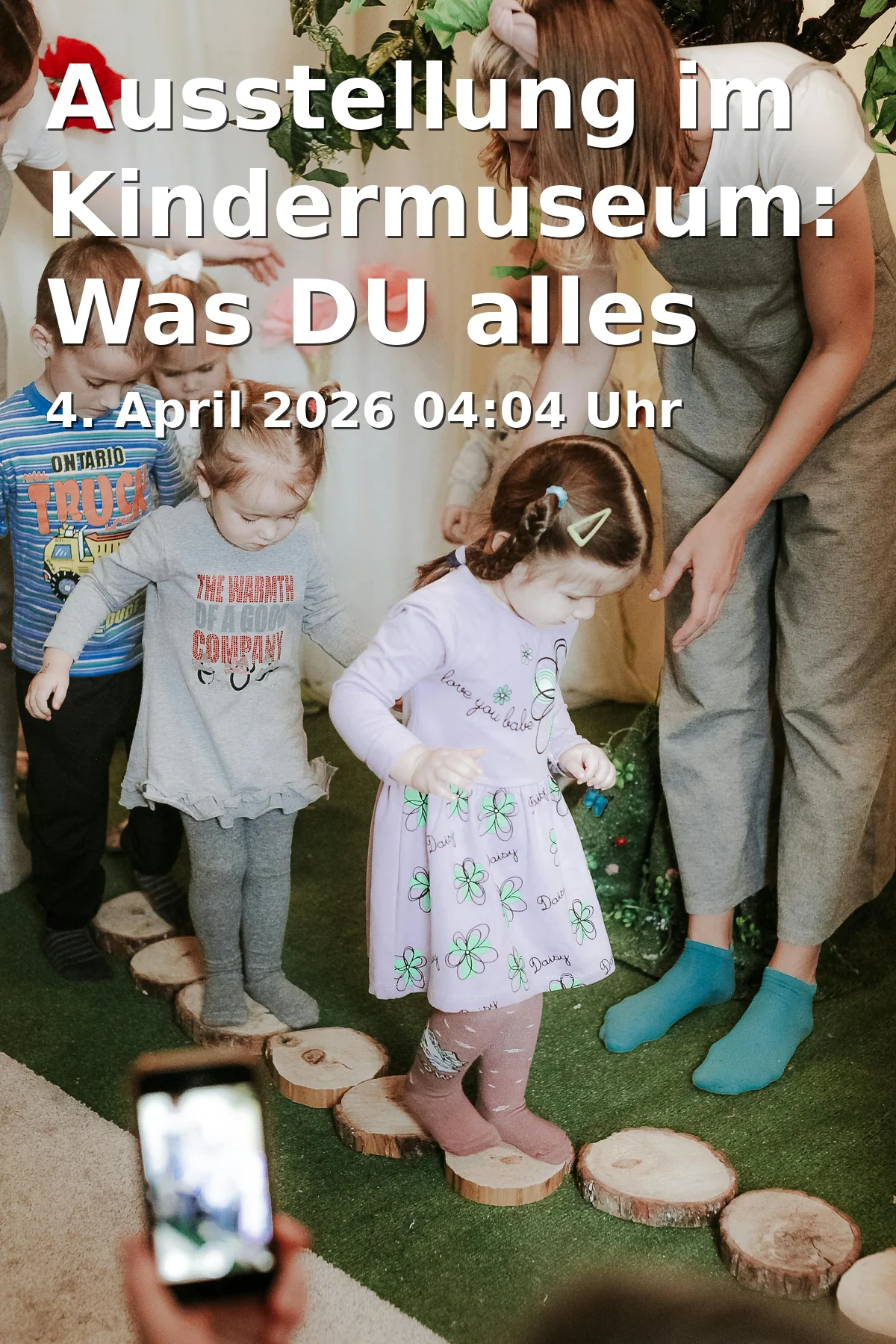
Exhibition at the Children's Museum: What YOU Can Do (until September 2026)
A strong family experience in Neu-Ulm: The interactive exhibition What YOU Can Do delights children with discovery, wonder, and learning fun. #FamilyTime
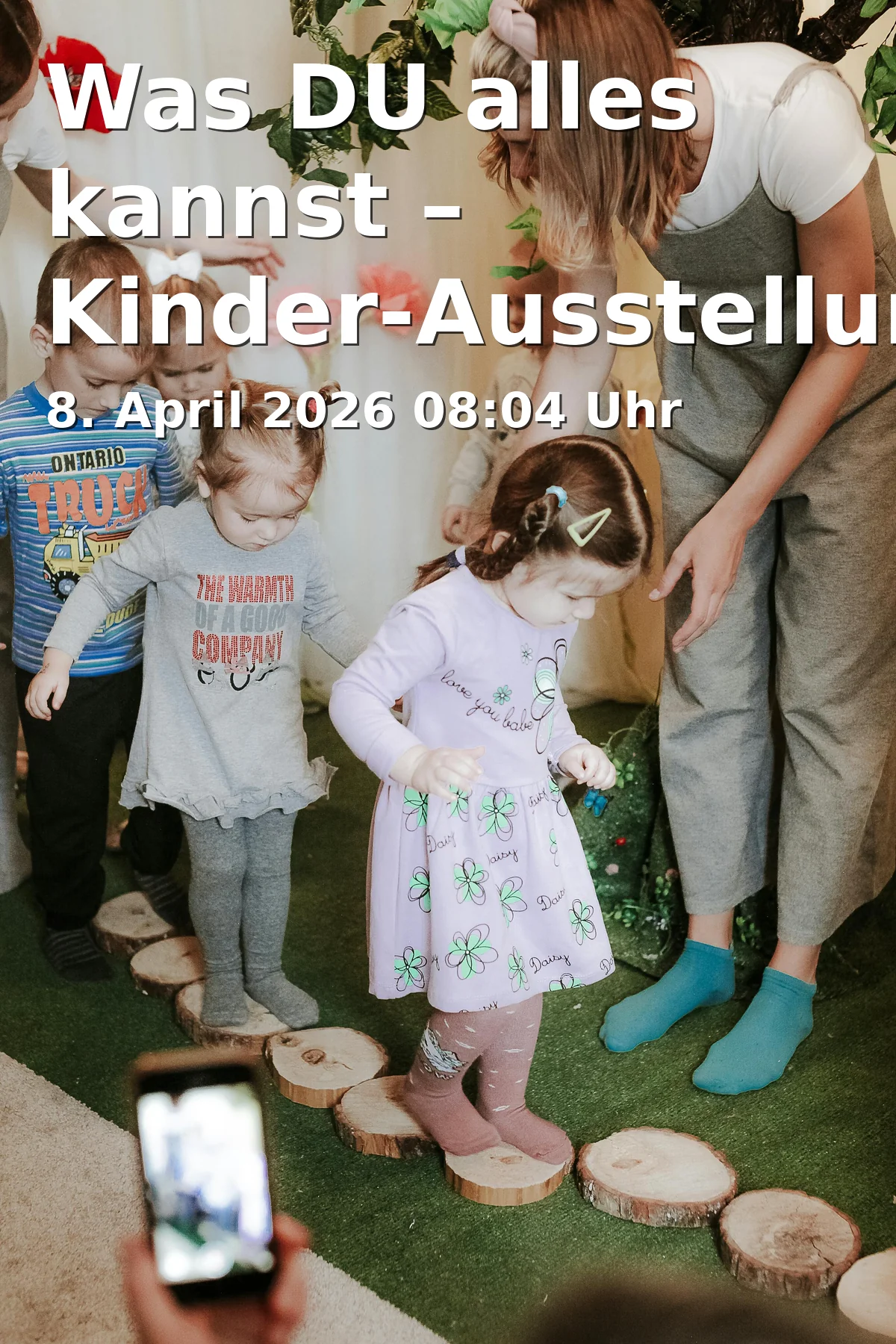
What YOU can do – Children's Exhibition in Neu-Ulm
Family time full of aha moments at the Edwin Scharff Museum: Children discover playfully what they can do. From around 5 years, barrier-free and with participatory stations. #FamilyTrip
Frequently Asked Questions
Reviews
Alice Oehninger
26. May 2022
Small but exquisite The Edwin Scharff House museum has been host to a long line of distinguished and well chosen expositions. Ranging through all kinds of art, historic, modern or contemporary, the art collected and displayed here are always worth seeing. Aside from that, there is a Café which offers refreshments and delicacies, regardless of whether you enthuse about art or not. Central and easy to find, easy to access, the museum is barrier free. There is a small shop, which sells books, posters and cards.
GERSI ÇOÇKA
13. July 2025
What a wonderful place. I visited several times with my daughter and her friends. Every time we go there, they enjoy the Kinder Museum. It is very creative and special. The staff is very very friendly, very dedicated during explanation to the kids and talking with them. It is one of the best places I have been in ULM.
Do Hav
20. November 2022
The museum is fantastic. We have seen here a creative, interesting exhibition with a lot of activities. The personal is friendly and helpful. The tickets were very cheap.... There is a Caffe at the entrance, it opens before the museum. The whole experience was very positive, the kids loved it.
Marc A
25. April 2023
Very nice place. Employees very kind, and cheerful. Highly recommend to visit. Exhibition was dealing about an uncommon subject: death. Interesting approach from other cultures (e.g. Mexican), even for children.
A DS
22. April 2018
Nice Emil Cimiotti Exhibition! Plus the interactive children's Museum is always an attraction and worth spending a rainy afternoon there.