
Neu-Ulm
Donauufer, 89231 Neu-Ulm, Deutschland
Danube Bank Neu-Ulm | Danube Path & Parking
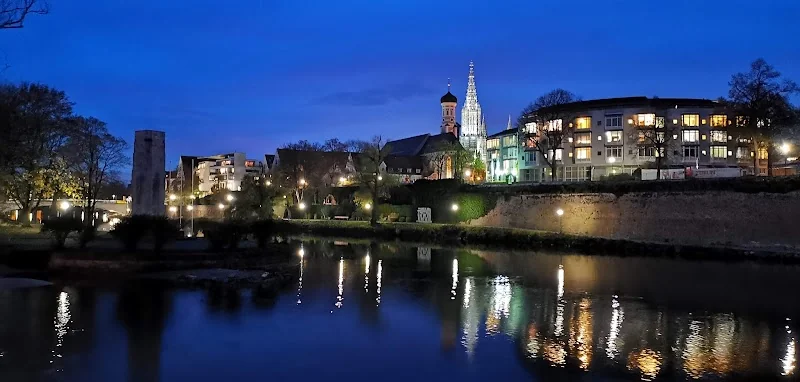
The Danube Bank Neu-Ulm represents an urban space where river, movement, and recreation are closely intertwined. Visitors to the Neu-Ulm side of the Danube experience not just a geographical location, but a piece of lived twin city: on one side Ulm with its historic backdrop, on the other side Neu-Ulm as a young Bavarian sister city on the right bank of the Danube. The history of this location dates back to the reorganization of 1810, when the border at Ulm was placed in the middle of the Danube, leading to the development of the later city of Neu-Ulm. Today, the bank serves as a transitional space between the city center, parks, bike paths, bridges, and event areas. This very mix makes the location so interesting: here, the Danube can be experienced without having to forgo urban infrastructure. The Danube Bank is thus equally a destination for walks, a starting point for bike tours, and a reference point for local orientation when people search for Danube Path, parking, access, or places in the immediate vicinity. ([tourismus.ulm.de](https://tourismus.ulm.de/PDFs/Presse-Basistexte/UNT_Geschichte_NU.pdf))
Location, History, and Character of the Danube Bank
Neu-Ulm is historically closely connected to the river. The city emerged in the shadow of the new border demarcation and later developed into the bridgehead of the federal fortress before being officially elevated to city status in 1869. This origin is still palpable at the Danube Bank, where the Danube is not only a landscape element but also a city frame, border, and meeting space. The bank today presents itself in various forms: as an open recreational area, as a green edge with seating options, and as a connection between individual neighborhoods. This is particularly evident in the area around the Edwin-Scharff-Haus, where a small park is located directly by the Danube. There, one can play chess, sit on the grass steps, and let their gaze wander over the river. This mix of cultural site, water location, and quality of stay gives the Danube Bank Neu-Ulm a calm yet urban character that differs from classic tourist attractions and is precisely why it is attractive to many visitors. ([nu.neu-ulm.de](https://nu.neu-ulm.de/neu-ulm-erleben/freizeit-sport/parks-gruenanlagen))
The Herbelhölzle also contributes to this character. It is also located on the Danube Bank and extends from the river road at the height of the beer garden Barfüsser to the Danube bridge in Offenhausen. The city highlights the hall-like, nature-friendly old tree population there, which creates a special atmosphere. Thus, the Danube Bank has two very different faces: here the urban-shaped recreational area at the Edwin-Scharff-Haus, there the nature-friendly, almost park-like section with its own scenic charm. Together, these subspaces create a river image that is neither a pure promenade nor just a walking path, but a broadly usable recreational landscape. Therefore, those searching for Danube Bank Neu-Ulm, Danube Bank Street Ulm, or a location near the Danube will find themselves in an area that has grown urbanistically, is historically charged, and is also pleasantly close to everyday life. ([nu.neu-ulm.de](https://nu.neu-ulm.de/neu-ulm-erleben/freizeit-sport/parks-gruenanlagen))
Danube Path in Neu-Ulm: Expansion, Walks, and Bike Connection
A central theme surrounding the Danube Bank Neu-Ulm is the Danube Path. In February 2026, the city of Neu-Ulm decided to further expand the section between Gänstor Bridge and Villa Schäfer over a length of about 450 meters. The goal is to create a continuous, attractive bike and pedestrian path connection between Offenhausen and the Gänstor underpass, as well as to enhance the Danube Bank as a recreational area. For the search intent Danube Path Neu-Ulm, this is particularly relevant because here not only a path exists, but an ongoing urban development process becomes visible. The bank is thus not treated as a static edge area but as a public space that is being developed in terms of traffic, landscape, and function. This information is especially important for walkers and cyclists because it shows: The Danube Bank is an active part of urban planning and remains in motion. ([nu.neu-ulm.de](https://nu.neu-ulm.de/aktuelles/aktuell-detail/article/neu-ulmer-stadtrat-beschliesst-angepassten-ausbau-des-donauuferwegs))
Additionally, the Green Bridge is described as a direct axis for cyclists and pedestrians from the Danube in the Neu-Ulm city center to the landscape at the bathing lake in Ludwigsfeld. It was built in connection with the State Garden Show 2008 and is now a key piece of the pedestrian and cycling access to the city. This means that the Danube Bank is not perceived in isolation but as a starting point for a longer green and movement space that connects the city center, the forefield, Wiley, and Ludwigsfeld. For visitors, this means: a walk by the river can seamlessly transition into a longer tour, and a bike ride can start or end directly by the water. This connection of water, green, and city is one of the greatest advantages of the location because it supports both short stays and longer recreational paths. ([nu.neu-ulm.de](https://nu.neu-ulm.de/stadt-politik/stadtentwicklung/stadtplanung/oeffentlicher-raum/gruene-bruecke))
The river area is also well-equipped for sports. Donaurunning is a unique project in southern Germany by SSV Ulm 1846 and features a measured 5-kilometer running and walking route along the Danube. The route is signposted and illuminated, time measurement is done via fixed installed measuring points, and the path leads after one round through Friedrichsau and past the festival grounds over the pedestrian bridge to the Neu-Ulm side. For all those searching for bike path Danube, walk Danube, or sports opportunities by the bank, this provides a clear picture: The Danube Bank Neu-Ulm is not only for lingering but also intended for active movement. Thus, a vibrant urban space is created where jogging, walking, cycling, and relaxed strolling coexist naturally. ([tourismus.ulm.de](https://tourismus.ulm.de/de/entdecken/sehen-und-erleben/freizeit/sport/donaurunning-ulm?utm_source=openai))
Parking, Access, and Orientation in Neu-Ulm
In a location like the Danube Bank Neu-Ulm, the question of parking and access plays a significant role. The official tourist information for Ulm and Neu-Ulm points out that there are good parking options in Neu-Ulm; four spaces for coaches are mentioned in the center of Neu-Ulm at Silcherstraße 40. Additionally, the tourist information refers to central parking garages in Ulm as well as Park & Ride offers that facilitate access to the city center. For visitors to the Danube Bank, this means: the area is well integrated into the urban infrastructure, even if the actual bank sections mainly function as recreational and movement spaces and not as classic parking locations. Those arriving by car are best advised to plan in conjunction with the city center or a Park & Ride point; those using public transport or walking benefit from the compact structure of the twin city. ([tourismus.ulm.de](https://tourismus.ulm.de/en/planning/travel-planning/arrival-and-publictransport/parking/))
Traveling to the twin city is overall uncomplicated. The official tourism description mentions a convenient location at the A8 and A7 as well as connections to five railway lines and the ICE network. This supra-regional accessibility is helpful for search queries such as access Neu-Ulm or Danube Bank Neu-Ulm because it places the urban space in a larger mobility context. Those who understand the Danube Bank not just as a walking destination but as part of a day trip or weekend visit can thus approach the location relatively flexibly. This is especially true if one combines the river visit with other destinations, such as a stroll through Neu-Ulm, a detour to Ulm, or a bike tour along the Danube cycling path. This interconnectivity is a practical advantage of the address by the river because it does not reduce the location to a single function. ([tourismus.ulm.de](https://tourismus.ulm.de/PDFs/Presse-Basistexte/Ulm_Neu-Ulm_allgemeinerText.pdf))
Local Recreation Between Edwin-Scharff-Haus and Herbelhölzle
The greatest added value of the Danube Bank lies in its local recreational quality. The small park at the Edwin-Scharff-Haus is a good example of this because it is located directly by the water and offers simple yet effective forms of use. One can sit on the grass steps, watch the river, or enjoy the fresh air during a game of chess. This may sound unspectacular, but it is precisely the kind of urban quality that makes a good bank: short distances, open accessibility, visual relationships, and an environment that is neither loud nor overloaded. Especially in a city like Neu-Ulm, which is strongly shaped by connections and transitions, such a place offers a noticeable deceleration. The Danube is not experienced here as a barrier but as a calm surface in the midst of urban everyday life. ([nu.neu-ulm.de](https://nu.neu-ulm.de/neu-ulm-erleben/freizeit-sport/parks-gruenanlagen))
The Herbelhölzle presents itself even more landscape-oriented. The city describes it as located on the Danube Bank and highlights the nature-friendly, hall-like old tree population. The section extends from the river road at the height of the beer garden Barfüsser to the Danube bridge in Offenhausen, making it a longer river corridor with its own character. For search queries related to walk Danube or nature-friendly places in Neu-Ulm, this is particularly relevant because here there is not only a path but also an atmospherically dense green space. The contrast to the urban section at the Edwin-Scharff-Haus is particularly interesting: there, open seating by the water is in the foreground, here the closed, tree-shaped atmosphere. Together, these places make the Danube Bank a varied zone that is well-suited for short breaks, quiet walks, photo opportunities, or a small excursion on the edge of the city center. ([nu.neu-ulm.de](https://nu.neu-ulm.de/neu-ulm-erleben/freizeit-sport/parks-gruenanlagen))
The significance of these river sections is also growing due to urban enhancement measures. The city of Neu-Ulm points out that it has carried out several design measures at the Danube Bank together with LEW Wasserkraft GmbH and that in the context of the LEADER project, nature-friendly bank design in Herbelhölzle was already implemented in 2018 and 2019. The direction is clear: the Danube should become more accessible and usable for people without losing its scenic character. Thus, the Danube Bank Neu-Ulm is not only a beautiful place but also an example of how river spaces in a modern city can be thought of in terms of recreational value, ecology, and quality of stay. Those who walk here thus experience not only nature but also consciously designed urban space development. ([nu.neu-ulm.de](https://nu.neu-ulm.de/stadt-politik/stadtentwicklung/stadtplanung/flusslandschaften-erleben))
Green Bridge, Donaurunning, and the Sporty River Area
Those who want to use the Danube Bank Neu-Ulm for sports will quickly come across the Green Bridge and Donaurunning. The Green Bridge is designed as a direct cycling axis from the Danube in the Neu-Ulm city center to Ludwigsfeld, thus creating a clear connection from the river to the neighborhoods. This axis is important for everyday life as well as for recreational users because it shows how closely pedestrian and cycling traffic in the Neu-Ulm urban space is linked to the Danube Bank. Those starting at the bank can thus continue without complicated detours. This is a significant advantage for people who do not just want to stand at the water's edge but want to incorporate movement into their urban experience. The search terms green bridge Neu-Ulm and bike path Danube hit a real content core here. ([nu.neu-ulm.de](https://nu.neu-ulm.de/stadt-politik/stadtentwicklung/stadtplanung/oeffentlicher-raum/gruene-bruecke))
Donaurunning complements this axis with a concrete sporting offer. The route is 5 kilometers long, illuminated, and signposted, and it allows for a timed use along the Danube. The special feature is the combination of sporting infrastructure and urban backdrop: those running there do not move in an anonymous park but in a space between river, city, and culturally shaped river landscape. For visitors searching for bike path Danube, walk Danube, or active leisure by the Danube, this is a strong argument because the path quality is high and orientation is easy. Additionally, the route leads over the Neu-Ulm side, thus connecting the twin city in a sporty way. The river is not only observed but actively experienced. ([tourismus.ulm.de](https://tourismus.ulm.de/de/entdecken/sehen-und-erleben/freizeit/sport/donaurunning-ulm?utm_source=openai))
From a tourist perspective, this is also important. The Ulm/Neu-Ulm tourism describes the Danube as a place where movement becomes an experience: jogging, SUP, cycling, or simply dangling feet in the water are among the obvious uses. In this sense, the Danube Bank Neu-Ulm is an open recreational area that serves various needs. Some seek a quick running round, others a family bike ride, and still others just a short moment of peace by the water. The quality of the location lies in the fact that all these uses are possible without major hurdles. The bank is neither over-staged nor arbitrary but functional, scenic, and urban at the same time. ([tourismus.ulm.de](https://tourismus.ulm.de/de/entdecken/sehen-und-erleben/freizeit/?utm_source=openai))
Events, River Experiences, and Summer Moments at the Danube
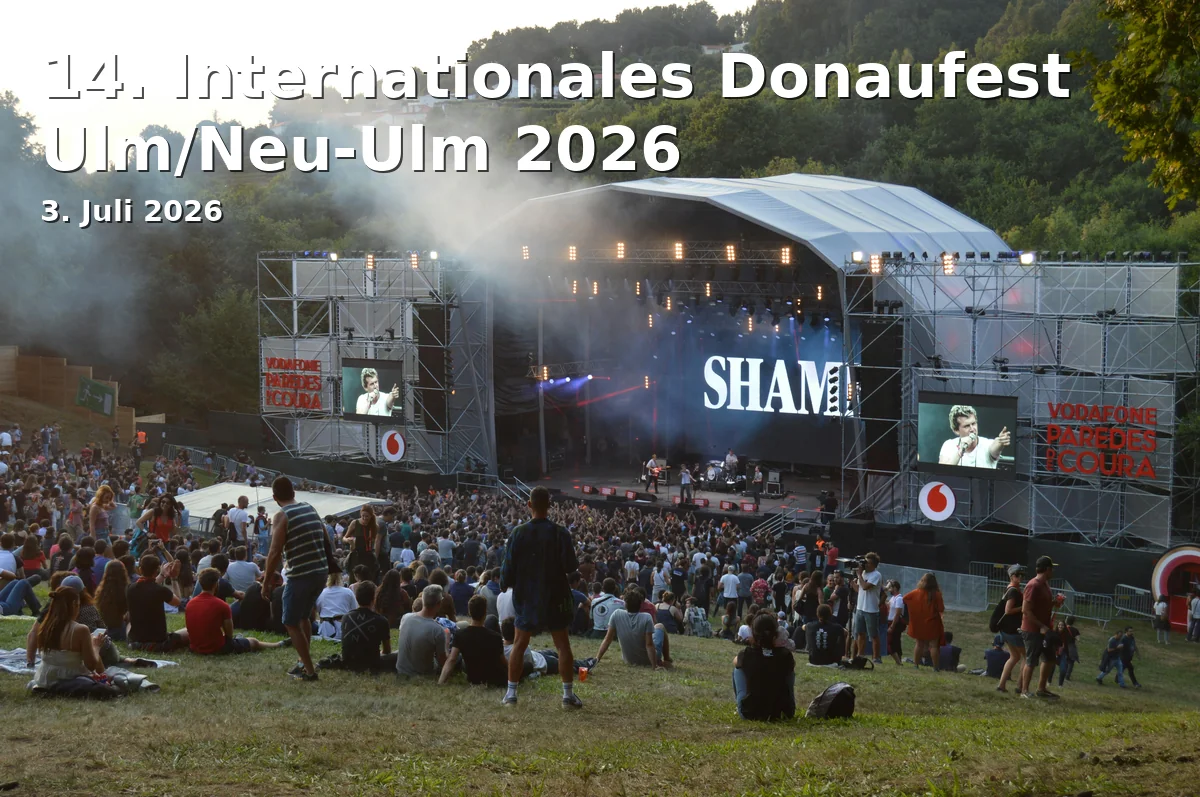
The Danube Bank Neu-Ulm is also shaped by events that regularly showcase the river area. The International Danube Festival will take place in 2026 from July 3 to 12 and is organized every two years by the Danube Office Ulm/Neu-Ulm. According to tourism, the event is a cultural festival along both banks of the Danube, where international artists, encounter projects, music, dance, literature, exhibitions, and the marketplace of cultures play a central role. This is important for the perception of the Danube Bank because it shows that the river is not only a beautiful backdrop but a real stage for cross-border culture. Those searching for Danube Bank Neu-Ulm are often also looking for atmosphere, programs, and experiential value, and this dimension is particularly provided by the Danube Festival. ([tourismus.ulm.de](https://tourismus.ulm.de/de/entdecken/veranstaltungen/veranstaltungshighlights/internationales-donaufest?utm_source=openai))
Another defining event is the Nabada on Swearing Monday. For 2026, the tourism site mentions July 20 and a start around 4 p.m. A colorful water parade on the Danube is described, where themed boats, music ships, and many small watercraft travel the approximately 7-kilometer route. The day's end then shifts to Friedrichsau and the city center, where live music and parties follow. For the Danube Bank, this means: it becomes clear how strongly the Danube functions as an urban experience axis. The bank is not just the edge of the water but the immediate spectator area of one of the most famous Ulm and Neu-Ulm events. Therefore, those searching for events at the Danube find here an authentic and historically rooted major event. ([tourismus.ulm.de](https://tourismus.ulm.de/de/entdecken/veranstaltungen/veranstaltungshighlights/nabada?utm_source=openai))
The Ulmer Spatz also belongs to the river experiences that complement the Danube Bank in everyday life. The historic excursion boat operates from May to the end of August from Friedrichsau and offers a 60-minute round trip with changing views of Ulm and Neu-Ulm. The tourism site describes the offer as a relaxed summer experience on the Danube, operated and restored by Lebenshilfe Donau-Iller. Especially in combination with the Danube Bank Neu-Ulm, a complete picture emerges: a walk by the bank, a ride on the water, late summer events, and cultural large formats are not separate worlds here but parts of a coherent urban experience. This makes the location particularly strong for those seeking a place with recreational, cultural, and stay value. ([tourismus.ulm.de](https://tourismus.ulm.de/en/discover/ulm-and-neu-ulm/sports-and-leisure/adventure-pools/schifffahrt-ulmer-spatz))
History, Twin City, and Today's Profile of the Danube Bank
The special quality of the Danube Bank in Neu-Ulm can only be understood when considering the history of the twin city. Neu-Ulm emerged as a city on the right bank of the Danube because the border was placed in the middle of the Danube after the Napoleonic upheavals. From a small settlement with a border post and customs station, a place developed through fortress, railway connection, city formation, and later urban expansion that today is naturally thought of together with Ulm. The Danube Bank is thus more than just a beautiful front by the water: it is the expression of a historical separation that has long transformed into connection and shared use in everyday life. This mix of independence and proximity makes the location exciting for visitors. ([tourismus.ulm.de](https://tourismus.ulm.de/PDFs/Presse-Basistexte/UNT_Geschichte_NU.pdf))
Neu-Ulm has visibly opened up in the 20th and 21st centuries. The dismantling of the fortress structures, the development of new green spaces, the State Garden Show 2008, and the strengthened pathway connections have brought the urban space closer to the Danube. This explains why the Danube Bank is no longer perceived as a residual area or fringe zone but as a developed recreational area with political and urban significance. The city itself speaks of measures to enhance the Danube Bank, and the expansion of the Danube Path also shows that this goal is being pursued further. For an SEO page, this is crucial because searchers expect not just a place but a current usage situation. The Danube Bank Neu-Ulm is thus neither museum-like nor random but a consciously maintained part of urban life. ([nu.neu-ulm.de](https://nu.neu-ulm.de/stadt-politik/stadtentwicklung/stadtplanung/flusslandschaften-erleben))
Today's profile also includes the close connection with cultural and recreational places such as the Edwin-Scharff-Haus, the Glacis, the Green Bridge, and the river festivals of the region. This creates an urban space where the search terms Danube Bank Neu-Ulm, Danube Path Neu-Ulm, parking Neu-Ulm, access Neu-Ulm, bike path Danube, and international Danube festival do not line up as random keywords but as real usage logic. Those who come here can walk, run, ride, watch, sit, celebrate, or simply observe the river. This is exactly what makes the location so strong for visitors and for local orientation: it is easily accessible, scenically independent, and culturally connected. The Danube Bank Neu-Ulm is thus a place where urban development, history, and recreational quality meet very directly. ([nu.neu-ulm.de](https://nu.neu-ulm.de/neu-ulm-erleben/freizeit-sport/parks-gruenanlagen))
Sources:
Mehr anzeigenWeniger anzeigen
Danube Bank Neu-Ulm | Danube Path & Parking
The Danube Bank Neu-Ulm represents an urban space where river, movement, and recreation are closely intertwined. Visitors to the Neu-Ulm side of the Danube experience not just a geographical location, but a piece of lived twin city: on one side Ulm with its historic backdrop, on the other side Neu-Ulm as a young Bavarian sister city on the right bank of the Danube. The history of this location dates back to the reorganization of 1810, when the border at Ulm was placed in the middle of the Danube, leading to the development of the later city of Neu-Ulm. Today, the bank serves as a transitional space between the city center, parks, bike paths, bridges, and event areas. This very mix makes the location so interesting: here, the Danube can be experienced without having to forgo urban infrastructure. The Danube Bank is thus equally a destination for walks, a starting point for bike tours, and a reference point for local orientation when people search for Danube Path, parking, access, or places in the immediate vicinity. ([tourismus.ulm.de](https://tourismus.ulm.de/PDFs/Presse-Basistexte/UNT_Geschichte_NU.pdf))
Location, History, and Character of the Danube Bank
Neu-Ulm is historically closely connected to the river. The city emerged in the shadow of the new border demarcation and later developed into the bridgehead of the federal fortress before being officially elevated to city status in 1869. This origin is still palpable at the Danube Bank, where the Danube is not only a landscape element but also a city frame, border, and meeting space. The bank today presents itself in various forms: as an open recreational area, as a green edge with seating options, and as a connection between individual neighborhoods. This is particularly evident in the area around the Edwin-Scharff-Haus, where a small park is located directly by the Danube. There, one can play chess, sit on the grass steps, and let their gaze wander over the river. This mix of cultural site, water location, and quality of stay gives the Danube Bank Neu-Ulm a calm yet urban character that differs from classic tourist attractions and is precisely why it is attractive to many visitors. ([nu.neu-ulm.de](https://nu.neu-ulm.de/neu-ulm-erleben/freizeit-sport/parks-gruenanlagen))
The Herbelhölzle also contributes to this character. It is also located on the Danube Bank and extends from the river road at the height of the beer garden Barfüsser to the Danube bridge in Offenhausen. The city highlights the hall-like, nature-friendly old tree population there, which creates a special atmosphere. Thus, the Danube Bank has two very different faces: here the urban-shaped recreational area at the Edwin-Scharff-Haus, there the nature-friendly, almost park-like section with its own scenic charm. Together, these subspaces create a river image that is neither a pure promenade nor just a walking path, but a broadly usable recreational landscape. Therefore, those searching for Danube Bank Neu-Ulm, Danube Bank Street Ulm, or a location near the Danube will find themselves in an area that has grown urbanistically, is historically charged, and is also pleasantly close to everyday life. ([nu.neu-ulm.de](https://nu.neu-ulm.de/neu-ulm-erleben/freizeit-sport/parks-gruenanlagen))
Danube Path in Neu-Ulm: Expansion, Walks, and Bike Connection
A central theme surrounding the Danube Bank Neu-Ulm is the Danube Path. In February 2026, the city of Neu-Ulm decided to further expand the section between Gänstor Bridge and Villa Schäfer over a length of about 450 meters. The goal is to create a continuous, attractive bike and pedestrian path connection between Offenhausen and the Gänstor underpass, as well as to enhance the Danube Bank as a recreational area. For the search intent Danube Path Neu-Ulm, this is particularly relevant because here not only a path exists, but an ongoing urban development process becomes visible. The bank is thus not treated as a static edge area but as a public space that is being developed in terms of traffic, landscape, and function. This information is especially important for walkers and cyclists because it shows: The Danube Bank is an active part of urban planning and remains in motion. ([nu.neu-ulm.de](https://nu.neu-ulm.de/aktuelles/aktuell-detail/article/neu-ulmer-stadtrat-beschliesst-angepassten-ausbau-des-donauuferwegs))
Additionally, the Green Bridge is described as a direct axis for cyclists and pedestrians from the Danube in the Neu-Ulm city center to the landscape at the bathing lake in Ludwigsfeld. It was built in connection with the State Garden Show 2008 and is now a key piece of the pedestrian and cycling access to the city. This means that the Danube Bank is not perceived in isolation but as a starting point for a longer green and movement space that connects the city center, the forefield, Wiley, and Ludwigsfeld. For visitors, this means: a walk by the river can seamlessly transition into a longer tour, and a bike ride can start or end directly by the water. This connection of water, green, and city is one of the greatest advantages of the location because it supports both short stays and longer recreational paths. ([nu.neu-ulm.de](https://nu.neu-ulm.de/stadt-politik/stadtentwicklung/stadtplanung/oeffentlicher-raum/gruene-bruecke))
The river area is also well-equipped for sports. Donaurunning is a unique project in southern Germany by SSV Ulm 1846 and features a measured 5-kilometer running and walking route along the Danube. The route is signposted and illuminated, time measurement is done via fixed installed measuring points, and the path leads after one round through Friedrichsau and past the festival grounds over the pedestrian bridge to the Neu-Ulm side. For all those searching for bike path Danube, walk Danube, or sports opportunities by the bank, this provides a clear picture: The Danube Bank Neu-Ulm is not only for lingering but also intended for active movement. Thus, a vibrant urban space is created where jogging, walking, cycling, and relaxed strolling coexist naturally. ([tourismus.ulm.de](https://tourismus.ulm.de/de/entdecken/sehen-und-erleben/freizeit/sport/donaurunning-ulm?utm_source=openai))
Parking, Access, and Orientation in Neu-Ulm
In a location like the Danube Bank Neu-Ulm, the question of parking and access plays a significant role. The official tourist information for Ulm and Neu-Ulm points out that there are good parking options in Neu-Ulm; four spaces for coaches are mentioned in the center of Neu-Ulm at Silcherstraße 40. Additionally, the tourist information refers to central parking garages in Ulm as well as Park & Ride offers that facilitate access to the city center. For visitors to the Danube Bank, this means: the area is well integrated into the urban infrastructure, even if the actual bank sections mainly function as recreational and movement spaces and not as classic parking locations. Those arriving by car are best advised to plan in conjunction with the city center or a Park & Ride point; those using public transport or walking benefit from the compact structure of the twin city. ([tourismus.ulm.de](https://tourismus.ulm.de/en/planning/travel-planning/arrival-and-publictransport/parking/))
Traveling to the twin city is overall uncomplicated. The official tourism description mentions a convenient location at the A8 and A7 as well as connections to five railway lines and the ICE network. This supra-regional accessibility is helpful for search queries such as access Neu-Ulm or Danube Bank Neu-Ulm because it places the urban space in a larger mobility context. Those who understand the Danube Bank not just as a walking destination but as part of a day trip or weekend visit can thus approach the location relatively flexibly. This is especially true if one combines the river visit with other destinations, such as a stroll through Neu-Ulm, a detour to Ulm, or a bike tour along the Danube cycling path. This interconnectivity is a practical advantage of the address by the river because it does not reduce the location to a single function. ([tourismus.ulm.de](https://tourismus.ulm.de/PDFs/Presse-Basistexte/Ulm_Neu-Ulm_allgemeinerText.pdf))
Local Recreation Between Edwin-Scharff-Haus and Herbelhölzle
The greatest added value of the Danube Bank lies in its local recreational quality. The small park at the Edwin-Scharff-Haus is a good example of this because it is located directly by the water and offers simple yet effective forms of use. One can sit on the grass steps, watch the river, or enjoy the fresh air during a game of chess. This may sound unspectacular, but it is precisely the kind of urban quality that makes a good bank: short distances, open accessibility, visual relationships, and an environment that is neither loud nor overloaded. Especially in a city like Neu-Ulm, which is strongly shaped by connections and transitions, such a place offers a noticeable deceleration. The Danube is not experienced here as a barrier but as a calm surface in the midst of urban everyday life. ([nu.neu-ulm.de](https://nu.neu-ulm.de/neu-ulm-erleben/freizeit-sport/parks-gruenanlagen))
The Herbelhölzle presents itself even more landscape-oriented. The city describes it as located on the Danube Bank and highlights the nature-friendly, hall-like old tree population. The section extends from the river road at the height of the beer garden Barfüsser to the Danube bridge in Offenhausen, making it a longer river corridor with its own character. For search queries related to walk Danube or nature-friendly places in Neu-Ulm, this is particularly relevant because here there is not only a path but also an atmospherically dense green space. The contrast to the urban section at the Edwin-Scharff-Haus is particularly interesting: there, open seating by the water is in the foreground, here the closed, tree-shaped atmosphere. Together, these places make the Danube Bank a varied zone that is well-suited for short breaks, quiet walks, photo opportunities, or a small excursion on the edge of the city center. ([nu.neu-ulm.de](https://nu.neu-ulm.de/neu-ulm-erleben/freizeit-sport/parks-gruenanlagen))
The significance of these river sections is also growing due to urban enhancement measures. The city of Neu-Ulm points out that it has carried out several design measures at the Danube Bank together with LEW Wasserkraft GmbH and that in the context of the LEADER project, nature-friendly bank design in Herbelhölzle was already implemented in 2018 and 2019. The direction is clear: the Danube should become more accessible and usable for people without losing its scenic character. Thus, the Danube Bank Neu-Ulm is not only a beautiful place but also an example of how river spaces in a modern city can be thought of in terms of recreational value, ecology, and quality of stay. Those who walk here thus experience not only nature but also consciously designed urban space development. ([nu.neu-ulm.de](https://nu.neu-ulm.de/stadt-politik/stadtentwicklung/stadtplanung/flusslandschaften-erleben))
Green Bridge, Donaurunning, and the Sporty River Area
Those who want to use the Danube Bank Neu-Ulm for sports will quickly come across the Green Bridge and Donaurunning. The Green Bridge is designed as a direct cycling axis from the Danube in the Neu-Ulm city center to Ludwigsfeld, thus creating a clear connection from the river to the neighborhoods. This axis is important for everyday life as well as for recreational users because it shows how closely pedestrian and cycling traffic in the Neu-Ulm urban space is linked to the Danube Bank. Those starting at the bank can thus continue without complicated detours. This is a significant advantage for people who do not just want to stand at the water's edge but want to incorporate movement into their urban experience. The search terms green bridge Neu-Ulm and bike path Danube hit a real content core here. ([nu.neu-ulm.de](https://nu.neu-ulm.de/stadt-politik/stadtentwicklung/stadtplanung/oeffentlicher-raum/gruene-bruecke))
Donaurunning complements this axis with a concrete sporting offer. The route is 5 kilometers long, illuminated, and signposted, and it allows for a timed use along the Danube. The special feature is the combination of sporting infrastructure and urban backdrop: those running there do not move in an anonymous park but in a space between river, city, and culturally shaped river landscape. For visitors searching for bike path Danube, walk Danube, or active leisure by the Danube, this is a strong argument because the path quality is high and orientation is easy. Additionally, the route leads over the Neu-Ulm side, thus connecting the twin city in a sporty way. The river is not only observed but actively experienced. ([tourismus.ulm.de](https://tourismus.ulm.de/de/entdecken/sehen-und-erleben/freizeit/sport/donaurunning-ulm?utm_source=openai))
From a tourist perspective, this is also important. The Ulm/Neu-Ulm tourism describes the Danube as a place where movement becomes an experience: jogging, SUP, cycling, or simply dangling feet in the water are among the obvious uses. In this sense, the Danube Bank Neu-Ulm is an open recreational area that serves various needs. Some seek a quick running round, others a family bike ride, and still others just a short moment of peace by the water. The quality of the location lies in the fact that all these uses are possible without major hurdles. The bank is neither over-staged nor arbitrary but functional, scenic, and urban at the same time. ([tourismus.ulm.de](https://tourismus.ulm.de/de/entdecken/sehen-und-erleben/freizeit/?utm_source=openai))
Events, River Experiences, and Summer Moments at the Danube
The Danube Bank Neu-Ulm is also shaped by events that regularly showcase the river area. The International Danube Festival will take place in 2026 from July 3 to 12 and is organized every two years by the Danube Office Ulm/Neu-Ulm. According to tourism, the event is a cultural festival along both banks of the Danube, where international artists, encounter projects, music, dance, literature, exhibitions, and the marketplace of cultures play a central role. This is important for the perception of the Danube Bank because it shows that the river is not only a beautiful backdrop but a real stage for cross-border culture. Those searching for Danube Bank Neu-Ulm are often also looking for atmosphere, programs, and experiential value, and this dimension is particularly provided by the Danube Festival. ([tourismus.ulm.de](https://tourismus.ulm.de/de/entdecken/veranstaltungen/veranstaltungshighlights/internationales-donaufest?utm_source=openai))
Another defining event is the Nabada on Swearing Monday. For 2026, the tourism site mentions July 20 and a start around 4 p.m. A colorful water parade on the Danube is described, where themed boats, music ships, and many small watercraft travel the approximately 7-kilometer route. The day's end then shifts to Friedrichsau and the city center, where live music and parties follow. For the Danube Bank, this means: it becomes clear how strongly the Danube functions as an urban experience axis. The bank is not just the edge of the water but the immediate spectator area of one of the most famous Ulm and Neu-Ulm events. Therefore, those searching for events at the Danube find here an authentic and historically rooted major event. ([tourismus.ulm.de](https://tourismus.ulm.de/de/entdecken/veranstaltungen/veranstaltungshighlights/nabada?utm_source=openai))
The Ulmer Spatz also belongs to the river experiences that complement the Danube Bank in everyday life. The historic excursion boat operates from May to the end of August from Friedrichsau and offers a 60-minute round trip with changing views of Ulm and Neu-Ulm. The tourism site describes the offer as a relaxed summer experience on the Danube, operated and restored by Lebenshilfe Donau-Iller. Especially in combination with the Danube Bank Neu-Ulm, a complete picture emerges: a walk by the bank, a ride on the water, late summer events, and cultural large formats are not separate worlds here but parts of a coherent urban experience. This makes the location particularly strong for those seeking a place with recreational, cultural, and stay value. ([tourismus.ulm.de](https://tourismus.ulm.de/en/discover/ulm-and-neu-ulm/sports-and-leisure/adventure-pools/schifffahrt-ulmer-spatz))
History, Twin City, and Today's Profile of the Danube Bank
The special quality of the Danube Bank in Neu-Ulm can only be understood when considering the history of the twin city. Neu-Ulm emerged as a city on the right bank of the Danube because the border was placed in the middle of the Danube after the Napoleonic upheavals. From a small settlement with a border post and customs station, a place developed through fortress, railway connection, city formation, and later urban expansion that today is naturally thought of together with Ulm. The Danube Bank is thus more than just a beautiful front by the water: it is the expression of a historical separation that has long transformed into connection and shared use in everyday life. This mix of independence and proximity makes the location exciting for visitors. ([tourismus.ulm.de](https://tourismus.ulm.de/PDFs/Presse-Basistexte/UNT_Geschichte_NU.pdf))
Neu-Ulm has visibly opened up in the 20th and 21st centuries. The dismantling of the fortress structures, the development of new green spaces, the State Garden Show 2008, and the strengthened pathway connections have brought the urban space closer to the Danube. This explains why the Danube Bank is no longer perceived as a residual area or fringe zone but as a developed recreational area with political and urban significance. The city itself speaks of measures to enhance the Danube Bank, and the expansion of the Danube Path also shows that this goal is being pursued further. For an SEO page, this is crucial because searchers expect not just a place but a current usage situation. The Danube Bank Neu-Ulm is thus neither museum-like nor random but a consciously maintained part of urban life. ([nu.neu-ulm.de](https://nu.neu-ulm.de/stadt-politik/stadtentwicklung/stadtplanung/flusslandschaften-erleben))
Today's profile also includes the close connection with cultural and recreational places such as the Edwin-Scharff-Haus, the Glacis, the Green Bridge, and the river festivals of the region. This creates an urban space where the search terms Danube Bank Neu-Ulm, Danube Path Neu-Ulm, parking Neu-Ulm, access Neu-Ulm, bike path Danube, and international Danube festival do not line up as random keywords but as real usage logic. Those who come here can walk, run, ride, watch, sit, celebrate, or simply observe the river. This is exactly what makes the location so strong for visitors and for local orientation: it is easily accessible, scenically independent, and culturally connected. The Danube Bank Neu-Ulm is thus a place where urban development, history, and recreational quality meet very directly. ([nu.neu-ulm.de](https://nu.neu-ulm.de/neu-ulm-erleben/freizeit-sport/parks-gruenanlagen))
Sources:
Danube Bank Neu-Ulm | Danube Path & Parking
The Danube Bank Neu-Ulm represents an urban space where river, movement, and recreation are closely intertwined. Visitors to the Neu-Ulm side of the Danube experience not just a geographical location, but a piece of lived twin city: on one side Ulm with its historic backdrop, on the other side Neu-Ulm as a young Bavarian sister city on the right bank of the Danube. The history of this location dates back to the reorganization of 1810, when the border at Ulm was placed in the middle of the Danube, leading to the development of the later city of Neu-Ulm. Today, the bank serves as a transitional space between the city center, parks, bike paths, bridges, and event areas. This very mix makes the location so interesting: here, the Danube can be experienced without having to forgo urban infrastructure. The Danube Bank is thus equally a destination for walks, a starting point for bike tours, and a reference point for local orientation when people search for Danube Path, parking, access, or places in the immediate vicinity. ([tourismus.ulm.de](https://tourismus.ulm.de/PDFs/Presse-Basistexte/UNT_Geschichte_NU.pdf))
Location, History, and Character of the Danube Bank
Neu-Ulm is historically closely connected to the river. The city emerged in the shadow of the new border demarcation and later developed into the bridgehead of the federal fortress before being officially elevated to city status in 1869. This origin is still palpable at the Danube Bank, where the Danube is not only a landscape element but also a city frame, border, and meeting space. The bank today presents itself in various forms: as an open recreational area, as a green edge with seating options, and as a connection between individual neighborhoods. This is particularly evident in the area around the Edwin-Scharff-Haus, where a small park is located directly by the Danube. There, one can play chess, sit on the grass steps, and let their gaze wander over the river. This mix of cultural site, water location, and quality of stay gives the Danube Bank Neu-Ulm a calm yet urban character that differs from classic tourist attractions and is precisely why it is attractive to many visitors. ([nu.neu-ulm.de](https://nu.neu-ulm.de/neu-ulm-erleben/freizeit-sport/parks-gruenanlagen))
The Herbelhölzle also contributes to this character. It is also located on the Danube Bank and extends from the river road at the height of the beer garden Barfüsser to the Danube bridge in Offenhausen. The city highlights the hall-like, nature-friendly old tree population there, which creates a special atmosphere. Thus, the Danube Bank has two very different faces: here the urban-shaped recreational area at the Edwin-Scharff-Haus, there the nature-friendly, almost park-like section with its own scenic charm. Together, these subspaces create a river image that is neither a pure promenade nor just a walking path, but a broadly usable recreational landscape. Therefore, those searching for Danube Bank Neu-Ulm, Danube Bank Street Ulm, or a location near the Danube will find themselves in an area that has grown urbanistically, is historically charged, and is also pleasantly close to everyday life. ([nu.neu-ulm.de](https://nu.neu-ulm.de/neu-ulm-erleben/freizeit-sport/parks-gruenanlagen))
Danube Path in Neu-Ulm: Expansion, Walks, and Bike Connection
A central theme surrounding the Danube Bank Neu-Ulm is the Danube Path. In February 2026, the city of Neu-Ulm decided to further expand the section between Gänstor Bridge and Villa Schäfer over a length of about 450 meters. The goal is to create a continuous, attractive bike and pedestrian path connection between Offenhausen and the Gänstor underpass, as well as to enhance the Danube Bank as a recreational area. For the search intent Danube Path Neu-Ulm, this is particularly relevant because here not only a path exists, but an ongoing urban development process becomes visible. The bank is thus not treated as a static edge area but as a public space that is being developed in terms of traffic, landscape, and function. This information is especially important for walkers and cyclists because it shows: The Danube Bank is an active part of urban planning and remains in motion. ([nu.neu-ulm.de](https://nu.neu-ulm.de/aktuelles/aktuell-detail/article/neu-ulmer-stadtrat-beschliesst-angepassten-ausbau-des-donauuferwegs))
Additionally, the Green Bridge is described as a direct axis for cyclists and pedestrians from the Danube in the Neu-Ulm city center to the landscape at the bathing lake in Ludwigsfeld. It was built in connection with the State Garden Show 2008 and is now a key piece of the pedestrian and cycling access to the city. This means that the Danube Bank is not perceived in isolation but as a starting point for a longer green and movement space that connects the city center, the forefield, Wiley, and Ludwigsfeld. For visitors, this means: a walk by the river can seamlessly transition into a longer tour, and a bike ride can start or end directly by the water. This connection of water, green, and city is one of the greatest advantages of the location because it supports both short stays and longer recreational paths. ([nu.neu-ulm.de](https://nu.neu-ulm.de/stadt-politik/stadtentwicklung/stadtplanung/oeffentlicher-raum/gruene-bruecke))
The river area is also well-equipped for sports. Donaurunning is a unique project in southern Germany by SSV Ulm 1846 and features a measured 5-kilometer running and walking route along the Danube. The route is signposted and illuminated, time measurement is done via fixed installed measuring points, and the path leads after one round through Friedrichsau and past the festival grounds over the pedestrian bridge to the Neu-Ulm side. For all those searching for bike path Danube, walk Danube, or sports opportunities by the bank, this provides a clear picture: The Danube Bank Neu-Ulm is not only for lingering but also intended for active movement. Thus, a vibrant urban space is created where jogging, walking, cycling, and relaxed strolling coexist naturally. ([tourismus.ulm.de](https://tourismus.ulm.de/de/entdecken/sehen-und-erleben/freizeit/sport/donaurunning-ulm?utm_source=openai))
Parking, Access, and Orientation in Neu-Ulm
In a location like the Danube Bank Neu-Ulm, the question of parking and access plays a significant role. The official tourist information for Ulm and Neu-Ulm points out that there are good parking options in Neu-Ulm; four spaces for coaches are mentioned in the center of Neu-Ulm at Silcherstraße 40. Additionally, the tourist information refers to central parking garages in Ulm as well as Park & Ride offers that facilitate access to the city center. For visitors to the Danube Bank, this means: the area is well integrated into the urban infrastructure, even if the actual bank sections mainly function as recreational and movement spaces and not as classic parking locations. Those arriving by car are best advised to plan in conjunction with the city center or a Park & Ride point; those using public transport or walking benefit from the compact structure of the twin city. ([tourismus.ulm.de](https://tourismus.ulm.de/en/planning/travel-planning/arrival-and-publictransport/parking/))
Traveling to the twin city is overall uncomplicated. The official tourism description mentions a convenient location at the A8 and A7 as well as connections to five railway lines and the ICE network. This supra-regional accessibility is helpful for search queries such as access Neu-Ulm or Danube Bank Neu-Ulm because it places the urban space in a larger mobility context. Those who understand the Danube Bank not just as a walking destination but as part of a day trip or weekend visit can thus approach the location relatively flexibly. This is especially true if one combines the river visit with other destinations, such as a stroll through Neu-Ulm, a detour to Ulm, or a bike tour along the Danube cycling path. This interconnectivity is a practical advantage of the address by the river because it does not reduce the location to a single function. ([tourismus.ulm.de](https://tourismus.ulm.de/PDFs/Presse-Basistexte/Ulm_Neu-Ulm_allgemeinerText.pdf))
Local Recreation Between Edwin-Scharff-Haus and Herbelhölzle
The greatest added value of the Danube Bank lies in its local recreational quality. The small park at the Edwin-Scharff-Haus is a good example of this because it is located directly by the water and offers simple yet effective forms of use. One can sit on the grass steps, watch the river, or enjoy the fresh air during a game of chess. This may sound unspectacular, but it is precisely the kind of urban quality that makes a good bank: short distances, open accessibility, visual relationships, and an environment that is neither loud nor overloaded. Especially in a city like Neu-Ulm, which is strongly shaped by connections and transitions, such a place offers a noticeable deceleration. The Danube is not experienced here as a barrier but as a calm surface in the midst of urban everyday life. ([nu.neu-ulm.de](https://nu.neu-ulm.de/neu-ulm-erleben/freizeit-sport/parks-gruenanlagen))
The Herbelhölzle presents itself even more landscape-oriented. The city describes it as located on the Danube Bank and highlights the nature-friendly, hall-like old tree population. The section extends from the river road at the height of the beer garden Barfüsser to the Danube bridge in Offenhausen, making it a longer river corridor with its own character. For search queries related to walk Danube or nature-friendly places in Neu-Ulm, this is particularly relevant because here there is not only a path but also an atmospherically dense green space. The contrast to the urban section at the Edwin-Scharff-Haus is particularly interesting: there, open seating by the water is in the foreground, here the closed, tree-shaped atmosphere. Together, these places make the Danube Bank a varied zone that is well-suited for short breaks, quiet walks, photo opportunities, or a small excursion on the edge of the city center. ([nu.neu-ulm.de](https://nu.neu-ulm.de/neu-ulm-erleben/freizeit-sport/parks-gruenanlagen))
The significance of these river sections is also growing due to urban enhancement measures. The city of Neu-Ulm points out that it has carried out several design measures at the Danube Bank together with LEW Wasserkraft GmbH and that in the context of the LEADER project, nature-friendly bank design in Herbelhölzle was already implemented in 2018 and 2019. The direction is clear: the Danube should become more accessible and usable for people without losing its scenic character. Thus, the Danube Bank Neu-Ulm is not only a beautiful place but also an example of how river spaces in a modern city can be thought of in terms of recreational value, ecology, and quality of stay. Those who walk here thus experience not only nature but also consciously designed urban space development. ([nu.neu-ulm.de](https://nu.neu-ulm.de/stadt-politik/stadtentwicklung/stadtplanung/flusslandschaften-erleben))
Green Bridge, Donaurunning, and the Sporty River Area
Those who want to use the Danube Bank Neu-Ulm for sports will quickly come across the Green Bridge and Donaurunning. The Green Bridge is designed as a direct cycling axis from the Danube in the Neu-Ulm city center to Ludwigsfeld, thus creating a clear connection from the river to the neighborhoods. This axis is important for everyday life as well as for recreational users because it shows how closely pedestrian and cycling traffic in the Neu-Ulm urban space is linked to the Danube Bank. Those starting at the bank can thus continue without complicated detours. This is a significant advantage for people who do not just want to stand at the water's edge but want to incorporate movement into their urban experience. The search terms green bridge Neu-Ulm and bike path Danube hit a real content core here. ([nu.neu-ulm.de](https://nu.neu-ulm.de/stadt-politik/stadtentwicklung/stadtplanung/oeffentlicher-raum/gruene-bruecke))
Donaurunning complements this axis with a concrete sporting offer. The route is 5 kilometers long, illuminated, and signposted, and it allows for a timed use along the Danube. The special feature is the combination of sporting infrastructure and urban backdrop: those running there do not move in an anonymous park but in a space between river, city, and culturally shaped river landscape. For visitors searching for bike path Danube, walk Danube, or active leisure by the Danube, this is a strong argument because the path quality is high and orientation is easy. Additionally, the route leads over the Neu-Ulm side, thus connecting the twin city in a sporty way. The river is not only observed but actively experienced. ([tourismus.ulm.de](https://tourismus.ulm.de/de/entdecken/sehen-und-erleben/freizeit/sport/donaurunning-ulm?utm_source=openai))
From a tourist perspective, this is also important. The Ulm/Neu-Ulm tourism describes the Danube as a place where movement becomes an experience: jogging, SUP, cycling, or simply dangling feet in the water are among the obvious uses. In this sense, the Danube Bank Neu-Ulm is an open recreational area that serves various needs. Some seek a quick running round, others a family bike ride, and still others just a short moment of peace by the water. The quality of the location lies in the fact that all these uses are possible without major hurdles. The bank is neither over-staged nor arbitrary but functional, scenic, and urban at the same time. ([tourismus.ulm.de](https://tourismus.ulm.de/de/entdecken/sehen-und-erleben/freizeit/?utm_source=openai))
Events, River Experiences, and Summer Moments at the Danube
The Danube Bank Neu-Ulm is also shaped by events that regularly showcase the river area. The International Danube Festival will take place in 2026 from July 3 to 12 and is organized every two years by the Danube Office Ulm/Neu-Ulm. According to tourism, the event is a cultural festival along both banks of the Danube, where international artists, encounter projects, music, dance, literature, exhibitions, and the marketplace of cultures play a central role. This is important for the perception of the Danube Bank because it shows that the river is not only a beautiful backdrop but a real stage for cross-border culture. Those searching for Danube Bank Neu-Ulm are often also looking for atmosphere, programs, and experiential value, and this dimension is particularly provided by the Danube Festival. ([tourismus.ulm.de](https://tourismus.ulm.de/de/entdecken/veranstaltungen/veranstaltungshighlights/internationales-donaufest?utm_source=openai))
Another defining event is the Nabada on Swearing Monday. For 2026, the tourism site mentions July 20 and a start around 4 p.m. A colorful water parade on the Danube is described, where themed boats, music ships, and many small watercraft travel the approximately 7-kilometer route. The day's end then shifts to Friedrichsau and the city center, where live music and parties follow. For the Danube Bank, this means: it becomes clear how strongly the Danube functions as an urban experience axis. The bank is not just the edge of the water but the immediate spectator area of one of the most famous Ulm and Neu-Ulm events. Therefore, those searching for events at the Danube find here an authentic and historically rooted major event. ([tourismus.ulm.de](https://tourismus.ulm.de/de/entdecken/veranstaltungen/veranstaltungshighlights/nabada?utm_source=openai))
The Ulmer Spatz also belongs to the river experiences that complement the Danube Bank in everyday life. The historic excursion boat operates from May to the end of August from Friedrichsau and offers a 60-minute round trip with changing views of Ulm and Neu-Ulm. The tourism site describes the offer as a relaxed summer experience on the Danube, operated and restored by Lebenshilfe Donau-Iller. Especially in combination with the Danube Bank Neu-Ulm, a complete picture emerges: a walk by the bank, a ride on the water, late summer events, and cultural large formats are not separate worlds here but parts of a coherent urban experience. This makes the location particularly strong for those seeking a place with recreational, cultural, and stay value. ([tourismus.ulm.de](https://tourismus.ulm.de/en/discover/ulm-and-neu-ulm/sports-and-leisure/adventure-pools/schifffahrt-ulmer-spatz))
History, Twin City, and Today's Profile of the Danube Bank
The special quality of the Danube Bank in Neu-Ulm can only be understood when considering the history of the twin city. Neu-Ulm emerged as a city on the right bank of the Danube because the border was placed in the middle of the Danube after the Napoleonic upheavals. From a small settlement with a border post and customs station, a place developed through fortress, railway connection, city formation, and later urban expansion that today is naturally thought of together with Ulm. The Danube Bank is thus more than just a beautiful front by the water: it is the expression of a historical separation that has long transformed into connection and shared use in everyday life. This mix of independence and proximity makes the location exciting for visitors. ([tourismus.ulm.de](https://tourismus.ulm.de/PDFs/Presse-Basistexte/UNT_Geschichte_NU.pdf))
Neu-Ulm has visibly opened up in the 20th and 21st centuries. The dismantling of the fortress structures, the development of new green spaces, the State Garden Show 2008, and the strengthened pathway connections have brought the urban space closer to the Danube. This explains why the Danube Bank is no longer perceived as a residual area or fringe zone but as a developed recreational area with political and urban significance. The city itself speaks of measures to enhance the Danube Bank, and the expansion of the Danube Path also shows that this goal is being pursued further. For an SEO page, this is crucial because searchers expect not just a place but a current usage situation. The Danube Bank Neu-Ulm is thus neither museum-like nor random but a consciously maintained part of urban life. ([nu.neu-ulm.de](https://nu.neu-ulm.de/stadt-politik/stadtentwicklung/stadtplanung/flusslandschaften-erleben))
Today's profile also includes the close connection with cultural and recreational places such as the Edwin-Scharff-Haus, the Glacis, the Green Bridge, and the river festivals of the region. This creates an urban space where the search terms Danube Bank Neu-Ulm, Danube Path Neu-Ulm, parking Neu-Ulm, access Neu-Ulm, bike path Danube, and international Danube festival do not line up as random keywords but as real usage logic. Those who come here can walk, run, ride, watch, sit, celebrate, or simply observe the river. This is exactly what makes the location so strong for visitors and for local orientation: it is easily accessible, scenically independent, and culturally connected. The Danube Bank Neu-Ulm is thus a place where urban development, history, and recreational quality meet very directly. ([nu.neu-ulm.de](https://nu.neu-ulm.de/neu-ulm-erleben/freizeit-sport/parks-gruenanlagen))
Sources:
Frequently Asked Questions
Reviews
No reviews found