
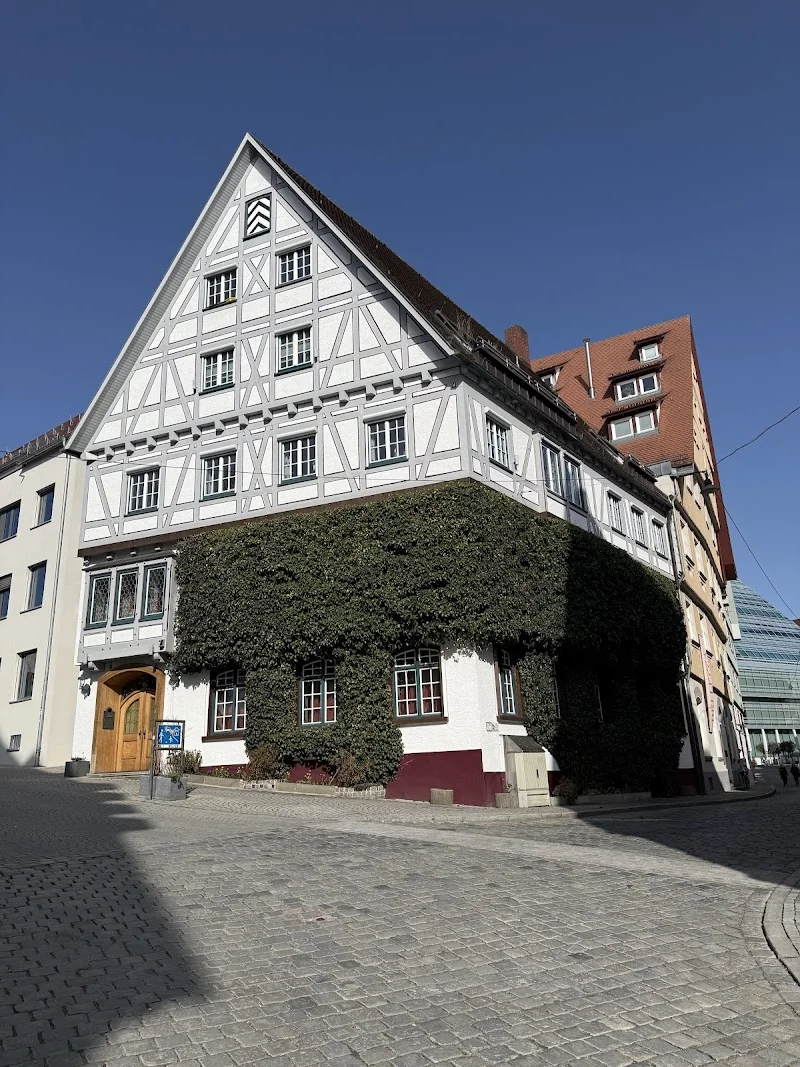
Weinhof 19, Ulm
Weinhof 19, 89073 Ulm, Germany
The Einsteins, Ulm | Museum & Opening Hours
The Einsteins in Ulm are more than just another museum location in the city center. Here, not only the most famous name of the city is in focus, but also the multifaceted history of a family that was closely connected to Ulm and simultaneously makes visible the fractures of the 20th century. The museum is located at Weinhof 19 in the historic Engländer and has been open to visitors since July 5, 2024. It is dedicated to the connection of Albert Einstein with his birthplace, the life paths of his relatives, the history of the Jewish community in Ulm, and the consequences of the Nazi era. This very mix of personal biography, local history, and memory culture makes the exhibition an unusually rich destination for culture enthusiasts, school classes, Einstein fans, and anyone looking for a content-rich museum visit in Ulm. The official presentation clearly shows that this is not about a classic science museum, but about a historically narrated family story with modern mediation, quiet spaces, and a clear educational orientation. ([einstein.ulm.de](https://einstein.ulm.de/global/datenpool/organisationseinheiten/stadt-ulm/kultur/haus-der-stadtgeschichte-stadtarchiv/%E2%80%9Edie-einsteins-museum-einer-ulmer-familie))
The Einsteins in Ulm: Family History, Judaism, and Memory Culture
The strongest search intent behind the keywords related to The Einsteins in Ulm is clearly historical and biographical. Those searching for the museum want to understand why Albert Einstein has his own exhibition here and why the house in Ulm is so closely connected to his family history. The official description explains that Einstein lived in Ulm for only a few months but always kept in touch with his large family, which remained in the city. The exhibition highlights the moving individual fates of these relatives and shows how strongly their life paths were shaped by the dark events of the Nazi era. Thus, the museum not only tells the story of a famous physicist but also of migration, loss, persecution, and familial connectedness. This perspective is particularly important because it removes Albert Einstein from the pure icon role and makes him visible as part of a concrete Ulm family history. This creates a credible, regionally anchored approach that is both emotionally and historically convincing. ([einstein.ulm.de](https://einstein.ulm.de/global/datenpool/organisationseinheiten/stadt-ulm/kultur/haus-der-stadtgeschichte-stadtarchiv/%E2%80%9Edie-einsteins-museum-einer-ulmer-familie))
The city of Ulm explicitly emphasizes in its opening statement that the museum aims to show the personal and family environment while simultaneously depicting a prototypical image of southern German rural Judaism. It describes the family's journey from moving to the prosperous city to the Shoah. This is important for visitors because it clearly distinguishes the museum from a mere Einstein collection or souvenir world. It is about memory culture, historical education, and the contextualization of a world-famous name within local contexts. The exhibition commemorates the history of the Jewish community in Ulm and sees itself as a place of reflection and contemplation. This attitude is a strong unique selling point in the museum landscape because it connects scientific, societal, and emotional levels. Those interested in family history, Jewish history, or how cities deal with their cultural heritage will find a very precise and accessible offering here. ([einstein.ulm.de](https://einstein.ulm.de/global/datenpool/organisationseinheiten/stadt-ulm/kultur/haus-der-stadtgeschichte-stadtarchiv/%E2%80%9Edie-einsteins-museum-einer-ulmer-familie))
The location of the museum also contributes to the narrative. The permanent exhibition is housed in the former residence of Einstein's grandparents and at the site of the company in which his father was involved. The city of Ulm emphasizes that the museum is located in the historic building of the Engländer, where Einstein's grandmother once lived and where the feather bed factory Israel & Levi was based. This makes the place itself part of the narrative. Not only the content but also the architecture and the historical use of the building create an additional layer of authenticity. The name The Einsteins is therefore very aptly chosen because the exhibition makes visible not only the famous individual but also the family as a social and historical structure. For seekers looking for museum, family, Ulm, or historical anchoring, this local connection is a central signal. ([einstein.ulm.de](https://einstein.ulm.de/global/datenpool/organisationseinheiten/stadt-ulm/kultur/haus-der-stadtgeschichte-stadtarchiv/%E2%80%9Edie-einsteins-museum-einer-ulmer-familie))
Exhibition, Seven Chapters, and Multimedia Access at the Engländer at Weinhof 19
A particularly strong feature of the exhibition is its structure in seven thematic chapters. The city of Ulm describes an analog tour that is complemented by multimedia components. These include media guides with explanatory films, an elaborate media station called Window into the Past, a digital Collection-Wall, and seven graphic novels that tell the true life stories and fates of individual family members. This mix of classic exhibition, digital mediation, and narrative access is particularly attractive to visitors because it addresses different learning types. Those who enjoy reading can explore the space at their leisure. Those who prefer visual or audiovisual impulses will find additional depth at several points. Especially with a historical topic that has many biographical facets, this form of mediation is very sensible because it conveys content not dryly but understandably and accessibly. ([ulm.de](https://www.ulm.de/aktuelle-meldungen/z%C3%B6a/juli-2024/einstein-eroeffnung-2024_7))
Highlighted stations include a cabinet of wonders showcasing the pop icon Einstein and a four-meter-wide family tree. Additionally, letters from Einstein are presented in a special window on retractable elements, as well as the Window into the Past, which combines historical and current views of Ulm. Such elements are important because they distinguish the museum from a purely text-heavy exhibition. Visitors experience not only information but also a staged sequence of rooms, images, and personal traces. The combination of family tree, letters, and city views creates closeness to the people behind the famous figure. At the same time, it becomes visible how closely familial fates were linked to political upheavals. The fact that the exhibition also shows films and future workshops are planned underscores the educational ambition of the house. For parents, teachers, and groups, this is a clear advantage because the content can be easily integrated into a learning or excursion context. ([ulm.de](https://www.ulm.de/aktuelle-meldungen/z%C3%B6a/juli-2024/einstein-eroeffnung-2024_7))
The official communication regarding the opening makes it clear that the museum also opens a new perspective on Albert Einstein himself. The physicist is not only presented as a Nobel laureate or icon of science but as part of a family whose history is rooted in Ulm and simultaneously extends far beyond the city. The city’s website describes Einstein as a world-famous physicist and Nobel laureate, born on March 14, 1879, at Bahnhofstraße 20 in Ulm. It also refers to the reciprocal relationship between Einstein and his birthplace and the significance of the family for local memory. This connection of global fame and local origin is particularly relevant for the search interest in The Einsteins Ulm. Those expecting photos, museum insights, or a discovery-like experience will not find a spectacular continuous soundscape but a carefully staged, historically grounded, and deliberately quiet exhibition with a strong personal impact. ([einstein.ulm.de](https://einstein.ulm.de/))
Opening Hours, Tickets, and Practical Visitor Information
For planning a visit, the practical information is clear and reliable. The city of Ulm states the regular opening hours as Tuesday and Wednesday from 11 AM to 5 PM, Thursday from 11 AM to 7 PM, Friday from 11 AM to 5 PM, and Saturday and Sunday from 11 AM to 6 PM. On holidays, the museum is open from 11 AM to 6 PM. Additionally, the official description mentions that groups and school classes can also come by arrangement outside of regular opening hours. This is especially interesting for schools, clubs, and organized excursions, as it allows for flexible time slots. For the SEO topic of opening hours, there is a very clear answer: The museum does not have a daily standard window but a weekly rhythm with extended Thursday hours and generous weekend access. Therefore, those traveling from outside to Ulm or wanting to combine their museum visit with a city stroll should plan their weekdays accordingly. ([einstein.ulm.de](https://einstein.ulm.de/global/datenpool/organisationseinheiten/stadt-ulm/kultur/haus-der-stadtgeschichte-stadtarchiv/%E2%80%9Edie-einsteins-museum-einer-ulmer-familie))
The city of Ulm also provides specific information regarding admission. For the opening, the admission fee was set at 8 euros for adults and 6 euros reduced. There are separate prices for children, and free admission is mentioned for certain age groups. Additionally, there is an annual pass. Such information is important for seekers because it provides a quick overview of costs and facilitates the decision for a spontaneous visit. Those interested in The Einsteins as a destination usually want to know immediately if the visit is uncomplicated and affordable. Especially since the exhibition is compact and thematically focused, a transparent pricing structure fits very well with the overall appearance. The official communication also mentions the telephone contacts 0731 161 4273 for visits and 0731 161 4271 for tour inquiries, as well as the email address einstein@ulm.de. This shows that the museum actively supports both individual visits and organized tours. ([ulm.de](https://www.ulm.de/aktuelle-meldungen/z%C3%B6a/juli-2024/einstein-eroeffnung-2024_7))
For special dates, it is important that the official pages also mention deviations. The city page notes a special regulation for early April 2026: From April 3 to 6, the museum will be open during the Easter holidays from 11 AM to 6 PM. This additional information shows that it is worthwhile to check the current opening hours before traveling, especially on holidays and during vacation periods. Those searching for tickets, opening hours, or planning a visit should therefore not only know the regular times but especially check the current announcement on the official page before their visit. This is not a sign of uncertainty but normal for a lively museum with special openings, tours, and event offerings. This flexibility makes the house attractive for groups and families. ([einstein.ulm.de](https://einstein.ulm.de/global/datenpool/organisationseinheiten/stadt-ulm/kultur/haus-der-stadtgeschichte-stadtarchiv/%E2%80%9Edie-einsteins-museum-einer-ulmer-familie))
Access, Parking, and Barrier-Free Access in the City Center of Ulm
The location at Weinhof 19 in 89073 Ulm is central, but it brings typical city center conditions with it. The official city page clearly states: There is no parking directly at the museum. The next paid parking garage is the underground garage Am Rathaus. Other nearby parking garages are Fischerviertel, Kornhaus, and Frauenstraße. This information is particularly valuable for visitors as it avoids false expectations. Those arriving by car should therefore plan the parking situation in advance and not hope for a parking space directly in front of the entrance. Especially with a museum in a historic city center location, this transparency is an advantage as it makes the visit more relaxed. For SEO inquiries regarding parking, access, and parking space, the answer is clear: centrally located but without its own parking space, with several paid alternatives within walking distance. ([einstein.ulm.de](https://einstein.ulm.de/global/datenpool/organisationseinheiten/stadt-ulm/kultur/haus-der-stadtgeschichte-stadtarchiv/%E2%80%9Edie-einsteins-museum-einer-ulmer-familie))
Public transport is also easily integrated. The city of Ulm names the Rathaus stop as the nearest stop and refers to the timetable information of the DING association. This is good news for guests arriving without a car. Those coming from other districts, from Neu-Ulm, or from the surrounding area can therefore plan their museum visit well with bus and train. For many cultural sites in the city center, this is a significant plus point, as visit routes become more flexible and sustainable. In the context of the search terms access and public transport, it is important that the museum is not isolated on the outskirts of the city but is very well embedded in the city center structure. This allows the visit to be combined with other destinations in the Ulm center. ([einstein.ulm.de](https://einstein.ulm.de/global/datenpool/organisationseinheiten/stadt-ulm/kultur/haus-der-stadtgeschichte-stadtarchiv/%E2%80%9Edie-einsteins-museum-einer-ulmer-familie))
Additionally, there is a positive aspect for people with mobility impairments: The city indicates that the museum is barrier-free. This is an important signal as it facilitates access to the house for a broader audience. Especially in a historic building, barrier-free access is not a given, so this information is particularly relevant for visitor planning. It also enhances usability for school classes, families with strollers, older guests, and groups with different needs. In conjunction with the clear opening hours, contact options, and central location, this creates a very practical overall picture. Therefore, those searching for barrier-free access, parking, or access receive an honest and concrete answer from the museum instead of general promotional phrases. ([einstein.ulm.de](https://einstein.ulm.de/global/datenpool/organisationseinheiten/stadt-ulm/kultur/haus-der-stadtgeschichte-stadtarchiv/%E2%80%9Edie-einsteins-museum-einer-ulmer-familie))
Why The Einsteins in Ulm Are Often Searched with Photos, Reviews, and Museum
The existing search terms clearly show what expectations visitors have for this destination. Those searching for photos, reviews, or museum primarily want to get a quick impression: How does the house look, is the visit worthwhile, and what exactly can be seen on site? The official representation answers this question with an unusually clear profile. The exhibition is small enough to be experienced in a concentrated manner, but content-wise so dense that it does not appear superficial. This is precisely why it is interesting for seekers who prefer to visit a well-curated city house museum rather than a large but diffuse collection. The connection of biography, Jewish history, family research, and digital mediation creates an experiential value that is often perceived positively in reviews and photo series. The search interest in reviews and photos is therefore well explainable: Visitors want to see if the place makes its historical claim visible. The official museum communication suggests that this is achieved through the spatial staging and the multimedia stations. ([einstein.ulm.de](https://einstein.ulm.de/global/datenpool/organisationseinheiten/stadt-ulm/kultur/haus-der-stadtgeschichte-stadtarchiv/%E2%80%9Edie-einsteins-museum-einer-ulmer-familie))
It is particularly striking that the museum does not rely on spectacular effects but on a calm, reflective narrative style. This fits a place that traces the history of the Einstein family and the Jewish community in Ulm up to the present day. For the search intent ulm einstein discovery center, this is important: The term discovery here stands less for a leisure attraction than for discovering historical connections. Visitors discover how a famous name is embedded in a concrete city history, how familial connections have persisted over generations, and how the Nazi era severed this family history. Thus, photos of the place are not just visual souvenirs but expressions of an intellectual and emotional experience. This makes the location also suitable for social media without losing its historical seriousness. ([einstein.ulm.de](https://einstein.ulm.de/global/datenpool/organisationseinheiten/stadt-ulm/kultur/haus-der-stadtgeschichte-stadtarchiv/%E2%80%9Edie-einsteins-museum-einer-ulmer-familie))
For SEO, it is also interesting that The Einsteins in Ulm serve multiple search intents simultaneously. Some users specifically search for opening hours or tickets, others for parking and access, and still others for background, family history, or the connection to the Jewish community. The ideal content structure should therefore always first explain the place itself, then provide the historical embedding, and finally answer practical questions. This is exactly how this museum narrative is structured: first the family history, then the multimedia exhibition, followed by visitor information, and finally the sources. This structure not only reflects the keyword landscape but also the actual usage situation. A user googling The Einsteins Ulm wants to know in a few seconds whether a compact museum visit with depth, good location, and clear times awaits him. According to the official information, the answer is clearly yes. ([einstein.ulm.de](https://einstein.ulm.de/global/datenpool/organisationseinheiten/stadt-ulm/kultur/haus-der-stadtgeschichte-stadtarchiv/%E2%80%9Edie-einsteins-museum-einer-ulmer-familie))
Sources:
- Einstein.ulm.de – Homepage of the Einstein Project ([einstein.ulm.de](https://einstein.ulm.de/))
- City of Ulm – The Einsteins, Museum of an Ulm Family ([einstein.ulm.de](https://einstein.ulm.de/global/datenpool/organisationseinheiten/stadt-ulm/kultur/haus-der-stadtgeschichte-stadtarchiv/%E2%80%9Edie-einsteins-museum-einer-ulmer-familie))
- City of Ulm – Museum The Einsteins Festively Opened ([ulm.de](https://www.ulm.de/aktuelle-meldungen/z%C3%B6a/juli-2024/einstein-eroeffnung-2024_7))
- Tourism Ulm/Neu-Ulm – Museum The Einsteins ([tourismus.ulm.de](https://tourismus.ulm.de/de/entdecken/sehen-und-erleben/kunst-und-kultur/museen-und-ausstellungen/die-einsteins-ulm?utm_source=openai))
Show moreShow less
The Einsteins, Ulm | Museum & Opening Hours
The Einsteins in Ulm are more than just another museum location in the city center. Here, not only the most famous name of the city is in focus, but also the multifaceted history of a family that was closely connected to Ulm and simultaneously makes visible the fractures of the 20th century. The museum is located at Weinhof 19 in the historic Engländer and has been open to visitors since July 5, 2024. It is dedicated to the connection of Albert Einstein with his birthplace, the life paths of his relatives, the history of the Jewish community in Ulm, and the consequences of the Nazi era. This very mix of personal biography, local history, and memory culture makes the exhibition an unusually rich destination for culture enthusiasts, school classes, Einstein fans, and anyone looking for a content-rich museum visit in Ulm. The official presentation clearly shows that this is not about a classic science museum, but about a historically narrated family story with modern mediation, quiet spaces, and a clear educational orientation. ([einstein.ulm.de](https://einstein.ulm.de/global/datenpool/organisationseinheiten/stadt-ulm/kultur/haus-der-stadtgeschichte-stadtarchiv/%E2%80%9Edie-einsteins-museum-einer-ulmer-familie))
The Einsteins in Ulm: Family History, Judaism, and Memory Culture
The strongest search intent behind the keywords related to The Einsteins in Ulm is clearly historical and biographical. Those searching for the museum want to understand why Albert Einstein has his own exhibition here and why the house in Ulm is so closely connected to his family history. The official description explains that Einstein lived in Ulm for only a few months but always kept in touch with his large family, which remained in the city. The exhibition highlights the moving individual fates of these relatives and shows how strongly their life paths were shaped by the dark events of the Nazi era. Thus, the museum not only tells the story of a famous physicist but also of migration, loss, persecution, and familial connectedness. This perspective is particularly important because it removes Albert Einstein from the pure icon role and makes him visible as part of a concrete Ulm family history. This creates a credible, regionally anchored approach that is both emotionally and historically convincing. ([einstein.ulm.de](https://einstein.ulm.de/global/datenpool/organisationseinheiten/stadt-ulm/kultur/haus-der-stadtgeschichte-stadtarchiv/%E2%80%9Edie-einsteins-museum-einer-ulmer-familie))
The city of Ulm explicitly emphasizes in its opening statement that the museum aims to show the personal and family environment while simultaneously depicting a prototypical image of southern German rural Judaism. It describes the family's journey from moving to the prosperous city to the Shoah. This is important for visitors because it clearly distinguishes the museum from a mere Einstein collection or souvenir world. It is about memory culture, historical education, and the contextualization of a world-famous name within local contexts. The exhibition commemorates the history of the Jewish community in Ulm and sees itself as a place of reflection and contemplation. This attitude is a strong unique selling point in the museum landscape because it connects scientific, societal, and emotional levels. Those interested in family history, Jewish history, or how cities deal with their cultural heritage will find a very precise and accessible offering here. ([einstein.ulm.de](https://einstein.ulm.de/global/datenpool/organisationseinheiten/stadt-ulm/kultur/haus-der-stadtgeschichte-stadtarchiv/%E2%80%9Edie-einsteins-museum-einer-ulmer-familie))
The location of the museum also contributes to the narrative. The permanent exhibition is housed in the former residence of Einstein's grandparents and at the site of the company in which his father was involved. The city of Ulm emphasizes that the museum is located in the historic building of the Engländer, where Einstein's grandmother once lived and where the feather bed factory Israel & Levi was based. This makes the place itself part of the narrative. Not only the content but also the architecture and the historical use of the building create an additional layer of authenticity. The name The Einsteins is therefore very aptly chosen because the exhibition makes visible not only the famous individual but also the family as a social and historical structure. For seekers looking for museum, family, Ulm, or historical anchoring, this local connection is a central signal. ([einstein.ulm.de](https://einstein.ulm.de/global/datenpool/organisationseinheiten/stadt-ulm/kultur/haus-der-stadtgeschichte-stadtarchiv/%E2%80%9Edie-einsteins-museum-einer-ulmer-familie))
Exhibition, Seven Chapters, and Multimedia Access at the Engländer at Weinhof 19
A particularly strong feature of the exhibition is its structure in seven thematic chapters. The city of Ulm describes an analog tour that is complemented by multimedia components. These include media guides with explanatory films, an elaborate media station called Window into the Past, a digital Collection-Wall, and seven graphic novels that tell the true life stories and fates of individual family members. This mix of classic exhibition, digital mediation, and narrative access is particularly attractive to visitors because it addresses different learning types. Those who enjoy reading can explore the space at their leisure. Those who prefer visual or audiovisual impulses will find additional depth at several points. Especially with a historical topic that has many biographical facets, this form of mediation is very sensible because it conveys content not dryly but understandably and accessibly. ([ulm.de](https://www.ulm.de/aktuelle-meldungen/z%C3%B6a/juli-2024/einstein-eroeffnung-2024_7))
Highlighted stations include a cabinet of wonders showcasing the pop icon Einstein and a four-meter-wide family tree. Additionally, letters from Einstein are presented in a special window on retractable elements, as well as the Window into the Past, which combines historical and current views of Ulm. Such elements are important because they distinguish the museum from a purely text-heavy exhibition. Visitors experience not only information but also a staged sequence of rooms, images, and personal traces. The combination of family tree, letters, and city views creates closeness to the people behind the famous figure. At the same time, it becomes visible how closely familial fates were linked to political upheavals. The fact that the exhibition also shows films and future workshops are planned underscores the educational ambition of the house. For parents, teachers, and groups, this is a clear advantage because the content can be easily integrated into a learning or excursion context. ([ulm.de](https://www.ulm.de/aktuelle-meldungen/z%C3%B6a/juli-2024/einstein-eroeffnung-2024_7))
The official communication regarding the opening makes it clear that the museum also opens a new perspective on Albert Einstein himself. The physicist is not only presented as a Nobel laureate or icon of science but as part of a family whose history is rooted in Ulm and simultaneously extends far beyond the city. The city’s website describes Einstein as a world-famous physicist and Nobel laureate, born on March 14, 1879, at Bahnhofstraße 20 in Ulm. It also refers to the reciprocal relationship between Einstein and his birthplace and the significance of the family for local memory. This connection of global fame and local origin is particularly relevant for the search interest in The Einsteins Ulm. Those expecting photos, museum insights, or a discovery-like experience will not find a spectacular continuous soundscape but a carefully staged, historically grounded, and deliberately quiet exhibition with a strong personal impact. ([einstein.ulm.de](https://einstein.ulm.de/))
Opening Hours, Tickets, and Practical Visitor Information
For planning a visit, the practical information is clear and reliable. The city of Ulm states the regular opening hours as Tuesday and Wednesday from 11 AM to 5 PM, Thursday from 11 AM to 7 PM, Friday from 11 AM to 5 PM, and Saturday and Sunday from 11 AM to 6 PM. On holidays, the museum is open from 11 AM to 6 PM. Additionally, the official description mentions that groups and school classes can also come by arrangement outside of regular opening hours. This is especially interesting for schools, clubs, and organized excursions, as it allows for flexible time slots. For the SEO topic of opening hours, there is a very clear answer: The museum does not have a daily standard window but a weekly rhythm with extended Thursday hours and generous weekend access. Therefore, those traveling from outside to Ulm or wanting to combine their museum visit with a city stroll should plan their weekdays accordingly. ([einstein.ulm.de](https://einstein.ulm.de/global/datenpool/organisationseinheiten/stadt-ulm/kultur/haus-der-stadtgeschichte-stadtarchiv/%E2%80%9Edie-einsteins-museum-einer-ulmer-familie))
The city of Ulm also provides specific information regarding admission. For the opening, the admission fee was set at 8 euros for adults and 6 euros reduced. There are separate prices for children, and free admission is mentioned for certain age groups. Additionally, there is an annual pass. Such information is important for seekers because it provides a quick overview of costs and facilitates the decision for a spontaneous visit. Those interested in The Einsteins as a destination usually want to know immediately if the visit is uncomplicated and affordable. Especially since the exhibition is compact and thematically focused, a transparent pricing structure fits very well with the overall appearance. The official communication also mentions the telephone contacts 0731 161 4273 for visits and 0731 161 4271 for tour inquiries, as well as the email address einstein@ulm.de. This shows that the museum actively supports both individual visits and organized tours. ([ulm.de](https://www.ulm.de/aktuelle-meldungen/z%C3%B6a/juli-2024/einstein-eroeffnung-2024_7))
For special dates, it is important that the official pages also mention deviations. The city page notes a special regulation for early April 2026: From April 3 to 6, the museum will be open during the Easter holidays from 11 AM to 6 PM. This additional information shows that it is worthwhile to check the current opening hours before traveling, especially on holidays and during vacation periods. Those searching for tickets, opening hours, or planning a visit should therefore not only know the regular times but especially check the current announcement on the official page before their visit. This is not a sign of uncertainty but normal for a lively museum with special openings, tours, and event offerings. This flexibility makes the house attractive for groups and families. ([einstein.ulm.de](https://einstein.ulm.de/global/datenpool/organisationseinheiten/stadt-ulm/kultur/haus-der-stadtgeschichte-stadtarchiv/%E2%80%9Edie-einsteins-museum-einer-ulmer-familie))
Access, Parking, and Barrier-Free Access in the City Center of Ulm
The location at Weinhof 19 in 89073 Ulm is central, but it brings typical city center conditions with it. The official city page clearly states: There is no parking directly at the museum. The next paid parking garage is the underground garage Am Rathaus. Other nearby parking garages are Fischerviertel, Kornhaus, and Frauenstraße. This information is particularly valuable for visitors as it avoids false expectations. Those arriving by car should therefore plan the parking situation in advance and not hope for a parking space directly in front of the entrance. Especially with a museum in a historic city center location, this transparency is an advantage as it makes the visit more relaxed. For SEO inquiries regarding parking, access, and parking space, the answer is clear: centrally located but without its own parking space, with several paid alternatives within walking distance. ([einstein.ulm.de](https://einstein.ulm.de/global/datenpool/organisationseinheiten/stadt-ulm/kultur/haus-der-stadtgeschichte-stadtarchiv/%E2%80%9Edie-einsteins-museum-einer-ulmer-familie))
Public transport is also easily integrated. The city of Ulm names the Rathaus stop as the nearest stop and refers to the timetable information of the DING association. This is good news for guests arriving without a car. Those coming from other districts, from Neu-Ulm, or from the surrounding area can therefore plan their museum visit well with bus and train. For many cultural sites in the city center, this is a significant plus point, as visit routes become more flexible and sustainable. In the context of the search terms access and public transport, it is important that the museum is not isolated on the outskirts of the city but is very well embedded in the city center structure. This allows the visit to be combined with other destinations in the Ulm center. ([einstein.ulm.de](https://einstein.ulm.de/global/datenpool/organisationseinheiten/stadt-ulm/kultur/haus-der-stadtgeschichte-stadtarchiv/%E2%80%9Edie-einsteins-museum-einer-ulmer-familie))
Additionally, there is a positive aspect for people with mobility impairments: The city indicates that the museum is barrier-free. This is an important signal as it facilitates access to the house for a broader audience. Especially in a historic building, barrier-free access is not a given, so this information is particularly relevant for visitor planning. It also enhances usability for school classes, families with strollers, older guests, and groups with different needs. In conjunction with the clear opening hours, contact options, and central location, this creates a very practical overall picture. Therefore, those searching for barrier-free access, parking, or access receive an honest and concrete answer from the museum instead of general promotional phrases. ([einstein.ulm.de](https://einstein.ulm.de/global/datenpool/organisationseinheiten/stadt-ulm/kultur/haus-der-stadtgeschichte-stadtarchiv/%E2%80%9Edie-einsteins-museum-einer-ulmer-familie))
Why The Einsteins in Ulm Are Often Searched with Photos, Reviews, and Museum
The existing search terms clearly show what expectations visitors have for this destination. Those searching for photos, reviews, or museum primarily want to get a quick impression: How does the house look, is the visit worthwhile, and what exactly can be seen on site? The official representation answers this question with an unusually clear profile. The exhibition is small enough to be experienced in a concentrated manner, but content-wise so dense that it does not appear superficial. This is precisely why it is interesting for seekers who prefer to visit a well-curated city house museum rather than a large but diffuse collection. The connection of biography, Jewish history, family research, and digital mediation creates an experiential value that is often perceived positively in reviews and photo series. The search interest in reviews and photos is therefore well explainable: Visitors want to see if the place makes its historical claim visible. The official museum communication suggests that this is achieved through the spatial staging and the multimedia stations. ([einstein.ulm.de](https://einstein.ulm.de/global/datenpool/organisationseinheiten/stadt-ulm/kultur/haus-der-stadtgeschichte-stadtarchiv/%E2%80%9Edie-einsteins-museum-einer-ulmer-familie))
It is particularly striking that the museum does not rely on spectacular effects but on a calm, reflective narrative style. This fits a place that traces the history of the Einstein family and the Jewish community in Ulm up to the present day. For the search intent ulm einstein discovery center, this is important: The term discovery here stands less for a leisure attraction than for discovering historical connections. Visitors discover how a famous name is embedded in a concrete city history, how familial connections have persisted over generations, and how the Nazi era severed this family history. Thus, photos of the place are not just visual souvenirs but expressions of an intellectual and emotional experience. This makes the location also suitable for social media without losing its historical seriousness. ([einstein.ulm.de](https://einstein.ulm.de/global/datenpool/organisationseinheiten/stadt-ulm/kultur/haus-der-stadtgeschichte-stadtarchiv/%E2%80%9Edie-einsteins-museum-einer-ulmer-familie))
For SEO, it is also interesting that The Einsteins in Ulm serve multiple search intents simultaneously. Some users specifically search for opening hours or tickets, others for parking and access, and still others for background, family history, or the connection to the Jewish community. The ideal content structure should therefore always first explain the place itself, then provide the historical embedding, and finally answer practical questions. This is exactly how this museum narrative is structured: first the family history, then the multimedia exhibition, followed by visitor information, and finally the sources. This structure not only reflects the keyword landscape but also the actual usage situation. A user googling The Einsteins Ulm wants to know in a few seconds whether a compact museum visit with depth, good location, and clear times awaits him. According to the official information, the answer is clearly yes. ([einstein.ulm.de](https://einstein.ulm.de/global/datenpool/organisationseinheiten/stadt-ulm/kultur/haus-der-stadtgeschichte-stadtarchiv/%E2%80%9Edie-einsteins-museum-einer-ulmer-familie))
Sources:
- Einstein.ulm.de – Homepage of the Einstein Project ([einstein.ulm.de](https://einstein.ulm.de/))
- City of Ulm – The Einsteins, Museum of an Ulm Family ([einstein.ulm.de](https://einstein.ulm.de/global/datenpool/organisationseinheiten/stadt-ulm/kultur/haus-der-stadtgeschichte-stadtarchiv/%E2%80%9Edie-einsteins-museum-einer-ulmer-familie))
- City of Ulm – Museum The Einsteins Festively Opened ([ulm.de](https://www.ulm.de/aktuelle-meldungen/z%C3%B6a/juli-2024/einstein-eroeffnung-2024_7))
- Tourism Ulm/Neu-Ulm – Museum The Einsteins ([tourismus.ulm.de](https://tourismus.ulm.de/de/entdecken/sehen-und-erleben/kunst-und-kultur/museen-und-ausstellungen/die-einsteins-ulm?utm_source=openai))
The Einsteins, Ulm | Museum & Opening Hours
The Einsteins in Ulm are more than just another museum location in the city center. Here, not only the most famous name of the city is in focus, but also the multifaceted history of a family that was closely connected to Ulm and simultaneously makes visible the fractures of the 20th century. The museum is located at Weinhof 19 in the historic Engländer and has been open to visitors since July 5, 2024. It is dedicated to the connection of Albert Einstein with his birthplace, the life paths of his relatives, the history of the Jewish community in Ulm, and the consequences of the Nazi era. This very mix of personal biography, local history, and memory culture makes the exhibition an unusually rich destination for culture enthusiasts, school classes, Einstein fans, and anyone looking for a content-rich museum visit in Ulm. The official presentation clearly shows that this is not about a classic science museum, but about a historically narrated family story with modern mediation, quiet spaces, and a clear educational orientation. ([einstein.ulm.de](https://einstein.ulm.de/global/datenpool/organisationseinheiten/stadt-ulm/kultur/haus-der-stadtgeschichte-stadtarchiv/%E2%80%9Edie-einsteins-museum-einer-ulmer-familie))
The Einsteins in Ulm: Family History, Judaism, and Memory Culture
The strongest search intent behind the keywords related to The Einsteins in Ulm is clearly historical and biographical. Those searching for the museum want to understand why Albert Einstein has his own exhibition here and why the house in Ulm is so closely connected to his family history. The official description explains that Einstein lived in Ulm for only a few months but always kept in touch with his large family, which remained in the city. The exhibition highlights the moving individual fates of these relatives and shows how strongly their life paths were shaped by the dark events of the Nazi era. Thus, the museum not only tells the story of a famous physicist but also of migration, loss, persecution, and familial connectedness. This perspective is particularly important because it removes Albert Einstein from the pure icon role and makes him visible as part of a concrete Ulm family history. This creates a credible, regionally anchored approach that is both emotionally and historically convincing. ([einstein.ulm.de](https://einstein.ulm.de/global/datenpool/organisationseinheiten/stadt-ulm/kultur/haus-der-stadtgeschichte-stadtarchiv/%E2%80%9Edie-einsteins-museum-einer-ulmer-familie))
The city of Ulm explicitly emphasizes in its opening statement that the museum aims to show the personal and family environment while simultaneously depicting a prototypical image of southern German rural Judaism. It describes the family's journey from moving to the prosperous city to the Shoah. This is important for visitors because it clearly distinguishes the museum from a mere Einstein collection or souvenir world. It is about memory culture, historical education, and the contextualization of a world-famous name within local contexts. The exhibition commemorates the history of the Jewish community in Ulm and sees itself as a place of reflection and contemplation. This attitude is a strong unique selling point in the museum landscape because it connects scientific, societal, and emotional levels. Those interested in family history, Jewish history, or how cities deal with their cultural heritage will find a very precise and accessible offering here. ([einstein.ulm.de](https://einstein.ulm.de/global/datenpool/organisationseinheiten/stadt-ulm/kultur/haus-der-stadtgeschichte-stadtarchiv/%E2%80%9Edie-einsteins-museum-einer-ulmer-familie))
The location of the museum also contributes to the narrative. The permanent exhibition is housed in the former residence of Einstein's grandparents and at the site of the company in which his father was involved. The city of Ulm emphasizes that the museum is located in the historic building of the Engländer, where Einstein's grandmother once lived and where the feather bed factory Israel & Levi was based. This makes the place itself part of the narrative. Not only the content but also the architecture and the historical use of the building create an additional layer of authenticity. The name The Einsteins is therefore very aptly chosen because the exhibition makes visible not only the famous individual but also the family as a social and historical structure. For seekers looking for museum, family, Ulm, or historical anchoring, this local connection is a central signal. ([einstein.ulm.de](https://einstein.ulm.de/global/datenpool/organisationseinheiten/stadt-ulm/kultur/haus-der-stadtgeschichte-stadtarchiv/%E2%80%9Edie-einsteins-museum-einer-ulmer-familie))
Exhibition, Seven Chapters, and Multimedia Access at the Engländer at Weinhof 19
A particularly strong feature of the exhibition is its structure in seven thematic chapters. The city of Ulm describes an analog tour that is complemented by multimedia components. These include media guides with explanatory films, an elaborate media station called Window into the Past, a digital Collection-Wall, and seven graphic novels that tell the true life stories and fates of individual family members. This mix of classic exhibition, digital mediation, and narrative access is particularly attractive to visitors because it addresses different learning types. Those who enjoy reading can explore the space at their leisure. Those who prefer visual or audiovisual impulses will find additional depth at several points. Especially with a historical topic that has many biographical facets, this form of mediation is very sensible because it conveys content not dryly but understandably and accessibly. ([ulm.de](https://www.ulm.de/aktuelle-meldungen/z%C3%B6a/juli-2024/einstein-eroeffnung-2024_7))
Highlighted stations include a cabinet of wonders showcasing the pop icon Einstein and a four-meter-wide family tree. Additionally, letters from Einstein are presented in a special window on retractable elements, as well as the Window into the Past, which combines historical and current views of Ulm. Such elements are important because they distinguish the museum from a purely text-heavy exhibition. Visitors experience not only information but also a staged sequence of rooms, images, and personal traces. The combination of family tree, letters, and city views creates closeness to the people behind the famous figure. At the same time, it becomes visible how closely familial fates were linked to political upheavals. The fact that the exhibition also shows films and future workshops are planned underscores the educational ambition of the house. For parents, teachers, and groups, this is a clear advantage because the content can be easily integrated into a learning or excursion context. ([ulm.de](https://www.ulm.de/aktuelle-meldungen/z%C3%B6a/juli-2024/einstein-eroeffnung-2024_7))
The official communication regarding the opening makes it clear that the museum also opens a new perspective on Albert Einstein himself. The physicist is not only presented as a Nobel laureate or icon of science but as part of a family whose history is rooted in Ulm and simultaneously extends far beyond the city. The city’s website describes Einstein as a world-famous physicist and Nobel laureate, born on March 14, 1879, at Bahnhofstraße 20 in Ulm. It also refers to the reciprocal relationship between Einstein and his birthplace and the significance of the family for local memory. This connection of global fame and local origin is particularly relevant for the search interest in The Einsteins Ulm. Those expecting photos, museum insights, or a discovery-like experience will not find a spectacular continuous soundscape but a carefully staged, historically grounded, and deliberately quiet exhibition with a strong personal impact. ([einstein.ulm.de](https://einstein.ulm.de/))
Opening Hours, Tickets, and Practical Visitor Information
For planning a visit, the practical information is clear and reliable. The city of Ulm states the regular opening hours as Tuesday and Wednesday from 11 AM to 5 PM, Thursday from 11 AM to 7 PM, Friday from 11 AM to 5 PM, and Saturday and Sunday from 11 AM to 6 PM. On holidays, the museum is open from 11 AM to 6 PM. Additionally, the official description mentions that groups and school classes can also come by arrangement outside of regular opening hours. This is especially interesting for schools, clubs, and organized excursions, as it allows for flexible time slots. For the SEO topic of opening hours, there is a very clear answer: The museum does not have a daily standard window but a weekly rhythm with extended Thursday hours and generous weekend access. Therefore, those traveling from outside to Ulm or wanting to combine their museum visit with a city stroll should plan their weekdays accordingly. ([einstein.ulm.de](https://einstein.ulm.de/global/datenpool/organisationseinheiten/stadt-ulm/kultur/haus-der-stadtgeschichte-stadtarchiv/%E2%80%9Edie-einsteins-museum-einer-ulmer-familie))
The city of Ulm also provides specific information regarding admission. For the opening, the admission fee was set at 8 euros for adults and 6 euros reduced. There are separate prices for children, and free admission is mentioned for certain age groups. Additionally, there is an annual pass. Such information is important for seekers because it provides a quick overview of costs and facilitates the decision for a spontaneous visit. Those interested in The Einsteins as a destination usually want to know immediately if the visit is uncomplicated and affordable. Especially since the exhibition is compact and thematically focused, a transparent pricing structure fits very well with the overall appearance. The official communication also mentions the telephone contacts 0731 161 4273 for visits and 0731 161 4271 for tour inquiries, as well as the email address einstein@ulm.de. This shows that the museum actively supports both individual visits and organized tours. ([ulm.de](https://www.ulm.de/aktuelle-meldungen/z%C3%B6a/juli-2024/einstein-eroeffnung-2024_7))
For special dates, it is important that the official pages also mention deviations. The city page notes a special regulation for early April 2026: From April 3 to 6, the museum will be open during the Easter holidays from 11 AM to 6 PM. This additional information shows that it is worthwhile to check the current opening hours before traveling, especially on holidays and during vacation periods. Those searching for tickets, opening hours, or planning a visit should therefore not only know the regular times but especially check the current announcement on the official page before their visit. This is not a sign of uncertainty but normal for a lively museum with special openings, tours, and event offerings. This flexibility makes the house attractive for groups and families. ([einstein.ulm.de](https://einstein.ulm.de/global/datenpool/organisationseinheiten/stadt-ulm/kultur/haus-der-stadtgeschichte-stadtarchiv/%E2%80%9Edie-einsteins-museum-einer-ulmer-familie))
Access, Parking, and Barrier-Free Access in the City Center of Ulm
The location at Weinhof 19 in 89073 Ulm is central, but it brings typical city center conditions with it. The official city page clearly states: There is no parking directly at the museum. The next paid parking garage is the underground garage Am Rathaus. Other nearby parking garages are Fischerviertel, Kornhaus, and Frauenstraße. This information is particularly valuable for visitors as it avoids false expectations. Those arriving by car should therefore plan the parking situation in advance and not hope for a parking space directly in front of the entrance. Especially with a museum in a historic city center location, this transparency is an advantage as it makes the visit more relaxed. For SEO inquiries regarding parking, access, and parking space, the answer is clear: centrally located but without its own parking space, with several paid alternatives within walking distance. ([einstein.ulm.de](https://einstein.ulm.de/global/datenpool/organisationseinheiten/stadt-ulm/kultur/haus-der-stadtgeschichte-stadtarchiv/%E2%80%9Edie-einsteins-museum-einer-ulmer-familie))
Public transport is also easily integrated. The city of Ulm names the Rathaus stop as the nearest stop and refers to the timetable information of the DING association. This is good news for guests arriving without a car. Those coming from other districts, from Neu-Ulm, or from the surrounding area can therefore plan their museum visit well with bus and train. For many cultural sites in the city center, this is a significant plus point, as visit routes become more flexible and sustainable. In the context of the search terms access and public transport, it is important that the museum is not isolated on the outskirts of the city but is very well embedded in the city center structure. This allows the visit to be combined with other destinations in the Ulm center. ([einstein.ulm.de](https://einstein.ulm.de/global/datenpool/organisationseinheiten/stadt-ulm/kultur/haus-der-stadtgeschichte-stadtarchiv/%E2%80%9Edie-einsteins-museum-einer-ulmer-familie))
Additionally, there is a positive aspect for people with mobility impairments: The city indicates that the museum is barrier-free. This is an important signal as it facilitates access to the house for a broader audience. Especially in a historic building, barrier-free access is not a given, so this information is particularly relevant for visitor planning. It also enhances usability for school classes, families with strollers, older guests, and groups with different needs. In conjunction with the clear opening hours, contact options, and central location, this creates a very practical overall picture. Therefore, those searching for barrier-free access, parking, or access receive an honest and concrete answer from the museum instead of general promotional phrases. ([einstein.ulm.de](https://einstein.ulm.de/global/datenpool/organisationseinheiten/stadt-ulm/kultur/haus-der-stadtgeschichte-stadtarchiv/%E2%80%9Edie-einsteins-museum-einer-ulmer-familie))
Why The Einsteins in Ulm Are Often Searched with Photos, Reviews, and Museum
The existing search terms clearly show what expectations visitors have for this destination. Those searching for photos, reviews, or museum primarily want to get a quick impression: How does the house look, is the visit worthwhile, and what exactly can be seen on site? The official representation answers this question with an unusually clear profile. The exhibition is small enough to be experienced in a concentrated manner, but content-wise so dense that it does not appear superficial. This is precisely why it is interesting for seekers who prefer to visit a well-curated city house museum rather than a large but diffuse collection. The connection of biography, Jewish history, family research, and digital mediation creates an experiential value that is often perceived positively in reviews and photo series. The search interest in reviews and photos is therefore well explainable: Visitors want to see if the place makes its historical claim visible. The official museum communication suggests that this is achieved through the spatial staging and the multimedia stations. ([einstein.ulm.de](https://einstein.ulm.de/global/datenpool/organisationseinheiten/stadt-ulm/kultur/haus-der-stadtgeschichte-stadtarchiv/%E2%80%9Edie-einsteins-museum-einer-ulmer-familie))
It is particularly striking that the museum does not rely on spectacular effects but on a calm, reflective narrative style. This fits a place that traces the history of the Einstein family and the Jewish community in Ulm up to the present day. For the search intent ulm einstein discovery center, this is important: The term discovery here stands less for a leisure attraction than for discovering historical connections. Visitors discover how a famous name is embedded in a concrete city history, how familial connections have persisted over generations, and how the Nazi era severed this family history. Thus, photos of the place are not just visual souvenirs but expressions of an intellectual and emotional experience. This makes the location also suitable for social media without losing its historical seriousness. ([einstein.ulm.de](https://einstein.ulm.de/global/datenpool/organisationseinheiten/stadt-ulm/kultur/haus-der-stadtgeschichte-stadtarchiv/%E2%80%9Edie-einsteins-museum-einer-ulmer-familie))
For SEO, it is also interesting that The Einsteins in Ulm serve multiple search intents simultaneously. Some users specifically search for opening hours or tickets, others for parking and access, and still others for background, family history, or the connection to the Jewish community. The ideal content structure should therefore always first explain the place itself, then provide the historical embedding, and finally answer practical questions. This is exactly how this museum narrative is structured: first the family history, then the multimedia exhibition, followed by visitor information, and finally the sources. This structure not only reflects the keyword landscape but also the actual usage situation. A user googling The Einsteins Ulm wants to know in a few seconds whether a compact museum visit with depth, good location, and clear times awaits him. According to the official information, the answer is clearly yes. ([einstein.ulm.de](https://einstein.ulm.de/global/datenpool/organisationseinheiten/stadt-ulm/kultur/haus-der-stadtgeschichte-stadtarchiv/%E2%80%9Edie-einsteins-museum-einer-ulmer-familie))
Sources:
- Einstein.ulm.de – Homepage of the Einstein Project ([einstein.ulm.de](https://einstein.ulm.de/))
- City of Ulm – The Einsteins, Museum of an Ulm Family ([einstein.ulm.de](https://einstein.ulm.de/global/datenpool/organisationseinheiten/stadt-ulm/kultur/haus-der-stadtgeschichte-stadtarchiv/%E2%80%9Edie-einsteins-museum-einer-ulmer-familie))
- City of Ulm – Museum The Einsteins Festively Opened ([ulm.de](https://www.ulm.de/aktuelle-meldungen/z%C3%B6a/juli-2024/einstein-eroeffnung-2024_7))
- Tourism Ulm/Neu-Ulm – Museum The Einsteins ([tourismus.ulm.de](https://tourismus.ulm.de/de/entdecken/sehen-und-erleben/kunst-und-kultur/museen-und-ausstellungen/die-einsteins-ulm?utm_source=openai))
Upcoming Events
No events found
Frequently Asked Questions
Reviews
Sharon Kusterer
17. October 2024
Great place to follow Albert Einstein and the contributions he made to his family, education and humanity. Most of the museum offers English translations and although it is small, it's well worth the visit.
LeeLee
2. November 2024
Excellent museum about the Einstein family. You can also purchase some cute Einstein items.
Vishnu J
23. June 2025
The Museum is mainly focused on Einstein's connection to Ulm and Family tree and the migration during World war time. Don't expect exhibits related to Scientific achievements specifically theory of relativity.
Mohamned Al Mawali
21. August 2025
Magnificent place.
Susanne Hunger
16. February 2026
The Daa Museum is interestingly and informatively designed. If you read/listen to everything, you can easily spend two to three hours here. However, we had hoped to gain some insight into the science as well.