
Ulm
89081 Ulm, Deutschland
Deserter Memorial Ulm | History & Access
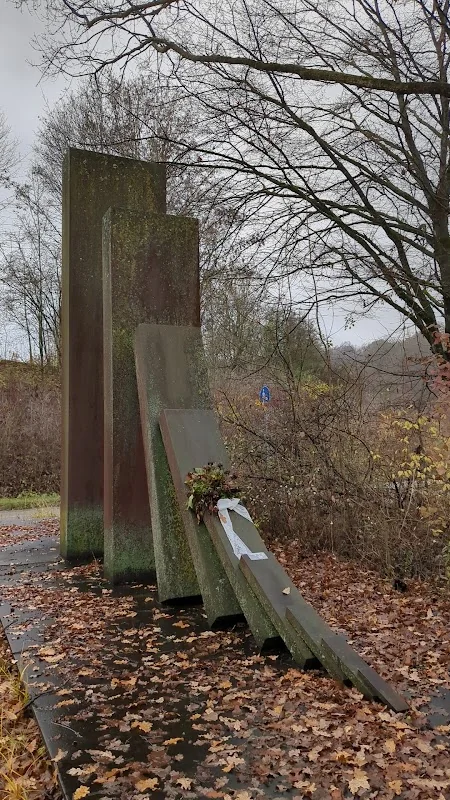
The Deserter Memorial Ulm is a special place of remembrance where art, city history, and political responsibility intersect. It is located in Lehrer Tal opposite the eastern entrance to the Botanical Garden of the University of Ulm, thus anchored in a place that combines tranquility, nature, and historical awareness. The city of Ulm explicitly refers to the Deserter Memorial in Lehrer Tal in its event calendar, while the University of Ulm mentions the access to Lehrer Tal via the Schießstände bus stop and the free parking at Lehrer Tal. This combination of clear orientation and quiet surroundings makes the site easily accessible and dignified for visitors. The memorial is associated with the artist Hannah Stütz-Mentzel and was finally erected at its current location in 2005 after a long debate. In 2012, information steles and memorial plaques were added to make the historical context visible. ([veranstaltungen.ulm.de](https://veranstaltungen.ulm.de/leoonline/portals/ulm_en/mobile/veranstaltungen/id/52756/DENK%20MAL%20%7C%20Gemeinsames%20Innehalten%20zu%20Beginn%20der%20Ulmer%20Friedenswochen%202026%20vor%20dem%20Ulmer%20Deserteurdenkmal/Ulmer%20Deserteurdenkmal%20im%20Lehrer%20Tal/Kultur/))
History of the Deserter Memorial in Ulm
The history of the memorial is itself part of the memory it is meant to preserve. The journey did not begin with a quiet ceremony in public space, but with disputes, resistance, and a long struggle for visibility. Local memory literature describes that in 1989, a deserter memorial was initially unveiled on private property in Ulm after the city had rejected a public installation. The memorial had to be removed and remained on private land for many years before it was allowed to be erected in 2005 in Lehrer Tal. The location is intentionally close to the historical execution site where deserters were shot according to the judgments of the Nazi military justice during the National Socialist regime. This proximity between object and place defines the significance of the memorial: it is not only a work of art but a consciously set sign against forgetting. The city of Ulm and the Documentation Center Oberer Kuhberg frame this development as part of a broader struggle for recognition of the victims of Nazi military justice. ([dzok-ulm.de](https://dzok-ulm.de/wp-content/uploads/2021/01/Um_die_Erinnerung_streiten.pdf))
Also important is the historical change in societal evaluation. In the 1990s and 2000s, public perception of deserters and the judgments of Nazi military justice gradually changed. The Bundestag rehabilitated Wehrmacht deserters in 1997; in 2009, the comprehensive rehabilitation of the victims of Nazi military justice followed, including those convicted as 'war traitors'. The Ulm debate about the memorial is therefore more than a local dispute over art in public space. It shows how slowly recognition can grow when a city confronts the dark sides of its history. In 2012, information steles and memorial plaques were installed at the memorial and other crime scenes based on the research of Ulm history teacher Oliver Thron. This provided the site with the historical context that was previously missing, allowing visitors to better understand the connection between the memorial, places of detention, and execution sites today. ([dzok-ulm.de](https://dzok-ulm.de/wp-content/uploads/2021/01/Um_die_Erinnerung_streiten.pdf))
Location in Lehrer Tal: Proximity to the Botanical Garden
Those searching for the Deserter Memorial Ulm do not end up in a representative city center situation, but in a peripheral and transitional space with a special effect. The memorial stands in Lehrer Tal, opposite the eastern entrance to the Botanical Garden of the University of Ulm. This location is practical and symbolic at the same time: practical because it is clearly described and easily accessible; symbolic because the site is in close proximity to a scientifically and landscape-shaped area. The Botanical Garden itself is located southeast of the university at Oberer Eselsberg and is described by the university as a place for learning, research, and recreation. The path to the memorial does not lead through a noisy event backdrop but into an environment that invites quiet contemplation. This form of embedding is particularly suitable for a memorial that commemorates victims of war and military justice. ([veranstaltungen.ulm.de](https://veranstaltungen.ulm.de/leoonline/portals/ulm_en/mobile/veranstaltungen/id/52756/DENK%20MAL%20%7C%20Gemeinsames%20Innehalten%20zu%20Beginn%20der%20Ulmer%20Friedenswochen%202026%20vor%20dem%20Ulmer%20Deserteurdenkmal/Ulmer%20Deserteurdenkmal%20im%20Lehrer%20Tal/Kultur/))
For visitors, it is also helpful that the Botanical Garden and the surrounding area of Lehrer Tal are officially well connected. The university explicitly names the entrance Lehrer Tal as a point of access and points out the parking area Lehrer Tal. Those visiting the Botanical Garden find a clear location reference that also makes the Deserter Memorial easier to find. The proximity to the garden entrances, footpaths, and the university creates a kind of quiet urban space where nature, learning, and historical remembrance overlap. Therefore, the memorial does not appear isolated but as part of a larger ensemble of paths, accesses, and places of remembrance. This is also where its SEO potential lies: many users search not only for the name of the memorial but for terms like Lehrer Tal, Botanical Garden, Ulm, and access. These search intentions converge here at a real place that can be described just as it is experienced on-site: open, public, and yet consciously subdued. ([uni-ulm.de](https://www.uni-ulm.de/einrichtungen/garten/information/informationen-fuer-besucher/))
Access and Parking at the Deserter Memorial Ulm
Getting to the Deserter Memorial Ulm is relatively straightforward if you use the official information from the University of Ulm. For the entrance Lehrer Tal, the university specifies the parking area Lehrer Tal as free; for public transport, it refers to bus line 49 to the Schießstände stop. For the Botanical Garden as a whole, the university also describes additional accesses with tram line 2 and various bus lines, as well as the paid parking garage Ost in Helmholtzstraße for the greenhouse entrance. Therefore, if you specifically want to visit the Deserter Memorial, you should focus on the entrance Lehrer Tal and not on the greenhouse-adjacent accesses. This saves time and prevents detours. This separation is especially important for visitors who are visiting the site for the first time, as the Botanical Garden has several entrances and not all paths end equally close to the memorial. ([uni-ulm.de](https://www.uni-ulm.de/einrichtungen/garten/information/informationen-fuer-besucher/))
From the perspective of search terms, the question of parking and access is also central. Many users do not enter the official place name but search for combinations like 'deserter memorial parking' or 'deserter memorial access'. Therefore, the clear location description is particularly valuable: Lehrer Tal, opposite the eastern entrance to the Botanical Garden, 89081 Ulm. Those arriving by car benefit from the free parking area Lehrer Tal. Those using buses and trains orient themselves at the Schießstände stop for the Lehrer Tal entrance or at the generally mentioned connections to the Botanical Garden. For an SEO page about a memorial site, this mix of practical information and historical context is crucial. Because people who want to visit a memorial site need not only an address but reliable orientation. The official information from the University of Ulm provides a solid foundation for this. ([uni-ulm.de](https://www.uni-ulm.de/einrichtungen/garten/information/informationen-fuer-besucher/))
What the Deserter Memorial Remembers
The Deserter Memorial Ulm commemorates men who refused to participate in a criminal war or shoot at fellow human beings during the National Socialist regime. The city of Ulm describes the event at the memorial as a collective remembrance of people who have refused, refuse, and will refuse to shoot at fellow human beings. This makes the moral dimension of the site very clear: it is not about fleeing from responsibility but about resistance against a system that placed obedience above humanity. The memorial is thus a sign of remembrance for the victims of Nazi military justice and at the same time a plea for conscience, civil courage, and the ability to make peace. The historical context is important because deserters were long not recognized as victims. Only the late rehabilitation by the Bundestag made it clear that their behavior is to be understood today as resistance against injustice. ([veranstaltungen.ulm.de](https://veranstaltungen.ulm.de/leoonline/portals/ulm_en/mobile/veranstaltungen/id/52756/DENK%20MAL%20%7C%20Gemeinsames%20Innehalten%20zu%20Beginn%20der%20Ulmer%20Friedenswochen%202026%20vor%20dem%20Ulmer%20Deserteurdenkmal/Ulmer%20Deserteurdenkmal%20im%20Lehrer%20Tal/Kultur/))
In Ulm, this remembrance is particularly closely linked to specific crime scenes. The documentation work of the DZOK points out that in 2012, information steles were installed at the memorial and at the former military court and detention center at Frauenstraße 134. Additionally, since 2015, six stumbling blocks at the former military prison in Frauenstraße 134 commemorate executed deserters who were held there before their execution. These indicators transform a single memorial into a network of places. Visitors can thus not only see a work of art but also trace the history of an entire repressive system: detention, judgment, execution, later rehabilitation, and today's commemoration. This spatial connection is typical of Ulm's culture of remembrance and makes the site relevant for historically interested people, school classes, and peace initiatives alike. ([dzok-ulm.de](https://dzok-ulm.de/wp-content/uploads/2021/01/Um_die_Erinnerung_streiten.pdf))
Art, Inscription, and Statement of the Sculpture
The Deserter Memorial is not only a historical marker but also an artistic statement. The Ulm event announcement emphasizes that the artist Hannah Stütz-Mentzel created the memorial with a sculpture that captures the idea of a small stone of provocation and makes a larger domino effect visible. This is where the power of the work lies: it is not a monumental triumphal arch or a pathetic heroic depiction, but an object that generates irritation, raises questions, and sparks political debates. This restraint fits the theme. Because desertion is not an easy subject but a moral conflict that cannot be resolved with simple images. The memorial addresses this conflict with a language of form, material, and place. ([veranstaltungen.ulm.de](https://veranstaltungen.ulm.de/leoonline/portals/ulm_en/mobile/veranstaltungen/id/52756/DENK%20MAL%20%7C%20Gemeinsames%20Innehalten%20zu%20Beginn%20der%20Ulmer%20Friedenswochen%202026%20vor%20dem%20Ulmer%20Deserteurdenkmal/Ulmer%20Deserteurdenkmal%20im%20Lehrer%20Tal/Kultur/))
The local and regional debate shows how strongly the work has been read as a sign. On one side was the rejection of showing such a memorial in public space; on the other side, the insistence of peace initiatives, historians, and relatives for a visible place of remembrance. This made the sculpture itself part of its own history. It is not merely an object but the result of a long negotiation process. The later addition of information steles further reinforced this impression: from a controversial work of art, it became a declared site of remembrance. This is also important for SEO content because searchers often look not only for the name but for terms like 'hannah stütz-mentzel', 'deserter memorial ulm', or 'nazi military justice'. All these terms lead here to a single statement: the memorial poses the question of what conscience, courage, and responsibility mean in the shadow of war and dictatorship. ([veranstaltungen.ulm.de](https://veranstaltungen.ulm.de/leoonline/portals/ulm_en/mobile/veranstaltungen/id/52756/DENK%20MAL%20%7C%20Gemeinsames%20Innehalten%20zu%20Beginn%20der%20Ulmer%20Friedenswochen%202026%20vor%20dem%20Ulmer%20Deserteurdenkmal/Ulmer%20Deserteurdenkmal%20im%20Lehrer%20Tal/Kultur/))
Remembrance Today: Peace Weeks, Steles, and Ulm's Culture of Remembrance
The Deserter Memorial is today an active site of remembrance. The city of Ulm lists events of the Ulm Peace Weeks there, and a collective moment of reflection is planned at the memorial for September 4, 2026. Even the wording of the event shows that the site is not closed but continues to be used for public remembrance. Visitors can therefore perceive the memorial not only as a quiet individual site but as part of a living calendar of peace and remembrance. The fact that the city and civil society actors regularly choose the site for commemorative events underscores its significance far beyond the individual work of art. ([veranstaltungen.ulm.de](https://veranstaltungen.ulm.de/leoonline/portals/ulm_en/mobile/veranstaltungen/id/52756/DENK%20MAL%20%7C%20Gemeinsames%20Innehalten%20zu%20Beginn%20der%20Ulmer%20Friedenswochen%202026%20vor%20dem%20Ulmer%20Deserteurdenkmal/Ulmer%20Deserteurdenkmal%20im%20Lehrer%20Tal/Kultur/))
The later added information elements also point in the same direction. The steles installed in 2012 make the history of deserters, places of detention, and execution sites more understandable. The initiative of the DZOK and the research of Oliver Thron have contributed to making the biographies of the men executed in Ulm visible. Moreover, Ulm's city history shows through other examples how strongly the city is expanding its culture of remembrance, such as at the Memorial Site White Rose. In this larger context, the Deserter Memorial stands for a city that not only commemorates but also explains, contextualizes, and creates places of learning. Therefore, those who visit the memorial do not merely experience an object on a meadow but a place where Ulm makes its own history of war, resistance, and moral courage visible. This is what makes the Deserter Memorial Ulm a relevant search target for people looking for history, access, parking, background, and significance. ([dzok-ulm.de](https://dzok-ulm.de/wp-content/uploads/2021/01/Um_die_Erinnerung_streiten.pdf))
Sources:
Mehr anzeigenWeniger anzeigen
Deserter Memorial Ulm | History & Access
The Deserter Memorial Ulm is a special place of remembrance where art, city history, and political responsibility intersect. It is located in Lehrer Tal opposite the eastern entrance to the Botanical Garden of the University of Ulm, thus anchored in a place that combines tranquility, nature, and historical awareness. The city of Ulm explicitly refers to the Deserter Memorial in Lehrer Tal in its event calendar, while the University of Ulm mentions the access to Lehrer Tal via the Schießstände bus stop and the free parking at Lehrer Tal. This combination of clear orientation and quiet surroundings makes the site easily accessible and dignified for visitors. The memorial is associated with the artist Hannah Stütz-Mentzel and was finally erected at its current location in 2005 after a long debate. In 2012, information steles and memorial plaques were added to make the historical context visible. ([veranstaltungen.ulm.de](https://veranstaltungen.ulm.de/leoonline/portals/ulm_en/mobile/veranstaltungen/id/52756/DENK%20MAL%20%7C%20Gemeinsames%20Innehalten%20zu%20Beginn%20der%20Ulmer%20Friedenswochen%202026%20vor%20dem%20Ulmer%20Deserteurdenkmal/Ulmer%20Deserteurdenkmal%20im%20Lehrer%20Tal/Kultur/))
History of the Deserter Memorial in Ulm
The history of the memorial is itself part of the memory it is meant to preserve. The journey did not begin with a quiet ceremony in public space, but with disputes, resistance, and a long struggle for visibility. Local memory literature describes that in 1989, a deserter memorial was initially unveiled on private property in Ulm after the city had rejected a public installation. The memorial had to be removed and remained on private land for many years before it was allowed to be erected in 2005 in Lehrer Tal. The location is intentionally close to the historical execution site where deserters were shot according to the judgments of the Nazi military justice during the National Socialist regime. This proximity between object and place defines the significance of the memorial: it is not only a work of art but a consciously set sign against forgetting. The city of Ulm and the Documentation Center Oberer Kuhberg frame this development as part of a broader struggle for recognition of the victims of Nazi military justice. ([dzok-ulm.de](https://dzok-ulm.de/wp-content/uploads/2021/01/Um_die_Erinnerung_streiten.pdf))
Also important is the historical change in societal evaluation. In the 1990s and 2000s, public perception of deserters and the judgments of Nazi military justice gradually changed. The Bundestag rehabilitated Wehrmacht deserters in 1997; in 2009, the comprehensive rehabilitation of the victims of Nazi military justice followed, including those convicted as 'war traitors'. The Ulm debate about the memorial is therefore more than a local dispute over art in public space. It shows how slowly recognition can grow when a city confronts the dark sides of its history. In 2012, information steles and memorial plaques were installed at the memorial and other crime scenes based on the research of Ulm history teacher Oliver Thron. This provided the site with the historical context that was previously missing, allowing visitors to better understand the connection between the memorial, places of detention, and execution sites today. ([dzok-ulm.de](https://dzok-ulm.de/wp-content/uploads/2021/01/Um_die_Erinnerung_streiten.pdf))
Location in Lehrer Tal: Proximity to the Botanical Garden
Those searching for the Deserter Memorial Ulm do not end up in a representative city center situation, but in a peripheral and transitional space with a special effect. The memorial stands in Lehrer Tal, opposite the eastern entrance to the Botanical Garden of the University of Ulm. This location is practical and symbolic at the same time: practical because it is clearly described and easily accessible; symbolic because the site is in close proximity to a scientifically and landscape-shaped area. The Botanical Garden itself is located southeast of the university at Oberer Eselsberg and is described by the university as a place for learning, research, and recreation. The path to the memorial does not lead through a noisy event backdrop but into an environment that invites quiet contemplation. This form of embedding is particularly suitable for a memorial that commemorates victims of war and military justice. ([veranstaltungen.ulm.de](https://veranstaltungen.ulm.de/leoonline/portals/ulm_en/mobile/veranstaltungen/id/52756/DENK%20MAL%20%7C%20Gemeinsames%20Innehalten%20zu%20Beginn%20der%20Ulmer%20Friedenswochen%202026%20vor%20dem%20Ulmer%20Deserteurdenkmal/Ulmer%20Deserteurdenkmal%20im%20Lehrer%20Tal/Kultur/))
For visitors, it is also helpful that the Botanical Garden and the surrounding area of Lehrer Tal are officially well connected. The university explicitly names the entrance Lehrer Tal as a point of access and points out the parking area Lehrer Tal. Those visiting the Botanical Garden find a clear location reference that also makes the Deserter Memorial easier to find. The proximity to the garden entrances, footpaths, and the university creates a kind of quiet urban space where nature, learning, and historical remembrance overlap. Therefore, the memorial does not appear isolated but as part of a larger ensemble of paths, accesses, and places of remembrance. This is also where its SEO potential lies: many users search not only for the name of the memorial but for terms like Lehrer Tal, Botanical Garden, Ulm, and access. These search intentions converge here at a real place that can be described just as it is experienced on-site: open, public, and yet consciously subdued. ([uni-ulm.de](https://www.uni-ulm.de/einrichtungen/garten/information/informationen-fuer-besucher/))
Access and Parking at the Deserter Memorial Ulm
Getting to the Deserter Memorial Ulm is relatively straightforward if you use the official information from the University of Ulm. For the entrance Lehrer Tal, the university specifies the parking area Lehrer Tal as free; for public transport, it refers to bus line 49 to the Schießstände stop. For the Botanical Garden as a whole, the university also describes additional accesses with tram line 2 and various bus lines, as well as the paid parking garage Ost in Helmholtzstraße for the greenhouse entrance. Therefore, if you specifically want to visit the Deserter Memorial, you should focus on the entrance Lehrer Tal and not on the greenhouse-adjacent accesses. This saves time and prevents detours. This separation is especially important for visitors who are visiting the site for the first time, as the Botanical Garden has several entrances and not all paths end equally close to the memorial. ([uni-ulm.de](https://www.uni-ulm.de/einrichtungen/garten/information/informationen-fuer-besucher/))
From the perspective of search terms, the question of parking and access is also central. Many users do not enter the official place name but search for combinations like 'deserter memorial parking' or 'deserter memorial access'. Therefore, the clear location description is particularly valuable: Lehrer Tal, opposite the eastern entrance to the Botanical Garden, 89081 Ulm. Those arriving by car benefit from the free parking area Lehrer Tal. Those using buses and trains orient themselves at the Schießstände stop for the Lehrer Tal entrance or at the generally mentioned connections to the Botanical Garden. For an SEO page about a memorial site, this mix of practical information and historical context is crucial. Because people who want to visit a memorial site need not only an address but reliable orientation. The official information from the University of Ulm provides a solid foundation for this. ([uni-ulm.de](https://www.uni-ulm.de/einrichtungen/garten/information/informationen-fuer-besucher/))
What the Deserter Memorial Remembers
The Deserter Memorial Ulm commemorates men who refused to participate in a criminal war or shoot at fellow human beings during the National Socialist regime. The city of Ulm describes the event at the memorial as a collective remembrance of people who have refused, refuse, and will refuse to shoot at fellow human beings. This makes the moral dimension of the site very clear: it is not about fleeing from responsibility but about resistance against a system that placed obedience above humanity. The memorial is thus a sign of remembrance for the victims of Nazi military justice and at the same time a plea for conscience, civil courage, and the ability to make peace. The historical context is important because deserters were long not recognized as victims. Only the late rehabilitation by the Bundestag made it clear that their behavior is to be understood today as resistance against injustice. ([veranstaltungen.ulm.de](https://veranstaltungen.ulm.de/leoonline/portals/ulm_en/mobile/veranstaltungen/id/52756/DENK%20MAL%20%7C%20Gemeinsames%20Innehalten%20zu%20Beginn%20der%20Ulmer%20Friedenswochen%202026%20vor%20dem%20Ulmer%20Deserteurdenkmal/Ulmer%20Deserteurdenkmal%20im%20Lehrer%20Tal/Kultur/))
In Ulm, this remembrance is particularly closely linked to specific crime scenes. The documentation work of the DZOK points out that in 2012, information steles were installed at the memorial and at the former military court and detention center at Frauenstraße 134. Additionally, since 2015, six stumbling blocks at the former military prison in Frauenstraße 134 commemorate executed deserters who were held there before their execution. These indicators transform a single memorial into a network of places. Visitors can thus not only see a work of art but also trace the history of an entire repressive system: detention, judgment, execution, later rehabilitation, and today's commemoration. This spatial connection is typical of Ulm's culture of remembrance and makes the site relevant for historically interested people, school classes, and peace initiatives alike. ([dzok-ulm.de](https://dzok-ulm.de/wp-content/uploads/2021/01/Um_die_Erinnerung_streiten.pdf))
Art, Inscription, and Statement of the Sculpture
The Deserter Memorial is not only a historical marker but also an artistic statement. The Ulm event announcement emphasizes that the artist Hannah Stütz-Mentzel created the memorial with a sculpture that captures the idea of a small stone of provocation and makes a larger domino effect visible. This is where the power of the work lies: it is not a monumental triumphal arch or a pathetic heroic depiction, but an object that generates irritation, raises questions, and sparks political debates. This restraint fits the theme. Because desertion is not an easy subject but a moral conflict that cannot be resolved with simple images. The memorial addresses this conflict with a language of form, material, and place. ([veranstaltungen.ulm.de](https://veranstaltungen.ulm.de/leoonline/portals/ulm_en/mobile/veranstaltungen/id/52756/DENK%20MAL%20%7C%20Gemeinsames%20Innehalten%20zu%20Beginn%20der%20Ulmer%20Friedenswochen%202026%20vor%20dem%20Ulmer%20Deserteurdenkmal/Ulmer%20Deserteurdenkmal%20im%20Lehrer%20Tal/Kultur/))
The local and regional debate shows how strongly the work has been read as a sign. On one side was the rejection of showing such a memorial in public space; on the other side, the insistence of peace initiatives, historians, and relatives for a visible place of remembrance. This made the sculpture itself part of its own history. It is not merely an object but the result of a long negotiation process. The later addition of information steles further reinforced this impression: from a controversial work of art, it became a declared site of remembrance. This is also important for SEO content because searchers often look not only for the name but for terms like 'hannah stütz-mentzel', 'deserter memorial ulm', or 'nazi military justice'. All these terms lead here to a single statement: the memorial poses the question of what conscience, courage, and responsibility mean in the shadow of war and dictatorship. ([veranstaltungen.ulm.de](https://veranstaltungen.ulm.de/leoonline/portals/ulm_en/mobile/veranstaltungen/id/52756/DENK%20MAL%20%7C%20Gemeinsames%20Innehalten%20zu%20Beginn%20der%20Ulmer%20Friedenswochen%202026%20vor%20dem%20Ulmer%20Deserteurdenkmal/Ulmer%20Deserteurdenkmal%20im%20Lehrer%20Tal/Kultur/))
Remembrance Today: Peace Weeks, Steles, and Ulm's Culture of Remembrance
The Deserter Memorial is today an active site of remembrance. The city of Ulm lists events of the Ulm Peace Weeks there, and a collective moment of reflection is planned at the memorial for September 4, 2026. Even the wording of the event shows that the site is not closed but continues to be used for public remembrance. Visitors can therefore perceive the memorial not only as a quiet individual site but as part of a living calendar of peace and remembrance. The fact that the city and civil society actors regularly choose the site for commemorative events underscores its significance far beyond the individual work of art. ([veranstaltungen.ulm.de](https://veranstaltungen.ulm.de/leoonline/portals/ulm_en/mobile/veranstaltungen/id/52756/DENK%20MAL%20%7C%20Gemeinsames%20Innehalten%20zu%20Beginn%20der%20Ulmer%20Friedenswochen%202026%20vor%20dem%20Ulmer%20Deserteurdenkmal/Ulmer%20Deserteurdenkmal%20im%20Lehrer%20Tal/Kultur/))
The later added information elements also point in the same direction. The steles installed in 2012 make the history of deserters, places of detention, and execution sites more understandable. The initiative of the DZOK and the research of Oliver Thron have contributed to making the biographies of the men executed in Ulm visible. Moreover, Ulm's city history shows through other examples how strongly the city is expanding its culture of remembrance, such as at the Memorial Site White Rose. In this larger context, the Deserter Memorial stands for a city that not only commemorates but also explains, contextualizes, and creates places of learning. Therefore, those who visit the memorial do not merely experience an object on a meadow but a place where Ulm makes its own history of war, resistance, and moral courage visible. This is what makes the Deserter Memorial Ulm a relevant search target for people looking for history, access, parking, background, and significance. ([dzok-ulm.de](https://dzok-ulm.de/wp-content/uploads/2021/01/Um_die_Erinnerung_streiten.pdf))
Sources:
Upcoming Events
No events found
Frequently Asked Questions
Reviews
No reviews found