
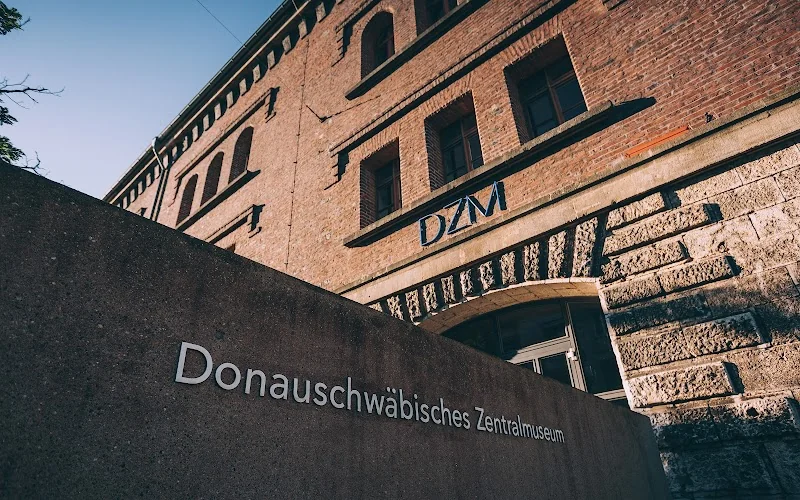
Schillerstraße 1, Ulm
Schillerstraße 1, 89077 Ulm, Germany
Danube Swabian Central Museum | Danube Swabians & Tickets
The Danube Swabian Central Museum in Ulm is a house for history, migration, and Danube culture that goes far beyond a classic regional exhibition. It is the only museum in Germany that presents the history of the Danube Swabians comprehensively and on a scientific basis. The location itself tells a story: The museum is located in the upper Danube bastion part of the Ulm Federal Fortress, thus in a building that is itself part of historical memory. Inside, the house connects objects, documents, films, hands-on stations, and educational offerings into a dense museum visit that is both historically grounded and accessible to a wide audience. Upon entering the museum, visitors move between emigration, settlement, multilingualism, identity, loss, and new beginnings. This very range makes the location so special: It is not only about the past of a specific group but about European migration history, about coexistence in a multi-ethnic region along the Danube, and about the question of how cultural heritage can be conveyed today. The museum connects research, collection, and experience in a way that is interesting for families, school classes, groups, and culture-interested individual visitors alike. ([dzm-museum.de](https://www.dzm-museum.de/en/the-museum/))
Danube Swabians: History, Migration, and Identity
The exhibition on the Danube Swabians is the heart of the museum. It tells the story of the German settlers in the middle Danube region in 13 thematic sections, spanning from emigration in the 18th century to the present. The starting point is the historical settlement of German-speaking people in what was then the Kingdom of Hungary, which was promoted by the Habsburgs and private landowners after the wars against the Ottoman Empire. Thus, the exhibition is not only a look at a single population group but at a European migration movement that was from the beginning characterized by new ways of life, contact zones, and cultural exchange. The museum makes it clear how village community, agriculture, trade, daily life, language, and religion interacted and how a distinct regional identity developed in the Danube region. The presentation also shows how the history of the Danube Swabians was shaped in the 20th century by nationalism, World War II, flight, internment, deportation, and expulsion. Many people lost their homes, while others built new lives in new places. Today, Danube Swabians and their descendants live scattered in the former settlement areas in Central and Southeastern Europe, in Germany and Austria, but also in Brazil and the USA. The museum does not present this history as a rigid chronicle but as a living narrative about entanglement, memory, and mediation. A free media guide available for loan with acted scenes and background information in German and English supports the tour through the entire exhibition. ([dzm-museum.de](https://www.dzm-museum.de/en/danube-swabians/))
Danube. River stories: Danube culture between nature and Europe
With the permanent exhibition Danube. River stories, the museum has expanded its perspective and placed the Danube itself at the center. On 550 m², objects, images, films, and sounds in German and English tell of people and animals, of life on the water, and of the cultural diversity along this extraordinary river. The Danube is not only a natural space here but a connecting axis through Europe: It flows nearly 3,000 kilometers from Germany to the Black Sea through ten countries, linking historical regions, economic areas, and ways of life. The museum shows how strongly this river transcends borders while simultaneously bundling stories. The exhibition leads to famous coffee houses in Vienna and Budapest, addresses shipping and waterways, showcases the cultural diversity along the banks, and also tackles ecological questions. A special motif is the Danube sturgeon, which once lived as a giant fish in the river system and is now nearly extinct. Equally impressive are the sections on flight and border experiences: The exhibition recalls failed and life-threatening escape attempts on the Danube, persecuted people, and the political dimension of the river in the 20th century. At the same time, visitors are actively involved, as interactive stations explain navigation, water quality, and the famous Ulm box rhythm of the river. Thus, a narrative emerges that connects natural history, cultural history, and contemporary history and makes the Danube visible as a European space of memory. ([dzm-museum.de](https://www.dzm-museum.de/en/river-stories/?utm_source=openai))
Opening hours, admission, and tickets at a glance
For planning a visit, the practical information from the museum is pleasantly clear. The Danube Swabian Central Museum is closed on Mondays. From Tuesday to Friday, guests can visit from 11:00 AM to 5:00 PM, and on Saturdays, Sundays, and public holidays from 10:00 AM to 6:00 PM. This makes the visit suitable for both a weekday excursion and a relaxed weekend in Ulm. Admission remains relatively inexpensive: The regular price is 5 euros, and the reduced price is 3.50 euros. Children and teenagers up to 18 years have free admission, and there is also a reduced price of 3.50 euros per person for groups of ten or more. Particularly attractive is the free admission on the first Friday of every month. Tickets can be obtained at the museum ticket office; there, the free media guide for the Danube Swabians exhibition can also be borrowed. For those who want to combine their visit with a quick stop at the shop, there are publications, posters, cards, calendars, postcards, children's and youth literature, as well as selected handicrafts and toys from the Danube countries. These conditions are particularly helpful for visitors who wish to get a quick overview in advance: The house is manageable, fairly priced, and thematically diverse. The mix of permanent exhibitions, educational offerings, and changing programs makes the visit interesting even for return visitors. For those interested in Danube culture, migration history, or the history of the Danube Swabians, this is a reliable and easily accessible address in Ulm. ([dzm-museum.de](https://www.dzm-museum.de/en/visitor-information/))
Directions, parking, and barrier-free access in Ulm
The museum is also well integrated logistically. From Ulm's main train station, it can be reached on foot in about 10 to 15 minutes. The path initially leads right along the tracks under the Zinglerstraße bridge, then up the stairs to Zinglerstraße and from there left into Schillerstraße towards the Danube. Those using public transport can take tram lines 1 or 2 or bus lines 7, 10, or 12 to the Ehinger Tor stop. From there, it is about 500 meters along Schillerstraße towards the Danube. Arriving by car is also well described: From the south, the route leads via B 28 and the Danube bridge, from the north via B 10, the city tunnel, and the Konrad-Adenauer bridge. Directly to the left of the museum entrance at Schillerstraße 1 are the parking spaces for visitors; the museum has a total of 7 parking spaces. Equally important for many guests: The house is accessible and has a barrier-free toilet. Wi-Fi is available, and the location is close enough to the train station that spontaneous visits are also possible. The combination of a central location, clear directions, dedicated parking spaces, and barrier-free access makes the museum practical and low-threshold. This is a decisive advantage for families, older visitors, and travel groups, as arrival remains stress-free and well-planned. ([dzm-museum.de](https://www.dzm-museum.de/kontakt/?utm_source=openai))
Building, collection, and scientific claim
The building itself is also part of the museum's history. The house sits in the reduit of the upper Danube bastion, thus in a historical element of the Ulm Federal Fortress, which the city acquired for the museum construction and comprehensively renovated between 1995 and 2000. As part of this work, the entire technical infrastructure was renewed; the installation of a staircase and elevator necessitated a change in one axis of the vault, but beyond that, as little as possible was changed to the historical structure. This restraint fits the self-understanding of the house, as the museum aims not only to exhibit but also to preserve, document, and convey scientifically. The collection now includes over 50,000 objects, from everyday items to photographs and documents to artworks from more than three centuries. Only a small part of this is visible in the permanent exhibitions; the rest forms a growing depot that provides the material basis for research and mediation. The foundation that supports the museum has the mandate to preserve the cultural tradition and cultural assets of the Danube Swabians based on Section 96 of the Federal Expellee Law, to document history, culture, and landscape, and to make research on the regions of origin accessible. At the same time, the house collaborates with partner museums in Germany and Southeastern Europe and sees itself as part of a cross-border museum landscape. This is precisely where its particular strength lies: Here, regional memory is not isolated but placed in a larger European context. The result is a museum that makes history visible but also poses questions and understands its own collection as a living knowledge archive. ([dzm-museum.de](https://www.dzm-museum.de/en/the-building/))
Families, groups, and media guide for the museum visit
The Danube Swabian Central Museum is not only interesting for specialists but explicitly also for families, school classes, and groups. The website highlights group tours, children's and family offerings, and museum education. Children are allowed to explore, craft, and play, while adults encounter a combination of historical content, interactive stations, and clear narrative structure. There are special tours for groups, and guided tours and workshops are also offered for schools. Particularly practical is the free media guide, which can be borrowed at the ticket office and accompanies the Danube Swabians exhibition with acted scenes and additional information. This makes the tour especially accessible for guests who wish for an easier entry into the topic. Additionally, the museum shop is thematically carefully aligned with the collection: Visitors will find books, catalogs, cards, posters, postcards, CDs, DVDs, children's and youth literature, as well as selected handicrafts and toys from the Danube countries. This not only creates a pleasant conclusion to the tour but also extends the museum experience into everyday life. Those planning a visit with children also benefit from the fact that the two permanent exhibitions offer different approaches: The Danube Swabians exhibition tells family and migration history, while Danube. River stories works particularly vividly with nature, water, animals, and interactive stations. Thus, the museum becomes a place where knowledge, memory, and discovery come together. For guests seeking a cultural destination with substance, the house is therefore much more than a classic local museum: It is a place of learning and experience for the history of the Danube region. ([dzm-museum.de](https://www.dzm-museum.de/en/group-tours/?utm_source=openai))
Sources:
- DZM – Official Website ([dzm-museum.de](https://www.dzm-museum.de/en/?utm_source=openai))
- DZM – Visitor Information ([dzm-museum.de](https://www.dzm-museum.de/en/visitor-information/?utm_source=openai))
- DZM – Danube Swabians ([dzm-museum.de](https://www.dzm-museum.de/en/danube-swabians/?utm_source=openai))
- DZM – River stories ([dzm-museum.de](https://www.dzm-museum.de/en/river-stories/?utm_source=openai))
- DZM – Contact ([dzm-museum.de](https://www.dzm-museum.de/en/contact/?utm_source=openai))
- DZM – The building ([dzm-museum.de](https://www.dzm-museum.de/en/the-building/))
Show moreShow less
Danube Swabian Central Museum | Danube Swabians & Tickets
The Danube Swabian Central Museum in Ulm is a house for history, migration, and Danube culture that goes far beyond a classic regional exhibition. It is the only museum in Germany that presents the history of the Danube Swabians comprehensively and on a scientific basis. The location itself tells a story: The museum is located in the upper Danube bastion part of the Ulm Federal Fortress, thus in a building that is itself part of historical memory. Inside, the house connects objects, documents, films, hands-on stations, and educational offerings into a dense museum visit that is both historically grounded and accessible to a wide audience. Upon entering the museum, visitors move between emigration, settlement, multilingualism, identity, loss, and new beginnings. This very range makes the location so special: It is not only about the past of a specific group but about European migration history, about coexistence in a multi-ethnic region along the Danube, and about the question of how cultural heritage can be conveyed today. The museum connects research, collection, and experience in a way that is interesting for families, school classes, groups, and culture-interested individual visitors alike. ([dzm-museum.de](https://www.dzm-museum.de/en/the-museum/))
Danube Swabians: History, Migration, and Identity
The exhibition on the Danube Swabians is the heart of the museum. It tells the story of the German settlers in the middle Danube region in 13 thematic sections, spanning from emigration in the 18th century to the present. The starting point is the historical settlement of German-speaking people in what was then the Kingdom of Hungary, which was promoted by the Habsburgs and private landowners after the wars against the Ottoman Empire. Thus, the exhibition is not only a look at a single population group but at a European migration movement that was from the beginning characterized by new ways of life, contact zones, and cultural exchange. The museum makes it clear how village community, agriculture, trade, daily life, language, and religion interacted and how a distinct regional identity developed in the Danube region. The presentation also shows how the history of the Danube Swabians was shaped in the 20th century by nationalism, World War II, flight, internment, deportation, and expulsion. Many people lost their homes, while others built new lives in new places. Today, Danube Swabians and their descendants live scattered in the former settlement areas in Central and Southeastern Europe, in Germany and Austria, but also in Brazil and the USA. The museum does not present this history as a rigid chronicle but as a living narrative about entanglement, memory, and mediation. A free media guide available for loan with acted scenes and background information in German and English supports the tour through the entire exhibition. ([dzm-museum.de](https://www.dzm-museum.de/en/danube-swabians/))
Danube. River stories: Danube culture between nature and Europe
With the permanent exhibition Danube. River stories, the museum has expanded its perspective and placed the Danube itself at the center. On 550 m², objects, images, films, and sounds in German and English tell of people and animals, of life on the water, and of the cultural diversity along this extraordinary river. The Danube is not only a natural space here but a connecting axis through Europe: It flows nearly 3,000 kilometers from Germany to the Black Sea through ten countries, linking historical regions, economic areas, and ways of life. The museum shows how strongly this river transcends borders while simultaneously bundling stories. The exhibition leads to famous coffee houses in Vienna and Budapest, addresses shipping and waterways, showcases the cultural diversity along the banks, and also tackles ecological questions. A special motif is the Danube sturgeon, which once lived as a giant fish in the river system and is now nearly extinct. Equally impressive are the sections on flight and border experiences: The exhibition recalls failed and life-threatening escape attempts on the Danube, persecuted people, and the political dimension of the river in the 20th century. At the same time, visitors are actively involved, as interactive stations explain navigation, water quality, and the famous Ulm box rhythm of the river. Thus, a narrative emerges that connects natural history, cultural history, and contemporary history and makes the Danube visible as a European space of memory. ([dzm-museum.de](https://www.dzm-museum.de/en/river-stories/?utm_source=openai))
Opening hours, admission, and tickets at a glance
For planning a visit, the practical information from the museum is pleasantly clear. The Danube Swabian Central Museum is closed on Mondays. From Tuesday to Friday, guests can visit from 11:00 AM to 5:00 PM, and on Saturdays, Sundays, and public holidays from 10:00 AM to 6:00 PM. This makes the visit suitable for both a weekday excursion and a relaxed weekend in Ulm. Admission remains relatively inexpensive: The regular price is 5 euros, and the reduced price is 3.50 euros. Children and teenagers up to 18 years have free admission, and there is also a reduced price of 3.50 euros per person for groups of ten or more. Particularly attractive is the free admission on the first Friday of every month. Tickets can be obtained at the museum ticket office; there, the free media guide for the Danube Swabians exhibition can also be borrowed. For those who want to combine their visit with a quick stop at the shop, there are publications, posters, cards, calendars, postcards, children's and youth literature, as well as selected handicrafts and toys from the Danube countries. These conditions are particularly helpful for visitors who wish to get a quick overview in advance: The house is manageable, fairly priced, and thematically diverse. The mix of permanent exhibitions, educational offerings, and changing programs makes the visit interesting even for return visitors. For those interested in Danube culture, migration history, or the history of the Danube Swabians, this is a reliable and easily accessible address in Ulm. ([dzm-museum.de](https://www.dzm-museum.de/en/visitor-information/))
Directions, parking, and barrier-free access in Ulm
The museum is also well integrated logistically. From Ulm's main train station, it can be reached on foot in about 10 to 15 minutes. The path initially leads right along the tracks under the Zinglerstraße bridge, then up the stairs to Zinglerstraße and from there left into Schillerstraße towards the Danube. Those using public transport can take tram lines 1 or 2 or bus lines 7, 10, or 12 to the Ehinger Tor stop. From there, it is about 500 meters along Schillerstraße towards the Danube. Arriving by car is also well described: From the south, the route leads via B 28 and the Danube bridge, from the north via B 10, the city tunnel, and the Konrad-Adenauer bridge. Directly to the left of the museum entrance at Schillerstraße 1 are the parking spaces for visitors; the museum has a total of 7 parking spaces. Equally important for many guests: The house is accessible and has a barrier-free toilet. Wi-Fi is available, and the location is close enough to the train station that spontaneous visits are also possible. The combination of a central location, clear directions, dedicated parking spaces, and barrier-free access makes the museum practical and low-threshold. This is a decisive advantage for families, older visitors, and travel groups, as arrival remains stress-free and well-planned. ([dzm-museum.de](https://www.dzm-museum.de/kontakt/?utm_source=openai))
Building, collection, and scientific claim
The building itself is also part of the museum's history. The house sits in the reduit of the upper Danube bastion, thus in a historical element of the Ulm Federal Fortress, which the city acquired for the museum construction and comprehensively renovated between 1995 and 2000. As part of this work, the entire technical infrastructure was renewed; the installation of a staircase and elevator necessitated a change in one axis of the vault, but beyond that, as little as possible was changed to the historical structure. This restraint fits the self-understanding of the house, as the museum aims not only to exhibit but also to preserve, document, and convey scientifically. The collection now includes over 50,000 objects, from everyday items to photographs and documents to artworks from more than three centuries. Only a small part of this is visible in the permanent exhibitions; the rest forms a growing depot that provides the material basis for research and mediation. The foundation that supports the museum has the mandate to preserve the cultural tradition and cultural assets of the Danube Swabians based on Section 96 of the Federal Expellee Law, to document history, culture, and landscape, and to make research on the regions of origin accessible. At the same time, the house collaborates with partner museums in Germany and Southeastern Europe and sees itself as part of a cross-border museum landscape. This is precisely where its particular strength lies: Here, regional memory is not isolated but placed in a larger European context. The result is a museum that makes history visible but also poses questions and understands its own collection as a living knowledge archive. ([dzm-museum.de](https://www.dzm-museum.de/en/the-building/))
Families, groups, and media guide for the museum visit
The Danube Swabian Central Museum is not only interesting for specialists but explicitly also for families, school classes, and groups. The website highlights group tours, children's and family offerings, and museum education. Children are allowed to explore, craft, and play, while adults encounter a combination of historical content, interactive stations, and clear narrative structure. There are special tours for groups, and guided tours and workshops are also offered for schools. Particularly practical is the free media guide, which can be borrowed at the ticket office and accompanies the Danube Swabians exhibition with acted scenes and additional information. This makes the tour especially accessible for guests who wish for an easier entry into the topic. Additionally, the museum shop is thematically carefully aligned with the collection: Visitors will find books, catalogs, cards, posters, postcards, CDs, DVDs, children's and youth literature, as well as selected handicrafts and toys from the Danube countries. This not only creates a pleasant conclusion to the tour but also extends the museum experience into everyday life. Those planning a visit with children also benefit from the fact that the two permanent exhibitions offer different approaches: The Danube Swabians exhibition tells family and migration history, while Danube. River stories works particularly vividly with nature, water, animals, and interactive stations. Thus, the museum becomes a place where knowledge, memory, and discovery come together. For guests seeking a cultural destination with substance, the house is therefore much more than a classic local museum: It is a place of learning and experience for the history of the Danube region. ([dzm-museum.de](https://www.dzm-museum.de/en/group-tours/?utm_source=openai))
Sources:
- DZM – Official Website ([dzm-museum.de](https://www.dzm-museum.de/en/?utm_source=openai))
- DZM – Visitor Information ([dzm-museum.de](https://www.dzm-museum.de/en/visitor-information/?utm_source=openai))
- DZM – Danube Swabians ([dzm-museum.de](https://www.dzm-museum.de/en/danube-swabians/?utm_source=openai))
- DZM – River stories ([dzm-museum.de](https://www.dzm-museum.de/en/river-stories/?utm_source=openai))
- DZM – Contact ([dzm-museum.de](https://www.dzm-museum.de/en/contact/?utm_source=openai))
- DZM – The building ([dzm-museum.de](https://www.dzm-museum.de/en/the-building/))
Danube Swabian Central Museum | Danube Swabians & Tickets
The Danube Swabian Central Museum in Ulm is a house for history, migration, and Danube culture that goes far beyond a classic regional exhibition. It is the only museum in Germany that presents the history of the Danube Swabians comprehensively and on a scientific basis. The location itself tells a story: The museum is located in the upper Danube bastion part of the Ulm Federal Fortress, thus in a building that is itself part of historical memory. Inside, the house connects objects, documents, films, hands-on stations, and educational offerings into a dense museum visit that is both historically grounded and accessible to a wide audience. Upon entering the museum, visitors move between emigration, settlement, multilingualism, identity, loss, and new beginnings. This very range makes the location so special: It is not only about the past of a specific group but about European migration history, about coexistence in a multi-ethnic region along the Danube, and about the question of how cultural heritage can be conveyed today. The museum connects research, collection, and experience in a way that is interesting for families, school classes, groups, and culture-interested individual visitors alike. ([dzm-museum.de](https://www.dzm-museum.de/en/the-museum/))
Danube Swabians: History, Migration, and Identity
The exhibition on the Danube Swabians is the heart of the museum. It tells the story of the German settlers in the middle Danube region in 13 thematic sections, spanning from emigration in the 18th century to the present. The starting point is the historical settlement of German-speaking people in what was then the Kingdom of Hungary, which was promoted by the Habsburgs and private landowners after the wars against the Ottoman Empire. Thus, the exhibition is not only a look at a single population group but at a European migration movement that was from the beginning characterized by new ways of life, contact zones, and cultural exchange. The museum makes it clear how village community, agriculture, trade, daily life, language, and religion interacted and how a distinct regional identity developed in the Danube region. The presentation also shows how the history of the Danube Swabians was shaped in the 20th century by nationalism, World War II, flight, internment, deportation, and expulsion. Many people lost their homes, while others built new lives in new places. Today, Danube Swabians and their descendants live scattered in the former settlement areas in Central and Southeastern Europe, in Germany and Austria, but also in Brazil and the USA. The museum does not present this history as a rigid chronicle but as a living narrative about entanglement, memory, and mediation. A free media guide available for loan with acted scenes and background information in German and English supports the tour through the entire exhibition. ([dzm-museum.de](https://www.dzm-museum.de/en/danube-swabians/))
Danube. River stories: Danube culture between nature and Europe
With the permanent exhibition Danube. River stories, the museum has expanded its perspective and placed the Danube itself at the center. On 550 m², objects, images, films, and sounds in German and English tell of people and animals, of life on the water, and of the cultural diversity along this extraordinary river. The Danube is not only a natural space here but a connecting axis through Europe: It flows nearly 3,000 kilometers from Germany to the Black Sea through ten countries, linking historical regions, economic areas, and ways of life. The museum shows how strongly this river transcends borders while simultaneously bundling stories. The exhibition leads to famous coffee houses in Vienna and Budapest, addresses shipping and waterways, showcases the cultural diversity along the banks, and also tackles ecological questions. A special motif is the Danube sturgeon, which once lived as a giant fish in the river system and is now nearly extinct. Equally impressive are the sections on flight and border experiences: The exhibition recalls failed and life-threatening escape attempts on the Danube, persecuted people, and the political dimension of the river in the 20th century. At the same time, visitors are actively involved, as interactive stations explain navigation, water quality, and the famous Ulm box rhythm of the river. Thus, a narrative emerges that connects natural history, cultural history, and contemporary history and makes the Danube visible as a European space of memory. ([dzm-museum.de](https://www.dzm-museum.de/en/river-stories/?utm_source=openai))
Opening hours, admission, and tickets at a glance
For planning a visit, the practical information from the museum is pleasantly clear. The Danube Swabian Central Museum is closed on Mondays. From Tuesday to Friday, guests can visit from 11:00 AM to 5:00 PM, and on Saturdays, Sundays, and public holidays from 10:00 AM to 6:00 PM. This makes the visit suitable for both a weekday excursion and a relaxed weekend in Ulm. Admission remains relatively inexpensive: The regular price is 5 euros, and the reduced price is 3.50 euros. Children and teenagers up to 18 years have free admission, and there is also a reduced price of 3.50 euros per person for groups of ten or more. Particularly attractive is the free admission on the first Friday of every month. Tickets can be obtained at the museum ticket office; there, the free media guide for the Danube Swabians exhibition can also be borrowed. For those who want to combine their visit with a quick stop at the shop, there are publications, posters, cards, calendars, postcards, children's and youth literature, as well as selected handicrafts and toys from the Danube countries. These conditions are particularly helpful for visitors who wish to get a quick overview in advance: The house is manageable, fairly priced, and thematically diverse. The mix of permanent exhibitions, educational offerings, and changing programs makes the visit interesting even for return visitors. For those interested in Danube culture, migration history, or the history of the Danube Swabians, this is a reliable and easily accessible address in Ulm. ([dzm-museum.de](https://www.dzm-museum.de/en/visitor-information/))
Directions, parking, and barrier-free access in Ulm
The museum is also well integrated logistically. From Ulm's main train station, it can be reached on foot in about 10 to 15 minutes. The path initially leads right along the tracks under the Zinglerstraße bridge, then up the stairs to Zinglerstraße and from there left into Schillerstraße towards the Danube. Those using public transport can take tram lines 1 or 2 or bus lines 7, 10, or 12 to the Ehinger Tor stop. From there, it is about 500 meters along Schillerstraße towards the Danube. Arriving by car is also well described: From the south, the route leads via B 28 and the Danube bridge, from the north via B 10, the city tunnel, and the Konrad-Adenauer bridge. Directly to the left of the museum entrance at Schillerstraße 1 are the parking spaces for visitors; the museum has a total of 7 parking spaces. Equally important for many guests: The house is accessible and has a barrier-free toilet. Wi-Fi is available, and the location is close enough to the train station that spontaneous visits are also possible. The combination of a central location, clear directions, dedicated parking spaces, and barrier-free access makes the museum practical and low-threshold. This is a decisive advantage for families, older visitors, and travel groups, as arrival remains stress-free and well-planned. ([dzm-museum.de](https://www.dzm-museum.de/kontakt/?utm_source=openai))
Building, collection, and scientific claim
The building itself is also part of the museum's history. The house sits in the reduit of the upper Danube bastion, thus in a historical element of the Ulm Federal Fortress, which the city acquired for the museum construction and comprehensively renovated between 1995 and 2000. As part of this work, the entire technical infrastructure was renewed; the installation of a staircase and elevator necessitated a change in one axis of the vault, but beyond that, as little as possible was changed to the historical structure. This restraint fits the self-understanding of the house, as the museum aims not only to exhibit but also to preserve, document, and convey scientifically. The collection now includes over 50,000 objects, from everyday items to photographs and documents to artworks from more than three centuries. Only a small part of this is visible in the permanent exhibitions; the rest forms a growing depot that provides the material basis for research and mediation. The foundation that supports the museum has the mandate to preserve the cultural tradition and cultural assets of the Danube Swabians based on Section 96 of the Federal Expellee Law, to document history, culture, and landscape, and to make research on the regions of origin accessible. At the same time, the house collaborates with partner museums in Germany and Southeastern Europe and sees itself as part of a cross-border museum landscape. This is precisely where its particular strength lies: Here, regional memory is not isolated but placed in a larger European context. The result is a museum that makes history visible but also poses questions and understands its own collection as a living knowledge archive. ([dzm-museum.de](https://www.dzm-museum.de/en/the-building/))
Families, groups, and media guide for the museum visit
The Danube Swabian Central Museum is not only interesting for specialists but explicitly also for families, school classes, and groups. The website highlights group tours, children's and family offerings, and museum education. Children are allowed to explore, craft, and play, while adults encounter a combination of historical content, interactive stations, and clear narrative structure. There are special tours for groups, and guided tours and workshops are also offered for schools. Particularly practical is the free media guide, which can be borrowed at the ticket office and accompanies the Danube Swabians exhibition with acted scenes and additional information. This makes the tour especially accessible for guests who wish for an easier entry into the topic. Additionally, the museum shop is thematically carefully aligned with the collection: Visitors will find books, catalogs, cards, posters, postcards, CDs, DVDs, children's and youth literature, as well as selected handicrafts and toys from the Danube countries. This not only creates a pleasant conclusion to the tour but also extends the museum experience into everyday life. Those planning a visit with children also benefit from the fact that the two permanent exhibitions offer different approaches: The Danube Swabians exhibition tells family and migration history, while Danube. River stories works particularly vividly with nature, water, animals, and interactive stations. Thus, the museum becomes a place where knowledge, memory, and discovery come together. For guests seeking a cultural destination with substance, the house is therefore much more than a classic local museum: It is a place of learning and experience for the history of the Danube region. ([dzm-museum.de](https://www.dzm-museum.de/en/group-tours/?utm_source=openai))
Sources:
- DZM – Official Website ([dzm-museum.de](https://www.dzm-museum.de/en/?utm_source=openai))
- DZM – Visitor Information ([dzm-museum.de](https://www.dzm-museum.de/en/visitor-information/?utm_source=openai))
- DZM – Danube Swabians ([dzm-museum.de](https://www.dzm-museum.de/en/danube-swabians/?utm_source=openai))
- DZM – River stories ([dzm-museum.de](https://www.dzm-museum.de/en/river-stories/?utm_source=openai))
- DZM – Contact ([dzm-museum.de](https://www.dzm-museum.de/en/contact/?utm_source=openai))
- DZM – The building ([dzm-museum.de](https://www.dzm-museum.de/en/the-building/))
Frequently Asked Questions
Reviews
david antoun
9. July 2024
Only cash payment available with lockers for your backpacks. It's divided between 2 floors. One exhibition is about the life of the people of Schwabing origins and culture, only in German. The 2nd one is about the marine life on the Danube river with multiple historical and scientific facts in English and German. A small artistic exhibition of colors is also on the ground floor. Not too many details, but if you're around, you can go check the history.
Lisa Reutter
4. January 2024
Very interesting and newly renovated museum. The exhibitions were beautiful and well-organized, and I especially enjoyed the interactive elements and lighting of the artwork. Highly recommended hidden gem!
Sabine End
25. April 2024
Great, if you're interested in the history of the Donauschwaben. Why/how they settled in, what was then Hungary.
Dave Saxton
29. June 2022
A modern, well-presented museum of the Danube and its people. Not all sections are in English, but there are many photos and exhibits.
Colectivo Alicia en oz
27. December 2017
This museum is only in German. They don't have English or Spanish translations on the exhibition signs. If you ask for an English or Spanish audio guide, they only give you a small pamphlet that gives you a summary of the museum.