
Ulm
Fischergasse 34, 89073 Ulm, Deutschland
BEGE Galleries | Gallery at Saumarkt, Ulm | Art & Exhibitions
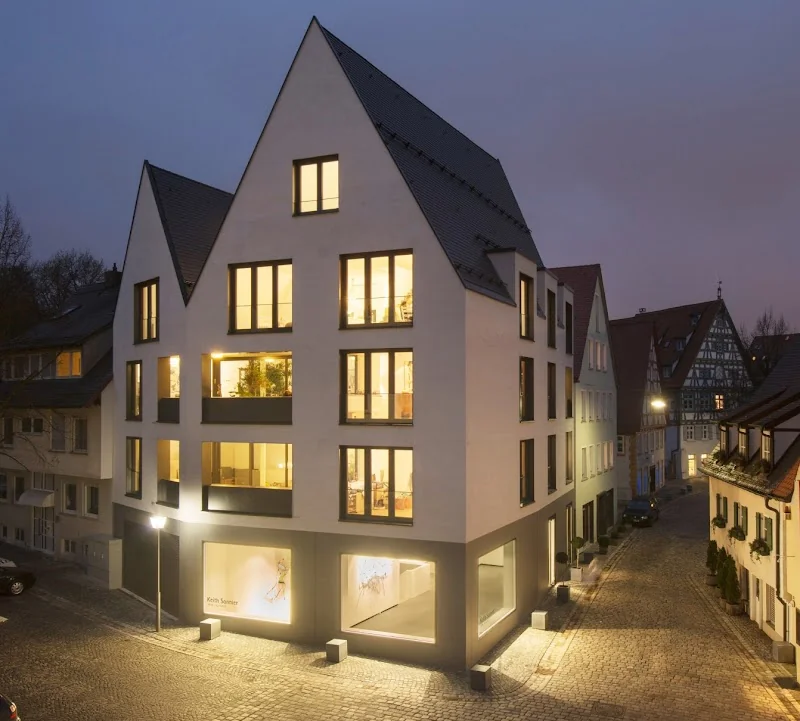
The BEGE Galleries | Gallery at Saumarkt, Ulm are located in the heart of the Ulm Old Town and combine a historic site with contemporary art. The gallery was founded in 1984 as Fischerplatz Gallery Ulm by Bernd Geserick and is now known as BEGE Galleries Kunst GmbH. Those who come here will not find just any exhibition space, but an art address that has grown over decades right at Saumarkt, in close proximity to Fischerplatz. The profile is clear: changing presentations, curated art, and a location that is culturally a fixed point for Ulm. This mix of tradition, present, and professional exhibition work makes the place interesting for art collectors as well as for visitors who want to experience contemporary positions in a calm, focused environment. The official city description and the gallery itself also make it clear that it is a permanent part of the Ulm art scene, not a temporary pop-up location. The location, history, and content continuity are visibly intertwined here and explain why BEGE Galleries frequently appear in search queries alongside terms like Gallery at Saumarkt, Ulm, exhibition, parking, and opening hours. ([bege-galerien.de](https://www.bege-galerien.de/))
Current Exhibitions and Program at the Gallery at Saumarkt
The homepage of BEGE Galleries already shows how continuously the program is maintained: For 2026, among others, Sparfels Intermezzo by Marc Sparfel, Linear Structures by Armin Göhringer, 100 Years of Marilyn Monroe, WeBlingBling, and 40 Years of Banana Sprayer are announced. This demonstrates a thematic range from sculpture and drawing to pop and icon references, as well as conceptually and socially charged formats. The gallery does not work with a rigid annual theme, but with changing solo presentations, each opening up its own perspective. Visitors thus do not experience a monotonous repetition, but an ongoing dialogue of various artistic signatures. Especially in the context of the Ulm Old Town, this is an important advantage, as the gallery continually provides a new reason for a return visit. The current program structure is also designed so that the themes are well distributed throughout the year, keeping the gallery perceivable as a lively exhibition space. ([bege-galerien.de](https://www.bege-galerien.de/startseite/))
The gallery's own website also describes that BEGE Galleries show at least six exhibitions of important contemporary artists annually. This is a remarkable pace for a city gallery and speaks for a permanently active exhibition profile. Individual pages on the website also emphasize the light-flooded exhibition spaces of the award-winning Gallery at Saumarkt, spread over two floors. This spatial framework is important for the impact of the works, as sculpture, photography, paper work, or installation are not only shown but become tangible in the space. Those interested in art thus do not just get a display on the wall, but a staging of material, light, and distance. This also fits with formats like in between or the presentations of Esther Hagenmaier and Gisela Hoffmann, which deal strongly with perception, space, and in-between zones. The gallery thus shows not only individual works but curated experiential spaces in which the perception of visitors is consciously shifted. ([bege-galerien.de](https://www.bege-galerien.de/))
That BEGE Galleries consistently develop their programming is also evident from a look at recent exhibitions. In between raised questions about the in-between, that is, the threshold between surface and space, between two- and three-dimensionality, as well as between light and shadow. Such themes are particularly well suited for the Gallery at Saumarkt, as the spatial structure of the building itself collaborates. At the same time, other exhibitions like Reduction and Space with Kurt Grimm prove that sculptural and drawing positions play an important role here. In this way, a program emerges that is not reduced to a single style but allows for various artistic logics. Pop Art, concrete art, photography, installation, material art, and sculptural languages can coexist in this house. This makes the gallery interesting for an audience that is not only looking for well-known names but also wants to follow the current development of contemporary art. ([bege-galerien.de](https://www.bege-galerien.de/954-2025-hagenmeier-et-hoffmann/))
Opening Hours, Contact, and Stress-Free Visits
For planning a visit, the opening hours of the Gallery at Saumarkt are clear and pleasantly manageable. Visits are possible by appointment on Mondays and Tuesdays; from Wednesday to Friday, the gallery is open from 10:00 AM to 12:00 PM and from 2:00 PM to 6:00 PM, and on Saturdays from 10:00 AM to 12:00 PM. Additionally, the contact details of the gallery at Fischergasse 34 in 89073 Ulm include a telephone number, a mobile number, and the email address info@bege-galerien.de. Therefore, anyone who wants to see an exhibition, discuss a work, or schedule an appointment can plan their visit well. The combination of regular hours and appointment scheduling is sensible for a gallery, as it allows for focused discussions about art, editions, or individual positions. Especially in a venue with a professional exhibition operation, this is an advantage: the visit feels more personal but not unstructured. This is also helpful for people who are only briefly in Ulm, as an art visit can be clearly integrated into the daily schedule. ([bege-galerien.de](https://www.bege-galerien.de/startseite/))
From a content perspective, this structure also fits the gallery. BEGE Galleries not only present exhibitions but also graphics and sculptures, organize and mediate projects domestically and abroad, and thus see themselves as an active part of the art scene. This means: a visit can involve not just pure viewing, but a conversation about editions, series, image spaces, or artistic development. Those who schedule an appointment on a Monday or Tuesday often experience a particularly quiet form of gallery visit, suitable for consultation and exchange. From Wednesday to Saturday, the classic visiting hours are open, allowing even spontaneous visitors a good chance. This mix of reliability and flexibility is a strong argument for the gallery in the competitive environment of Ulm's city center, as it remains attractive for both planning collectors and curious cultural guests. ([bege-galerien.de](https://www.bege-galerien.de/))
Directions and Parking in the Ulm Old Town
The most important practical information upfront: According to official information, there is no private parking directly at the house. For the gallery at Fischergasse, the nearest paid parking garages in Ulm are the Salzstadel underground garage and the Deutschhaus parking garage. Additionally, an exhibition page of the gallery mentions parking options nearby in the Neue Mitte parking garage. This is helpful for visitors who drive to the Old Town, as it allows for short distances. At the same time, it shows that the location is right in the inner-city area and cannot be compared to a location on the outskirts. Those who want to arrive particularly comfortably should plan parking in advance and not hope for a spot directly in front of the door. Especially at a location in the Old Town, this preparation is part of a relaxed visit. This is especially true if the gallery visit is combined with an appointment, an opening, or a combination of art and city stroll. ([english.ulm.de](https://english.ulm.de/global/datapool/organisationseinheiten/stadt-ulm/b%C3%BCrgerdienste/sicherheit%2C-ordnung-und-gewerbe?utm_source=openai))
The Tourist Information Ulm/Neu-Ulm points out that there are nine parking garages available in the city center. For arrival and transfer, it also recommends Park & Ride options: Science Park II with line 2 in 16 minutes to the main train station, Donauhalle with line 1 in 9 minutes, and on Saturdays Kuhberg School Center with line 2 in 11 minutes. This is particularly interesting if one wants to combine a visit to the gallery with a stay in the city or does not want to approach the Old Town via direct car traffic. The city parking system also mentions other central parking garages such as Fischerviertel, Kornhaus, and Frauenstraße. Overall, getting to Ulm is easy, but especially in the Old Town area, a consciously chosen parking strategy is worthwhile to keep the art visit relaxed. For visitors who do not come by car, this is also helpful, as the urban traffic translates into a good mix of walking, public transport, and central parking solutions. ([tourismus.ulm.de](https://tourismus.ulm.de/en/planning/travel-planning/arrival-and-publictransport/parking/))
For an SEO-oriented perspective, this practical information is particularly valuable, as search queries for Gallery Ulm, Parking Saumarkt, Directions BEGE Galleries, or Parking Garage Nearby usually have a clear intent: people want to quickly know how to arrive without detours. Exactly that is provided by the official sources. The location is in the Old Town, the parking infrastructure is available, and the city also recommends Park & Ride if needed instead of a direct approach to the center. Therefore, anyone choosing the gallery as a destination for a cultural appointment should expect a city center visit, not just a straightforward drop-off situation. This is not a disadvantage but part of the character of the place. The combination of a historic environment and inner-city accessibility makes the location particularly interesting for visitors who consciously want to enter the city. ([tourismus.ulm.de](https://tourismus.ulm.de/en/planning/travel-planning/arrival-and-publictransport/parking/))
History of BEGE Galleries and Their Profile for Contemporary Art
The historical line of the gallery is central to understanding its current reputation. Officially, BEGE Galleries Kunst GmbH was originally founded in 1984 as Fischerplatz Gallery Ulm by Bernd Geserick. Today, the company is based in Ulm, presents itself at the historic Saumarkt, and is a member of BVDG. This origin explains why the name still carries both the heritage from the Ulm Old Town and the developed professional orientation. It is not a temporary pop-up location but an institution that has developed a clear profile over many years. This is where its cultural-historical value lies: the gallery stands for continuity, brand building, and the ability to make contemporary art visible in the long term. Those searching for BEGE Galleries, Gallery at Saumarkt, or BEGE Gallery are usually looking for a place with structure, recognizability, and a palpable artistic ambition. This profile is very well traceable through the official website and the city directories. ([bege-galerien.de](https://www.bege-galerien.de/))
The program underscores this claim with a mix of international visibility and local anchoring. According to its own representation, the gallery presents itself at international art fairs, edits graphics and sculptures, and organizes or mediates exhibitions of the represented artists both domestically and abroad. Many names are mentioned on the website and in cultural directories that cover a broad spectrum of modern and contemporary art, including Jeff Koons, Niki de Saint Phalle, Günther Uecker, and Stephan Balkenhol. The current and recent exhibitions with Marc Sparfel, Armin Göhringer, Esther Hagenmaier, Gisela Hoffmann, Kurt Grimm, Thitz, Thomas Baumgärtel, or a program title like 100 Years of Marilyn Monroe show: this is about strong artistic signatures, high recognizability, and exhibitions that consciously juxtapose different forms of expression. The gallery thus proves that it can work with both established positions and striking current exhibitions. For visitors, this creates a credible profile that mediates between market, mediation, and exhibition culture. ([bege-galerien.de](https://www.bege-galerien.de/))
Particularly exciting is the way BEGE Galleries make their artist selection visible. The pages of the gallery not only show individual works but often also thematically framed series, groups of works, and editions. This is important because it opens the view to artistic development and not just to a single image or object. An example of this is the exhibition BAG STAGE by Thitz, in which his Bag Art is presented as an independent visual language. Another example is the presentation Reduction and Space by Kurt Grimm, in which steel, lightness, and spatial reference come into tension with each other. Additionally, the exhibition in between features photographic and installative works that focus on the question of perception, space, and boundary areas. Such formats show that BEGE Galleries do not rely on pure decorative interest but on content-rich exhibiting. This is exactly what makes the gallery interesting for art-affine visitors who want not only to see well-known names but also to understand the language of the works. ([bege-galerien.de](https://www.bege-galerien.de/951-2025-thitz-engl/?utm_source=openai))
Saumarkt, Fischerplatz, and the Surroundings of the Gallery
The location of BEGE Galleries is not only practical but also culturally and historically interesting. The official city description refers to the institution as Fischerplatz Gallery, Gallery at Saumarkt, directly pointing to the two defining places in the cityscape. The gallery is located in the Ulm Old Town, near the Ulm Fischerplatz and directly at the historic Ulm Saumarkt. For visitors, this means a very clear orientation: those who know the Old Town immediately recognize that the gallery is situated in a developed, walkable environment and is embedded in the cultural center of the city. The address at Fischergasse belongs to the places where art does not act in isolation but is integrated into an urban structure of history, paths, and sightlines. The location also supports the perception of the gallery as a fixed address and not as a temporary place. Therefore, anyone looking for a location where exhibitions take place with a real connection to the site will find exactly the right environment here. ([bege-galerien.de](https://www.bege-galerien.de/))
This embedding makes the visit interesting. The gallery is not a closed showroom outside the city but part of an Old Town structure that lends itself to a compact cultural appointment. Because the place is historically, centrally, and simultaneously quiet enough for concentrated art contemplation, a visit feeling emerges that mediates between city and exhibition. From the available sources, a clear recommendation can therefore be derived: those visiting BEGE Galleries should take enough time not only to perceive individual works but also the impact of the place. The gallery consciously works with this tension: it presents contemporary art in an old urban framework and makes this contrast a part of the experience. This is not a coincidence but a consistently utilized location advantage. The combination of Old Town, Saumarkt, Fischergasse, and professional exhibition architecture creates an atmosphere that can be very well found in search terms like Gallery Ulm, Art Gallery Old Town, or Gallery at Saumarkt. ([bege-galerien.de](https://www.bege-galerien.de/))
This environment is also important for digital findability. Many people today search not only for the name of a gallery but for a connection of place, exhibition, and practical accessibility. That is exactly why it is worthwhile to always think of BEGE Galleries in conjunction with the geographical context: Ulm Old Town, Saumarkt, Fischerplatz, Fischergasse, and city center. These terms not only describe the location but also the visit feeling. The gallery is central but not loud; historical but clearly contemporary; urban but focused on art. From a content concept perspective, this is a strong mix because seekers ask for both art and orientation. BEGE Galleries provide a very good foundation for both. Therefore, anyone planning an exhibition in Ulm gets a precise address, a developed history, and a contentually profiled art house that visibly relies on quality and continuity. ([bege-galerien.de](https://www.bege-galerien.de/))
Sources:
Show moreShow less
BEGE Galleries | Gallery at Saumarkt, Ulm | Art & Exhibitions
The BEGE Galleries | Gallery at Saumarkt, Ulm are located in the heart of the Ulm Old Town and combine a historic site with contemporary art. The gallery was founded in 1984 as Fischerplatz Gallery Ulm by Bernd Geserick and is now known as BEGE Galleries Kunst GmbH. Those who come here will not find just any exhibition space, but an art address that has grown over decades right at Saumarkt, in close proximity to Fischerplatz. The profile is clear: changing presentations, curated art, and a location that is culturally a fixed point for Ulm. This mix of tradition, present, and professional exhibition work makes the place interesting for art collectors as well as for visitors who want to experience contemporary positions in a calm, focused environment. The official city description and the gallery itself also make it clear that it is a permanent part of the Ulm art scene, not a temporary pop-up location. The location, history, and content continuity are visibly intertwined here and explain why BEGE Galleries frequently appear in search queries alongside terms like Gallery at Saumarkt, Ulm, exhibition, parking, and opening hours. ([bege-galerien.de](https://www.bege-galerien.de/))
Current Exhibitions and Program at the Gallery at Saumarkt
The homepage of BEGE Galleries already shows how continuously the program is maintained: For 2026, among others, Sparfels Intermezzo by Marc Sparfel, Linear Structures by Armin Göhringer, 100 Years of Marilyn Monroe, WeBlingBling, and 40 Years of Banana Sprayer are announced. This demonstrates a thematic range from sculpture and drawing to pop and icon references, as well as conceptually and socially charged formats. The gallery does not work with a rigid annual theme, but with changing solo presentations, each opening up its own perspective. Visitors thus do not experience a monotonous repetition, but an ongoing dialogue of various artistic signatures. Especially in the context of the Ulm Old Town, this is an important advantage, as the gallery continually provides a new reason for a return visit. The current program structure is also designed so that the themes are well distributed throughout the year, keeping the gallery perceivable as a lively exhibition space. ([bege-galerien.de](https://www.bege-galerien.de/startseite/))
The gallery's own website also describes that BEGE Galleries show at least six exhibitions of important contemporary artists annually. This is a remarkable pace for a city gallery and speaks for a permanently active exhibition profile. Individual pages on the website also emphasize the light-flooded exhibition spaces of the award-winning Gallery at Saumarkt, spread over two floors. This spatial framework is important for the impact of the works, as sculpture, photography, paper work, or installation are not only shown but become tangible in the space. Those interested in art thus do not just get a display on the wall, but a staging of material, light, and distance. This also fits with formats like in between or the presentations of Esther Hagenmaier and Gisela Hoffmann, which deal strongly with perception, space, and in-between zones. The gallery thus shows not only individual works but curated experiential spaces in which the perception of visitors is consciously shifted. ([bege-galerien.de](https://www.bege-galerien.de/))
That BEGE Galleries consistently develop their programming is also evident from a look at recent exhibitions. In between raised questions about the in-between, that is, the threshold between surface and space, between two- and three-dimensionality, as well as between light and shadow. Such themes are particularly well suited for the Gallery at Saumarkt, as the spatial structure of the building itself collaborates. At the same time, other exhibitions like Reduction and Space with Kurt Grimm prove that sculptural and drawing positions play an important role here. In this way, a program emerges that is not reduced to a single style but allows for various artistic logics. Pop Art, concrete art, photography, installation, material art, and sculptural languages can coexist in this house. This makes the gallery interesting for an audience that is not only looking for well-known names but also wants to follow the current development of contemporary art. ([bege-galerien.de](https://www.bege-galerien.de/954-2025-hagenmeier-et-hoffmann/))
Opening Hours, Contact, and Stress-Free Visits
For planning a visit, the opening hours of the Gallery at Saumarkt are clear and pleasantly manageable. Visits are possible by appointment on Mondays and Tuesdays; from Wednesday to Friday, the gallery is open from 10:00 AM to 12:00 PM and from 2:00 PM to 6:00 PM, and on Saturdays from 10:00 AM to 12:00 PM. Additionally, the contact details of the gallery at Fischergasse 34 in 89073 Ulm include a telephone number, a mobile number, and the email address info@bege-galerien.de. Therefore, anyone who wants to see an exhibition, discuss a work, or schedule an appointment can plan their visit well. The combination of regular hours and appointment scheduling is sensible for a gallery, as it allows for focused discussions about art, editions, or individual positions. Especially in a venue with a professional exhibition operation, this is an advantage: the visit feels more personal but not unstructured. This is also helpful for people who are only briefly in Ulm, as an art visit can be clearly integrated into the daily schedule. ([bege-galerien.de](https://www.bege-galerien.de/startseite/))
From a content perspective, this structure also fits the gallery. BEGE Galleries not only present exhibitions but also graphics and sculptures, organize and mediate projects domestically and abroad, and thus see themselves as an active part of the art scene. This means: a visit can involve not just pure viewing, but a conversation about editions, series, image spaces, or artistic development. Those who schedule an appointment on a Monday or Tuesday often experience a particularly quiet form of gallery visit, suitable for consultation and exchange. From Wednesday to Saturday, the classic visiting hours are open, allowing even spontaneous visitors a good chance. This mix of reliability and flexibility is a strong argument for the gallery in the competitive environment of Ulm's city center, as it remains attractive for both planning collectors and curious cultural guests. ([bege-galerien.de](https://www.bege-galerien.de/))
Directions and Parking in the Ulm Old Town
The most important practical information upfront: According to official information, there is no private parking directly at the house. For the gallery at Fischergasse, the nearest paid parking garages in Ulm are the Salzstadel underground garage and the Deutschhaus parking garage. Additionally, an exhibition page of the gallery mentions parking options nearby in the Neue Mitte parking garage. This is helpful for visitors who drive to the Old Town, as it allows for short distances. At the same time, it shows that the location is right in the inner-city area and cannot be compared to a location on the outskirts. Those who want to arrive particularly comfortably should plan parking in advance and not hope for a spot directly in front of the door. Especially at a location in the Old Town, this preparation is part of a relaxed visit. This is especially true if the gallery visit is combined with an appointment, an opening, or a combination of art and city stroll. ([english.ulm.de](https://english.ulm.de/global/datapool/organisationseinheiten/stadt-ulm/b%C3%BCrgerdienste/sicherheit%2C-ordnung-und-gewerbe?utm_source=openai))
The Tourist Information Ulm/Neu-Ulm points out that there are nine parking garages available in the city center. For arrival and transfer, it also recommends Park & Ride options: Science Park II with line 2 in 16 minutes to the main train station, Donauhalle with line 1 in 9 minutes, and on Saturdays Kuhberg School Center with line 2 in 11 minutes. This is particularly interesting if one wants to combine a visit to the gallery with a stay in the city or does not want to approach the Old Town via direct car traffic. The city parking system also mentions other central parking garages such as Fischerviertel, Kornhaus, and Frauenstraße. Overall, getting to Ulm is easy, but especially in the Old Town area, a consciously chosen parking strategy is worthwhile to keep the art visit relaxed. For visitors who do not come by car, this is also helpful, as the urban traffic translates into a good mix of walking, public transport, and central parking solutions. ([tourismus.ulm.de](https://tourismus.ulm.de/en/planning/travel-planning/arrival-and-publictransport/parking/))
For an SEO-oriented perspective, this practical information is particularly valuable, as search queries for Gallery Ulm, Parking Saumarkt, Directions BEGE Galleries, or Parking Garage Nearby usually have a clear intent: people want to quickly know how to arrive without detours. Exactly that is provided by the official sources. The location is in the Old Town, the parking infrastructure is available, and the city also recommends Park & Ride if needed instead of a direct approach to the center. Therefore, anyone choosing the gallery as a destination for a cultural appointment should expect a city center visit, not just a straightforward drop-off situation. This is not a disadvantage but part of the character of the place. The combination of a historic environment and inner-city accessibility makes the location particularly interesting for visitors who consciously want to enter the city. ([tourismus.ulm.de](https://tourismus.ulm.de/en/planning/travel-planning/arrival-and-publictransport/parking/))
History of BEGE Galleries and Their Profile for Contemporary Art
The historical line of the gallery is central to understanding its current reputation. Officially, BEGE Galleries Kunst GmbH was originally founded in 1984 as Fischerplatz Gallery Ulm by Bernd Geserick. Today, the company is based in Ulm, presents itself at the historic Saumarkt, and is a member of BVDG. This origin explains why the name still carries both the heritage from the Ulm Old Town and the developed professional orientation. It is not a temporary pop-up location but an institution that has developed a clear profile over many years. This is where its cultural-historical value lies: the gallery stands for continuity, brand building, and the ability to make contemporary art visible in the long term. Those searching for BEGE Galleries, Gallery at Saumarkt, or BEGE Gallery are usually looking for a place with structure, recognizability, and a palpable artistic ambition. This profile is very well traceable through the official website and the city directories. ([bege-galerien.de](https://www.bege-galerien.de/))
The program underscores this claim with a mix of international visibility and local anchoring. According to its own representation, the gallery presents itself at international art fairs, edits graphics and sculptures, and organizes or mediates exhibitions of the represented artists both domestically and abroad. Many names are mentioned on the website and in cultural directories that cover a broad spectrum of modern and contemporary art, including Jeff Koons, Niki de Saint Phalle, Günther Uecker, and Stephan Balkenhol. The current and recent exhibitions with Marc Sparfel, Armin Göhringer, Esther Hagenmaier, Gisela Hoffmann, Kurt Grimm, Thitz, Thomas Baumgärtel, or a program title like 100 Years of Marilyn Monroe show: this is about strong artistic signatures, high recognizability, and exhibitions that consciously juxtapose different forms of expression. The gallery thus proves that it can work with both established positions and striking current exhibitions. For visitors, this creates a credible profile that mediates between market, mediation, and exhibition culture. ([bege-galerien.de](https://www.bege-galerien.de/))
Particularly exciting is the way BEGE Galleries make their artist selection visible. The pages of the gallery not only show individual works but often also thematically framed series, groups of works, and editions. This is important because it opens the view to artistic development and not just to a single image or object. An example of this is the exhibition BAG STAGE by Thitz, in which his Bag Art is presented as an independent visual language. Another example is the presentation Reduction and Space by Kurt Grimm, in which steel, lightness, and spatial reference come into tension with each other. Additionally, the exhibition in between features photographic and installative works that focus on the question of perception, space, and boundary areas. Such formats show that BEGE Galleries do not rely on pure decorative interest but on content-rich exhibiting. This is exactly what makes the gallery interesting for art-affine visitors who want not only to see well-known names but also to understand the language of the works. ([bege-galerien.de](https://www.bege-galerien.de/951-2025-thitz-engl/?utm_source=openai))
Saumarkt, Fischerplatz, and the Surroundings of the Gallery
The location of BEGE Galleries is not only practical but also culturally and historically interesting. The official city description refers to the institution as Fischerplatz Gallery, Gallery at Saumarkt, directly pointing to the two defining places in the cityscape. The gallery is located in the Ulm Old Town, near the Ulm Fischerplatz and directly at the historic Ulm Saumarkt. For visitors, this means a very clear orientation: those who know the Old Town immediately recognize that the gallery is situated in a developed, walkable environment and is embedded in the cultural center of the city. The address at Fischergasse belongs to the places where art does not act in isolation but is integrated into an urban structure of history, paths, and sightlines. The location also supports the perception of the gallery as a fixed address and not as a temporary place. Therefore, anyone looking for a location where exhibitions take place with a real connection to the site will find exactly the right environment here. ([bege-galerien.de](https://www.bege-galerien.de/))
This embedding makes the visit interesting. The gallery is not a closed showroom outside the city but part of an Old Town structure that lends itself to a compact cultural appointment. Because the place is historically, centrally, and simultaneously quiet enough for concentrated art contemplation, a visit feeling emerges that mediates between city and exhibition. From the available sources, a clear recommendation can therefore be derived: those visiting BEGE Galleries should take enough time not only to perceive individual works but also the impact of the place. The gallery consciously works with this tension: it presents contemporary art in an old urban framework and makes this contrast a part of the experience. This is not a coincidence but a consistently utilized location advantage. The combination of Old Town, Saumarkt, Fischergasse, and professional exhibition architecture creates an atmosphere that can be very well found in search terms like Gallery Ulm, Art Gallery Old Town, or Gallery at Saumarkt. ([bege-galerien.de](https://www.bege-galerien.de/))
This environment is also important for digital findability. Many people today search not only for the name of a gallery but for a connection of place, exhibition, and practical accessibility. That is exactly why it is worthwhile to always think of BEGE Galleries in conjunction with the geographical context: Ulm Old Town, Saumarkt, Fischerplatz, Fischergasse, and city center. These terms not only describe the location but also the visit feeling. The gallery is central but not loud; historical but clearly contemporary; urban but focused on art. From a content concept perspective, this is a strong mix because seekers ask for both art and orientation. BEGE Galleries provide a very good foundation for both. Therefore, anyone planning an exhibition in Ulm gets a precise address, a developed history, and a contentually profiled art house that visibly relies on quality and continuity. ([bege-galerien.de](https://www.bege-galerien.de/))
Sources:
BEGE Galleries | Gallery at Saumarkt, Ulm | Art & Exhibitions
The BEGE Galleries | Gallery at Saumarkt, Ulm are located in the heart of the Ulm Old Town and combine a historic site with contemporary art. The gallery was founded in 1984 as Fischerplatz Gallery Ulm by Bernd Geserick and is now known as BEGE Galleries Kunst GmbH. Those who come here will not find just any exhibition space, but an art address that has grown over decades right at Saumarkt, in close proximity to Fischerplatz. The profile is clear: changing presentations, curated art, and a location that is culturally a fixed point for Ulm. This mix of tradition, present, and professional exhibition work makes the place interesting for art collectors as well as for visitors who want to experience contemporary positions in a calm, focused environment. The official city description and the gallery itself also make it clear that it is a permanent part of the Ulm art scene, not a temporary pop-up location. The location, history, and content continuity are visibly intertwined here and explain why BEGE Galleries frequently appear in search queries alongside terms like Gallery at Saumarkt, Ulm, exhibition, parking, and opening hours. ([bege-galerien.de](https://www.bege-galerien.de/))
Current Exhibitions and Program at the Gallery at Saumarkt
The homepage of BEGE Galleries already shows how continuously the program is maintained: For 2026, among others, Sparfels Intermezzo by Marc Sparfel, Linear Structures by Armin Göhringer, 100 Years of Marilyn Monroe, WeBlingBling, and 40 Years of Banana Sprayer are announced. This demonstrates a thematic range from sculpture and drawing to pop and icon references, as well as conceptually and socially charged formats. The gallery does not work with a rigid annual theme, but with changing solo presentations, each opening up its own perspective. Visitors thus do not experience a monotonous repetition, but an ongoing dialogue of various artistic signatures. Especially in the context of the Ulm Old Town, this is an important advantage, as the gallery continually provides a new reason for a return visit. The current program structure is also designed so that the themes are well distributed throughout the year, keeping the gallery perceivable as a lively exhibition space. ([bege-galerien.de](https://www.bege-galerien.de/startseite/))
The gallery's own website also describes that BEGE Galleries show at least six exhibitions of important contemporary artists annually. This is a remarkable pace for a city gallery and speaks for a permanently active exhibition profile. Individual pages on the website also emphasize the light-flooded exhibition spaces of the award-winning Gallery at Saumarkt, spread over two floors. This spatial framework is important for the impact of the works, as sculpture, photography, paper work, or installation are not only shown but become tangible in the space. Those interested in art thus do not just get a display on the wall, but a staging of material, light, and distance. This also fits with formats like in between or the presentations of Esther Hagenmaier and Gisela Hoffmann, which deal strongly with perception, space, and in-between zones. The gallery thus shows not only individual works but curated experiential spaces in which the perception of visitors is consciously shifted. ([bege-galerien.de](https://www.bege-galerien.de/))
That BEGE Galleries consistently develop their programming is also evident from a look at recent exhibitions. In between raised questions about the in-between, that is, the threshold between surface and space, between two- and three-dimensionality, as well as between light and shadow. Such themes are particularly well suited for the Gallery at Saumarkt, as the spatial structure of the building itself collaborates. At the same time, other exhibitions like Reduction and Space with Kurt Grimm prove that sculptural and drawing positions play an important role here. In this way, a program emerges that is not reduced to a single style but allows for various artistic logics. Pop Art, concrete art, photography, installation, material art, and sculptural languages can coexist in this house. This makes the gallery interesting for an audience that is not only looking for well-known names but also wants to follow the current development of contemporary art. ([bege-galerien.de](https://www.bege-galerien.de/954-2025-hagenmeier-et-hoffmann/))
Opening Hours, Contact, and Stress-Free Visits
For planning a visit, the opening hours of the Gallery at Saumarkt are clear and pleasantly manageable. Visits are possible by appointment on Mondays and Tuesdays; from Wednesday to Friday, the gallery is open from 10:00 AM to 12:00 PM and from 2:00 PM to 6:00 PM, and on Saturdays from 10:00 AM to 12:00 PM. Additionally, the contact details of the gallery at Fischergasse 34 in 89073 Ulm include a telephone number, a mobile number, and the email address info@bege-galerien.de. Therefore, anyone who wants to see an exhibition, discuss a work, or schedule an appointment can plan their visit well. The combination of regular hours and appointment scheduling is sensible for a gallery, as it allows for focused discussions about art, editions, or individual positions. Especially in a venue with a professional exhibition operation, this is an advantage: the visit feels more personal but not unstructured. This is also helpful for people who are only briefly in Ulm, as an art visit can be clearly integrated into the daily schedule. ([bege-galerien.de](https://www.bege-galerien.de/startseite/))
From a content perspective, this structure also fits the gallery. BEGE Galleries not only present exhibitions but also graphics and sculptures, organize and mediate projects domestically and abroad, and thus see themselves as an active part of the art scene. This means: a visit can involve not just pure viewing, but a conversation about editions, series, image spaces, or artistic development. Those who schedule an appointment on a Monday or Tuesday often experience a particularly quiet form of gallery visit, suitable for consultation and exchange. From Wednesday to Saturday, the classic visiting hours are open, allowing even spontaneous visitors a good chance. This mix of reliability and flexibility is a strong argument for the gallery in the competitive environment of Ulm's city center, as it remains attractive for both planning collectors and curious cultural guests. ([bege-galerien.de](https://www.bege-galerien.de/))
Directions and Parking in the Ulm Old Town
The most important practical information upfront: According to official information, there is no private parking directly at the house. For the gallery at Fischergasse, the nearest paid parking garages in Ulm are the Salzstadel underground garage and the Deutschhaus parking garage. Additionally, an exhibition page of the gallery mentions parking options nearby in the Neue Mitte parking garage. This is helpful for visitors who drive to the Old Town, as it allows for short distances. At the same time, it shows that the location is right in the inner-city area and cannot be compared to a location on the outskirts. Those who want to arrive particularly comfortably should plan parking in advance and not hope for a spot directly in front of the door. Especially at a location in the Old Town, this preparation is part of a relaxed visit. This is especially true if the gallery visit is combined with an appointment, an opening, or a combination of art and city stroll. ([english.ulm.de](https://english.ulm.de/global/datapool/organisationseinheiten/stadt-ulm/b%C3%BCrgerdienste/sicherheit%2C-ordnung-und-gewerbe?utm_source=openai))
The Tourist Information Ulm/Neu-Ulm points out that there are nine parking garages available in the city center. For arrival and transfer, it also recommends Park & Ride options: Science Park II with line 2 in 16 minutes to the main train station, Donauhalle with line 1 in 9 minutes, and on Saturdays Kuhberg School Center with line 2 in 11 minutes. This is particularly interesting if one wants to combine a visit to the gallery with a stay in the city or does not want to approach the Old Town via direct car traffic. The city parking system also mentions other central parking garages such as Fischerviertel, Kornhaus, and Frauenstraße. Overall, getting to Ulm is easy, but especially in the Old Town area, a consciously chosen parking strategy is worthwhile to keep the art visit relaxed. For visitors who do not come by car, this is also helpful, as the urban traffic translates into a good mix of walking, public transport, and central parking solutions. ([tourismus.ulm.de](https://tourismus.ulm.de/en/planning/travel-planning/arrival-and-publictransport/parking/))
For an SEO-oriented perspective, this practical information is particularly valuable, as search queries for Gallery Ulm, Parking Saumarkt, Directions BEGE Galleries, or Parking Garage Nearby usually have a clear intent: people want to quickly know how to arrive without detours. Exactly that is provided by the official sources. The location is in the Old Town, the parking infrastructure is available, and the city also recommends Park & Ride if needed instead of a direct approach to the center. Therefore, anyone choosing the gallery as a destination for a cultural appointment should expect a city center visit, not just a straightforward drop-off situation. This is not a disadvantage but part of the character of the place. The combination of a historic environment and inner-city accessibility makes the location particularly interesting for visitors who consciously want to enter the city. ([tourismus.ulm.de](https://tourismus.ulm.de/en/planning/travel-planning/arrival-and-publictransport/parking/))
History of BEGE Galleries and Their Profile for Contemporary Art
The historical line of the gallery is central to understanding its current reputation. Officially, BEGE Galleries Kunst GmbH was originally founded in 1984 as Fischerplatz Gallery Ulm by Bernd Geserick. Today, the company is based in Ulm, presents itself at the historic Saumarkt, and is a member of BVDG. This origin explains why the name still carries both the heritage from the Ulm Old Town and the developed professional orientation. It is not a temporary pop-up location but an institution that has developed a clear profile over many years. This is where its cultural-historical value lies: the gallery stands for continuity, brand building, and the ability to make contemporary art visible in the long term. Those searching for BEGE Galleries, Gallery at Saumarkt, or BEGE Gallery are usually looking for a place with structure, recognizability, and a palpable artistic ambition. This profile is very well traceable through the official website and the city directories. ([bege-galerien.de](https://www.bege-galerien.de/))
The program underscores this claim with a mix of international visibility and local anchoring. According to its own representation, the gallery presents itself at international art fairs, edits graphics and sculptures, and organizes or mediates exhibitions of the represented artists both domestically and abroad. Many names are mentioned on the website and in cultural directories that cover a broad spectrum of modern and contemporary art, including Jeff Koons, Niki de Saint Phalle, Günther Uecker, and Stephan Balkenhol. The current and recent exhibitions with Marc Sparfel, Armin Göhringer, Esther Hagenmaier, Gisela Hoffmann, Kurt Grimm, Thitz, Thomas Baumgärtel, or a program title like 100 Years of Marilyn Monroe show: this is about strong artistic signatures, high recognizability, and exhibitions that consciously juxtapose different forms of expression. The gallery thus proves that it can work with both established positions and striking current exhibitions. For visitors, this creates a credible profile that mediates between market, mediation, and exhibition culture. ([bege-galerien.de](https://www.bege-galerien.de/))
Particularly exciting is the way BEGE Galleries make their artist selection visible. The pages of the gallery not only show individual works but often also thematically framed series, groups of works, and editions. This is important because it opens the view to artistic development and not just to a single image or object. An example of this is the exhibition BAG STAGE by Thitz, in which his Bag Art is presented as an independent visual language. Another example is the presentation Reduction and Space by Kurt Grimm, in which steel, lightness, and spatial reference come into tension with each other. Additionally, the exhibition in between features photographic and installative works that focus on the question of perception, space, and boundary areas. Such formats show that BEGE Galleries do not rely on pure decorative interest but on content-rich exhibiting. This is exactly what makes the gallery interesting for art-affine visitors who want not only to see well-known names but also to understand the language of the works. ([bege-galerien.de](https://www.bege-galerien.de/951-2025-thitz-engl/?utm_source=openai))
Saumarkt, Fischerplatz, and the Surroundings of the Gallery
The location of BEGE Galleries is not only practical but also culturally and historically interesting. The official city description refers to the institution as Fischerplatz Gallery, Gallery at Saumarkt, directly pointing to the two defining places in the cityscape. The gallery is located in the Ulm Old Town, near the Ulm Fischerplatz and directly at the historic Ulm Saumarkt. For visitors, this means a very clear orientation: those who know the Old Town immediately recognize that the gallery is situated in a developed, walkable environment and is embedded in the cultural center of the city. The address at Fischergasse belongs to the places where art does not act in isolation but is integrated into an urban structure of history, paths, and sightlines. The location also supports the perception of the gallery as a fixed address and not as a temporary place. Therefore, anyone looking for a location where exhibitions take place with a real connection to the site will find exactly the right environment here. ([bege-galerien.de](https://www.bege-galerien.de/))
This embedding makes the visit interesting. The gallery is not a closed showroom outside the city but part of an Old Town structure that lends itself to a compact cultural appointment. Because the place is historically, centrally, and simultaneously quiet enough for concentrated art contemplation, a visit feeling emerges that mediates between city and exhibition. From the available sources, a clear recommendation can therefore be derived: those visiting BEGE Galleries should take enough time not only to perceive individual works but also the impact of the place. The gallery consciously works with this tension: it presents contemporary art in an old urban framework and makes this contrast a part of the experience. This is not a coincidence but a consistently utilized location advantage. The combination of Old Town, Saumarkt, Fischergasse, and professional exhibition architecture creates an atmosphere that can be very well found in search terms like Gallery Ulm, Art Gallery Old Town, or Gallery at Saumarkt. ([bege-galerien.de](https://www.bege-galerien.de/))
This environment is also important for digital findability. Many people today search not only for the name of a gallery but for a connection of place, exhibition, and practical accessibility. That is exactly why it is worthwhile to always think of BEGE Galleries in conjunction with the geographical context: Ulm Old Town, Saumarkt, Fischerplatz, Fischergasse, and city center. These terms not only describe the location but also the visit feeling. The gallery is central but not loud; historical but clearly contemporary; urban but focused on art. From a content concept perspective, this is a strong mix because seekers ask for both art and orientation. BEGE Galleries provide a very good foundation for both. Therefore, anyone planning an exhibition in Ulm gets a precise address, a developed history, and a contentually profiled art house that visibly relies on quality and continuity. ([bege-galerien.de](https://www.bege-galerien.de/))
Sources:
Frequently Asked Questions
Reviews
Karen Olivia Hill
25. July 2024
Beautiful gallery run by such a nice owner named Bernd! The current exhibition by Saxa is so ingenious and creative, requiring lots of planning and devotion - really happy it’s in the neighborhood!
Karlo Daycer
28. September 2019
Super
Jerome Sinkler
19. March 2024
Extraordinarily friendly and interesting contact with the owner. We acquired several works from different artists. It's also worth visiting the booth of Bege Galerien at Art Karlsruhe, always in February.
Erik Thomas Nothhelfer
19. August 2020
Very nice exhibition spaces showcase renowned, unique, and international artists. Bernd Geserick impresses with excellent knowledge, good contacts with the artists, and outstanding advice. I’m looking forward to the next vernissage and can highly recommend Bernd Geserick's gallery.
Marco Pescatore
3. January 2024
Excellent address for contemporary art. Good advice and diverse artist presentations. I always enjoy being there and am currently looking forward to two new works.