
Ursula Krechel
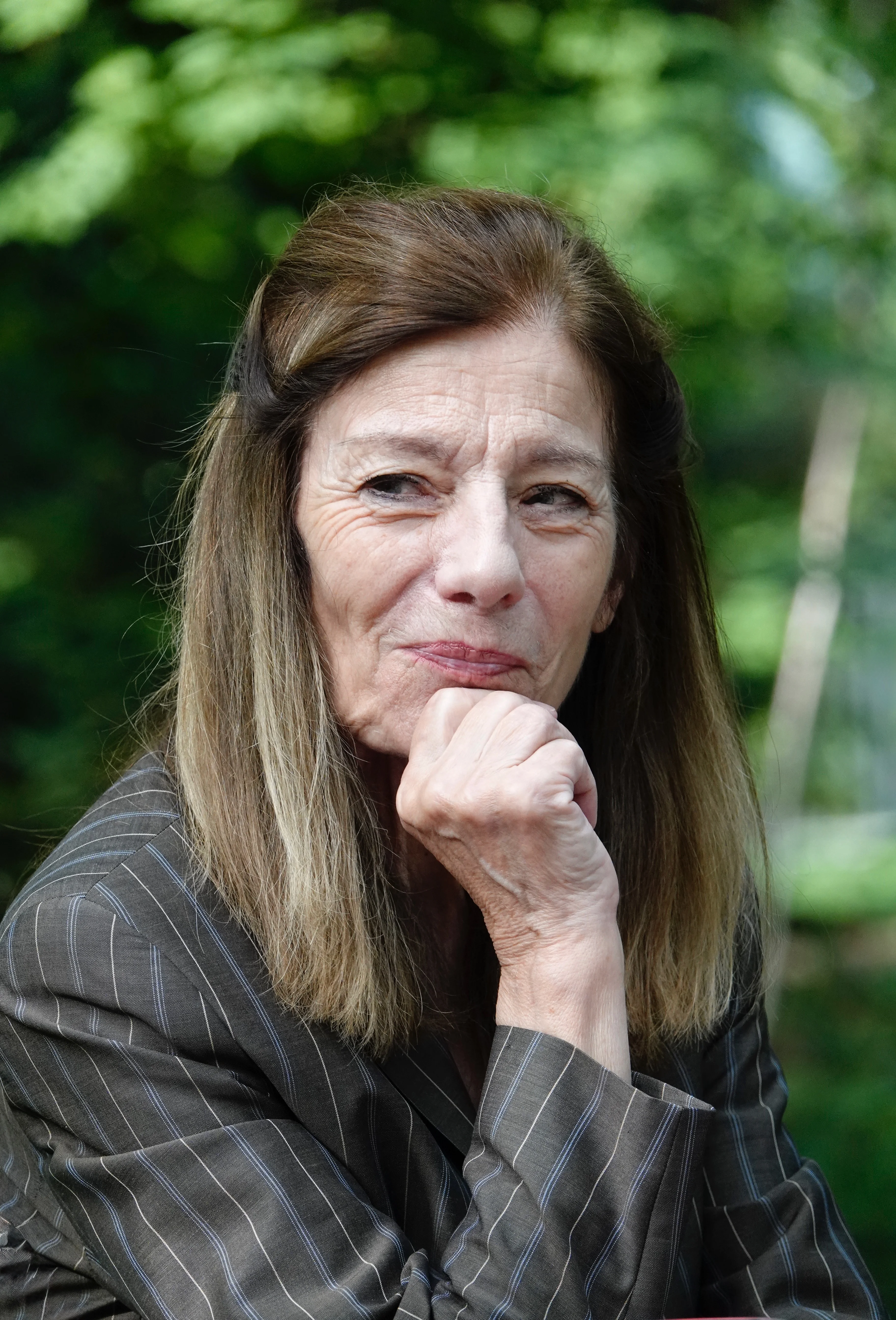
Image from Wikipedia
Image from Wikipedia
Ursula Krechel: The Great Stylist of Memory and Linguistic Precision
An Author Who Transforms History into Language
Ursula Krechel is one of the most compelling voices in contemporary German literature. Born on December 4, 1947, in Trier, she has created a body of work that encompasses poetry, narrative prose, novels, essays, plays, and radio plays. Her writing combines journalistic precision with poetic condensation, focusing on exile, flight, persecution, feminism, and the long-lasting shadows of World War II. In 2025, she was awarded the Georg-Büchner-Prize, one of the most prestigious literary honors in the German-speaking world. ([de.wikipedia.org](https://de.wikipedia.org/wiki/Ursula_Krechel))
Early Years, Studies, and the Path to Literature
Ursula Krechel grew up in Trier and studied German studies, theater studies, and art history in Cologne. While still a student, she began working as a journalist and wrote for Westdeutscher Rundfunk and the Kölner Stadt-Anzeiger. In 1971, she completed her studies with a doctoral thesis on the critic Herbert Ihering. The combination of academic work, theater practice, and journalistic observation profoundly shapes her later work. ([de.wikipedia.org](https://de.wikipedia.org/wiki/Ursula_Krechel))
From 1969 to 1972, she worked as a dramaturge at the Städtische Bühnen Dortmund and led projects with juvenile offenders. This early experience in theater and social work explains much of the later impact of her texts: Krechel never writes from a distance but from her interest in biographies, social conflicts, and the disturbances of historical processes. Her first play, Erika, drew attention to her in 1974 and signaled her lifelong interest in emancipation, role models, and female assertion. ([de.wikipedia.org](https://de.wikipedia.org/wiki/Ursula_Krechel))
Career Across Poetry, Prose, Drama, and Essay
Krechel's career unfolds not linearly but through a productive exchange of forms. Since the 1980s, she has taught both nationally and internationally, including in Warwick, Vienna, St. Louis, Essen, Leipzig, Be’er Scheva, and Barcelona. At the same time, she directed the prose workshop at the Literarisches Colloquium in Berlin, underscoring her status as a formative mediator of literary work. This institutional presence grants her name authority far beyond individual publications. ([de.wikipedia.org](https://de.wikipedia.org/wiki/Ursula_Krechel))
Noteworthy is the range of her oeuvre. The Österreichische Gesellschaft für Literatur and the Jung und Jung publishing house record numerous poetry collections, prose volumes, essays, and dramatic texts spanning several decades. Krechel is among those authors who do not pit poetic form, analytical access, and critical social perspectives against each other but understand them as a shared literary method. It is in this that her unique artistic development lies: emerging from the early feminist writing movement, she became an author who connects memory politics, contemporary diagnostics, and form-conscious prose of the highest caliber. ([jungundjung.at](https://jungundjung.at/stark-und-leise/?utm_source=openai))
The Literary Breakthrough and the Great Resonance
Krechel gained broad attention with her documentary-based novels, particularly Shanghai fern von wo, Landgericht, and Geisterbahn. These books exemplify her working method: meticulous research, historical knowledge, and a language that maintains tension rather than drying out the facts. ZEIT described how Krechel has been investigating the fate of emigrants who fled from Hitler's Germany to Shanghai since 1980; from such archival research, radio plays initially emerged, and later novels. ([zeit.de](https://www.zeit.de/kultur/literatur/2012-10/buchpreis-2012-ursula-krechel))
Landgericht was awarded the Deutscher Buchpreis in 2012 and is considered a key work of her oeuvre. The jury highlighted how the novel portrays early post-war Germany with a precise eye on architecture, living conditions, and family psychology. The reception also emphasized the political relevance of the book and its character as a linguistic monument for repression, return, and damaged biographies. This gave Krechel not only literary fame but also broad cultural visibility, permanently anchoring her name in the canon of contemporary literature. ([de.wikipedia.org](https://de.wikipedia.org/wiki/Landgericht_%28Roman%29?utm_source=openai))
Discography? Her Bibliography as an Artistic Score
With Ursula Krechel, one does not speak of a discography but a bibliography, and this fits her art perfectly. Her work includes poetry, prose, essays, plays, and radio plays; examples range from Erika to Selbsterfahrung und Fremdbestimmung, Nach Mainz!, Verwundbar wie in den besten Zeiten, Vom Feuer lernen, Die Freunde des Wetterleuchtens, Technik des Erwachens, Shanghai fern von wo, Landgericht, Geisterbahn, to Beileibe und Zumute and Der Übergriff. The Jung und Jung publishing house and the Literarisches Colloquium Berlin impressively document this range. ([jungundjung.at](https://jungundjung.at/stark-und-leise/?utm_source=openai))
Particularly the selected volumes and recent publications demonstrate how consistently Krechel works on a poetics of precision. The publisher describes her works as concentrated and analytical, yet also literarily lively and marked by great linguistic alertness. The LCB emphasizes in its podcast on Beileibe und Zumute that her poetry also transforms the everyday and collective memory into a balanced language. This combination of formal control and emotional depth constitutes the core of her aesthetic signature. ([jungundjung.at](https://jungundjung.at/stark-und-leise/))
Theme World: Exile, Feminism, Repression, and Memory
Krechel's work persistently revolves around historical traumas. In 2019, the Free State of Bavaria noted in its justification that she addresses the traumas, guilt, and repression of German history with meticulously researched and artistically shaped memory. Particularly important is her perspective on those who long had no voice in post-war history: refugees, disenfranchised individuals, slandered persons, and the persecuted. Thus, literature for Krechel becomes a form of reclamation and resistance. ([bayern.de](https://www.bayern.de/pdf/printpdf.php?id=13281))
The feminist impulse remains central as well. The Free State of Bavaria emphasized that Krechel was among the first feminist authors in the Federal Republic at the beginning of her career. Her texts negotiate self-determination, societal attributions, and the conditions of female existence not as a peripheral motivation but as a sustained analysis of modernity. This explains why her books are read as both literary-historical and contemporary diagnostics. ([bayern.de](https://www.bayern.de/pdf/printpdf.php?id=13281))
Style, Composition, and Poetic Method
Ursula Krechel's language is never ornamental for its own sake but precisely constructed. The jury of the Georg-Büchner-Prize emphasized her diversity: poems, plays, radio plays, novels, and essays appear as different but interconnected forms of expression. The Deutsche Akademie für Sprache und Dichtung speaks of "diverse literature" and of an unparalleled poetic precision, accompanied by impressive factual knowledge and dramatic understanding. This is not just a description of style, but the exact formula for her writing. ([deutscheakademie.de](https://www.deutscheakademie.de/de/auszeichnungen/georg-buechner-preis/ursula-krechel/dankrede?utm_source=openai))
In Geisterbahn, this method is particularly evident. ZEIT described the novel as powerful, brutal, and gripping, as Krechel portrays the breakdown of a Sinti family under the terror of the Nazis with great narrative force. Here, literary empathy meets historical accuracy; the result is not a distanced reconstruction but a text that brings the past into the present. It is precisely in this tension that the depth of her oeuvre lies. ([zeit.de](https://www.zeit.de/2018/39/geisterbahn-ursula-krechel-roman-nazizeit))
Critical Reception and Cultural Influence
Krechel is an author with extraordinary institutional and critical recognition. She is a member of the Akademie der Künste, the Deutsche Akademie für Sprache und Dichtung, and the PEN Center Germany. In 2019, the Free State of Bavaria awarded her the Jean-Paul-Prize for her lifetime achievement; the Georg-Büchner-Prize followed in 2025. Such honors mark not only successes but also reaffirm the status of a body of work that has shaped German literature for decades. ([bayern.de](https://www.bayern.de/pdf/printpdf.php?id=13281))
The cultural influence of her books extends far beyond literary criticism. Landgericht significantly shaped public perception through the awarding of the book prize, was widely discussed, and was read as linguistically impressive memory literature. Her novels and essays expand the horizons of German post-war literature because they inseparably think about private and political history together. Thus, Ursula Krechel has become an author whose work is not only read but repeatedly brought up in cultural debates. ([de.wikipedia.org](https://de.wikipedia.org/wiki/Landgericht_%28Roman%29?utm_source=openai))
Conclusion: An Indispensable Voice in German Literature
Ursula Krechel fascinates because she understands literature as a precise form of knowledge. Her books connect research and poetry, historical responsibility and linguistic elegance, social analysis, and emotional force. Reading her work allows one to encounter an author who makes the repressed visible and gives weight to the quiet, often overlooked voices of history. For this reason, Ursula Krechel is one of the most exciting contemporary writers and deserves to be read with great attention and experienced live at readings. ([de.wikipedia.org](https://de.wikipedia.org/wiki/Ursula_Krechel))
Official Channels of Ursula Krechel:
- Instagram: No official profile found
- Facebook: No official profile found
- YouTube: No official profile found
- Spotify: No official profile found
- TikTok: No official profile found
Sources:
- Wikipedia – Ursula Krechel
- Jung und Jung – Stark und leise
- Literarisches Colloquium Berlin – continue reading | Ursula Krechel
- DIE ZEIT – Ursula Krechel: The Archivist of the Repressed
- DIE ZEIT – "Geisterbahn": The Saints of the Fair
- Free State of Bavaria – Jean-Paul-Prize 2019 awarded to Ursula Krechel for her lifetime achievement
- Börsenblatt – Georg-Büchner-Prize 2025 awarded to Ursula Krechel
- Deutsche Akademie für Sprache und Dichtung – Press
- Deutsche Akademie für Sprache und Dichtung – Ursula Krechel
Upcoming Events
Ulmer Lyriksommer: Ursula Krechel reads and speaks in Ulm
Poetic start in Ulm: Ursula Krechel reads and speaks at the city library about memory, presence, and language. Free admission. #Lyriksommer
Literature Festival TEXTLAND
Experience the first literature festival TEXTLAND at the Literature House Darmstadt. Enjoy readings and discussions with renowned authors.