
Reinhard Köhler
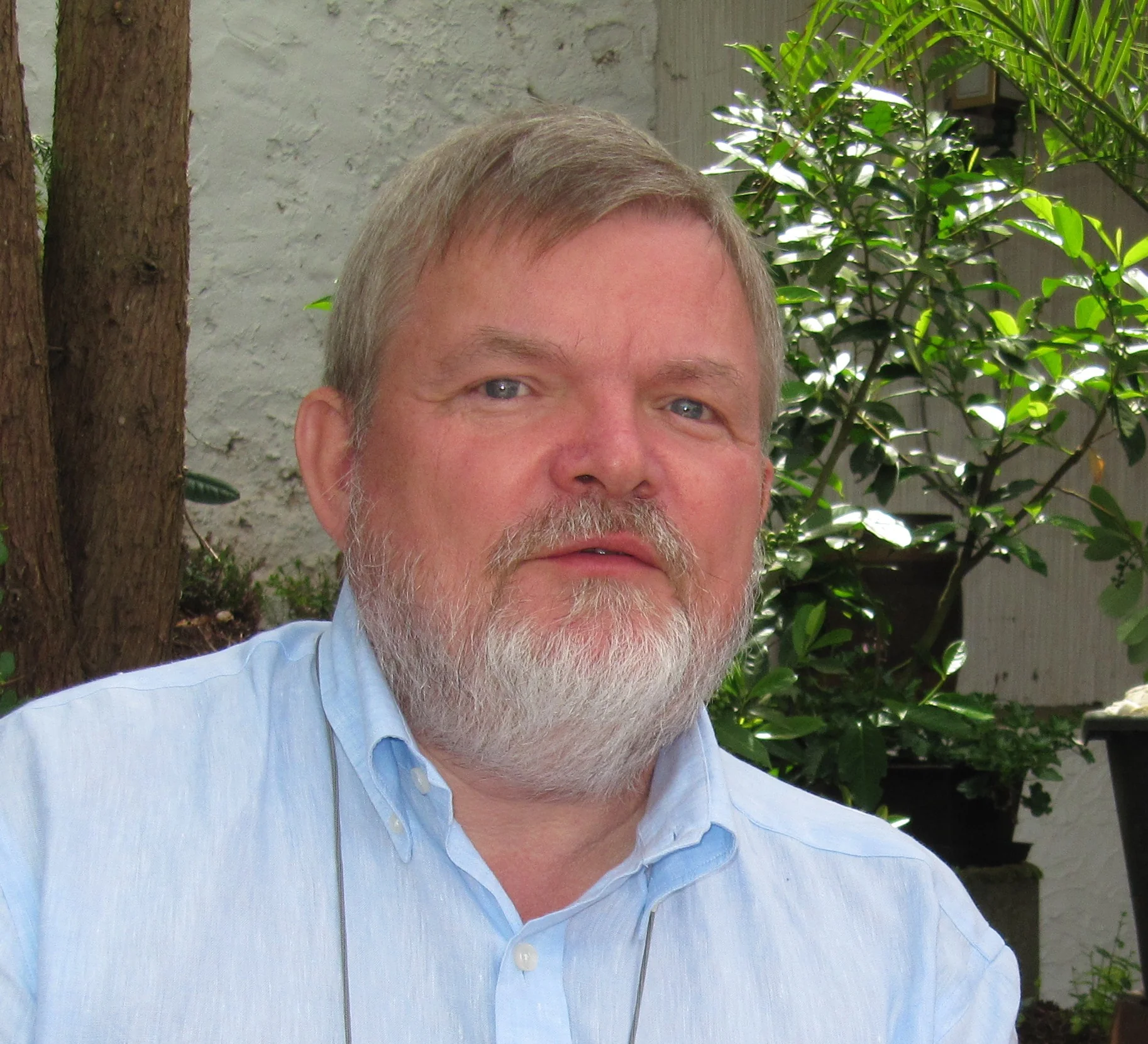
Image from Wikipedia
Image from Wikipedia
Reinhard Köhler – the Architect of Quantitative Linguistics
A researcher who doesn't just describe language, but thinks of it as a dynamic system
Reinhard Köhler, born on August 10, 1951, in Dortmund, is one of the influential German linguists in the fields of computational linguistics and quantitative linguistics. His academic career took him to the University of Trier, where he held the Chair of Linguistic Data Processing from 1990 to 2016 and later became emeritus. Köhler represents a research approach that investigates language with methodological precision, statistical analysis, and systems theory thinking. ([de.wikipedia.org](https://de.wikipedia.org/wiki/Reinhard_K%C3%B6hler))
Biography: From Dortmund to Trier
Reinhard Köhler's scientific biography is closely linked to the institutional development of a research field that is now discussed under computational linguistics and digital humanities. After his dissertation on linguistic synergetics, published in 1986, he received the Wilhelm Hollenberg Prize and the Prize of the Ruhr University Bochum for this work. This early recognition foreshadowed a career that cannot be reduced to individual publications, but rather aims at theory development and disciplinary expansion. ([de.wikipedia.org](https://de.wikipedia.org/wiki/Reinhard_K%C3%B6hler))
From the winter semester of 1989/90, Köhler represented the Chair of Linguistic Data Processing at the University of Trier; from September 1990, he was appointed there permanently. Until 2016, he shaped the professorship and transformed it into a place where quantitative and systems-theoretical linguistics were brought together in teaching and research. These stages mark a scientific career that unfolds consistently at the intersection of language, statistics, and modeling. ([de.wikipedia.org](https://de.wikipedia.org/wiki/Reinhard_K%C3%B6hler))
Career: Research at the Intersection of Theory, Method, and Institutional Development
The core of Köhler’s work lies in quantitative and systems-theoretical linguistics. The University of Trier highlights not only these two fields, but also software engineering, philosophy of science, and statistical methods in linguistics. It is in this combination that his scientific fingerprint is evident: language is not understood as a static inventory but as a measurable, interconnected, and modelable system. ([uni-trier.de](https://www.uni-trier.de/universitaet/fachbereiche-faecher/fachbereich-ii/faecher/computerlinguistik-und-digital-humanities/team/ehemalige-mitarbeiter-cl/prof-dr-reinhard-koehler))
Köhler's contribution to linguistic synergetics, whose foundation and elaboration are attributed to him, is particularly significant. This concept describes language as a network of interconnected linguistic laws and aims at a newly established language theory. In the research history of German-speaking linguistics, this represents an ambitious attempt to think empirical data, mathematical models, and language-theoretical questions within a common framework. ([de.wikipedia.org](https://de.wikipedia.org/wiki/Reinhard_K%C3%B6hler))
Köhler also had an institutional impact that extended far beyond his own professorship. According to Wikipedia, he is the President of the International Quantitative Linguistics Association and the principal editor of the Journal of Quantitative Linguistics. This underscores his authority within an international professional network that has established quantitative language research not as a fringe area but as an independent scientific tradition. ([de.wikipedia.org](https://de.wikipedia.org/wiki/Reinhard_K%C3%B6hler))
Scientific Development: From Dissertation to International Authority
His dissertation, On Linguistic Synergetics: Structure and Dynamics of the Lexicon, remains a key text for understanding his work. The title already indicates a programmatic direction: lexicon is not only cataloged but examined as a dynamic, structurable system. Köhler’s thinking thus connects two levels that are often treated separately in linguistics: the precise description of linguistic forms and the explanation of their systemic movement. ([de.wikipedia.org](https://de.wikipedia.org/wiki/Reinhard_K%C3%B6hler))
The research focal points and teaching areas documented by the University of Trier show that Köhler was not only a theorist but also a didactic mediator of complex methods. Software engineering and statistical methods in linguistics sit alongside philosophy of science and quantitative linguistics. This makes his academic role particularly interesting: he worked on the tools with which language is analyzed in the digital age and at the same time on the theoretical foundations of this analysis. ([uni-trier.de](https://www.uni-trier.de/universitaet/fachbereiche-faecher/fachbereich-ii/faecher/computerlinguistik-und-digital-humanities/team/ehemalige-mitarbeiter-cl/prof-dr-reinhard-koehler))
Publications: Monographs, Collections, and Journals
Reinhard Köhler’s publication record is diverse and clearly tailored to the field. The Wikipedia list mentions monographs, editorships, translations, international handbooks, and several journal projects, including Journal of Quantitative Linguistics, Glottometrics, and Glottotheory. These publications point to a scientific career that does not center on isolated articles but on building an entire research ecosystem. ([de.wikipedia.org](https://de.wikipedia.org/wiki/Reinhard_K%C3%B6hler))
This is particularly evident in the collaboratively edited works on quantitative linguistics and in collections that document international exchange. The book series Quantitative Linguistics is also part of this context and demonstrates how significantly Köhler's efforts contributed to the long-term stabilization of the field. This is crucial for academic reception: Köhler represents not only insights but also the structures in which such insights can circulate. ([de.wikipedia.org](https://de.wikipedia.org/wiki/Reinhard_K%C3%B6hler))
Style and Methodology: Language as a Measurable System
Köhler's scientific style is characterized by clarity, systematicness, and methodological rigor. The term “quantitative” for him describes not merely a computational practice, but an epistemological stance: linguistic phenomena are made visible through frequencies, regularities, and models. This connects him with a research tradition that understands linguistics as an exact analysis of order, variation, and dynamics. ([uni-trier.de](https://www.uni-trier.de/universitaet/fachbereiche-faecher/fachbereich-ii/faecher/computerlinguistik-und-digital-humanities/team/ehemalige-mitarbeiter-cl/prof-dr-reinhard-koehler))
His work in linguistic synergetics adds an additional depth to this approach. Language appears here as a self-organizing system, whose elements mutually influence each other and whose development does not progress linearly. This perspective makes Köhler’s work applicable to computational linguistics and digital humanities, as it brings together data analysis and language theory. ([de.wikipedia.org](https://de.wikipedia.org/wiki/Reinhard_K%C3%B6hler))
Cultural and Professional Influence
Reinhard Köhler is among those scholars who not only represent a field but actively shape it. The University of Trier identifies him as a former, for decades, central figure of the Chair of Computational Linguistics, while Wikipedia highlights his role as a driving force in international quantitative linguistics. This creates a profile that is as important for the history of the discipline as it is for the development of modern linguistic methods. ([uni-trier.de](https://www.uni-trier.de/universitaet/fachbereiche-faecher/fachbereich-ii/faecher/computerlinguistik-und-digital-humanities/team/ehemalige-mitarbeiter-cl/prof-dr-reinhard-koehler))
Honors for his 60th and 65th birthdays, documented in academic festive publications and special issues, also reflect the esteem within the community. Such dedications are not incidental; they signify a lasting authority in the field and an impact that reaches beyond individual projects. Köhler’s influence thereby lies in the connection of research achievements, institutional development, and international networking. ([de.wikipedia.org](https://de.wikipedia.org/wiki/Reinhard_K%C3%B6hler))
Current Projects and Publications
No new albums, singles, tours, or music projects are found in the available verifiable sources related to Reinhard Köhler, as he is a linguist and not a musician. The documented information focuses on his academic career, his publications, and his role in quantitative linguistics. For a serious placement, this clarity is important: there is no pop or rock catalog here, but rather a scientific work with long-lasting professional impact. ([uni-trier.de](https://www.uni-trier.de/universitaet/fachbereiche-faecher/fachbereich-ii/faecher/computerlinguistik-und-digital-humanities/team/ehemalige-mitarbeiter-cl/prof-dr-reinhard-koehler))
Conclusion: Why Reinhard Köhler Remains Relevant Today
Reinhard Köhler is compelling because he makes language comprehensible as a system, as a data field, and as a scientific puzzle simultaneously. His career combines academic depth with institutional development and international visibility. Those who wish to understand how modern linguistics operates between theory, statistics, and digitization will find a key figure in Köhler. ([uni-trier.de](https://www.uni-trier.de/universitaet/fachbereiche-faecher/fachbereich-ii/faecher/computerlinguistik-und-digital-humanities/team/ehemalige-mitarbeiter-cl/prof-dr-reinhard-koehler))
For readers interested in the history of computational linguistics and the development of quantitative linguistics, examining his works and editorships is worthwhile. Köhler's work demonstrates how precise scientific thinking can be when it not only describes language but takes seriously its structures, dynamics, and laws. ([dblp.uni-trier.de](https://dblp.uni-trier.de/pid/k/ReinhardKohler.html))
Official Channels of Reinhard Köhler:
- Instagram: No official profile found
- Facebook: No official profile found
- YouTube: No official profile found
- Spotify: No official profile found
- TikTok: No official profile found
Sources:
Upcoming Events
Vernissage "When Gray Hair Grows on You"
Exhibition "When Gray Hair Grows on You"