
Markus (Evangelist)
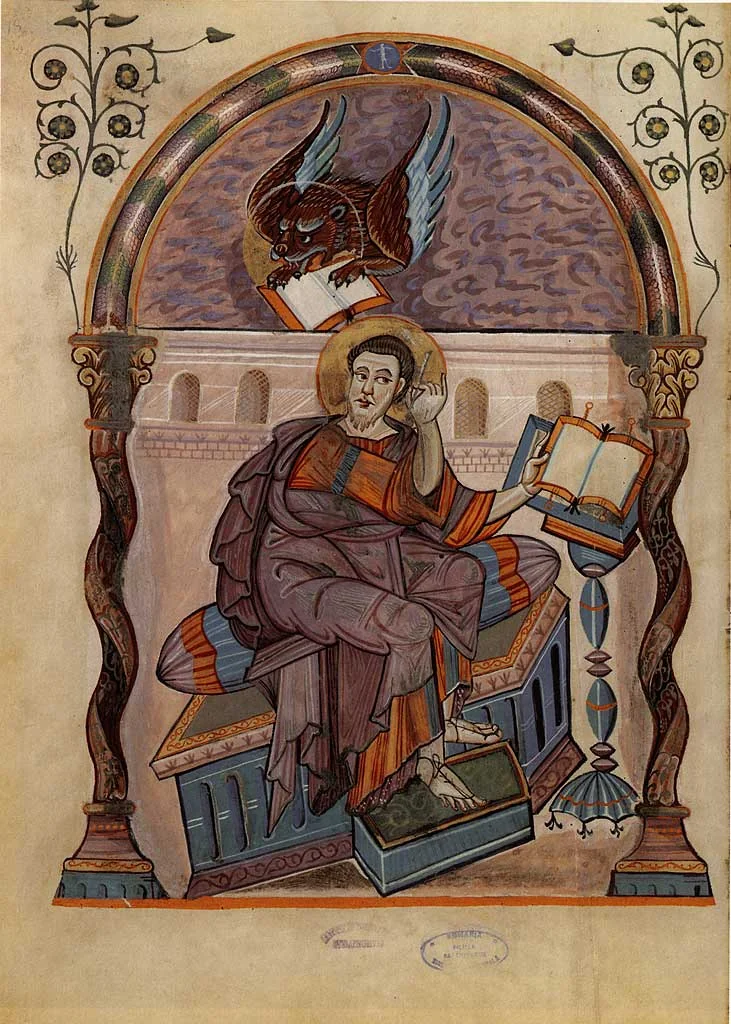
Image from Wikipedia
Image from Wikipedia
Markus (Evangelist) – The Powerful Voice Behind the Oldest Gospel
An Evangelist Whose Name Became Tradition and Whose Work Resonates to This Day
Markus is one of the most influential figures in Christian tradition: the name given by early church tradition to the author of the probably oldest Gospel. The author does not name himself, and this very reticence makes the text so impressive: it is not the person's identity that stands in the foreground, but the message being conveyed. In later interpretations, the anonymous narrator became the Evangelist Markus – an identity that continues to shape theology, liturgy, and art history to this day. His symbol is the lion of Markus, a powerful image representing the unmistakable presence of his Gospel. ([wissen-digital.de](https://www.wissen-digital.de/Markus_%28Evangelist%29?utm_source=openai))
Those who seek to establish Markus as a historical individual quickly encounter the limitations of available sources. Research emphasizes that “Markus” is a convention of tradition in this context and does not necessarily denote a verified biography. At the same time, tradition reveals a fascinating tension: between anonymous text, ecclesiastical memory, and later legend formation. This is where the cultural significance of this name lies – Markus stands not just for a person, but for a narrative authority that has endured for centuries. ([opus.bibliothek.uni-augsburg.de](https://opus.bibliothek.uni-augsburg.de/opus4/frontdoor/deliver/index/docId/53070/file/53070.pdf))
The Tradition: Between Peter, Paul, and the Community of Jerusalem
According to church tradition, Markus was connected with early Christian figures Peter and Paul. In the sources, he appears as a coworker of Paul and a close companion of Peter; in the Book of Acts, he is associated with the house of Mary, the mother of John who is called Markus. This tradition anchors him deeply in the foundational core of the Christian movement, making him a key figure in the history of remembrance and proclamation. The name thus does not appear in isolation, but in the context of the earliest mission and community narratives. ([wissen-digital.de](https://www.wissen-digital.de/Markus_%28Evangelist%29))
At the same time, much remains open-ended. Research points out that the author of the Gospel of Markus remains anonymous and that the later identification with Markus mentioned in the New Testament arose only through tradition. Some portrayals describe him as Hellenistically influenced, knowledgeable about both the Jewish and the Greco-Roman worlds; others emphasize the uncertainty of historical reconstruction. This tension between confirmed textual evidence and ecclesiastical tradition is part of Markus’ enduring fascination. ([opus.bibliothek.uni-augsburg.de](https://opus.bibliothek.uni-augsburg.de/opus4/frontdoor/deliver/index/docId/53070/file/53070.pdf))
The Gospel of Markus as an Early Literary Form with Strong Dramatic Accessibility
The Gospel of Markus is considered the oldest biography of Jesus. The term "biography" here means more than just a label: like ancient biographies, the work aims to keep alive the memory of an outstanding individual and to reveal their significance for the present. Markus narrates concisely, directly, and with a high tension arc; he does not develop the story of Jesus as a smooth chronicle, but as a dramatic movement between proclamation, conflict, alienation, and passion. This narrative approach is precisely what has made the Gospel influential for centuries. ([opus.bibliothek.uni-augsburg.de](https://opus.bibliothek.uni-augsburg.de/opus4/frontdoor/deliver/index/docId/53070/file/53070.pdf))
Its emergence is usually situated shortly after the Jewish-Roman War, around 70 AD. Indications in the text seem to presuppose the destruction of the Jerusalem Temple, which lends historical urgency to the Gospel. The geographical horizon also points to a perspective outside of Palestine: the author explains Jewish customs, translates Aramaic terms, and operates within a Greek-influenced linguistic sphere. This results in a text that not only informs its readers but also draws them into a new interpretation of reality. ([opus.bibliothek.uni-augsburg.de](https://opus.bibliothek.uni-augsburg.de/opus4/frontdoor/deliver/index/docId/53070/file/53070.pdf))
Language, Style, and Narrative Compression
Markus’ language is considered simple but effective. The narrative employs concise scenes, direct action, and a clear focus on Jesus' deeds. This reduction is not a weakness, but a stylistic device: the text gains tempo, impact, and theological depth. It is in this compact form that its literary power lies, distinguishing the Gospel of Markus from later, more elaborated Gospels. ([opus.bibliothek.uni-augsburg.de](https://opus.bibliothek.uni-augsburg.de/opus4/frontdoor/deliver/index/docId/53070/file/53070.pdf))
Noteworthy is also the cultural mediation effect of the text. Markus seems to address readers who were not necessarily familiar with Jewish customs, geographical details, or linguistic peculiarities. He explains, translates, and organizes – thus creating a bridge between Jewish tradition and the Hellenistic-Roman world. This mediatory work is what makes the Gospel of Markus a key text in the history of Christian literature to this day. ([opus.bibliothek.uni-augsburg.de](https://opus.bibliothek.uni-augsburg.de/opus4/frontdoor/deliver/index/docId/53070/file/53070.pdf))
Legend, Martyrdom, and the Spiritual Topography of the Name Markus
The later tradition placed Markus in Alexandria, where, according to legend, he founded the local church and was venerated as the first bishop. He was also attributed a martyr's death: it is said that he was attacked by hostile locals and dragged to his death. Whether historically verified or not, this narrative shows how strongly the Evangelist has entered the memory of the Church. Thus, Markus is not only an author but also a martyr figure, a patron, and a foundational saint. ([wissen-digital.de](https://www.wissen-digital.de/Markus_%28Evangelist%29))
This veneration is particularly visible in iconography. Markus often appears writing and with the winged lion, one of the most memorable symbols of Christian art. His patronage is also remarkable: Venice and Reichenau are among the places where his veneration has developed a strong historical depth. The transfer of the alleged relics to Venice made the Evangelist a key figure in urban religious and art history. ([wissen-digital.de](https://www.wissen-digital.de/Markus_%28Evangelist%29))
Cultural Influence: From Liturgical Feast Day to Theological Research
April 25 is the traditional commemorative day of the Evangelist Markus, and this date has become firmly established in liturgy and church practice. In veneration, Markus is understood not only as a saint but also as a symbol of memory, testimony, and written tradition. His name stands for a Gospel that sharpens the perspective on Jesus and still plays a central role in preaching, catechesis, and scholarly exegesis today. ([wissen-digital.de](https://www.wissen-digital.de/Markus_%28Evangelist%29))
Research is also deeply engaged with Markus. The work is read as the oldest biography of Jesus, as a narratively precise composition, and as a theological interpretation in times of crisis. Its significance thus extends far beyond religious practice: Markus is part of the cultural memory of Europe, a key figure for literature, art, and theology. Thus, those who read the Gospel of Markus encounter not only a text but a whole landscape of tradition. ([opus.bibliothek.uni-augsburg.de](https://opus.bibliothek.uni-augsburg.de/opus4/frontdoor/deliver/index/docId/53070/file/53070.pdf))
Conclusion: Why Markus Remains Fascinating to This Day
Markus fascinates because in his name, historical uncertainty, ecclesiastical tradition, and literary greatness uniquely intersect. The Gospel of Markus shows how powerful a concise, concentrated narrative can be when written with clear vision, dramatic instinct, and cultural foresight. Those who wish to understand Markus discover an author whose work is more than just tradition: it is a literary and spiritual classic with effects still felt today. Anyone interested in the origins of Christian narrative art should certainly encounter the Evangelist Markus – in the text, in tradition, and in living reception. ([opus.bibliothek.uni-augsburg.de](https://opus.bibliothek.uni-augsburg.de/opus4/frontdoor/deliver/index/docId/53070/file/53070.pdf))
Official Channels of Markus (Evangelist):
- Instagram: no official profile found
- Facebook: no official profile found
- YouTube: no official profile found
- Spotify: no official profile found
- TikTok: no official profile found