
Gardi Hutter
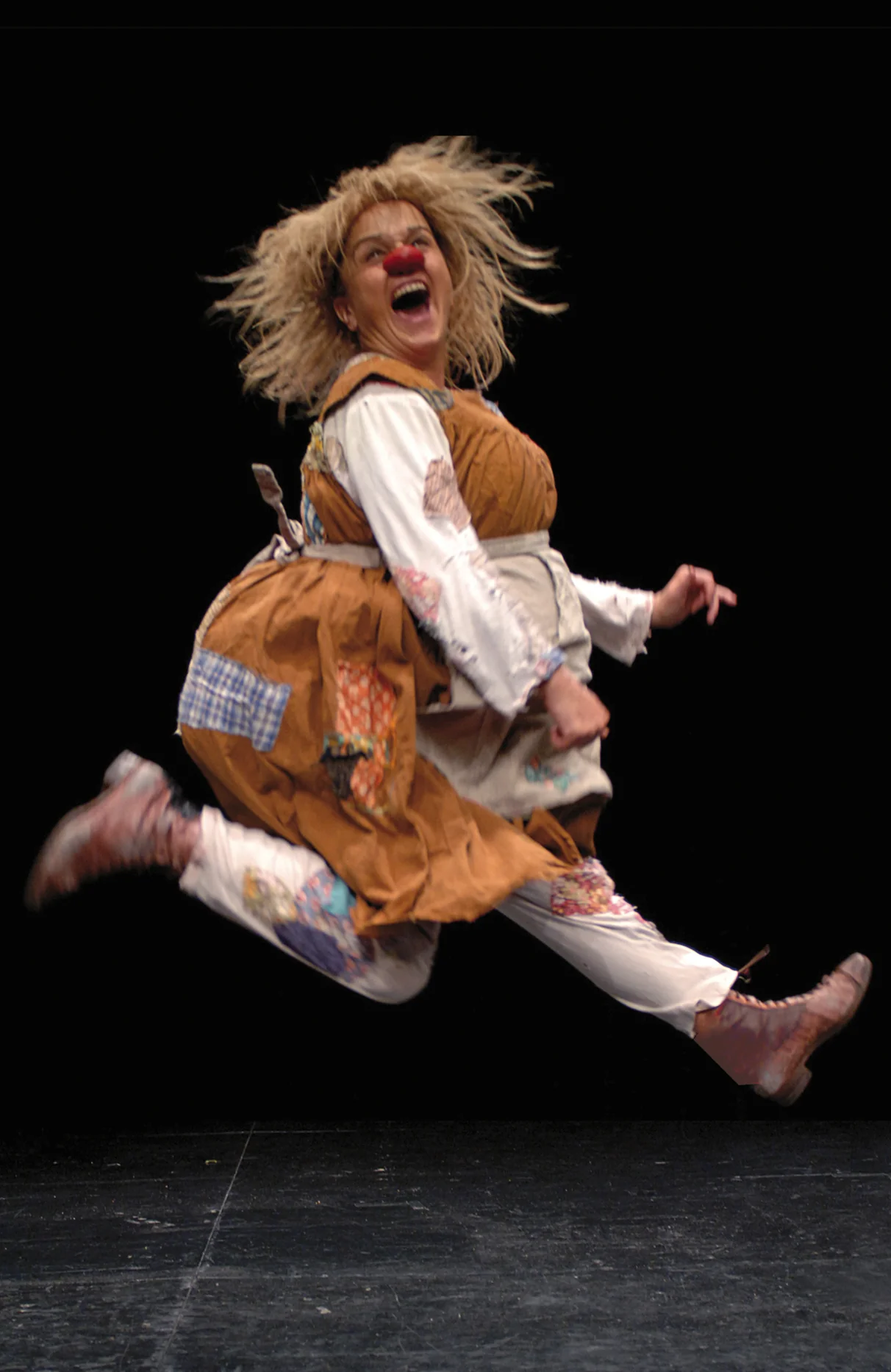
Image from Wikipedia
Image from Wikipedia
Gardi Hutter: The Great Swiss Clown Art Between Poetry, Physical Comedy, and World Theater
A stage artist who creates an entire universe from the minimal
Gardi Hutter is one of the most distinctive stage figures in Switzerland. Born in 1953 in Altstätten SG, the actress, comedienne, and author has developed a unique artistic signature through her own theater programs that extend well beyond the realms of cabaret. Since the early 1980s, she has been traveling the world with her clown-like theater, merging precision, physical work, and finely observed comedy into a distinctive theatrical system. ([gardihutter.com](https://www.gardihutter.com/en/))
Her work represents a form of physical theater in which rhythm, facial expressions, pauses, and visual storytelling are just as significant as humor. Gardi Hutter did not develop her characters as mere acts, but as complete theatrical existences with internal logic, tragicomic depth, and strong cultural recognition. The fascination arises precisely from this: Out of seemingly simple clowning emerges a highly artistic, internationally comprehensible performance about failure, desire, work, transformation, and dignity. ([gardihutter.com](https://www.gardihutter.com/en/))
Biographical Roots: From the Rhine Valley to the International Stage
Gardi Hutter studied at the Zurich Academy of Drama from 1974 to 1977 and complemented her education with experiences gained alongside influential clown and theater artists. These include work in the environment of the CRT in Milan as well as exchanges with Nani Colombaioni, Mario Gonzales, and Ferruccio Cainero. These early stages laid the foundation for a practice that does not separate acting, clown theater, and physical storytelling, but rather intertwines them deliberately. ([gardihutter.com](https://www.gardihutter.com/en/))
The decisive artistic breakthrough came in 1981 with the character Hanna, also known as "Joan of ArPpo" or "The Brave Hanna". From that point on, a Swiss theater artist became an international stage personality capable of opening entire societal images with a single character. The media describe this development as pioneering; it made Gardi Hutter an exceptional phenomenon in the German-speaking theater scene. ([blick.ch](https://www.blick.ch/people-tv/schweiz/zu-besuch-bei-der-bekanntesten-clownin-der-schweiz-gardi-hutter-stellt-ihre-welt-auf-den-kopf-id20243259.html?utm_source=openai))
Career Path: Over 4,000 Performances in 35 Countries
The official biography on her website mentions more than 4,000 performances in 35 countries across five continents since 1981, along with TV recordings in 17 countries, sketches for television and film, and numerous radio shows. This is not only an impressive tour record but also an indication of the enormous international connectivity of her style. Her stage work has always navigated a space between cabaret, independent theater, and transnational guest performances. ([gardihutter.com](https://www.gardihutter.com/en/))
This reach is also reflected in her institutional recognition. Gardi Hutter has received numerous awards, including the Hans Reinhart Ring, the Swiss cabaret award, and international honors ranging from Cannes to New York. Such awards mark not only milestones of success but also document a lasting authority in the field of physical theater and clowning. ([gardihutter.com](https://www.gardihutter.com/en/))
The World of Characters: Hanna, Craftsmanship, Transformation, and Tragicomedy
The core of Gardi Hutter's art lies in her character programs. Works such as "Joan of ArPpo / The Brave Jane," "Cheese!," "The Prompter," and "The Tailor" demonstrate how consistently she transforms everyday worlds into grotesque, poetic, and often existential spaces of play. The official descriptions refer to a washerwoman, a mouse, a prompter, or a tailor as starting points for comedic microcosms that reflect human weaknesses and societal roles. ([gardihutter.com](https://www.gardihutter.com/en/))
It is precisely in these programs that her dramaturgical intelligence shines through. Gardi Hutter works with condensation, repetition, gestural precision, and a sense for failure as a source of comedic energy. Her characters are never merely silly; they embody vulnerability, defiance, and a melancholic core that makes laughter more complex and lasting. ([srf.ch](https://www.srf.ch/kultur/buehne/pionierin-rebellin-clownerin-gardi-hutter-erhaelt-den-deutschen-kleinkunstpreis?utm_source=openai))
Current Projects: gardiZERO and the Stage as a Place of Origin
Among her current works is "gardiZERO," which is introduced on her website as a new production. The piece addresses the power of transformation, the transition from emptiness to fullness, from chaos to order, and from zero to one. In doing so, Gardi Hutter centers an existential theme: the origin of all life and the creative energy of nothingness. ([gardihutter.com](https://www.gardihutter.com/en/))
The official announcement describes "gardiZERO" as a work with minimal means and maximum expressive power, a poetic and grotesque celebration of imagination. Media reports from 2024/2025 also emphasize that Gardi Hutter is in a new phase of her career, where she leaves behind her iconic character Hanna and shifts her focus to other forms of storytelling. This makes this phase as exciting for longtime viewers as it is for new audiences. ([gardihutter.com](https://www.gardihutter.com/en/))
Musical Theater, Collaborations, and Boundary Crossing
Although Gardi Hutter is primarily known as a clown, her work also encompasses musical theater and ensemble projects. Her official website lists several musical productions, including "Wanderful – There’s no Piz, like Show Piz," as well as "The Brides" and "Honkystonky by Huttystucky." These works show how flexibly she integrates singing, sound, and collective stage energy into her comedic theater. ([gardihutter.com](https://www.gardihutter.com/en/))
Her profile also includes collaborations with other well-known Swiss stage personalities. This is particularly evident in projects with Sandra Studer and Michael von der Heide, emphasizing her enthusiasm for intergenerational theater communication. Such collaborations expand her artistic resonance and demonstrate that her work does not exist in solo but repeatedly engages in dialogue with other voices. ([gardihutter.com](https://www.gardihutter.com/en/))
Aesthetics and Style: Physical Comedy as the Art of Precision
Gardi Hutter works with an aesthetic of physical theater based on precise composition. Her style thrives on body control, timing, visual emphasis, and a language that operates even with few words. This is precisely where her quality as a stage artist lies: she creates meaning not through abundance but through reduction, contrast, and finely tuned movement. ([gardihutter.com](https://www.gardihutter.com/en/))
The official website formulates this principle very clearly: minimal means, maximum expressive power, emptiness and fullness, stillness and movement, absurdity and meaning. From a music journalistic perspective, it could be said that her work follows a precise sense of rhythm, a kind of stage pulse that forms an almost musical dramaturgy out of pauses, entries, and crescendos. This gives her performances immediate presence and high recognizability. ([gardihutter.com](https://www.gardihutter.com/en/))
Cultural Influence and Reception: A Pioneer of European Clown Art
The reception of Gardi Hutter repeatedly describes her as a pioneer. Media and cultural reports highlight that she was one of the first stage artists to receive the Hans Reinhart Ring without coming from a classical acting background. This fact points to the uniqueness of her career: she has carved out her own rank in the cultural canon with clown theater, theater education, and authorship. ([emma.de](https://www.emma.de/node/338721?utm_source=openai))
Her cultural influence ranges from Swiss cabaret to international festival stages and into the realm of education. According to her official biography, she taught at universities in Leipzig, Berlin, and Zurich and conducted workshops, seminars, and masterclasses on Physical Theatre and Clown Theatre. In doing so, she has acted not only as a performer but also as a mediator of an art form that has been strongly shaped by her attitude in Europe. ([gardihutter.com](https://www.gardihutter.com/en/))
Conclusion: Why Gardi Hutter Continues to Fascinate Today
Gardi Hutter fascinates because she unites comedy, tragedy, and technical mastery in an unmistakable stage persona. Her career proves that great theater art does not require huge apparatuses but rather a clear idea, a precise body, and the courage to transform. Those who experience her live see not just a clown but an autonomous storyteller who brings entire worlds to life through gestures, looks, and rhythms. ([gardihutter.com](https://www.gardihutter.com/en/))
Especially in a time of rapid stimuli, her work remains remarkably timeless. Gardi Hutter invites the audience to experience laughter not as an escape, but as insight. Anyone who has the opportunity to see her on stage should take it: this art form unfolds its full power only in the direct interaction between body, space, and audience. ([gardihutter.com](https://www.gardihutter.com/en/))
Official Channels of Gardi Hutter:
- Instagram: no official profile found
- Facebook: no official profile found
- YouTube: no official profile found
- Spotify: no official profile found
- TikTok: no official profile found
Sources:
- Gardi Hutter - Official Website
- Wikipedia: Gardi Hutter
- SRF Culture - Swiss Clown Gardi Hutter Receives the German Cabaret Award
- SRF Culture - Gardi Hutter: Many Things Are Surprising from Today's Perspective
- Munzinger Biography - Gardi Hutter
- EMMA - Gardi Hutter: By Profession Funny
- Blick - Gardi Hutter Turns Her World Upside Down
- Der Rheintaler - Early Seeds Were Planted