
Christian Friedrich Daniel Schubart
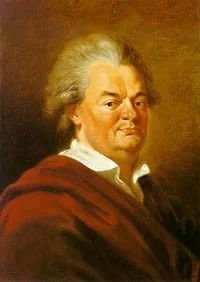
Image from Wikipedia
Image from Wikipedia
Christian Friedrich Daniel Schubart – the rebellious poet, organist, and composer of Sturm und Drang
An unyielding spirit between music, poetry, and political provocation
Christian Friedrich Daniel Schubart is one of the most notable boundary-crossers in German cultural history: poet, organist, composer, and journalist all in one, as well as a passionate stylist and an uncompromising critic of power. Born on March 24, 1739, in Obersontheim and dying on October 10, 1791, in Stuttgart, his name represents Sturm und Drang in its sharpest, untamed form. His historical significance is mainly due to his socially critical writings, with which he openly attacked the absolutist rule in the Duchy of Württemberg. (de.wikipedia.org)
Schubart was not an artist of quiet equilibrium, but rather a figure of intensity, verbal power, and musical passion. His career led him from theological studies to teaching positions and organist roles, ultimately to a journalistic role that made him well-known throughout Southern Germany. It is precisely this combination of musical virtuosity, literary energy, and political unwaveringness that continues to fascinate people today. (britannica.com)
Biographical beginnings: From Obersontheim to Erlangen
Schubart initially grew up in Aalen, after his family had moved there early on. As the son of a parish vicar and teacher, he received an education that introduced him both to the religious tradition and the intellectual debates of his time. In 1758, he enrolled at the University of Erlangen to study theology but left the studies after two years. (de.wikipedia.org)
These early years already show the inner tension of his life: duty and departure, erudition and restlessness, Pietism and criticism. After working temporarily as a tutor and assistant preacher, his musical talent began to gain weight. It is here that the artistic development begins to emerge, marking him not only as a writer but also as a musician of significance. (britannica.com)
The musician Schubart: Organist, music director, and fiery interpreter
Schubart’s musical career took concrete shape in Geislingen and later in Ludwigsburg, where he worked as an organist and music director. Contemporary voices praised his virtuosity on the organ and harpsichord; Hyperion points out that Charles Burney described him as an outstanding player and that later composers like Beethoven and Schumann took an interest in his aesthetic writings. Thus, Schubart moved right into the musical discourse of his era. (hyperion-records.co.uk)
His artistic production included not only poetry but also songs, sacred and secular compositions, as well as music theoretical reflections. Especially important was the work Ideen zu einer Ästhetik der Tonkunst, which was written during his imprisonment and published posthumously in 1806. In it, he recorded observations about musical life, court chapels, and musical centers of his time, leaving behind a document of significant music-historical value. (de.wikipedia.org)
The Deutsche Chronik: Journalism as an Attack on Power
In 1769, Schubart was summoned to the Württemberg court in Ludwigsburg, but his carefree lifestyle, openness, and, above all, his sharp criticism of aristocracy and clergy quickly made him a problematic figure. In 1774, he began publishing the Teutschen Chronik in Augsburg, a magazine that became a central medium for his public influence. In it, he polemicized against Jesuits, the clergy, and political arbitrariness. (de.wikipedia.org)
The Deutsche Chronik provided Schubart with enormous visibility, but also led to enmity and persecution. The magazine combined literature, politics, and cultural criticism, making its publisher a journalistic voice for those who felt overlooked by the ruling powers. The Schubart Society emphasizes that this main work presents him today as a thinker of a southwest German democratic movement. (schubart-gesellschaft.de)
Imprisonment at Hohenasperg: An Artist Under Pressure
In 1777, Schubart was lured to Blaubeuren by a trick and arrested on Württemberg territory. Without a trial, he spent more than ten years in the fortress Hohenasperg, a fate that made him the most famous political prisoner of his time. This imprisonment is key to the impact of his biography: repression, artistic resistance, and literary self-assertion condensed here. (de.wikipedia.org)
Under these conditions, some of his most poignant texts were created. He dictated his poem Die Fürstengruft to a fellow prisoner through the oven pipe into the adjacent cell because he was denied writing materials. Other texts, such as Gedichte aus dem Kerker, represent the existential weight of these years, in which Schubart transformed political indictment into poetic energy. (fau.de)
Style and Impact: Between Sturm und Drang, Pietism, and Musical Sensibility
Schubart's style combines the emotional immediacy of Sturm und Drang with pietistic and patriotic elements. Britannica describes him as a poet of this movement, whose work is permeated with religious fervor and national fury. His language is sharp, polemical, and often characterized by great rhetorical tension, making him particularly relatable to later generations. (britannica.com)
As a thinker about music, he possessed an astonishingly wide ear for aesthetic questions. His writings provide insight into performance practices, court music, and musical centers of the 18th century, showing him as an author who not only wrote music but also observed it analytically. Hyperion emphasizes that his musical aesthetic ideas resonated well into the 19th century. (hyperion-records.co.uk)
Literary Echo and Cultural Influence
Schubart's influence extends far beyond his own lifetime. His treatise Zur Geschichte des menschlichen Herzens inspired Friedrich Schiller to Die Räuber, thereby indirectly making Schubart a driving force of German drama. Furthermore, Franz Schubert set his poem Die Forelle to music, which became world-famous both as a song and in its arrangement for the Trout Quintet. (de.wikipedia.org)
Schubart also continued to have an impact as a political author. FAU describes how he impressed even Goethe with his poetry and musicality and how his Deutsche Chronik reached a broad audience through literary and musical entries. He contributed to making central figures of German literature known to a wider public, thus shaping the cultural mediation of his time. (fau.de)
Works and Discographic Relevance: A Resounding Legacy
A classical discography in the modern sense does not exist for Schubart, but his work continues to live on in song settings, historical recordings, and musicological editions. His preserved and received texts include Die Fürstengruft, Kaplied, An die Freude in Schubart's version, as well as Die Forelle. Musical bibliographic and archival platforms host scores, sources, and complete texts that document his significance as a composer and poet. (de.wikipedia.org)
His musical works are not treated as commercial releases in research but as part of the early German art song, church music, and the poetical-musical transitional culture. This perspective makes Schubart interesting to music lovers who seek not only well-known names but also the origins of emotionally charged, text-based song artistry. That is where his lasting value lies: in the connection of composition, poetry, and musical reflection. (hyperion-records.co.uk)
Current Projects and Publications
Since Christian Friedrich Daniel Schubart died in 1791, there are no current projects, new albums, or tours. His current presence arises instead through editorial editions, academic studies, memorial sites, and cultural-historical mediation. The Schubart Society and university sources keep his work in public consciousness, while music archives make his songs, texts, and aesthetic writings accessible. (schubart-gesellschaft.de)
Conclusion: Why Schubart Still Electrifies Today
Christian Friedrich Daniel Schubart is exciting because he never divorced art from attitude. His music career, journalistic fearlessness, and lyrical radicalism shape the image of an artist who responded with maximum expressive power in a time of political constriction. Those who read Schubart also hear the echo of a rebellious presence on stage, standing against oppression, censorship, and intellectual patronage. (deutschlandfunk.de)
For this reason, engaging with his texts and musical traces is still worthwhile today. Schubart represents passion, resistance, and the courage to understand art as a social force. Anyone interested in music history, the literature of Sturm und Drang, and the origins of political cultural criticism should definitely delve into his work. (de.wikipedia.org)
Official Channels of Christian Friedrich Daniel Schubart:
- Instagram: No official profile found
- Facebook: No official profile found
- YouTube: No official profile found
- Spotify: No official profile found
- TikTok: No official profile found
Sources:
- Wikipedia – Christian Friedrich Daniel Schubart
- Britannica – Christian Friedrich Daniel Schubart
- FAU – Christian Friedrich Daniel Schubart
- Deutschlandfunk – Voll Kampfgeist und Lust zur Widerrede
- Hyperion Records – Christian Friedrich Daniel Schubart
- Schubart-Gesellschaft – Wirken
- Schubart-Gesellschaft – Christian Friedrich Daniel Schubart
- Wikipedia: Image and text source
Upcoming Events
"Freedom Lives on the Mountains, But Not on the Asperg"
(Um-)Paths to Art - with Schubart through Aalen
In the Land of the Abderites? Southern German Imperial Cities as Living Spaces of Christian Friedrich Daniel Schubart