Culture Night Ulm/Neu-Ulm: History of a City Festival
Culture Night Ulm/Neu-Ulm: What to Expect at the Next Edition – Program Ideas, Planning & Visitor Tips
A compact guide to the upcoming Culture Night Ulm/Neu-Ulm: Which formats are typically planned, how the wristband works, how to sensibly put together your route through Ulm and Neu-Ulm, and what families, groups, and first-time visitors should pay attention to.
Goal: To help you practically plan the next Culture Night in Ulm and Neu-Ulm – from buying the wristband to route planning and questions about entry, accessibility, and family offers.
Overview: Culture Night as a City Festival in One Night
The next Culture Night Ulm/Neu-Ulm is designed as an evening city festival: Many cultural venues in both cities open within a tightly scheduled time window, so you can experience several events in succession in a single evening. A typical feature is the mix of established venues (e.g. theaters, museums, cultural centers) and surprising locations that are not usually perceived as stages.
The core of Culture Night is curated “hopping”: You put together your personal route from concerts, exhibitions, performances, readings, or participatory formats. If you are attending for the first time, you will especially benefit from a clear priority list (must-sees) and a plan B in case a venue is full.
Program Formats: What Is Typically Planned in the Upcoming Program
The concrete program for the next edition is usually published before the event date. Regardless of individual acts, you can generally expect a wide range at Culture Night, which can be well combined:
- Live music in different genres: from acoustic sets to louder club formats, sometimes in short slots that make it easier to move on.
- Exhibitions & short tours: ideal as a “stopover” if you want to avoid waiting times or are looking for a quieter program point.
- Performance, theater, dance: often in compact, well-planned time units.
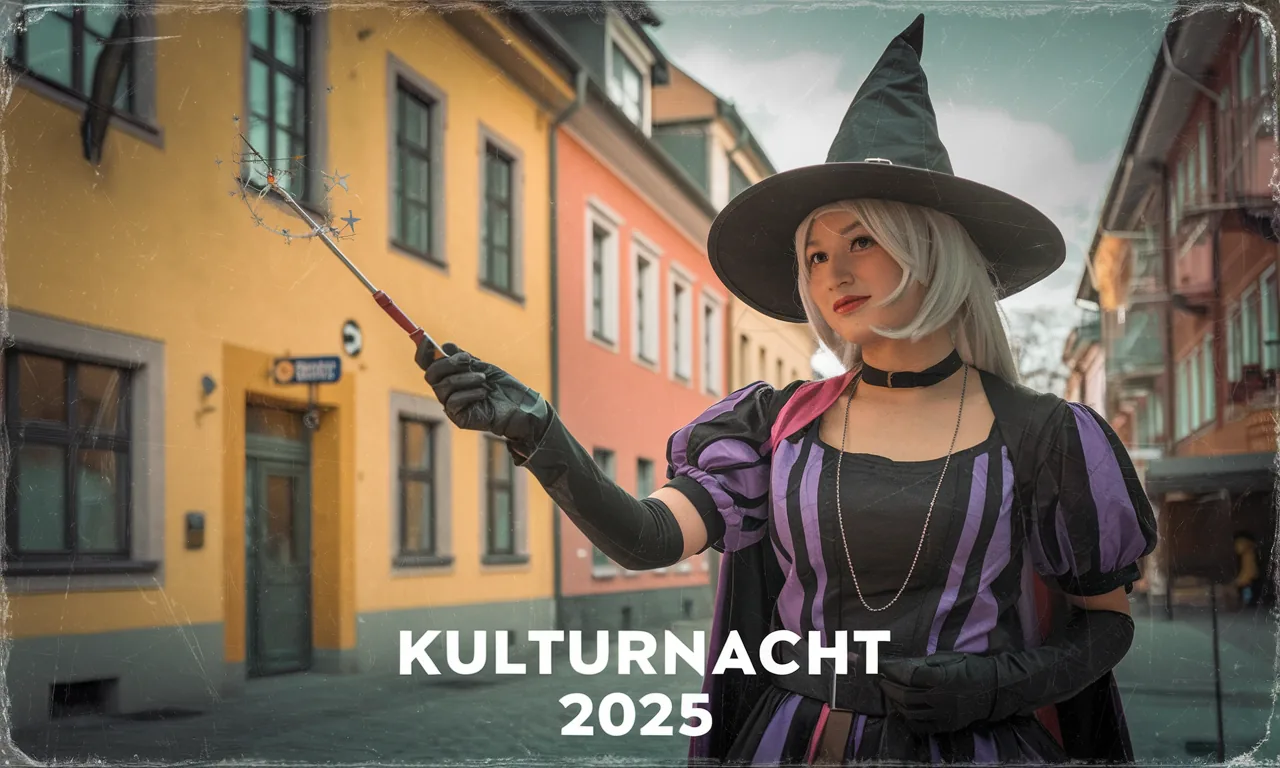
- Pop culture formats (e.g. cosplay, fashion, visuals): often with a strong “street scene” effect and low-threshold access, also for the curious without prior knowledge.
- Discourse & contemporary topics: Talks or artistic works on digitalization, AI, city life, or sustainability – often as dialogue-oriented formats.
Venues & Routes: How to Plan Your Culture Night Between Ulm and Neu-Ulm
The appeal of Culture Night lies in the cross-city movement: You consciously switch between Ulm and Neu-Ulm and experience how the program intensifies across the Danube. To keep it relaxed, three simple principles help:
1) Think of your route in zones
Divide the evening into two or three “zones” (e.g. city center focus, Danube crossing, second focus) and avoid frequent, long jumps. This reduces walking distances, waiting times, and the risk of missing program points.
2) Plan buffers for entry & travel
Popular locations may have entry stops or short waiting times. Plan a time buffer between two fixed appointments and choose nearby alternatives in case a venue is full.
3) Actively use app/program booklet
As soon as the official program is published, it is worth sorting by filters such as “start times,” “duration,” “accessibility,” or “family-friendly.” If there is an official app or a map view, set favorites and check distances between stations.
Wristband, Entry & Rules: How Access Works
For the next Culture Night, a wristband (or an equivalent festival pass) is typically the key to many program points. It serves as a quick visual proof on site and facilitates entry at several stations.
- Purchase & distribution: Find out in good time about official advance sales points and distribution locations (see Sources & Links).
- Entry logic: Even with a wristband, there may be capacity limits (fire protection/seating). “Arriving early” is especially worthwhile in small rooms.
- ID/age rules: Individual venues may have house rules (e.g. age checks at evening events). Check the notes in the program description.
If you are traveling in a group: Agree on meeting points and time windows in advance. In a full Culture Night, it is often easier to meet again at a prominent location than to coordinate “live.”
Families & Children: Early Time Slots and Stress-Free Planning
For families, Culture Night is most relaxed if you focus on early program points and choose stations that allow short distances, predictable duration, and enough breaks. Frequently, earlier time slots or dedicated program lines are offered for children and families (details depend on the respective edition and are listed in the official program).
- Start early, end consciously: Set a clear end goal (e.g. “two stations + snack”) instead of staying out too long.
- Prioritize participatory offers: Short workshops, open studios, or interactive formats usually work better than long seated events.
- Plan quiet alternatives: An exhibition or a short walk can be a good “reset” between two livelier program points.
Accessibility & Participation: What You Can Pay Attention to in Advance
Accessibility varies depending on the venue. For reliable planning, it is worth looking at the detailed information in the official program: There you will find notes on accessibility, seating, or special conditions for many events.
- Paths & entrances: Check whether there is step-free access and whether there are alternative entrances.
- Program density: Choose fewer stations with longer stays instead of many location changes.
- Need for assistance: If you need support, plan extra time (entry, cloakroom, restrooms).
Those who need a quiet atmosphere often benefit from exhibitions, installations, or program points in larger rooms. Concerts in small venues can be more crowded and louder.
Safety, Arrival & Good Behavior in the Audience
A Culture Night brings a lot of movement to the city centers. A few simple behavior and logistics rules help for a relaxed evening:
- Public transport & walking: Preferably plan with public transport and short walking distances. This reduces the search for parking and stress.
- Weather & clothing: Opt for comfortable shoes and an extra layer – you will be outside a lot.
- Respect in crowded rooms: Arrive quietly, dim phones, keep passageways clear, and choose alternative program points if overcrowded.
- Group safety: Agree on meeting points and a “If separated, then here” rule.
Sources & Further Links
- City of Ulm (official website) — Event and cultural information (accessed 2026-04-15)
- City of Neu-Ulm (official website) — City and event information (accessed 2026-04-15)